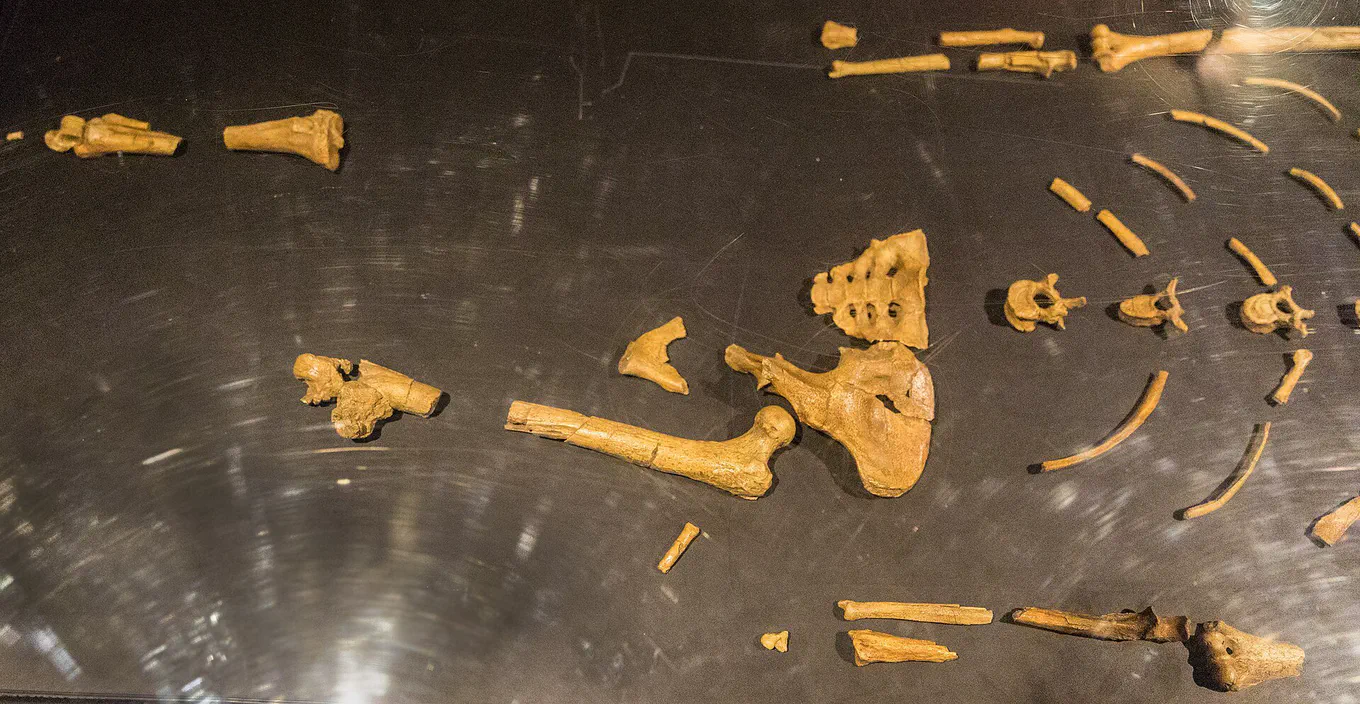
Lucy, perhaps the world’s most famous skeleton, is named after a Beatles song that was playing over and over at camp the night she was found. In Amharic she’s Dinkinesh, ‘you are marvellous’. I like both, but I’d have had Get Back on repeat. (Or maybe, It Ain’t Me Babe by Dylan.)
— Nick
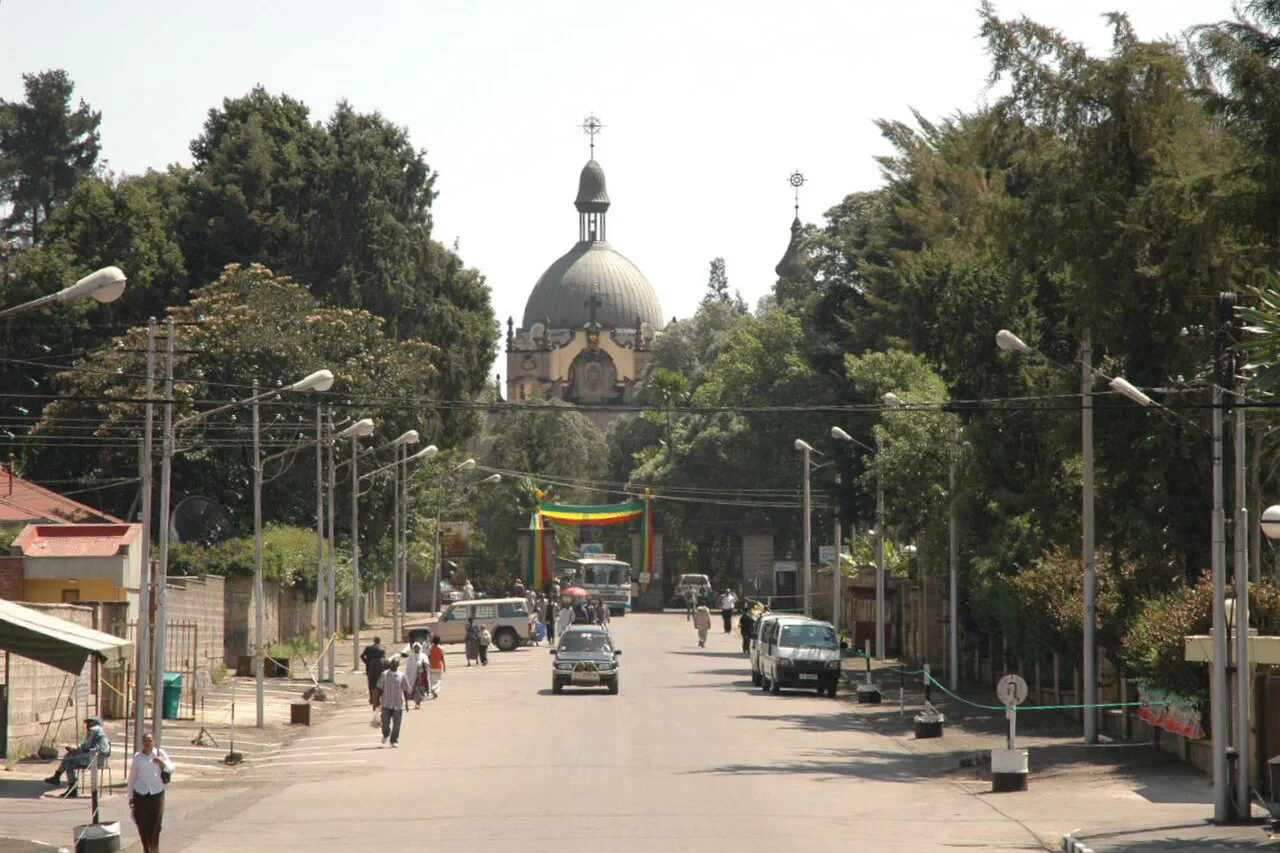
Addis Ababa is the capital of Ethiopia and, at 2,355 metres, the highest capital in Africa. It began in 1886, by hot springs below Mount Entoto. Its stories here are an empress sent back up her mountain, a translator and a looted lion, a suffragette’s grave, the father of Ethio-jazz, and Lucy and the Beatles.
1 Empress Taytu and the city she founded below Entoto
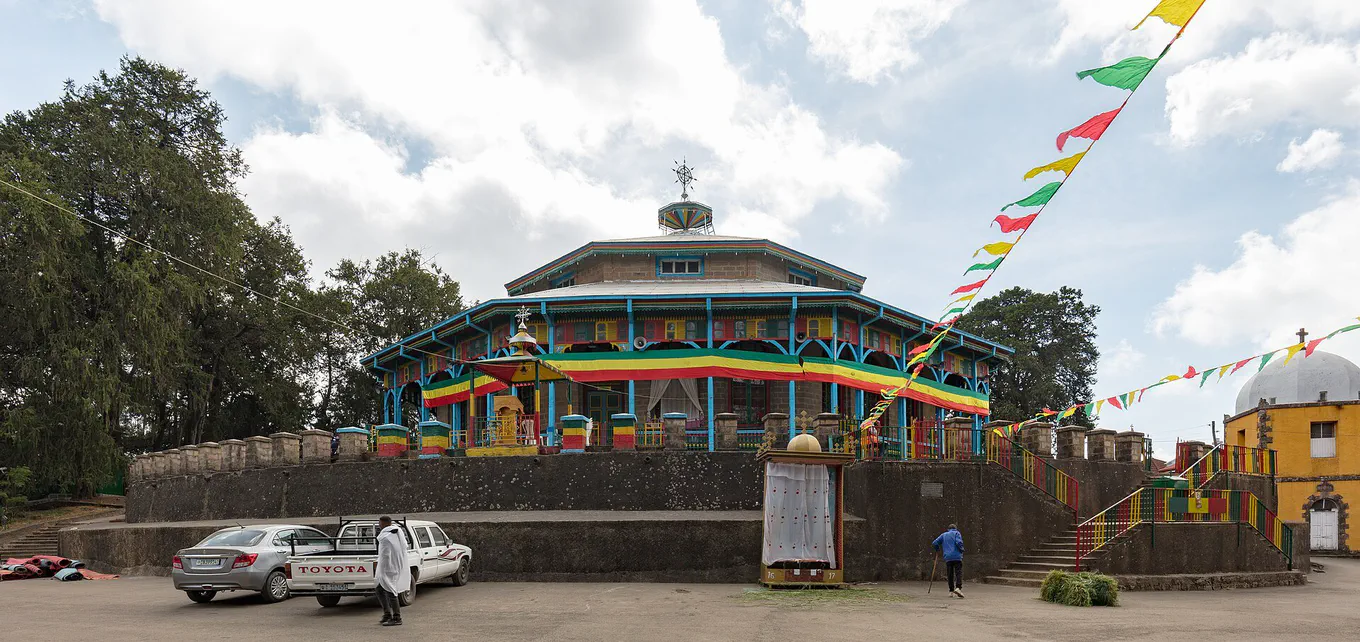
Stand here. Entoto Maryam Church, on Mount Entoto above the city. The museum beside it holds Menelik and Taytu’s belongings, including a mirror from Queen Victoria.
Before she commanded cannoneers against Italy at the Battle of Adwa, Empress Taytu Betul chose where this city would stand. In 1886, she built a house by the hot springs below Entoto and persuaded her husband, Menelik II, to bring his capital down off the cold, windy mountain. She named the city Addis Ababa, “new flower”. But in 1910 she was forced from power and banished back up the mountain. She lived out the next few years in the old palace at Entoto, looking down on her new flower.
2 Zerai Deres and the Lion of Judah at Legehar
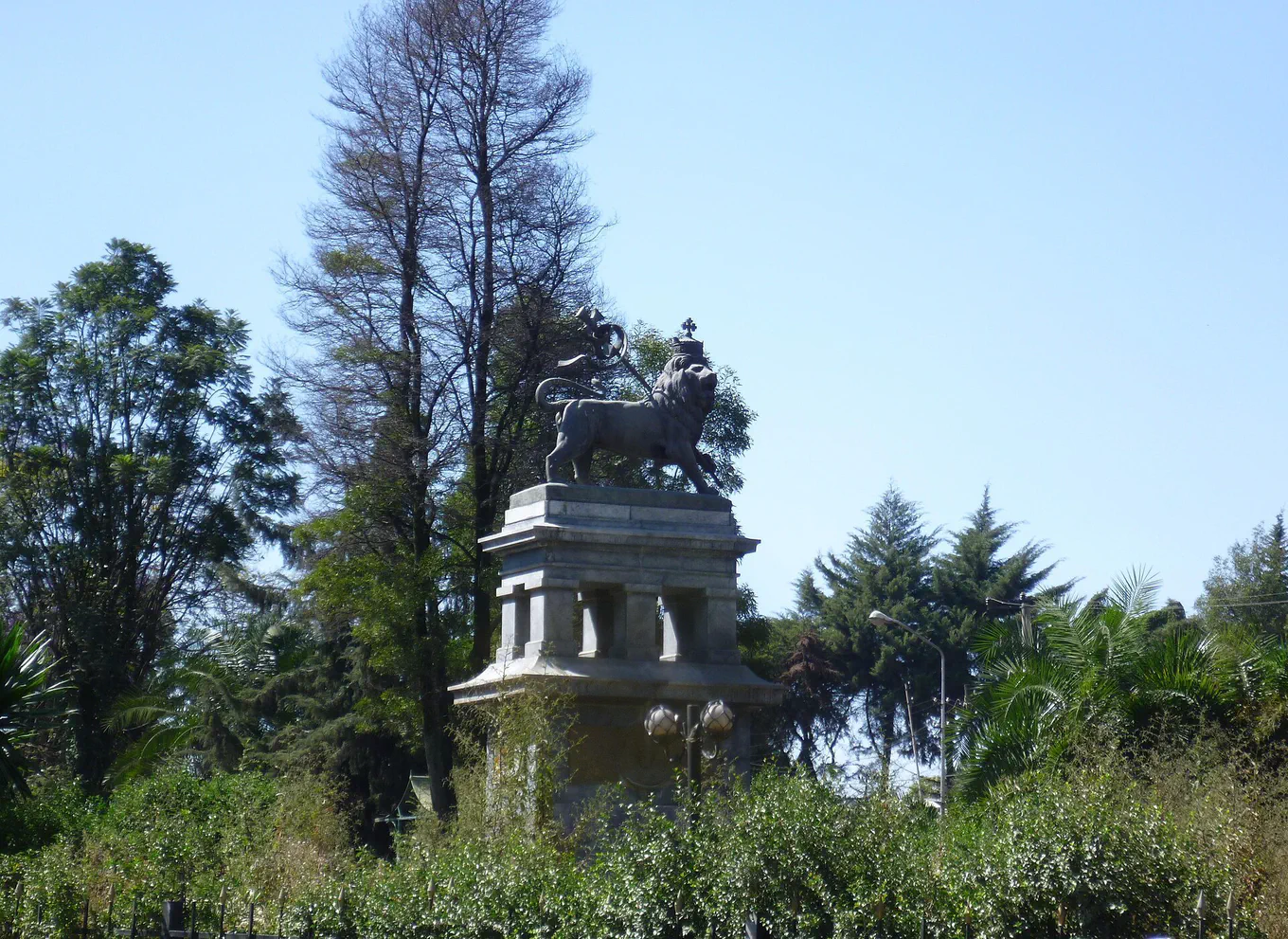
Stand here. The square in front of Legehar, the city’s old railway station, which is no longer in operation. The Lion of Judah stands there again.
The Lion of Judah was made for Haile Selassie’s coronation, and after Italy’s invasion it was carried off to Rome. Zerai Deres, an Eritrean, was in Rome translating for Ethiopian nobles the Italians had deported. One lunchtime in 1938, he knelt at the lion’s foot, then pulled a scimitar, struck an officer, and shouted against Italy while praising the emperor. Soldiers shot him four times, and he died in an asylum seven years later, aged 30. In 1966, the lion came home, and the emperor remembered him.
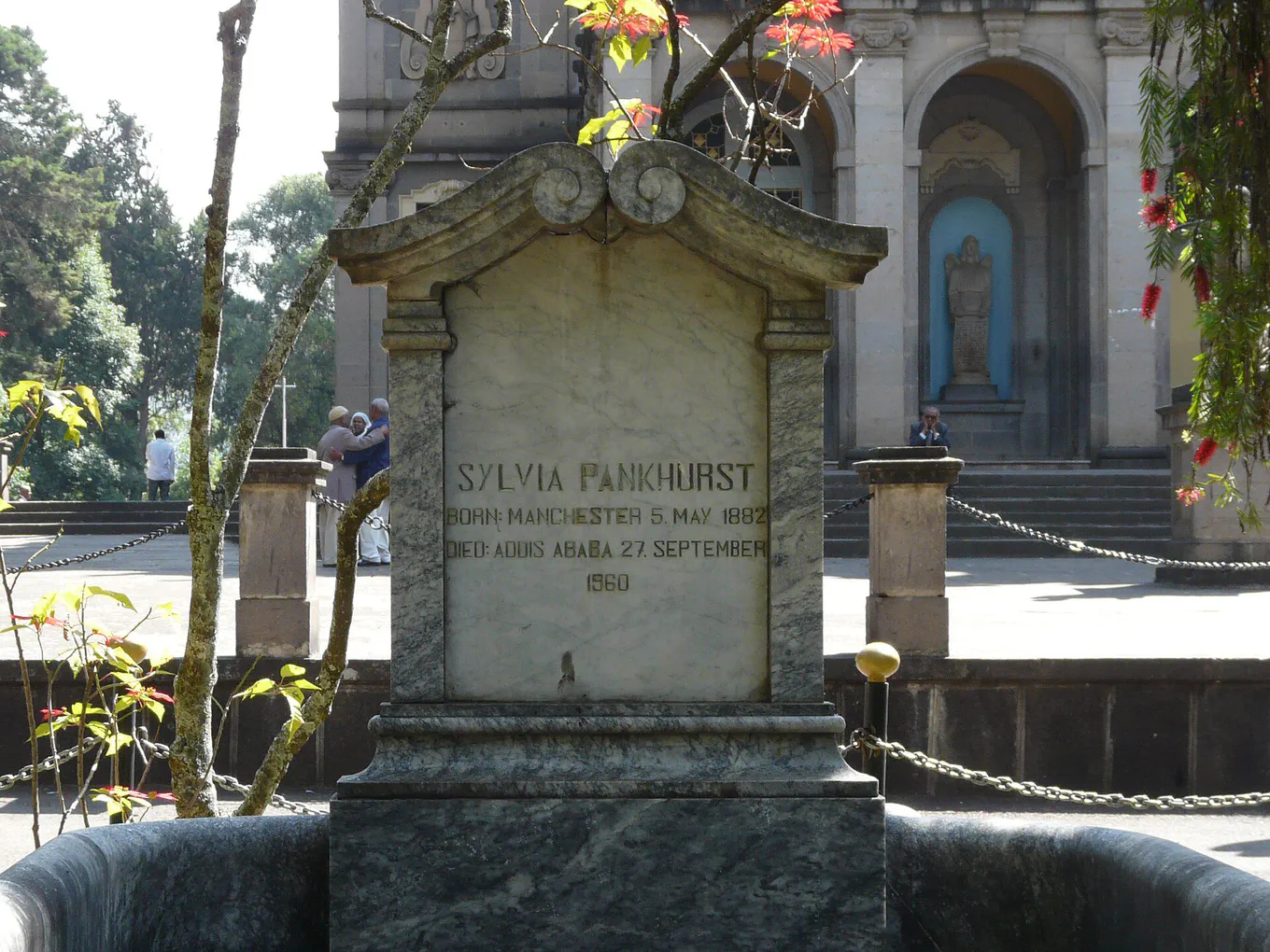
Sylvia Pankhurst helped her mother, Emmeline, and her sister Christabel found the suffragettes’ Women’s Social and Political Union. But she broke with their leadership, and when she refused to marry the father of her son, her mother never spoke to her again. In 1935, when Italy invaded Ethiopia, Sylvia started a newspaper, The New Times and Ethiopia News, and it ran for twenty years. Encouraged by Haile Selassie, she moved to Addis Ababa, and when she died there, she was given a state funeral, at which he named her an honorary Ethiopian.
4 Mulatu Astatke, Broken Flowers, and the African Jazz Village
Stand here. The African Jazz Village, the club Mulatu founded in the historic Ghion Hotel, where concerts are held and arranging is taught.
Jim Jarmusch’s Broken Flowers, with Bill Murray, features seven songs by Mulatu Astatke. Sent to Wales at 16 to study engineering, he studied music instead, and in 1969 brought home to Addis Ababa a blend of Ethiopian music and jazz he called Ethio-jazz. But by 1975 Amha Records had stopped, its owner driven out by the junta, and Mulatu made his living teaching. Thirty years later, Jarmusch’s film widened his audience in the West. “It took me 50 years to get it where it is today,” he said at 80.
5 Lucy, the Beatles, and the vault at the National Museum
Stand here. The National Museum of Ethiopia. A plaster replica of Lucy is on show, and the original is kept in a safe vault there.
Lucy takes her name from “Lucy in the Sky with Diamonds”, the Beatles song playing over and over at the camp on the night of 24 November 1974. That morning, at Hadar in Ethiopia’s Afar Triangle, Donald Johanson had put off his field notes to go searching with a student. On a hunch, he checked a gully searched at least twice before. Nothing showed. As they turned to leave, an arm bone caught his eye, the first piece of a 3.2-million-year-old skeleton. In Amharic she is Dinkinesh, “you are marvellous”.
Pack nothing. Leave Friday.
Every Friday, I write a free letter, Journey, that takes us on a trip through places, stories, and ideas.
Remote People(Evelyn Waugh, 1931). A travel book. It opens with Waugh, as special correspondent for The Times, at Haile Selassie’s coronation in 1930, held at St George’s Cathedral.
Addis Ababa Noir(edited by Maaza Mengiste, 2020). Short stories, all new, each one set in a different neighbourhood of the city, Arat Kilo among them.
Cutting for Stone(Abraham Verghese, 2009). A novel. Conjoined twins are born in 1954 at Mission Hospital in Addis Ababa, called “Missing” in the local pronunciation.
Beneath the Lion’s Gaze(Maaza Mengiste, 2010). A novel. A family in Addis Ababa lives through 1974, as rule passes from Emperor Haile Selassie to the Derg, a military junta.
Films to watch before you visit Addis Ababa
Fig Tree(Aäläm-Wärqe Davidian, 2018). A film set in Addis Ababa in 1989, about the Beta Israel community, drawing on the director’s childhood memories of Shola, her Addis neighbourhood, whose name means “fig”.
Price of Love(Hermon Hailay, 2015). A film. An Ethiopian drama about a young Addis Ababa taxi driver whose taxi is stolen and who becomes stuck in a relationship with a prostitute.
Teza(Haile Gerima, 2008). A film. An Ethiopian drama of the Derg period, in which Anberber returns to Addis Ababa in the 1980s with a PhD and finds soldiers throughout the airport.
Questions
Can you see Lucy in Addis Ababa?
Yes, in a way. The National Museum of Ethiopia displays a plaster replica of Lucy and keeps the 3.2-million-year-old original in a safe vault in the same museum. The original does travel. In August 2025, she went to Prague for a two-month exhibition at the Czech National Museum.
Why is Addis Ababa called the political capital of Africa?
In 1963, Emperor Haile Selassie invited the continent’s two rival blocs of leaders to the city, and they founded the Organisation of African Unity in Africa Hall. Its successor, the African Union, has its headquarters here, as does the UN Economic Commission for Africa, which runs tours of Africa Hall.
How high is Addis Ababa?
At 2,355 metres, Addis Ababa is the highest capital in Africa and the fourth highest in the world. Mount Entoto, which overlooks the city, rises to 3,200 metres. It was where the capital stood before Empress Taytu persuaded Menelik II to move it down to the plain.