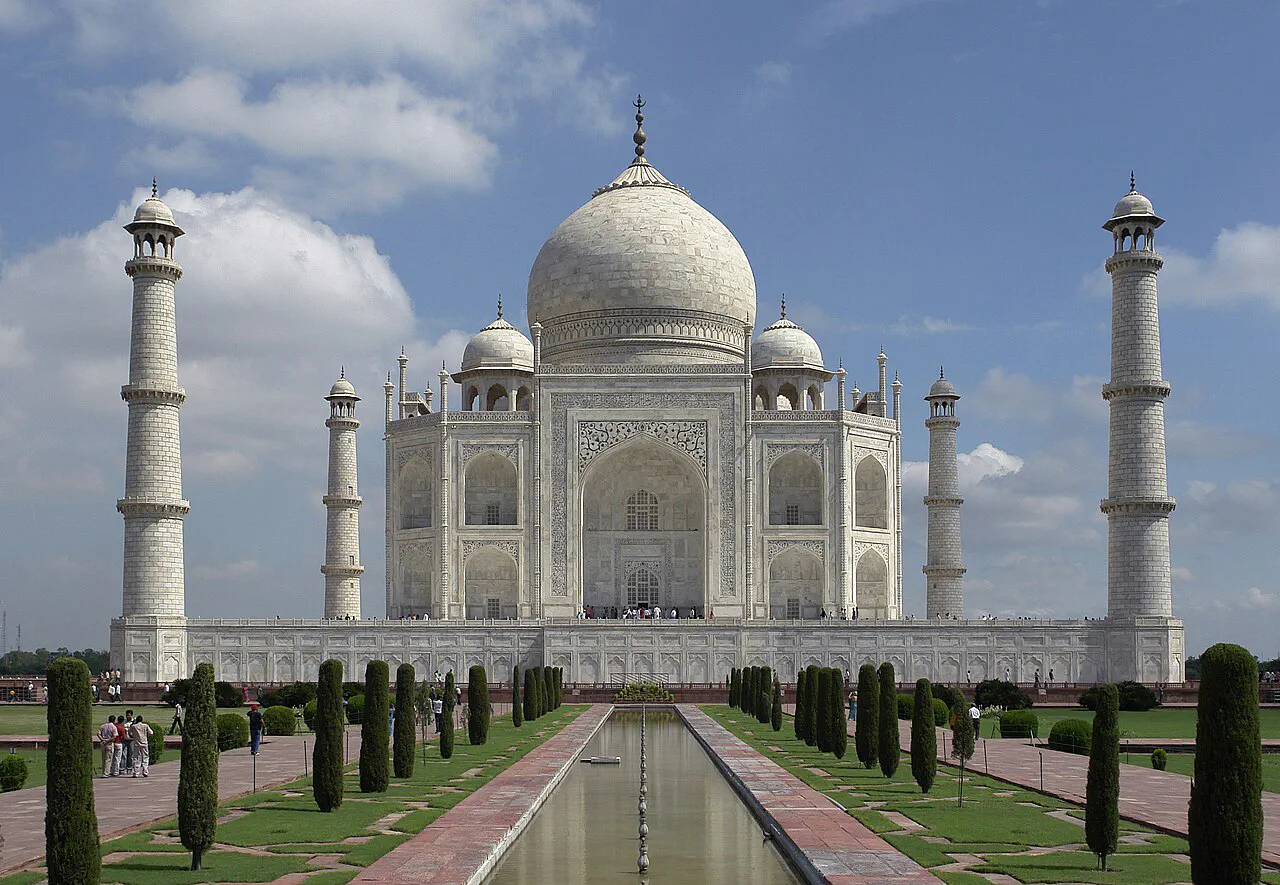
Shah Jahan was obsessed with symmetry, and the Taj Mahal is about as perfect as buildings get. The one thing off-centre is Shah Jahan himself, laid beside his wife by the son who’d locked him up.
I guess that none of us get to guarantee our final chapter.
— Nick
Agra is a city on the Yamuna in Uttar Pradesh, India, about 230 km south-east of Delhi. It was the Mughal capital under five emperors. The Taj Mahal, completed in 1648, and Agra Fort are UNESCO World Heritage Sites. Its stories here are an emperor jailed by his son, a Maratha ruler escaping house arrest, Akbar’s grave opened and his bones burned, a Sherlock Holmes treasure, and Princess Diana alone on a bench.
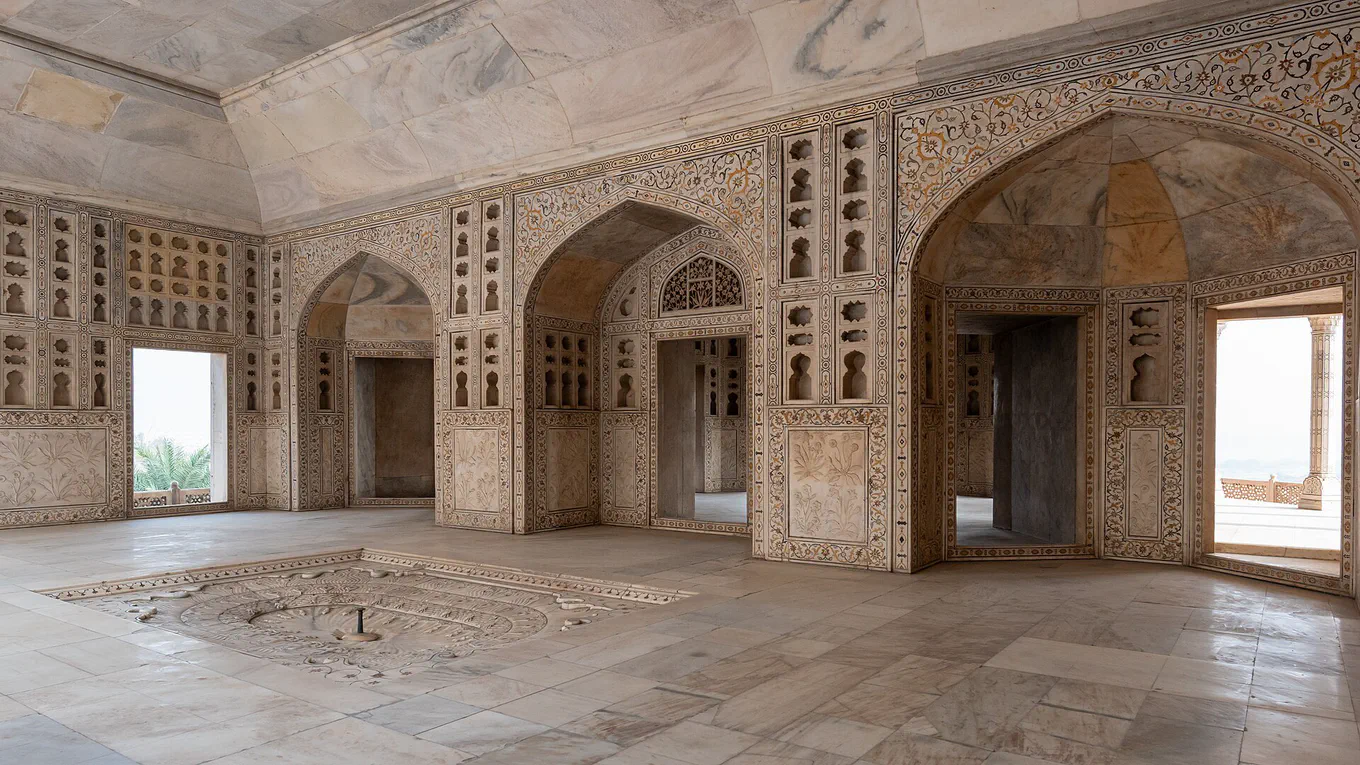
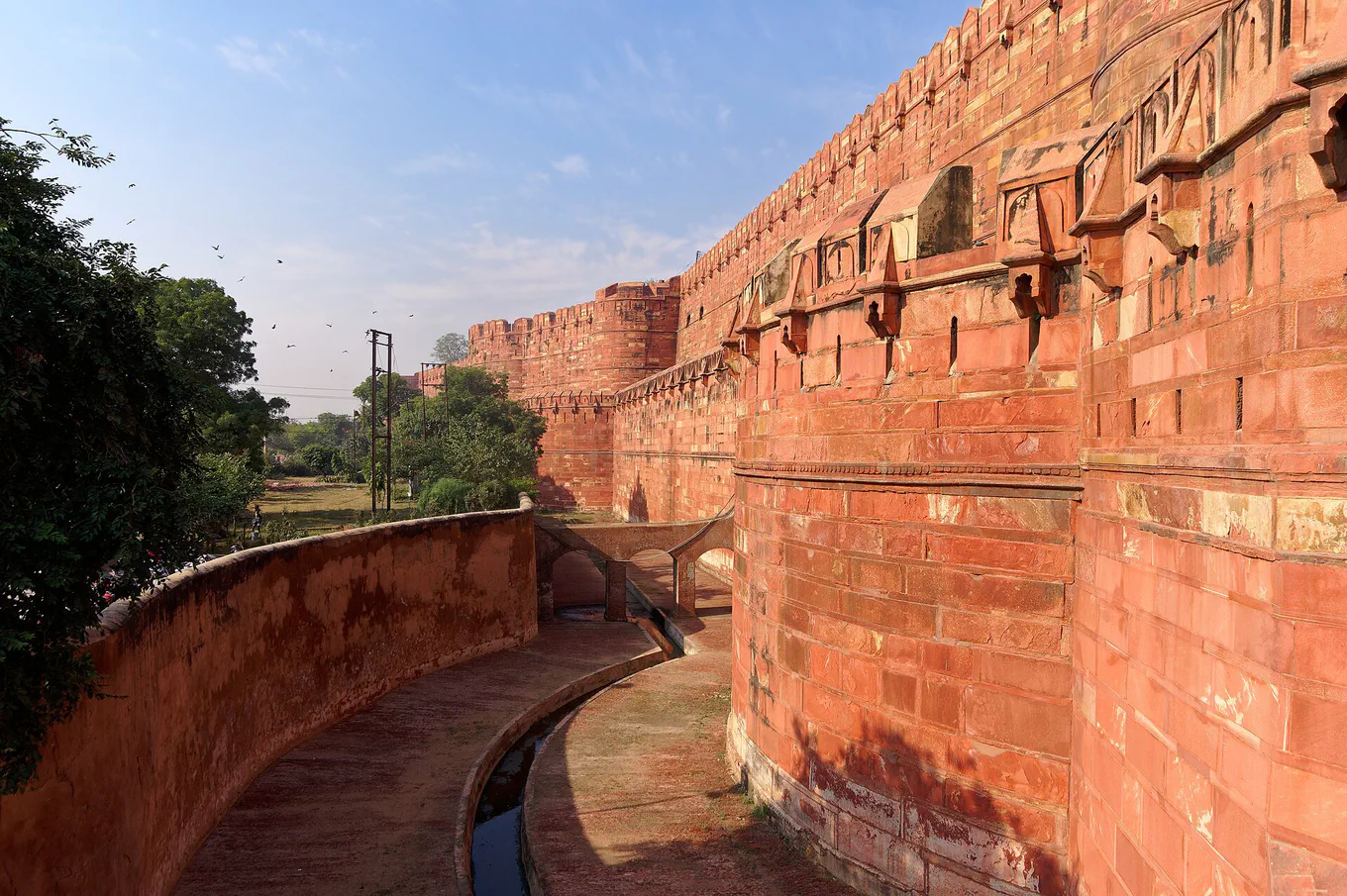
Shah Jahan, the emperor who built the Taj Mahal, ended his days a prisoner here. In July 1658, his son Aurangzeb locked him inside Agra Fort. Shah Jahan’s daughter Jahanara chose to share the confinement, and nursed him for eight years. Tradition says he died gazing at the Taj. He was buried there beside his wife, Mumtaz Mahal, whose memorial stone sits at the exact centre of the chamber. His, on a larger base to the west, breaks the symmetry he was obsessed with.
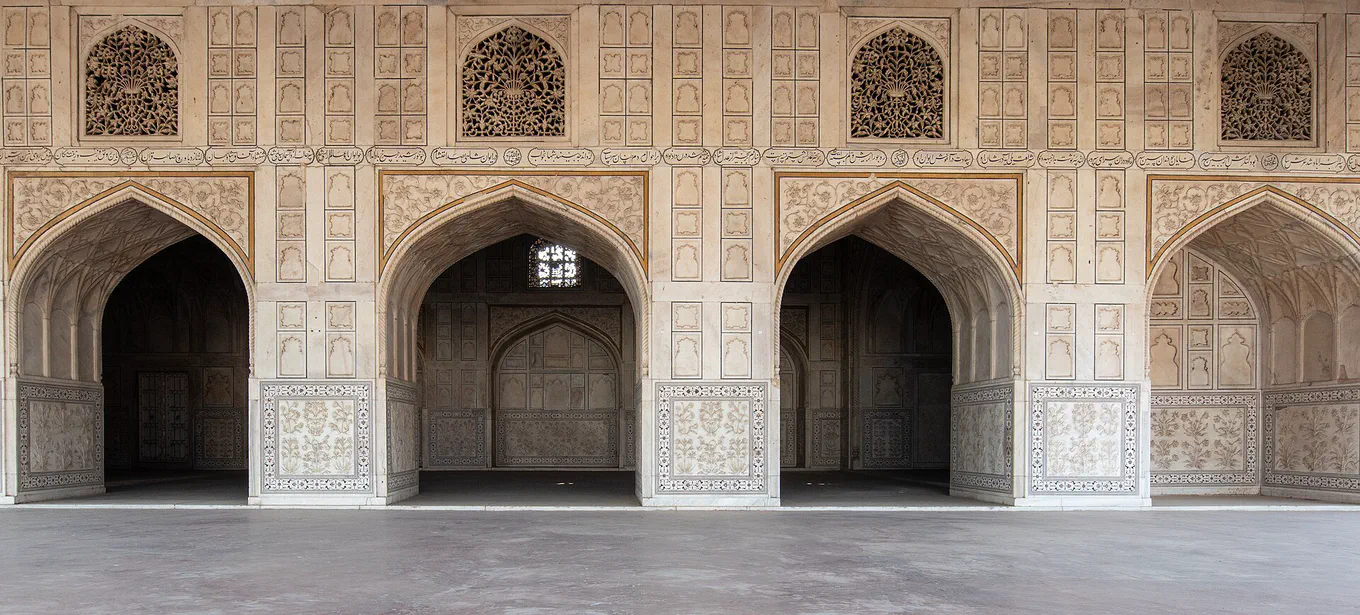
In 1666, Shivaji, the Maratha ruler, came to Agra to meet Aurangzeb. At court, he was made to stand among relatively low-ranking nobles. He took offence, stormed out, and was put under house arrest. The story goes that he pretended to be ill, sent out baskets of sweets, and on 17 August left hidden in one. One historian finds no contemporary evidence for the basket story, and thinks he likely bribed the guards. Either way, Aurangzeb’s prisoner was gone.
3 Akbar’s tomb at Sikandra and the day it was opened
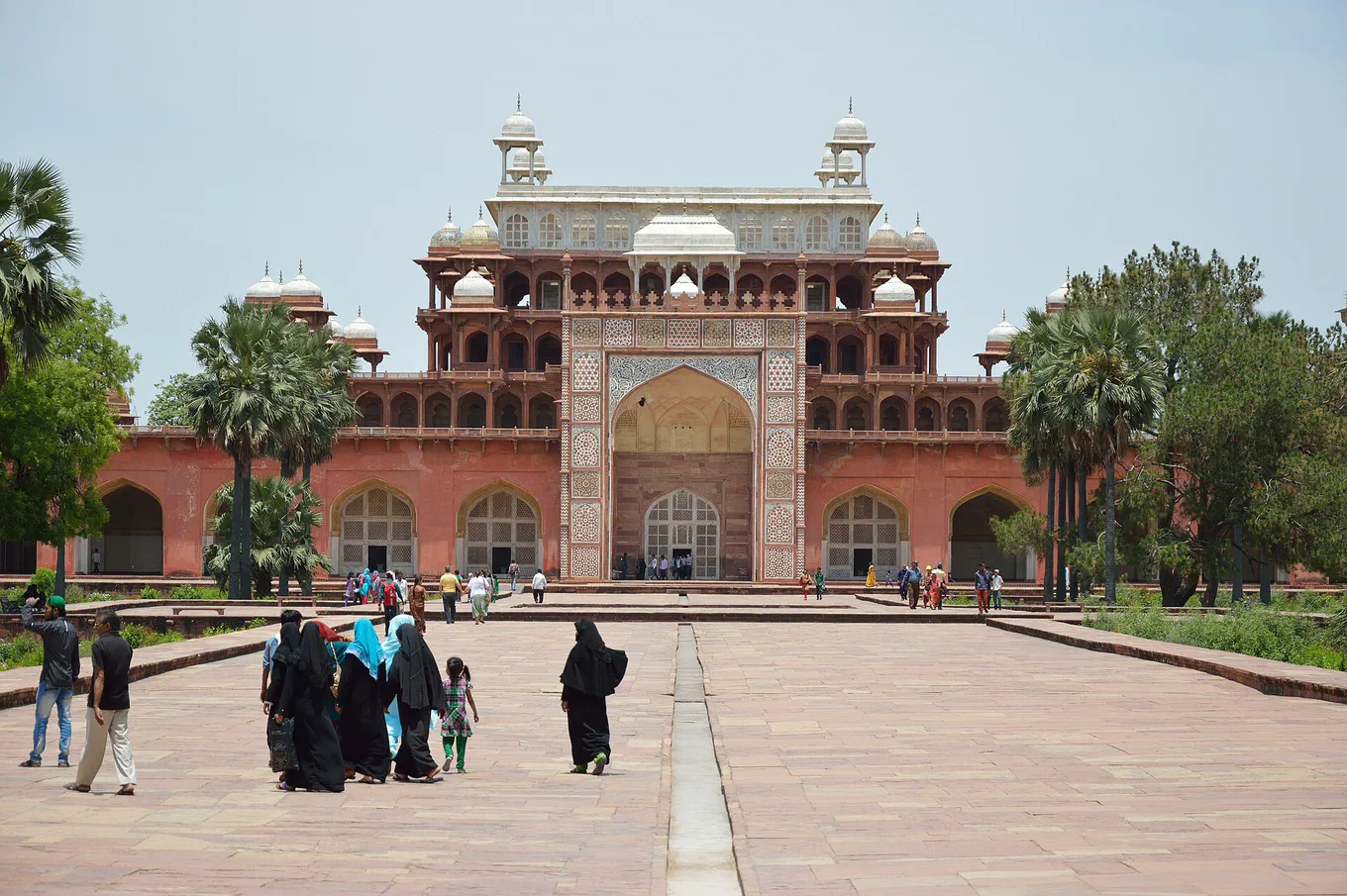
Stand here. Akbar’s Tomb, in 119 acres of grounds at Sikandra, a suburb of Agra, restored in work completed in 1905.
Jahangir took eight years to build this tomb for his father, Akbar the Great, the third Mughal emperor, finishing it in 1613. The throne passed down to Shah Jahan’s son Aurangzeb, who had jailed his own father, and in 1688, during his reign, the Jats rose in rebellion. The grave was opened and Akbar’s bones were burned. The tomb Jahangir raised for his father outlasted the rebellion. What was left of his father did not.
The treasure in The Sign of the Four, Arthur Conan Doyle’s second Sherlock Holmes novel, published in 1890, was stolen inside this fort. A client brings Holmes a case that leads to a one-legged man, Jonathan Small, and a treasure brought back from India in secret. The trail ends in a chase down the Thames, during which Small scatters the jewels into the river. Nobody gets the Agra treasure.
5 Princess Diana alone on a bench at the Taj Mahal
Stand here. The bench at the Taj Mahal where Diana sat alone. Prince William and Kate later sat on it too.
Princess Diana was photographed alone at the Taj Mahal in February 1992. A few years earlier, Prince Charles had told the royal photographer Kent Gavin that this was a monument to a man who loved a woman so much he built it, and “I’m going to bring my wife back here.” But on the day, by Gavin’s account, Charles stayed behind at a business meeting. Diana sat on a bench on her own for five minutes. The picture seemed to turn rumours into reality. That December, they announced their separation.
Pack nothing. Leave Friday.
Every Friday, I write a free letter, Journey, that takes us on a trip through places, stories, and ideas.
The Sign of the Four(Arthur Conan Doyle, 1890). A novel. The second Sherlock Holmes mystery, whose back story, set in 1857, has the Agra treasure stolen at Agra Fort.
Beneath a Marble Sky(John Shors, 2004). A novel of the Taj Mahal, narrated by Jahanara, the eldest daughter of Shah Jahan and Mumtaz Mahal.
The Complete Taj Mahal and the Riverfront Gardens of Agra(Ebba Koch, 2006). A history, which its publisher calls the first detailed documentation ever published of every building in the Taj Mahal complex.
Films to watch before you visit Agra
Slumdog Millionaire(Danny Boyle, 2008). A film. Part of it is set at the Taj Mahal, where its characters get by pickpocketing, washing dishes, and pretending to be tour guides.
Jodhaa Akbar(Ashutosh Gowariker, 2008). A film, with scenes inside Agra Fort.
Mere Brother Ki Dulhan(Ali Abbas Zafar, 2011). A romantic comedy film about finding a brother a bride, whose own brother decides the wedding should be in Agra, with a view of the Taj Mahal.
Questions
Where was Shah Jahan imprisoned in Agra Fort?
In the Musamman Burj, a tower complex inside the fort. His son Aurangzeb held him there from July 1658 until his death in January 1666, and tradition says he died gazing at the Taj Mahal. His daughter Jahanara shared his confinement and nursed him.
Was there going to be a black Taj Mahal?
Probably not. The idea that Shah Jahan planned a mausoleum in black marble comes from the fanciful writings of Jean-Baptiste Tavernier, a 17th-century French traveller. Across the Yamuna, at Mehtab Bagh, a large octagonal pond reflects the Taj Mahal.
Who is buried in the Taj Mahal?
Mumtaz Mahal, Shah Jahan’s wife, and Shah Jahan himself, buried beside her in 1666. Her cenotaph, or memorial stone, is at the exact centre of the chamber, and his stands on a larger base to the west.