Ahmedabad is the most populous city in Gujarat, in western India, on the banks of the Sabarmati River. A sultan founded it in 1411, and its textile industry earned it the nickname “Manchester of India”. Its stories here are Gandhi setting out on the Salt March, a Le Corbusier house whose plans were sold on, Louis Kahn’s brick campus, a mosque window never carved, and a saint who, the story goes, unwove a sultan’s fort walls.
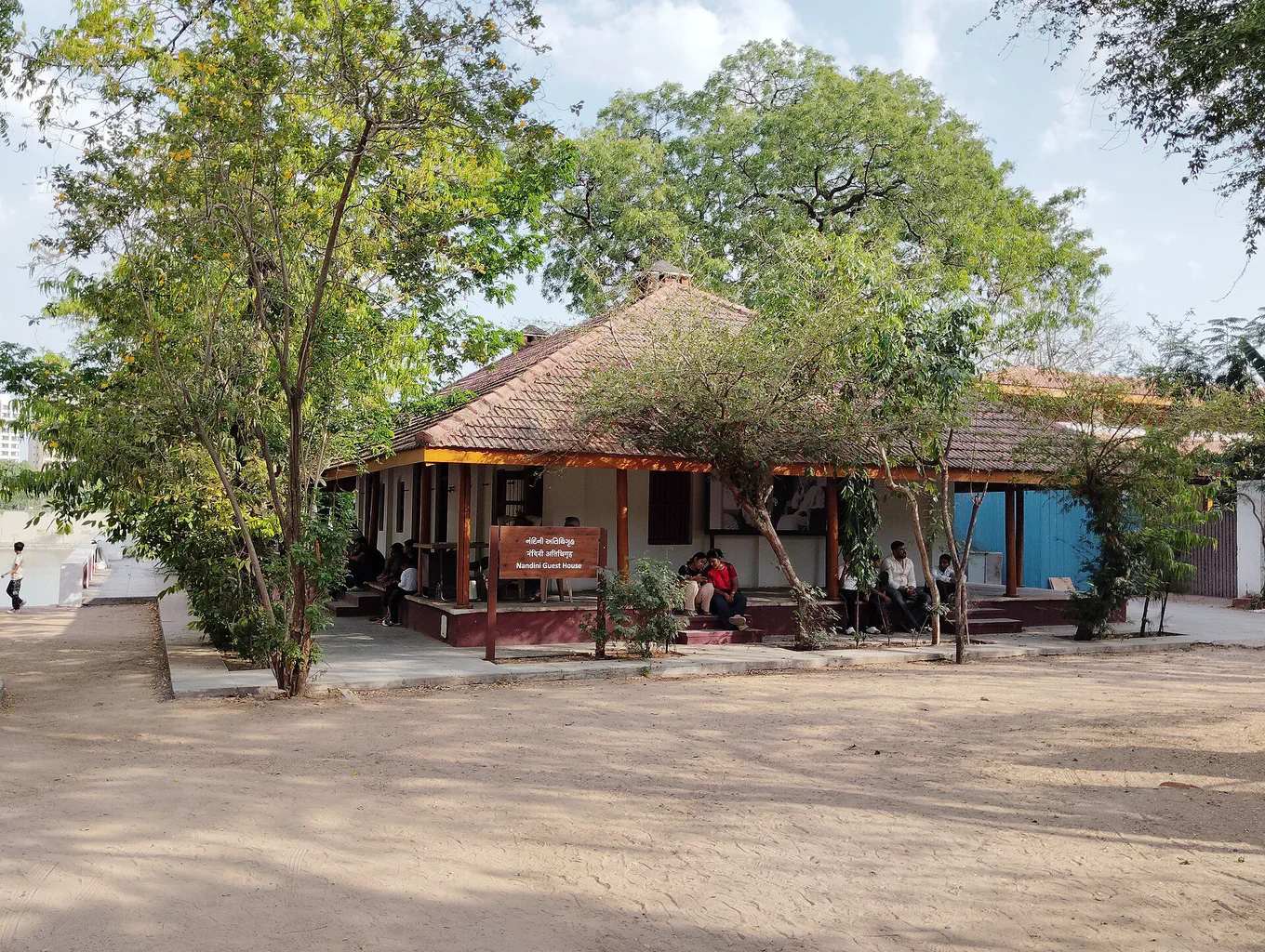
The Salt March started here, on 12 March 1930. Gandhi had lived at the ashram since 1917, and British law made every Indian buy salt from the colonial government, a tax that hurt the poorest most. He set out on foot with 78 followers for the coastal village of Dandi, vowing not to return until India was independent. After a 24-day march, he raised a lump of salty mud there and broke the law. He kept his vow. He moved to a new ashram at Wardha and never came back.
2 Le Corbusier’s Mill Owners’ building and the house plans sold on
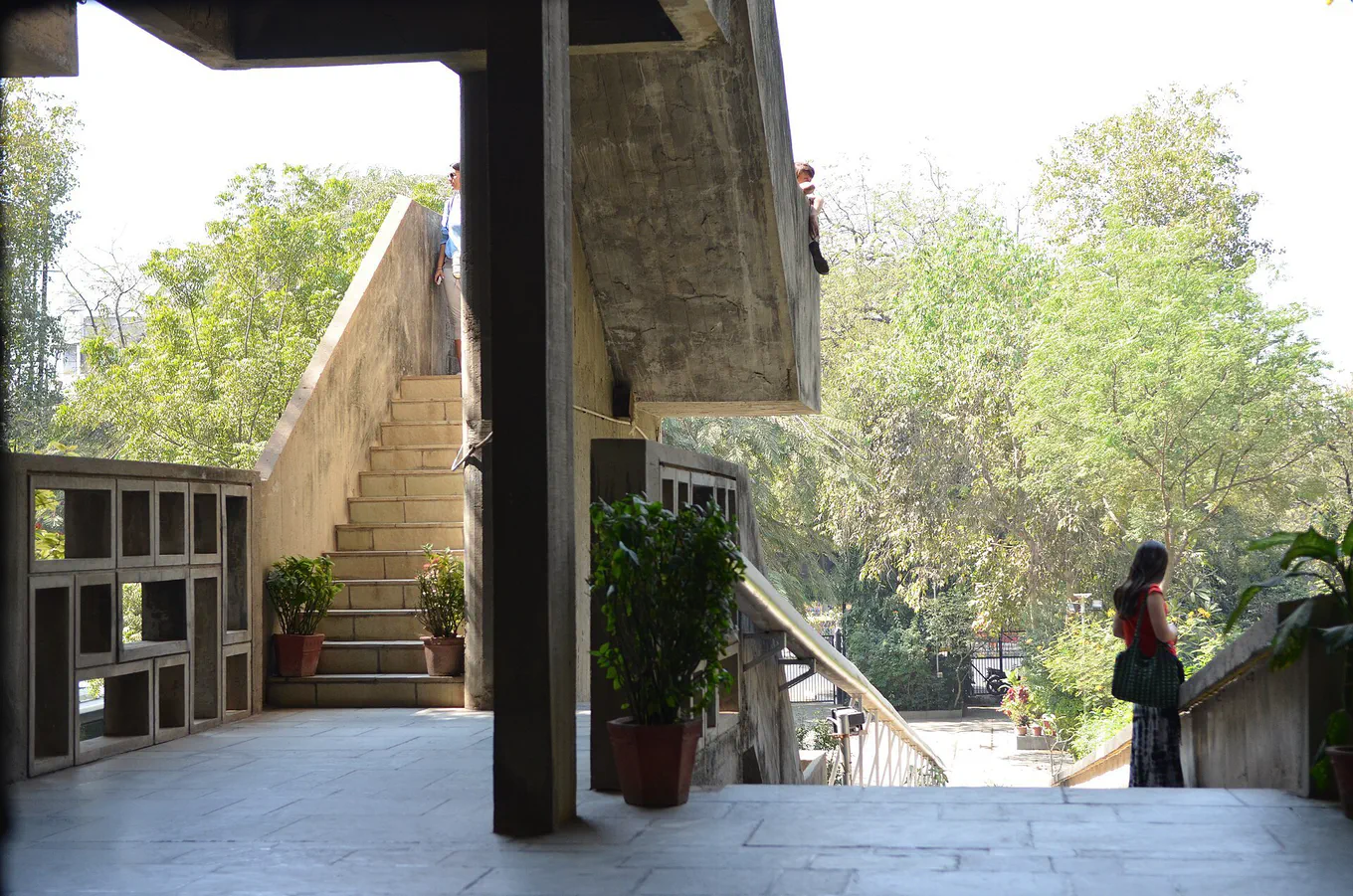
Stand here. The Mill Owners’ Association Building, on Ashram Road in Navrangpura. A ceremonial ramp climbs into a triple-height entrance hall open to the wind.
In 1951, a mill owner, Surottam Hutheesing, gave Le Corbusier, the Swiss-born architect, two Ahmedabad commissions. The first was this headquarters for the Mill Owners’ Association. The second was a house for Hutheesing himself, to show off his standing before his coming marriage. But Hutheesing sold the plans to another mill owner, Shyamubhai Shodhan, who kept them, even on an entirely new site and with a different way of life. Le Corbusier was later photographed inside Villa Shodhan, a house designed for one man’s marriage and built for another.
3 Louis Kahn’s red brick campus at IIM Ahmedabad
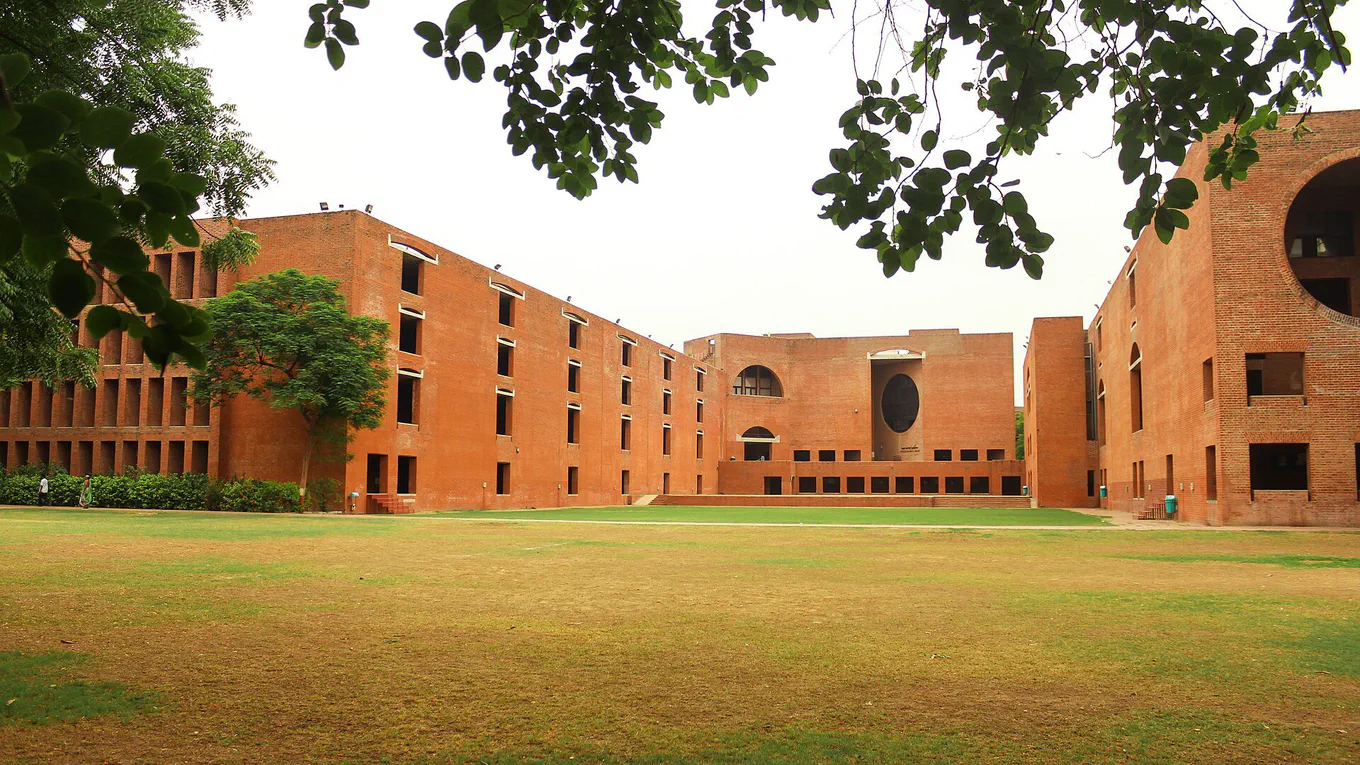
Stand here. The Louis Kahn Plaza, on IIM Ahmedabad’s heritage campus of exposed, locally made red brick, built between 1962 and 1974.
If you’ve seen My Architect, Nathaniel Kahn’s Oscar-nominated film about his father, you’ve seen this campus. In the 1960s, the new Indian Institute of Management wanted buildings on the scale of Le Corbusier’s, and found Louis Kahn, the Philadelphia architect. He built in red brick. Ask brick what it wants, he said, and it says, “I like an Arch.” Kahn died in New York’s Penn Station in 1974, broke, and his body lay unclaimed for three days. Back in Ahmedabad, his colleague Anant Raje kept building for another twenty-six years.
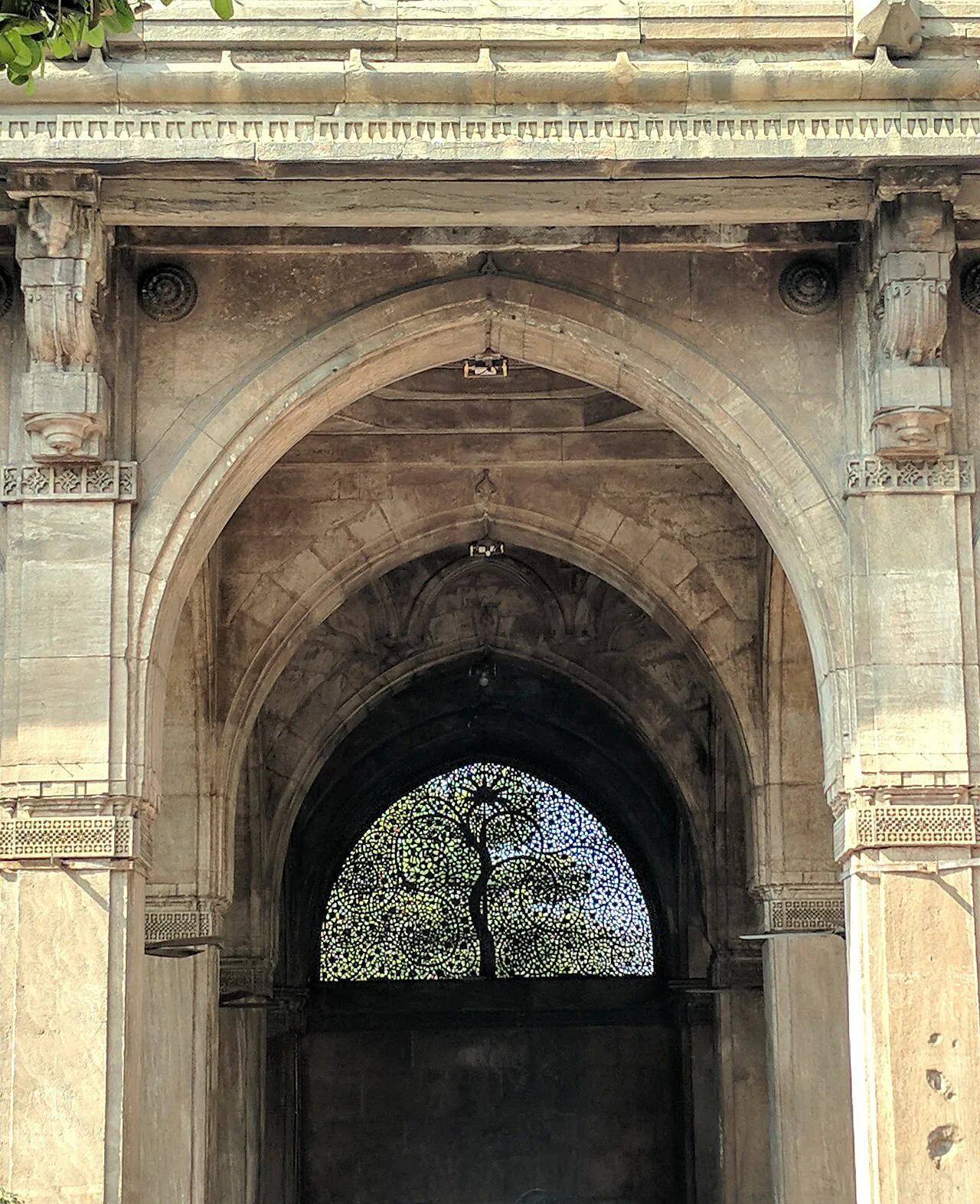
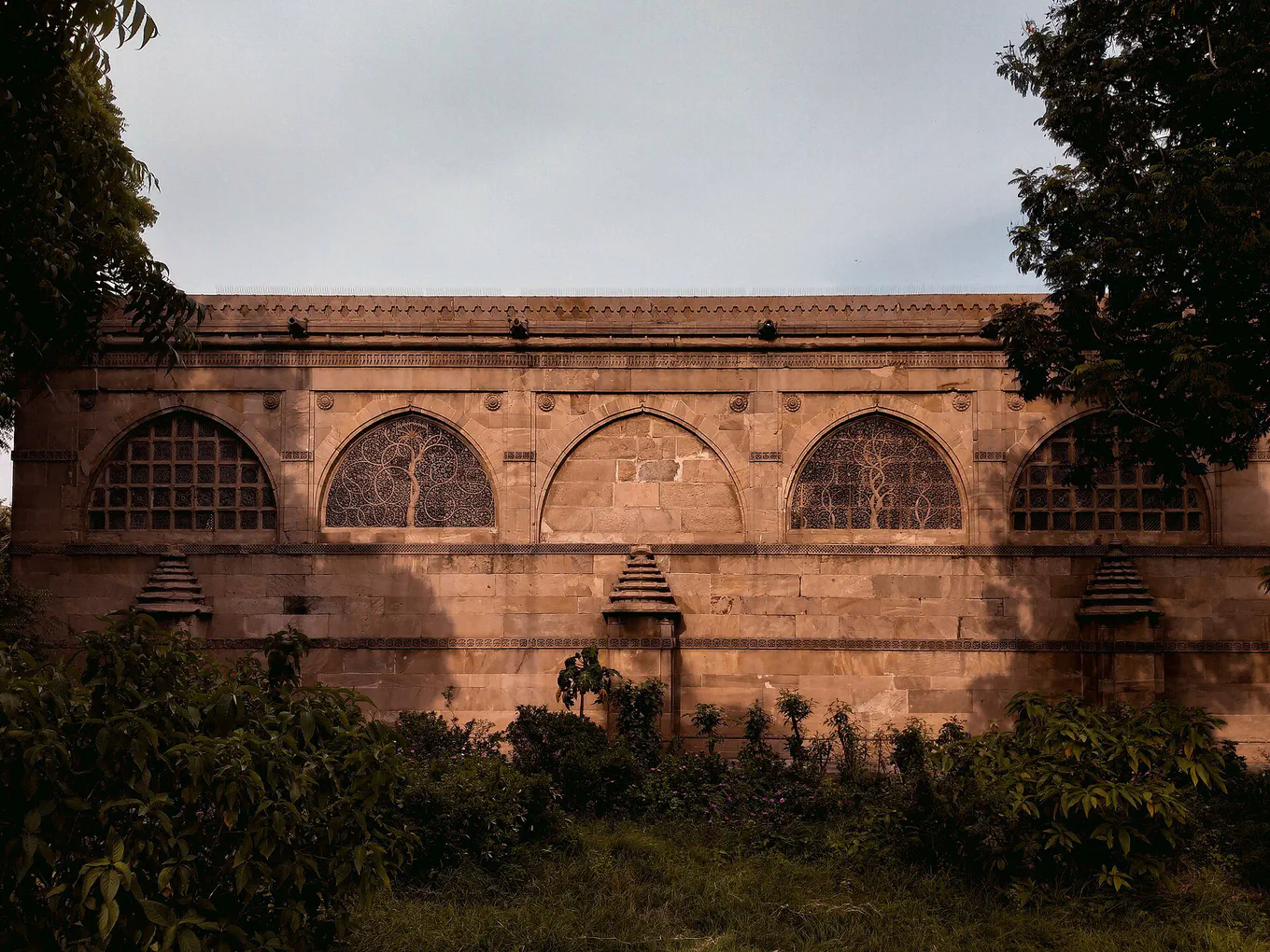
Ahmedabad’s unofficial symbol, the inspiration for the IIM Ahmedabad logo, is a stone window carved with intertwined trees, and it is here. Sidi Sa’id, an Abyssinian nobleman, once a Turkish general’s slave, built the mosque in 1572 or 1573, with ten stone lattice windows, called jalis. But it was the last year of the Gujarat Sultanate. The central arch, where another jali would be expected, is walled with stone, possibly because the Mughals invaded before the mosque was finished. The city’s emblem sits beside a window that was never carved.
5 Ahmad Shah’s walls and the saint who unwove them
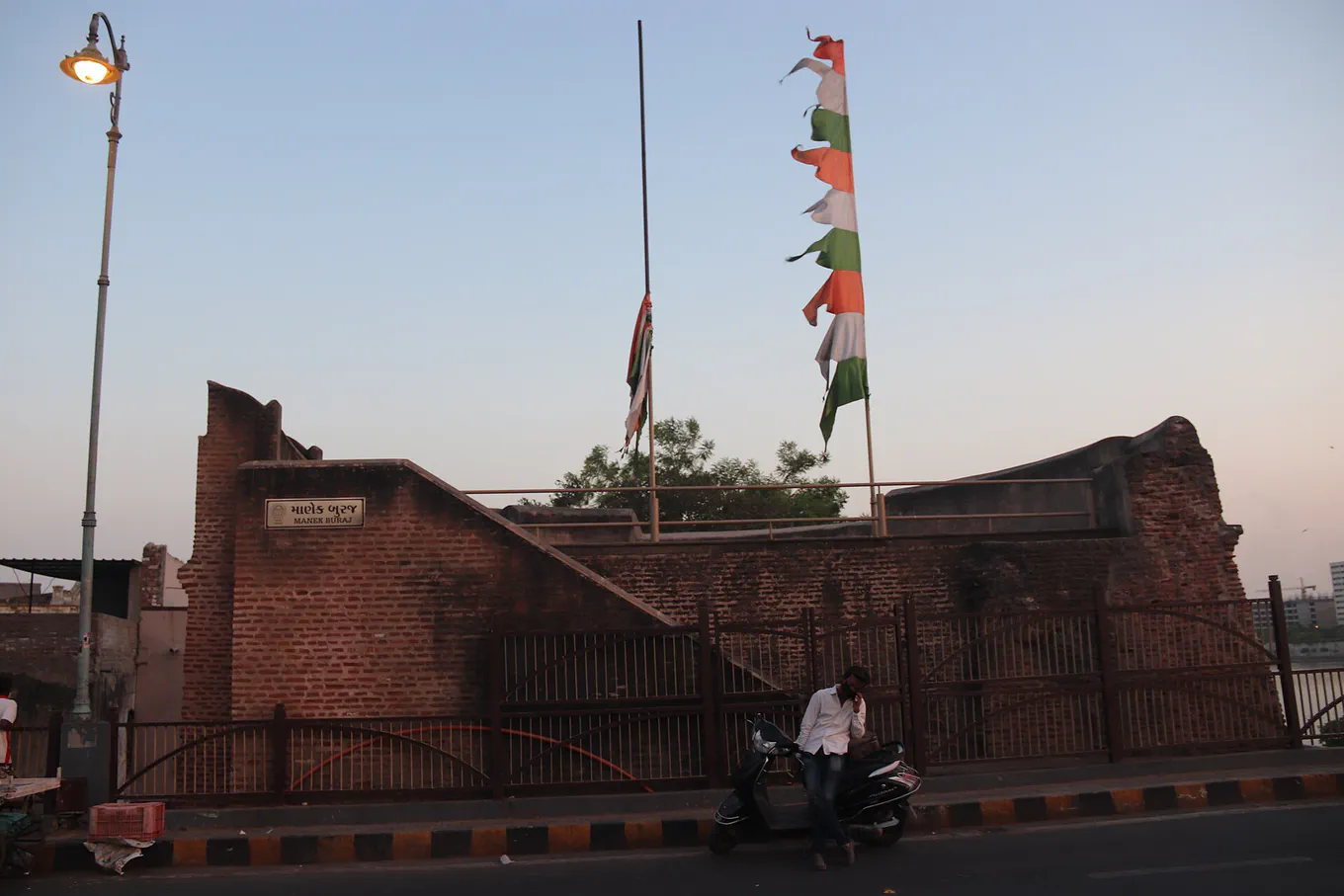
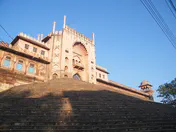
Stand here. Manek Burj, the bastion at the east end of Ellis Bridge, built around the city’s foundation stone and restored in 2003.
Sultan Ahmad Shah I laid the foundation stone of his walled capital on 26 February 1411. The story goes that the walls of his fort, Bhadra, would not stay up. A Hindu saint, Maneknath, wove a mat by day while they rose, then unwove it by night, and the walls crumbled with it, until he was found out. Ahmad Shah named the city after himself. But Manek Chowk, the city’s first quarter, is named after the saint, and so is the bastion around that first stone.
Pack nothing. Leave Friday.
Every Friday, I write a free letter, Journey, that takes us on a trip through places, stories, and ideas.
2 States: The Story of My Marriage(Chetan Bhagat, 2009). A novel. It opens in the IIM Ahmedabad mess hall, where Krish, a Punjabi boy from Delhi, first sees a beautiful girl.
Gandhi’s Truth: On the Origins of Militant Nonviolence(Erik H. Erikson, 1969). A study of Gandhi’s leadership of the Ahmedabad textile workers’ strike of 1918, and of the fast he undertook.
Ahmedabad: A City in the World(Amrita Shah, 2015). A contemporary history of Ahmedabad. It studies India’s emerging politics through the city, and was shortlisted for the Raymond-Crossword Book Award.
Films to watch before you visit Ahmedabad
My Architect: A Son’s Journey(Nathaniel Kahn, 2003). A documentary. Louis Kahn’s son visits every building his father made, among them the IIM Ahmedabad campus.
Kai Po Che!(Abhishek Kapoor, 2013). A film. Three friends in Ahmedabad between 2000 and 2012, with most scenes shot in the old city.
2 States(Abhishek Varman, 2014). A Hindi romantic comedy-drama about an MBA student at IIM Ahmedabad, partly shot on the campus in 2013.
Questions
Where is the Sidi Saiyyed jali?
In the Sidi Saiyyed Mosque, built in 1572 or 1573 by the Abyssinian nobleman Sidi Sa’id, in Ahmedabad’s historic city. The mosque has ten carved stone lattice windows, or jalis. Its jali of intertwined trees and foliage is the city’s unofficial symbol and inspired the logo of IIM Ahmedabad.
Is Ahmedabad a UNESCO World Heritage Site?
Its historic city is. In July 2017, UNESCO declared Old Ahmedabad a World Heritage Site, at the World Heritage Committee’s meeting in Krakow. It was the first city in India to receive the honour.
Is Ahmedabad the capital of Gujarat?
Not any more. Ahmedabad became the capital of Gujarat when Bombay State was divided on 1 May 1960. In the late 1970s, the capital moved to Gandhinagar, a newly built city 25 km away. Ahmedabad is still the state’s most populous city.