The Library of Alexandria probably wasn’t destroyed in one great fire. It just dwindled, for lack of money and support. Far less cinematic… and far more common. I guess a lot of good things don’t burn. They just stop being funded.
— Nick
Alexander the Great founded Alexandria in April 331 BC, on Egypt’s Mediterranean coast at the western edge of the Nile Delta. It stretches about 40 kilometres along the shore and is Egypt’s principal seaport and second-largest city, after Cairo. With a hijacked funeral cart the stories begin, moving to an architect’s hidden name, a queen’s last refusal, a poet above a brothel, and eight shots at Egypt’s leader.
Alexander the Great founded this city, but he had wanted to be buried at Siwa. After his death, his funeral cart set off for Macedonia. In 321 BC, his general Ptolemy hijacked the cart in Syria and took the body to Egypt. He buried it at Memphis, and by 274 BC it lay in Alexandria, in a mausoleum called the Soma, Greek for “body”. Julius Caesar came to see it. Then it was lost. Egypt’s antiquities council recognises more than 140 attempts to find the tomb, and none has succeeded.
2 The architect’s hidden name in the Lighthouse of Alexandria
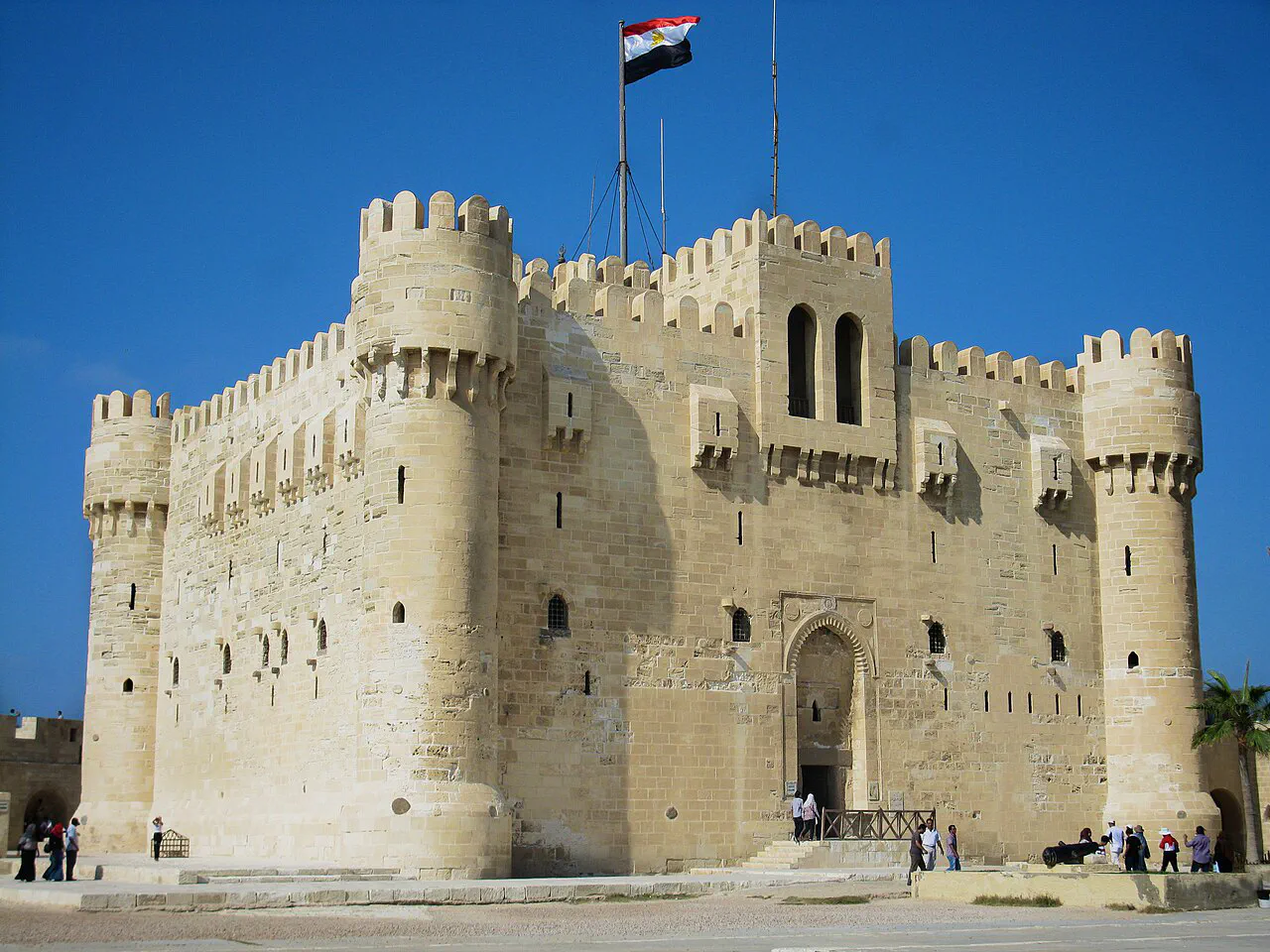
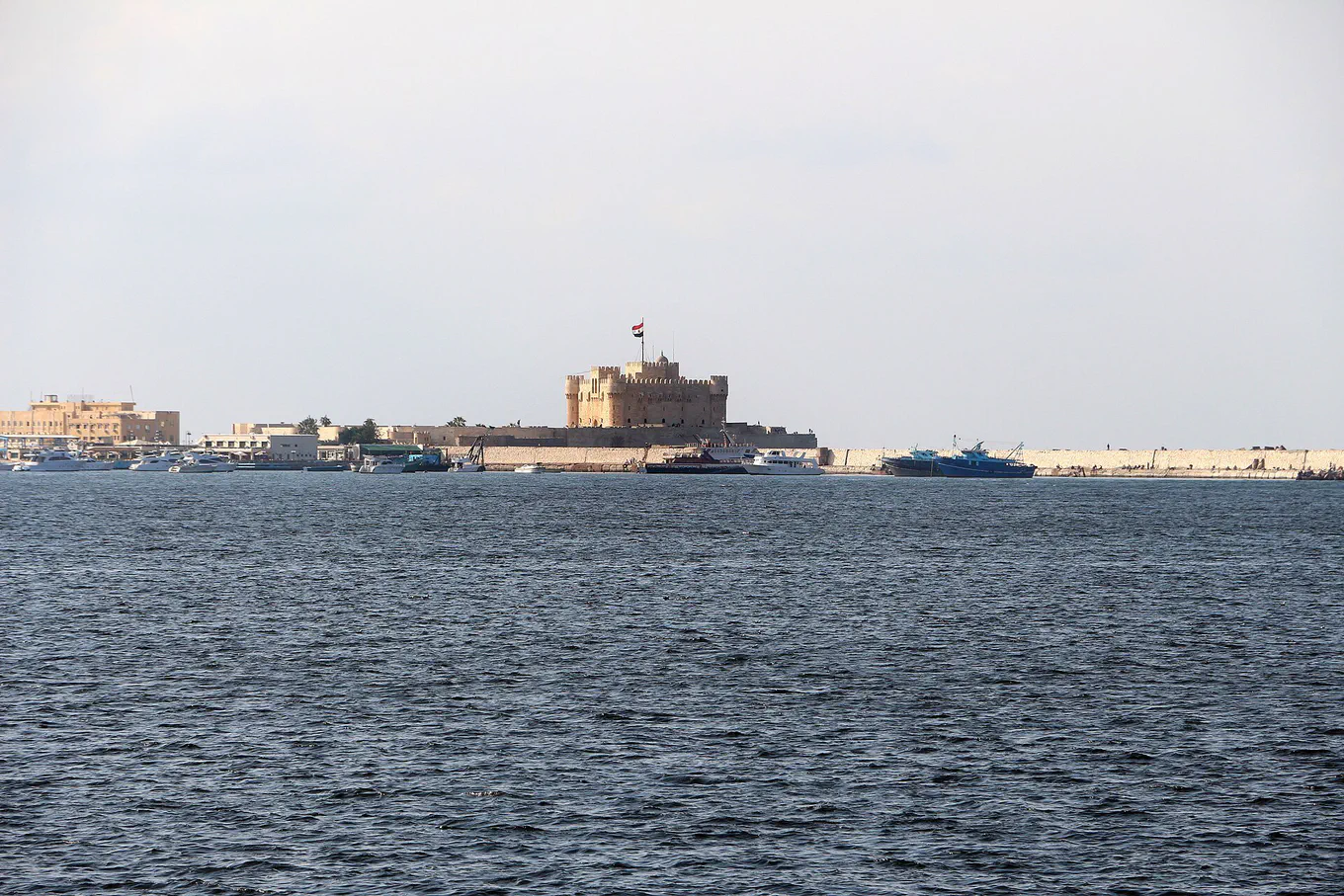
Stand here. The Citadel of Qaitbay, a fort built on the lighthouse’s site from its last stones, now a maritime museum. The lighthouse’s remains lie on the harbour floor.
The Lighthouse of Alexandria, one of the Seven Wonders of the Ancient World, was estimated at 100 metres or more. Ptolemy I declared himself king in 305 BC and commissioned it soon after. Pliny named Sostratus as its architect, though that is disputed. By Lucian’s account, Sostratus wrote his own name on the stone inside, with a dedication “for the sake of them that sail at sea”, covered it with plaster, and inscribed the king’s name over it. When the plaster fell away, the name left would be his.
3 Cleopatra’s last refusal in Alexandria, 30 BC
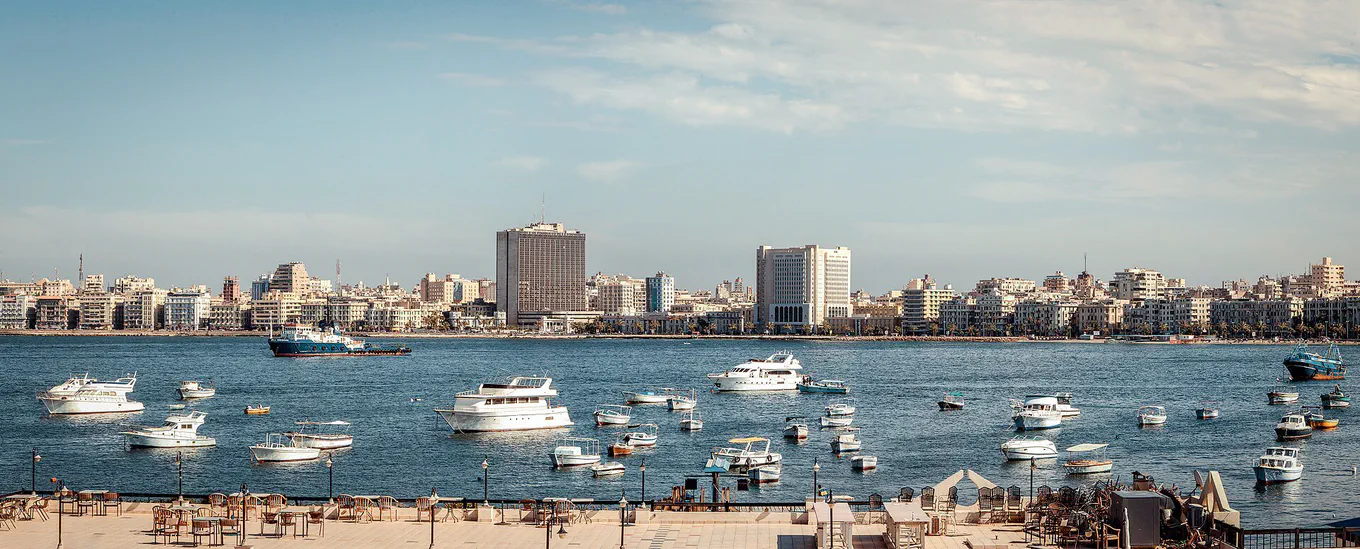
Stand here. The Eastern Harbour. Antirhodos, the palace island where Cleopatra stayed, probably sank in the fourth century and was found underwater in 1996.
Elizabeth Taylor played her in the 1963 film Cleopatra. The real Cleopatra VII died in Alexandria in August 30 BC. Octavian’s forces were in the city, she had withdrawn to her tomb, and her husband, Mark Antony, had stabbed himself and died. Then a spy told her Octavian meant to take her to Rome and parade her as a prisoner in his triumph. She took her own life at 39. Plutarch tells of an asp brought to her in a basket of figs, then admits nobody knew the true cause.
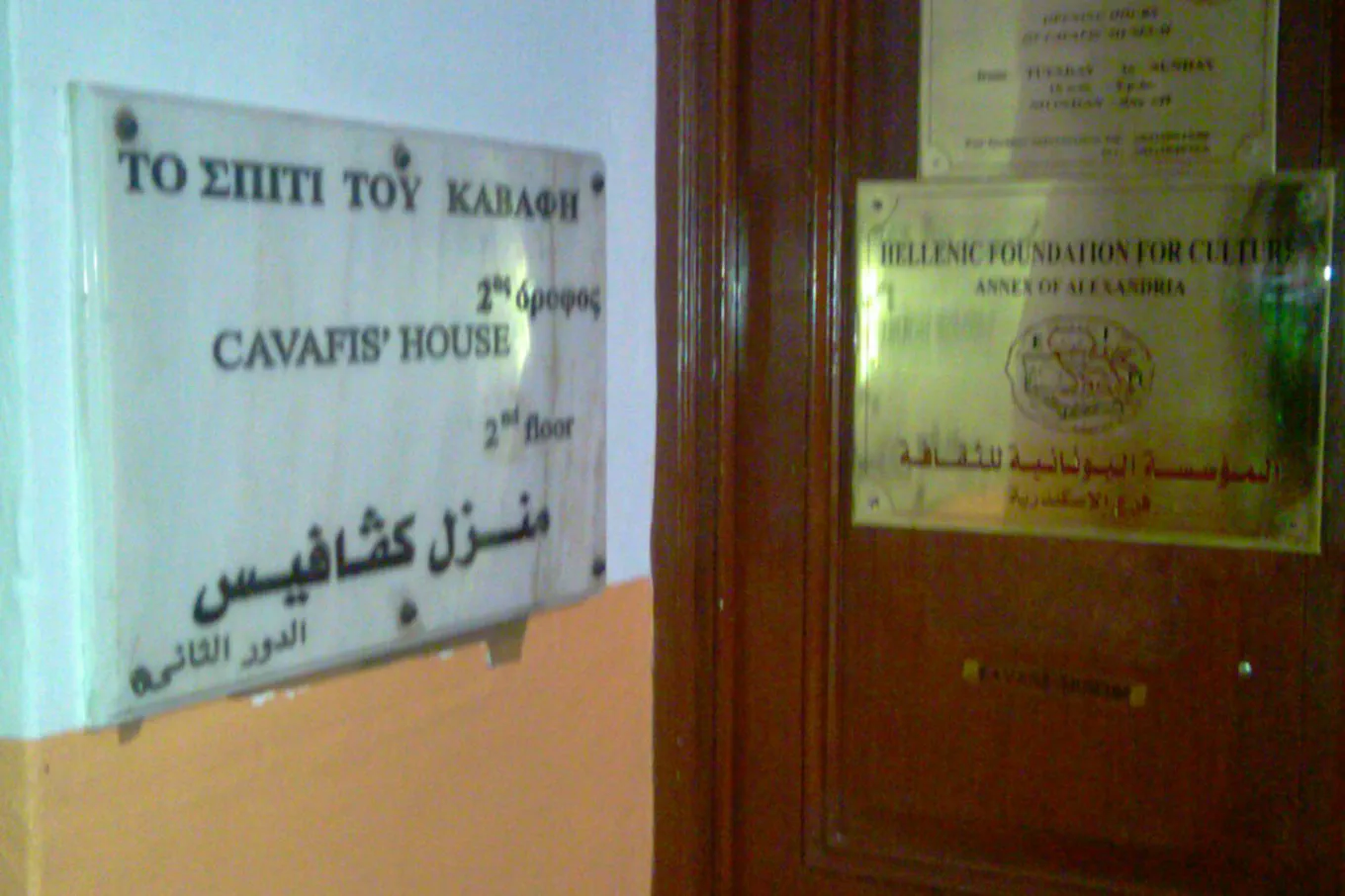
4 Cavafy’s flat above a brothel in Alexandria
Stand here. The Cavafy Museum, his flat on the street once called Lepsius, now Cavafy Street. It opened to the public in 1992.
E. M. Forster described Constantine Cavafy as “a Greek gentleman in a straw hat, standing absolutely motionless at a slight angle to the universe”. The poet refused to put his poems in a book. He lived here above a brothel, opposite a church, and near the Greek hospital, and is said to have remarked that the brothel served the flesh, the church forgave sins, and the hospital was where one dies. He died in that hospital on his 70th birthday, in 1933. His first book came out two years later.
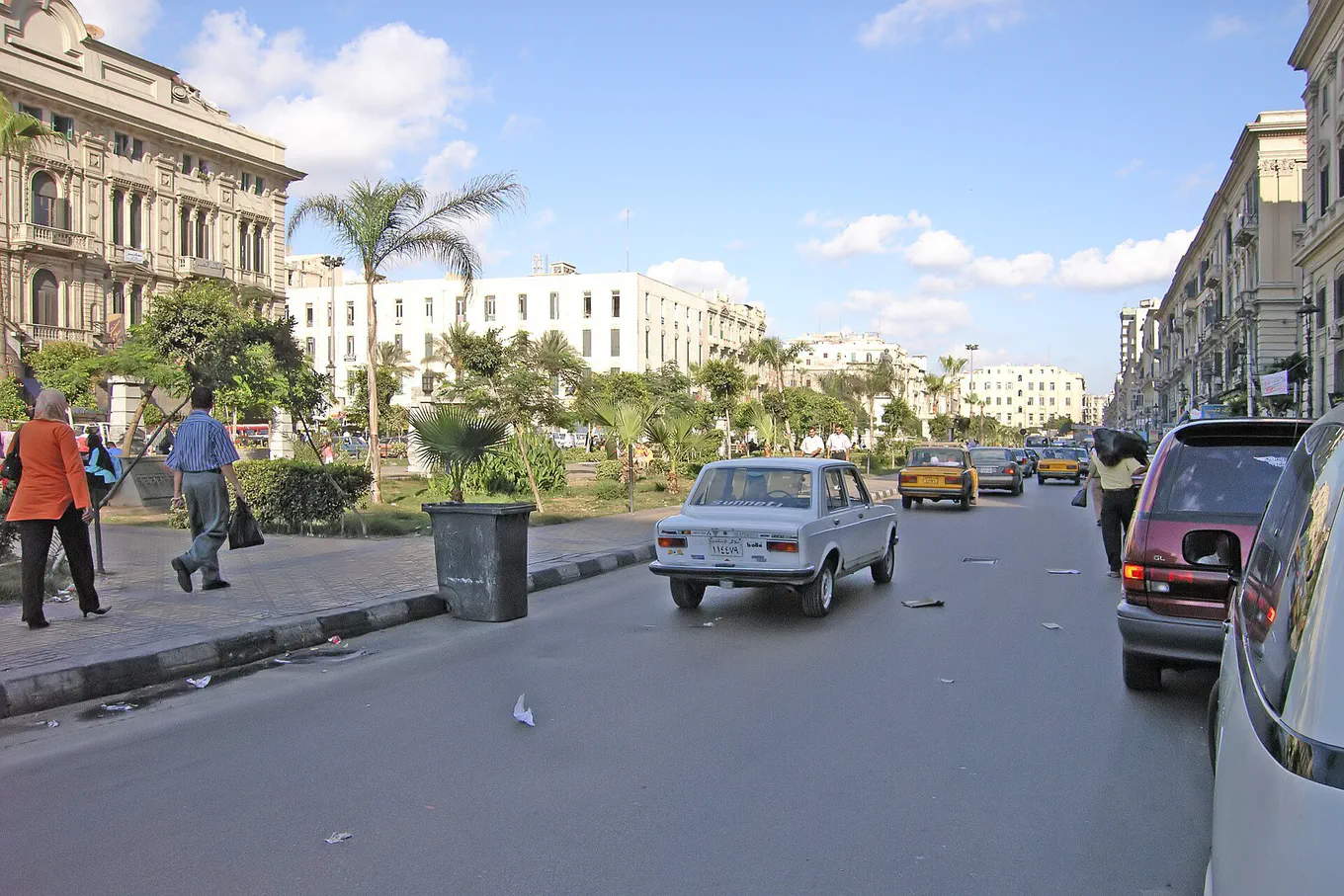
5 Eight shots at Nasser in Mansheya Square
Stand here. Mansheya Square, where Nasser addressed the crowd from a third-floor balcony.
Two years before he nationalised the Suez Canal, Gamal Abdel Nasser narrowly escaped death in this square. On 26 October 1954, Egypt’s prime minister was making a speech when a Muslim Brotherhood member fired eight shots from 25 feet. Every shot missed. The crowd panicked, but Nasser stood firm and called for calm. “Let them kill me… If Gamal Abdel Nasser should die, each of you shall be Gamal Abdel Nasser,” he told them. The crowd roared. The shots meant to kill him made him Egypt’s undisputed leader.
Pack nothing. Leave Friday.
Every Friday, I write a free letter, Journey, that takes us on a trip through places, stories, and ideas.
Justine(Lawrence Durrell, 1957). A novel, part of The Alexandria Quartet, set in the dusty, modern Alexandria of the 1930s.
Miramar(Naguib Mahfouz, 1967). A novel set in 1960s Alexandria at the Pension Miramar, a fictional boarding house.
Out of Egypt(André Aciman, 1996). A memoir of Alexandria in the years before the expulsions from Egypt in 1956.
Alexandria: A History and a Guide(E. M. Forster, 1922). A history and guide by the novelist, who served in Alexandria with the British Red Cross, searching for missing servicemen.
Films to watch before you visit Alexandria
Cleopatra(Joseph L. Mankiewicz, 1963). A film, with Elizabeth Taylor as Cleopatra and Richard Burton. Its Alexandria sets were built near Anzio, in Italy.
Alexandria… Why?(Youssef Chahine, 1979). A film in which the director portrays his own early life in his home city.
Questions
Can you still see the Lighthouse of Alexandria?
No. Three earthquakes between AD 956 and 1303 left it an abandoned ruin, and its last stones went into the Citadel of Qaitbay, built on the site and now a maritime museum. In 1994, French archaeologists led by Jean-Yves Empereur found the lighthouse’s remains on the floor of the Eastern Harbour.
Can you visit Cavafy’s home in Alexandria?
Yes. His flat, on the street called Lepsius in his day and now Cavafy Street, close to Fouad Street, opened to the public as a museum on 16 November 1992. After his death it became a cheap hostel, and it was later reconstructed with the help of photographs. It keeps his belongings and rare editions of his work.
What happened to the Library of Alexandria?
Probably not one fire. Julius Caesar burned it in 48 BC, but it is unclear how much was destroyed, and it seems to have survived or been rebuilt soon after. It then dwindled in the Roman period for lack of funding and support. The Bibliotheca Alexandrina, opened in 2002, commemorates it.