Cervantes tried to escape from Algiers four times in five years and failed every time. Later he wrote Don Quixote, about a man who refuses to accept reality. In Camino Real, a play I did as a teenager… the character of Quixote had one of my favourite (and hopeful) lines: “The violets in the mountains have broken the rocks!”
— Nick
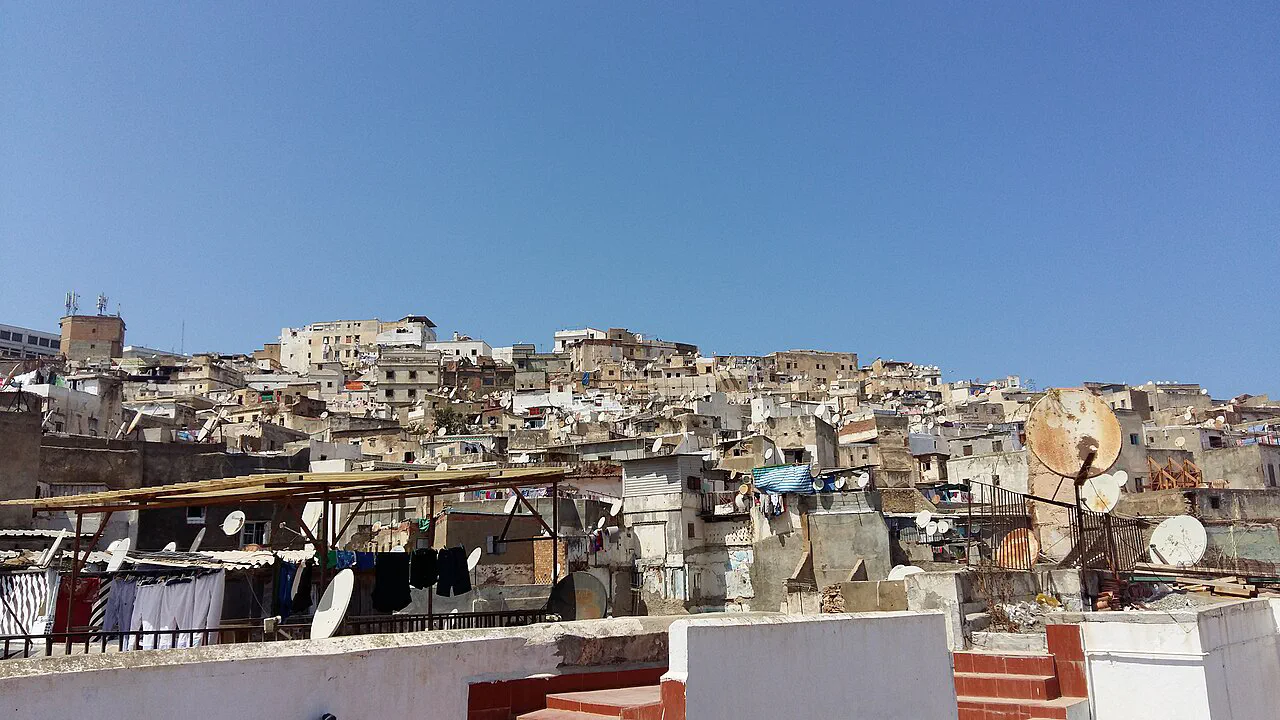
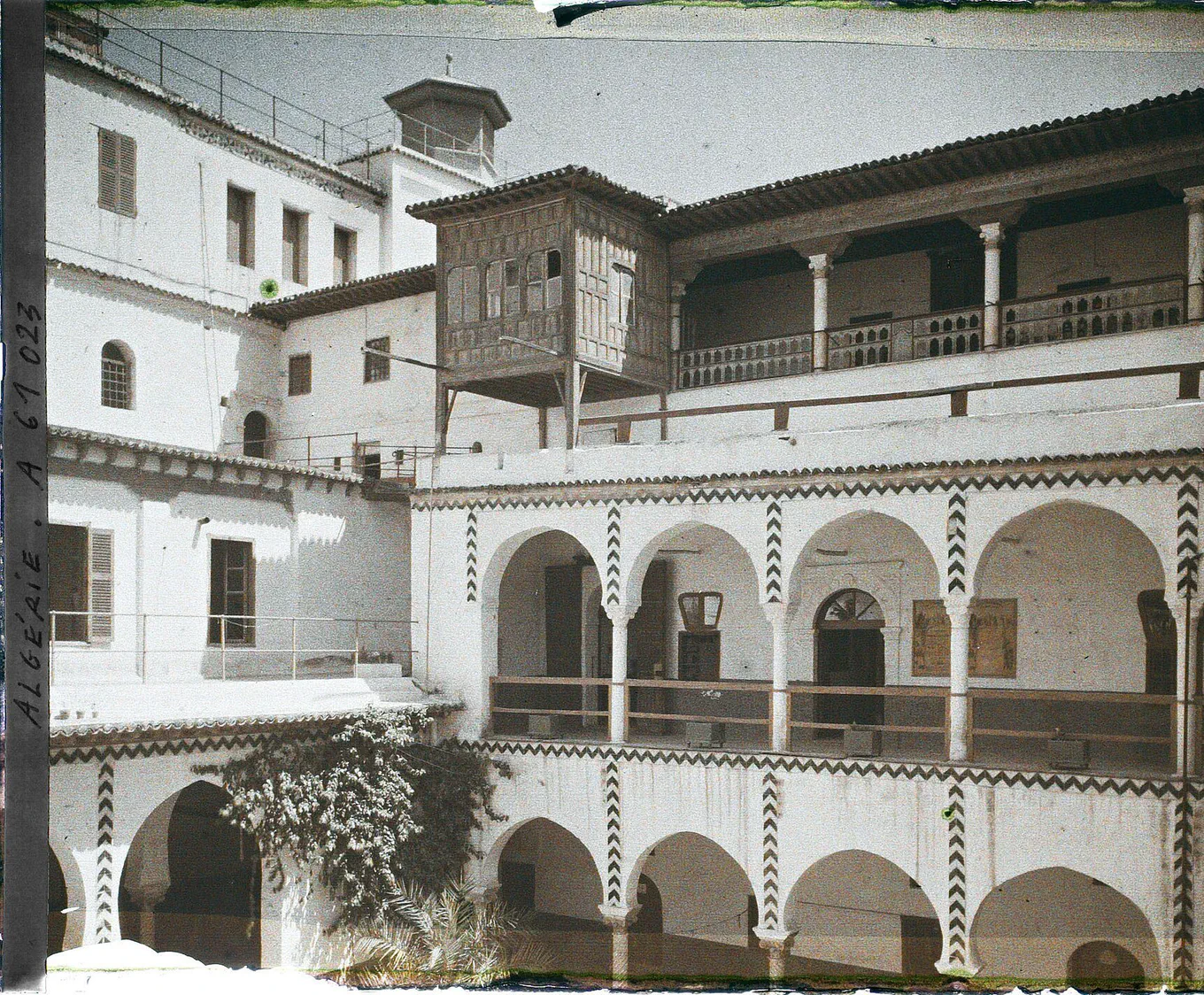
Algiers is the capital of Algeria, on the Mediterranean along the Bay of Algiers, known as “Algiers the White” for its whitewashed buildings. The present city was founded in 972. Its stories here are a captive writer in a garden cave, a ruler’s fly whisk, a poor boy and his teacher, a gangster who can’t leave the Casbah, and a rebel who helped film his own war.
Stand here. The Cervantes Cave, at the top of the Belouizdad district. It is now a memorial, with a fountain, a plaque, and a marble bust.
Miguel de Cervantes, best known for Don Quixote, was a captive in Algiers, held for a ransom his family couldn’t pay. In late September 1577, his brother Rodrigo, already ransomed, fitted out a boat to collect him from a beach. Cervantes and fourteen other captives hid in a secret cave in a garden. But the boat was spotted, a man nicknamed El Dorador betrayed them, and Cervantes was taken again. He tried four escapes in almost five years. In the end, a religious order bought his freedom.
Hussein Dey, the last ruler of Ottoman Algiers, wanted France to pay what it owed for wheat. On 29 April 1827, the French consul gave him no satisfactory answer, and the Dey struck him with his fly whisk. One version has him swatting a fly. Charles X used the insult to blockade the port for three years, then sent 34,000 soldiers. They took the city on 5 July 1830, and Hussein left for exile in Naples. Algeria won its independence 132 years later, to the day.
3 Albert Camus, the poor boy from Belcourt, and his teacher
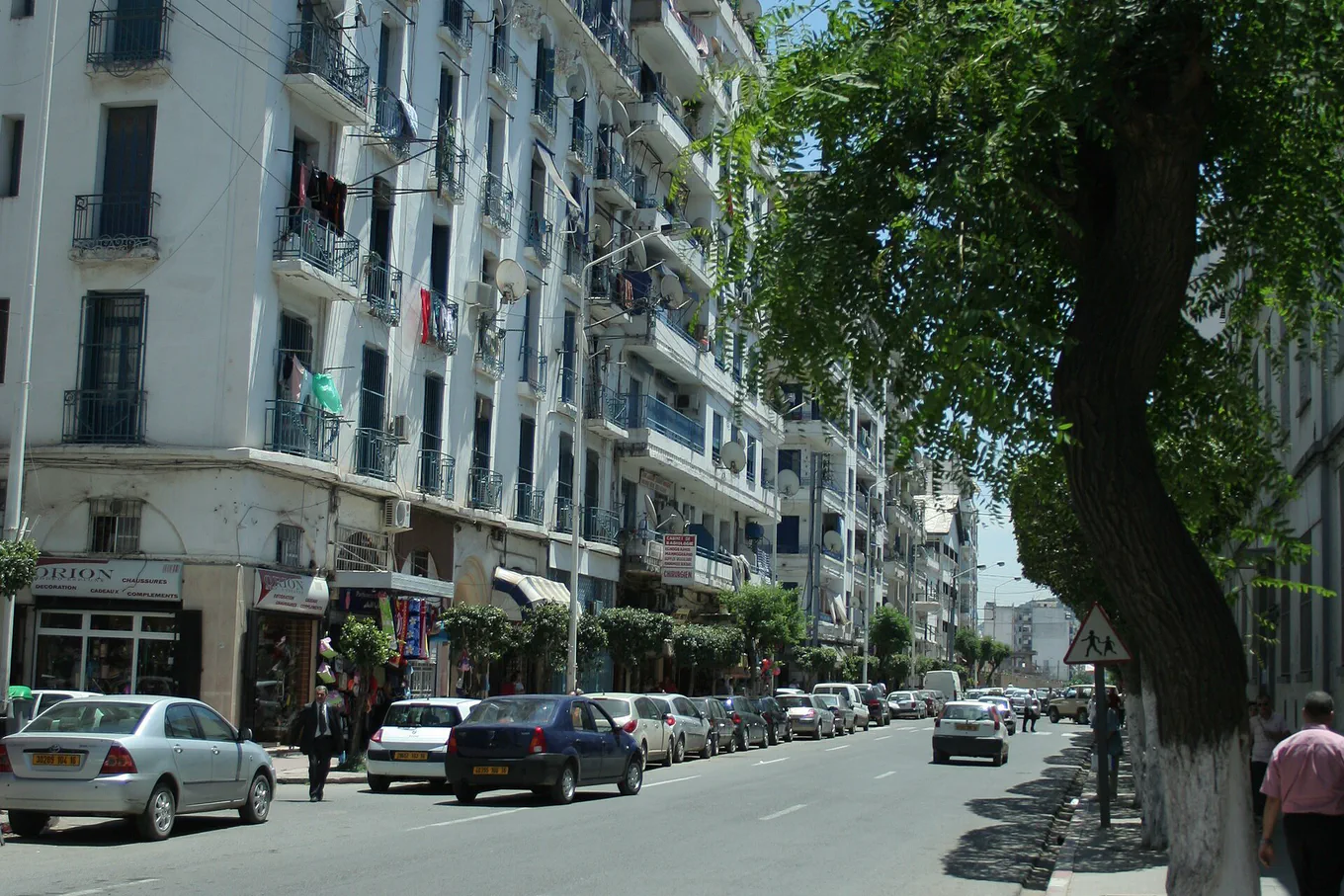
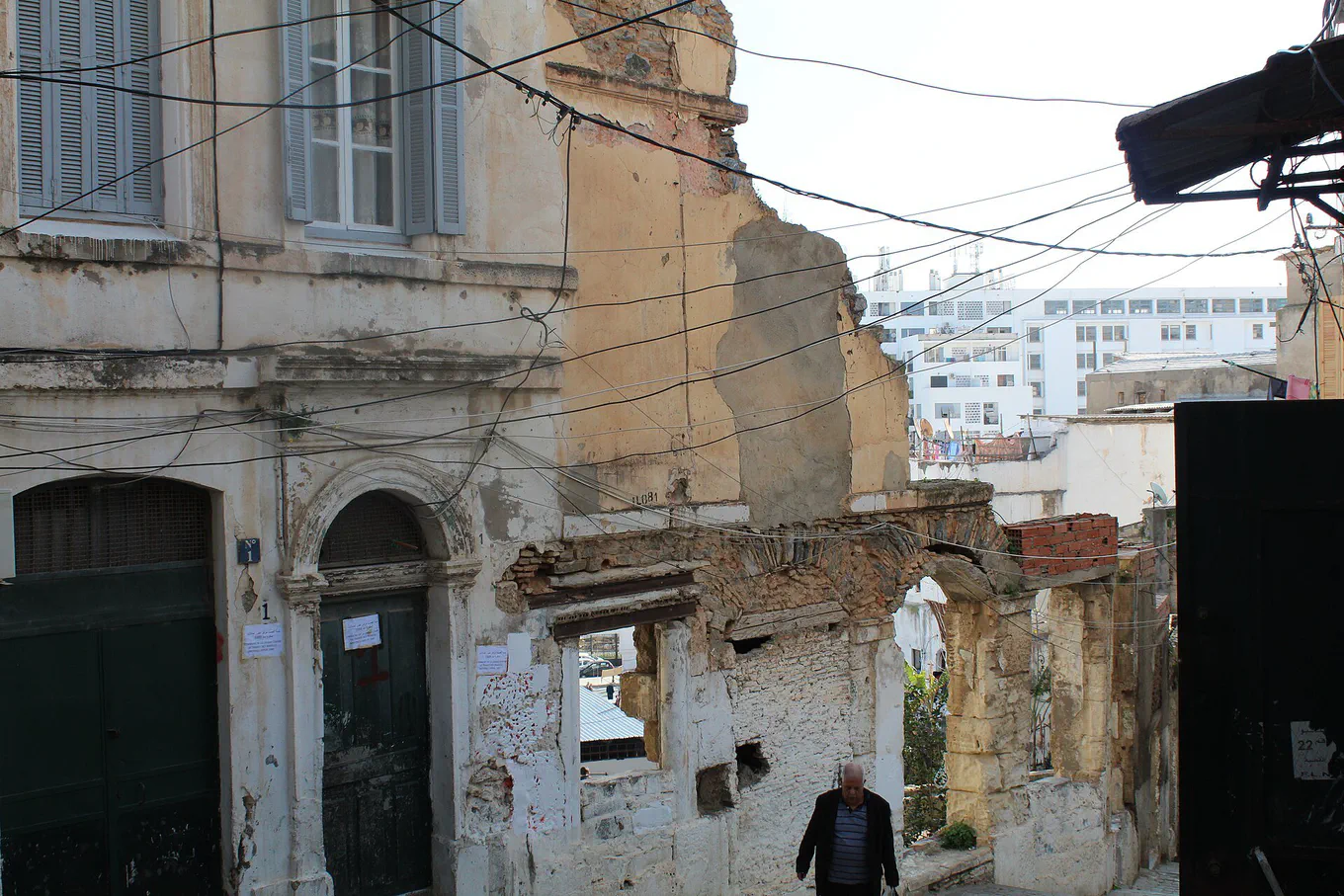
Stand here. Rue Mohamed-Belouizdad, once rue de Lyon, in the Belouizdad district, then called Belcourt. Camus’s family moved to number 93 in 1921.
Albert Camus set The Stranger in Algiers, the city where he grew up poor. He never knew his father, who was killed in the First World War. His mother was deaf and illiterate, and his grandmother wanted him in manual work, bringing in money. His teacher, Louis Germain, had other plans. He gave the boy free lessons for a scholarship, and Camus won it. In 1957, Camus received the Nobel Prize and wrote to Germain. “When I heard the news, my first thought, after my mother, was of you.”
4 Pépé le Moko, the Casbah, and a line nobody said
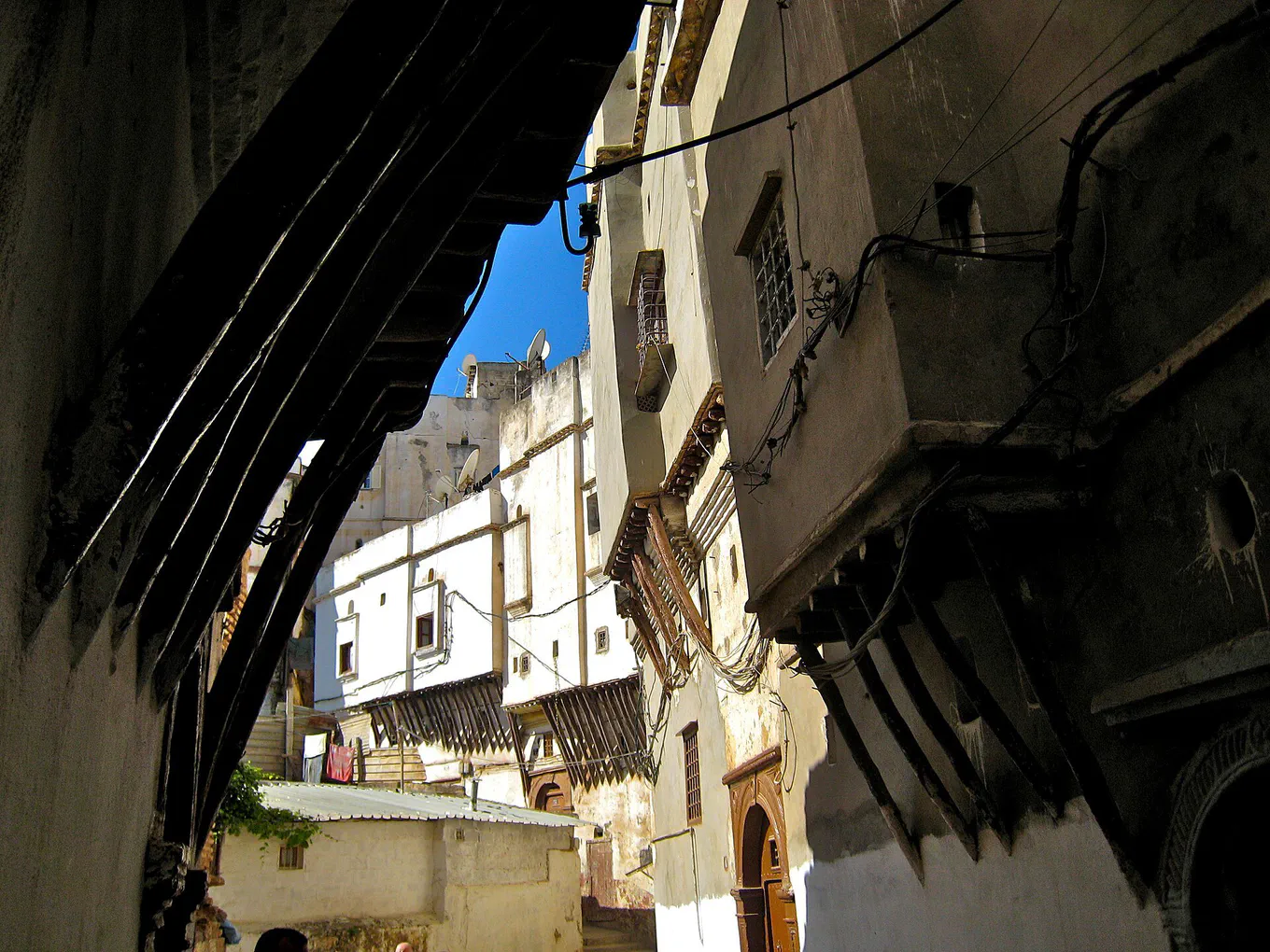
Stand here. The narrow streets of the Casbah, a UNESCO World Heritage Site since 1992. Most of the film was shot on a replica near Paris.
The film that inspired Casablanca was a Hollywood remake of Pépé le Moko (1937), in which Jean Gabin plays a thief safe from the police while he stays in the Casbah’s maze of streets. He falls for a Parisian visitor, follows her to the harbour, and is arrested. In the remake, Algiers, Charles Boyer took the part, and comedians made “Come with me to the Casbah” his catchphrase. He never says it in the film, and he hated it. A cartoon skunk, Pepé Le Pew, said it for him.
5 Saadi Yacef and The Battle of Algiers, filmed in the Casbah
Stand here. The Casbah, where the film was shot. Two in five of its buildings are failing or in ruins.
When The Battle of Algiers was filmed in the Casbah, most of the cast had lived through the fighting. One had helped lead it. Saadi Yacef was the rebels’ military chief in Algiers until French troops caught him. He was sentenced to death, and in prison, barely literate, he dictated a memoir. He was pardoned, and the film grew from it. Yacef helped produce it and played a commander modelled on himself. It won the Golden Lion at the Venice Film Festival. France didn’t release it until 1971.
Pack nothing. Leave Friday.
Every Friday, I write a free letter, Journey, that takes us on a trip through places, stories, and ideas.
The Stranger(Albert Camus, 1942). A novel. Weeks after his mother’s funeral, Meursault shoots an unnamed Arab man on a beach in Algiers.
The First Man(Albert Camus, 1994). An autobiographical novel, found in manuscript in the wreck of the car crash that killed him. It follows a boy to secondary school in Algiers.
Our Riches(Kaouther Adimi, 2020). A novel about Les Vraies Richesses bookshop, 2 bis, Rue Hamani, Algiers, which Edmond Charlot opened as a lending library in 1936. In 2017, twenty-year-old Ryad arrives with its key.
Films to watch before you visit Algiers
The Battle of Algiers(Gillo Pontecorvo, 1966). A film, shot in black and white in the Casbah, mostly with non-professional actors who had lived through the real battle.
Pépé le Moko(Julien Duvivier, 1937). A film. Jean Gabin as a gangster who believes he is safe from arrest in the Casbah, shot mostly on a replica near Paris.
Algiers(John Cromwell, 1938). A film. The Hollywood remake of Pépé le Moko, with Charles Boyer and Hedy Lamarr, its backgrounds and exteriors shot in Algiers.
Bab El-Oued City(Merzak Allouache, 1994). An Algerian drama film set in the Bab El-Oued district, where an imam’s prayer is boosted to full volume through loudspeakers.
Questions
Where is the Cervantes Cave in Algiers?
At the top of the Belouizdad district, once called Belcourt. The cave where Cervantes is believed to have hidden in 1577 is now a memorial, with an esplanade, a fountain, a plaque, and a marble bust. It was restored and reopened in 2006, and the district council and the Instituto Cervantes look after it.
Where was The Battle of Algiers filmed?
On location in the Casbah of Algiers, in black and white and in a newsreel style. Most of the cast were non-professional actors who had lived through the real battle. The only professional actor was Jean Martin, who played Colonel Mathieu.
Why is Algiers called “Algiers the White”?
For its whitewashed buildings. In French it is Alger la Blanche. The present city was founded in 972 on the ruins of Icosium, a Punic city, and it has been Algeria’s capital since independence on 5 July 1962.