Eisenstein shot most of Ivan the Terrible at night in wartime Alma-Ata because electricity was scarce during the day. My mum had no electricity at all until she was twelve, because the landlord wouldn’t pay to put it in.
Power on tap is a much newer luxury than it feels.
— Nick
Almaty sits in the foothills of the Trans-Ili Alatau mountains in southern Kazakhstan, near the border with Kyrgyzstan. It was founded in 1854 and was Kazakhstan’s capital from 1929 until 1997. Its stories are Trotsky in exile, a wooden cathedral that outlasted an earthquake, a film Stalin called a “nightmare”, a golden warrior who may have been a woman, and a last stand that never happened.
Leon Trotsky built the Red Army, lost the struggle for power to Stalin, and in 1928 was exiled to Alma-Ata, almost 4,000 kilometres from Moscow. When he refused to go, his wife Natalia Sedova wrote, agents carried him from the flat in their arms. Between April and October 1928, his son Lyova noted, about 800 political letters went out from Alma-Ata. Then the secret police told him he would be deported from the USSR. In 1940, in Mexico City, a Soviet agent attacked him with an ice axe.
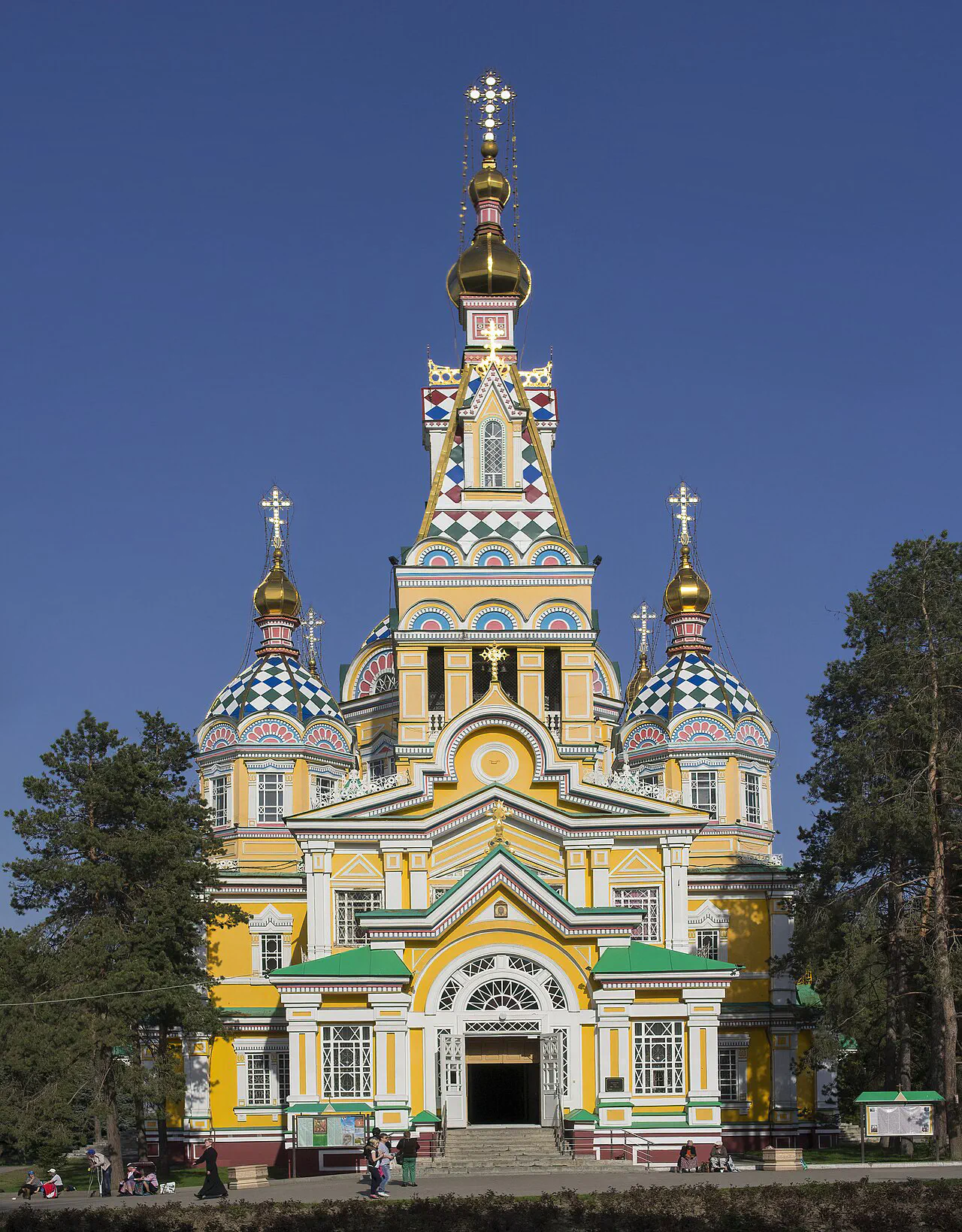
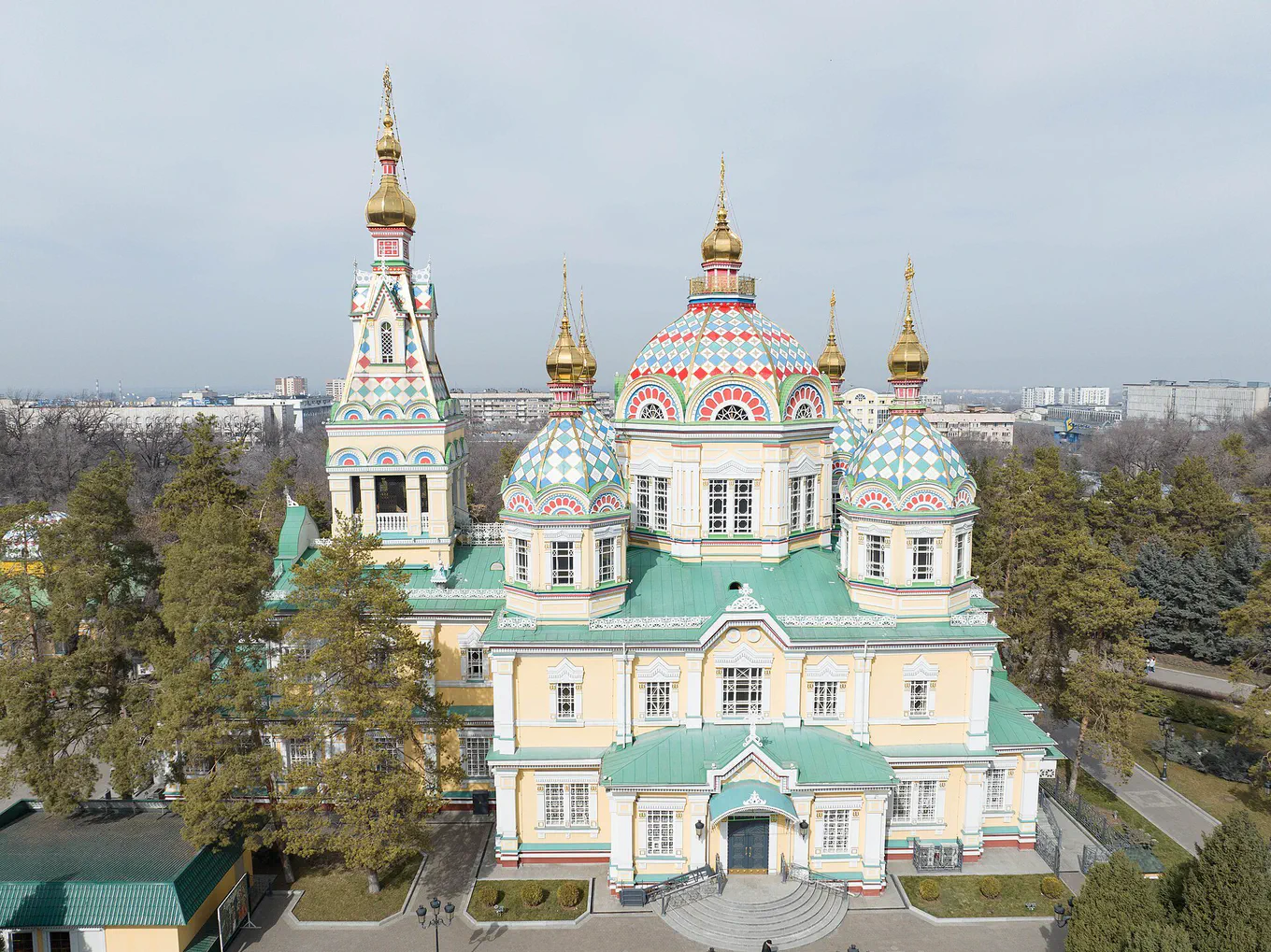
When an earthquake hit Verny, as Almaty was then called, in 1887, only one of its 1,799 brick buildings was left standing. The wooden ones stayed intact. Andrei Zenkov, who ran the regional government’s building projects, is credited with the town’s new cathedral, 56 metres tall, made entirely of wood and said to have been built without nails. In 1911, another earthquake almost completely destroyed the city, bringing down more than 770 brick buildings. Zenkov’s cathedral came through with minimal damage. Some bishops called it divine intervention.
3 Eisenstein films Ivan the Terrible in wartime Alma-Ata
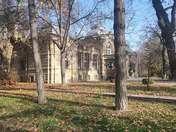
Stand here. The Zhambyl Kazakh State Philharmonic, at Tole Bi and Kaldayakov streets. Built as a Palace of Culture, it housed the wartime film studio.
The director of Battleship Potemkin, Sergei Eisenstein, was commissioned in 1941 to make Ivan the Terrible on Stalin’s behalf. Then Germany invaded, the Moscow studio Mosfilm was evacuated to Alma-Ata, and Eisenstein followed it. He shot most of the film there, at night, because electricity was short by day. Part I won a Stalin Prize. But Eisenstein insisted on showing Part II to Stalin, who called it a “nightmare”, and it was banned. Eisenstein had been dead ten years when the Soviet Union finally saw it, in 1958.
Stand here. The Independence Monument on Republic Square, where a Golden Man stands with a winged leopard atop a 28-metre column.
In 1969, the archaeologist Kemal Akishev led the dig at a burial mound of the Saka, a Scythian people, 50 kilometres east of Almaty. Its central grave had been robbed. But a side grave was undisturbed, and the mound gave up a skeleton with a warrior’s equipment and some 4,000 gold ornaments. The warrior, known as the Golden Man, became a symbol of modern Kazakhstan, and a likeness crowns the monument on the city’s central square. Yet the skeleton’s sex is uncertain. The Golden Man may have been a woman.
5 Panfilov’s 28 Guardsmen and the legend in the park
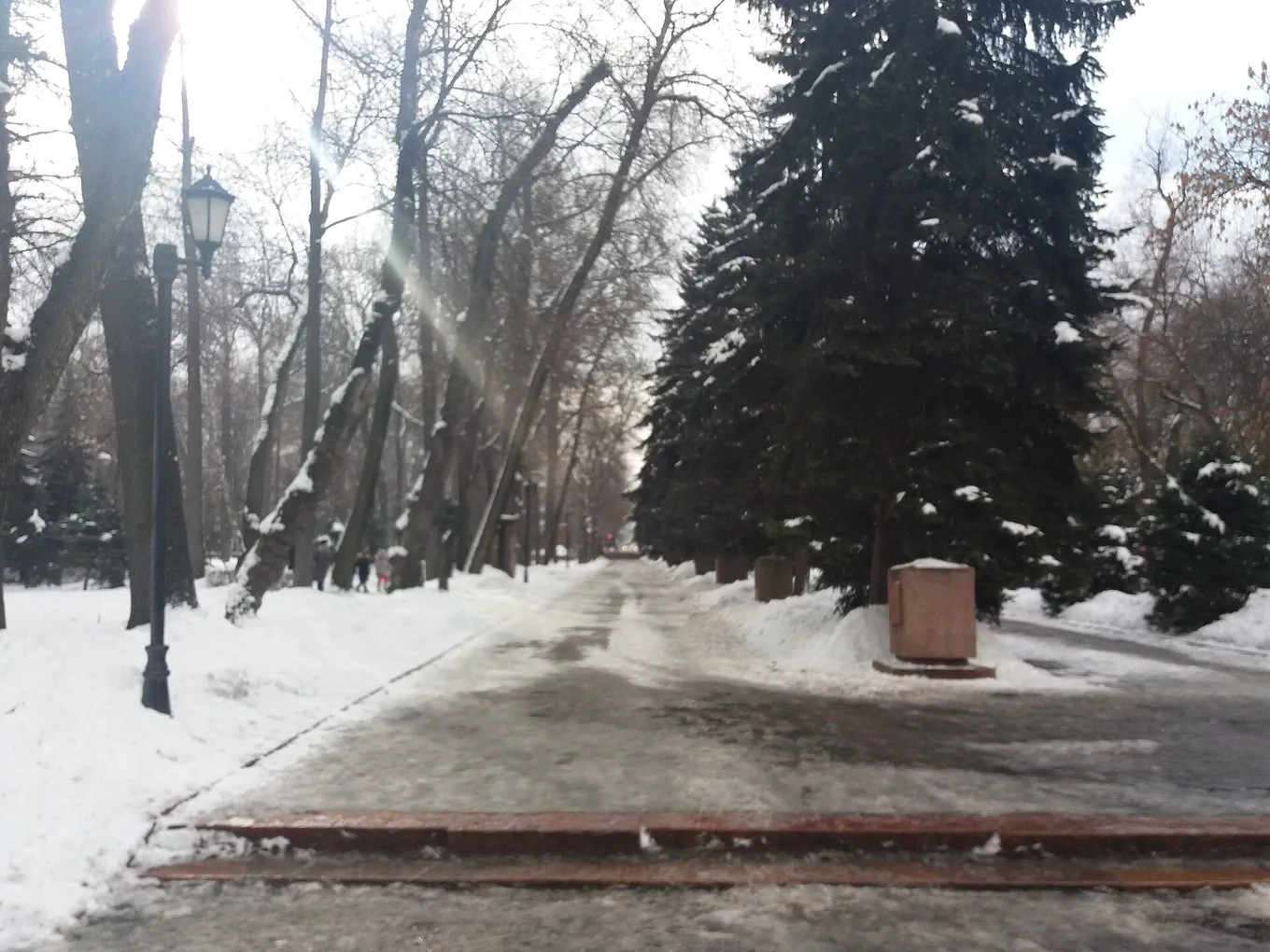
Stand here. Panfilov Park’s central alley, where granite pedestals carry the 28 names. The Memorial of Glory and its eternal flame date from 1975.
Twenty-eight men of General Panfilov’s division, formed in Alma-Ata, gave this park its name. To spur the army on, the Soviet press said they had destroyed 18 German tanks and all died, and a Red Army journalist, Aleksander Krivitsky, gave their commissar the last words “Russia is a vast land, yet there is nowhere to retreat — Moscow is behind us!” But in 1948, a military investigation found that the last stand “did not occur”. Krivitsky admitted inventing most of it, those last words included. Six of the 28 had survived.
Pack nothing. Leave Friday.
Every Friday, I write a free letter, Journey, that takes us on a trip through places, stories, and ideas.
My Life(Leon Trotsky, 1930). A memoir. Its chapter on the exile quotes his wife Natalia Sedova’s account of reaching a hotel on Gogol Street in the dark.
The Keeper of Antiquities(Yury Dombrovsky, 1964). A novel set in Almaty, where Dombrovsky lived in exile and made his living as a teacher.
The Faculty of Useless Knowledge(Yury Dombrovsky, 1978). A novel set in Almaty in the summer of 1937, whose hero is a historian at the city’s ethnographic museum.
Films to watch before you visit Almaty
The Needle(Rashid Nugmanov, 1988). A film. The rock singer Viktor Tsoi plays a drifter in Alma-Ata, and Tulebaev Street, where its final scene was shot, has become a memorial to him.
Ivan the Terrible, Part I(Sergei Eisenstein, 1945). A film, shot here rather than set here. Eisenstein made most of it in wartime Alma-Ata, filming at night.
Racketeer(Akan Satayev, 2007). A film set in Almaty in the tough economic years of the 1990s.
Questions
Is Almaty the capital of Kazakhstan?
No. Almaty was the capital through the Soviet era from 1929, and after independence until 1997, when the capital moved to Akmola, now Astana. It is still Kazakhstan’s most populous city, with more than two million people.
Was the Zenkov Cathedral in Almaty really built without nails?
That is the usual claim. The Ascension Cathedral in Panfilov Park, finished in 1907, is 56 metres tall and made of wood, and it is said to have been built without nails. Nails or not, it came through the 1911 earthquake with minimal damage.
What does the name Almaty mean?
It is often said to come from alma, the Kazakh word for apple, and to mean “full of apples”, though that theory is disputed. The older form, Alma-Ata, translates as “father of the apples”, and the name has roots in a medieval settlement called Almatau. The wild apple of the mountains above the city, Malus sieversii, is the ancestor of the cultivated apple.