Some of the oldest large statues of people ever found turned up in Amman because a bulldozer was cutting a road. They’re 9,000 years old, with wide-open eyes, and archaeologists think they may have been made to be buried. Made to be hidden, found by accident. I love that! We did something similar during renovations of our 1600s cottage. Built into one of the restored walls is a photo of us and a message to the future. I’m hoping it will be hundreds of years before anyone finds it.
— Nick
Amman is the capital and largest city of Jordan, first built on seven hills of the East Bank Plateau. As Rabbath Ammon, it was the Ammonite capital, and in 1921 Emir Abdullah made it the capital of his new state. Its stories here are a soldier King David sent to die, statues found by a bulldozer, an emir who stopped marching, and a king who took a call from space.
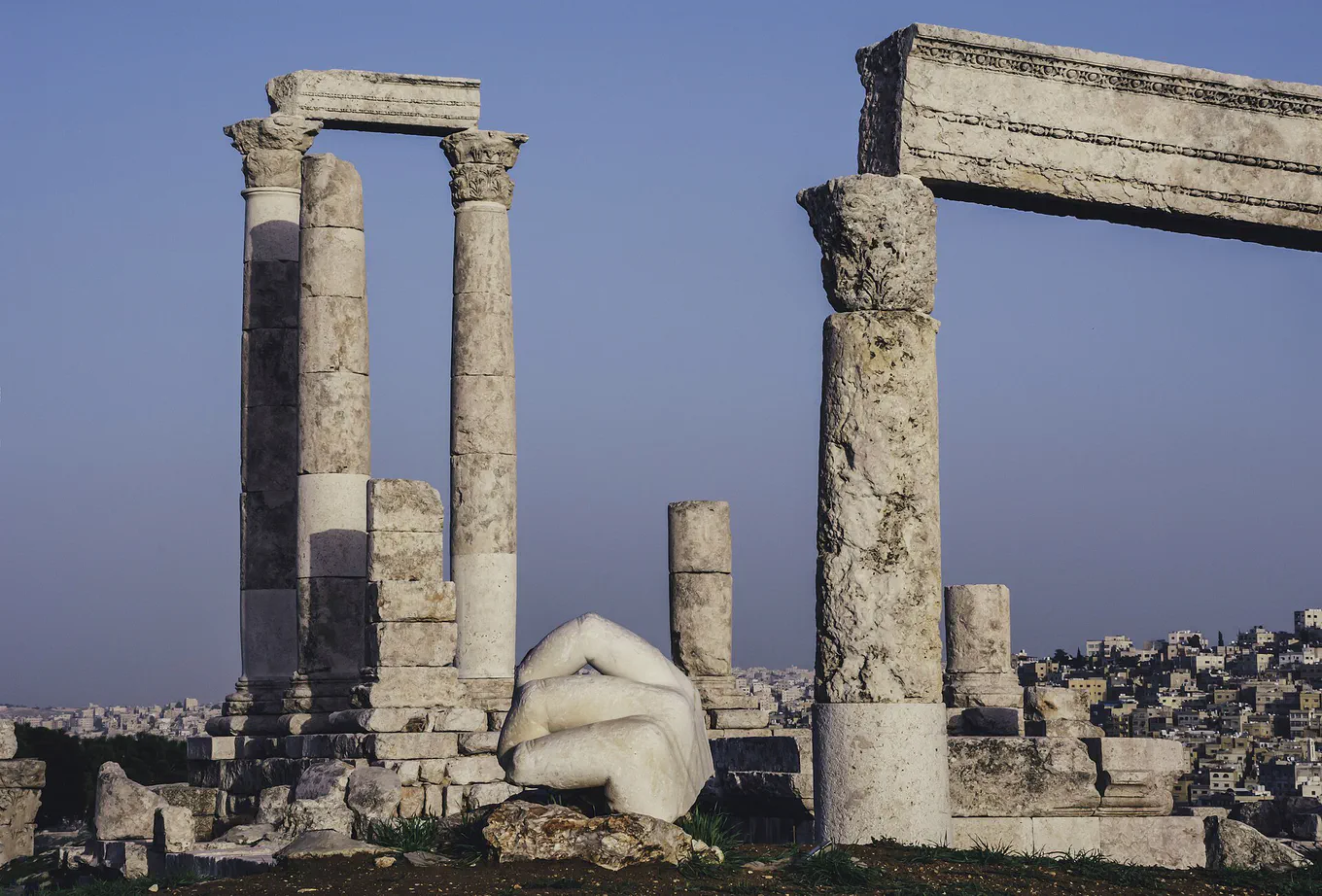
Stand here. Amman Citadel, on Jabal al-Qal’a (Citadel Hill), the city’s highest point. It was home to the Ammonite kingdom, and Ammonite ruins survive there.
In the Bible’s story of David and Bathsheba, her husband died at Rabbah, the Ammonite capital that grew into Amman. While David’s army besieged the city, the king saw Bathsheba bathing and wanted her. She was married to Uriah the Hittite, one of his elite soldiers. Uriah refused to go home to his wife. So David sent him back carrying a letter for Joab, his commander. It said to put Uriah where the fighting was fiercest. Joab did, and Uriah died.
2 The ’Ain Ghazal statues a bulldozer uncovered in Amman
Stand here. The Jordan Museum, in the Ras al-Ein district, opened in 2014. Its two main permanent exhibitions are the ’Ain Ghazal statues and the Dead Sea Scrolls.
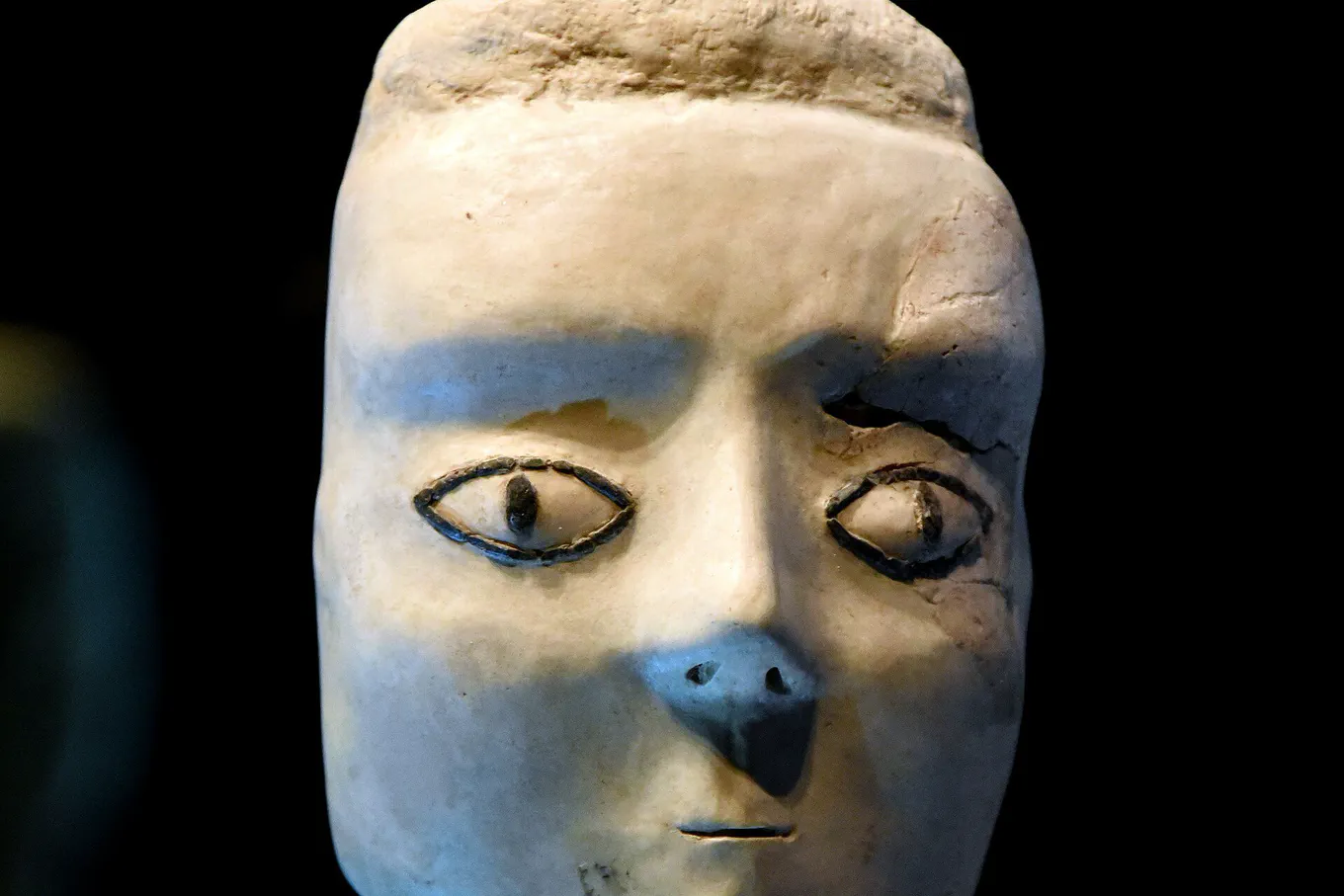
Some of the earliest large statues of the human form were found where a bulldozer had cut a path. Developers building a highway from Amman to Zarqa had come upon the site of ’Ain Ghazal. In 1983, archaeologists examining the cut saw the edge of a pit, 2.5 metres down, holding plaster statues. Made from lime plaster and reed 9,000 years ago, the tallest stand nearly a metre high, with wide-open eyes and irises outlined in bitumen. Archaeologists think they may have been made to be buried.
3 Emir Abdullah, Churchill’s offer, and the stop in Amman
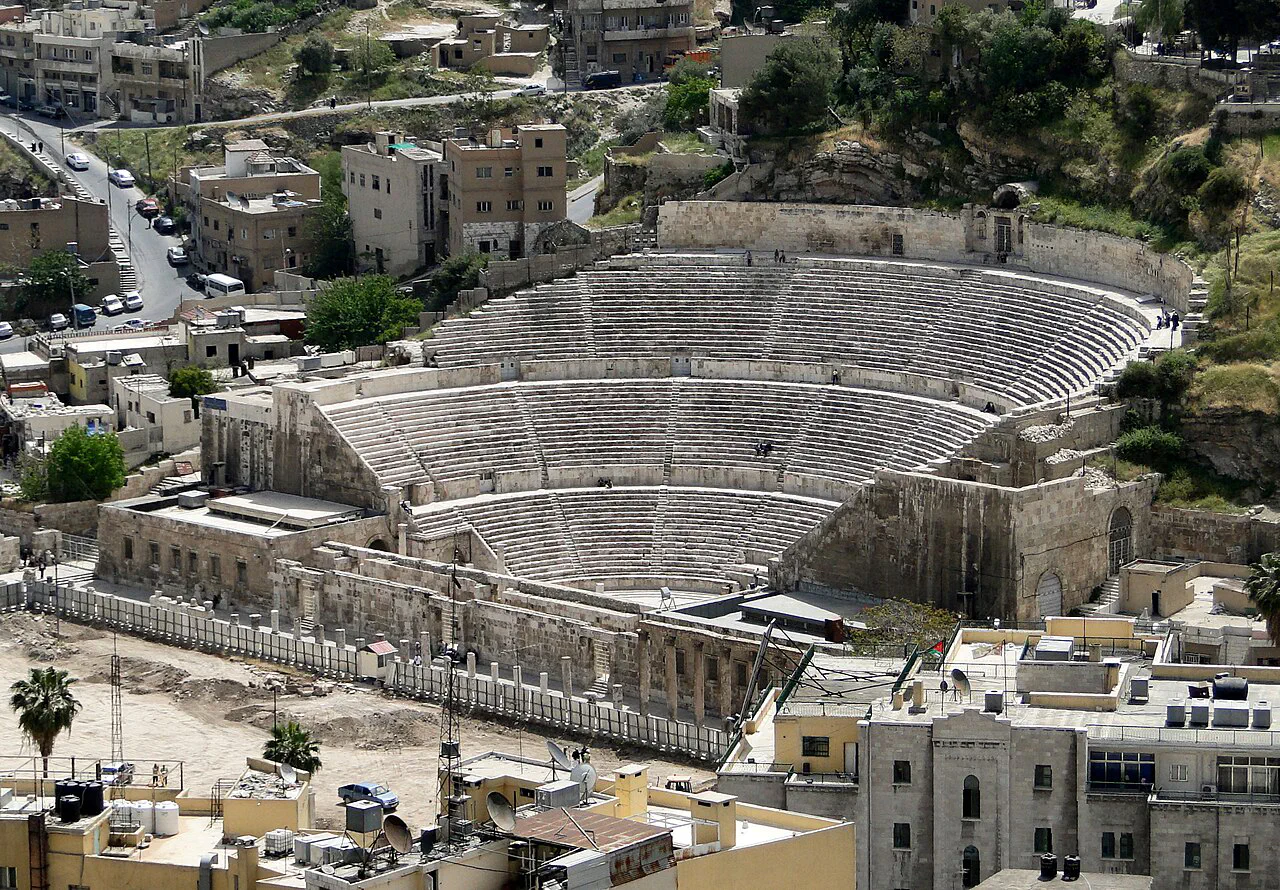
Stand here. The Roman Theatre in downtown Amman, built in the 2nd century to seat about 6,000. Abdullah first lived in a modest house nearby.
Abdullah, whose brother Faisal had lost his kingdom in Syria, led his forces into Transjordan, meaning to fight the French and win it back. In March 1921, he got as far as Amman. Churchill, the new Colonial Secretary, offered him Transjordan instead, as an Arab province with a British subsidy. Abdullah halted his advance and stayed, living at first in a modest house near the Roman Theatre.
4 King Hussein, call sign JY1, and the call from space
Stand here. Raghadan Palace, a royal palace in Amman built between 1924 and 1927, where Hussein was born in 1935 and his funeral was held.
King Hussein came to Jordan’s throne at 16, but on the radio he wanted to be one more amateur. He was an enthusiastic ham radio operator, call sign JY1, and insisted that other operators leave off his title. On 28 November 1983, the astronaut Owen Garriott, aboard the Space Shuttle, became the first radio amateur on the air from space. With a handheld set he made some 300 calls. He talked to his mother, a US senator, and JY1, the king without a title.
Pack nothing. Leave Friday.
Every Friday, I write a free letter, Journey, that takes us on a trip through places, stories, and ideas.
Story of a City: A Childhood in Amman(Abdul Rahman Munif, 1994). A memoir set in Amman, where Abdul Rahman Munif was born in 1933, describing his upbringing there.
The Confusion of Languages(Siobhan Fallon, 2017). A novel set in Amman. Cassie Hugo and Margaret Brickshaw follow their soldier husbands to the US embassy; Cassie can stay in Abdoun, where the embassies are.
The Bride of Amman(Fadi Zaghmout, 2015). A novel set in Amman. Through Salma, her sister Leila, and her friends, it looks at how views that make marriage central to women’s lives suffocate ambition and freedom.
Films to watch before you visit Amman
Captain Abu Raed(Amin Matalqa, 2007). A film. Abu Raed, a janitor at Queen Alia International Airport, is mistaken for a pilot by neighbourhood children. Many scenes are set on the Roman ruins on Jabal al-Qal’a.
The Alleys(Bassel Ghandour, 2021). A crime thriller. A small-time hustler’s secret relationship sets off blackmail, gossip, and violence in East Amman. It was filmed in Jabal Al Natheef, a densely built neighbourhood.
Jinn(Mir-Jean Bou Chaaya, Elan Dassani and Rajeev Dassani, 2019). A TV series. Teenagers at a private school in Amman go on a field trip to Petra and must stop Jinn from destroying the world.
Questions
What is left of the colossal statue on Amman Citadel?
Three fingers and an elbow, from a Roman statue estimated at around 13 metres tall. It was found near the Temple of Hercules, which was built on the Citadel while Geminius Marcianus governed the Roman province of Arabia, between AD 161 and 166.
What was Amman called in ancient times?
Rabbath Ammon, the Ammonite capital, which the Bible calls Rabbah. Ptolemy II later renamed it Philadelphia, and it still had that name in the 2nd century AD, when the Romans built its theatre, which seats about 6,000 and faces north to keep the sun out of spectators’ eyes.
Was The Hurt Locker filmed in Iraq?
No. Kathryn Bigelow wanted to film in Iraq, but the production’s security team could not guarantee the crew’s safety. The screenwriter Mark Boal’s CIA contacts suggested Jordan, because Amman strongly resembled Baghdad. Shooting began in July 2007, in Amman and other cities including Madaba, with Iraqi refugees as extras.