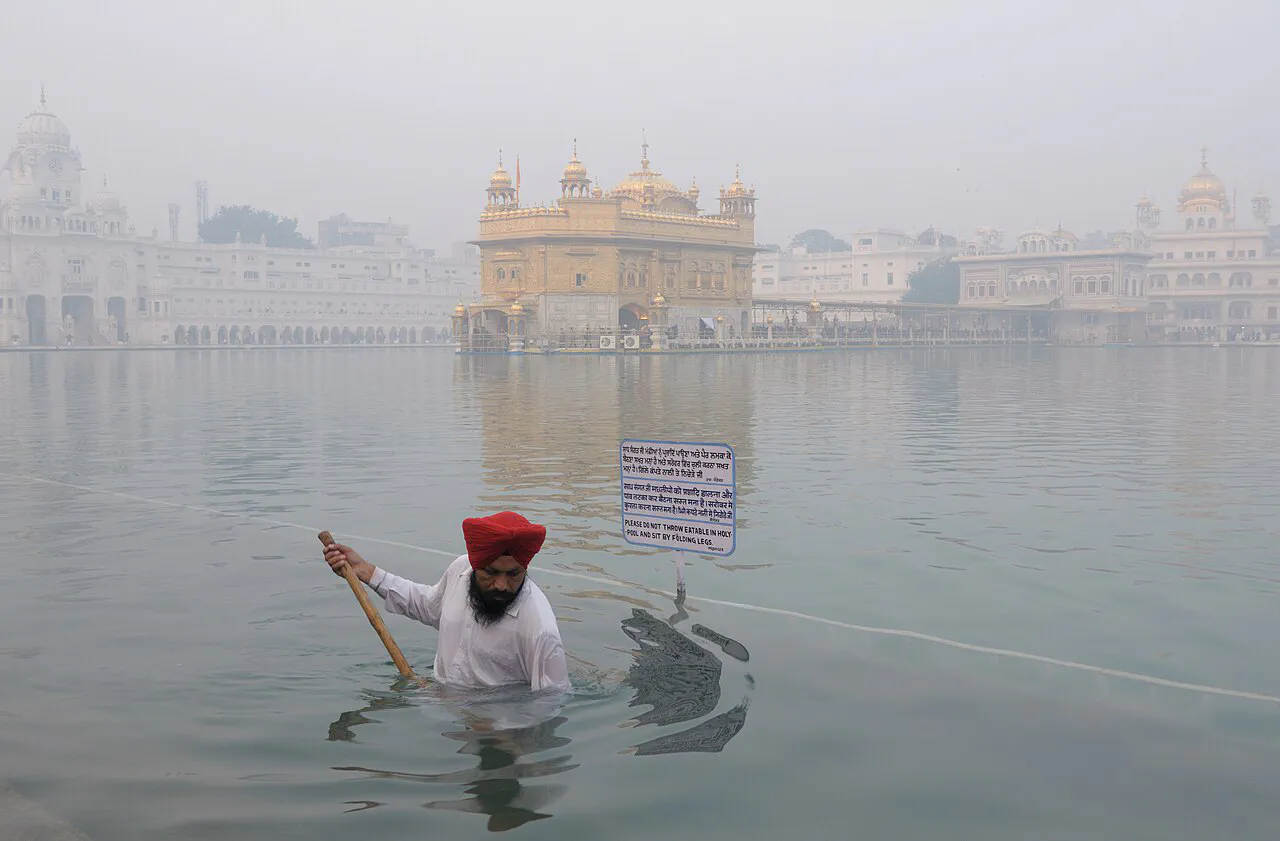
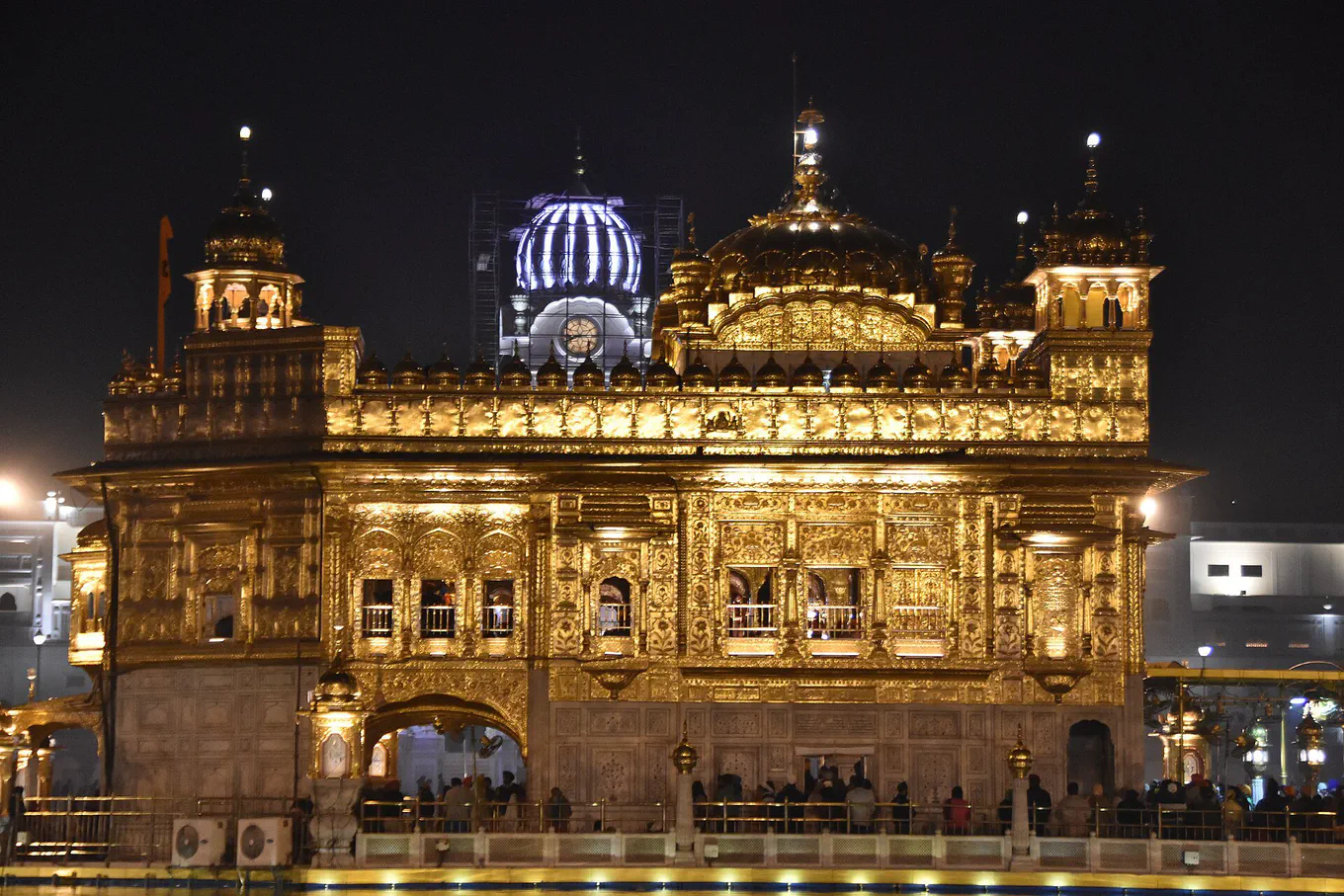
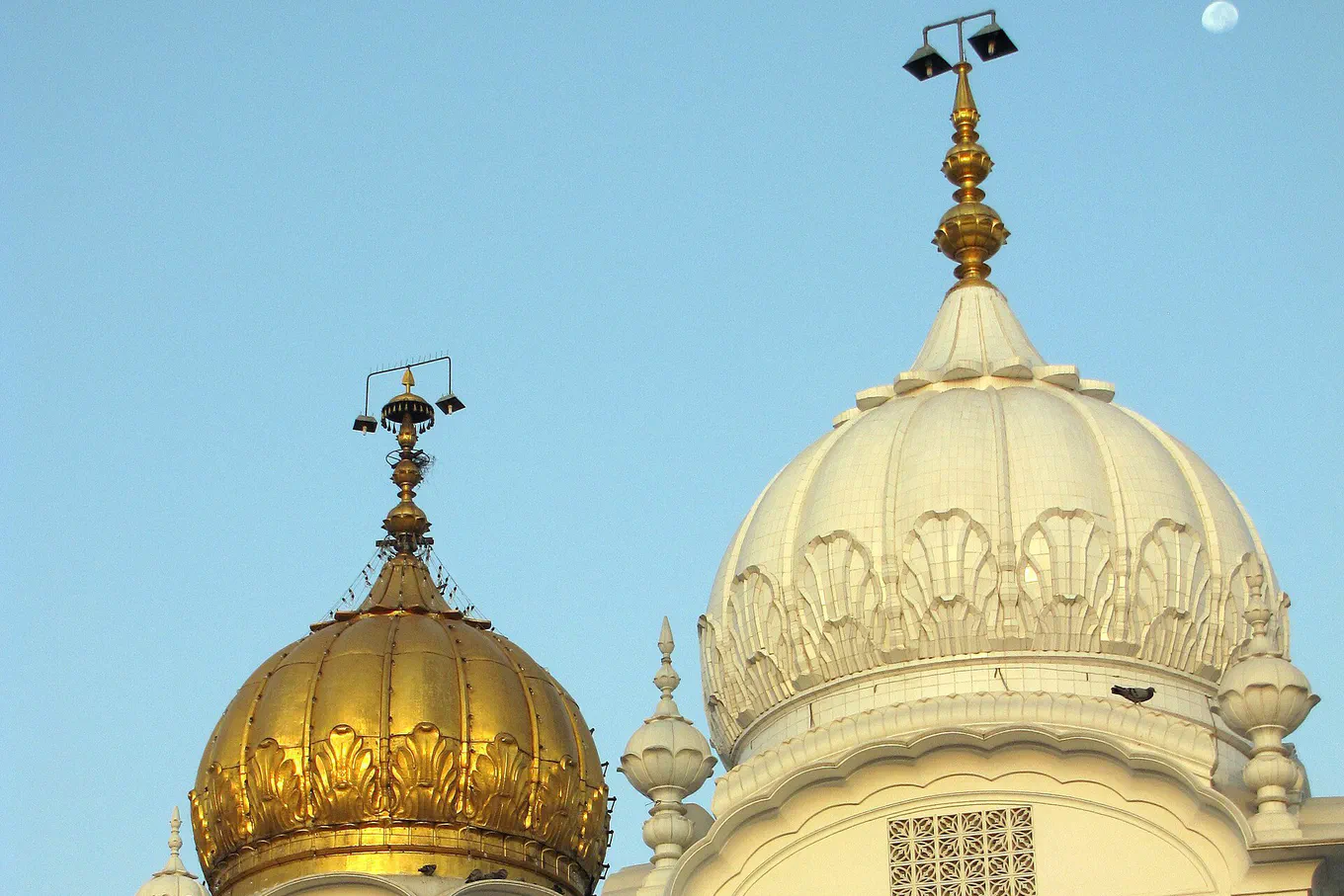
The Golden Temple has four entrances, one on each side, open to people of every faith. I love that symbolism. These days, religion is more often talked about for its lack of tolerance, but in my experience — I was raised a Methodist — the vast majority of people of faith are tolerant by nature.
— Nick
Amritsar is a city in the Indian state of Punjab, 28 km from the border with Pakistan. Sikh tradition credits Guru Ram Das, the fourth Sikh guru, with founding it in 1574, and it is home to the Golden Temple, an open house of worship for people of all faiths. Its stories are a temple built low, an old man’s vow, and a wait of almost 21 years.
Guru Arjan, the fifth Sikh Guru, planned the Golden Temple lower than the city around it, to teach humility. Its four entrances stand for the Sikh belief in equality, and in 1604 he placed a copy of the Adi Granth inside. Then the Mughal emperor Jahangir had him arrested and asked him to convert to Islam. He refused, and in 1606 he was tortured and executed. The temple’s four doors are open to every faith, Islam among them.
2 Baba Deep Singh’s vow to fall at the Golden Temple
Stand here. The marked spot in the Golden Temple complex where his head fell. A gurdwara named for him stands outside the Chattiwind Gate.
Baba Deep Singh, revered among Sikhs as one of the most hallowed martyrs, was 75 when he felt it was up to him to atone. Before setting out, he prayed, “May my head fall at the Darbar Sahib,” meaning the temple. On 13 November 1757, Sikhs and Afghans clashed in the Battle of Amritsar. The popular account says he fought on after being beheaded, though another gives him a mortal wound to the neck. Either way, the spot where his head fell is marked inside the temple complex, as he had prayed.
3 Udham Singh, from Jallianwala Bagh to Caxton Hall
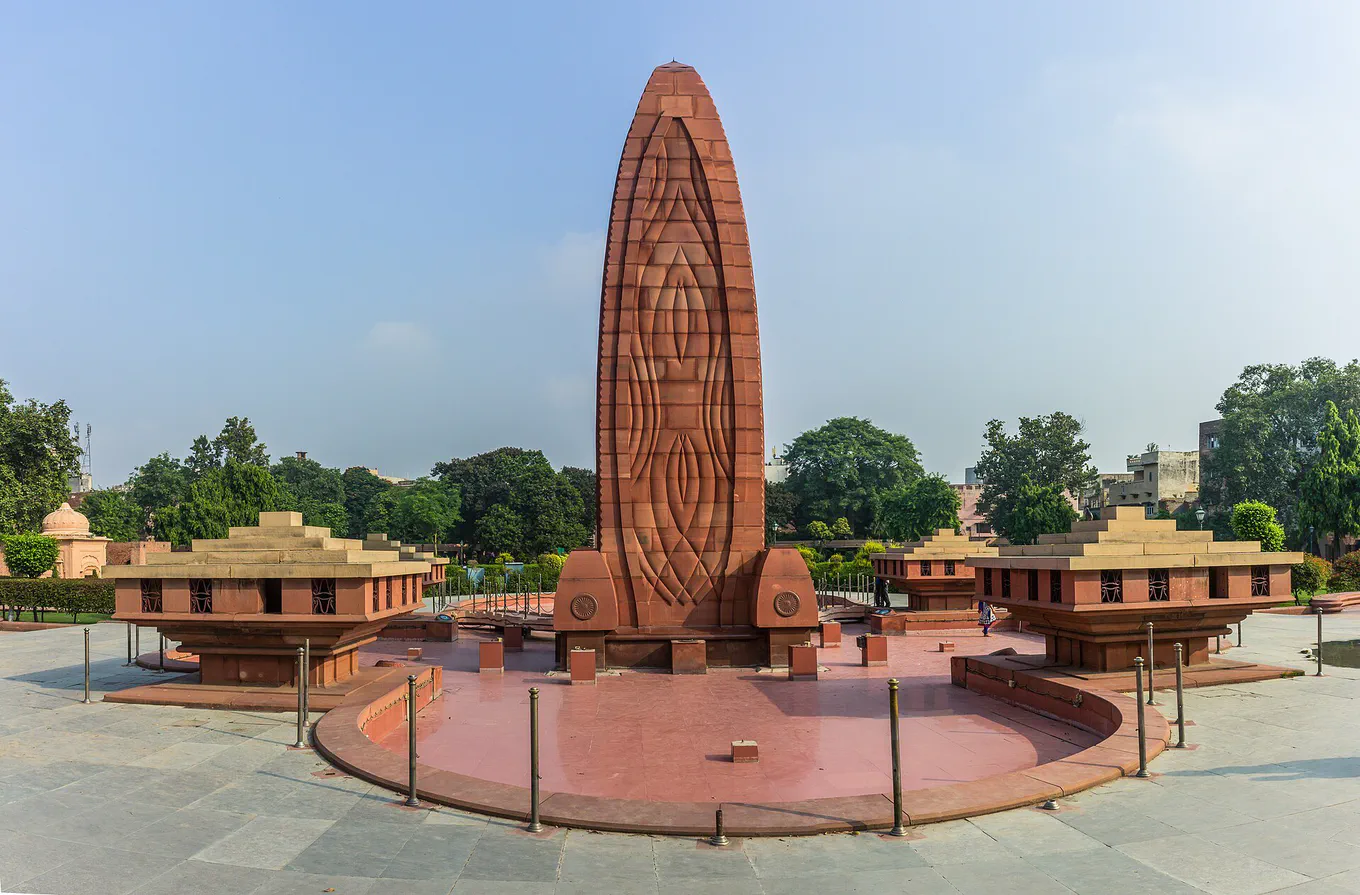
Stand here. Jallianwala Bagh, a garden closed in by buildings on three sides. It is a memorial garden, and bullet marks remain on its walls.
Vicky Kaushal plays Udham Singh in Sardar Udham (2021). On 13 April 1919, troops under a British general blocked the garden’s main exits and fired on the crowd for about ten minutes. Singh is said to have been serving water there, and to have survived. In March 1940, almost 21 years on, Michael O’Dwyer, Punjab’s lieutenant-governor during the massacre, was due to speak at Caxton Hall, in London. As the meeting ended, Singh shot him dead. Singh was hanged that July, and in 1974 his remains were brought home to India.
Pack nothing. Leave Friday.
Every Friday, I write a free letter, Journey, that takes us on a trip through places, stories, and ideas.
Midnight’s Children(Salman Rushdie, 1981). A novel. At Jallianwala Bagh, a character in the crowd is saved from the gunfire by a well-timed sneeze.
Amritsar 1919(Kim A. Wagner, 2019). A history. It argues that Dyer’s order to open fire at Jallianwala Bagh was an act of fear.
Amritsar: Mrs Gandhi’s Last Battle(Mark Tully). A history of the Indian army’s attack on the complex at Amritsar.
Films to watch before you visit Amritsar
Gandhi(Richard Attenborough, 1982). A film. It recreates the massacre at Jallianwala Bagh, with Edward Fox as Dyer, the British officer who ordered his troops to fire.
Sardar Udham(Shoojit Sircar, 2021). A film. Vicky Kaushal as Udham Singh, in a film known for its realistic portrayal of the Jallianwala Bagh massacre.
Rab Ne Bana Di Jodi(Aditya Chopra, 2008). A film, partly shot at the Golden Temple. Shah Rukh Khan plays a Punjab Power employee with a flamboyant alter ego.
Questions
Can you still see the bullet marks at Jallianwala Bagh?
Yes. Bullet marks remain on the garden’s walls and the buildings beside it. The well that people jumped into to escape the shooting is there too, and 120 bodies were taken out of it. A memorial by the American architect Benjamin Polk was opened in the garden in 1961.
Why is it called the Golden Temple?
Because of the gold on its sanctum. In 1762, Ahmad Shah Durrani, founder of the Durrani Empire, had the temple blown up with gunpowder. It was renovated in marble and copper in 1809, and in 1830 Maharaja Ranjit Singh, founder of the Sikh Empire, gave gold to cover the sanctum in gold leaf. The gold leaf gave the temple its name.
What does the name Amritsar mean?
It comes from Amṛta Sarovara, Sanskrit for “pool of nectar”. Sikh tradition credits Guru Ram Das, the fourth Sikh guru, with founding the city in 1574, and he completed the pool on the site of the Golden Temple in 1577.