I loved Classical Studies at school, but I wasn’t aware until I visited Turkey that it was, for more than a thousand years, the centre of the Roman world. The first Roman emperor, Augustus, completed his own account of his life’s achievements shortly before he died. The original bronze inscription in Rome is long lost, but the most complete surviving copy is carved into the walls of a temple in Ankara.
— Nick
Ankara, the capital of Turkey, lies in the middle of Anatolia. Once known as Ancyra, and later as Angora, it replaced Constantinople as capital on 13 October 1923. Its stories here are an emperor’s memoir on a temple wall, a rebel parliament, a poet who wouldn’t write for prize money, an ambassador’s valet with a camera, and a coffin that waited nearly fifteen years for its tomb.
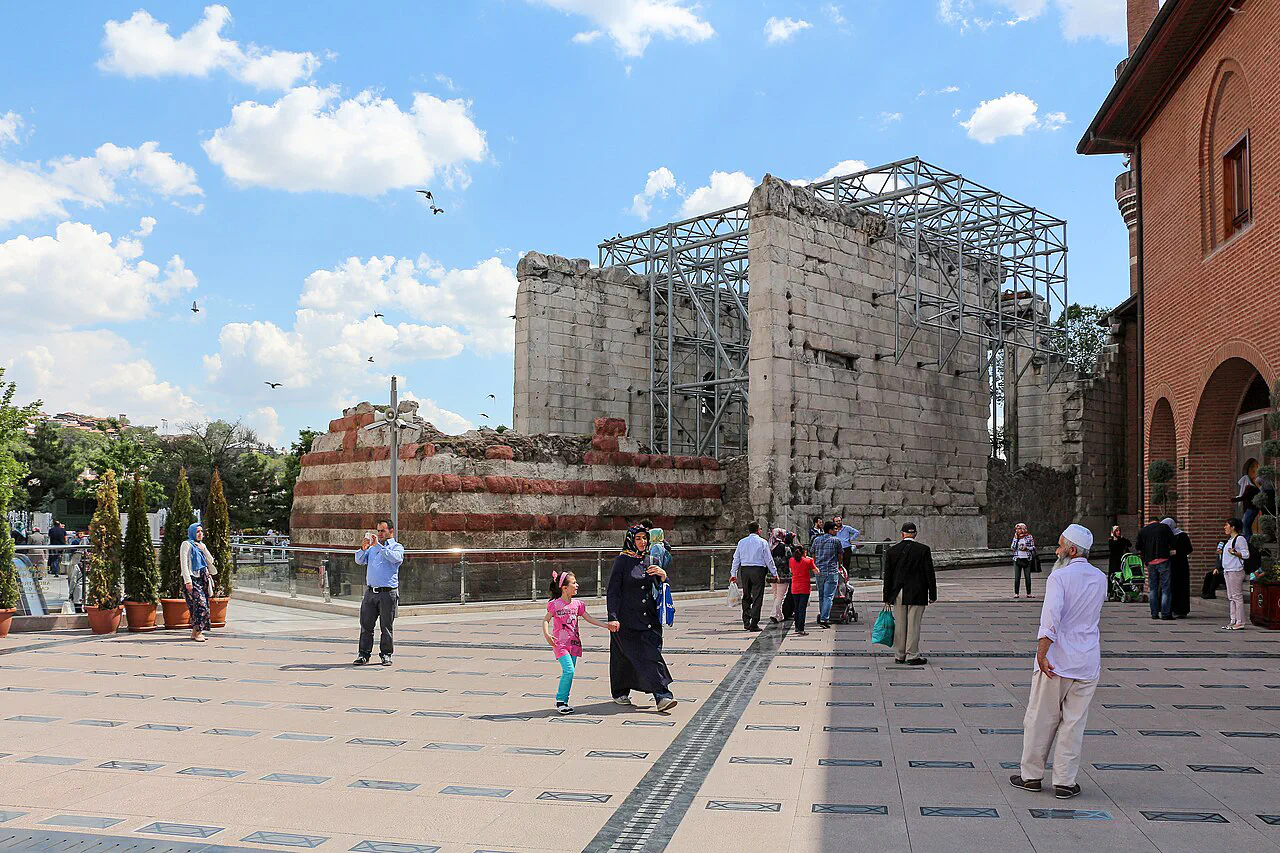
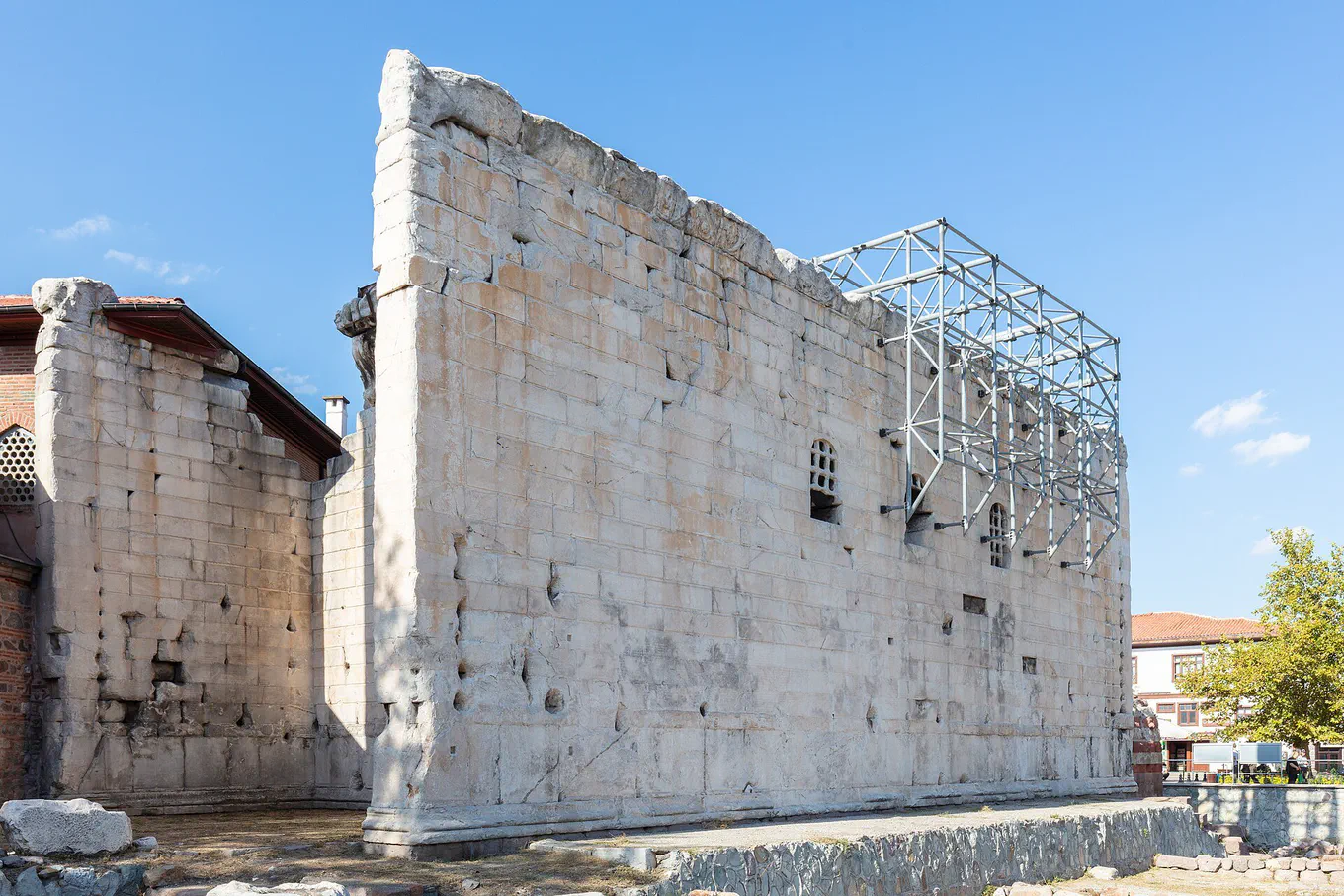
A month before he died in AD 14, Augustus, the first Roman emperor, finished his own account of his life. His will told the Senate to set it up, and it was engraved on two bronze pillars in front of his mausoleum in Rome. The bronze is lost. But after his death, a copy was carved on the walls of this temple in Ancyra, in Latin with a Greek translation, and no copy is more complete. His words survive best not in Rome, but in Ankara.
2 Turkey’s first parliament in an Ankara party headquarters
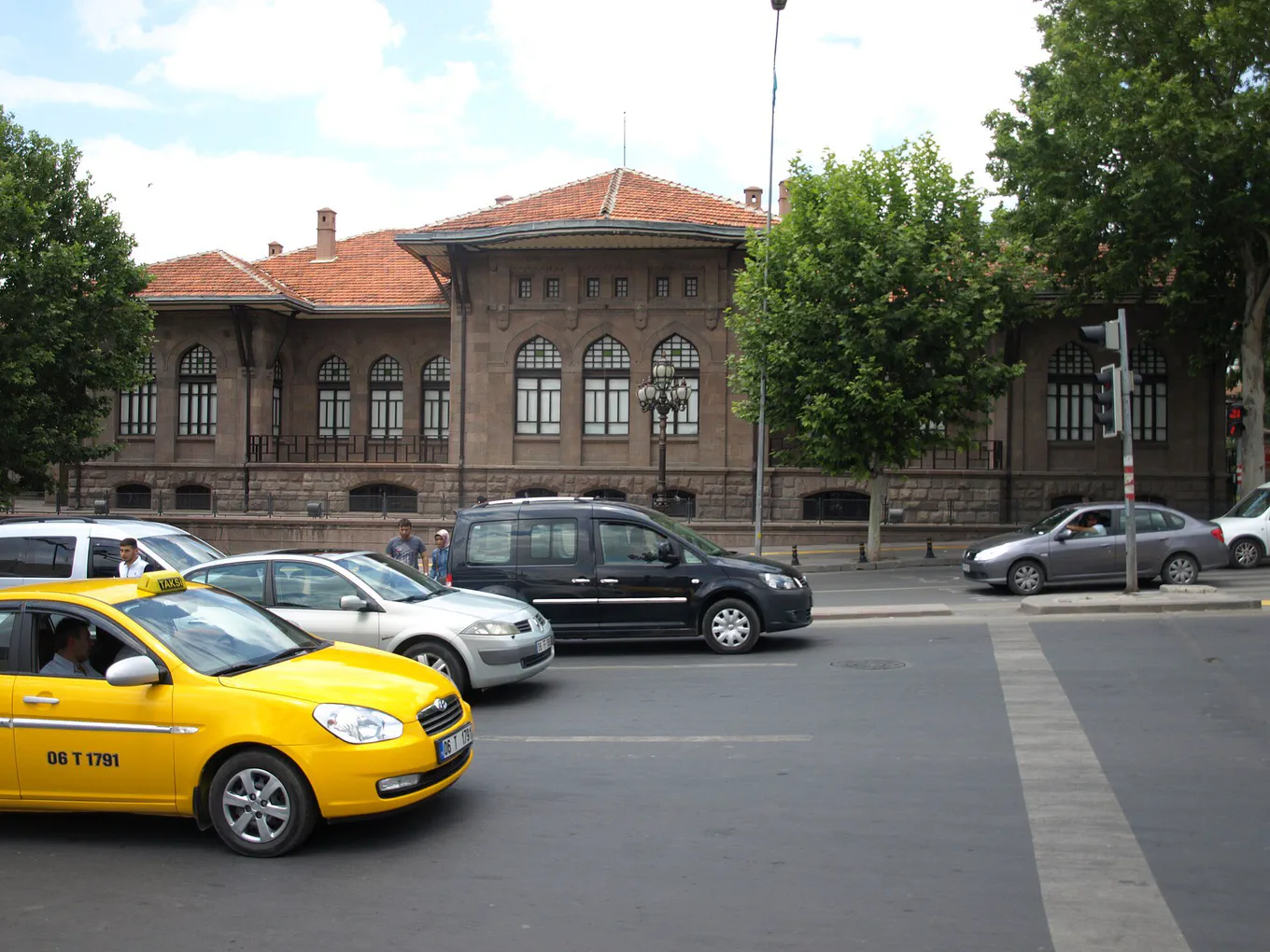
Stand here. The first Grand National Assembly building, on Ulus Square. It opened as a museum in 1961 and is now the War of Independence Museum.
Mustafa Kemal, the field marshal later known as Atatürk, made Ankara the headquarters of his resistance movement in 1920, the year British forces dissolved the Ottoman parliament in occupied Constantinople. On 23 April, thousands gathered in Ulus Square as a new Grand National Assembly opened in this building, a converted party headquarters, with Kemal as its speaker. Within weeks, the struggle between the two governments brought him a death sentence, passed in his absence. Two years later, this parliament abolished the Ottoman Sultanate.
3 The poet who wrote Turkey’s anthem in an Ankara lodge
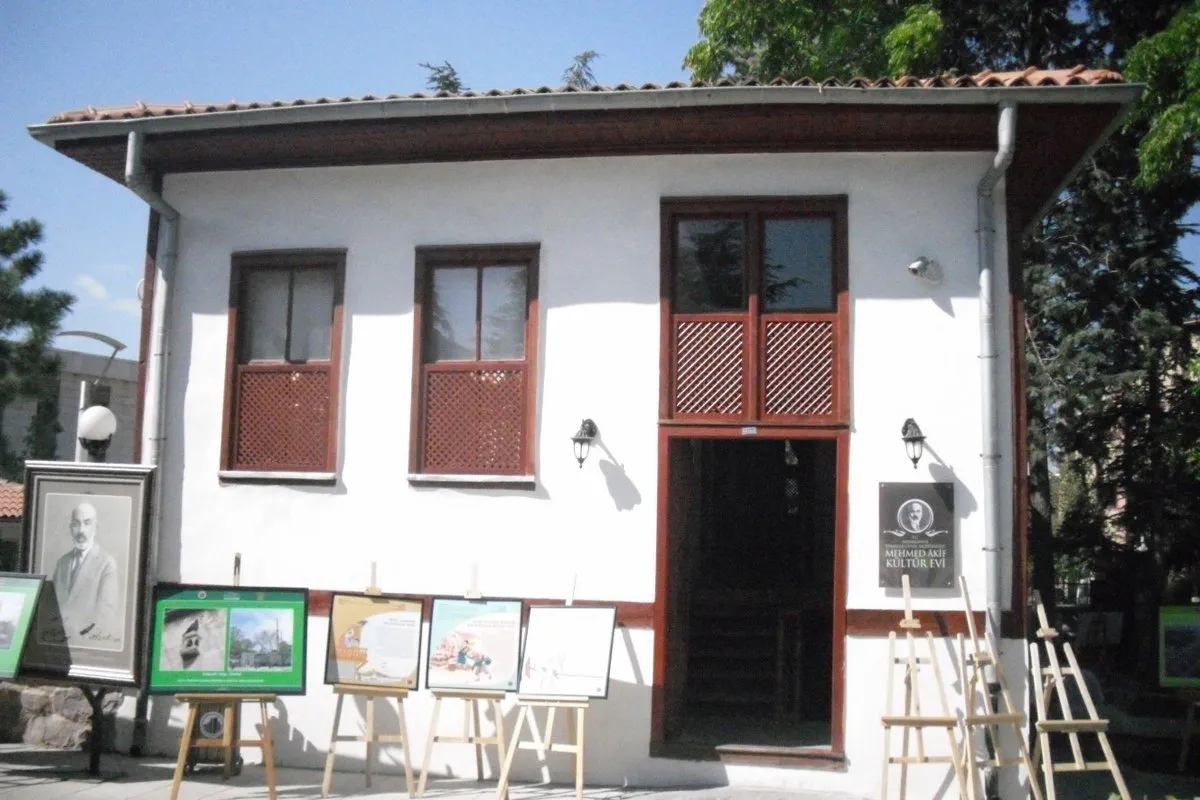
Stand here. The Taceddin Dervish Lodge in Ankara. The poet lived in part of a house here, given to him by the lodge’s sheikh.
The house at the Taceddin Dervish Lodge in Ankara where Mehmet Akif Ersoy lived, kept as his museum house.Nosferatü / Public domain.
Turkey’s national anthem, the İstiklal Marşı, was written in this lodge in 1921. Its poet, Mehmet Akif Ersoy, a deputy in the new assembly, moved in here. When a nationwide competition opened for the anthem’s words, he refused to enter, because it offered a prize of 500 lira. The education minister and a friend talked him round. Of 724 poems sent in, his was adopted on 12 March. He gave the prize away.
4 Cicero, the British ambassador’s valet who spied in Ankara
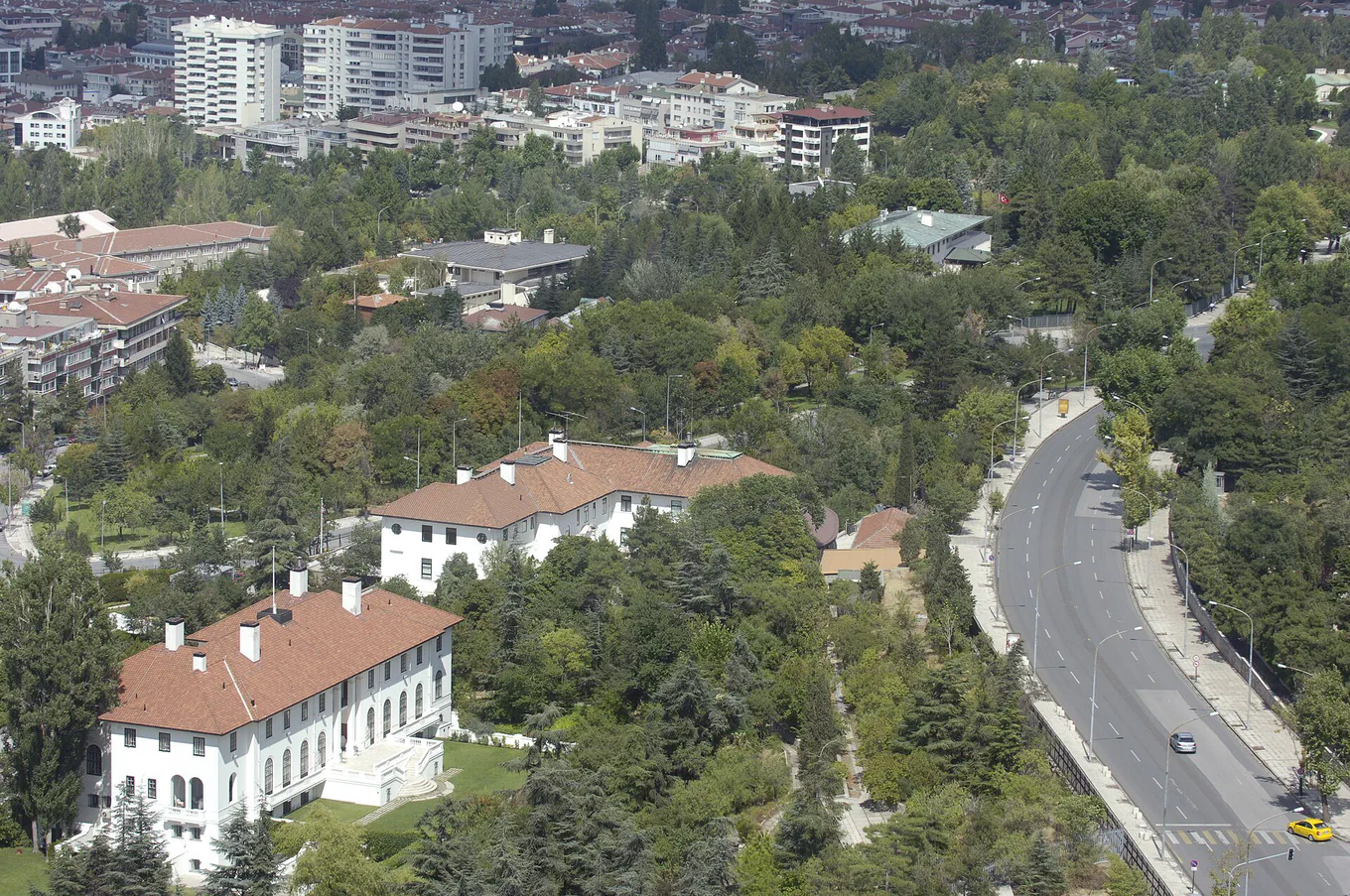
Stand here. The British Embassy in Çankaya, Britain’s mission in Ankara today. The sources don’t say whether this is the building where Bazna worked.
In the film 5 Fingers (1952), James Mason plays a valet, codenamed Cicero, selling secrets in Ankara. The real Cicero was Elyesa Bazna, valet to the British ambassador from 1943. Bazna opened his employer’s safe with a locksmith’s skill, photographed the papers while the ambassador slept, and sold them to Nazi Germany for £300,000. But about half the notes were forged, and Berlin doubted the secrets and barely acted on them. Bazna tried many times to be paid for the forgeries. He never got a penny.
5 Atatürk’s fifteen-year wait for his tomb in Ankara
Stand here. Anıtkabir, Atatürk’s mausoleum, on the hill once called Rasattepe and now Anıttepe.
When Atatürk died in Istanbul in 1938, his coffin was brought to Ankara and lay in state in front of the parliament. Then it waited. An international competition chose a design for a tomb on this hill. Until the tomb was built, his mahogany casket lay in the Ethnography Museum, inside a white marble sarcophagus, for nearly fifteen years. On 10 November 1953, the anniversary of his death, his remains were carried to Anıtkabir, and across Turkey 21 million people stood silent and motionless for five minutes.
Pack nothing. Leave Friday.
Every Friday, I write a free letter, Journey, that takes us on a trip through places, stories, and ideas.
Operation Cicero(L. C. Moyzisch, 1950). A memoir, and the book behind 5 Fingers. It tells of the valet who approached the German Embassy in Ankara in October 1943.
Madonna in a Fur Coat(Sabahattin Ali, 1943). A novel. In 1930s Ankara, a clerk at a lumber firm shares an office with an ordinary-looking man, Raif.
Ayaşlı ile Kiracıları(Memduh Şevket Esendal, 1934). A novel. In early-Republic Ankara, a new nine-room flat is let room by room, each to a different family.
Films to watch before you visit Ankara
5 Fingers(Joseph L. Mankiewicz, 1952). A spy film. James Mason plays the valet selling the British ambassador’s secrets to the German embassy in Ankara. Exteriors were shot there.
Behzat Ç. Bir Ankara Polisiyesi(Emrah Serbes, 2010). A TV series. A police procedural set in Ankara, following Behzat, head of the city’s homicide department, adapted from Emrah Serbes’s novels.
Love Likes Coincidences(Ömer Faruk Sorak, 2011). A film. Mostly filmed in Ankara, including the old Ankara Railway Station, it follows star-crossed lovers played by Mehmet Günsür and Belçim Bilgin Erdoğan.
Questions
Where did Turkey’s first parliament meet?
In a building on Ulus Square in Ankara, begun in 1915 as the local headquarters of the Committee of Union and Progress. The Grand National Assembly opened there on 23 April 1920 and met there until 15 October 1924. It opened as a museum in 1961 and is now the War of Independence Museum.
Is the Angora cat named after Ankara?
Yes. Ankara was once known as Angora, and the city gave its name to the Angora cat. It also named the long-haired Angora goat, the source of mohair, and the Angora wool shorn from Angora rabbits.
When did Ankara become the capital of Turkey?
On 13 October 1923, when Ankara, then called Angora, officially replaced Constantinople as the Turkish capital. Mustafa Kemal had made it the headquarters of his resistance movement in 1920, and the new Grand National Assembly had met there since April that year.