Antalya sits on the southwest coast of Anatolia, in Turkey, flanked by the Taurus Mountains. It began as Attaleia, founded by King Attalus II of Pergamon in about 150 BC as a base for his fleet. Its stories here are a gate the walls kept hidden, a king who left his army behind, sultans fighting over a port, a volunteer curator, and a statue split between Boston and Antalya.
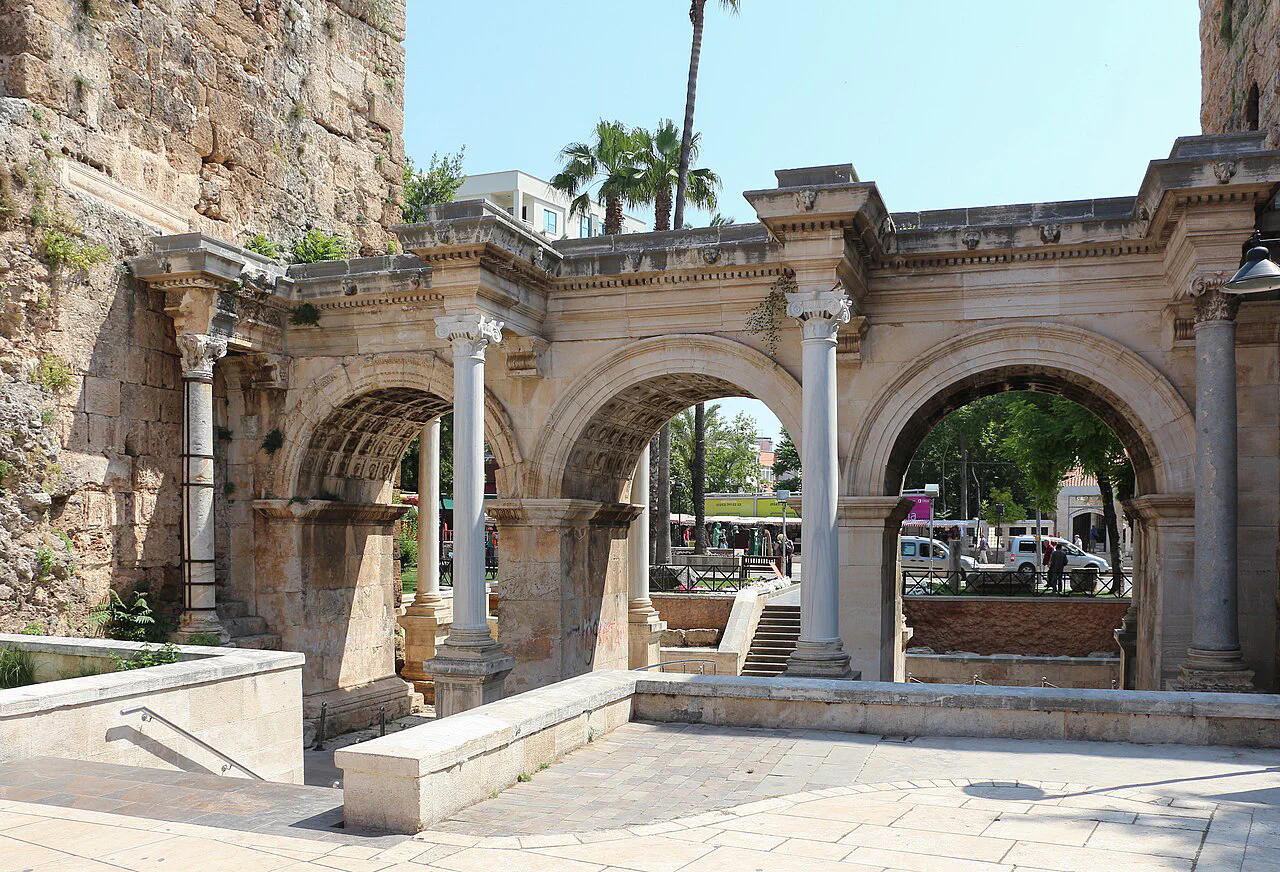
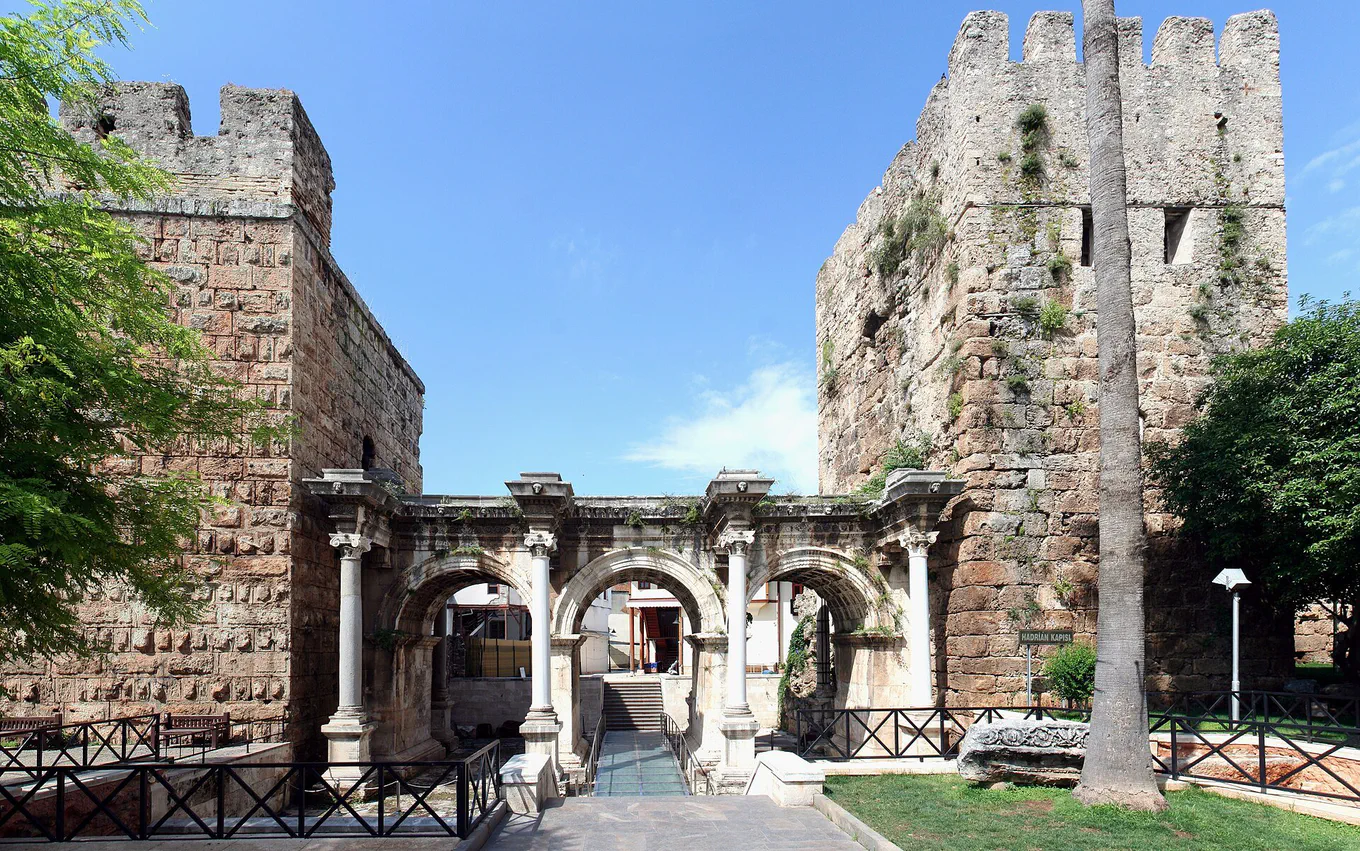
When the Roman emperor Hadrian visited Attaleia in AD 130, the city built a gateway in his name, three arches of white marble with pillars of granite. The gate was part of the city’s outer walls, and for a long time the walls enclosed its outer side. For many years, nobody used it. Then, in the 1950s, the walls collapsed, and the gate was revealed. It was restored in 1959. Hidden inside the walls for so long, Hadrian’s gate had outlasted them.
2 Louis VII, Eleanor of Aquitaine, and Antalya’s missing ships
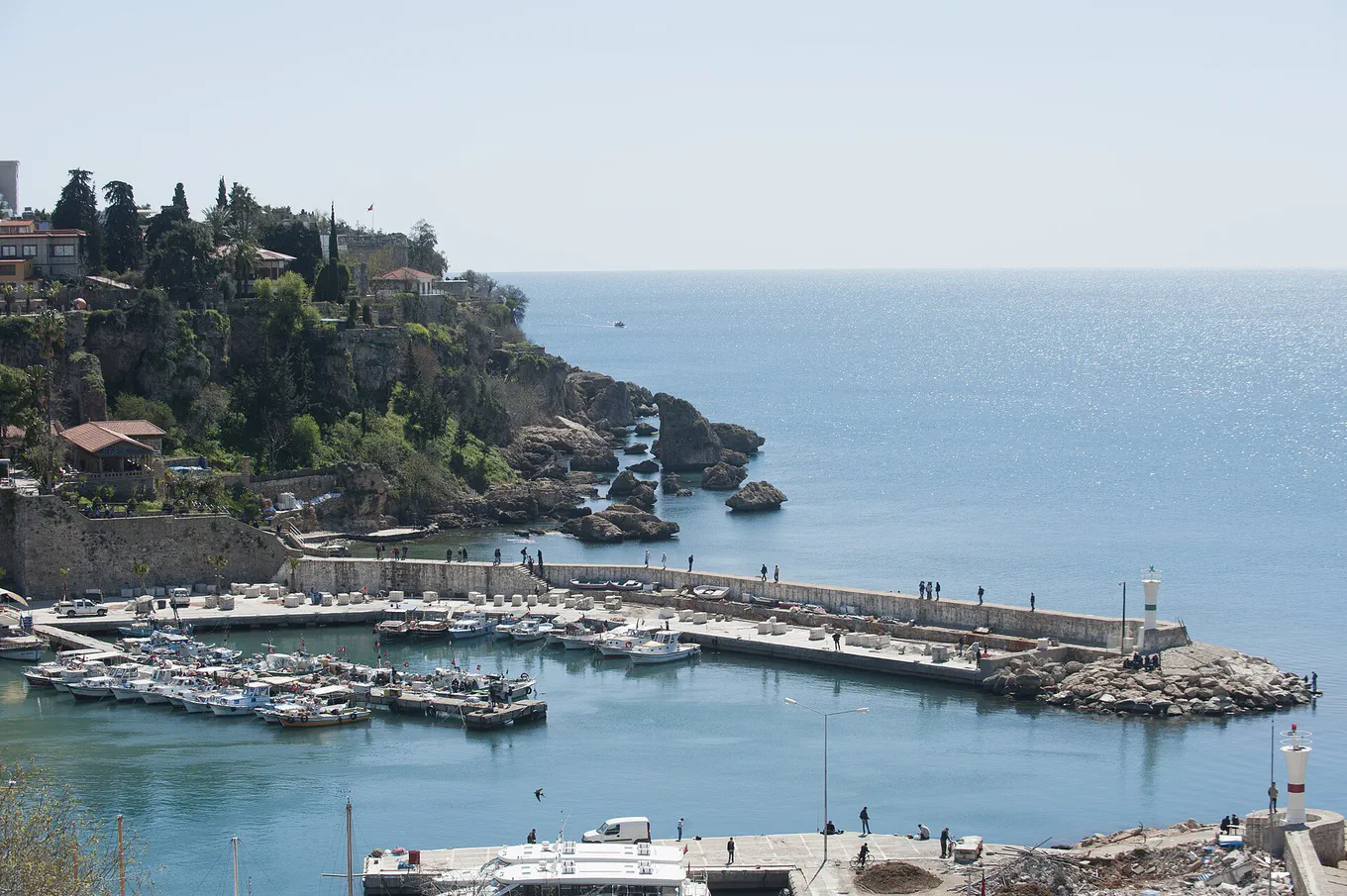
Stand here. The historical harbour in Kaleiçi, Antalya’s old town of narrow cobbled streets and Ottoman-era houses.
Eleanor of Aquitaine, later Queen of England and mother of Richard I, went on the Second Crusade with her husband, Louis VII of France. On 20 January 1148, the survivors of his army reached Antalya, harried by the Turks. Louis wanted to sail on to Antioch. After a month of storms, most of the promised ships never came. So Louis, his household, and a scattering of knights took the ships there were. Louis and Eleanor reached Antioch on 19 March. The army left behind was almost entirely destroyed.
3 The Yivli Minaret and the Seljuk fight for Antalya
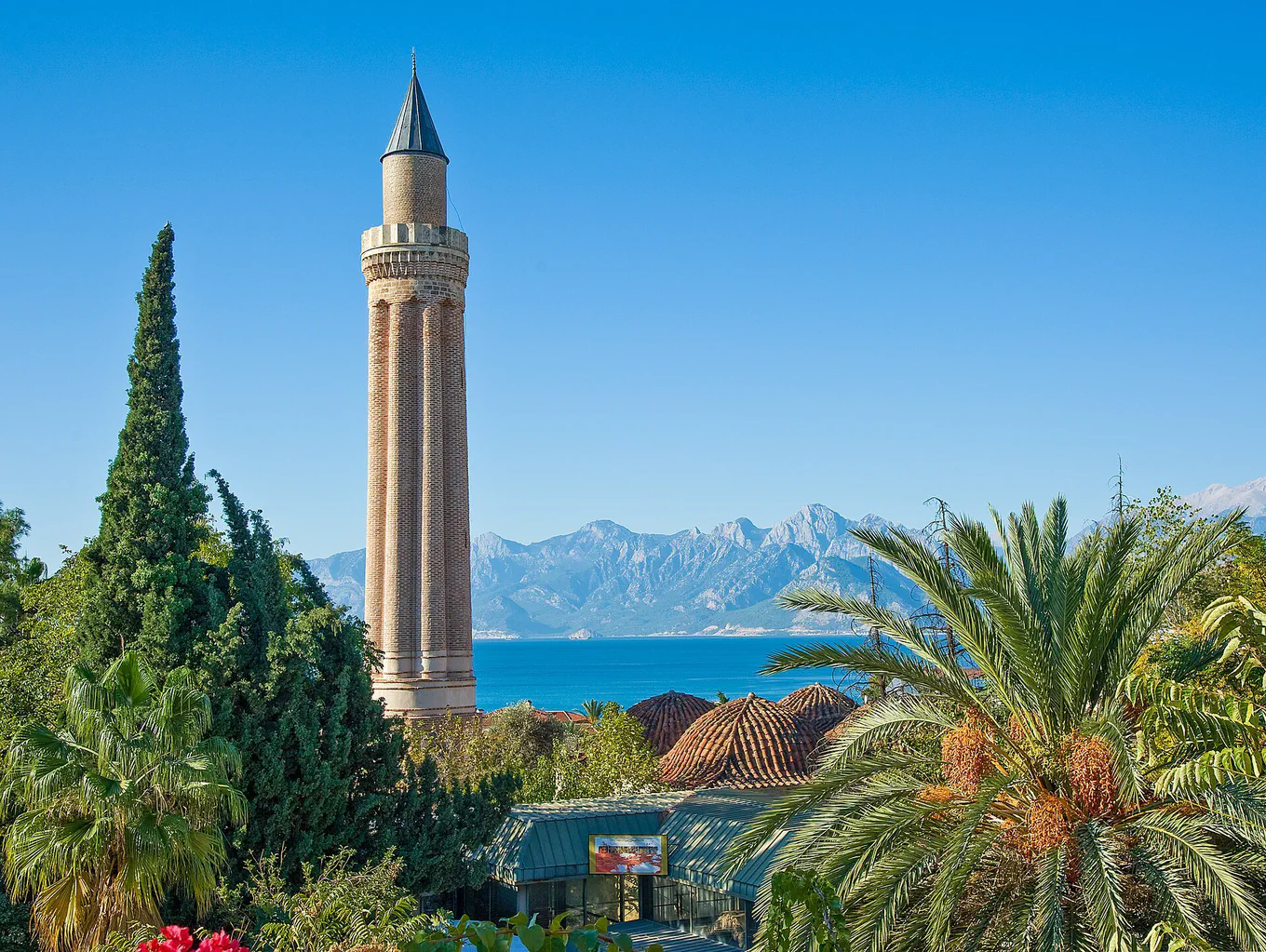
Stand here. The Yivli, or Fluted, Minaret. It stands 38 metres high, and its shaft is divided into eight fluted sections. Its mosque, built on the site of a ruined Byzantine church, is still a place of worship.
In 1207, the Seljuk sultan Kaykhusraw I took the port of Attaleia and built its first mosque. Five years later, local Christians rebelled and seized the city, and it took his eldest son, Kaykaus I, until 1216 to win it back. Kaykaus had a fight at home too. His younger brother Kayqubad challenged him for the throne and had to flee to the fortress at Ankara. Yet it was Kayqubad, the brother who had fled, whose reign most likely gave Antalya the fluted minaret that became its symbol.
4 Süleyman Fikri Bey and the founding of the Antalya Museum
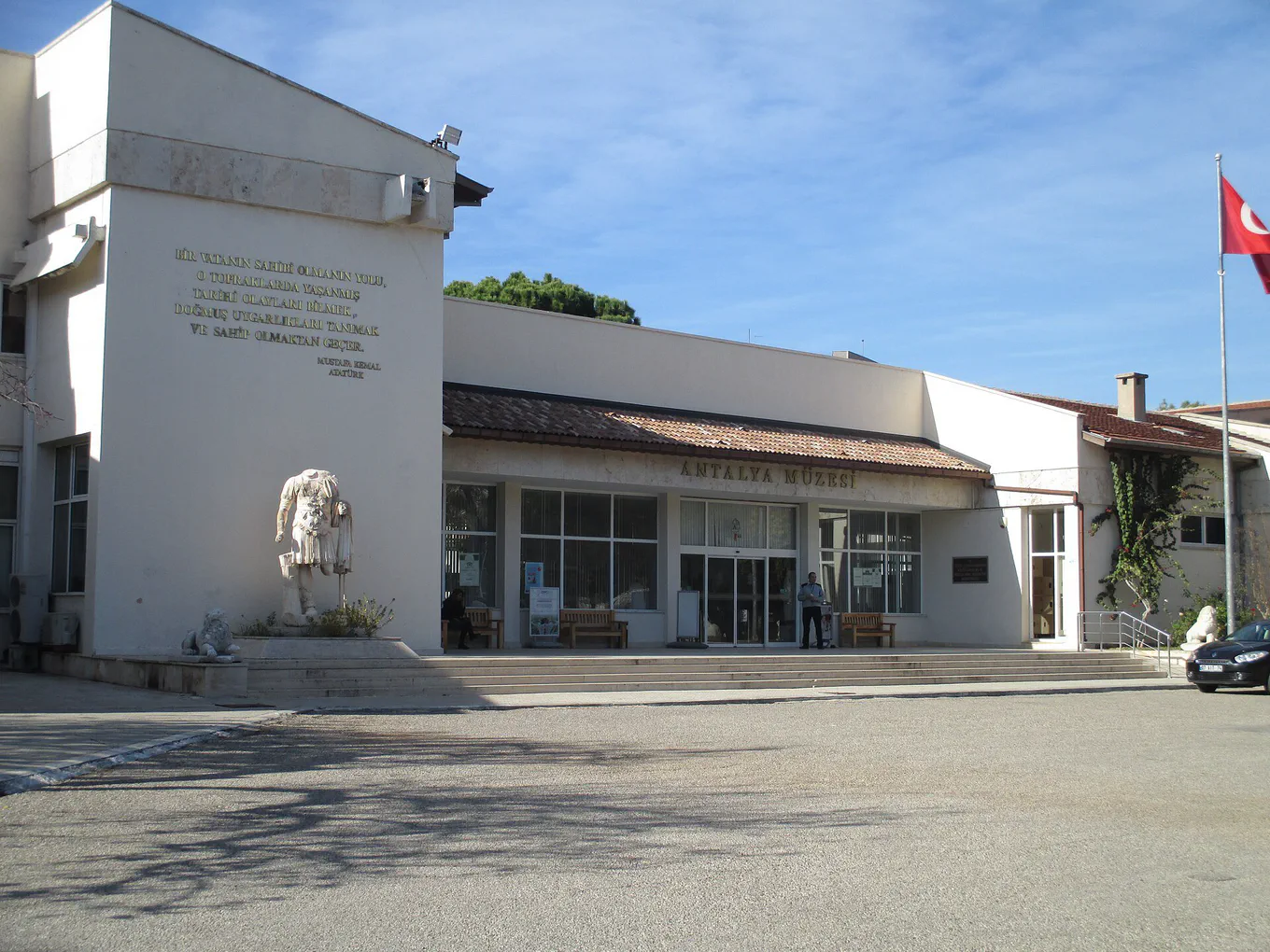
Stand here. The Antalya Museum, in Muratpaşa. Before this building, the collection was housed in two of the city’s mosques.
Italy occupied Antalya for three years after the First World War, and Italian archaeologists began removing finds from the city centre. They said they did it in the name of civilisation. Süleyman Fikri Bey, an adviser to the Sultan, set out to stop them. In 1919, he went to the provincial governor and had himself appointed voluntary curator of antiquities, then founded a museum to collect what remained. It opened in a mosque in 1922, the year the Italian troops withdrew. The soldiers left, and the museum stayed.
5 The Weary Herakles, split between Boston and Antalya
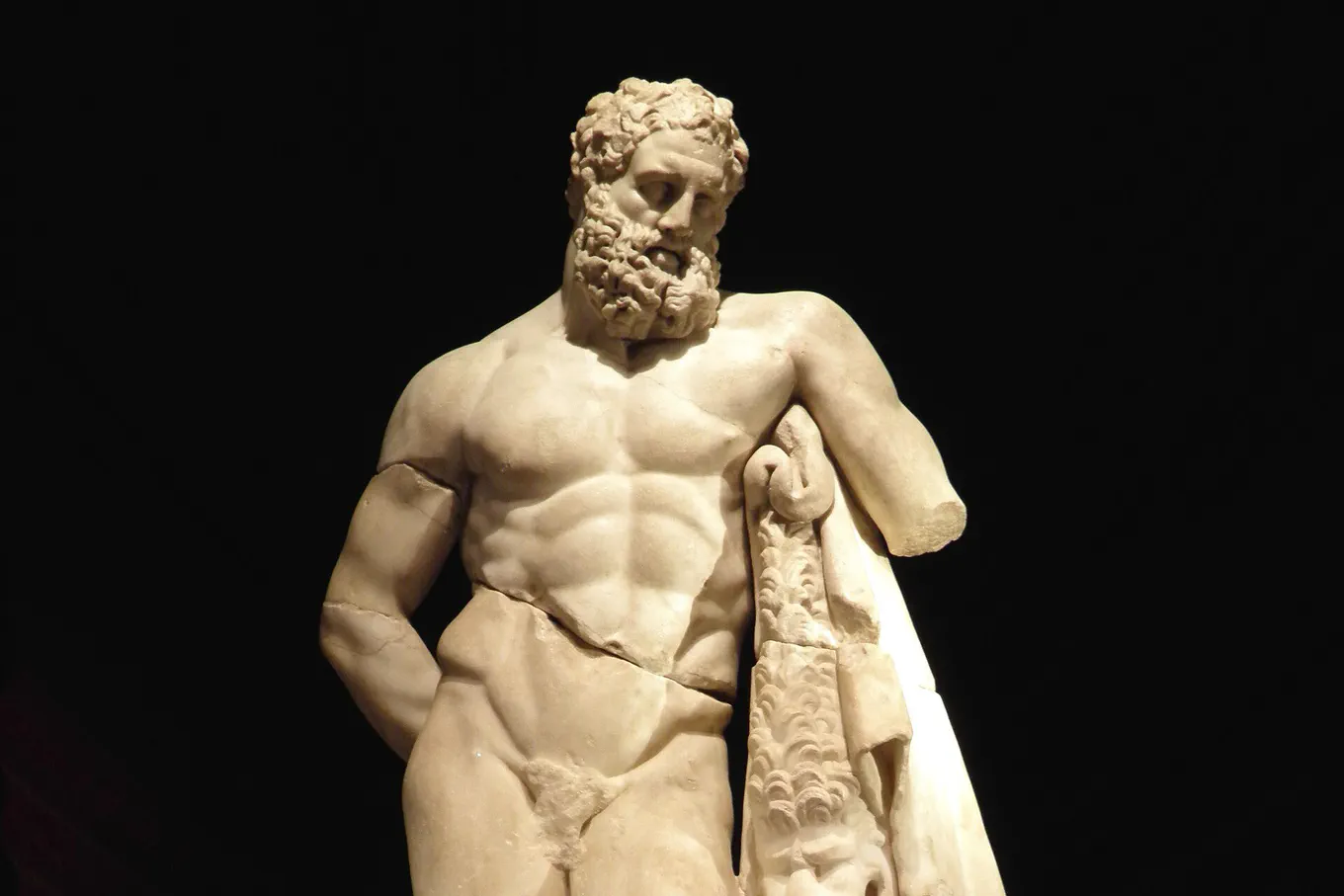
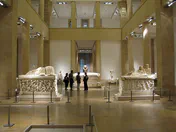
Stand here. The Antalya Museum, in Muratpaşa, which held the lower half. The rejoined statue went on display in Antalya in October 2011.
The Museum of Fine Arts in Boston bought a share in the top half of a Roman statue of Herakles, or Hercules, in 1981, from a dealer in Frankfurt. The lower half, dug up at Perge the year before, was in the Antalya Museum. After a scholar spotted the likeness, casts were made of both. They fitted, two halves of one broken statue. Turkey said the top had been stolen and smuggled out. In 2011, Boston handed it over, and the Weary Herakles was whole again in Antalya.
Pack nothing. Leave Friday.
Every Friday, I write a free letter, Journey, that takes us on a trip through places, stories, and ideas.
The Rihla(Ibn Battuta, 1355). A travel memoir. Ibn Battuta dictated it near the end of his life. In the port of Antalya, he met members of a semi-religious fityan association.
The Lycian Shore(Freya Stark, 1956). A travel book. Stark describes a journey on a small gulet from Izmir to Antalya, visiting many ancient sites en route.
Films to watch before you visit Antalya
Operation Fortune: Ruse de Guerre(Guy Ritchie, 2023). A spy action comedy film. Simmonds invites Danny and Sarah to his Turkish villa in Antalya. Filming took place there, as well as in Farnborough and Qatar.
Recep İvedik(Togan Gökbakar, 2008). A film. Recep drives to Antalya to return a wallet he found in the street, and accepts a hotel stay when his childhood love, Sibel, arrives.
Questions
Where is Hadrian’s Gate in Antalya?
On Atatürk Boulevard, in the city centre. Its three marble arches form the main entrance to Kaleiçi, the old town, from the east, and the two towers beside the gate date from different periods. It was built for the emperor Hadrian’s visit in AD 130, was enclosed by the city walls for many years, and was restored in 1959.
What was Antalya called in ancient times?
Attaleia. King Attalus II of Pergamon founded it in about 150 BC as a base for his fleet. It became part of the Roman Empire in 133 BC, when his nephew, Attalus III, left his kingdom to Rome. In the Acts of the Apostles it appears as Attalia, the port Paul and Barnabas sailed from for Antioch.
What is the Kesik Minare in Kaleiçi?
A minaret on Hesapçı Street, in Kaleiçi. The building it belonged to began as a Roman temple in the 2nd century AD and was later converted into a Byzantine church in honour of the Virgin Mary. A fire destroyed the main building in 1896. The Kesik Minare has since welcomed worshippers for the first time in nearly 125 years.