I first saw footage of Bangkok in Good Morning, Vietnam (where it stood in for Saigon). I loved that film, although, if I’m really honest, I was more interested in the girl sat next to me in the cinema. She was funny and beautiful… the killer combo.
— Nick
In 1782, King Rama I moved the capital across the Chao Phraya River to Rattanakosin Island. Bangkok, in the river’s delta, is still Thailand’s capital, and its largest city. Look here for a green Buddha found under plaster, the real teacher behind The King and I, a novelist with malaria, an American silk king who vanished, and a backpacker’s map to a hidden beach.
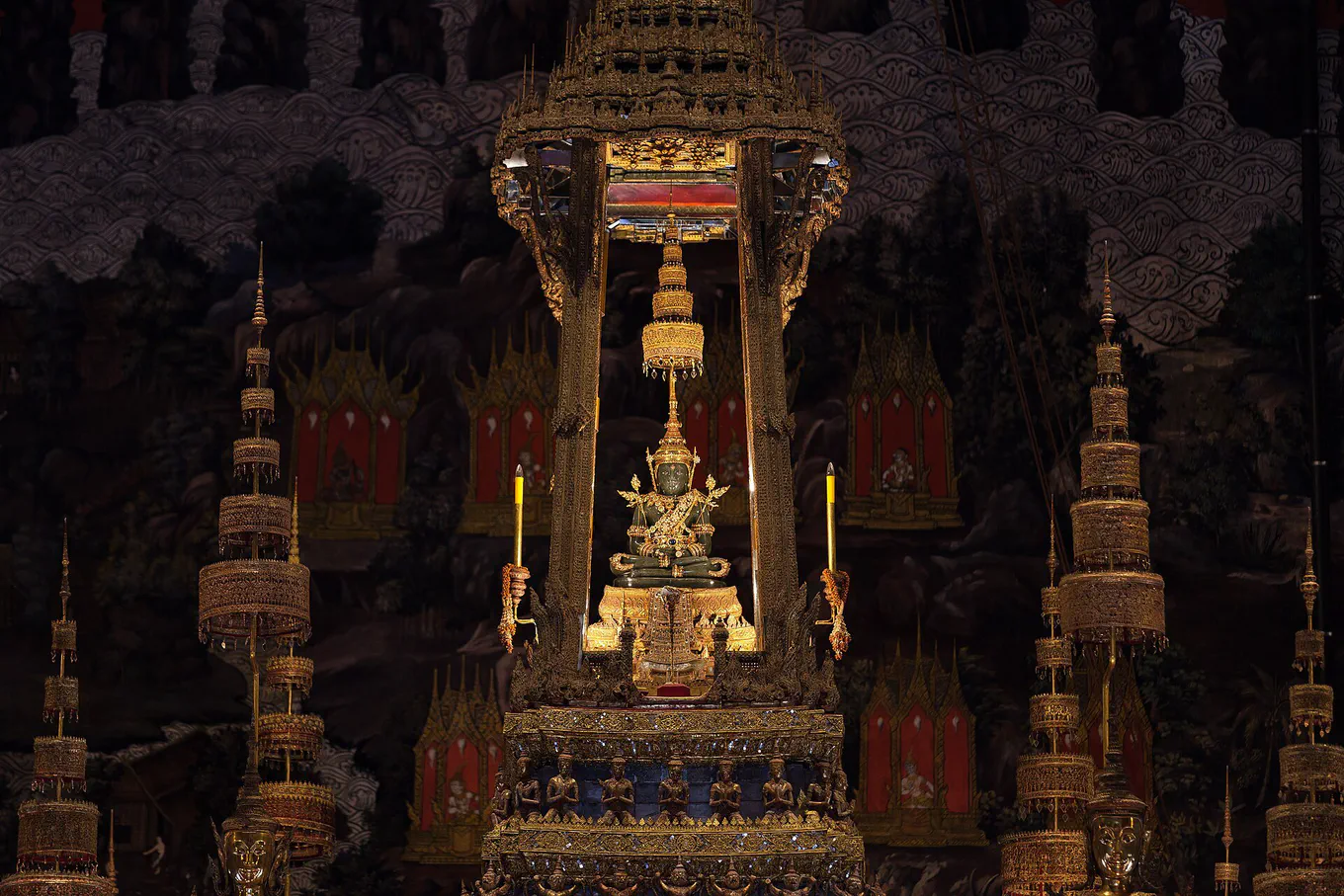
Thailand’s Emerald Buddha came to light under plaster. In 1434, lightning struck a chedi, or shrine tower, at a monastery in Chiang Rai, and inside was a stucco Buddha. The abbot kept it until the stucco on its nose flaked off. Underneath was green stone, jasper or jade, not emerald. Centuries later, a Siamese general looted it from Vientiane, and as King Rama I he brought it here in 1785. Each season, the King, or a senior royal in his place, still climbs up, wipes it with a wet cloth, and changes its gold costume.
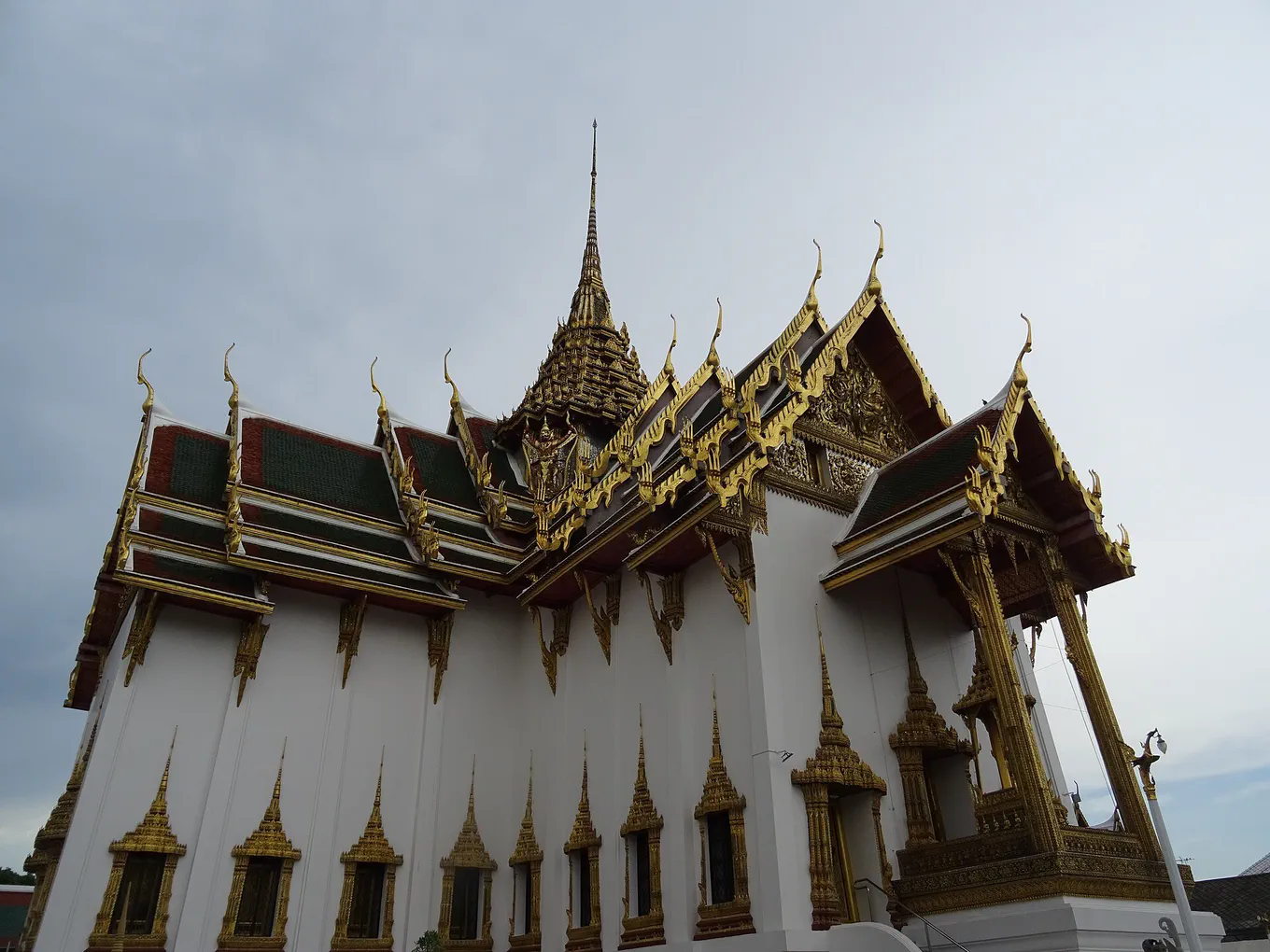
2 Anna Leonowens, the real teacher behind The King and I
Stand here. The Grand Palace, seat of King Mongkut’s court. Anna lived nearby.
The King and I began with a real teacher, Anna Leonowens. In 1862, she came to Bangkok with her five-year-old son to teach English to King Mongkut’s wives and children. She said she was Welsh, but she was born in India. Her memoir made her famous, and drew charges of sensationalism. Mongkut’s son, her former pupil and by then king, reportedly had a question for her: “Why did you write such a wicked book about my father King Mongkut?”
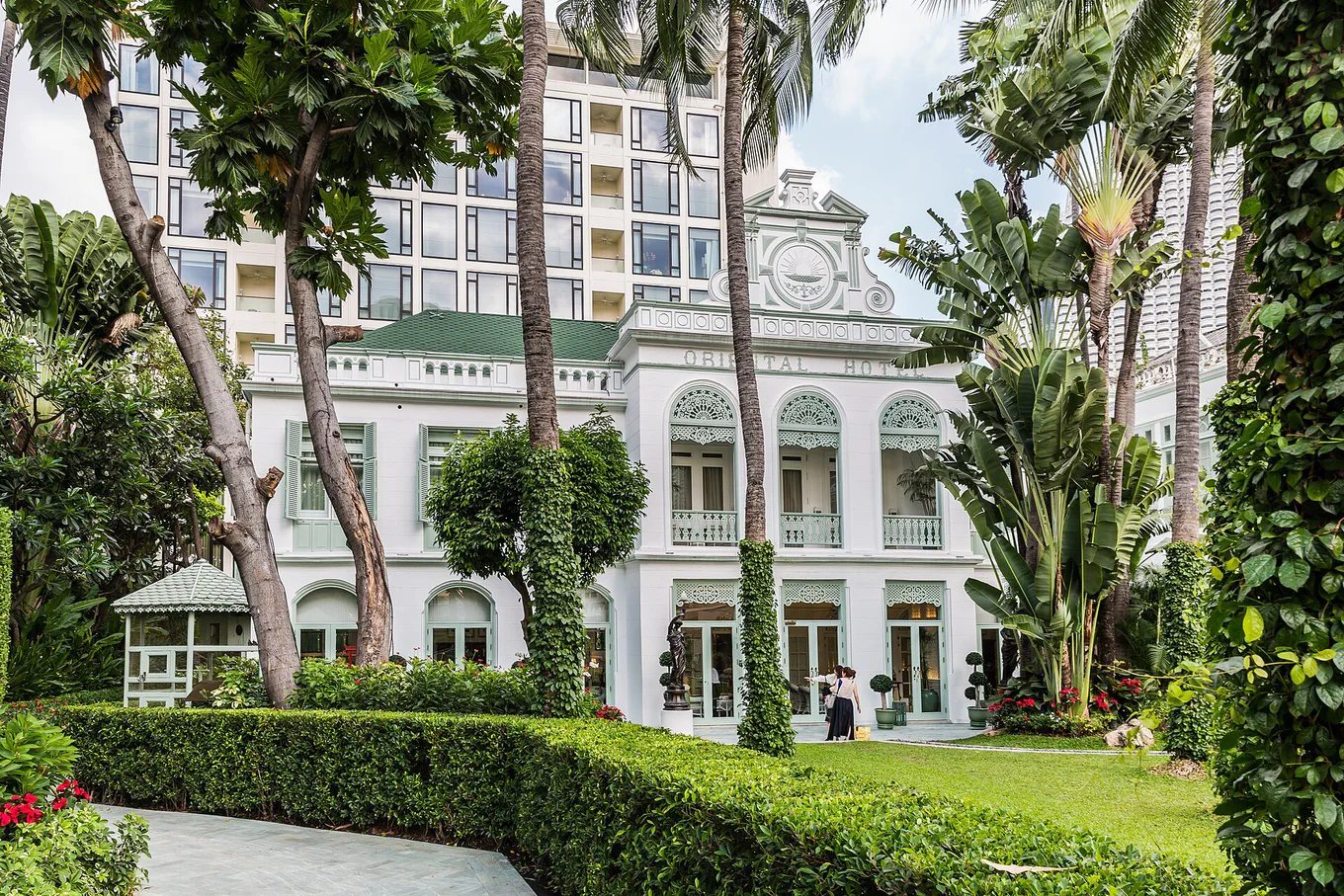
3 Somerset Maugham’s fever at the Oriental Hotel
Stand here. The Authors’ Wing of the Mandarin Oriental, formerly the Oriental, near the Chao Phraya. The hotel’s oldest building, it has a lounge named for Maugham.
Somerset Maugham, author of Of Human Bondage, took a room at the Oriental in January 1923. He had caught malaria on his travels, and at the hotel he fell seriously ill. For days quinine did nothing, and his temperature reached 105°F. Then, by his own account, he heard the manageress tell the doctor, “I can’t have him die here, you know. You must take him to the hospital.” A few days later he recovered. Back in Bangkok for his 85th birthday in 1960, he still remembered being almost evicted.
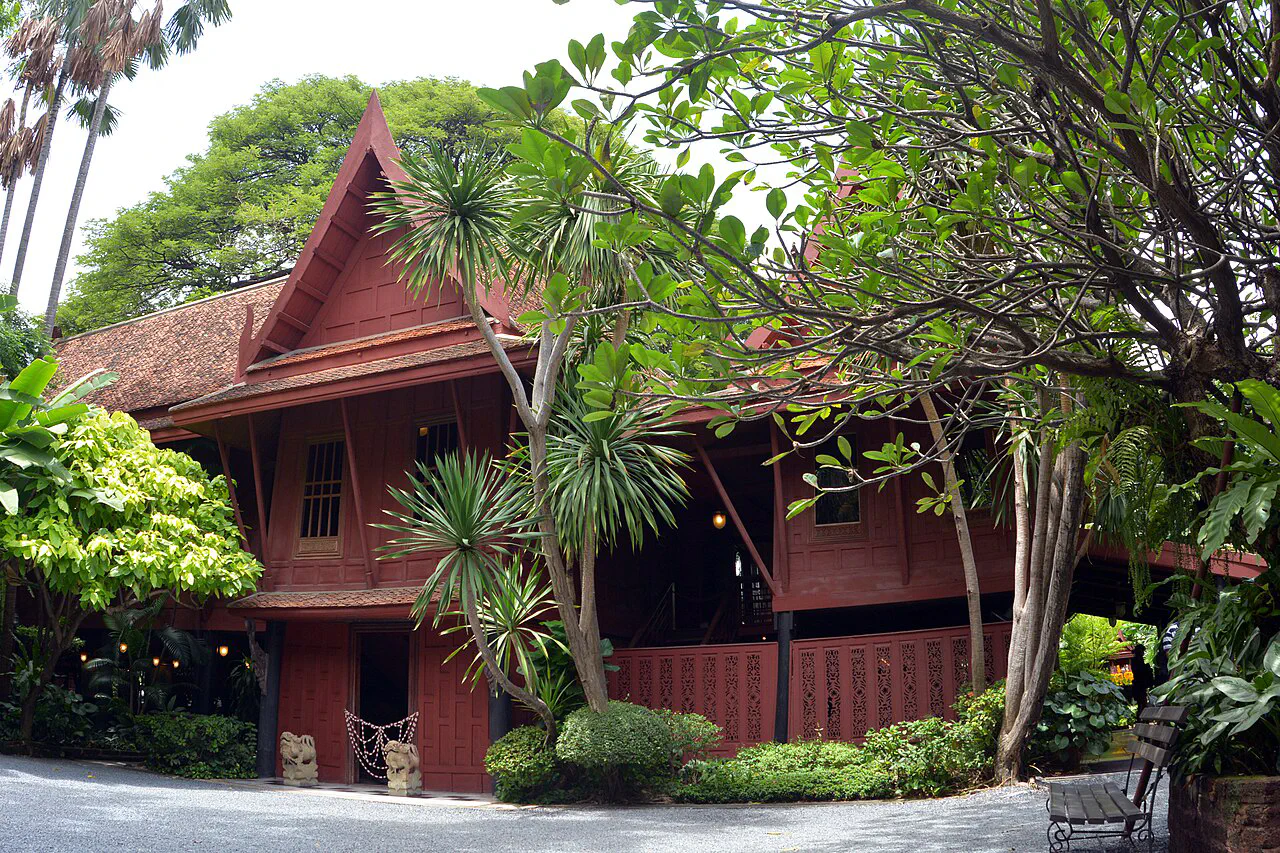
4 Jim Thompson, the Bangkok silk king who never came home
Stand here. The Jim Thompson House, beside the Saen Saep canal in Pathum Wan. His six traditional Thai houses are now a museum.
Jim Thompson’s Thai silk went into the costumes of The King and I when it opened on Broadway in 1951. He was a New York architect turned intelligence officer who had come to Bangkok at the end of the war. Time credited him with almost single-handedly saving Thai silk from extinction. Across the canal from his weavers, he reassembled six old Thai houses as his home. In 1967, on holiday in Malaysia’s Cameron Highlands, he went for an afternoon walk. More than 500 people searched. He was never found.
5 The Beach begins on Khao San Road
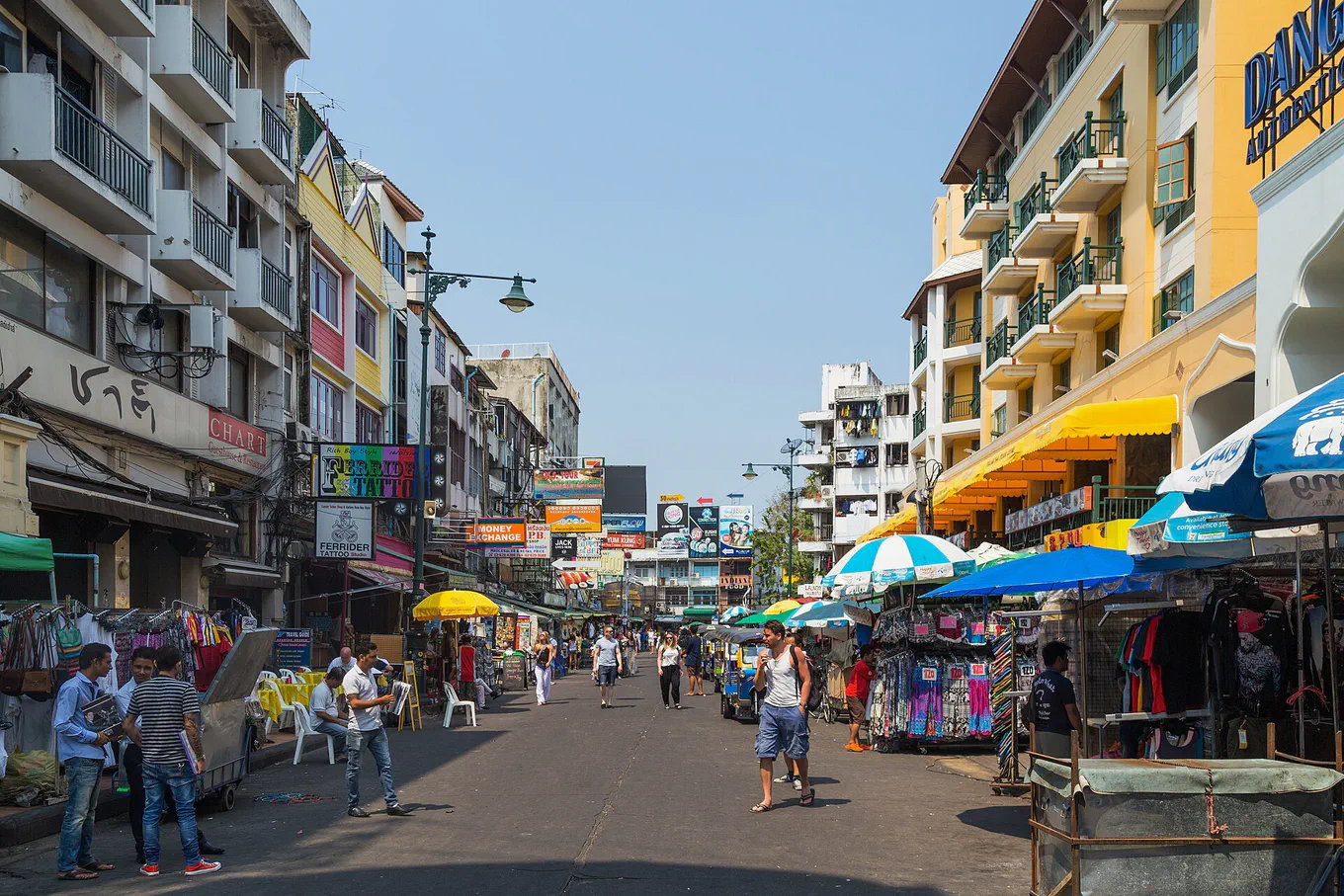
Stand here. Khao San Road, about a kilometre north of the Grand Palace. The backpackers’ street draws up to 50,000 visitors a day in high season.
In The Beach, Danny Boyle’s 2000 film with Leonardo DiCaprio, the story starts on Khao San Road. Richard, a young backpacker looking for adventure, checks into a drab travellers’ hotel here. A stranger called Daffy leaves him a map to a hidden island beach, then kills himself. The street was once a rice market, and its name means milled rice. Then the guesthouses came, and it became world-famous among backpackers. The writer Susan Orlean called it “the place to disappear”.
Pack nothing. Leave Friday.
Every Friday, I write a free letter, Journey, that takes us on a trip through places, stories, and ideas.
The English Governess at the Siamese Court(Anna Leonowens, 1870). A memoir. Anna’s account of teaching at King Mongkut’s court. It made her famous, and drew charges of sensationalism.
Four Reigns(Kukrit Pramoj, 1953). A novel. Phloi, a girl from a noble family, comes to live at Bangkok’s royal court, and the story follows her through four kings.
Bangkok 8(John Burdett, 2003). A novel. Its story runs through Thailand’s sex industry and the red-light districts of Bangkok.
Films to watch before you visit Bangkok
Good Morning, Vietnam(Barry Levinson, 1987). A film. A meteorological station in Bangkok doubled as its military headquarters and dormitories.
The Man with the Golden Gun(Guy Hamilton, 1974). A film starring Roger Moore. Its boxing scene used a real Muay Thai fixture at Lumpinee Boxing Stadium.
The Beach(Danny Boyle, 2000). A film. Leonardo DiCaprio’s backpacker starts in a drab hotel on Khao San Road, though its interiors were filmed in Phuket.
The Hangover Part II(Todd Phillips, 2011). A comedy. Three friends wake in a Bangkok hotel with no memory. Key scenes were shot at Sky Bar, high on State Tower.
Bangkok Dangerous(the Pang Brothers, 2008). A film starring Nicolas Cage. The Soi Cowboy entertainment district was among its Thai locations.
Questions
Can you see the Emerald Buddha in Bangkok?
Yes. It sits in the ordination hall of Wat Phra Kaew, inside the Grand Palace grounds. Dress respectfully, with no sleeveless tops, shorts, or mini skirts.
Can you visit Jim Thompson’s house in Bangkok?
Yes. The Jim Thompson House is a museum at 6 Soi Kasemsan 2, Rama 1 Road, beside the Saen Saep canal and one block from the National Stadium. It opens daily from 10 am to 5 pm, and adult entry is 250 baht.
What is Bangkok’s full name?
Thais call the city Krung Thep, short for Krung Thep Maha Nakhon. Its full name begins “Krung Thep Maha Nakhon Amon Rattanakosin…”, and Guinness World Records lists it as the world’s longest place name, at 168 letters.