My 1992 transatlantic adventure copied Columbus’ 1492 route to the New World, but not his return journey. Barcelona is where he returned to, though, to tell Ferdinand and Isabella what he’d found. I imagine that was quite a meeting.
— Nick
In about 15 BC, the Romans redrew Barcelona as a military camp. It is the capital of Catalonia, on the northeast coast of the Iberian Peninsula, and the most populous city in Spain after Madrid. Between a street that named a painting and a song for the 1992 Olympics come an architect hit by a tram, a pavilion pulled down and rebuilt, and a writer on a cinema roof.
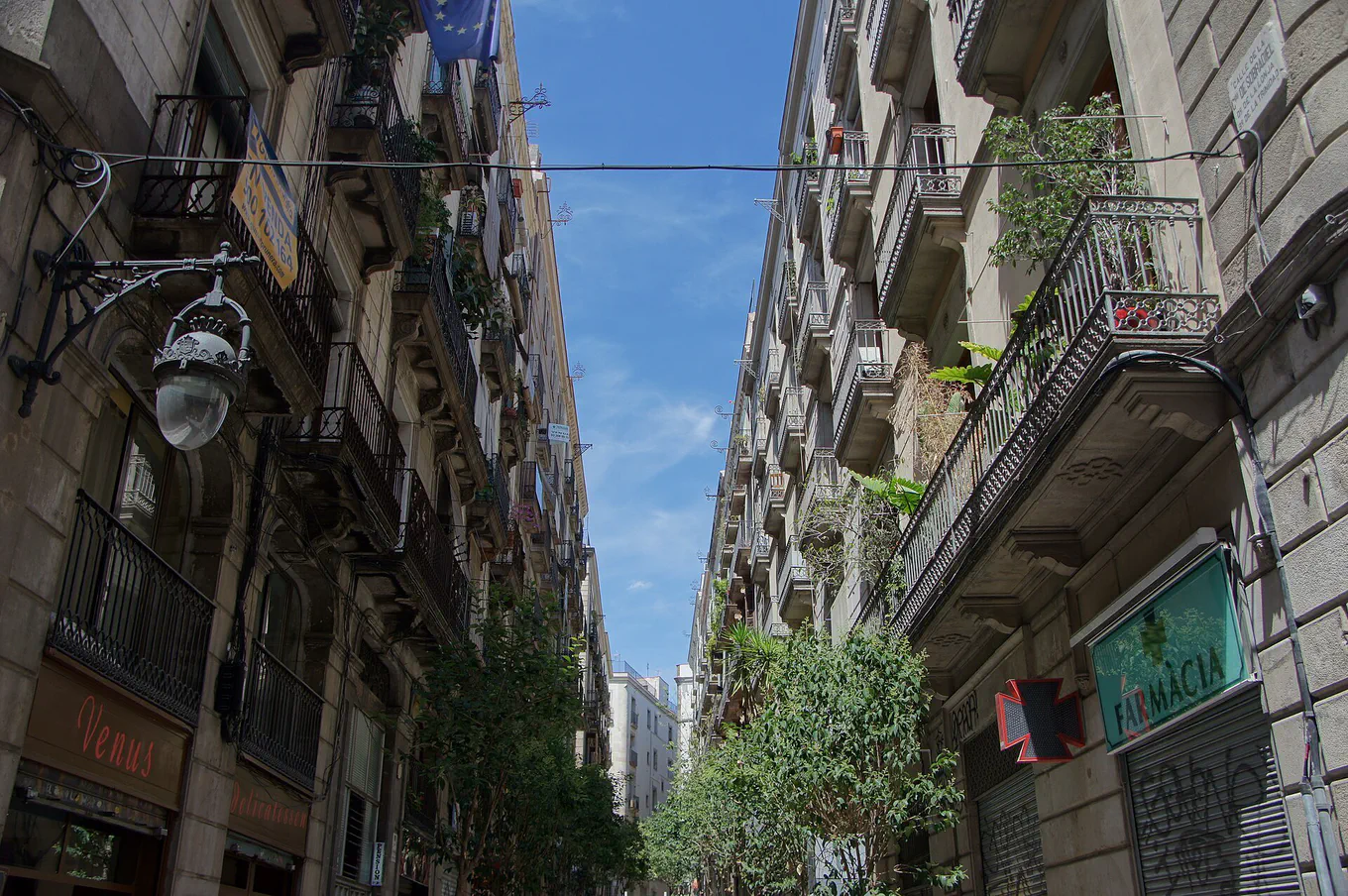
Les Demoiselles d’Avignon, Picasso’s painting of 1907, shows five naked prostitutes in a brothel on Carrer d’Avinyó, a street in Barcelona. Picasso, who when sad or nostalgic saw Barcelona as his true home, painted it in his Paris studio and always called it “my brothel”. When the poet André Salmon first showed it, in 1916, he gave it a less scandalous title. Even so, the painting was deemed immoral. Picasso never liked the new name, but it stuck, and Avignon was taken for the city in France, not the Barcelona street.
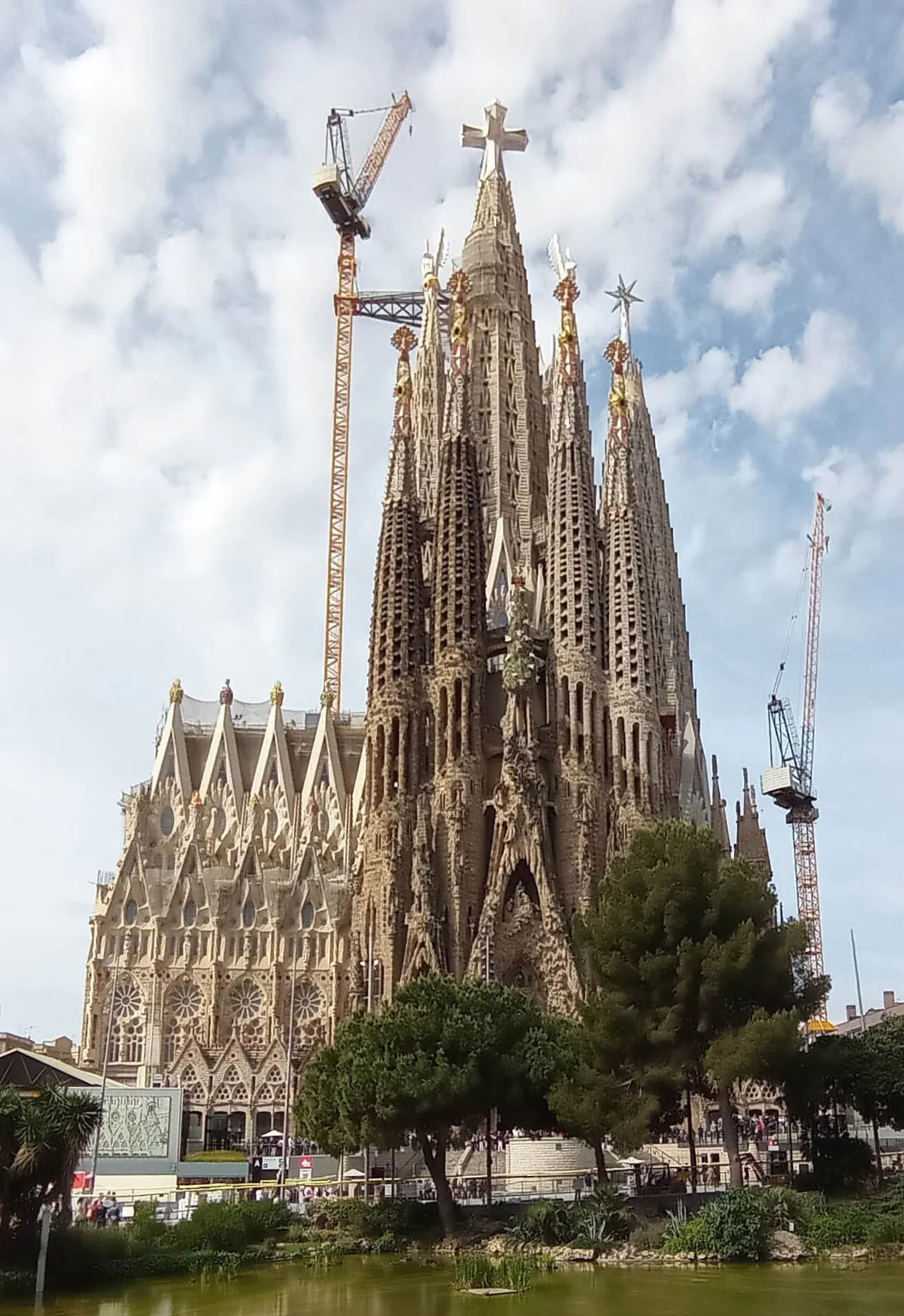
2 Gaudí, the Sagrada Família, and the number 30 tram
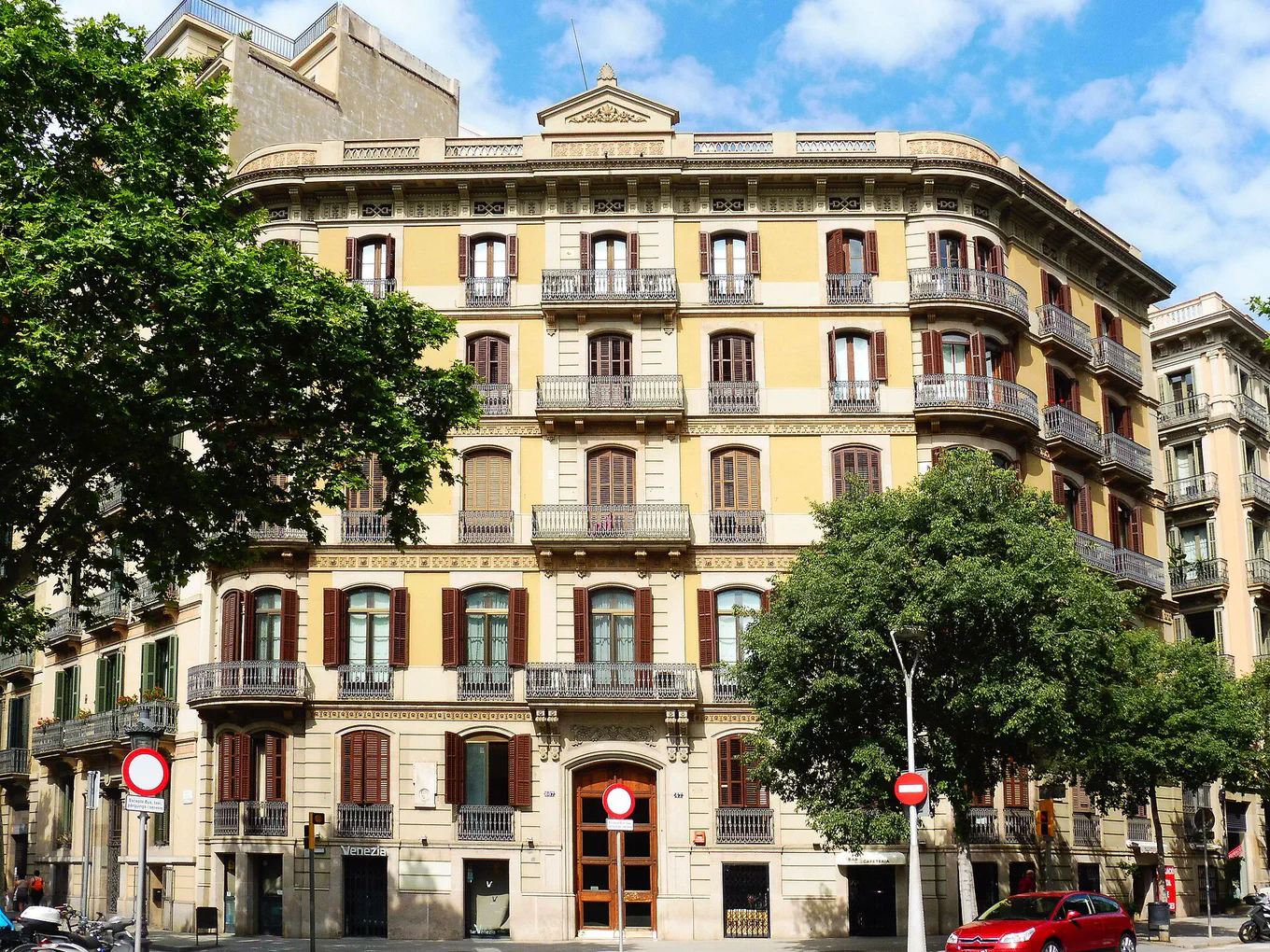
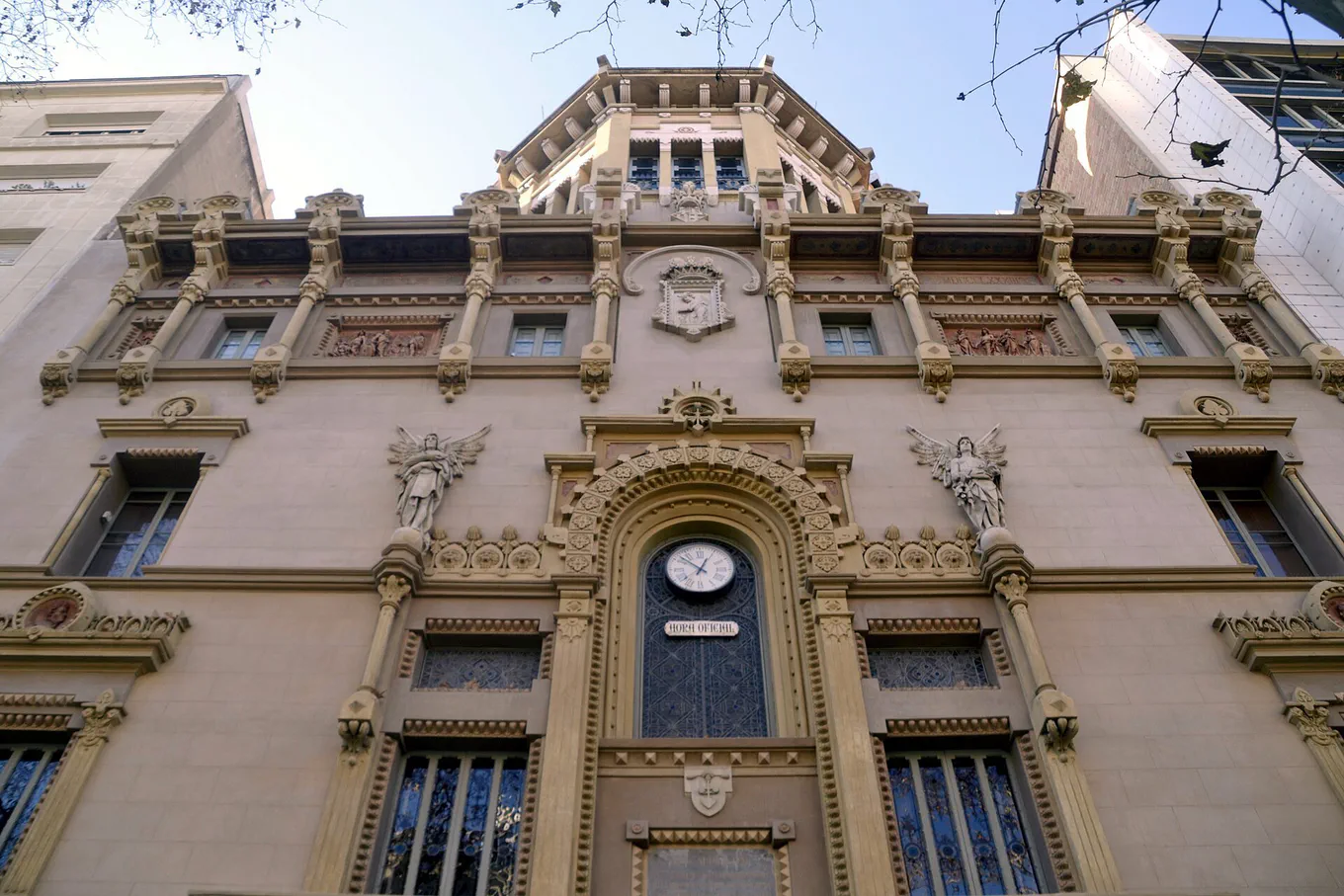
Stand here. The Gran Via, between Carrer de Girona and Carrer de Bailèn. Gaudí is buried in the Sagrada Família’s crypt.
For his last twelve years, Antoni Gaudí worked on nothing but the Sagrada Família, and in the end he lived in its workshop. He dressed in old, worn-out suits. On 7 June 1926, walking to church as he did every day, he was hit by a number 30 tram on the Gran Via. Taken for a beggar, he got no help at first, until passers-by put him in a taxi to hospital. He died three days later. Less than a quarter of his church was built.
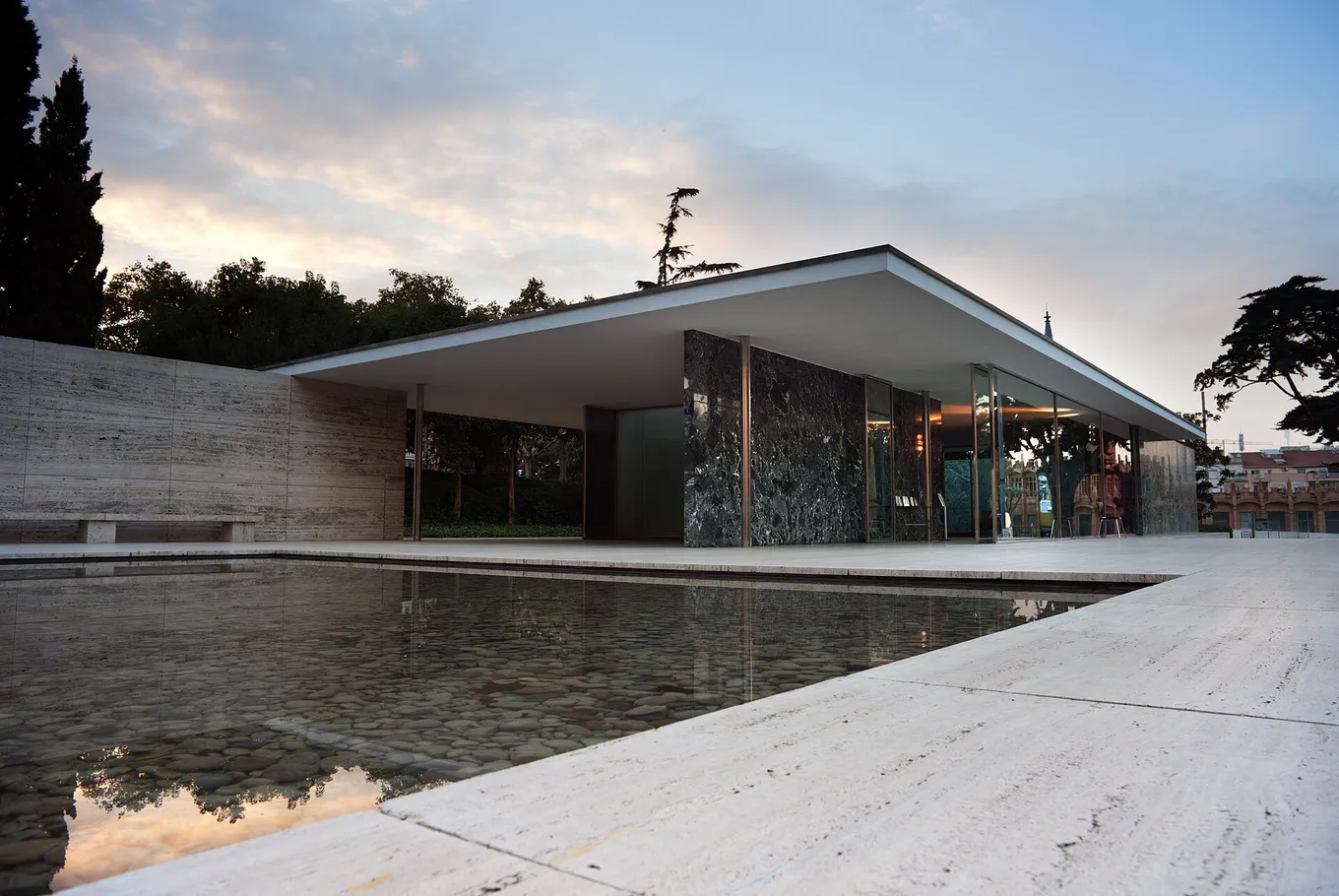
3 Mies van der Rohe’s Barcelona Pavilion on Montjuïc
Stand here. The Barcelona Pavilion, on Montjuïc. It is a 1986 reconstruction on the original site.
The Barcelona chair was made for this building, Germany’s pavilion at the 1929 International Exposition, so that Spanish royalty could oversee the opening. Ludwig Mies van der Rohe and Lilly Reich designed both, the pavilion in glass, steel, and marble. But the pavilion was torn down in early 1930, not a year after it was finished. Half a century later, Barcelona decided to rebuild it. The builders worked from old drawings and from footings rediscovered on the site, and the pavilion rose again where it had stood.
4 George Orwell on the roof of the Poliorama
Stand here. The Teatre Poliorama, at La Rambla 115, now run as a theatre. A Barcelona square, Plaça de George Orwell, bears his name.
George Orwell, later the author of Nineteen Eighty-Four, came to Barcelona to fight fascism. He found a town where “the working class was in the saddle”. But in May 1937, government forces and workers fought in the streets, and Orwell spent three days and nights on the roof of the Poliorama cinema, reading Penguin books and marvelling at the folly of it all. By June, the POUM, whose militia he had joined, was outlawed. He and his wife crossed into France, and both wanted to be back in Spain.
5 Freddie Mercury, Montserrat Caballé, and the song “Barcelona”
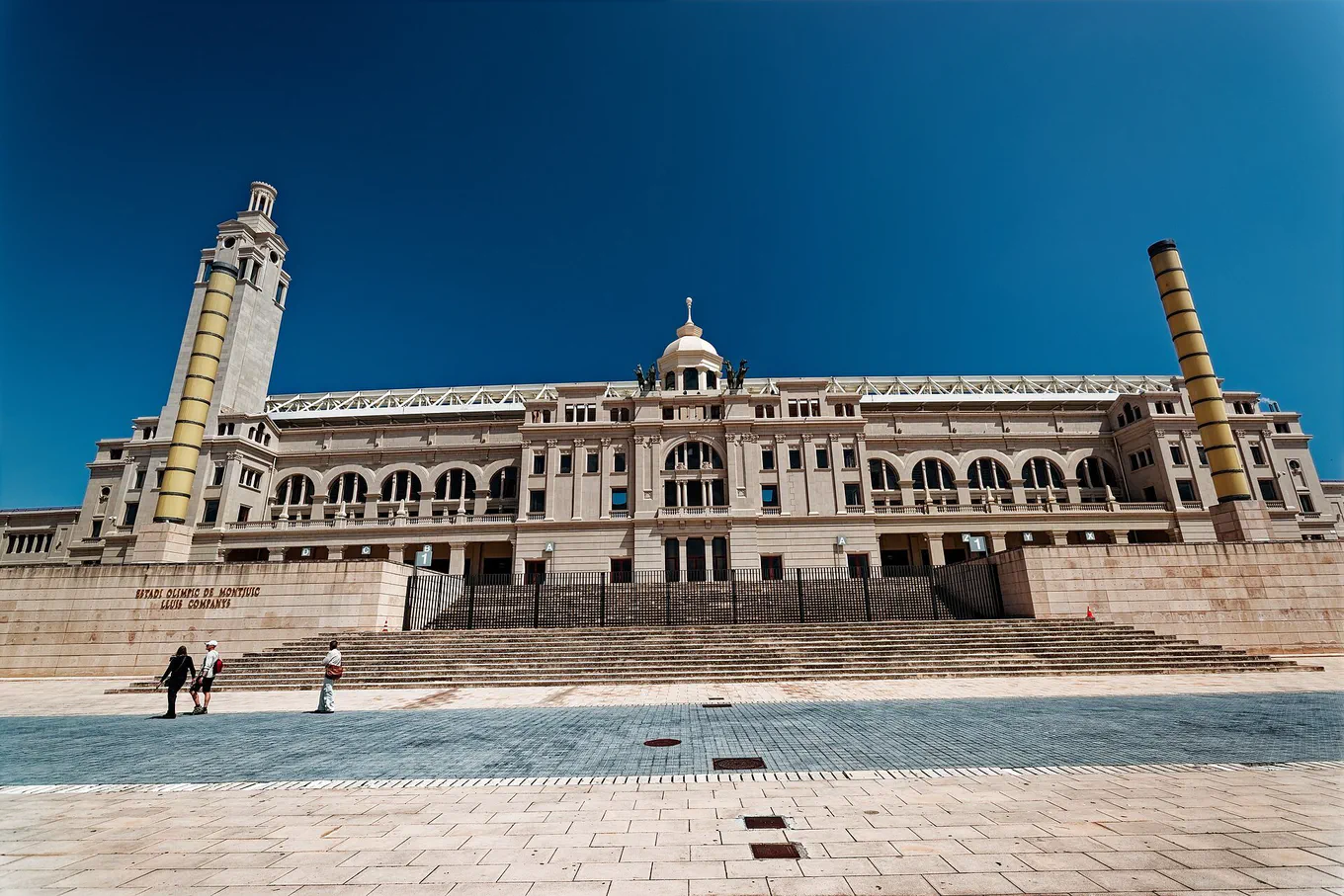
Stand here. The Estadi Olímpic Lluís Companys, on Montjuïc, where the 1992 Games opened. FC Barcelona has played there while the Camp Nou is rebuilt.
On Spanish television, Freddie Mercury of Queen said he wanted to meet Montserrat Caballé, the Barcelona-born soprano whose voice he thought the best in the world. They met in Barcelona, and when Caballé was asked to help produce a song for the city’s Olympics, she asked him to collaborate. In October 1988, they sang “Barcelona” together at an open-air festival, his last live performance. Mercury died in November 1991, eight months before the Games. When the Games opened, the duet played from a recording, over film of the city.
Pack nothing. Leave Friday.
Every Friday, I write a free letter, Journey, that takes us on a trip through places, stories, and ideas.
Homage to Catalonia(George Orwell, 1938). A memoir. Orwell’s Spanish Civil War, from the POUM militia to three days and nights on the Poliorama’s roof on La Rambla.
The Time of the Doves(Mercè Rodoreda, 1962). A novel. Its Catalan title, La plaça del Diamant, is the name of a real square in the Gràcia district.
The Shadow of the Wind(Carlos Ruiz Zafón, 2001). A novel. A bookseller’s son is taken to the Cemetery of Forgotten Books, which Zafón places on Carrer de l’Arc del Teatre, off La Rambla.
Nada(Carmen Laforet, 1945). A novel. Its heroine, Andrea, leaves behind an unhappy life on Carrer d’Aribau.
Cathedral of the Sea(Ildefonso Falcones, 2006). A novel. Its hero, Arnau, is transfixed by the building of the church of Santa Maria del Mar, in La Ribera.
Films to watch before you visit Barcelona
The Passenger(Michelangelo Antonioni, 1975). A film. Hiding in Gaudí’s Palau Güell, a man called Locke meets an architecture student. A later scene is at La Pedrera, on Passeig de Gràcia.
All About My Mother(Pedro Almodóvar, 1999). A film. Its Barcelona includes a flat right opposite the Palau de la Música Catalana, and the Sagrada Família.
REC(Jaume Balagueró and Paco Plaza, 2007). A film. Casa Argelich, at Rambla de Catalunya 34, has become a set for films, this one among them.
Questions
Is the Sagrada Família finished?
Its tallest tower is. Building began in 1882, and the central Tower of Jesus Christ, 172.5 metres high, was blessed on 10 June 2026, the centenary of Gaudí’s death. The tower makes the Sagrada Família the world’s tallest church. Gaudí is buried in its crypt, in the chapel of Our Lady of Carmel.
Where can you follow George Orwell in Barcelona?
During the fighting of May 1937, Orwell spent three days and nights on the roof of the Poliorama, opposite the POUM building. It is a theatre today, at La Rambla 115. Plaça de George Orwell is named after him, and was the first public space in Barcelona with round-the-clock camera surveillance.
Can you visit the Cemetery of Forgotten Books?
No. It is Carlos Ruiz Zafón’s invention. But the street where his novel The Shadow of the Wind hides it, Carrer de l’Arc del Teatre near La Rambla, is real, and so is Carrer de Santa Anna, near Plaça de Catalunya, where he imagined the Sempere family bookshop.