St George is the patron saint of England (where I live), but he gets everywhere. Beirut says Saint George killed his dragon in its bay. (Cappadocia says the same, and so does Libya.) Stories spread.
— Nick
Beirut is the capital of Lebanon, on a peninsula halfway along its Mediterranean coast, and people have lived there for more than 5,000 years. Its stories here are a saint and a dragon in the bay, a double agent who vanished in 1963, a curator who hid a museum in concrete, a sniper house saved by an architect, and a film finished nine days before a war.
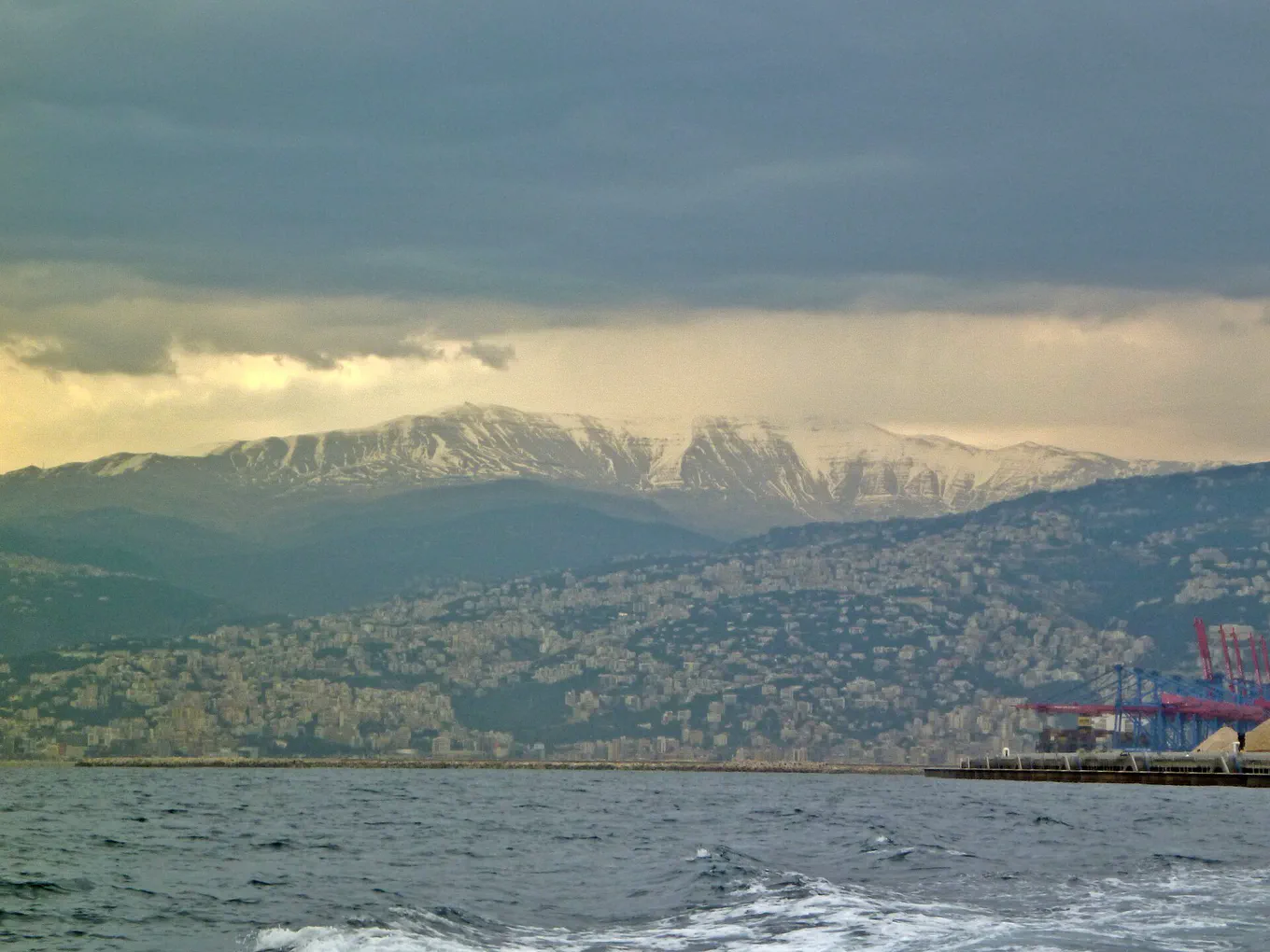
Beirut claims Saint George as its patron saint, and local legend says he killed the dragon here, at a grotto with seven caves at the mouth of the Beirut River. The dragon took human tribute chosen by lot, until the lot fell on the princess. George refused to flee. He killed the dragon and rescued her, and the astonished townspeople all became Christians. The earliest tellings set the story in Cappadocia, and later ones in Libya. But one account says “the place is shown close to Beyroot”.
2 Kim Philby’s bar at the St Georges Hotel
Stand here. The St Georges Hotel, on Saint George Bay. It closed in 1975 because of the civil war, but the building still stands.
Kim Philby, one of the Cambridge Five spies, drank at the hotel’s famous bar, arriving for his first gin and tonic at 1 p.m. He was in Beirut as a correspondent, and secretly a Soviet agent. But his MI6 friend Nicholas Elliott, who had believed him innocent, confronted him. Philby confessed, then stalled. On 23 January 1963, he failed to meet his wife, Eleanor, at a dinner party. He said later he had sailed on a Soviet freighter. Eleanor followed him to Moscow. Within a year, she had left, divorced.
3 Maurice Chehab pours concrete over Beirut’s National Museum
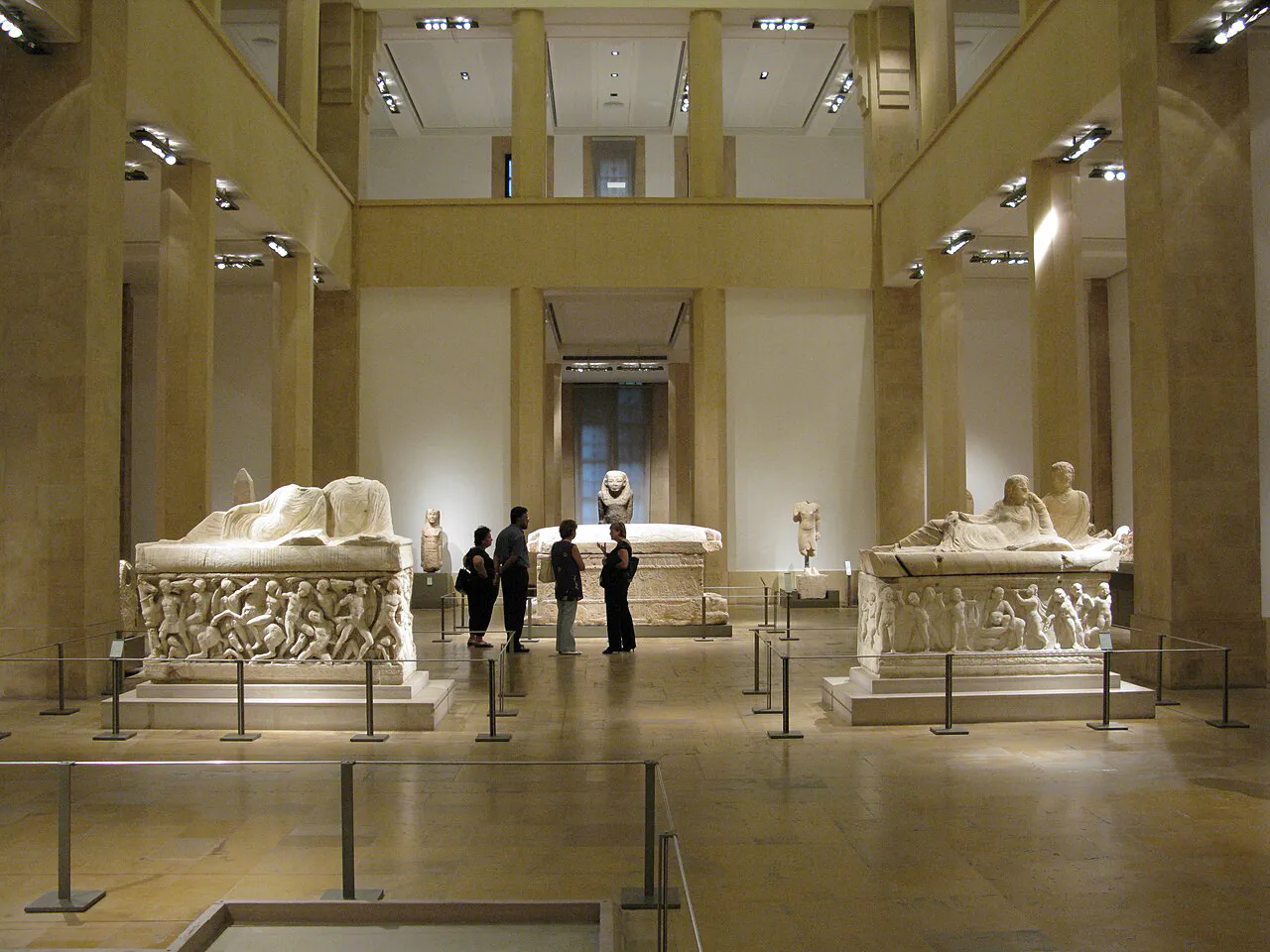
Stand here. The National Museum of Beirut, on the old Green Line. It reopened in 1999, and a hall there now bears Chehab’s name.
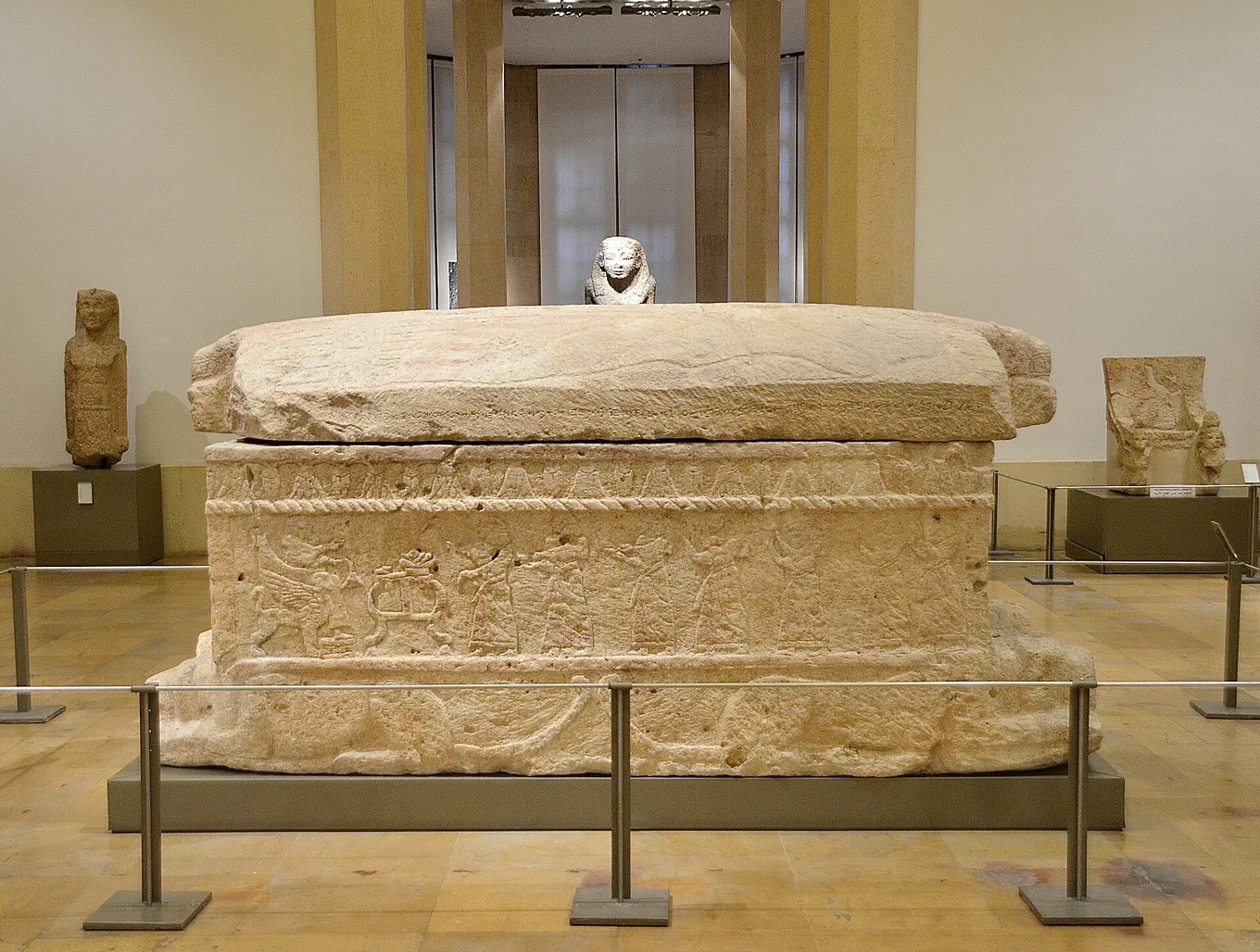
In 1976, as the civil war escalated, Beirut’s National Museum stood on the Green Line, the front between the warring sides. Its curator, Maurice Chehab, and his wife set about protecting it. Small objects went into the basement behind steel-reinforced concrete. The heaviest, including the Ahiram sarcophagus, a stone coffin, were encased in concrete where they stood. Chehab spread the rumour that the collection had been sent abroad. Shells hit the museum, and fighters made it a barracks. Chehab died in 1994, five years before it fully reopened.
4 Mona Hallak saves Beirut’s sniper house, the Yellow House
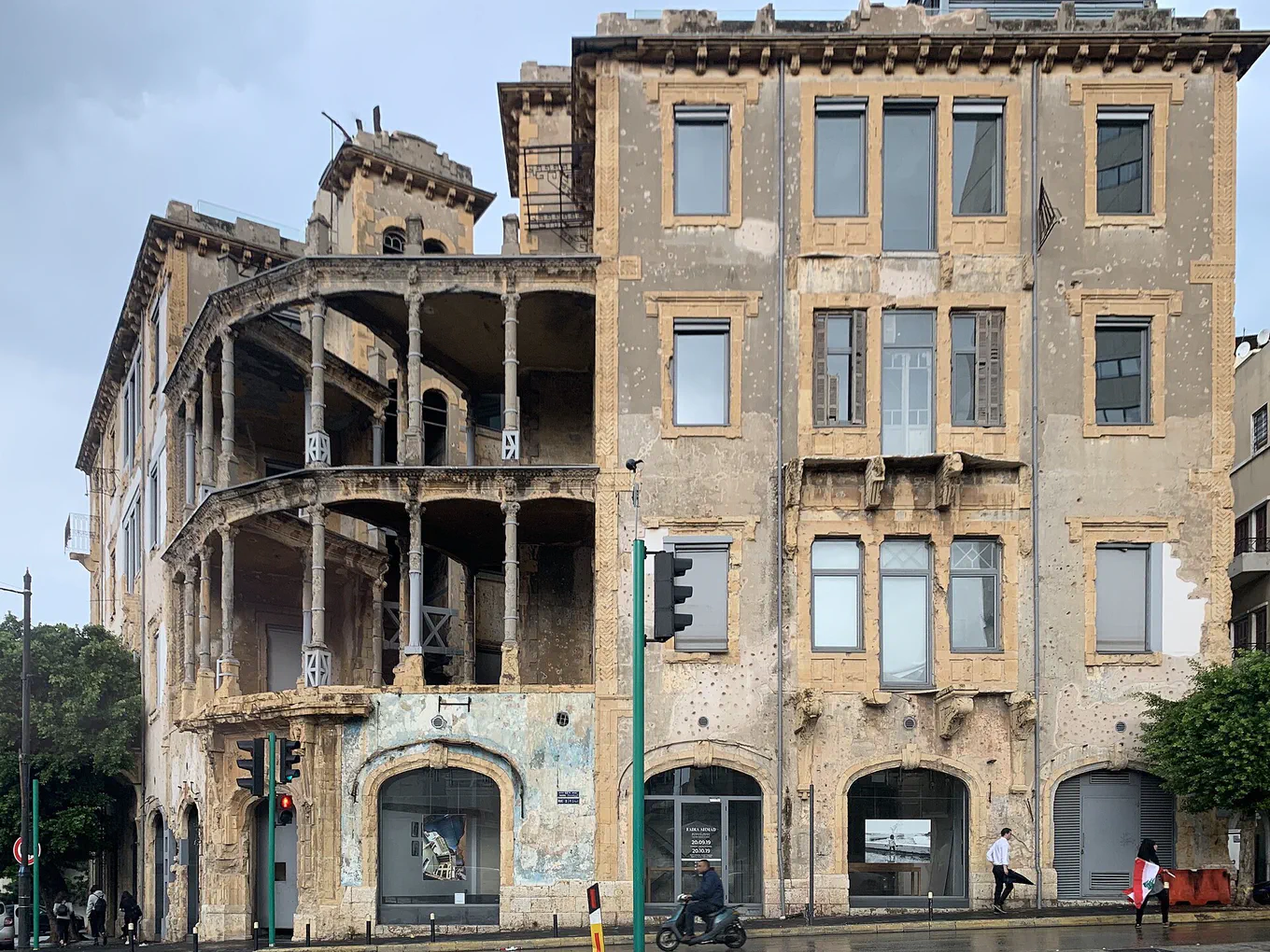
Stand here. Beit Beirut, on Damascus road at the Sodeco crossroads, now a museum of the city’s history, especially the civil war.
The Barakat building was nicknamed the Yellow House for its ochre sandstone, but in the civil war, used by snipers, it was called the building of death. In 1997, its owners decided to sell, and demolition was ordered. The architect Mona Hallak and other activists campaigned in the press and outside the building until the demolition was suspended. Inside, Hallak recovered what a dentist had left in his flat when he died in 1973 — his instruments and the love letters he had exchanged with his Italian wife.
5 Nadine Labaki’s Caramel and a salon in Gemmayzeh
Stand here. Gemmayzeh, the Beirut district where an old clothes shop became the film’s salon.
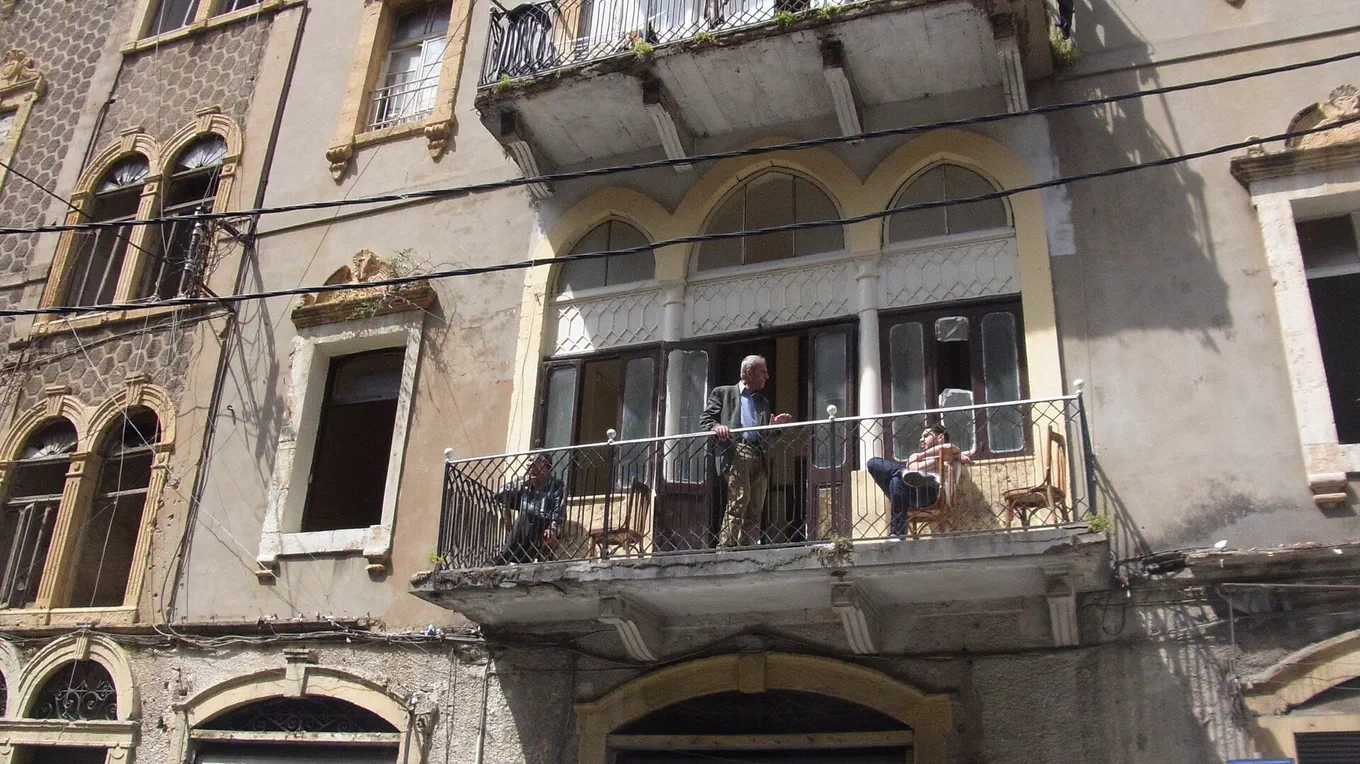
Old stone houses with arched windows and iron balconies on Rue Gouraud in Beirut’s Gemmayzeh district.Sluggh Mcgee / CC0.
Nadine Labaki’s Caramel, her debut as a director, follows three women in a Beirut beauty salon. Its title is a hair-removal method of heated sugar, water, and lemon juice. Labaki wrote it during a residence at the Cannes festival, spent almost a year finding women who resembled her characters, and played Layale herself. An old clothes shop in Gemmayzeh became the salon. The film shows a Beirut most people don’t know, and never mentions war. Shooting finished nine days before war broke out, in July 2006.
Pack nothing. Leave Friday.
Every Friday, I write a free letter, Journey, that takes us on a trip through places, stories, and ideas.
Sitt Marie Rose(Etel Adnan, 1978). A novel of the early civil war, and of the divide between West and East Beirut, Muslim and Christian.
Beirut Blues(Hanan al-Shaykh, 1992). A novel in letters, most of which may never arrive. The last finds its writer in the departure lounge of Beirut airport, weighing her decision.
An Unnecessary Woman(Rabih Alameddine, 2014). A novel set in Beirut, where Aaliya Saleh, an isolated 72-year-old widow and shut-in, reads widely and translates favourite novels.
Films to watch before you visit Beirut
West Beirut(Ziad Doueiri, 1998). A film. Beirut split along the line between West and East, and Tarek’s accidental visit to a brothel in the war-torn Zeytouni Quarter.
Caramel(Nadine Labaki, 2007). A film. Three women in a Beirut beauty salon, shot in an old clothes shop in Gemmayzeh.
A Spy Among Friends(2022). A TV drama from Ben Macintyre’s book, in which Elliott interviews Philby in Beirut before Philby defects to the Soviet Union.
Capernaum(Nadine Labaki, 2018). A film. Labaki’s later feature, in which Zain follows Cockroach Man off the bus at the Luna Park in Ras Beirut.
Questions
Can you visit the National Museum of Beirut?
Yes. The museum stood on the front line through the civil war and reopened to the public on 8 October 1999 after restoration. A new exhibition hall named after Maurice Chehab, its wartime curator, was opened to the public.
Where did Saint George kill the dragon?
Local legend puts it at Saint George Bay, on Beirut’s northern coast, at a grotto with seven caves at the mouth of the Beirut River. The earliest written versions, from the 11th and 12th centuries, set the story in Cappadocia, and later ones moved it to Libya.
What was the Green Line in Beirut?
It was the line that divided Beirut during the civil war, from 1975 to 1990, separating mainly Muslim West Beirut from mainly Christian East Beirut. Its main street was Damascus Street. It was called green after the plants that grew on the empty ground along it.