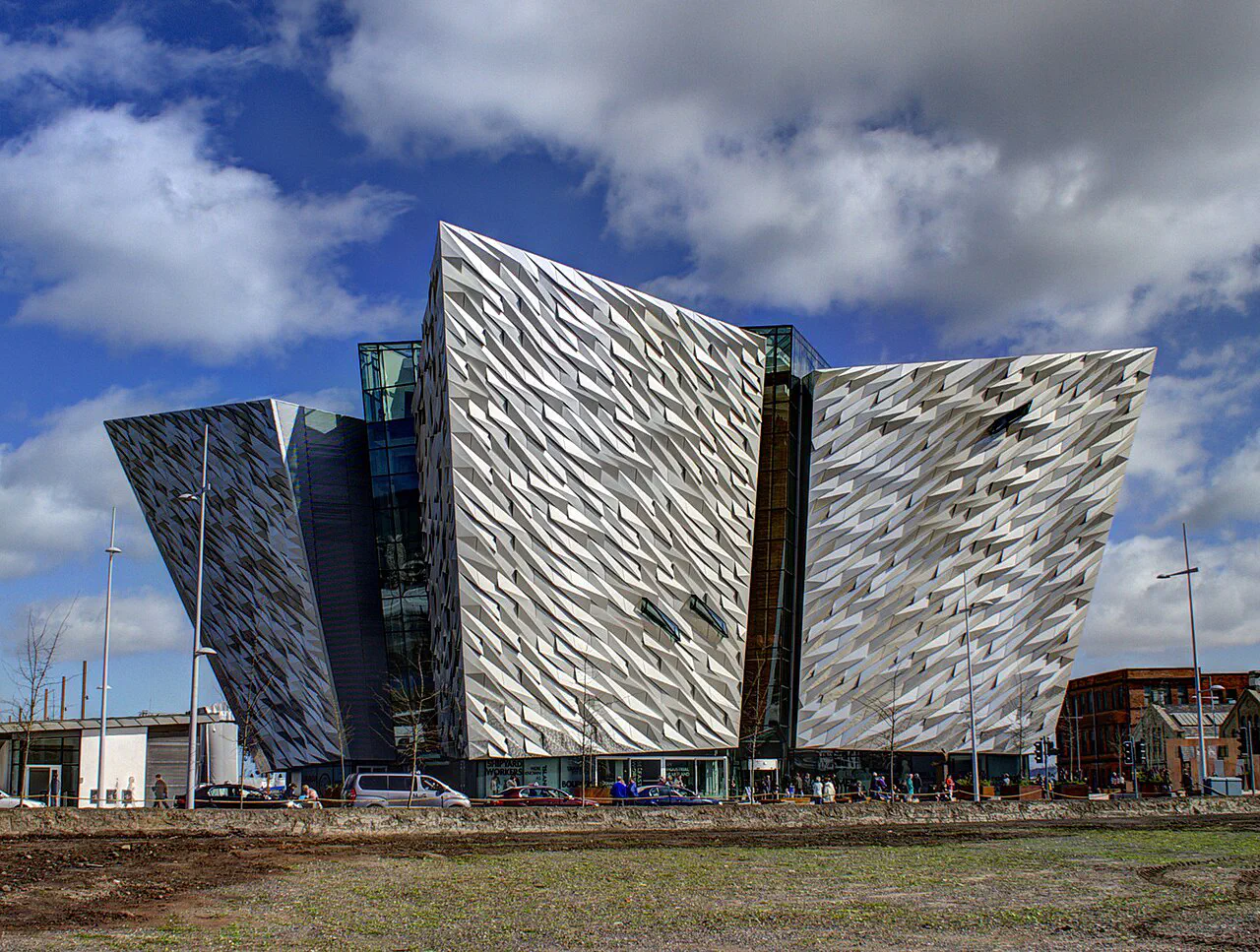
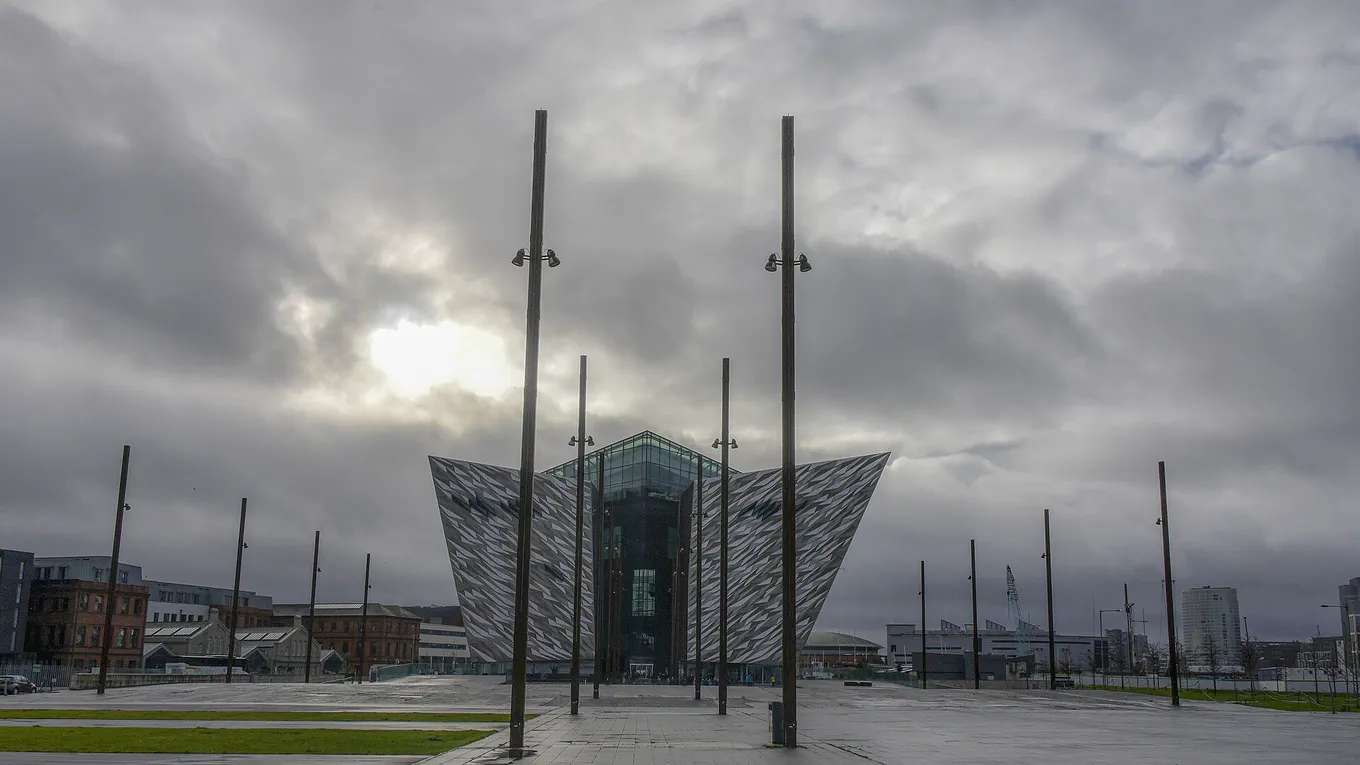
Much of the final season of Game of Thrones was shot in Belfast, next to the yard that built the Titanic.
— Nick
Queen Victoria made Belfast a city in 1888, when it was the world’s largest centre of linen making. The capital of Northern Ireland stands on the River Lagan, open to the sea through Belfast Lough. Kenneth Branagh’s lost street ends a list starting with a Titanic architect and taking in a pub with a crown on its floor, a vet’s air-filled tyre and the boy who would write Narnia.
The Titanic was built in Belfast, at the Harland and Wolff yard, and one of the architects in charge of her plans was Thomas Andrews, head of its drafting department. A hundred thousand people watched her launched into Belfast Lough. Andrews sailed on her maiden voyage, making notes on what could still be improved. But on 15 April 1912, she sank, and the man who had come aboard to make her better died with more than 1,500 others. His body was never recovered.
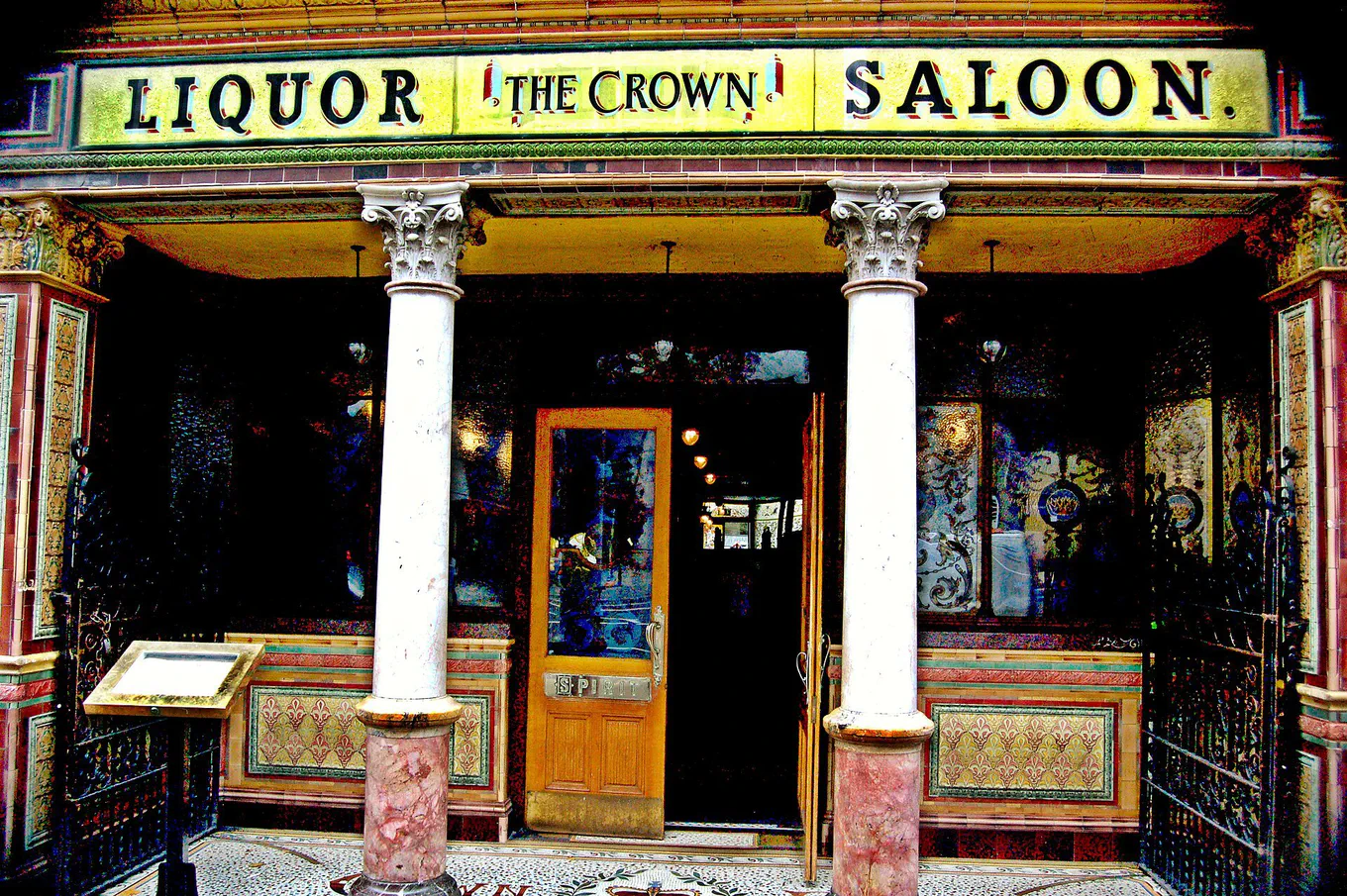
Stand here. The Crown Liquor Saloon, 46 Great Victoria Street. A working pub, with gas lighting, ten snugs, or booths, and the crown in its entrance floor.
In Carol Reed’s film Odd Man Out, the bar is a studio set based on this one. The real bar became a Victorian gin palace in 1885, when its owner, Patrick Flanagan, had it refitted with tiles, stained glass, and woodwork. He named it the Crown. At the door, he had a crown set in mosaic into the floor. The rumour is that he chose that spot on purpose, so that everyone who came in would trample on it.
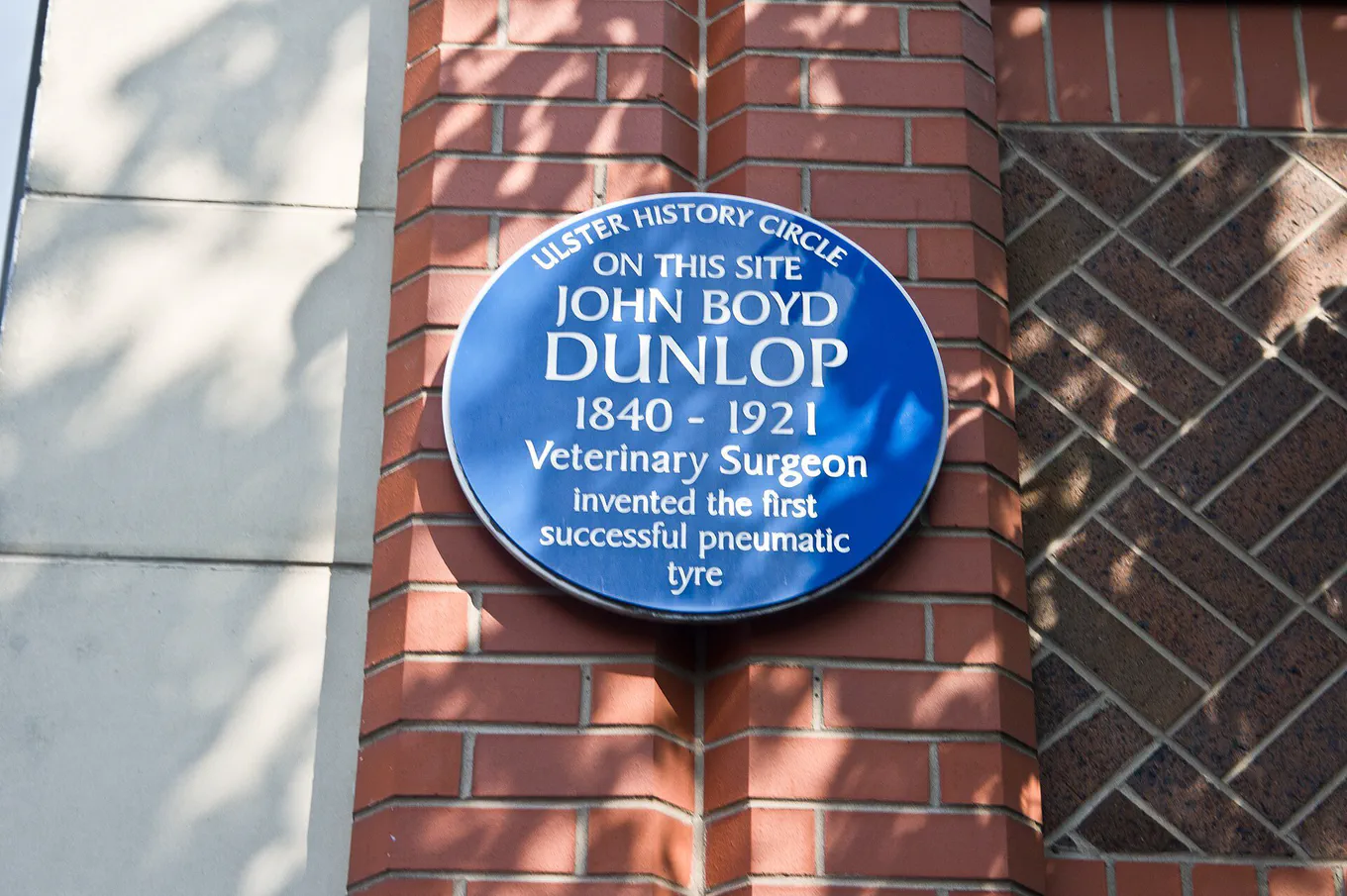
John Boyd Dunlop was a Scottish vet in Belfast. His small son was prescribed cycling for a heavy cold, so Dunlop made the boy’s tricycle more comfortable with tubes full of air. He rolled his wheel across the yard beside a metal one to test it. He patented the tyre in 1888. But two years later, he was told the patent was invalid. Robert Thomson had patented an air-filled tyre in the 1840s, when Dunlop was a small boy himself.
4 C. S. Lewis’s childhood at Little Lea, Belfast
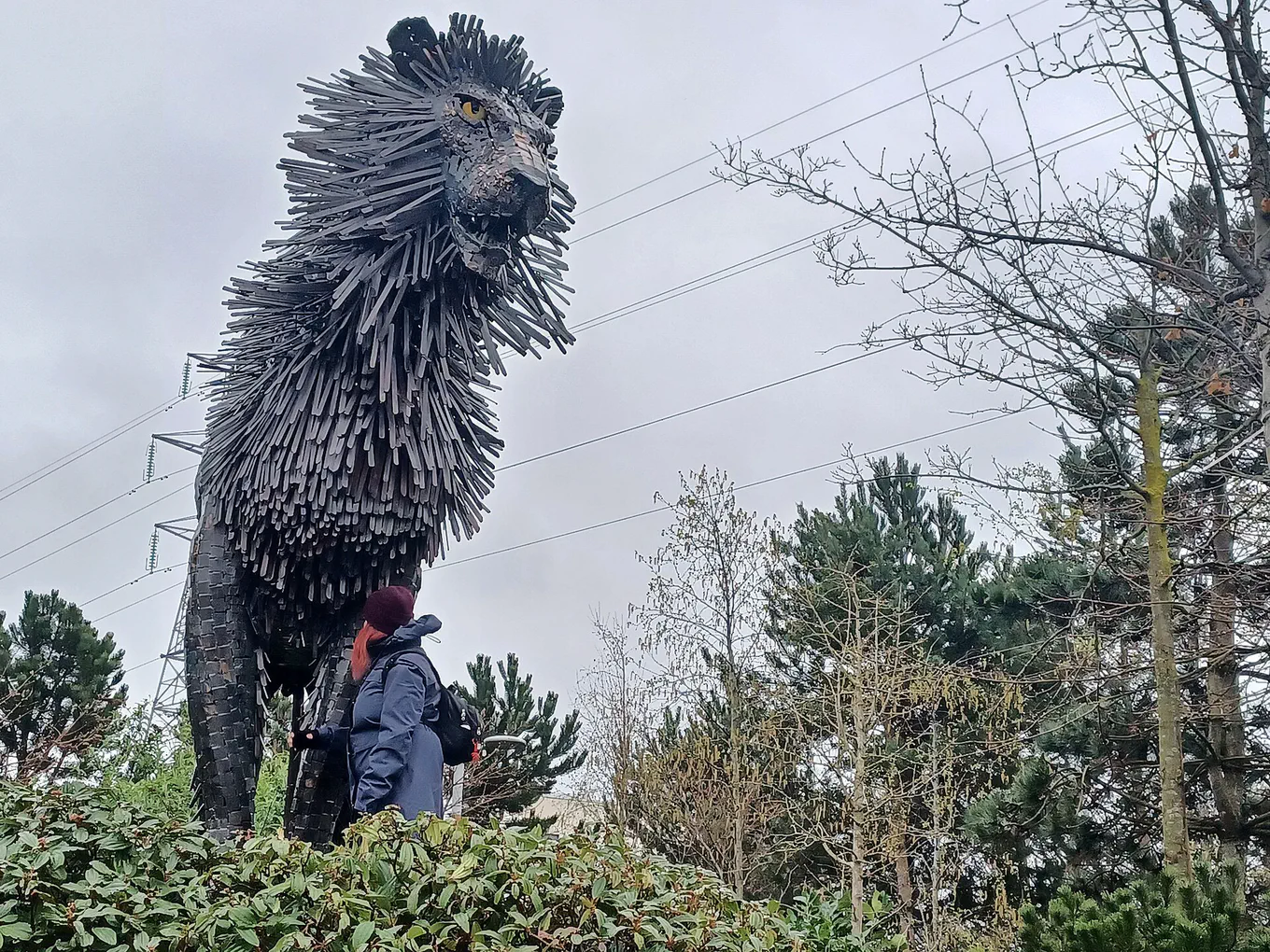
Stand here. C.S. Lewis Square, on the Connswater Community Greenway in east Belfast. Seven Narnia sculptures by Maurice Harron include Aslan and the White Witch.
C. S. Lewis, who wrote The Chronicles of Narnia, was seven when his family moved into Little Lea, a new house in Strandtown, east Belfast. He had its attics to himself, free run of his father’s books, and a brother, Warnie, with whom he invented Boxen, a world run by animals. Lewis later wrote that “the New House is almost a major character in my story”. But in 1908, when he was nine, his mother died of cancer, and his father sent him away to school in England.
5 Kenneth Branagh’s Belfast and the street he left
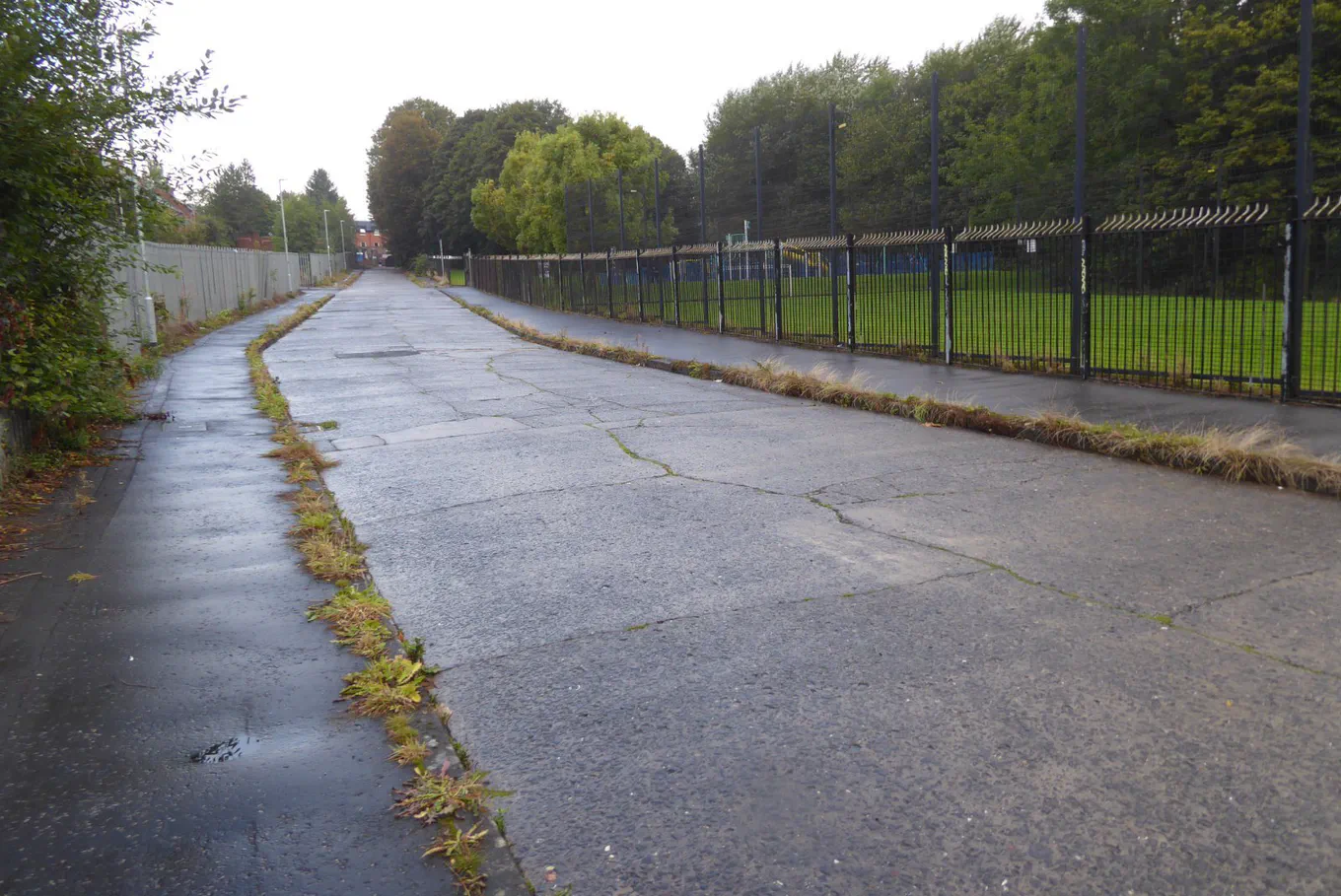
Stand here. Mountcollyer Street, in north Belfast. Most of it, No 96 included, has been demolished, and it is now a cul-de-sac beside Alexandra Park.
Kenneth Branagh won the Oscar for Best Original Screenplay with Belfast, his film about Buddy, a nine-year-old in the city as the Troubles begin in 1969. Branagh was nine himself when his family left No 96 Mountcollyer Street for England in early 1970, to escape the Troubles. Fifty years later, when he made the film, most of the street was gone, and Covid rules meant it was rebuilt on a set in England. He has said, “I don’t think you can take Belfast out of the boy.”
Pack nothing. Leave Friday.
Every Friday, I write a free letter, Journey, that takes us on a trip through places, stories, and ideas.
Say Nothing(Patrick Radden Keefe, 2018). A history of the Troubles, starting from the death of Jean McConville, a mother of ten kidnapped from her home in the Divis Flats in 1972.
Eureka Street(Robert McLiam Wilson, 1996). A novel about two Belfast friends, one Catholic and one Protestant, before and after the IRA ceasefire of 1994.
Films to watch before you visit Belfast
Belfast(Kenneth Branagh, 2021). A semi-autobiographical film. A nine-year-old’s childhood at the start of the Troubles, on a Mountcollyer Street rebuilt on a set in England.
Odd Man Out(Carol Reed, 1947). A film. Exterior scenes were shot in West Belfast, and its bar was a studio set based on the Crown, built at Denham in Buckinghamshire.
’71(Yann Demange, 2014). A film. Its hero, Hook, wanders into the Shankill Estate and is taken to a home in the Divis Flats.
Good Vibrations(Lisa Barros D’Sa and Glenn Leyburn, 2013). A biographical film. Richard Dormer plays Terri Hooley, who ran the Good Vibrations record shop in Belfast.
Questions
Can you visit C. S. Lewis’s childhood home in Belfast?
No. Little Lea, on Circular Road in Strandtown, is a private house behind gates marked “Little Lea” and “Private”. Also in east Belfast, C.S. Lewis Square on the Connswater Community Greenway has seven Narnia sculptures by Maurice Harron, including Aslan, the White Witch, and Mr and Mrs Beaver.
Where was Game of Thrones filmed in Belfast?
In the Paint Hall in the Titanic Quarter, a former shipyard building where the parts of ships were once painted. It is now a studio with four stages, and Northern Ireland Screen says it was home to HBO’s Game of Thrones from series 1 to 4.
Are Belfast’s peace walls still standing?
Many are. The first peace lines of the Troubles went up in 1969, after civil unrest broke out. No new one went up between 2008 and the end of 2023, and the Department of Justice’s 2026 figures put the official peace walls still standing in Northern Ireland at 39.