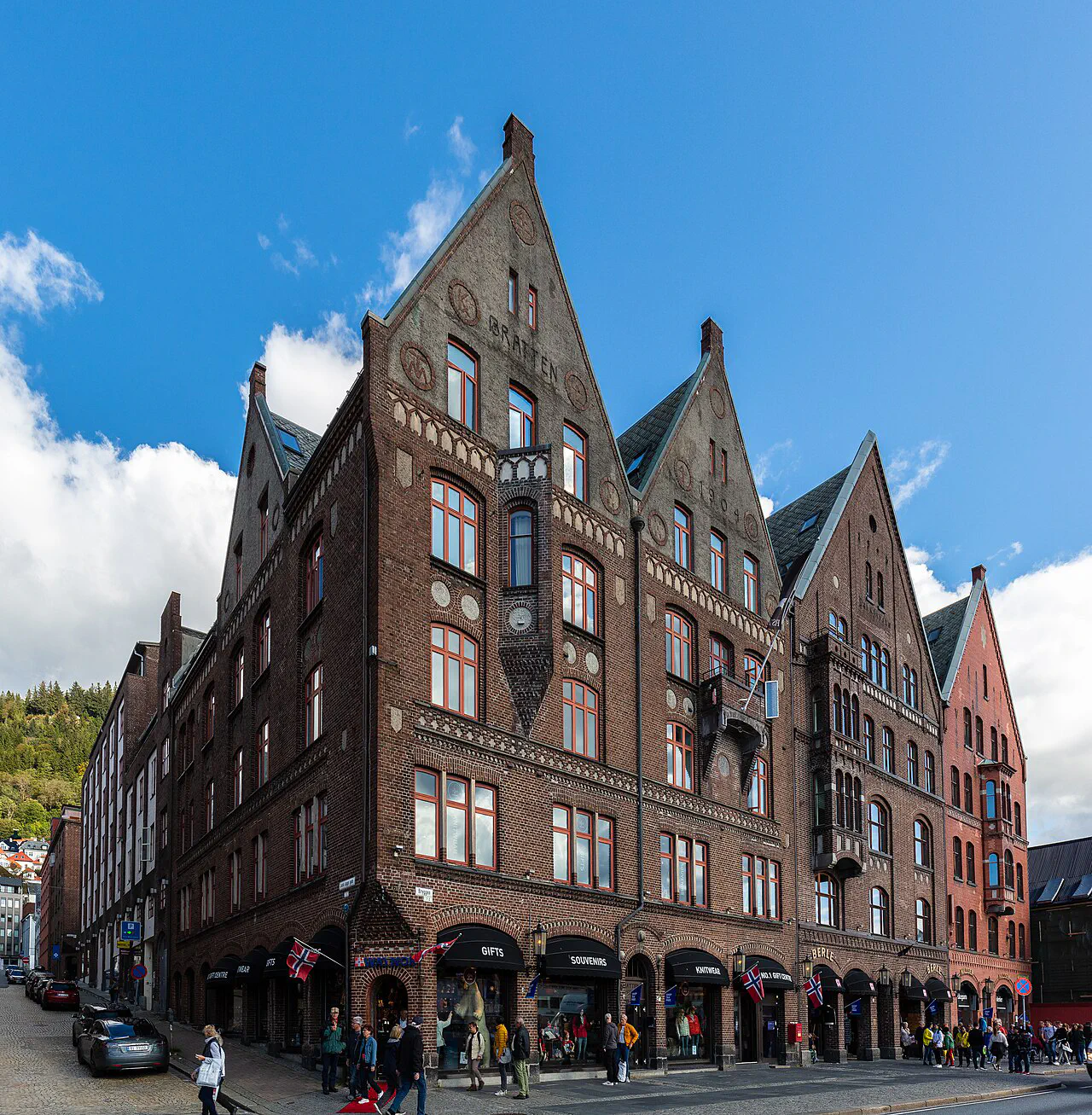
Bergen is Norway’s second-largest city, on the west coast in Vestland county. By tradition, King Olav Kyrre founded it in 1070, and Hanseatic merchants later kept a trading office on its old quays, Bryggen. Its stories here are a cannonball in the cathedral, a tune its composer couldn’t bear, a doctor who went too far, a boat sent after a battleship, and a fire that uncovered medieval messages.
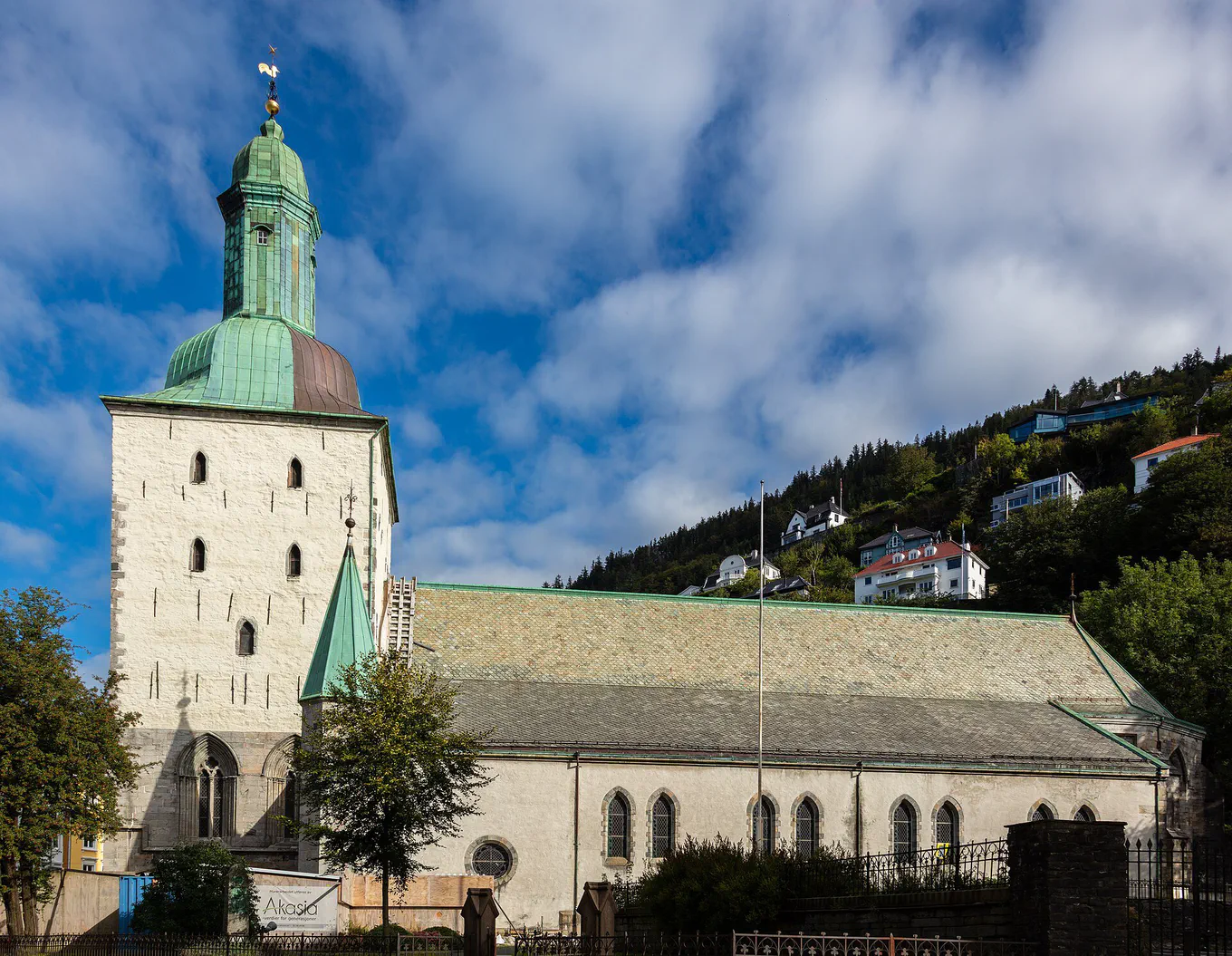
In 1665, a rich Dutch convoy sheltered in neutral Bergen. Under a secret deal, Denmark-Norway would let an English fleet attack and share the loot. But the order never reached Bergen in time. When the English attacked, Bergen’s commandant fired back. The English withdrew badly damaged, with 112 dead. The city’s guns had defended the ships its rulers had promised away.
2 Edvard Grieg and the mountain king tune he couldn’t bear
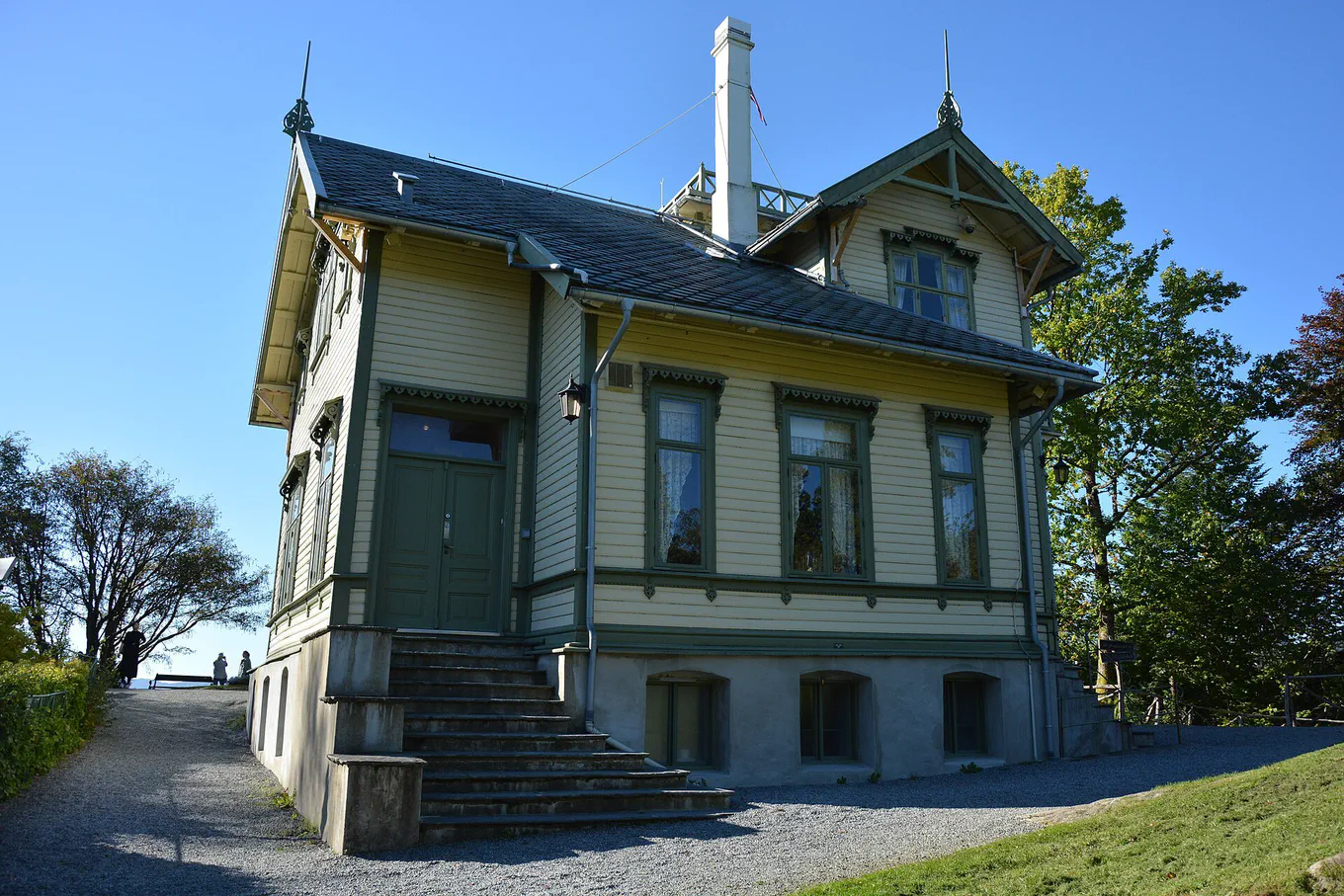
Stand here. Troldhaugen, the home Grieg and his wife Nina finished in 1885, now the Edvard Grieg Museum Troldhaugen. His composer’s hut overlooks Nordås Lake.
“In the Hall of the Mountain King” began as a job Edvard Grieg hadn’t wanted. In 1874, Henrik Ibsen asked him for music for Peer Gynt, and Grieg reluctantly agreed. “It is a terribly unmanageable subject,” he wrote to a friend. Of his music for the mountain king’s hall, he said he literally couldn’t bear listening to it, “because it absolutely reeks of cow-pies.” The music opened with the play in Christiania, now Oslo, and helped it succeed. Grieg’s ashes lie in a mountain tomb near his home.
Gerhard Armauer Hansen identified the leprosy bacillus in Bergen in 1873. The city had Europe’s largest concentration of patients, and he wanted to know whether the disease passed from person to person. In 1879, at the Bergen Leprosy Hospital, he used a cataract knife to put leprous material from one patient under the lining of a 33-year-old woman’s eye. He neither asked her nor told her why. A court ruled he had misused his authority, and the man who had found leprosy’s cause lost his hospital post.
4 Shetlands-Larsen and the boat sent after the Tirpitz
Stand here. Shetlands-Larsens brygge, the pier near Bryggen once called Torgutstikkeren. Knut Steen’s statue of Leif Larsen, “Shetlands-Larsen”, was unveiled here in 1995.
The target was the German battleship Tirpitz, and Bergen-born Leif Larsen went after her in a boat, Arthur. In October 1942, it carried two Chariots, to be towed underwater for the last stretch. Near the fjord’s mouth, a German officer boarded, checked the forged papers, questioned Larsen, and let them through. But in worsening weather, with the Tirpitz ten miles away, both Chariots were lost. The boat was scuttled, and Larsen crossed into Sweden. He still became the first non-Briton awarded the Conspicuous Gallantry Medal.
5 The Bryggen fire that uncovered medieval Bergen’s messages
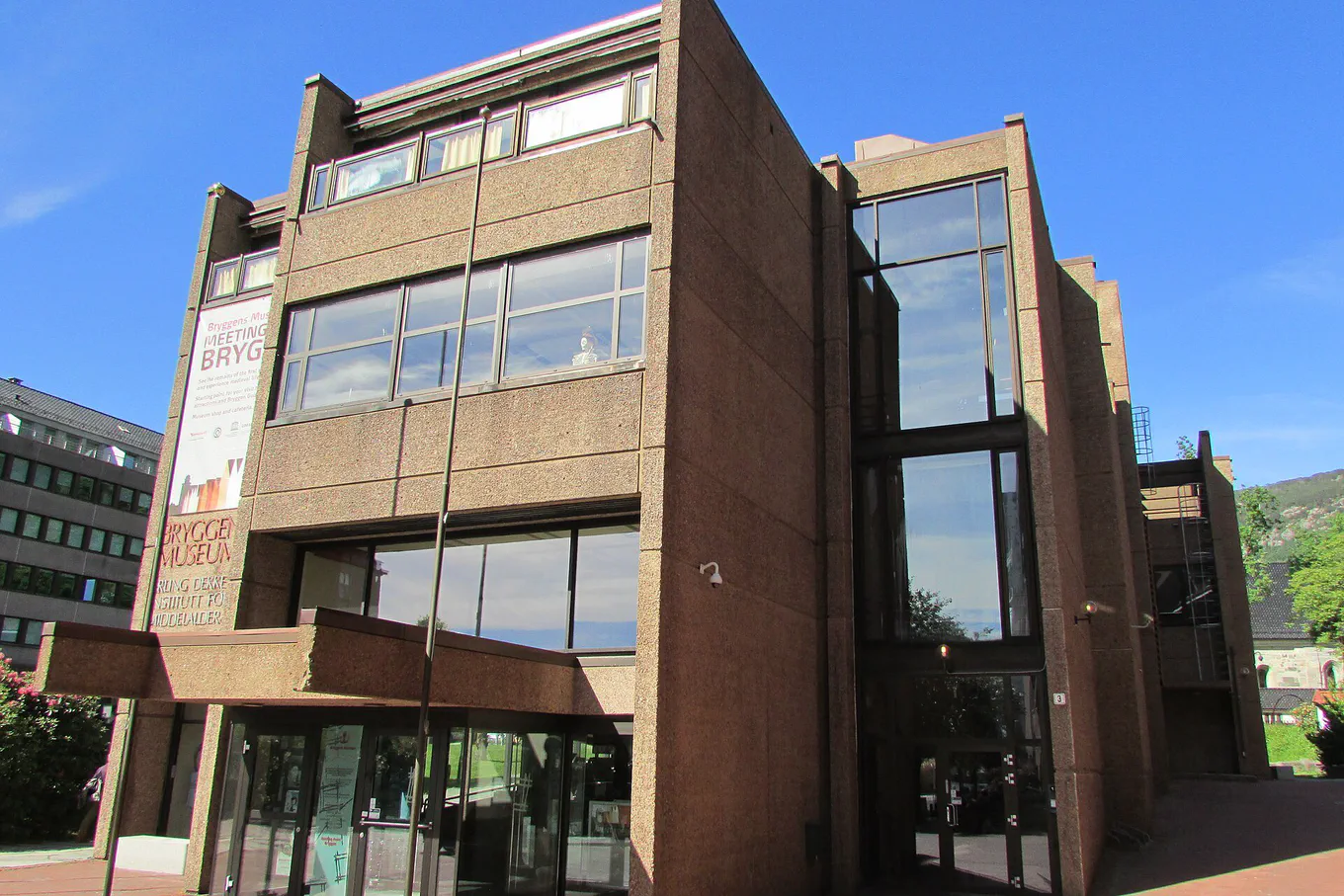
Stand here. Bryggens Museum, built in 1976 on part of the site the fire cleared. It keeps the runic inscriptions found at Bryggen.
In 1955, fire destroyed part of Bryggen, Bergen’s old Hanseatic wharf, now a World Heritage Site. The archaeologist Asbjørn Herteig was given joint charge of digging the burned ground, Norway’s first town excavation run on more modern principles. It lasted thirteen years. Under the burned site lay the everyday writing of medieval Bergen, and some 670 runic inscriptions on wood have been found at Bryggen since the fire. One reads, “My love, kiss me.” Another reads, “Gyða tells you to go home.”
Pack nothing. Leave Friday.
Every Friday, I write a free letter, Journey, that takes us on a trip through places, stories, and ideas.
Hellemyrsfolket*, or *The People of Hellemyr(Amalie Skram, 1887–1898). Four novels about a poor family at Hellemyren, which also show life in Bergen, where Skram was born.
Yours Until Death(Gunnar Staalesen, 1979). A novel. Its private detective, Varg Veum, has his office at Strandkaien 2, in central Bergen.
Some Rain Must Fall(Karl Ove Knausgård, 2016 in English). An autobiographical novel, Book 5 of My Struggle. The book follows him as the youngest student admitted to Bergen’s Writing Academy.
Films to watch before you visit Bergen
Cold Hearts(Kalde hjerter, 2012). A film, with Trond Espen Seim as Varg Veum. A statue of Veum went up by Strandkaien 2 in 2008.
War Sailor(Gunnar Vikene, 2022). A war drama film, set partly in occupied Bergen. Two best friends from Bergen are Second World War sailors, while the married sailor’s wife and children endure a harsh life.
The Snowman(Tomas Alfredson, 2017). A psychological thriller film. Its Bergen filming included scenes on the mountain of Ulriken, at Bryggen, and at the Skansen fire station.
Questions
Can you see the cannonball in Bergen Cathedral?
Yes. A cannonball from the Battle of Vågen in 1665, when an English fleet attacked Dutch merchant ships sheltering in Bergen’s harbour, is still embedded in the outside wall of the cathedral’s tower. The cathedral is the seat of the Church of Norway’s Diocese of Bjørgvin.
Where is Edvard Grieg buried?
At Troldhaugen, the home in Bergen that he and his wife Nina finished building in 1885, now the Edvard Grieg Museum Troldhaugen. His ashes were entombed in a mountain crypt near the house, and after Nina died, her ashes were placed beside his.
What is Bryggen?
Bryggen is the old wharf on Bergen’s harbour, where the Hanseatic League set up one of its four Kontore, or trading offices, around 1350. What remains of the quays was listed as a UNESCO World Heritage Site in 1979. A fire destroyed part of Bryggen in 1955, and Bryggens Museum was built on part of the cleared site in 1976.