I visited Berlin in January a few years ago. It was an extraordinary trip. I didn’t particularly love the city (put me right, Berliners), but trips out to Potsdam (where Truman, Churchill, and Stalin met) and Frederick the Great’s Summer Palace were very special.
— Nick
From 1961 to 1989, a wall ran around West Berlin. The city, built along the River Spree in Germany’s north-east, is the country’s capital and its largest city. Napoleon carrying off a chariot opens the stories below, then come the singer who became Sally Bowles, four gold medals in the 1936 Olympic stadium, two lovers kissing by the Wall, and the slip that opened it.
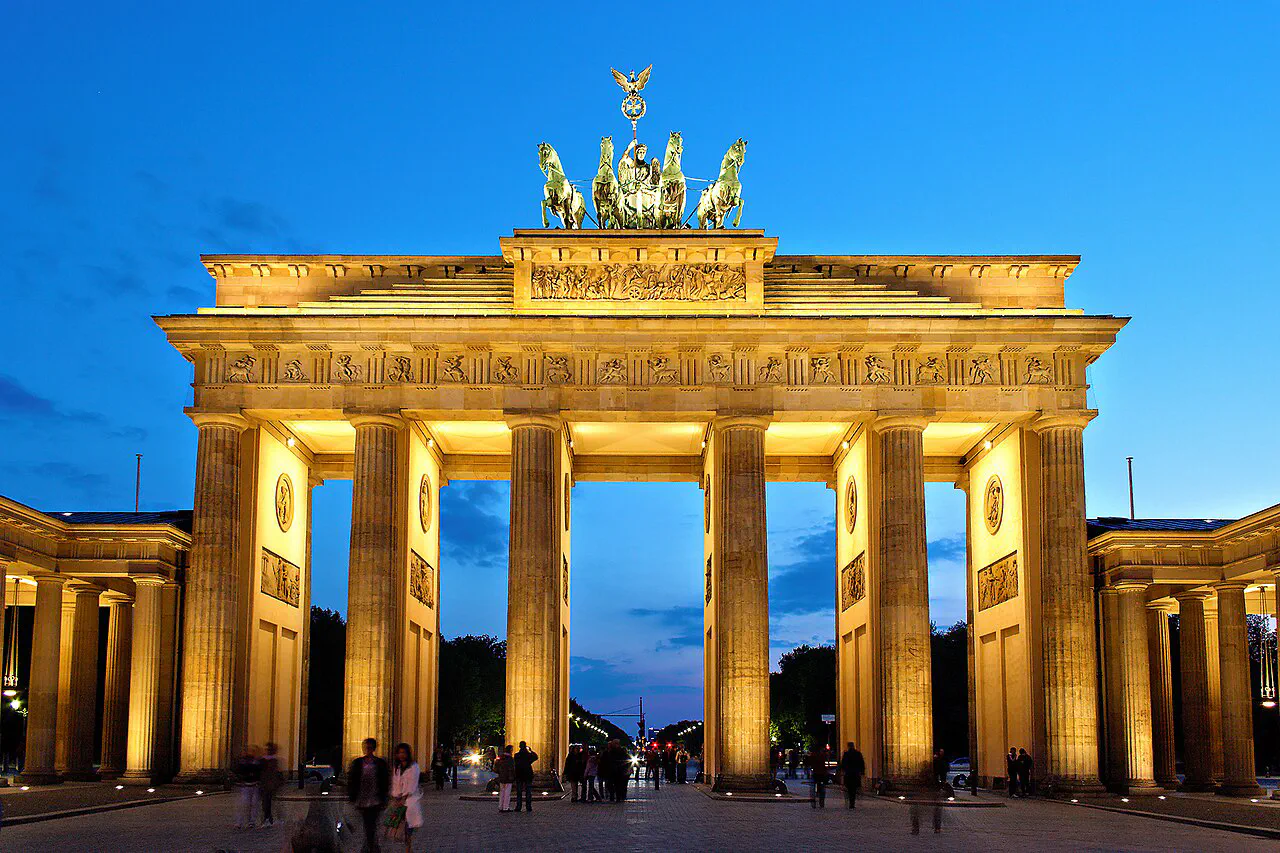
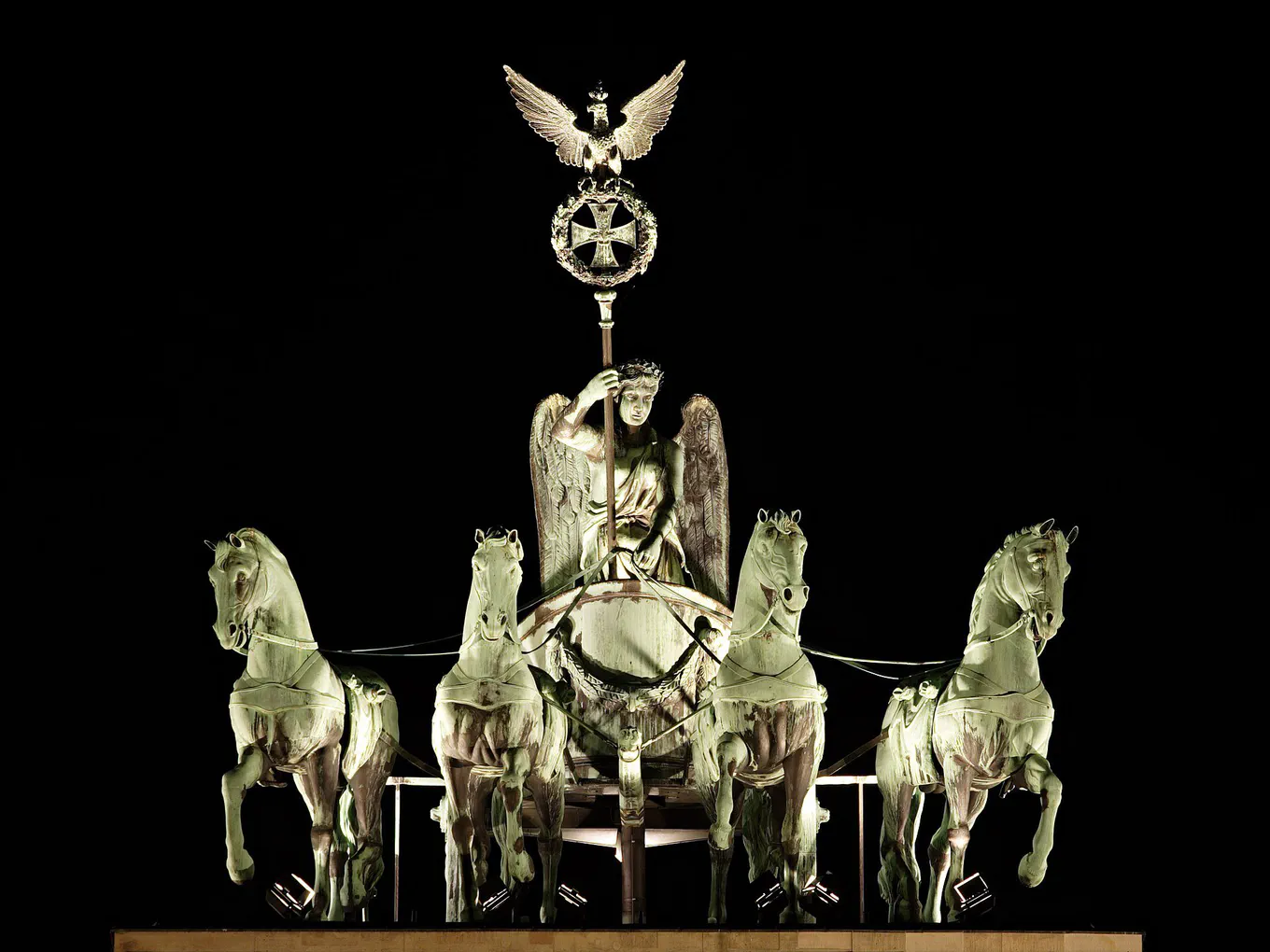
Napoleon was the first to lead a triumphal procession through the Brandenburg Gate, in 1806, after he beat Prussia. On top stood the Quadriga, four horses driven by a goddess who was meant at first as Eirene, goddess of peace. Napoleon took it to Paris. But in 1814 he was beaten in turn, the Prussians occupied Paris, and the Quadriga came home. Now the goddess carried the Prussian eagle and an Iron Cross on her lance. She had left as peace and came back as Victoria, goddess of victory.
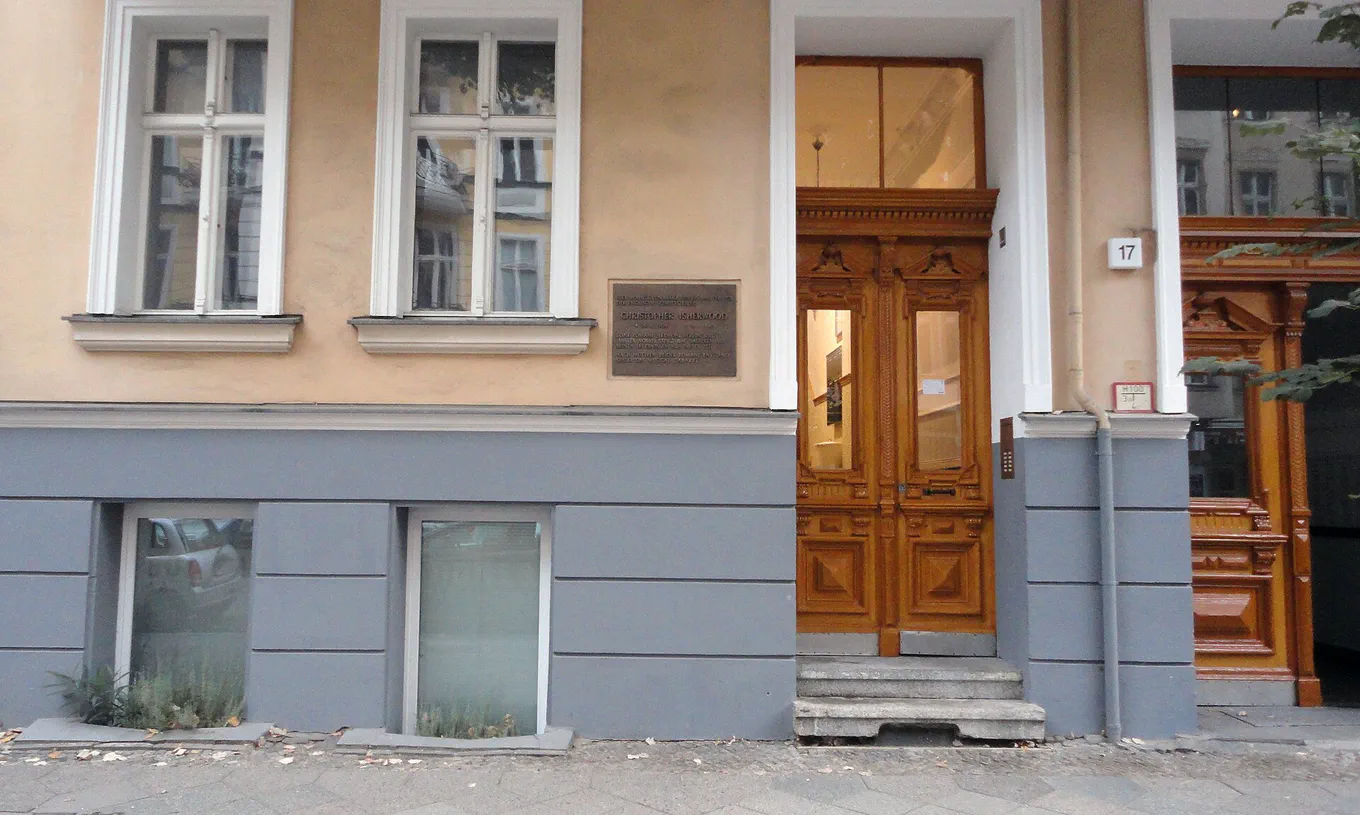
2 Jean Ross, the real Sally Bowles, at Nollendorfstraße 17
Stand here. Nollendorfstraße 17, in Schöneberg. The house still stands and carries a memorial plaque to Christopher Isherwood.
Cabaret’s Sally Bowles, played by Liza Minnelli in the film, was based on a real lodger in this house. Jean Ross, a 19-year-old singer, was working Berlin’s second-rate cabarets and hoping to become a famous actress. She lodged here with the writer Christopher Isherwood, who put her into Goodbye to Berlin, the novel behind Cabaret. Ross became famous, but as Sally, and she disliked it. She felt Isherwood had misunderstood her, resented most of all that he made Sally antisemitic, and never watched Cabaret.
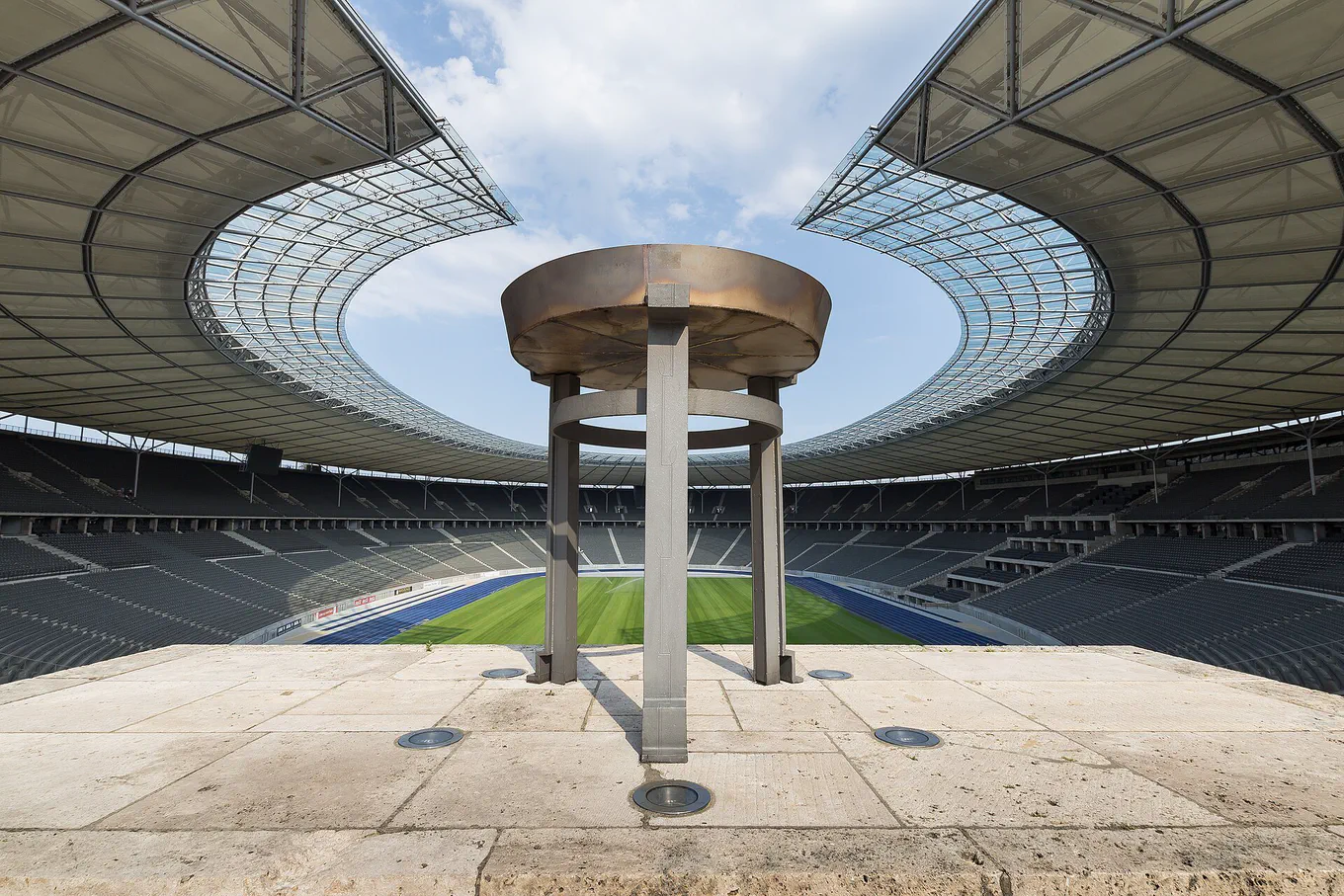
3 Jesse Owens wins four golds in Berlin’s Olympic Stadium
Stand here. The Olympiastadion, now home to the football club Hertha BSC. The old ticket booths survive outside, on Jesse-Owens-Allee.
Hitler was using the 1936 Olympics to show the world a resurgent Nazi Germany, and in this stadium the African-American athlete Jesse Owens won four gold medals. After the long jump, the German who took silver, Luz Long, was the first to congratulate him, and the two men walked arm in arm to the dressing room. Back home, President Roosevelt never invited Owens to the White House. “Hitler didn’t snub me — it was our president who snubbed me,” Owens said. “The president didn’t even send me a telegram.”
4 David Bowie writes “Heroes” at Hansa by the Wall
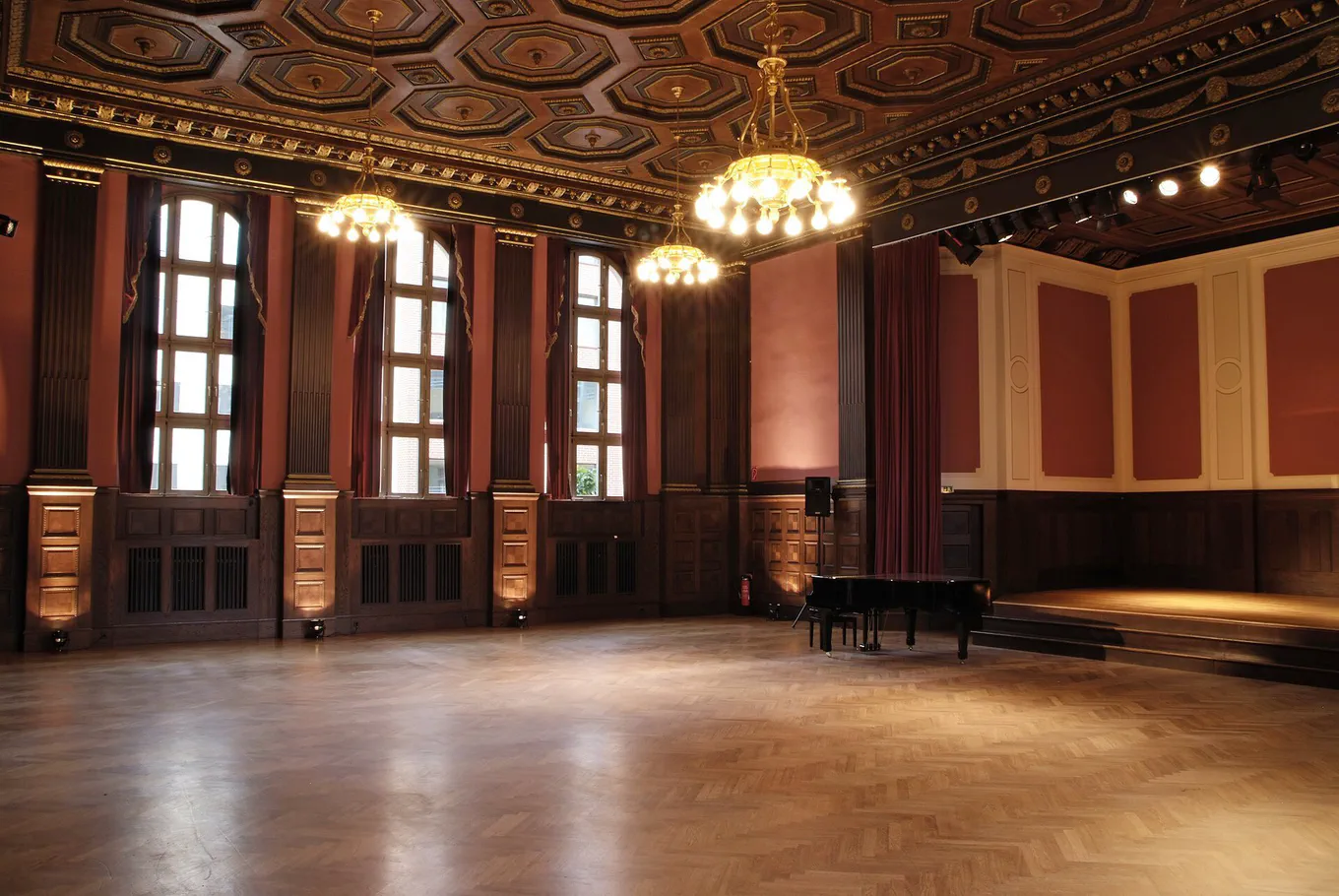
Stand here. Hansa Studios, Köthener Straße 38, in Kreuzberg. Its restored Meistersaal now hosts recording, concerts, and other events.
The lovers in David Bowie’s “Heroes” kiss by the Berlin Wall while guards fire over their heads. In 1977, recording at Hansa, Bowie had watched two people kiss beside the Wall from the studio window. For years he said the couple were anonymous. In 2003, he confirmed they were his co-producer, Tony Visconti, and the backing singer Antonia Maass, though Maass later said the song was finished before the kiss. When Bowie died, Germany’s Foreign Office paid tribute to him for “helping to bring down the Wall”.
5 Günter Schabowski’s slip and the night the Berlin Wall opened
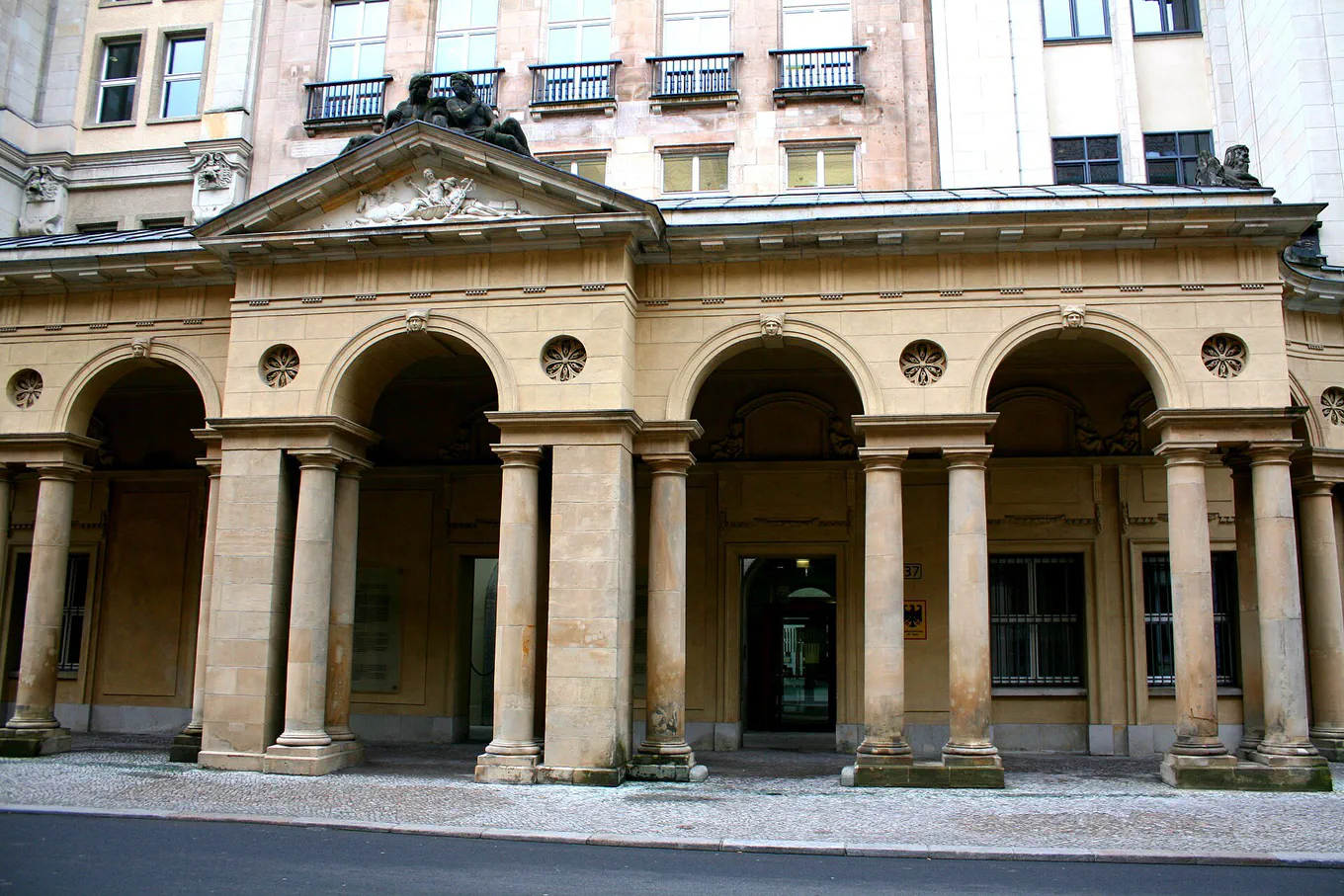
Stand here. The former International Press Centre, Anton-Wilhelm-Amo-Straße 36/37 (formerly Mohrenstraße). It now houses the Federal Ministry of Justice, with an information stele, a standing panel, outside.
On 9 November 1989, a live press conference in this building went wrong, and the Berlin Wall opened. Günter Schabowski, the regime’s spokesman, had just been handed new travel rules for East Germans, and hadn’t been fully briefed. They weren’t meant to be announced until morning. Asked when the rules took effect, he hesitated, then said, “As far as I know, it takes effect immediately, without delay.” That night, the crowd at the Bornholmer Straße crossing grew so large that the officer in charge raised the barrier, still without orders.
Pack nothing. Leave Friday.
Every Friday, I write a free letter, Journey, that takes us on a trip through places, stories, and ideas.
Berlin Alexanderplatz(Alfred Döblin, 1929). A novel, set in the working-class district around Alexanderplatz in the 1920s.
Goodbye to Berlin(Christopher Isherwood, 1939). A novel. Its Sally Bowles was inspired by Jean Ross, who shared Isherwood’s lodgings at Nollendorfstraße 17, in Schöneberg.
Every Man Dies Alone*, also published as *Alone in Berlin(Hans Fallada, 1947). A novel. The real couple behind it were executed at Plötzensee Prison.
Films to watch before you visit Berlin
Wings of Desire(Wim Wenders, 1987). A film, shot at real places in West Berlin, the Victory Column among them.
Run Lola Run(Tom Tykwer, 1998). A film in three episodes, each beginning at the same house on Albrechtstraße, in Mitte.
Good Bye, Lenin!(Wolfgang Becker, 2003). A film, shot mostly on Karl-Marx-Allee and among the prefabricated concrete housing blocks near Alexanderplatz.
The Lives of Others(Florian Henckel von Donnersmarck, 2006). A film. Its opening scene is set in the Stasi prison at Hohenschönhausen, though it couldn’t be shot there.
Questions
Can you visit Hansa Studios, where Bowie recorded “Heroes”?
The building still stands at Köthener Straße 38, in Kreuzberg, close to where the Wall ran. Its restored Meistersaal is used today for recording, concerts, and other events.
Where can you still see the Berlin Wall?
The longest surviving stretch is the East Side Gallery, on Mühlenstraße, 1,316 metres of Wall along the Spree, painted in 1990 by 118 artists from 21 countries. At the Berlin Wall Memorial on Bernauer Straße, a 60-metre section is kept as it was when the Wall fell.
When was the Berlin Wall built, and when did it fall?
East Germany began building it on 13 August 1961, and the border it closed ran 155 kilometres around West Berlin. It fell on 9 November 1989, the day the government announced that East Germans could visit the West. Germany was reunified on 3 October 1990.