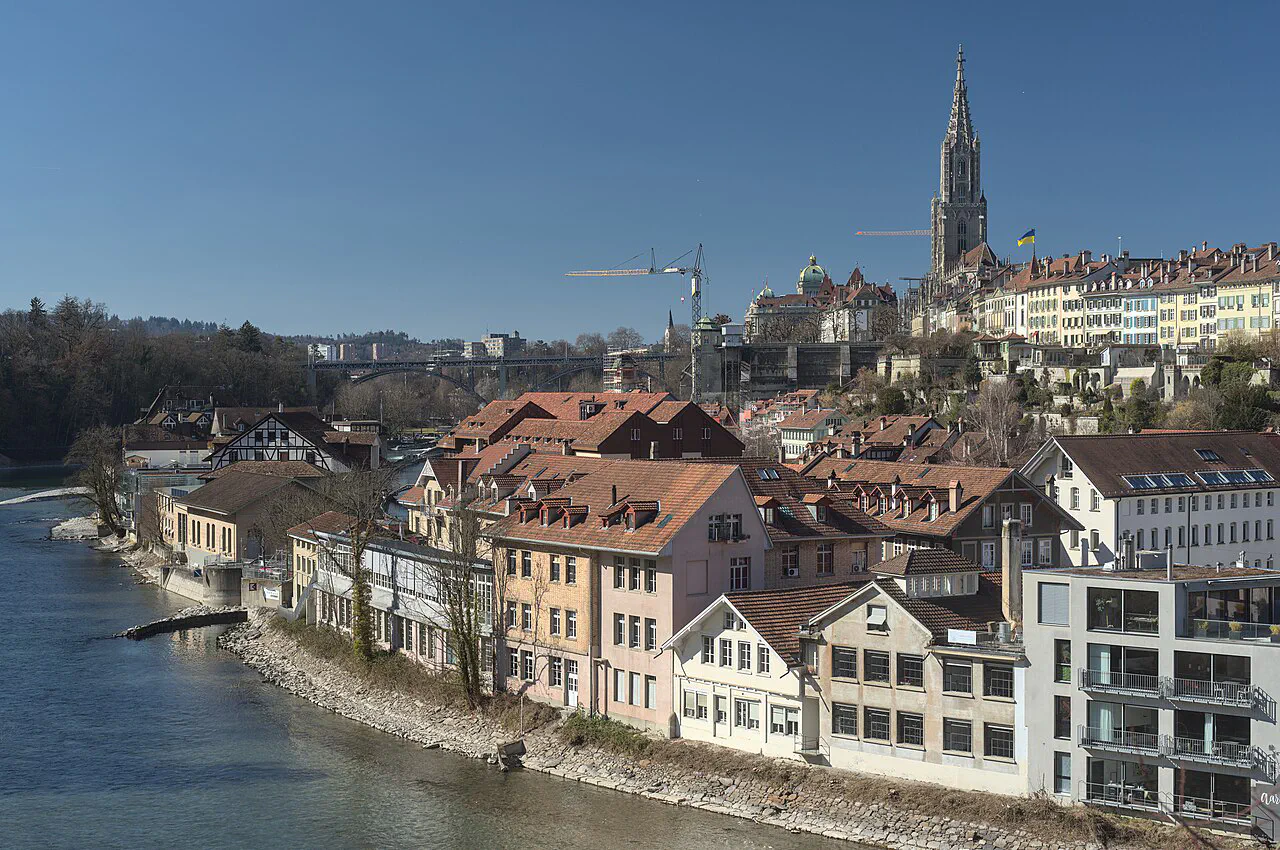
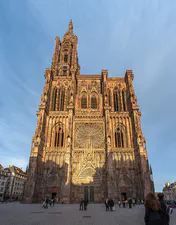
Bern is in practice the capital of Switzerland. It sits on the Swiss Plateau, and the River Aare wraps around its old town, which became a UNESCO World Heritage Site in 1983. Its stories here are Einstein’s flat on Kramgasse, the bear legend behind the city’s name, a painter who died a foreigner, a spy the British turned away, and a football final that Germans call a miracle.
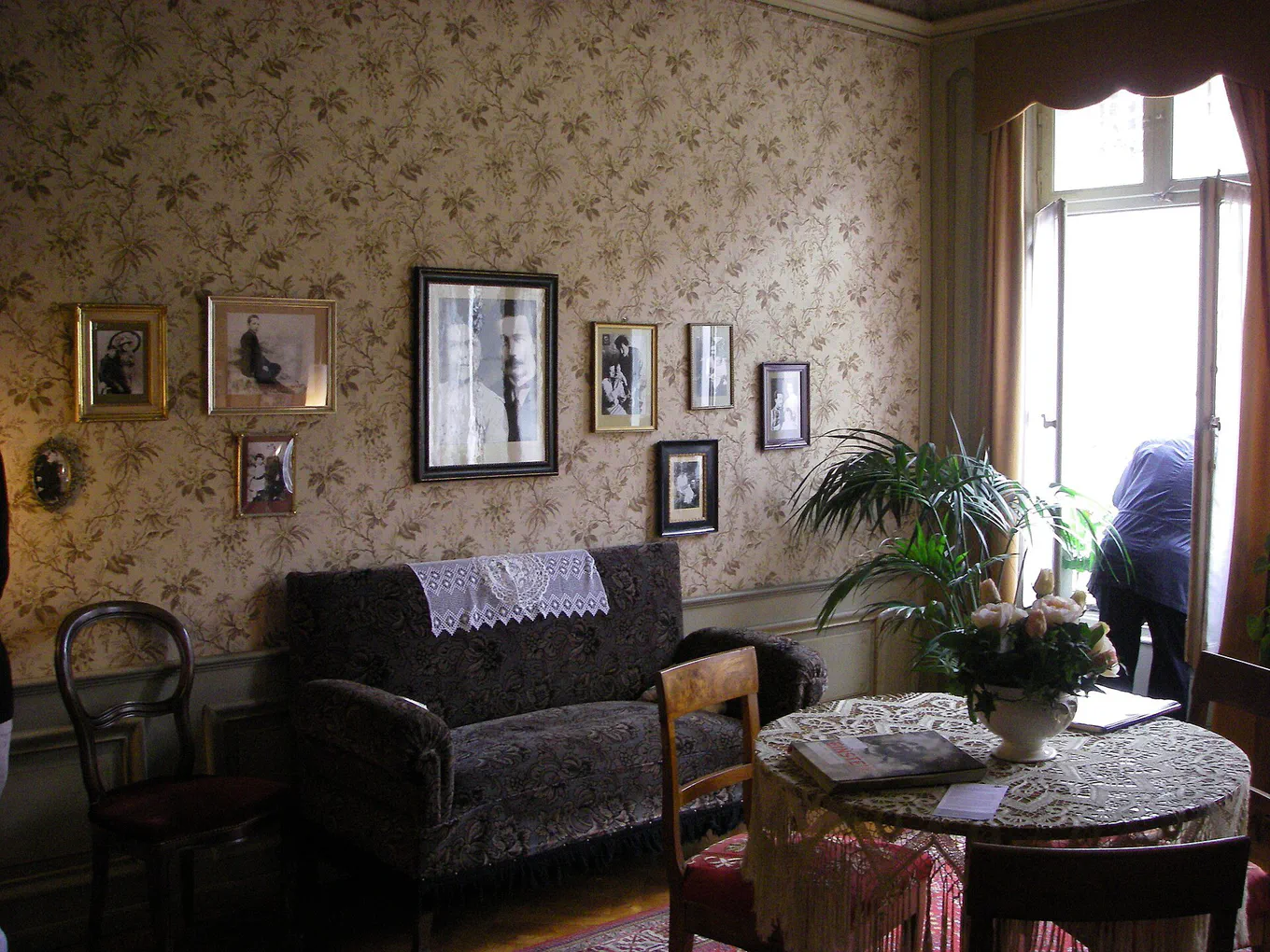
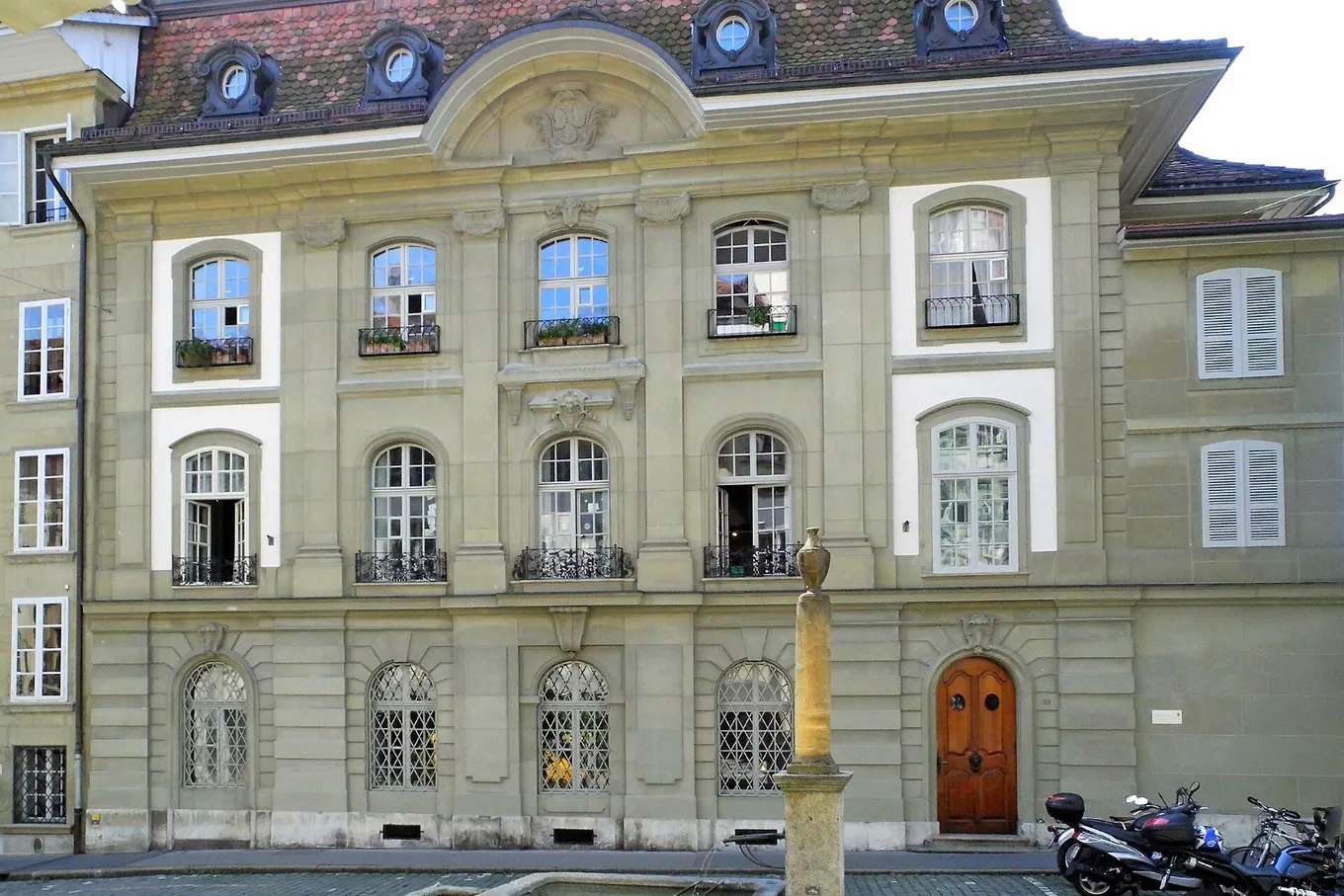
Stand here. Kramgasse 49, in the old town. The Einsteinhaus is a museum, with the family’s second-floor flat shown as they lived in it.
The living room of the Einsteins’ second-floor flat at Kramgasse 49, kept as a museum in Bern’s old town.Gerd Kortemeyer / Public domain.
Albert Einstein published the theory of relativity while living in a second-floor flat in this house. He had wanted to teach, and after graduating he spent almost two years applying for posts without a single offer. So, with the help of a friend’s father, he took a job at the Swiss Patent Office in Bern and set up home here with his wife, Mileva Marić, and soon a baby son. Then came 1905, later called his miracle year. The man no school would hire published four groundbreaking papers.
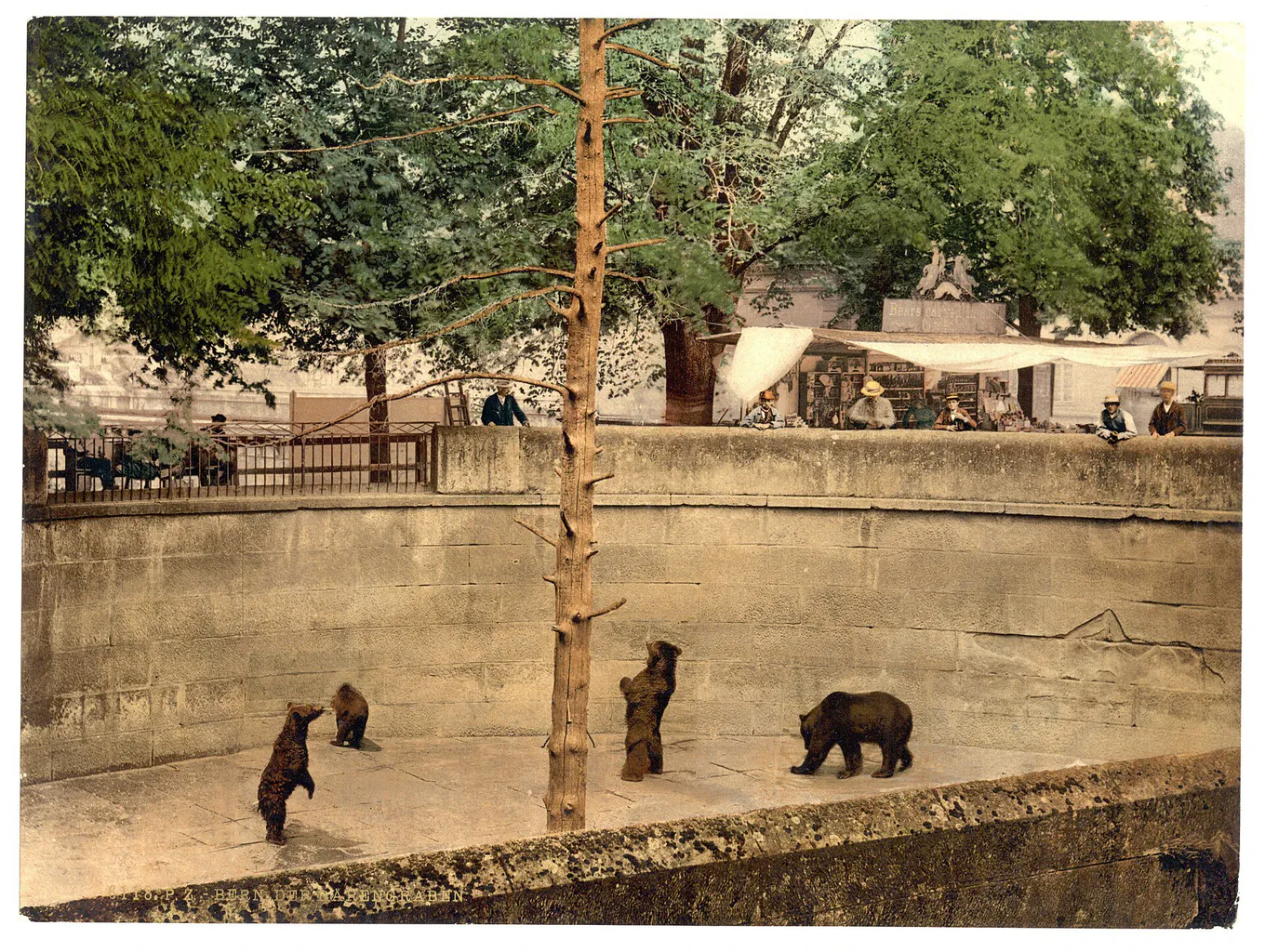
Legend has it that Bern is named after a bear. Duke Berthold V of Zähringen, founding the city probably in 1191, vowed to name it after the first animal his hunt met, and one chronicler wrote that the hunt caught a bear first. Another chronicler recorded the Bernese coming home from a battle with captured standards and a living bear. Bern has had a bear pit since the 16th century, first on what is still called the Bärenplatz, Bear Square. The pit here is the fourth.
3 Paul Klee, the Bern painter who never became Swiss
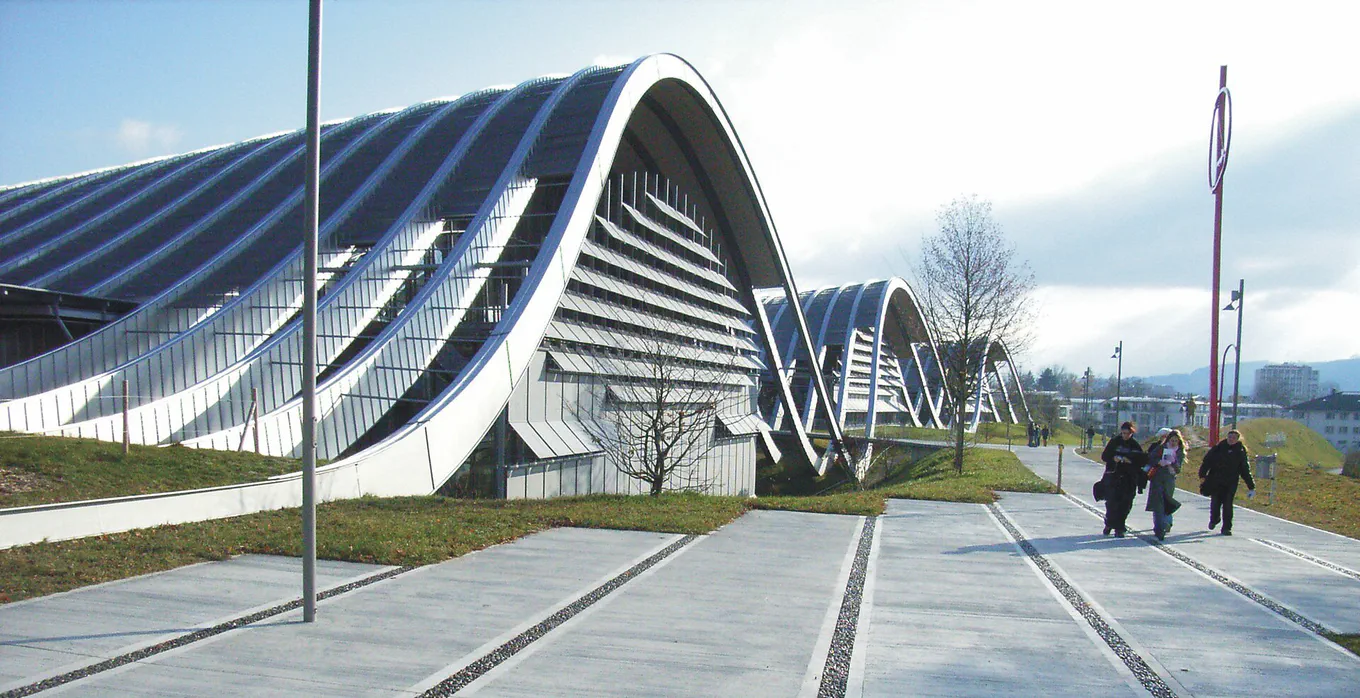
Stand here. The Zentrum Paul Klee, a museum designed by Renzo Piano and opened in 2005, holds the world’s largest collection of his work.
Bern raised Paul Klee, but it never made him Swiss, because his German father had never bothered to become Swiss. When the Nazis took away his professorship and the Gestapo searched his home, he went into exile in Bern in 1933. He applied to become Swiss and was refused, because Germans had to live in Switzerland five years first. Federal officials said yes in 1939, but the city of Bern still had to sign off when he died in 1940. He was born a foreigner in Switzerland and died one.
4 Allen Dulles, Fritz Kolbe, and a midnight meeting in Bern
Stand here. Herrengasse 23, where Allen Dulles lived and ran his wartime intelligence network, is a house of rented flats, as it was then.
Allen Dulles, who would later run the CIA, called Fritz Kolbe the best spy of the war. Kolbe, a German diplomat, offered Nazi secrets to the British, who turned him away, so he tried the Americans. He came to a midnight meeting in a flat in the Kirchenfeld district with documents strapped to his leg, and refused any money. He passed more than 1,600 documents. After the war, Germans despised him as a traitor. Dulles got the CIA. Kolbe sold power saws, and died in Bern.
5 The Miracle of Bern at the Wankdorf, 1954
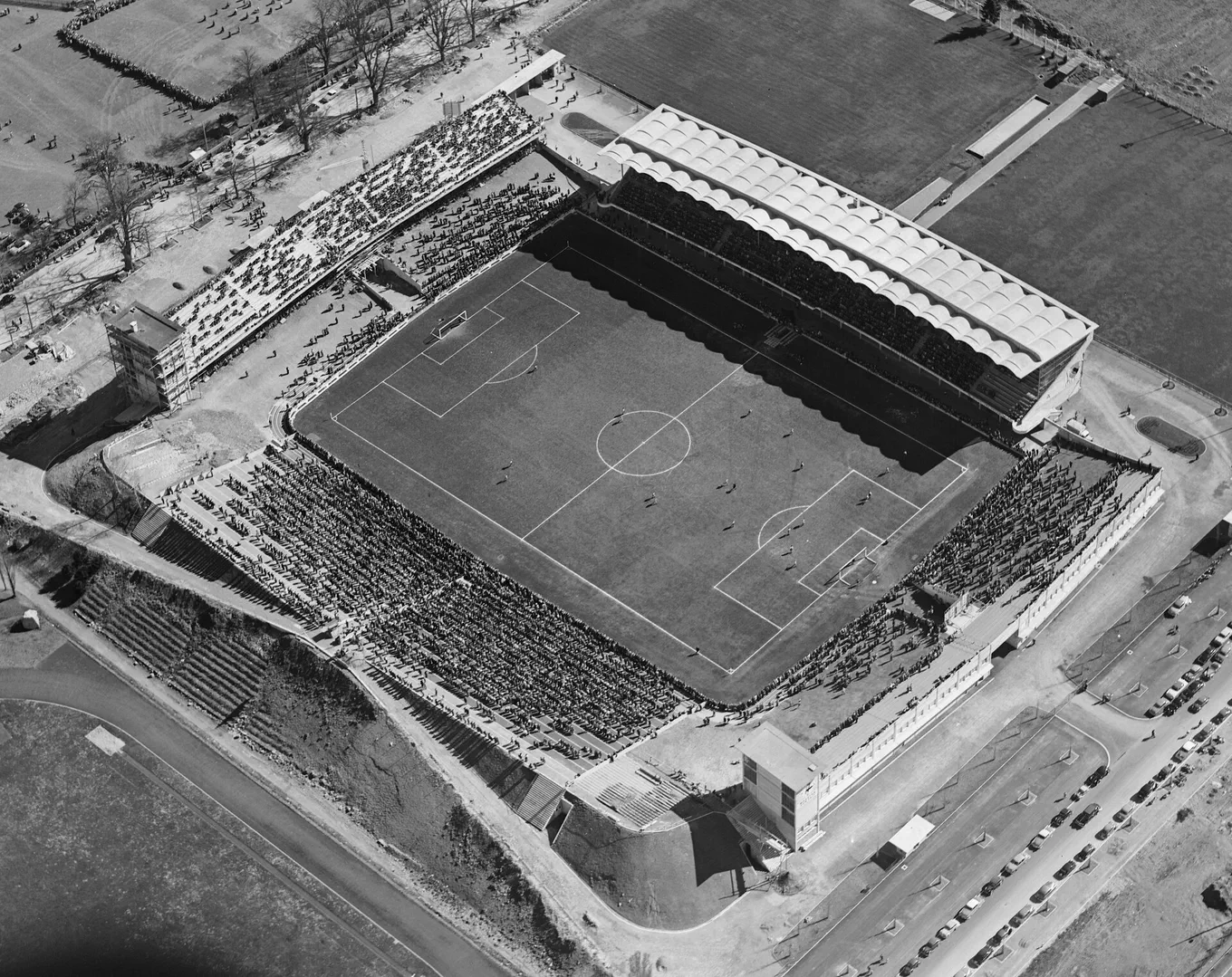
Stand here. The old Wankdorfstadion was demolished in 2001. Stadion Wankdorf, home of BSC Young Boys, opened on the same site in 2005.
Germans call it the Miracle of Bern. On 4 July 1954, Hungary, unbeaten in 31 games, met West Germany in the World Cup final, having beaten them 8–3 in the group stage. Hungary scored first, and added a second two minutes later. But in heavy rain West Germany fought back, and Helmut Rahn drove the winner hard and low in the 84th minute. Ferenc Puskás seemed to equalise, but was ruled offside. In Budapest, the defeat set off protests against the team.
Pack nothing. Leave Friday.
Every Friday, I write a free letter, Journey, that takes us on a trip through places, stories, and ideas.
Einstein’s Dreams(Alan Lightman, 1992). A novel. Einstein, a 26-year-old patent clerk in Bern, is tormented by dreams about time.
The Judge and His Hangman(Friedrich Dürrenmatt, 1950). A novel. Commissar Bärlach of the Bern police follows a case from his home in Bern to Lamboing, nearly fifty kilometres away.
Night Train to Lisbon(Pascal Mercier, 2004). A novel. Raimund Gregorius is a Latin teacher from Bern.
Films to watch before you visit Bern
The Miracle of Bern(Sönke Wortmann, 2003). A film. On the night before the 1954 final, a father and son drive to Bern to see the match.
Night Train to Lisbon(Bille August, 2013). A film. Gregorius, the Latin teacher, walks over a bridge in Bern on the way to his school.
Dällebach Kari(Kurt Früh, 1970). A Swiss dialect film about Karl Tellenbach, a Bern barber and local character of the early 20th century, set and filmed in the city’s Old Town.
Questions
What is the Einsteinhaus in Bern?
The Einsteinhaus, at Kramgasse 49, is a museum in the house where Albert Einstein lived from 1903 to 1905. Its second-floor flat shows how he and his family lived there. In 1905, his last year in the flat, he published the papers of his “miracle year”, which presented his theory of relativity.
Where was the Miracle of Bern played?
At the Wankdorfstadion in Bern, on 4 July 1954, where West Germany beat Hungary 3–2 in the World Cup final. That stadium was demolished in 2001, and Stadion Wankdorf, home of BSC Young Boys, opened on the same site in 2005.
Is Bern the capital of Switzerland?
In practice, yes. Bern is the de facto capital of Switzerland, and the national parliament sits in a building put up between 1857 and 1902. The old town has a 15th-century Gothic cathedral, the Münster, and an elaborate medieval clock tower with moving puppets.