I spent 40 years driving around Birmingham without ever stopping. Over the past few years, I’ve had reason to go and the centre is fantastic. I also recently stopped at the Black Country Museum, where they shot a lot of the Peaky Blinders canal scenes. Fantastic.
— Nick
By 1791, Birmingham was being hailed as “the first manufacturing town in the world”. It lies in the centre of England’s West Midlands and is commonly called the UK’s second city. Joining a teenage Tolkien forbidden to write to the woman he would marry are a guitarist’s lost fingertips, a chocolate village with no pub, a chemist driven out by a mob, and a printer who wouldn’t stay buried.
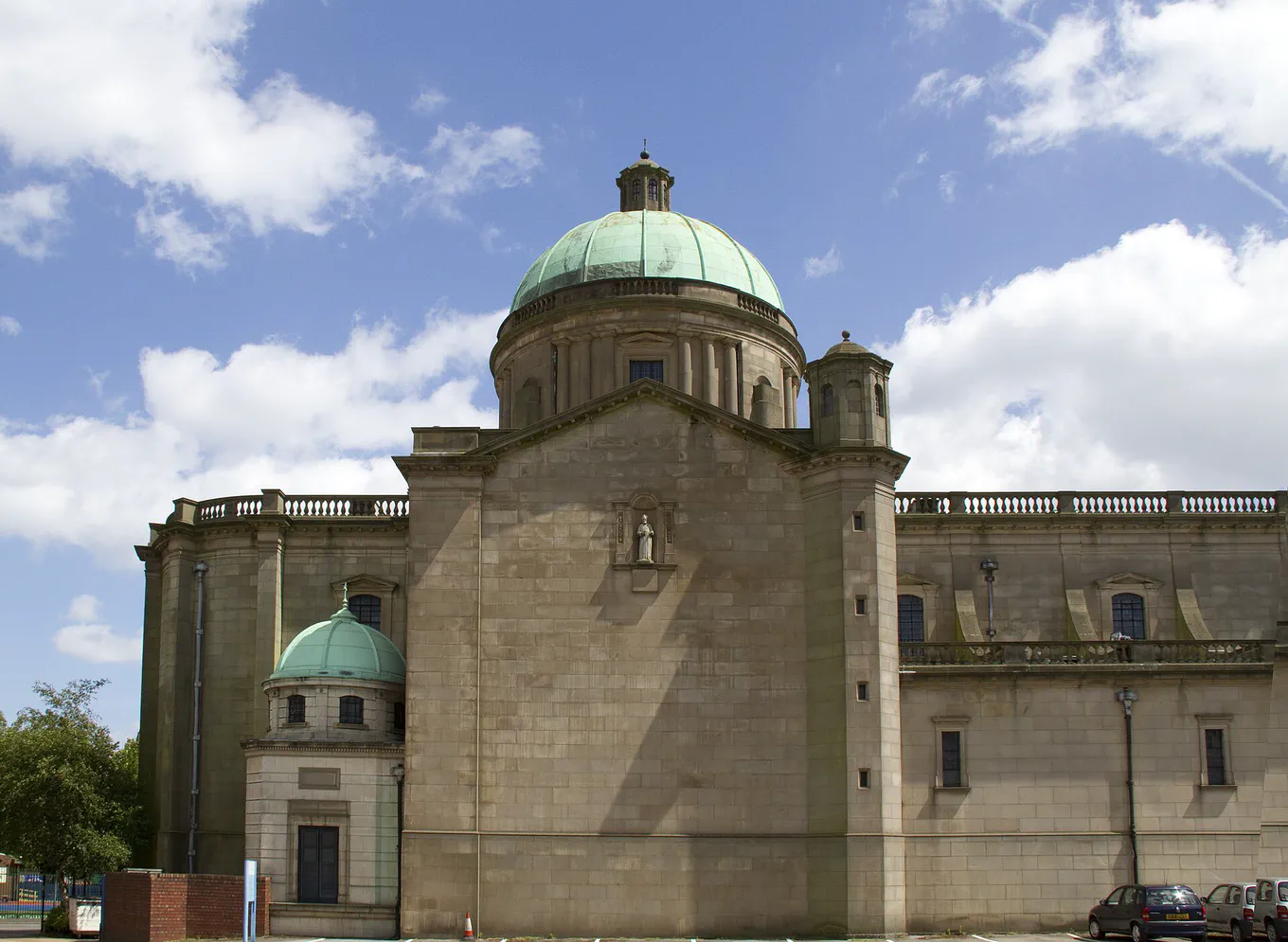
Long before The Hobbit, J.R.R. Tolkien was 16 and living in a boarding house on Duchess Road, Edgbaston, where he met Edith Bratt, who was 19. His guardian since his mother’s death, Father Francis Morgan of the Oratory, forbade him to meet, talk to, or write to Edith until he was 21. Tolkien obeyed to the letter. On the evening of his 21st birthday, in January 1913, he wrote to her. She had accepted another man’s proposal. She gave back the ring and became engaged to Tolkien instead.
2 Tony Iommi’s lost fingertips and the sound of Black Sabbath
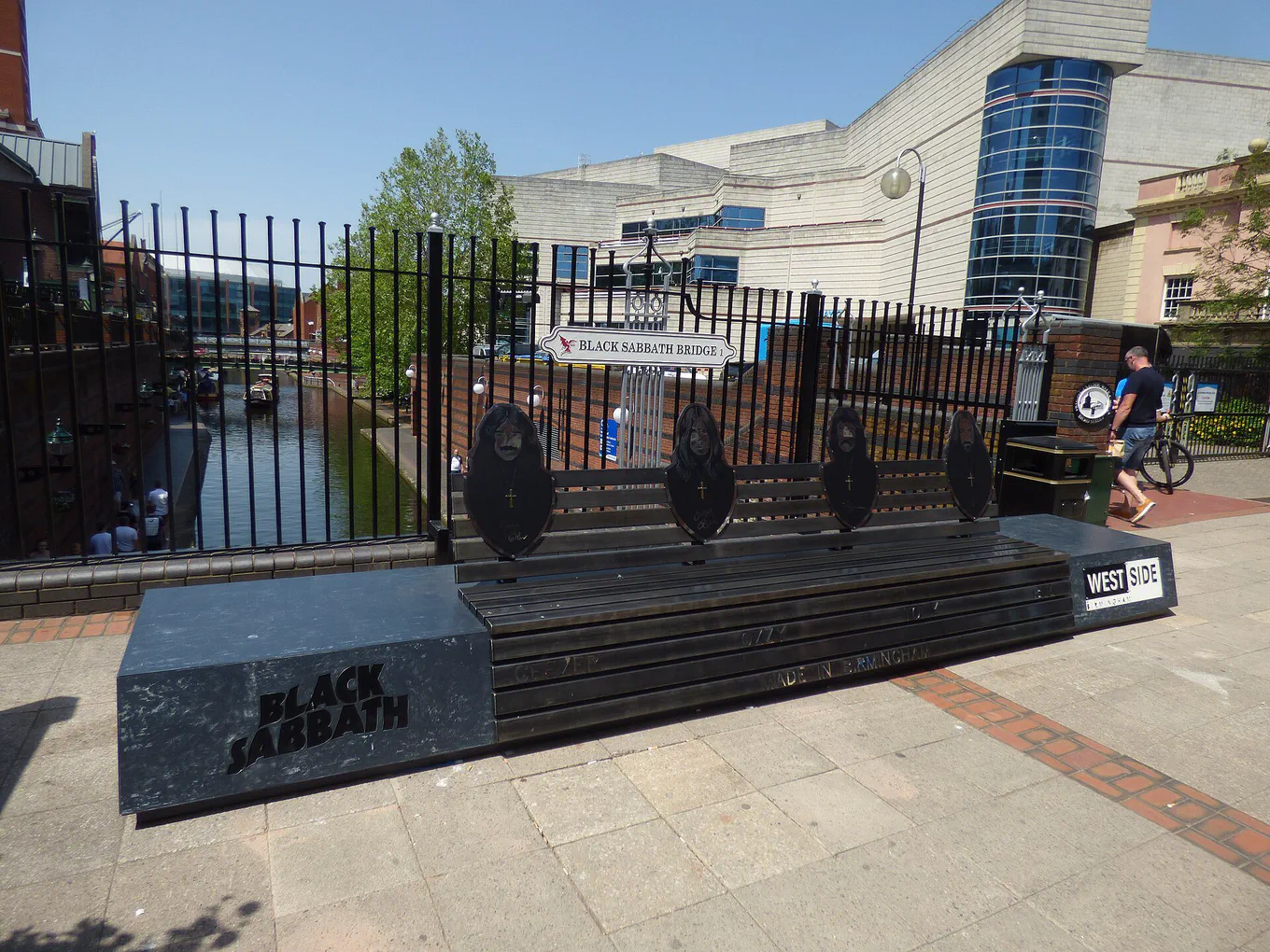
Stand here. Black Sabbath Bridge, where Broad Street crosses the canal. Its bench, unveiled in 2019, reads “Geezer. Ozzy. Tony. Bill. Made in Birmingham 1968.”
At 17, on his last day at a sheet-metal factory, Tony Iommi, later Black Sabbath’s guitarist, lost the tips of two fingers on his fretting hand. His foreman played him a record by Django Reinhardt, a jazz guitarist who played with two fingers on that hand. So Iommi melted a Fairy Liquid bottle and shaped new fingertips. Bending strings was still hard, so he chose lighter ones. He tuned down too, he said, for a bigger, heavier sound. Those down-tuned guitars set apart the band he co-founded in 1968.
3 George Cadbury’s Bournville, the chocolate village with no pub
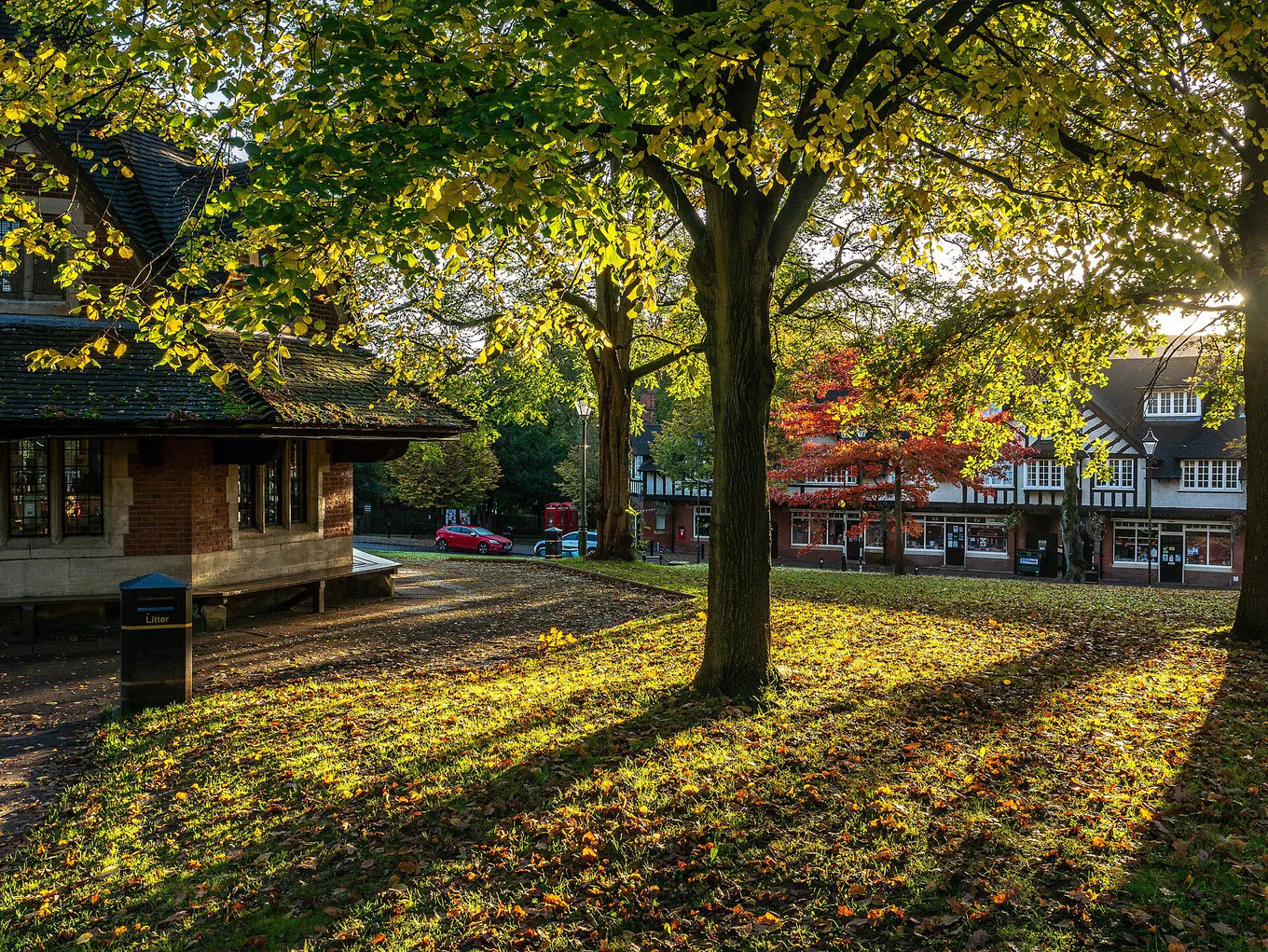
Stand here. Bournville Village Green, a triangle with the carillon and a Quaker meeting house beside it.
The Quaker chocolate makers George and Richard Cadbury moved their factory out of central Birmingham to a greenfield site four miles south, and gave it a French-sounding name, Bournville, because French chocolate had the highest reputation. George then bought land near the works for a village where anyone could live. Because he was a temperance Quaker, no pub has ever been built there. In 2007, hundreds of residents petitioned against Tesco selling alcohol, and Tesco was refused. Cadbury World, somewhat ironically, holds an alcohol licence.
4 Joseph Priestley, the Lunar Society, and the Birmingham mob
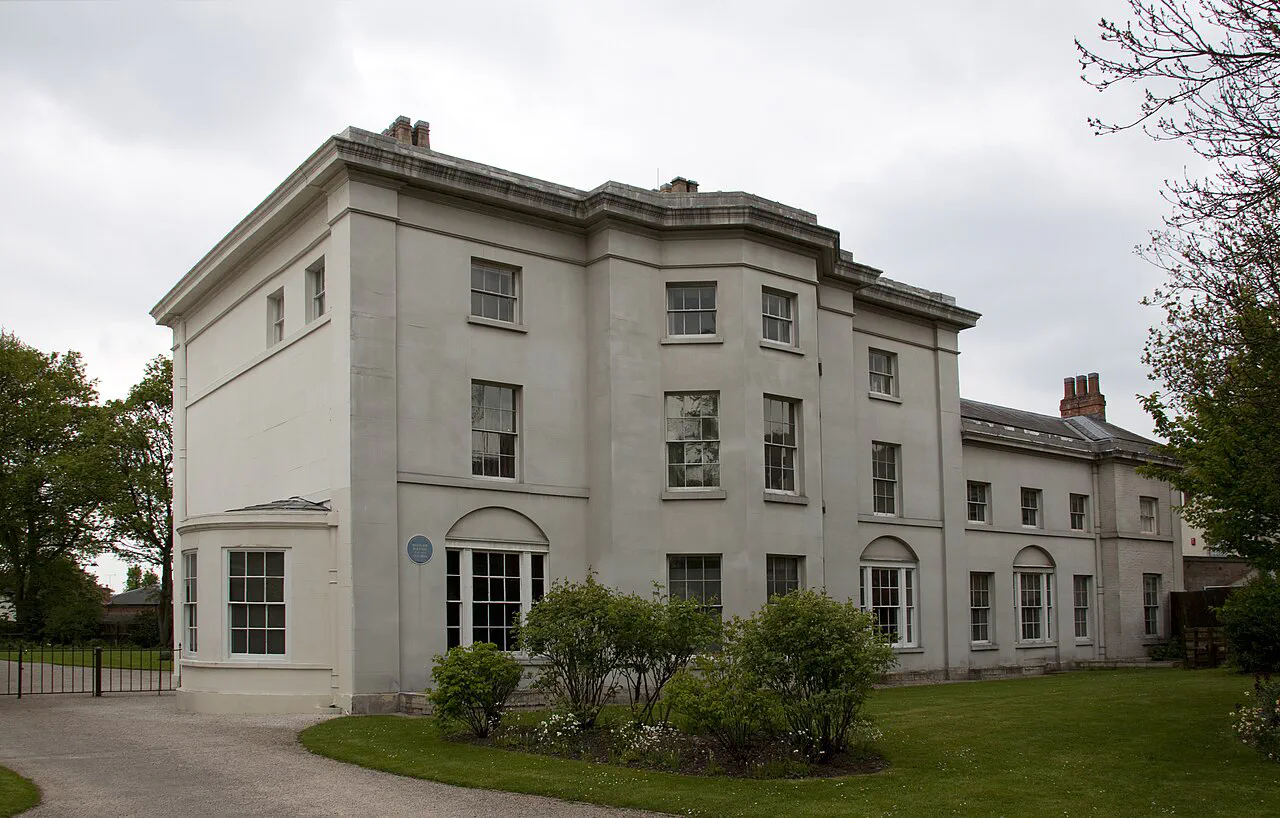
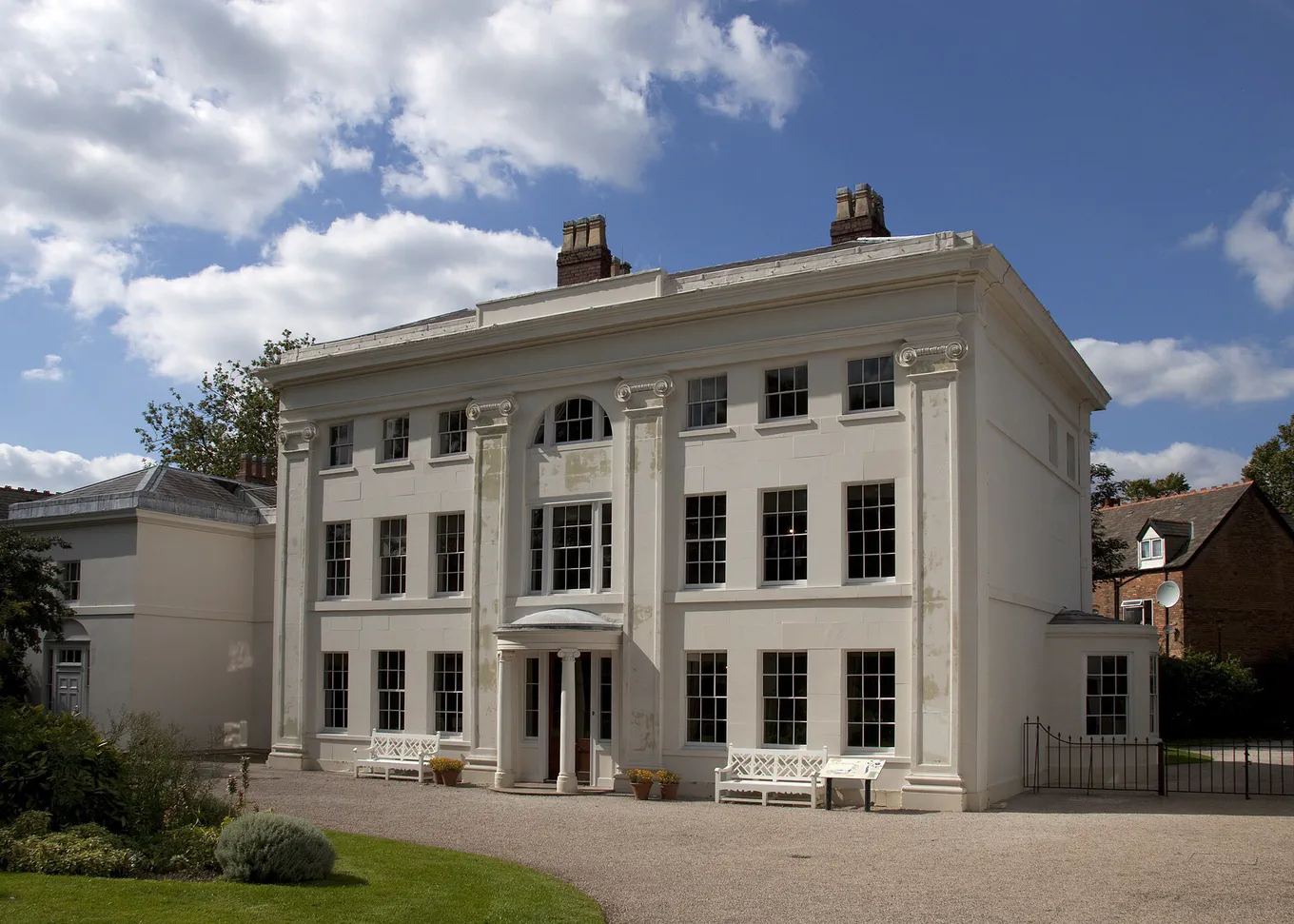
Stand here. Soho House, on Soho Avenue in Handsworth. Matthew Boulton’s home is now a museum, seen only on pre-booked guided tours.
Charles Darwin’s grandfather Erasmus and Joseph Priestley, a discoverer of oxygen, belonged to the Lunar Society, which met in Matthew Boulton’s dining room here near the full moon, so the light would see them home. On 14 July 1791, a hotel dinner marked the French Revolution. Priestley’s friends kept him away for his safety, but a mob attacked the hotel and then his house, burning his library and laboratory. Boulton and his business partner, James Watt, armed their workers. Priestley fled, and never set foot in Birmingham again.
5 John Baskerville, the printer who wouldn’t stay buried
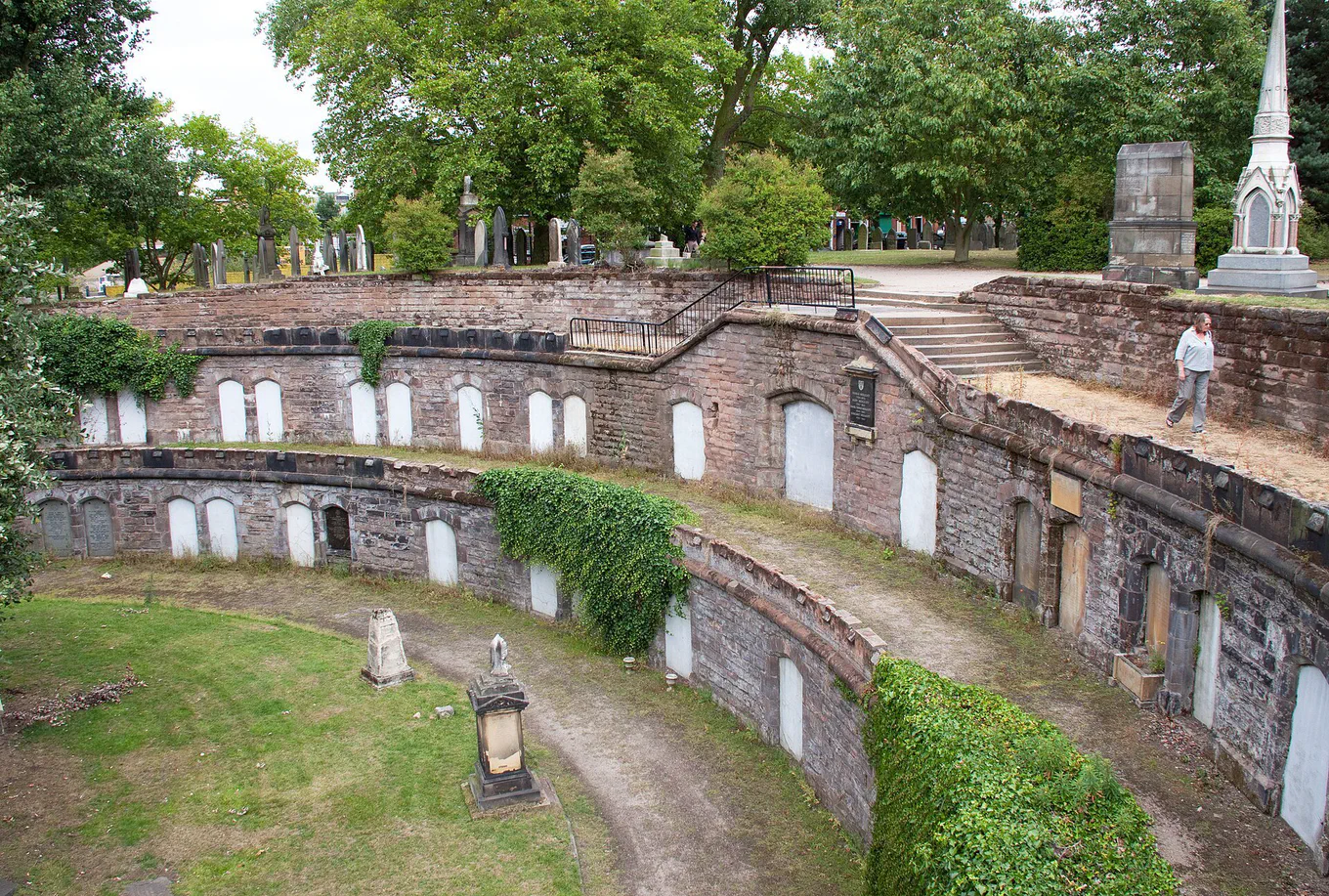
Stand here. Warstone Lane Cemetery in the Jewellery Quarter, where Baskerville lies in the catacombs. Baskerville House, on Centenary Square, stands on his land.
Fonts called Baskerville are based on the work of John Baskerville, a printer and type designer with a hearty contempt for superstition. When he died in 1775, his will put him in a vault beneath a cone on his own land at Easy Hill, in unconsecrated ground. Decades later, a canal was cut through the land, and his body was dug up and put on show. His coffin moved to a warehouse, then a church crypt. He lies now in consecrated catacombs, the kind of ground he had tried to avoid.
Pack nothing. Leave Friday.
Every Friday, I write a free letter, Journey, that takes us on a trip through places, stories, and ideas.
The Rotters’ Club(Jonathan Coe, 2001). A novel set in 1970s Birmingham, drawn from the author’s own years at King Edward’s School.
My Name Is Leon(Kit de Waal, 2016). A novel set against the 1981 Handsworth riots. The author was living in Handsworth then, with the riots at the end of the road.
Films to watch before you visit Birmingham
Peaky Blinders(Steven Knight, 2013). A TV drama series set in Birmingham just after the First World War. The real Peaky Blinders were a street gang from Small Heath.
Take Me High(David Askey, 1973). A film starring Cliff Richard, featuring city landmarks from Gas Street Basin and Corporation Street to Spaghetti Junction.
Questions
Can you visit Soho House, where the Lunar Society met?
Yes. Soho House, on Soho Avenue in Handsworth, was Matthew Boulton’s home and has been a Birmingham Museums Trust museum since 1995.
Was Peaky Blinders filmed in Birmingham?
Partly. The series is set in Birmingham just after the First World War, and its first series was filmed in Birmingham, Bradford, Dudley, Leeds, Liverpool, and Port Sunlight. Many scenes were shot at the Black Country Living Museum. The real Peaky Blinders were a Small Heath street gang, active from the 1880s to the 1920s.
Does Birmingham have more canals than Venice?
Yes, by length. Birmingham has more miles of canal than Venice, a network left from the Industrial Revolution and known as the Birmingham Canal Navigations. But the city is larger, and few of its buildings are reached by canal, so its canals are a less prominent feature than Venice’s.