Bogotá, Colombia, Bogotá Capital District, South America
On my 1992 Atlantic crossing, the boat had a tiny library, and One Hundred Years of Solitude was in it. (To be honest, I read it after I’d read almost everything else.) Its writer, Gabriel García Márquez, was a law student lunching near Gaitán’s office the day he was shot and said it was the day the country split in two.
— Nick
Bogotá is the capital and largest city of Colombia, on a high Andean plateau at an average of 2,640 metres. The Spanish founded it in 1538 in what is now La Candelaria, the old town. Its stories are a borrowed vase that started a revolt, Bolívar’s escape through a window, a lunchtime shooting that set off a riot, the gold raft behind El Dorado, and a stolen sword.
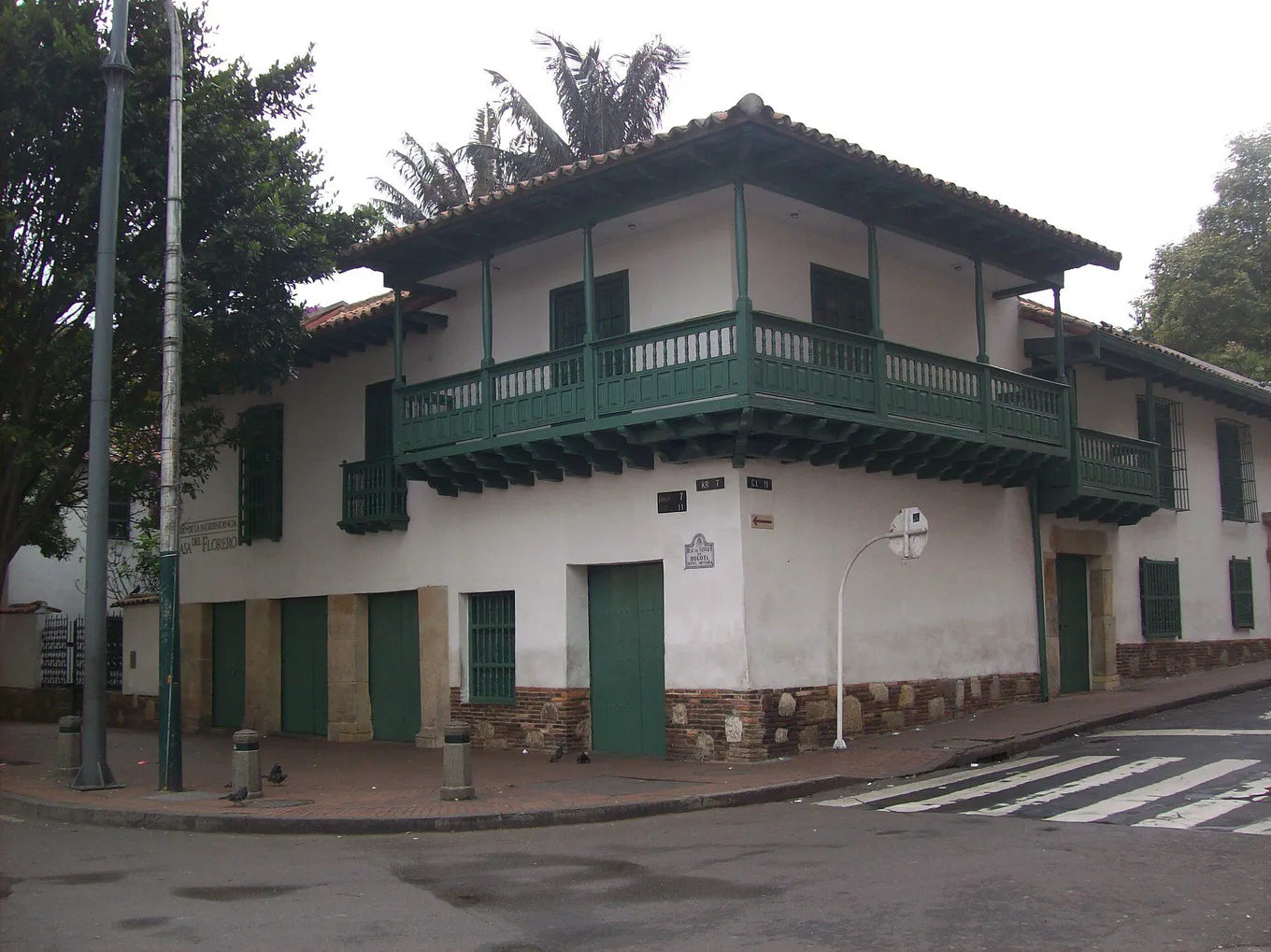
Colombia’s independence day, 20 July, began in 1810 with a request to borrow a vase. Plotters looking for an excuse to revolt against Spain chose a Spanish merchant, José González Llorente, and asked to borrow his vase for a royal commissioner’s dinner. They were counting on a no. Llorente refused, though accounts differ on his tone. Antonio Morales attacked him, and because it was market day, the square erupted. Llorente fled into hiding. That afternoon, the city had a governing council of its own.
2 Manuela Sáenz and Bolívar’s window, Palacio de San Carlos
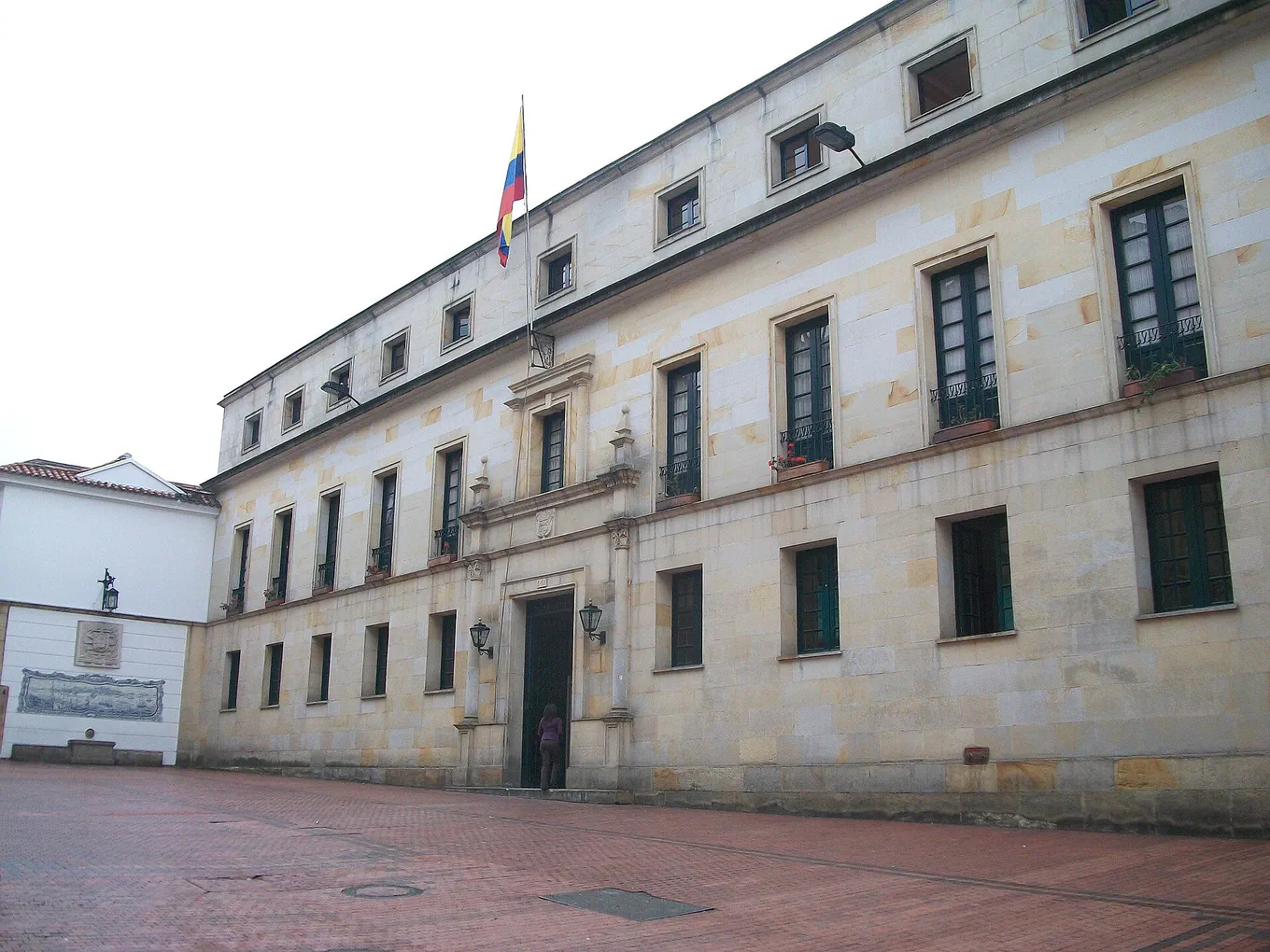
Stand here. The Palacio de San Carlos in La Candelaria, now the Foreign Ministry. A Latin plaque beside the east window marks his escape.
Simón Bolívar, the Liberator, had taken supreme power when assassins broke into this palace on the night of 25 September 1828. Manuela Sáenz, the Ecuadorian revolutionary who shared his bed, persuaded him out of a window and faced the intruders herself. She led them from room to room, pretending to lose her way, while Bolívar hid under a bridge until loyal soldiers rescued him. Another account has him in the bath, escaping through the window still covered in soap. She became known as “the liberator of the Liberator”.
3 Jorge Eliécer Gaitán and the Bogotazo, Carrera Séptima
Stand here. The corner of Carrera 7 and Calle 14, downtown. A memorial to Gaitán stands in front of the spot where he was shot.
On 9 April 1948, Fidel Castro was due to meet Jorge Eliécer Gaitán, the Liberal Party leader who, many think, would have been the next president. Around midday, Gaitán left his office here for lunch, and a lone gunman shot him at the door. He died that afternoon. A mob killed the alleged gunman, whose motives were never known, and a ten-hour riot, the Bogotazo, wrecked much of downtown. A law student lunching nearby, Gabriel García Márquez, said that was the day he realised the country had split in two.
4 The Muisca gold raft behind El Dorado, Gold Museum
Stand here. The Offering Boat Room in the Gold Museum, on Parque Santander, where the raft is the main piece on show.
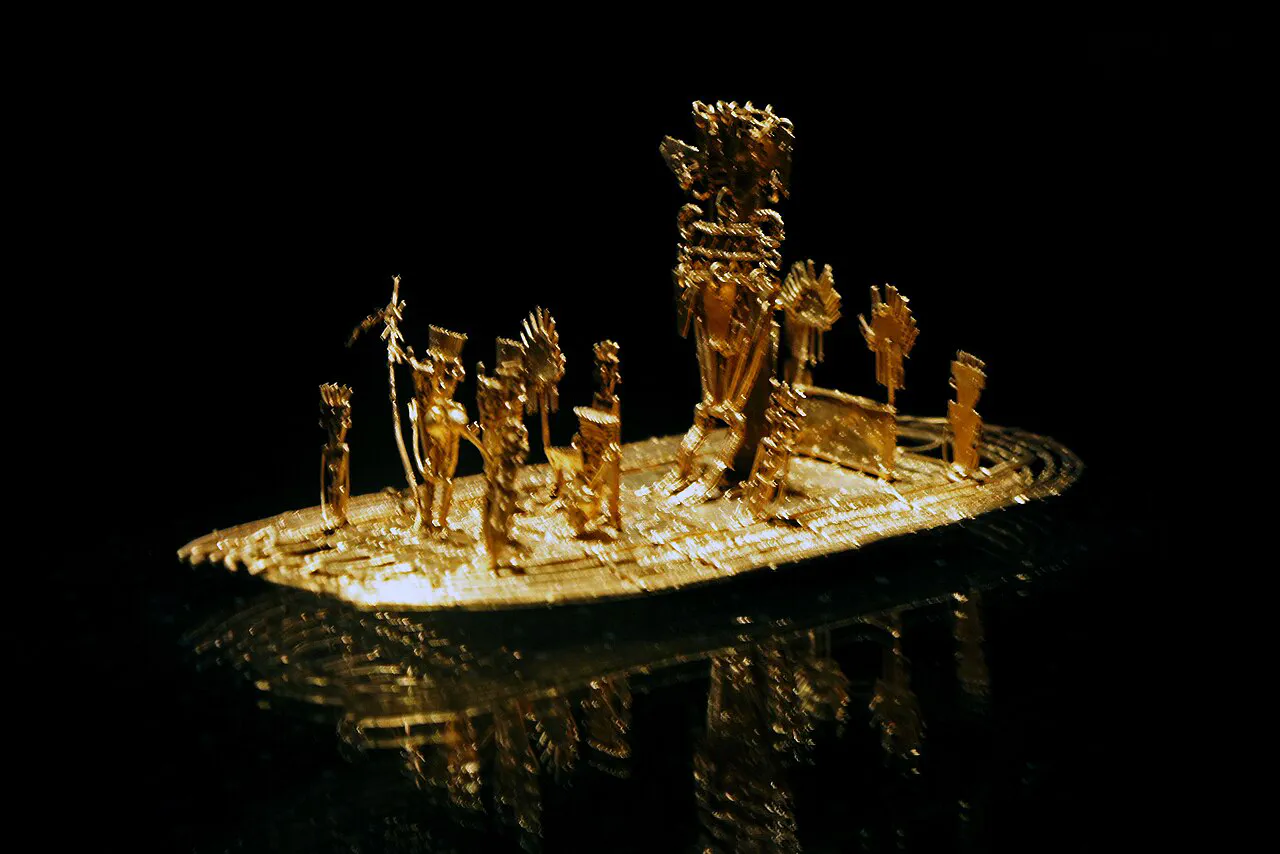
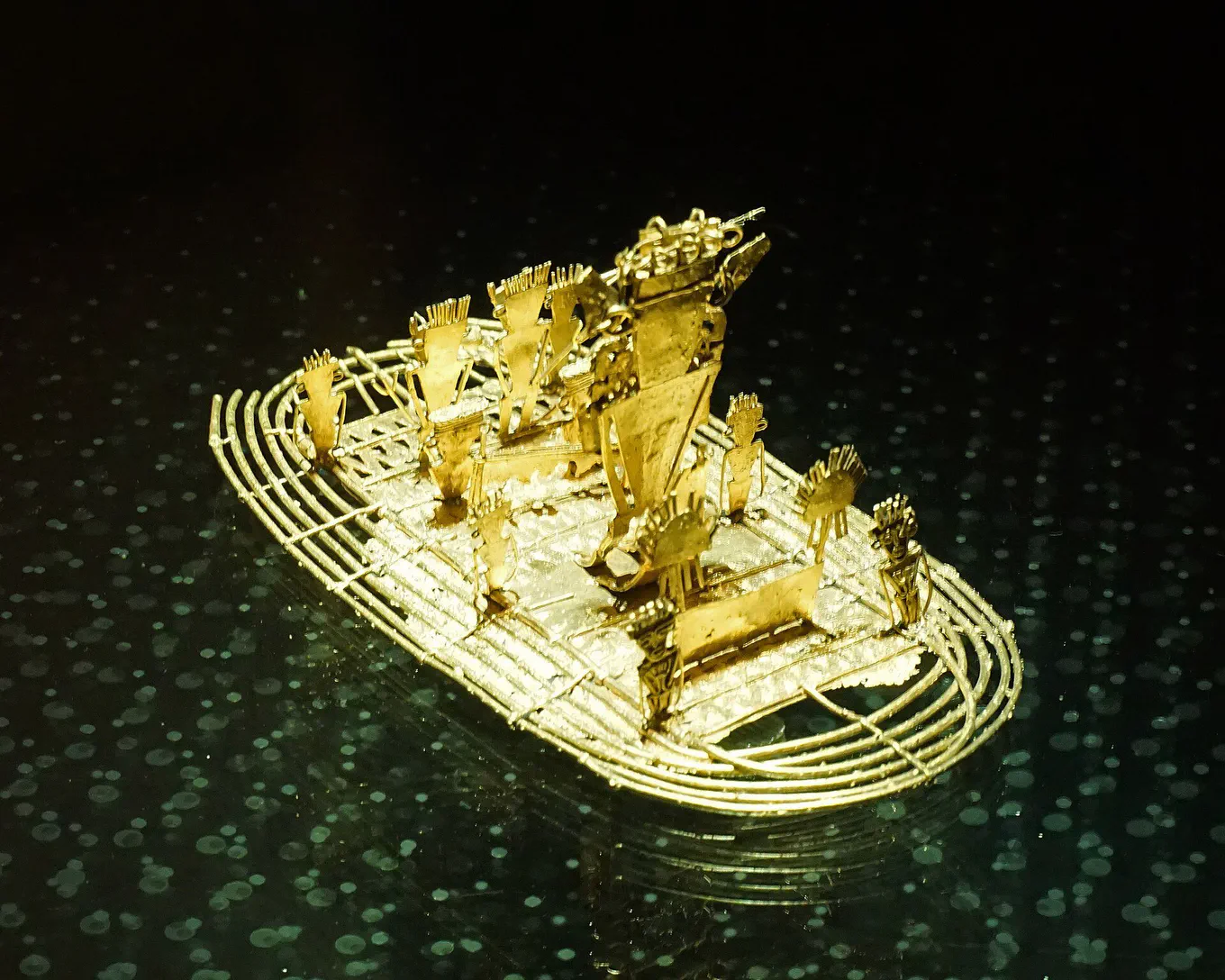
The legend of El Dorado, the Golden One, grew from a Muisca ceremony at Lake Guatavita, where a new chief, covered in gold dust, threw gold into the water from a raft. In 1856, two brothers found a raft, but it was sold to a German museum and burned on arrival at Bremen. In 1969, a peasant found this one in a cave at Pasca, and a parish priest made sure it came here. Its eleven figures probably show the ceremony itself. This time, the raft survived.
5 M-19 and the theft of Bolívar’s sword, Quinta de Bolívar
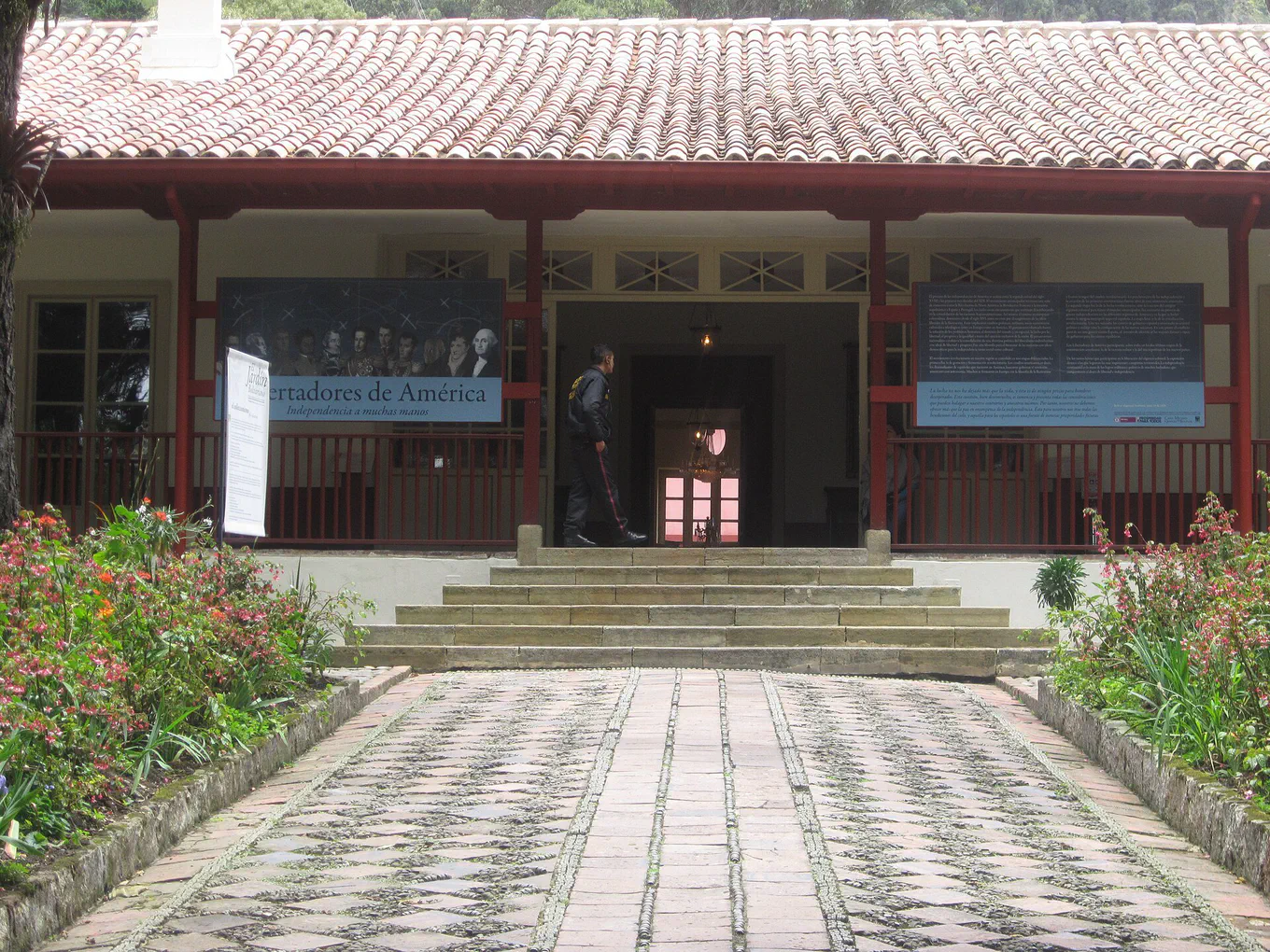
Stand here. The Quinta de Bolívar, the colonial house given to Bolívar, now a museum of his life. The sword has since moved to the presidential palace.
At 5 pm on 17 January 1974, a small group from the M-19 guerrilla movement walked into this house and took Bolívar’s sword. In its place they left a sign, “Bolívar, your sword returns to the fight.” It passed through several hands until it reached Cuba. Almost seventeen years later, during the group’s peace talks, one of its leaders handed it back. In 2022, Gustavo Petro, once an M-19 guerrilla himself, was sworn in as president with the sword beside him.
Pack nothing. Leave Friday.
Every Friday, I write a free letter, Journey, that takes us on a trip through places, stories, and ideas.
The Sound of Things Falling(Juan Gabriel Vásquez, 2011). A novel. Ricardo Laverde spends a morning in La Candelaria, then turns up at a billiards club on 14th Street.
Delirium(Laura Restrepo, 2004). A novel. In mid-1980s Bogotá, a man is asked to collect his wife from a hotel downtown.
The General in His Labyrinth(Gabriel García Márquez, 1989). A novel. It opens in Bogotá on 8 May 1830, as Bolívar leaves the city on his last journey.
Films to watch before you visit Bogotá
The Strategy of the Snail(Sergio Cabrera, 1993). A film. The tenants of La Casa Uribe, an old mansion in the centre of Bogotá, face illegal eviction by its owner, a banker.
Satanás(Andrés Baiz, 2007). A film. Adapted from Mario Mendoza Zambrano’s novel based on the 1986 Pozzetto massacre, it follows three characters in mid-1980s Bogotá. A killing spree ends at Pozzetto, an Italian restaurant.
Bogotá: City of the Lost(Kim Seong-je, 2024). A film. A South Korean crime drama about immigrants who start dangerous deals to survive in Bogotá, where filming began in January 2020.
Questions
How high is Bogotá?
Bogotá averages 2,640 metres (8,660 feet) above sea level, on a high plateau called the Bogotá savanna in the Eastern Cordillera of the Andes. That makes it the third highest capital city in the world.
Can you see the vase of 20 July 1810?
Yes. The Independence Museum, or Casa del Florero, on the north-east corner of Plaza de Bolívar, holds it. It was made at the Royal Factory of Buen Retiro in Madrid, though historians disagree whether it was the base of a vase or a bouquet holder.
How do you get up Monserrate?
By cable car or funicular, or on foot up a 2.4-kilometre pilgrims’ path. The mountain rises to 3,152 metres, where there is a church built in the 17th century, and pilgrims climb it to pray at the shrine of El Señor Caído, the Fallen Lord.