Brasília is the capital of Brazil, set in the Federal District on the Brazilian Highlands, in the country’s Central-West region. It was inaugurated on 21 April 1960, and in 1987 it became a UNESCO World Heritage Site. Its stories here are a saint’s dream, a question at a rally, a plan sketched freehand, a film star in a half-built city, and an atheist’s cathedral.
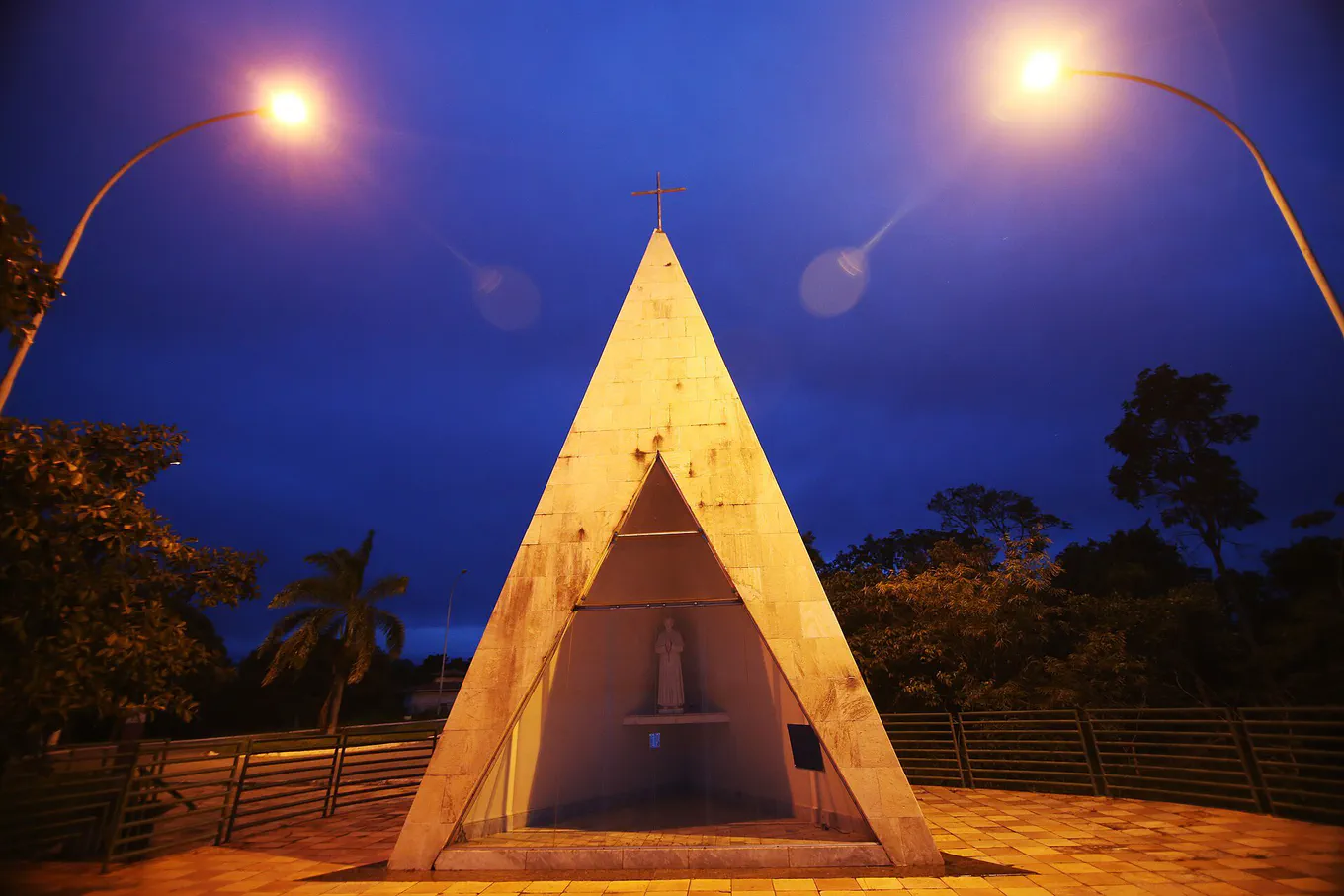
The story goes that in August 1883, Dom Bosco, made a saint in 1934, dreamed of a civilisation rising in the centre of South America, between latitudes 15 and 20, where a lake would form. Brasília took him as its patron saint, and in 1957 a chapel to him went up on the edge of a lake that didn’t yet exist. But the best-known line, a civilisation in Brazil’s interior to amaze the world, isn’t in the dream at all. Bosco never used those words.
2 Juscelino Kubitschek and the rally question that built Brasília
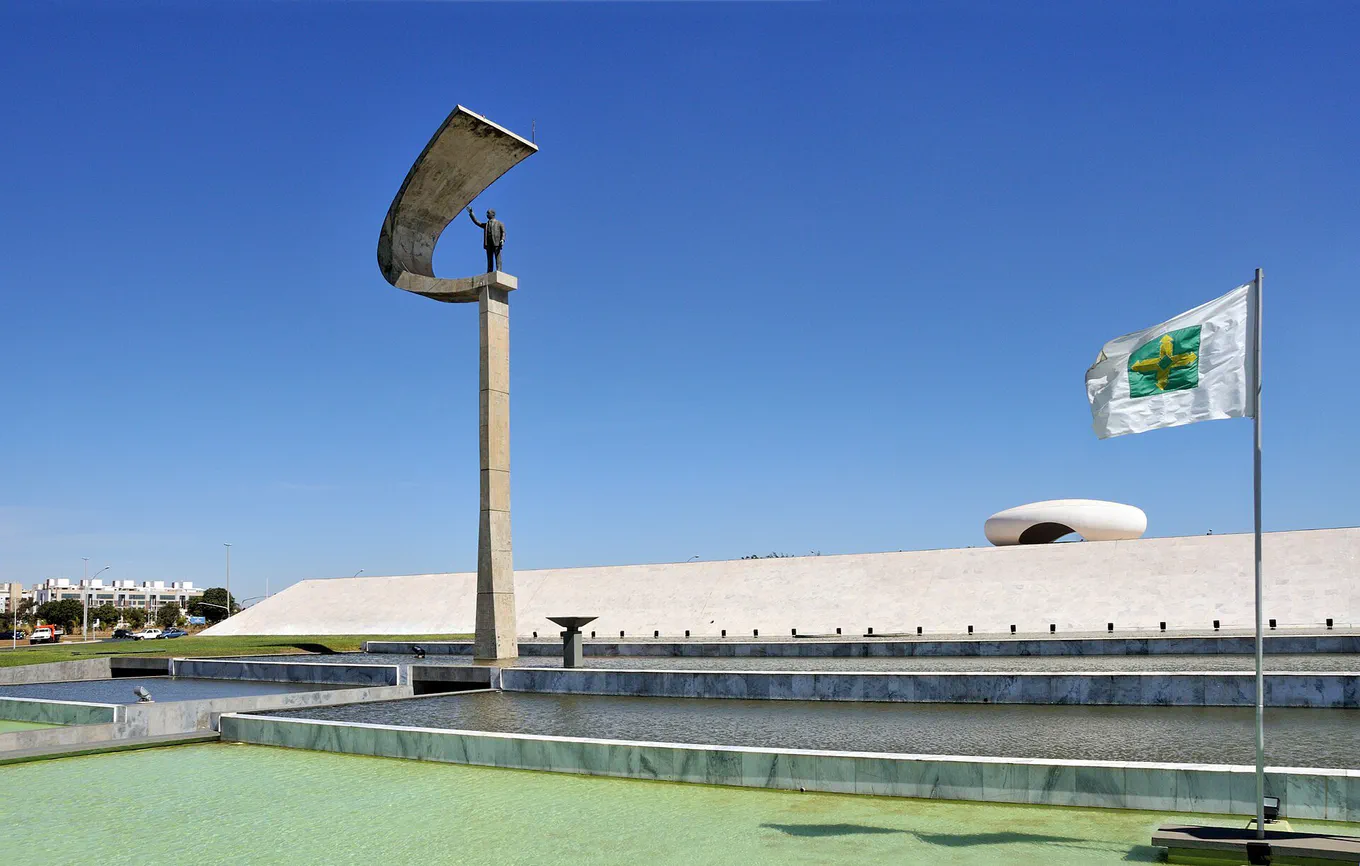
Stand here. The JK Memorial, on the Monumental Axis. Oscar Niemeyer designed this mausoleum and cultural centre, and Kubitschek is buried here.
In 1955, Juscelino Kubitschek was campaigning for president on a promise of fifty years’ progress in five. At a rally in Jataí, in Goiás, where he spoke from the back of a truck, a man of 30 asked whether he would keep the constitution and build the new capital. By his own account, Kubitschek had hardly considered it. He said he would build it on the central plateau. “Nobody thought I could or would do it,” he told Time. Brasília took 41 months.
3 Lúcio Costa’s freehand sketches that won the plan for Brasília
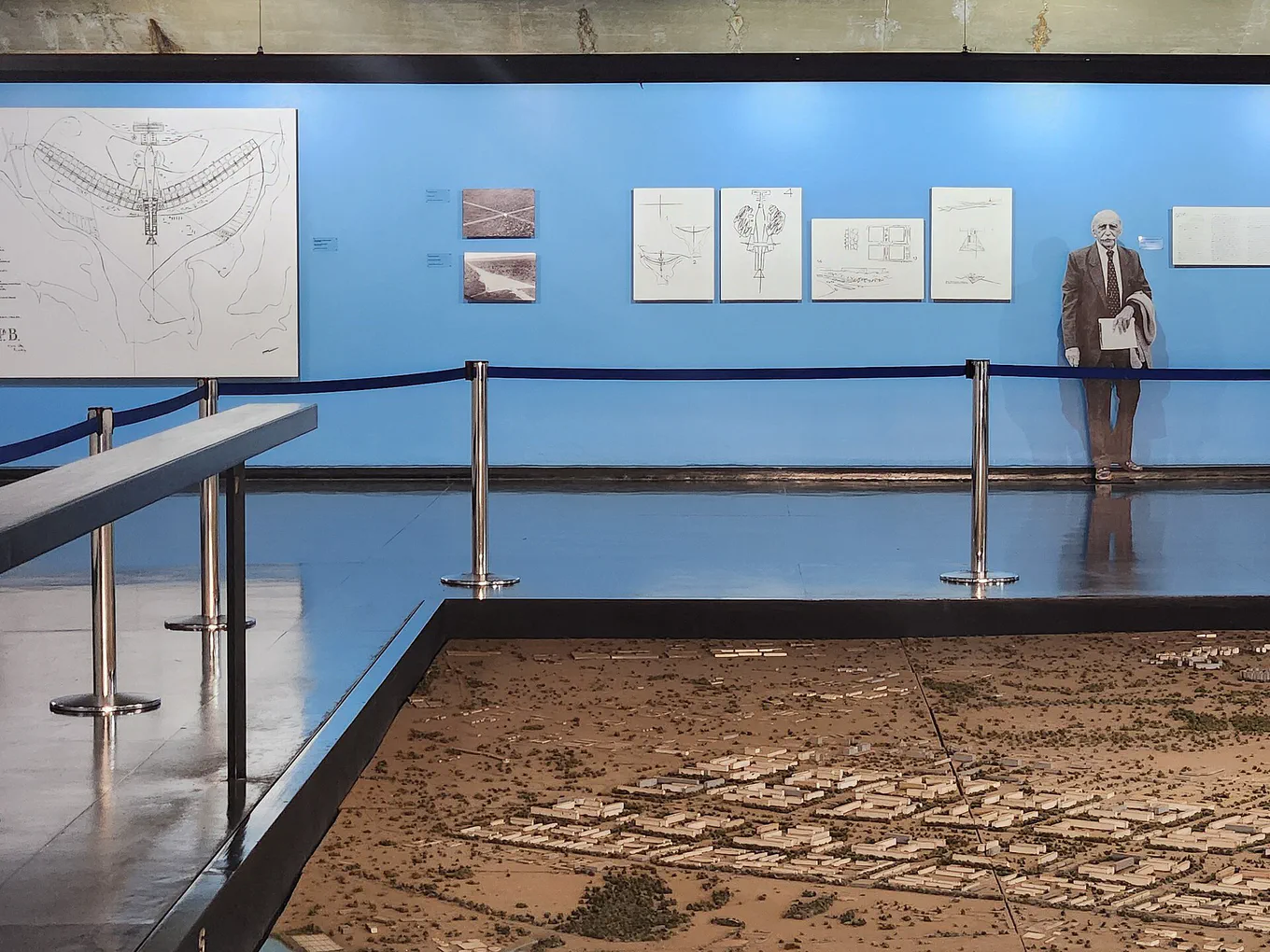
Stand here. Espaço Lúcio Costa, a museum by Niemeyer beneath the Praça dos Três Poderes. It holds copies of Costa’s sketches and a model.
When Brazil held a public competition in 1957 to plan its new capital, the architect Lúcio Costa entered a handful of freehand sketches and a report. Other entrants sent blueprints and models. Costa drew a cross, often likened to an aeroplane, a bird, or a dragonfly, and his entry was less detailed than some rival plans. But one judge saw in it “a city with solutions, not problems, built in”. Costa won, and his sketches became a capital.
4 Belmondo’s rooftop chase through an unfinished Brasília
Stand here. The Setor Bancário Sul, the banking sector, where Belmondo jumps from a building onto a rooftop in the Setor Comercial Sul.
Steven Spielberg is reported to have watched That Man from Rio nine times. Its star, Jean-Paul Belmondo, filmed his chase here in 1963, when every building in Brasília except the National Congress and the Palácio da Alvorada was still a skeleton. He turned down stunt doubles and did it all himself, high on an unfinished building, 50 metres up. And he rides a bicycle straight into Lake Paranoá.
5 Oscar Niemeyer, an atheist, and the Cathedral of Brasília
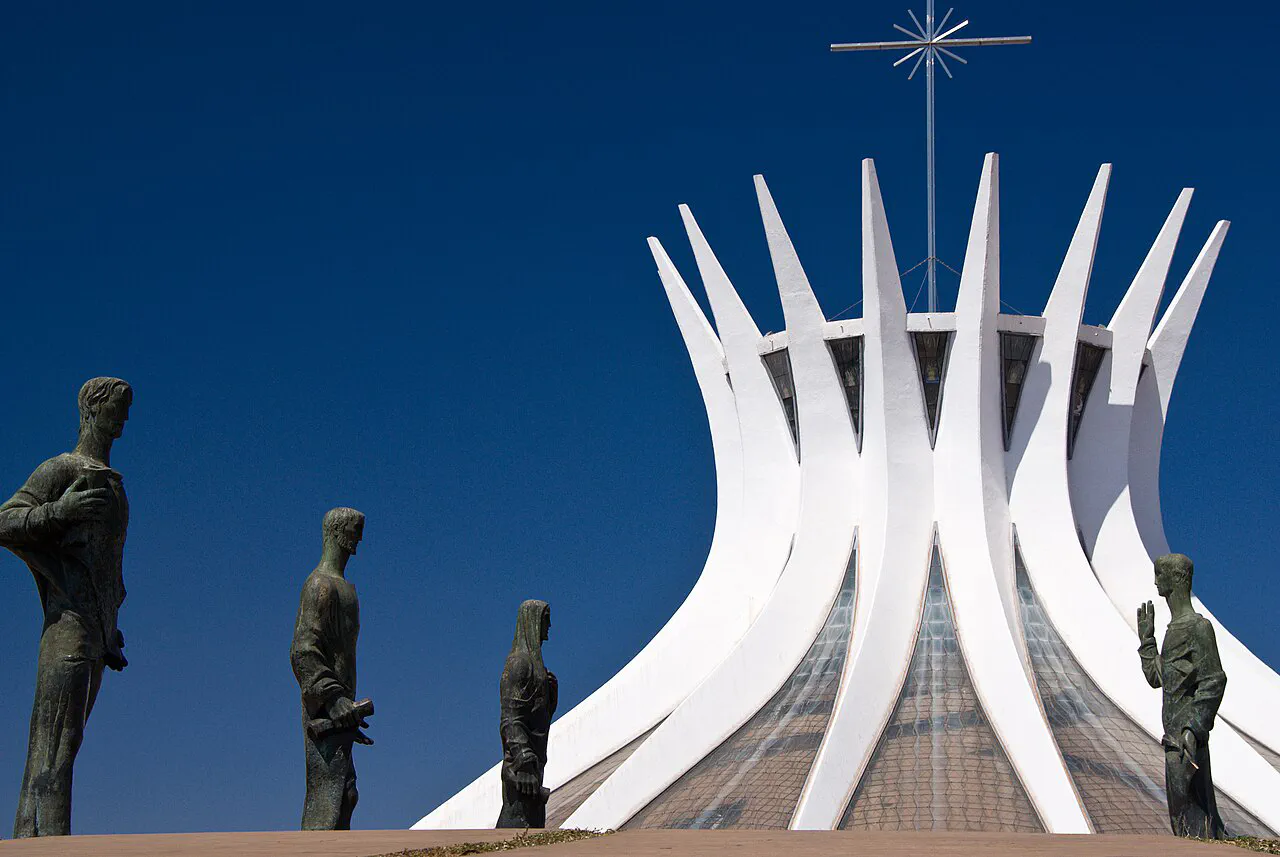
Stand here. The Cathedral of Brasília. You enter through a tunnel and come up into a bright space under a glass roof.
Oscar Niemeyer, the modernist who designed most of Brasília’s public buildings, was a lifelong atheist, involved with the Brazilian Communist Party. He still gave the capital its cathedral, sixteen concrete columns of 90 tonnes each, meant as two hands rising to heaven. On the day the city was inaugurated in 1960, its structure was finished, with only the roof showing above ground. After the military coup of 1964, Niemeyer left Brazil for Paris, and was forced into exile in Europe under the dictatorship. The atheist’s cathedral was dedicated in 1970.
Pack nothing. Leave Friday.
Every Friday, I write a free letter, Journey, that takes us on a trip through places, stories, and ideas.
The Modernist City(James Holston, 1989). A book by an anthropologist, on the Plano Piloto, Costa’s pilot plan, and the satellite cities people were moved to.
“Brasília”(Clarice Lispector, 1963). An essay. Of one of the new city’s churches, Lispector wrote, “The church would have been pure without the chandelier.”
Free City (Cidade Livre)(João Almino, 2010). A novel set in Brasília, Almino’s third to focus on the city, told as a blog that puts past and present into direct conflict.
Films to watch before you visit Brasília
That Man from Rio(Philippe de Broca, 1964). A film, also shot in Rio de Janeiro. Belmondo is chased across ground where the Museu da República now stands.
White Out, Black In(Adirley Queirós, 2014). A film. On 5 March 1986, police raided a run-down disco on the outskirts of Brasília and beat everyone inside, shouting the title.
Brazilian Western (Faroeste Caboclo)(René Sampaio, 2013). A crime drama film in which João de Santo Cristo arrives in Brasília. A set city was built to recreate Ceilândia as it was in the 80s.
Questions
Who designed Brasília, and why is it shaped like an aeroplane?
Lúcio Costa won the 1957 competition to plan the city. His plan is organised by two crossing axes, in the form of a cross often likened to an aeroplane, a bird, or a dragonfly. Oscar Niemeyer designed most of the public buildings, and Roberto Burle Marx was the landscape architect.
Where is Juscelino Kubitschek buried?
In the JK Memorial, on the Monumental Axis, a mausoleum and cultural centre designed by Oscar Niemeyer. Kubitschek died in a car crash near Resende in 1976, and 350,000 mourners came to his burial. In May 2026, a federal commission concluded that the military dictatorship killed him, though the National Truth Commission had earlier ruled out a deliberate crash.
Is there really a village under Lake Paranoá?
Yes. Vila Amaury, a village of wooden shacks home to about 16,000 people, was flooded in September 1959 as the dam began to fill Lake Paranoá, an artificial lake built to increase the city’s water supply. Its people were forced out, to satellite towns such as Taguatinga, Gama, and Sobradinho. The village rests on the lake bed.