I just think of In Bruges, which won’t appeal to everyone, but I thoroughly enjoyed it. I watched it in Edinburgh, the night before a client meeting. (Strange what we remember.)
— Nick
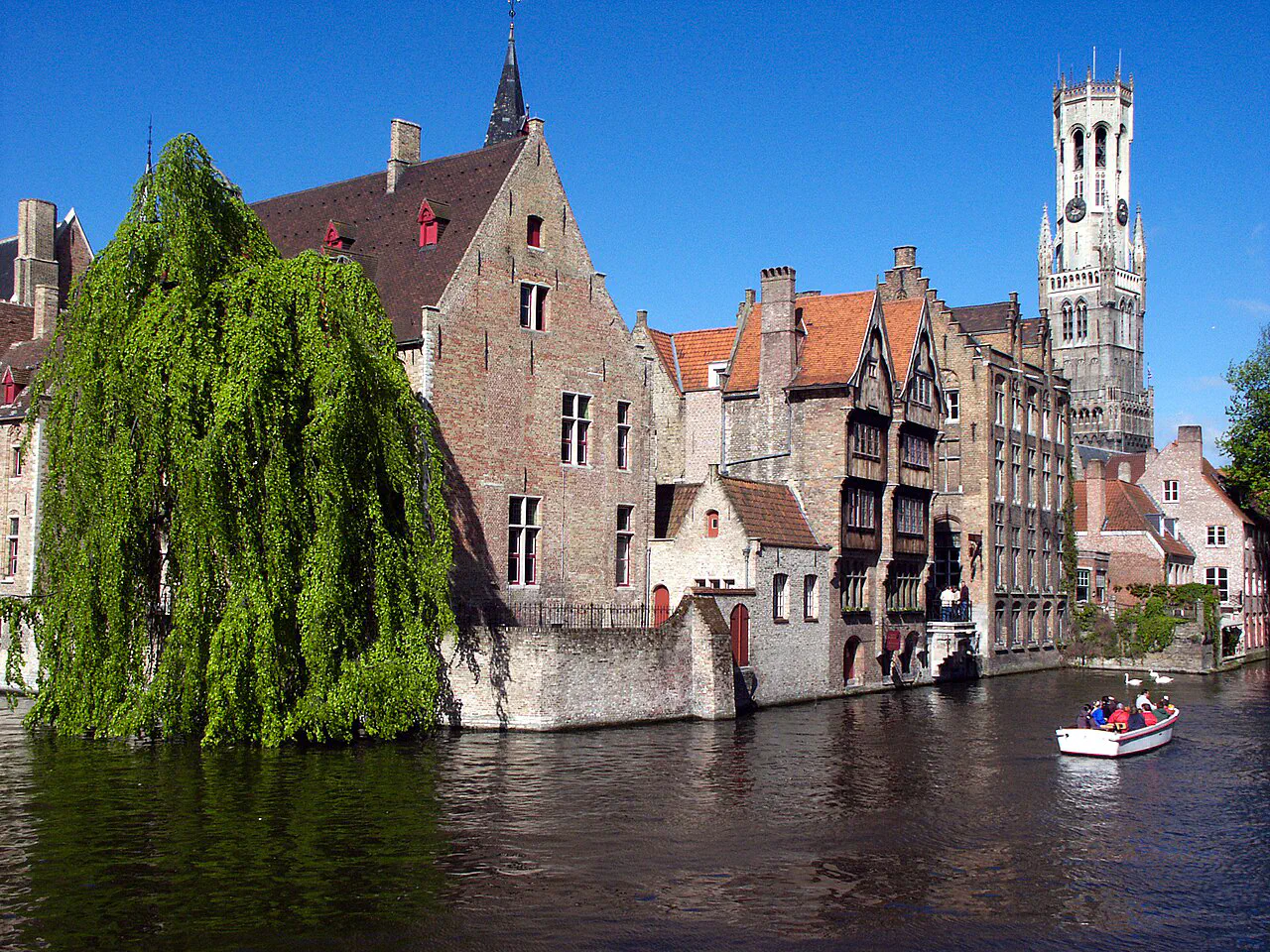
Bruges is the capital of West Flanders, in the northwest of Belgium. It was once one of the world’s chief commercial cities, until its channel to the sea began silting up around 1500. Its stories here are two hitmen and a bell tower, a relic its crusader may never have carried, a painter’s signature, a ruler locked up by his own city, and a Michelangelo taken twice.
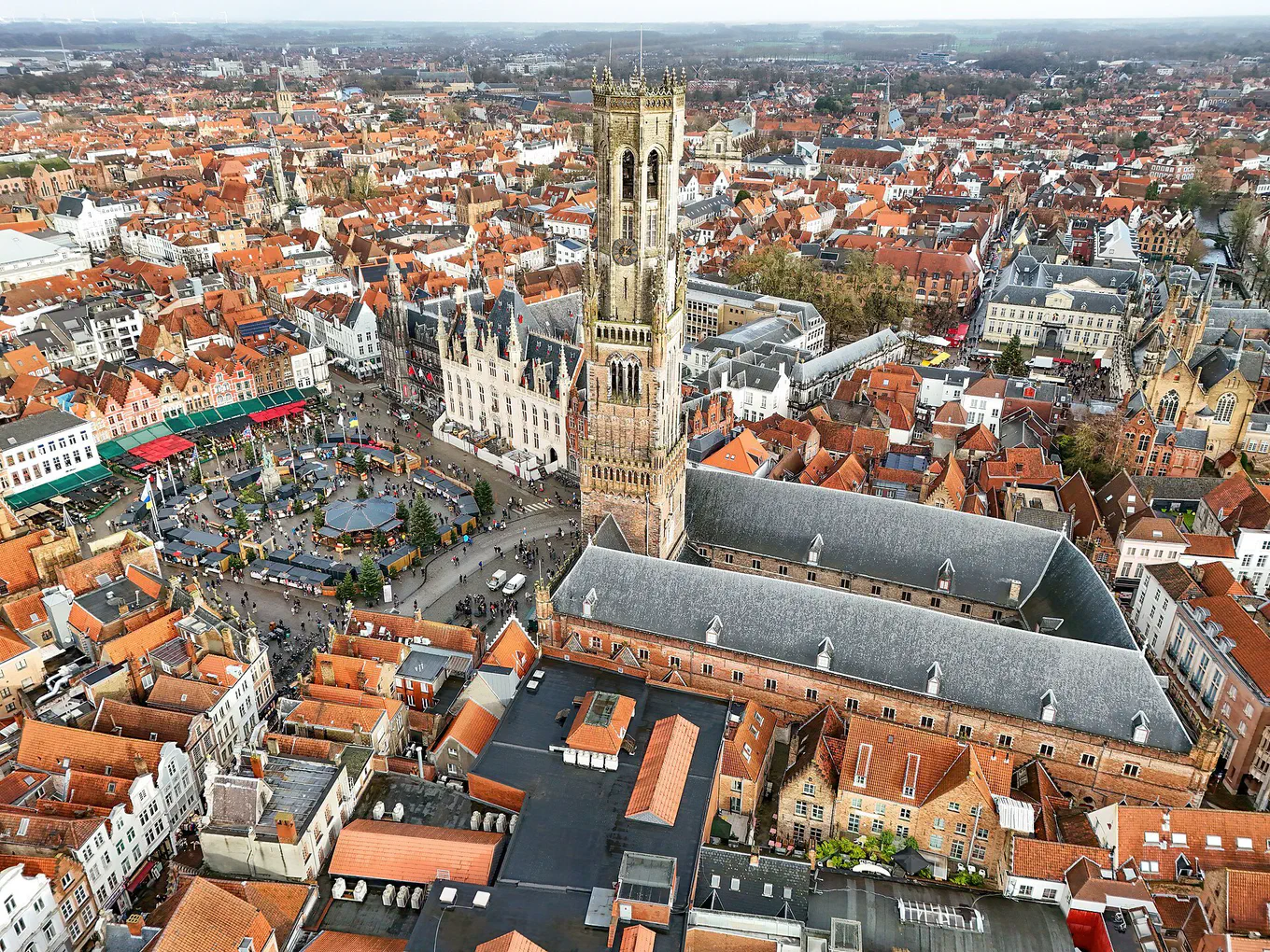
Martin McDonagh’s 2008 film In Bruges hides two Irish hitmen here. Ray has shot a priest and, by accident, killed an altar boy. His mentor, Ken, finds the city beautiful, and Ray hates it. Their boss, Harry, orders Ken to kill Ray, because killing a child is unforgivable. But Ken finds Ray about to shoot himself, stops him, and tells him to leave. When Harry arrives, Ken takes him up the bell tower, away from bystanders. Shot twice, Ken drags himself back to the top and jumps, to reach Ray first.
2 The Holy Blood of Bruges and its doubtful crusader
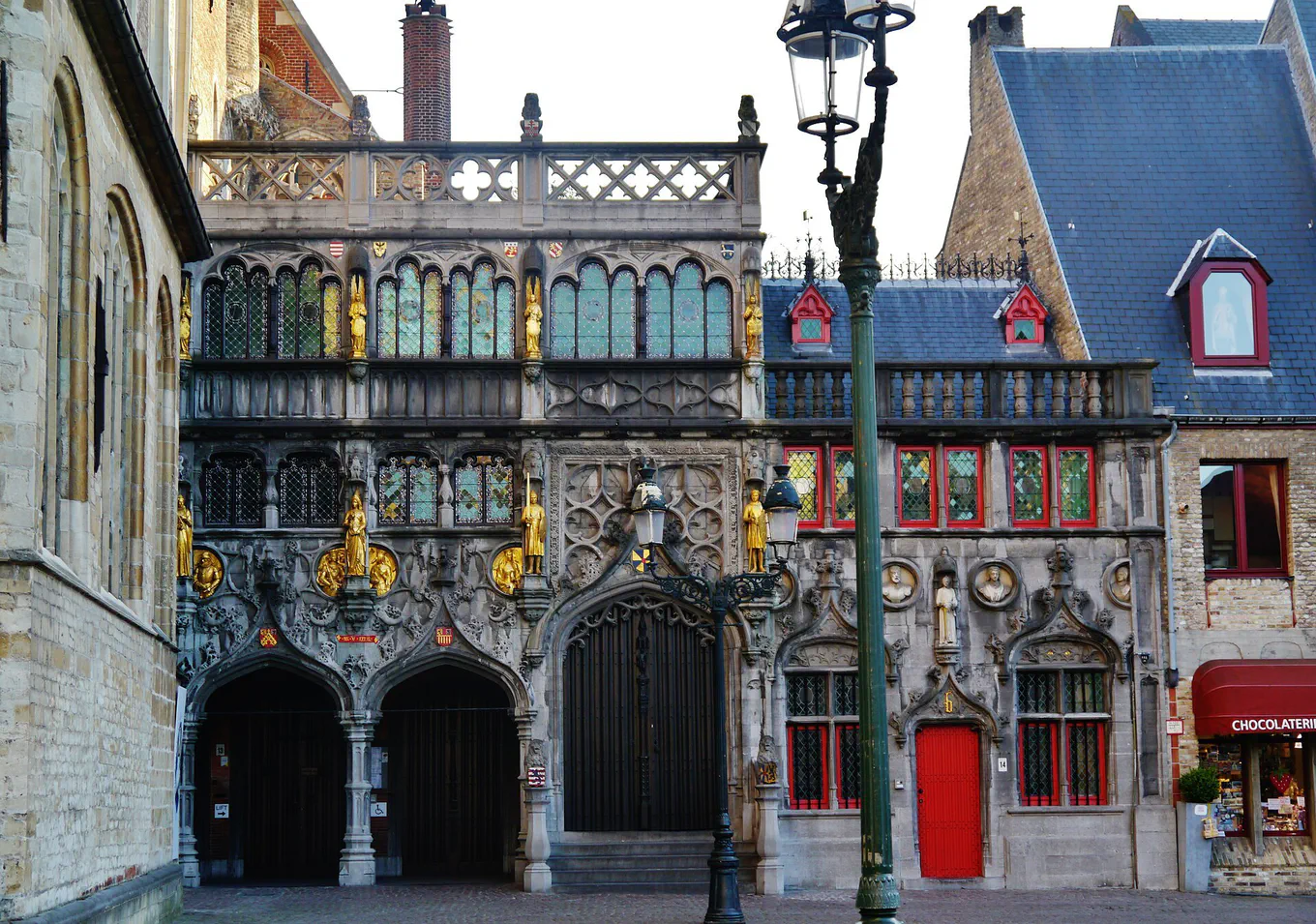
Stand here. The Basilica of the Holy Blood, on the Burg square. Its dark Romanesque lower chapel is almost unchanged since it was built.
The story Bruges tells is that Thierry, Count of Flanders, who had joined the Second Crusade in 1147, came home in 1150 with a cloth stained with Christ’s blood. But recent research finds no trace of the relic in Bruges until the 1250s. It most likely came from the sack of Constantinople by the army of a later Count of Flanders, and its rock-crystal phial began life as a Byzantine perfume bottle. Nobody can prove it real or false, and the relic is still shown every Friday.
3 Jan van Eyck was here: Bruges and the Arnolfini Portrait
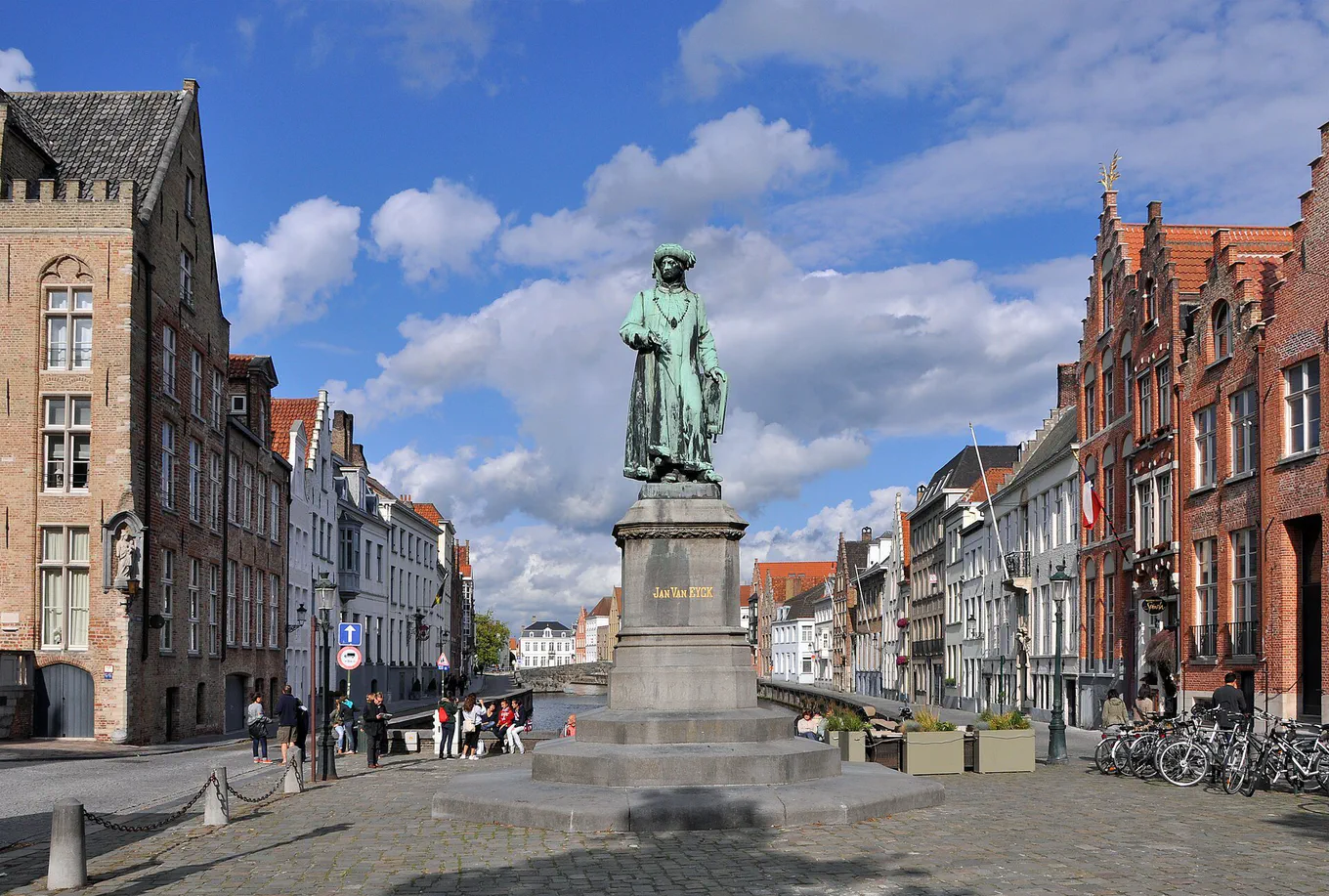
Stand here. Jan van Eyckplein, the square named after the painter, with his statue on a tall bluestone pedestal. The painting itself hangs in the National Gallery, London.
Jan van Eyck’s Arnolfini Portrait shows an Italian merchant and his wife, presumably in their house in Bruges. Van Eyck was court painter to the Duke of Burgundy and lived in the city from 1429 until he died. He signed this picture in Latin on the wall above the couple’s mirror: “Jan van Eyck was here 1434”. Look into the mirror, though, and two more figures stand just inside the door the couple are facing. The one in red is presumably the painter himself.
4 Maximilian of Austria, prisoner on the Markt of Bruges
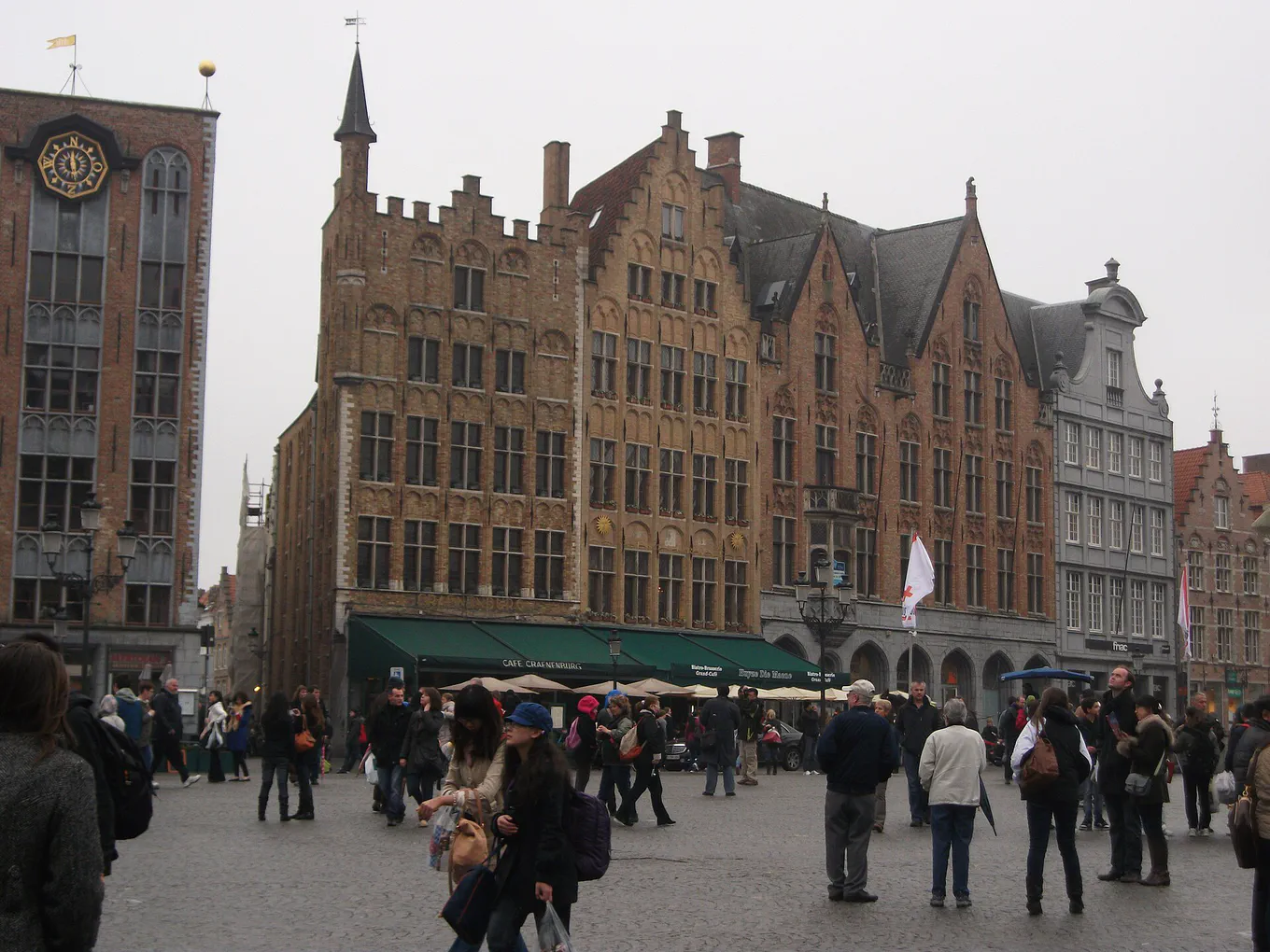
Stand here. Huis Craenenburg, at the corner of the Markt and Sint-Amandsstraat. It is now a café, behind a front of 1956.
In February 1488, the people of Bruges locked up the man who ruled them. Maximilian of Austria governed Flanders for his son, and taxes had doubled. For four weeks he was held in the Craenenburg, and from its window he watched his closest men tortured and put to death. He went free only when his father, the Emperor, raised an army of 20,000. The story goes that he then made Bruges keep swans on its canals forever. No archive supports it, and the swans were there first.
5 Michelangelo’s Madonna, taken from Bruges and brought home
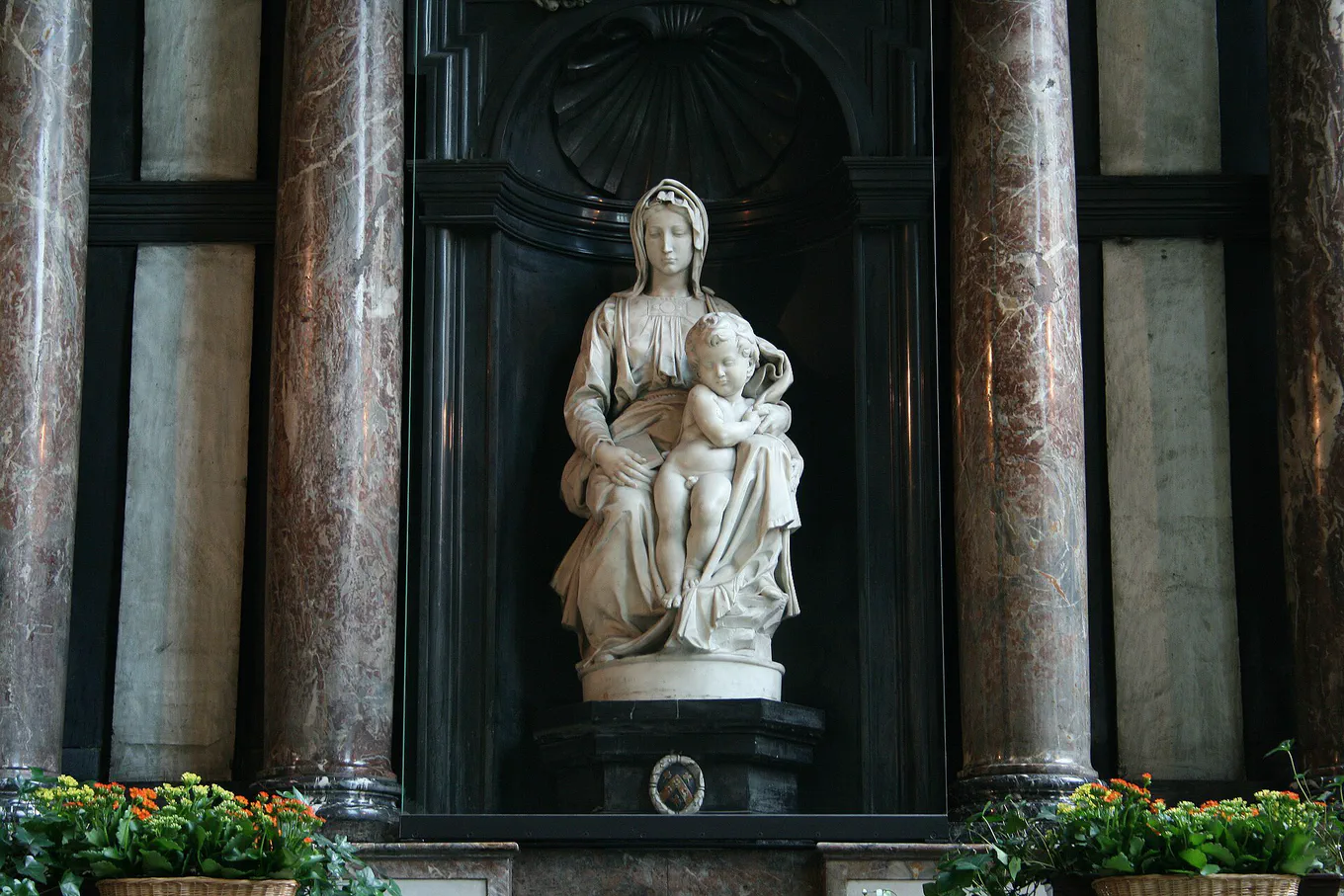
Stand here. The Church of Our Lady, on Mariastraat. The Madonna is the altarpiece of a chapel in the south aisle, inside the ticketed museum section.
This is the statue a British officer dies trying to save in George Clooney’s 2014 film The Monuments Men, which changed every name. Two Bruges cloth merchants gave Michelangelo’s marble Madonna and Child to the church on condition that it stay forever. It had been taken to Paris once, and returned. Then, in September 1944, retreating German soldiers wrapped it in a mattress and took it away. The Monuments Men found it in an Austrian salt mine, among nearly 8,000 hidden objects. In November 1945, it came home to stay.
Pack nothing. Leave Friday.
Every Friday, I write a free letter, Journey, that takes us on a trip through places, stories, and ideas.
Bruges-la-Morte(Georges Rodenbach, 1892). A novel. A grieving widower takes refuge in Bruges, and the text is set among dozens of photographs of the city.
The Abyss(Marguerite Yourcenar, 1968). A novel. Zeno, adopted by a rich Bruges banking family, comes back to the city under an assumed name.
The Monuments Men(Robert M. Edsel with Bret Witter, 2009). Non-fiction. Its story includes the Ghent Altarpiece and Michelangelo’s Bruges Madonna.
“The Belfry of Bruges”(Henry Wadsworth Longfellow, 1845). A poem about the tower in the market-place: “Thrice consumed and thrice rebuilded, still it watches o’er the town.”
Films to watch before you visit Bruges
In Bruges(Martin McDonagh, 2008). A film. Two Irish hitmen hide in Bruges, with the Belfry on the Markt at the heart of the story.
The Nun’s Story(Fred Zinnemann, 1959). A film. Its Belgian exteriors were shot in Bruges, including a house on the Sint-Annarei, though the novel was set in Ghent.
The Monuments Men(George Clooney, 2014). A film, with every name and some facts changed. A British officer is killed sneaking into occupied Bruges to save the Madonna.
Questions
Can you climb the Belfry of Bruges?
Yes. Visitors can climb the 366 steps of the medieval bell tower on the Markt, which stands 83 metres tall. It still holds a carillon of 47 bells.
Where can you see Michelangelo’s Madonna in Bruges?
In the Church of Our Lady, on Mariastraat, where it is the altarpiece of a large chapel in the south aisle. The same part of the church holds the tombs of Charles the Bold and Mary of Burgundy.
Why is Bruges called the Venice of the North?
Because of its canals. Bruges received its city charter in 1128, when new walls and canals were built, and its historic centre, known as the “egg”, is enclosed by a ring of canals. Like a few other northern canal cities, it is sometimes called the Venice of the North.