Brussels, Belgium, Brussels-Capital Region, Europe
This is totally true. In my teens, I created a memory system to help me remember the capitals of countries. One of the few images I still remember, is for this city that I have never visited. In the image, a BELL is working out in a GYM, lifting a bar that skewers hundreds of BRUSSEL sprouts. (I was a strange lad.)
— Nick
Its founding usually dated to around 979, Brussels grew from a small settlement on the river Senne. Now the de facto capital of the European Union, it is a region of 19 municipalities in the centre of Belgium, including the City of Brussels, the country’s capital. Tintin’s model ship and a poet’s gunshot lead into Charlotte Brontë’s love for a married man, Marx’s overdue manuscript, and Magritte’s dining room.
1 Tintin finds the Unicorn at the Marolles flea market
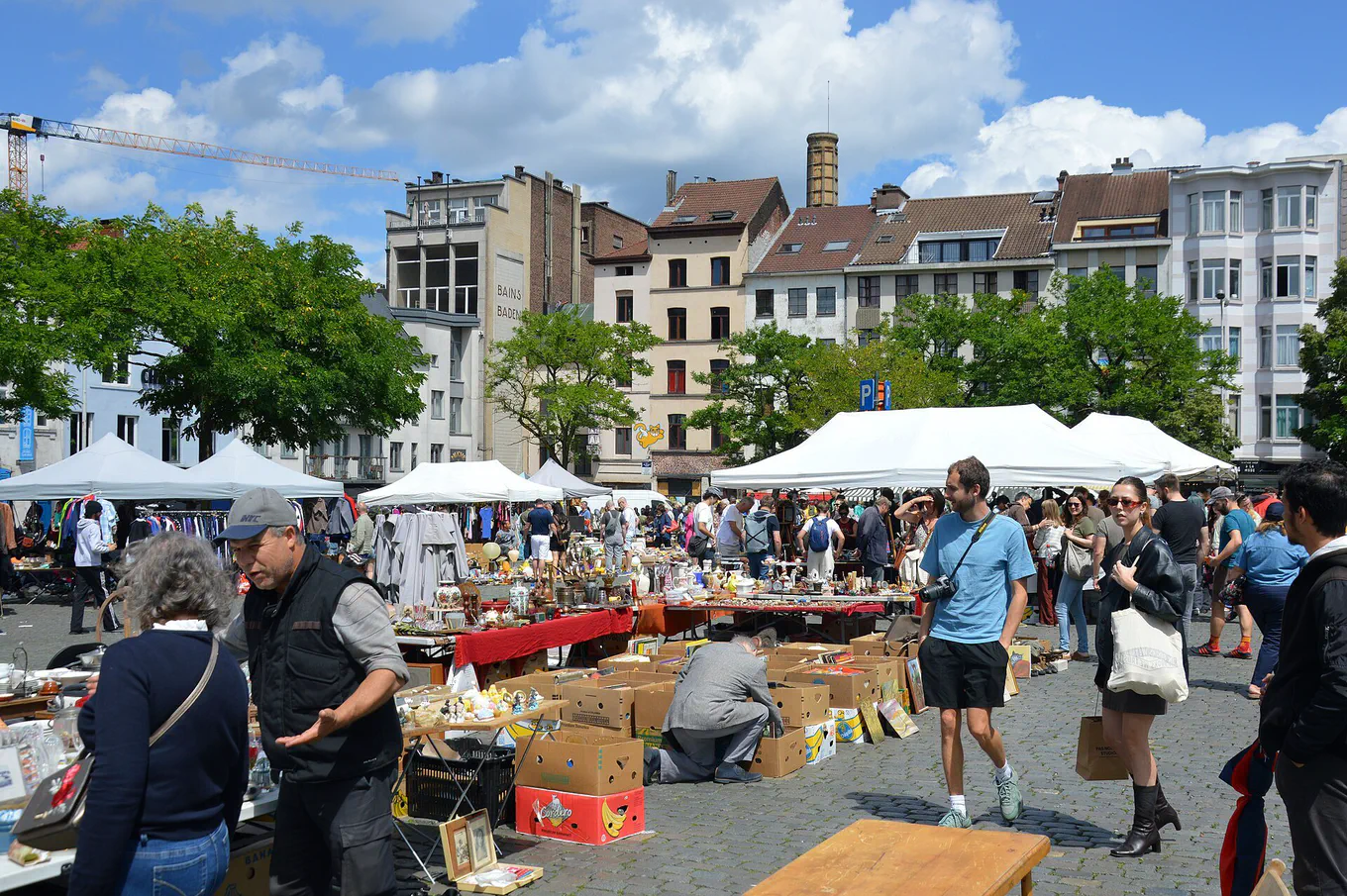
Stand here. Place du Jeu de Balle, in the Marolles. The Old Market, a flea market here since 1873, now runs every day.
The Old Market flea market on Place du Jeu de Balle, in the Marolles district of Brussels.DimiTalen / CC0.
In Steven Spielberg’s The Adventures of Tintin, the boy reporter buys a model ship at a market in 1940s Brussels. Hergé, the Brussels-born creator of Tintin, had set the original scene on this square. In The Secret of the Unicorn, first serialised in 1942, Tintin is browsing the flea market when he buys an antique model of the Unicorn. Then he finds a tiny scroll hidden in its mast. It is a riddle left by Captain Haddock’s ancestor, and it leads to the pirate Red Rackham’s treasure.
2 Verlaine shoots Rimbaud in a Brussels hotel room
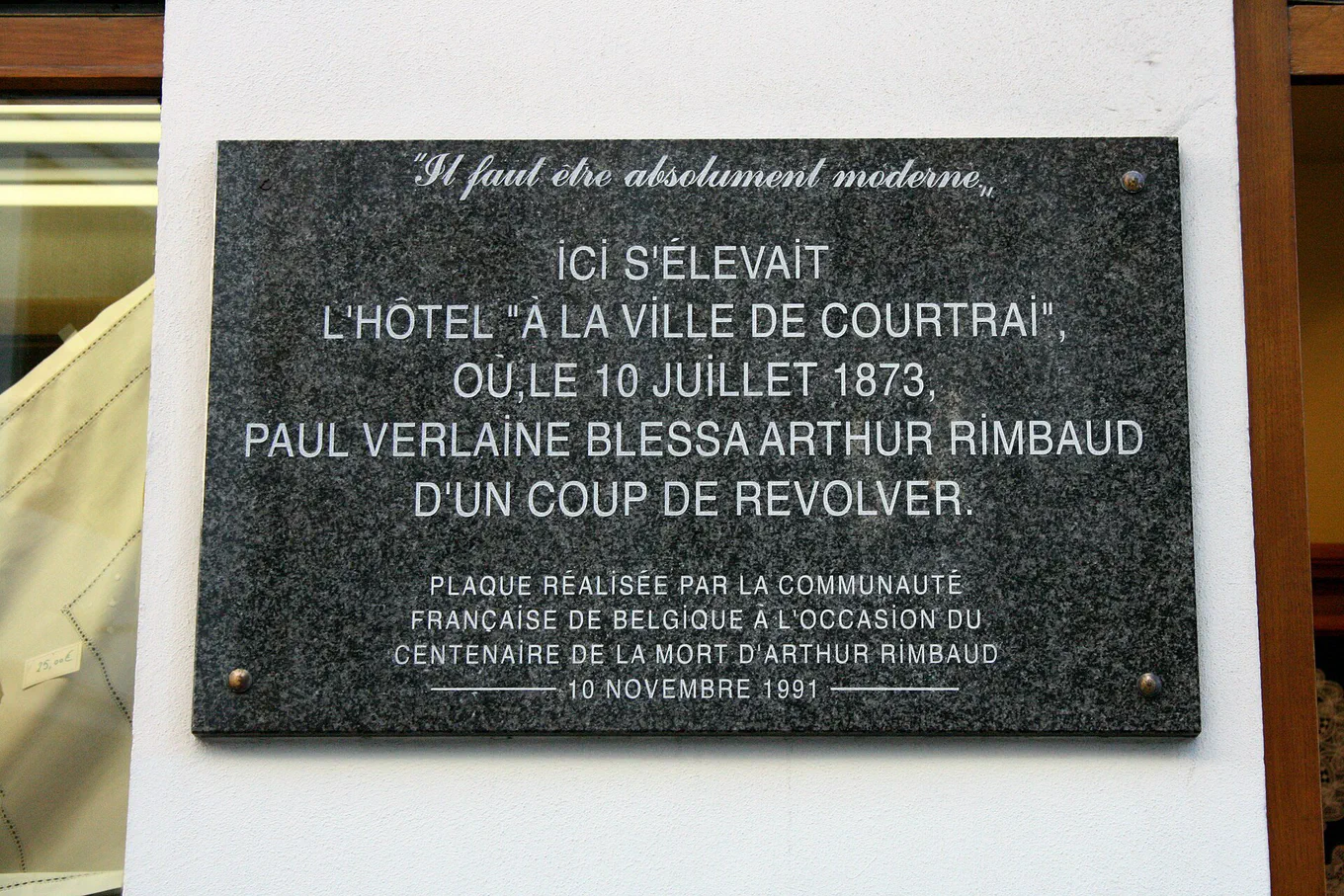
Stand here. No. 1 rue des Brasseurs. The hotel has gone, and a plaque recalls the two poets.
In the film Total Eclipse, Leonardo DiCaprio plays Arthur Rimbaud and David Thewlis plays Paul Verlaine, the French poet who left his wife and son for him. In July 1873, Rimbaud joined Verlaine in Brussels. They argued, and Verlaine drank heavily. Then Rimbaud said he was going back to Paris alone. Verlaine locked the door of the hotel room and shot him in the left wrist. Rimbaud withdrew his complaint, but Verlaine was sentenced to two years. Rimbaud finished A Season in Hell, then stopped writing poetry altogether.
3 Charlotte Brontë falls in love at the Pensionnat Heger
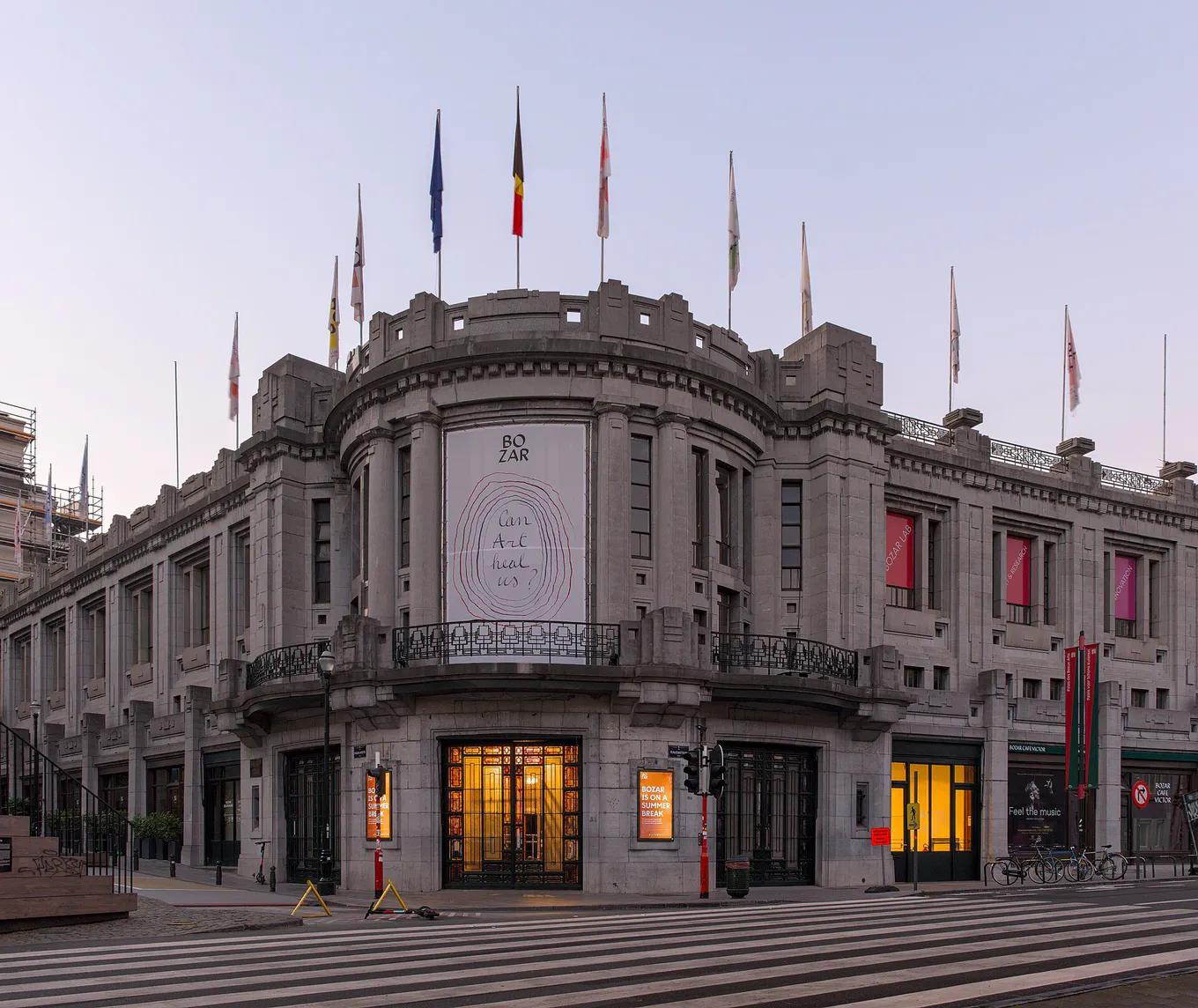
Stand here. The Centre for Fine Arts, known as BOZAR, stands where the school was. A Brontë plaque is on its rue Baron Horta wall.
Before she wrote Jane Eyre, Charlotte Brontë came to a boarding school here in 1842, with her sister Emily, to gain the language skills they needed to open a school of their own. The next January, she came back alone to teach. But she fell in love with the director, Constantin Heger, a married man, and came to dislike his wife. A year later, she had to go home to England. Heger tore up the letters she wrote him. Madame Heger retrieved them and carefully pieced them back together.
4 Karl Marx’s overdue Manifesto on the Grand-Place
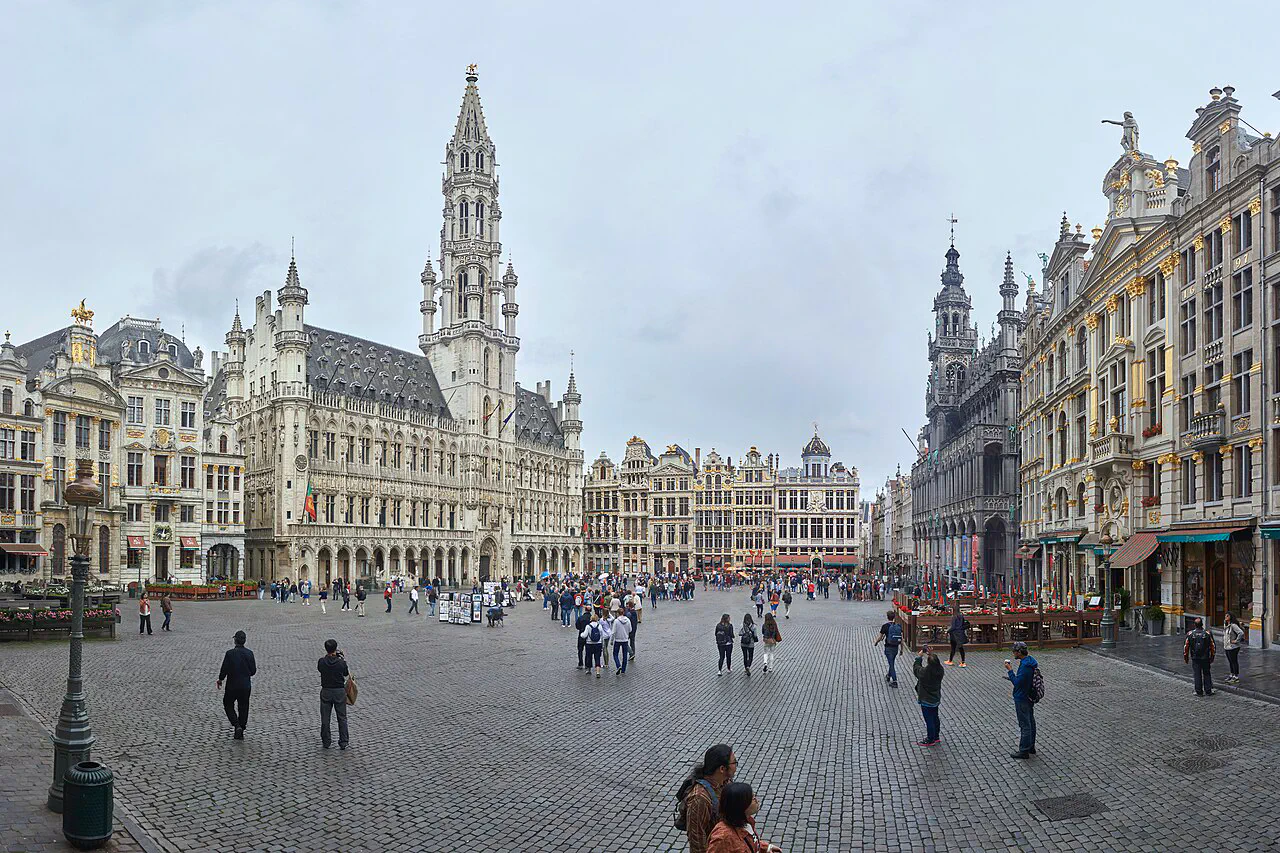
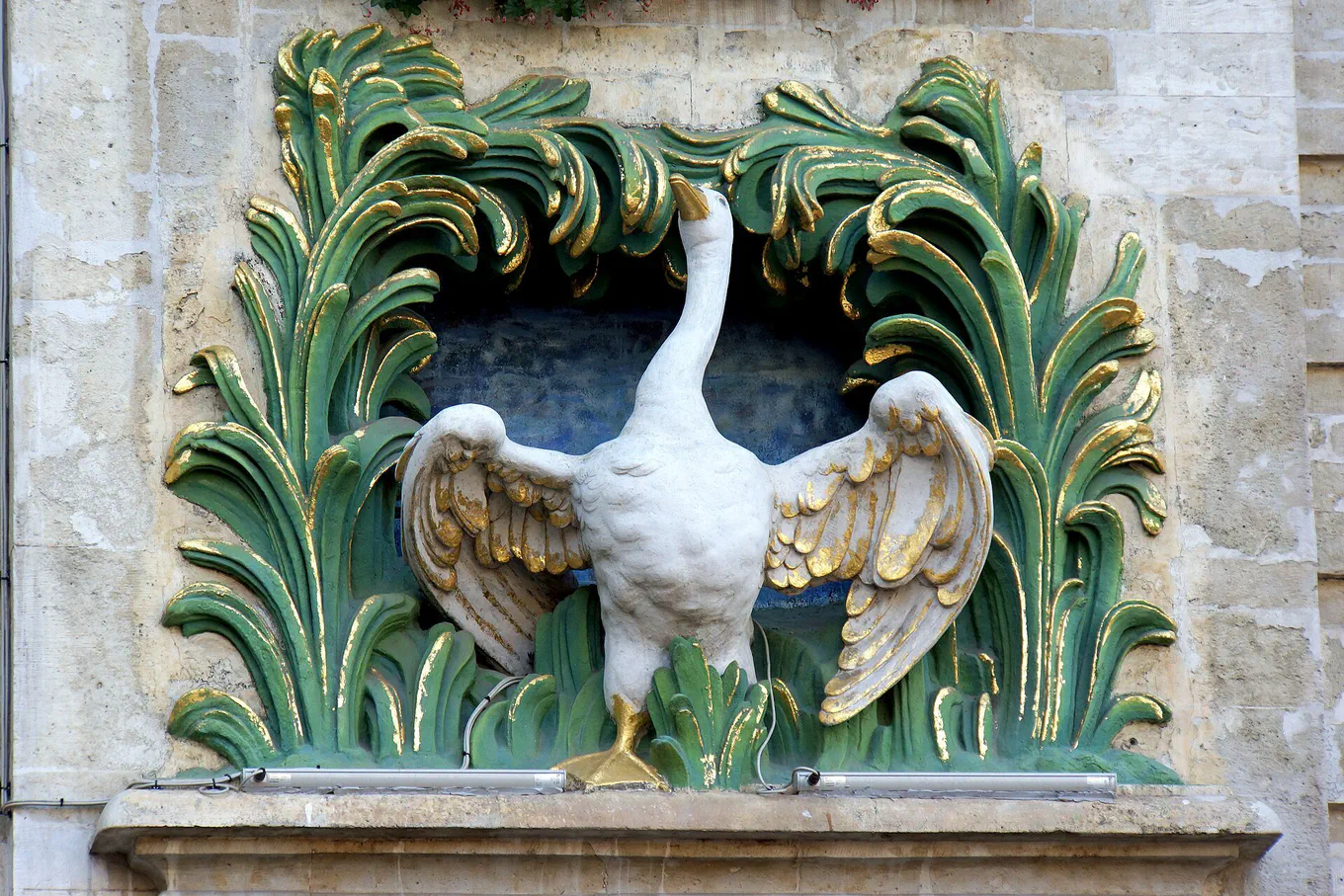
Stand here. Le Cygne, the Swan, at No. 9 Grand-Place. The butchers’ guild house of 1698 still stands on the square.
The Communist Manifesto was written against a deadline. Late in 1847, the Communist League commissioned Karl Marx, already expelled from France, and Friedrich Engels to write its manifesto. Back in Brussels, Marx engaged in what his biographer calls “ceaseless procrastination”, until the League sent an ultimatum demanding the manuscript by 1 February. Marx wrote the final version alone, and tradition says he wrote it in this house. The Manifesto came out that February. Within a fortnight, Belgian police had expelled him too.
5 René Magritte paints in his dining room in Jette
Stand here. 135 rue Esseghem, in Jette. The flat where Magritte and Georgette lived is now the René Magritte Museum.
Perhaps René Magritte’s best-known painting is The Son of Man, a man in a bowler hat whose face is largely hidden by a green apple. Magritte made little impact in Paris, and his gallery closed. In 1930, he came back to Brussels, returned to advertising, and moved into a flat here with his wife, Georgette. He painted in the dining room. He had a workshop built in the garden, but disliked painting there and used it mainly for advertising. Half his life’s work, about 800 paintings, came from this flat.
Pack nothing. Leave Friday.
Every Friday, I write a free letter, Journey, that takes us on a trip through places, stories, and ideas.
Villette(Charlotte Brontë, 1853). A novel. Brontë turns Brussels into the city of Villette, and bases its school on the Hegers’ boarding school, where BOZAR stands now.
The Secret of the Unicorn(Hergé, 1943). A comic. Tintin buys the model ship at the flea market on Place du Jeu de Balle, in the Marolles.
The Professor(Charlotte Brontë, 1857). A novel. Its hero makes his career as a teacher in Brussels, and the story draws on Brontë’s own experiences there.
Films to watch before you visit Brussels
Jeanne Dielman, 23 quai du Commerce, 1080 Bruxelles(Chantal Akerman, 1975). An art film named for an address on the Quai du Commerce, and shot on location in Brussels.
The Brand New Testament(Jaco Van Dormael, 2015). A film. God lives in a Brussels apartment, and his 10-year-old daughter, Ea, wanders the city’s streets.
The Adventures of Tintin(Steven Spielberg, 2011). A film. Set in 1940s Brussels, where Tintin buys the model Unicorn at an outdoor market.
Questions
Can you visit René Magritte’s house in Brussels?
Yes. The René Magritte Museum is in the house at 135 rue Esseghem, in Jette, where he and his wife Georgette lived from 1930 to 1954, and where he painted about half his work. It opened on 5 June 1999.
Is the Manneken Pis the original statue?
No. The statue, redesigned by Jérôme Duquesnoy the Elder, was put in place in 1619. Since 1965, a replica has stood at the corner of Rue du Chêne and Rue de l’Étuve, and the original is kept in the Brussels City Museum. The statue has been stolen or damaged many times, and it has around a thousand costumes.
How old are the buildings on the Grand-Place?
Most were rebuilt in the four years after 1695, when French troops bombarded Brussels during the Nine Years’ War and destroyed most of the square. The guilds and other owners did the rebuilding. Only the stone shell of the Town Hall and a few fragments survived. The square has been a UNESCO World Heritage Site since 1998.