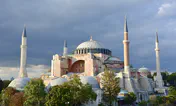
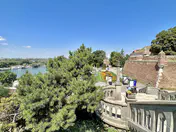
My Romania trip started with a drive out of Bucharest. Along the way, a building across a valley turned out to be Nevermore Academy from Wednesday, and I knew straight away it was a story I could share with my daughter. That’s what stories do to places.
— Nick
Bucharest is the capital and largest city of Romania, on the River Dâmbovița in the south-east of the country. It was first mentioned in 1459 and became the capital of the united Romanian principalities in 1862. Its stories here are a prince’s fortress, a novelist’s hotel at the start of a war, a dictator’s palace, churches moved on rails, and the dictator’s last speech.
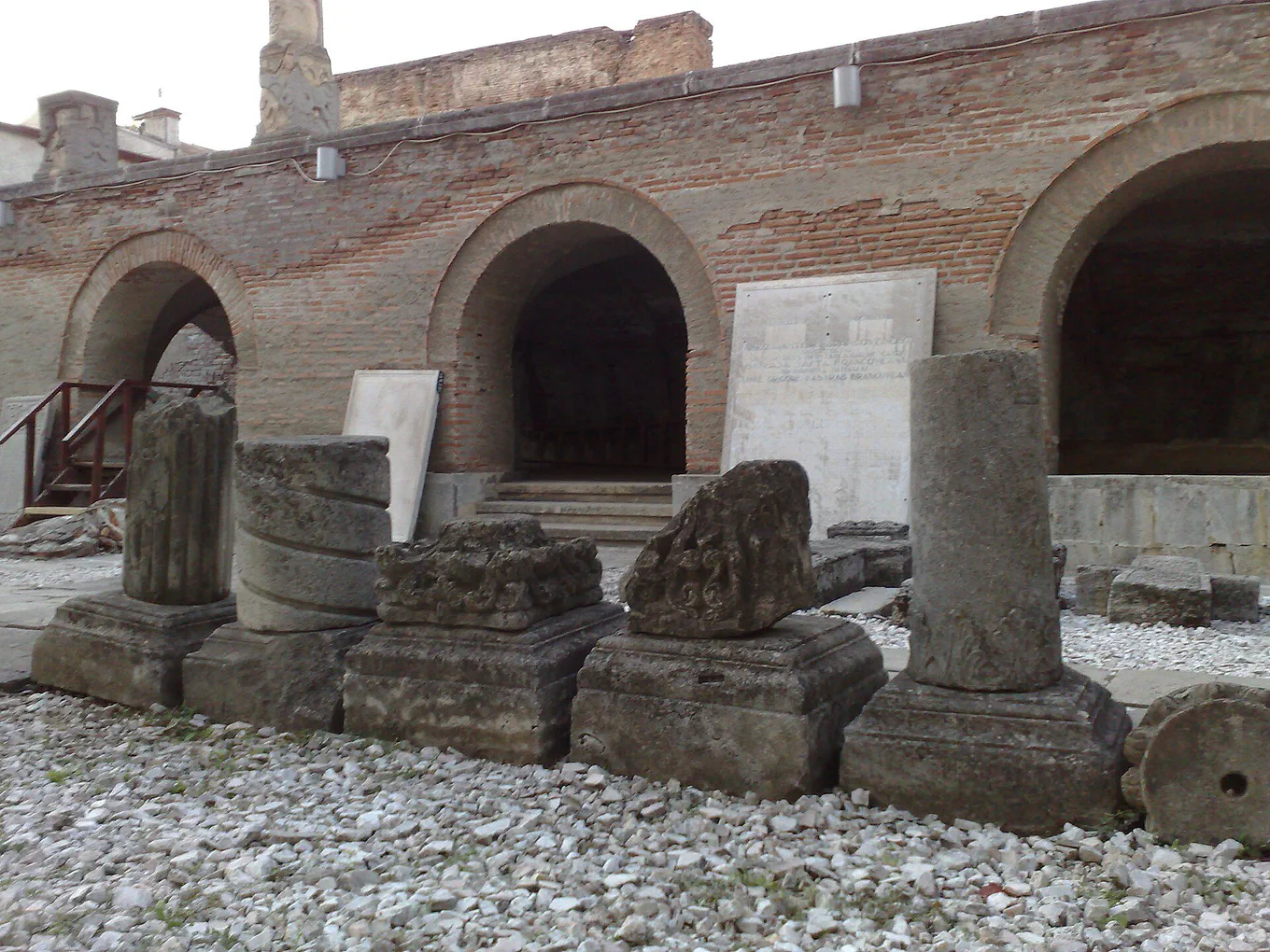
Bram Stoker’s Count Dracula may owe his name to Vlad III, a prince of Wallachia known as Dracula, “son of the Dragon”. Vlad’s reign was dominated by war with the Ottoman Empire, and on 20 September 1459 he issued a document calling the fortress at Bucharest his princely residence. Bucharest is first mentioned in that year. Romanian historians call him Vlad the Impaler, after his favourite method of execution. Yet Stoker’s notes never mention him directly. Vlad was killed in battle, and nobody knows where he is buried.
2 Olivia Manning, the Athénée Palace and Fortunes of War
Stand here. The Athénée Palace, on Str. Episcopiei at the corner of Calea Victoriei. It is still a hotel, the InterContinental since 2023.
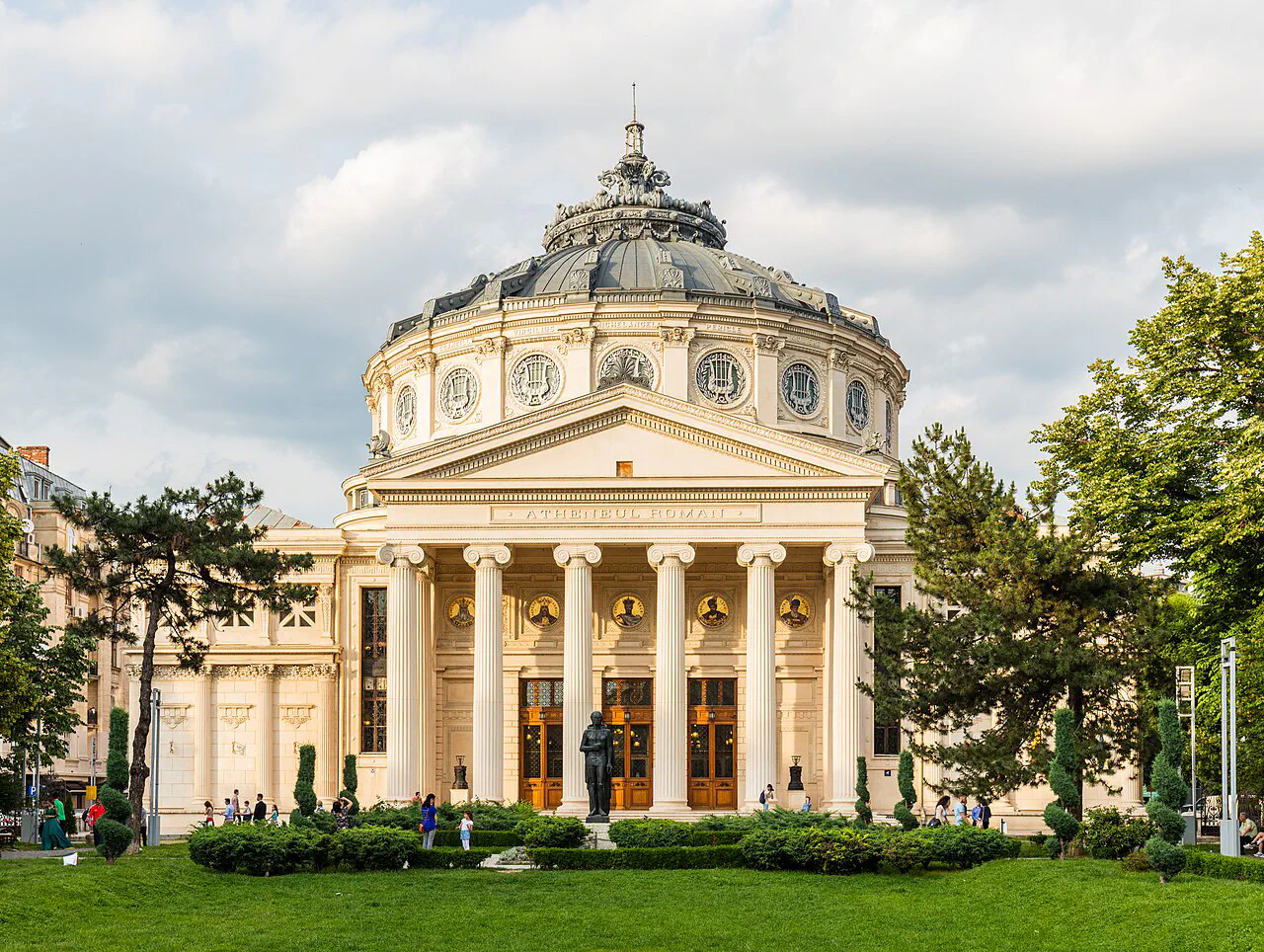
Kenneth Branagh and Emma Thompson met filming the BBC’s Fortunes of War (1987) and married for real. The couple they played were based on the novelist Olivia Manning and her husband, Reggie Smith. They arrived by train on 3 September 1939, the day Britain declared war. The Athénée Palace, then home to British spies and the Gestapo, became a main setting of her novels. The rise of fascism and the Iron Guard frightened her, and just before German troops arrived, she flew to Greece. Smith followed a week later.
3 Anca Petrescu and Ceaușescu’s Palace of the Parliament
Stand here. The Palace of the Parliament, on the levelled site of Uranus Hill. It holds both chambers of parliament and two museums.
The heaviest building in the world was ordered by Nicolae Ceaușescu, Romania’s Communist president, as the People’s House. An earthquake gave him a pretext to demolish parts of old Bucharest. Anca Petrescu won the contest to design the palace and became chief architect at 28. Uranus Hill was levelled, and 40,000 people were moved. Work began in 1984 and was meant to take two years. But Ceaușescu was executed in 1989 with the work unfinished. Romania’s parliament meets there now, and about 70% of the building stands empty.
4 Eugeniu Iordăchescu, the engineer who moved Bucharest’s churches
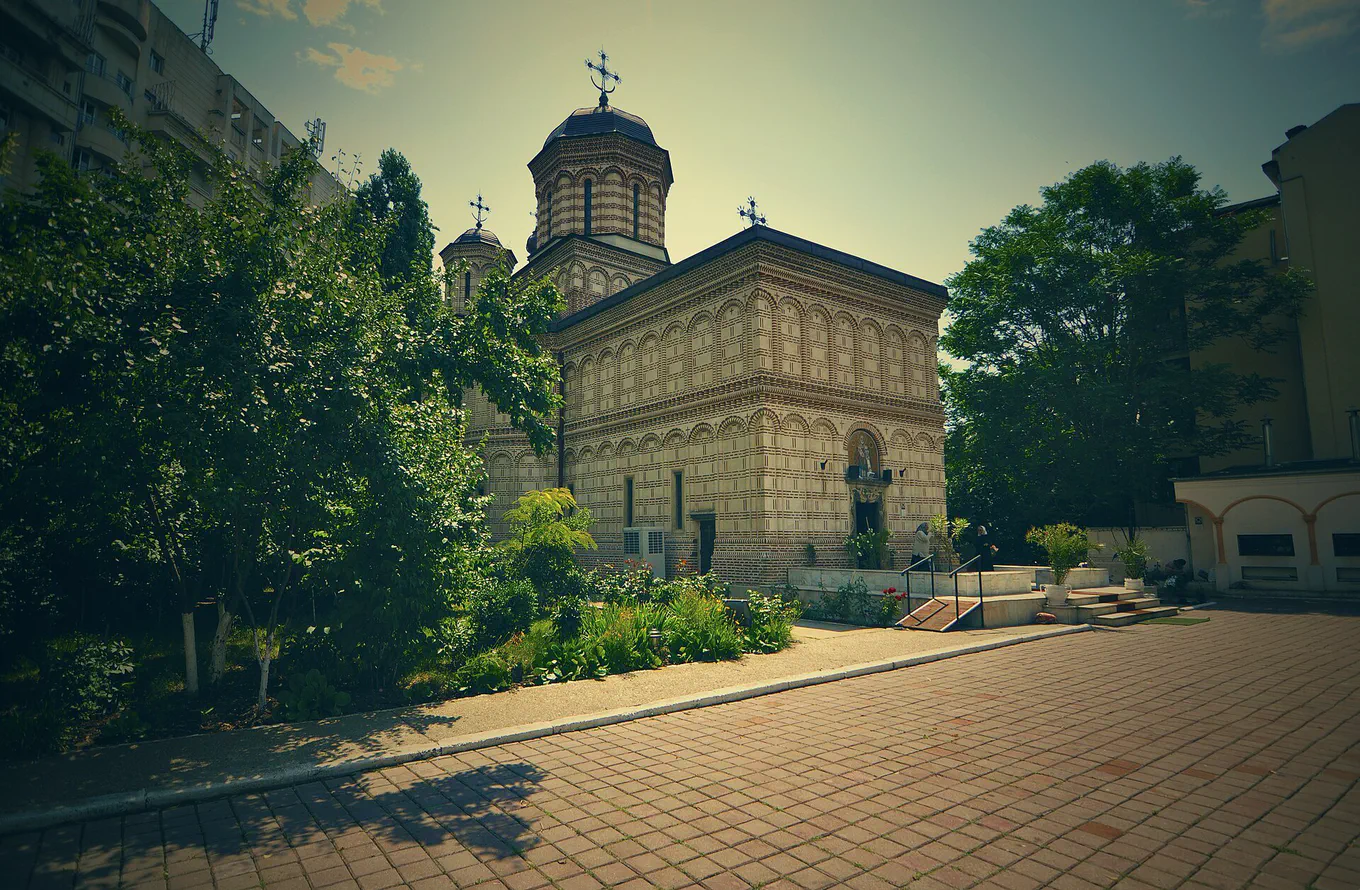
Stand here. Mihai Vodă church, now on Sapienței street. The church and its separate bell tower stand where he set them down.
They called Eugeniu Iordăchescu “the engineer of heaven”. In the 1980s, Ceaușescu’s regime demolished more than 40,000 buildings to rebuild Bucharest. Iordăchescu, a civil engineer, saved twelve churches by setting whole buildings on a structure like railway tracks and moving them. The biggest, at 9,000 tons, was the 16th-century Mihai Vodă church, which in 1985 he moved nearly 300 metres with its bell tower. The church survived, hidden away. Its medieval cloisters were demolished.
5 Ceaușescu’s last speech from the balcony on Revolution Square
Stand here. Revolution Square, below the balcony of the former Central Committee building, which now houses the Ministry of Interior.
On 21 December 1989, Nicolae Ceaușescu, Romania’s Communist leader, spoke from this balcony on state television to about 100,000 people, some bussed in under threat of the sack. Over a minute in, a scream went up, and within seconds the crowd was shouting. Ceaușescu stopped, raised his right hand, and stared. His wife Elena wondered aloud whether it was an earthquake. Censors cut the feed, but it was too late. The next day the couple fled by helicopter from the roof, and on Christmas Day they were executed.
Pack nothing. Leave Friday.
Every Friday, I write a free letter, Journey, that takes us on a trip through places, stories, and ideas.
The Balkan Trilogy(Olivia Manning, 1960–65). Three novels drawn from her own wartime experience. The Athénée Palace hotel is a main setting, with British journalists in its English bar.
Athene Palace(R. G. Waldeck, 1942). A memoir named after the Athénée Palace hotel, of Waldeck’s time in Bucharest as a Newsweek correspondent, June 1940 to January 1941.
Craii de Curtea-Veche* (Mateiu Caragiale, 1929), in English *Rakes of the Old Court. A novel inspired by Curtea Veche, the Old Princely Court, and its neighbourhood.
Films to watch before you visit Bucharest
Fortunes of War(BBC, 1987). A television series of Manning’s novels, with Kenneth Branagh as a lecturer in Bucharest. It was shot in Yugoslavia, not at the Athénée Palace.
The Death of Mr. Lazarescu(Cristi Puiu, 2005). A film. A widower who lives alone in a Bucharest apartment is carried by ambulance from hospital to hospital all night, as doctors send him away.
The Way I Spent the End of the World(Cătălin Mitulescu, 2006). A film about siblings living in Bucharest in the final years of Ceaușescu’s rule.
Questions
Where did Ceaușescu give his last speech?
From the balcony of the former Central Committee building on Revolution Square, then called Palace Square, on 21 December 1989. The next day he and his wife fled by helicopter from its roof. The building has housed the Ministry of Interior since 2006.
Did Dracula live in Bucharest?
Vlad III, the prince of Wallachia known as Vlad the Impaler and Dracula, had a residence here. In 1459 he named the fortress at Bucharest as his princely residence. Curtea Veche, the Old Princely Court, is now a museum with a bust of him. Bram Stoker may have borrowed the name, but Vlad isn’t directly mentioned in Stoker’s notes.
Where does the name Bucharest come from?
No one knows for sure. Tradition links it to a man named Bucur, who in different legends is a prince, an outlaw, a fisherman, a shepherd, or a hunter. The Romanian word bucurie means joy, so the name is sometimes read as “city of joy”.