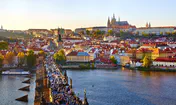
The Rubik’s Cube was born here. What else do you need? (Although it was also a shooting location for Hudson Hawk and The Witcher.)
— Nick
Buda, Óbuda, and Pest were joined in 1873 and given a new name, Budapest. Standing on the River Danube, it is Hungary’s capital and largest city. The stories run from a professor puzzled by his own cube to a prime minister’s second funeral, by way of a Scottish engineer saving a bridge, a pianist made unhappy by his hit song, and a blind architect.
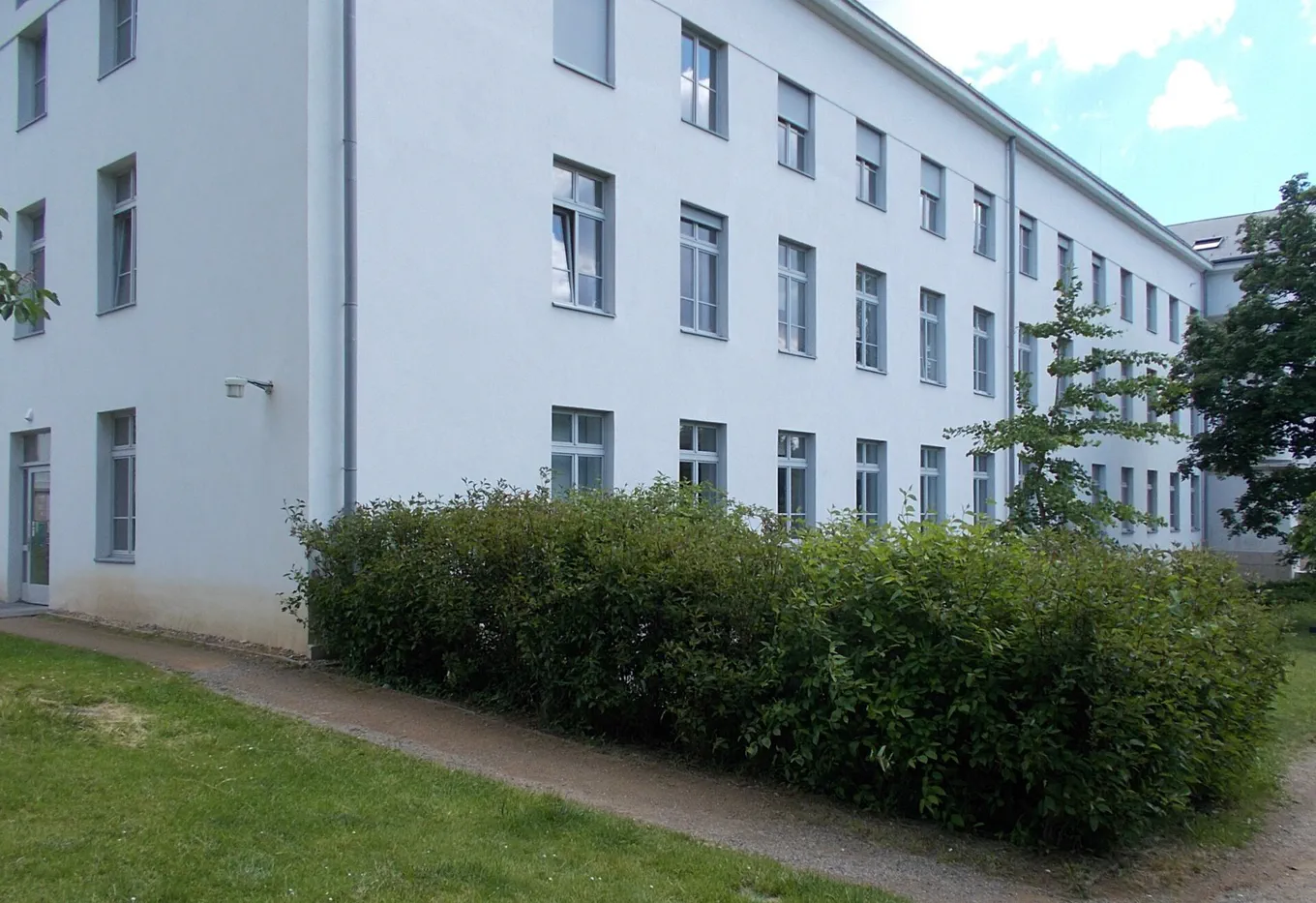
The Rubik’s Cube began in 1974 with Ernő Rubik, a sculptor who taught architecture at Budapest’s College of Applied Arts. He wasn’t making a toy. He wanted a structure whose small pieces could move without the whole falling apart, and he built one. At first he didn’t see that he had made a puzzle. When he did, it took him about a month of trial and error to solve it. He called it the Magic Cube. Today it carries his name, and about 500 million have been sold.
2 Adam Clark and the plot to blow up the Chain Bridge
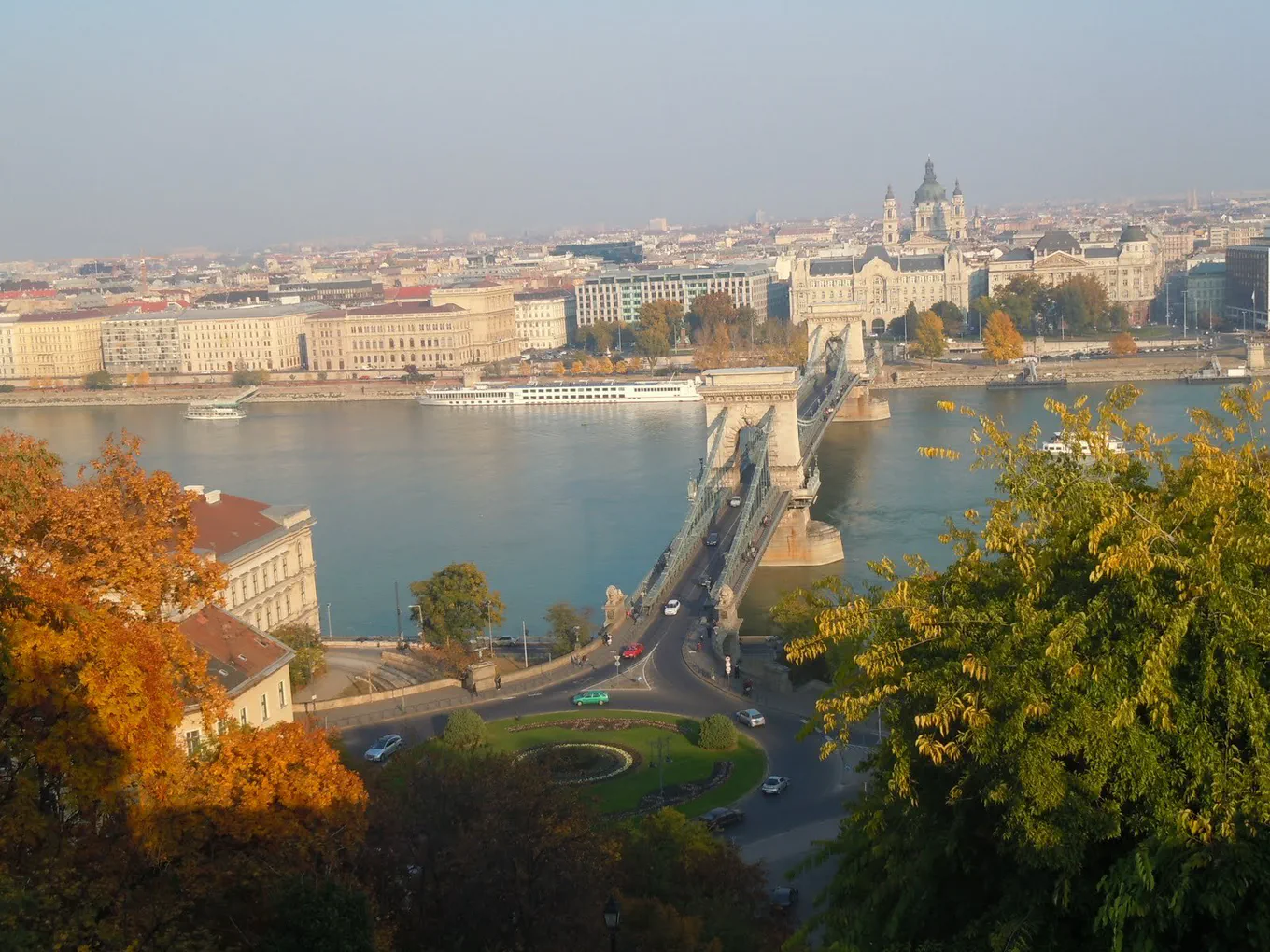
Stand here. Clark Ádám tér, the square at the Buda end of the Chain Bridge, renamed after the bridge’s builder in 1912.
Adam Clark, an engineer from Edinburgh, spent ten years building the first permanent bridge between Buda and Pest. In early 1849, with the bridge nearly done, he heard that the Austrian army meant to blow it up. He flooded its anchorage chambers to keep it stable, then destroyed the pumps. The Austrians set four canisters of gunpowder, and only one went off. Nearly a century later, retreating German troops blew the bridge up anyway. It was rebuilt, and it carries Clark’s name on each side.
3 Rezső Seress, “Gloomy Sunday”, and the piano at the Kispipa
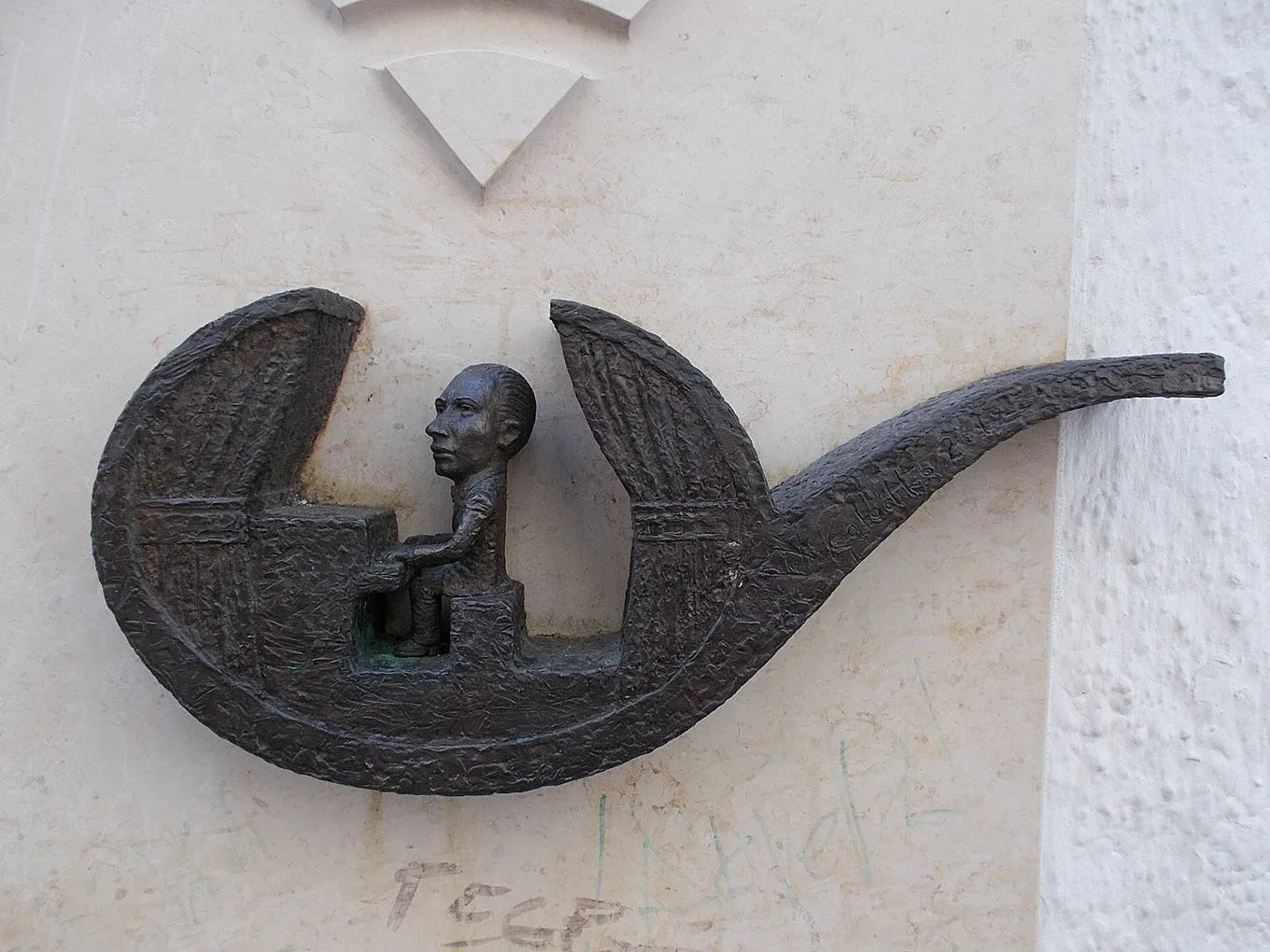
Stand here. The Kispipa, Akácfa utca 38, in District VII, now a cocktail bar. A small bronze of Seress at the piano sits nearby.
“Gloomy Sunday” became world-famous. Billie Holiday recorded it in 1941, and in English it was billed as the “Hungarian Suicide Song”. Its composer, Rezső Seress, had written it in Paris, trying to make his name. But he never wanted to go to America to collect his royalties, and he lived most of his life poor in Budapest. For ten years he played piano every night at the Kispipa, a remarkably cold restaurant with a pipe stove in the middle. The song’s success, he complained, only made him unhappier.
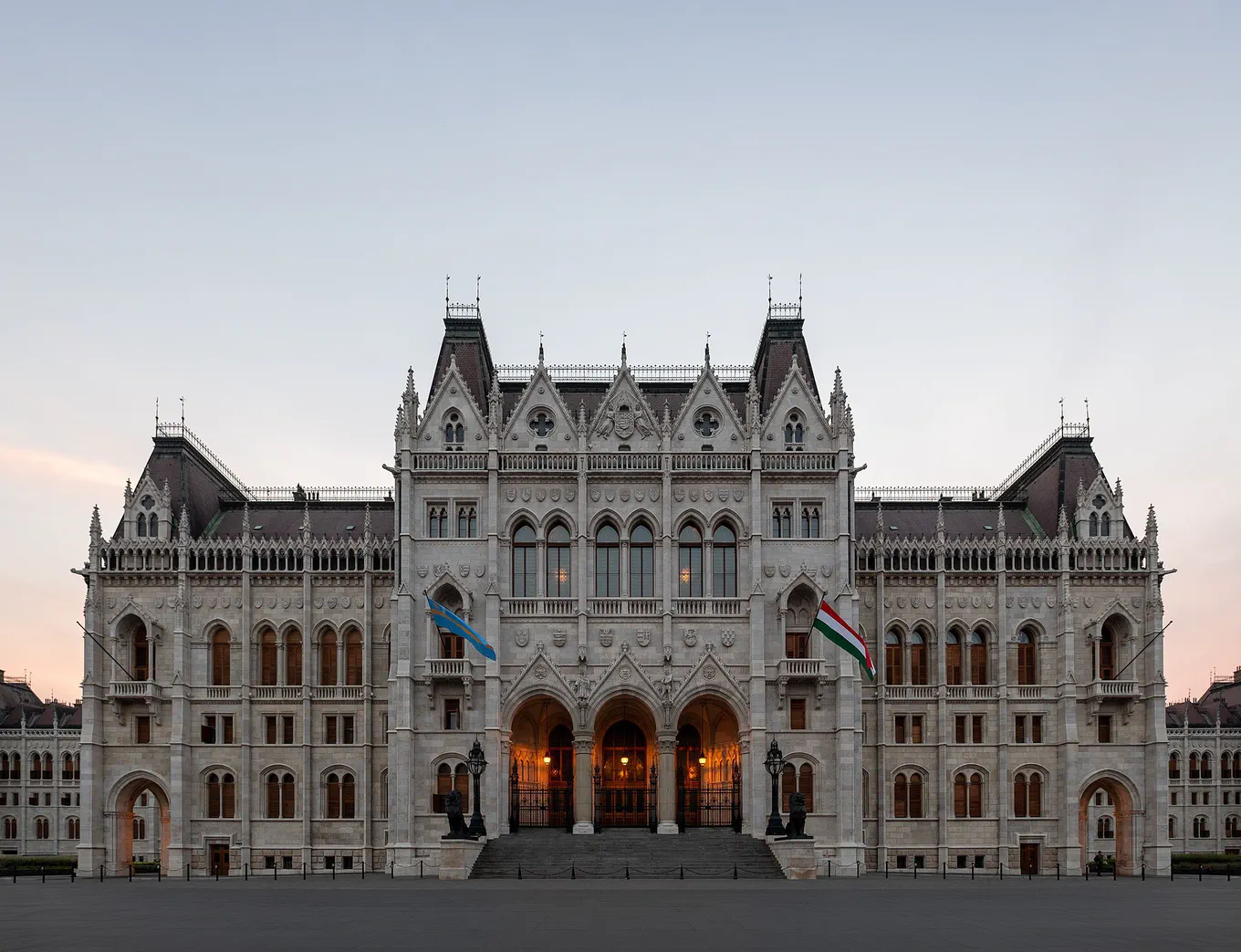
4 Imre Steindl, the architect who never saw his Parliament finished
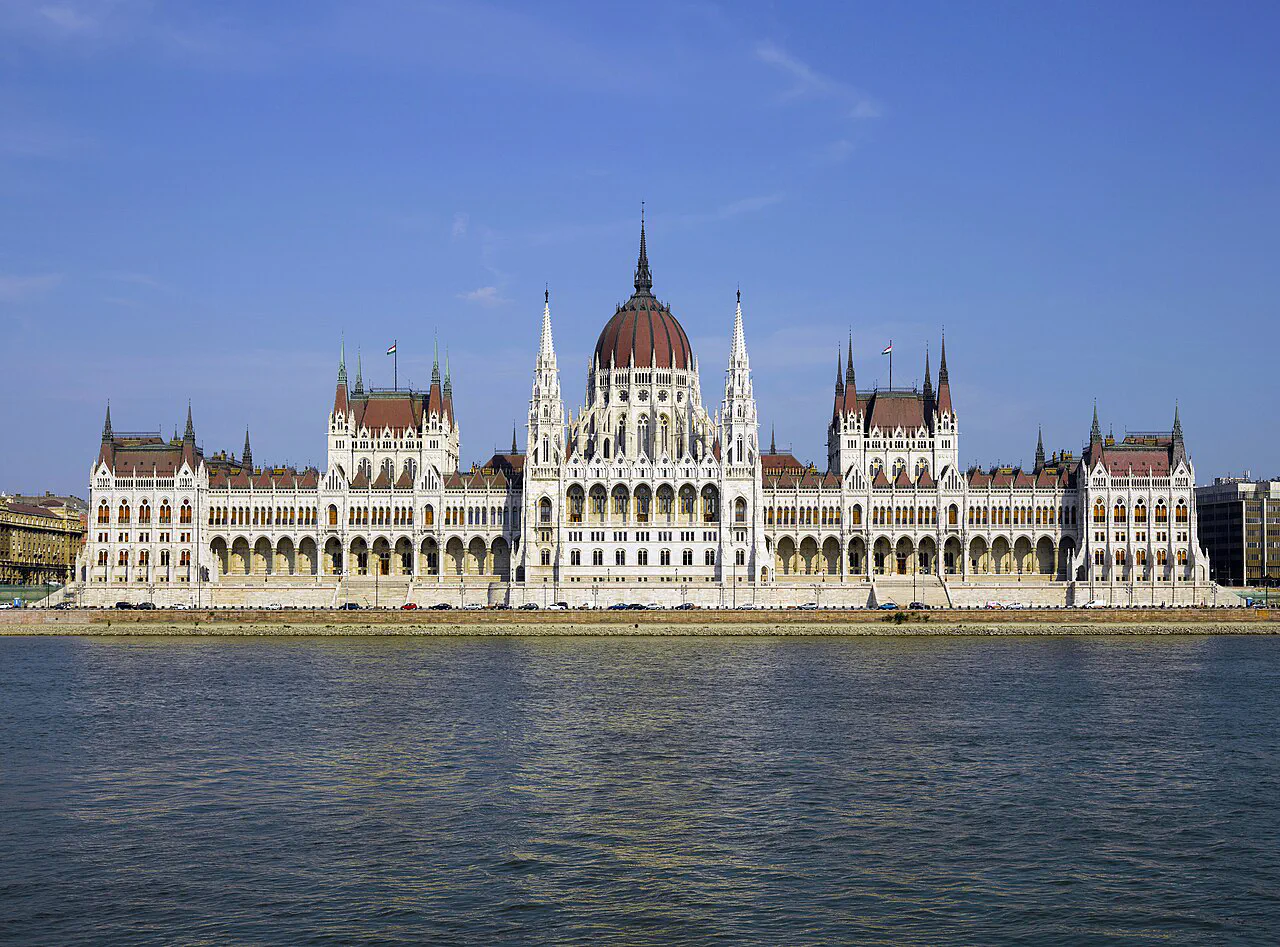
Stand here. The Hungarian Parliament Building, on Kossuth Square on the Pest bank of the Danube. Part of it is used for guided tours.
A likeness to London’s Palace of Westminster helped Imre Steindl win the international competition for Hungary’s new parliament. Work began on the Pest bank of the Danube in 1885, and the Parliament grew into the largest building in the country, 268 metres long. But before it was finished, Steindl went blind. He died in 1902, two years before the last work was done. He never saw his Parliament complete, and by the end he couldn’t have seen it at all.
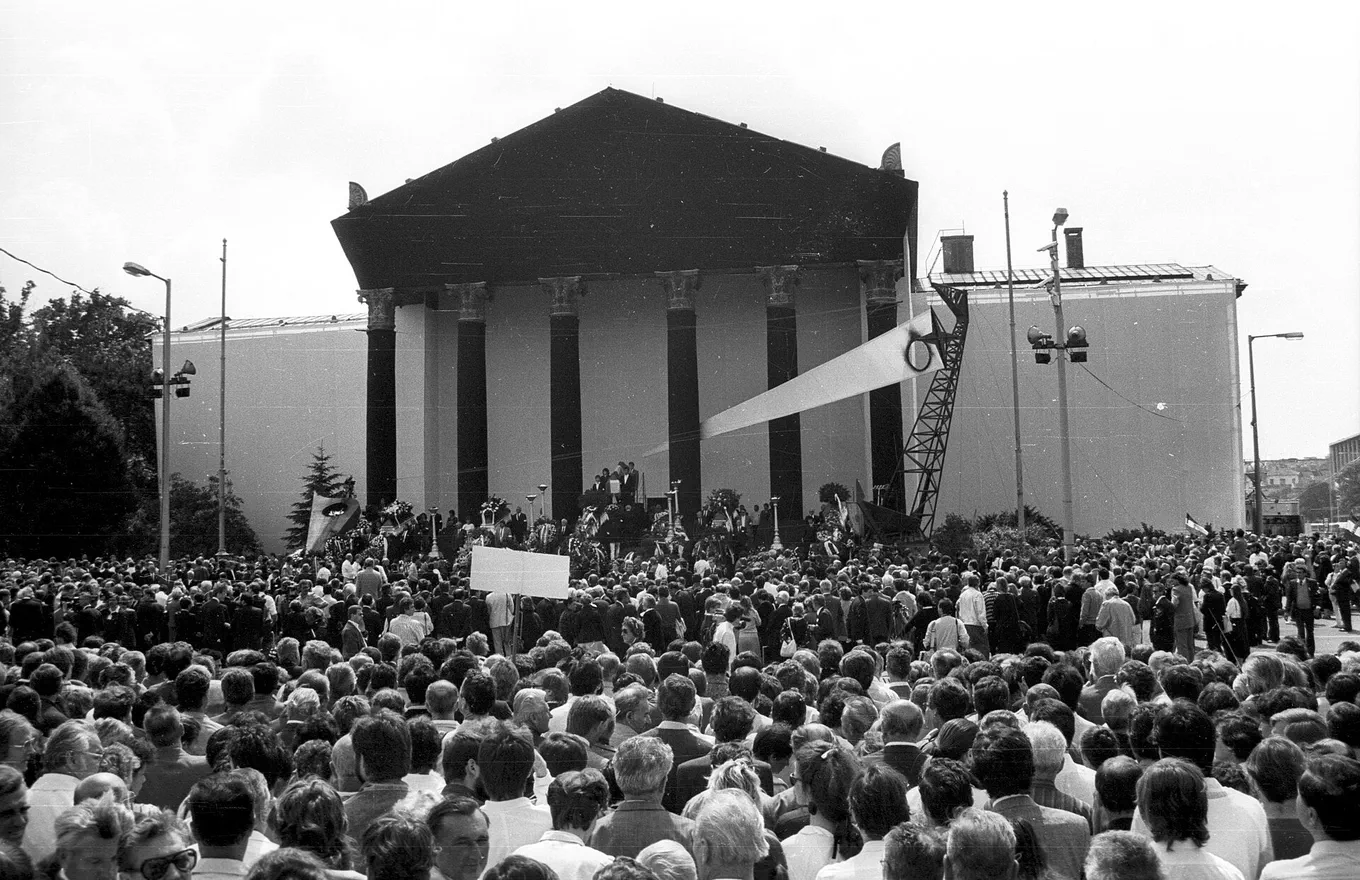
5 Imre Nagy’s second funeral in Heroes’ Square
Stand here. Heroes’ Square, at the end of Andrássy Avenue beside City Park. It faces the former Yugoslav embassy, now Serbia’s, where Nagy sheltered in 1956.
In the Hungarian Revolution of 1956, Imre Nagy became prime minister. He dissolved the secret police and took Hungary out of the Warsaw Pact. Three weeks later, Soviet forces arrested him as he left the Yugoslav embassy. He was tried in secret and hanged. Years later his body was moved to a far corner of a cemetery, face down, hands and feet tied with barbed wire. On 16 June 1989, 31 years to the day after his execution, more than 200,000 people gathered in Heroes’ Square for his second funeral.
Pack nothing. Leave Friday.
Every Friday, I write a free letter, Journey, that takes us on a trip through places, stories, and ideas.
The Paul Street Boys(Ferenc Molnár, 1906). A novel. Schoolboys in the Józsefváros neighbourhood of Budapest, in 1889.
Fatelessness(Imre Kertész, 1975). A novel. A young Hungarian boy, György Köves, lives in Budapest and travels to work outside the Jewish quarter before being sent to Auschwitz.
Prague(Arthur Phillips, 2002). A novel set in Budapest in about 1990, following a group of North American expatriates. At the end, one of them leaves by train for Prague.
Films to watch before you visit Budapest
Kontroll(Nimród Antal, 2003). A film, set on a fictionalised version of the Budapest Metro.
Evita(Alan Parker, 1996). A film. Budapest stands in for Buenos Aires, with exteriors shot outside St Stephen’s Basilica, though the crew were refused permission to film inside.
Sunshine(István Szabó, 1999). A film, shot at an apartment building at Bokréta utca 15, in Ferencváros. Interiors of the family mansion were filmed nearby, on Liliom Street.
Questions
Do the Chain Bridge lions really have no tongues?
No. A Hungarian legend says the stone lions at each end of the Chain Bridge have no tongues, but they do. The tongues just can’t be seen. The sculptor János Marschalkó carved the lions, and they were installed in 1852.
Did “Gloomy Sunday” really cause suicides?
There’s no good evidence that it did. Press reports in the 1930s linked at least 100 suicides to the song, but most of the claims are unsubstantiated, and no study has found a clear link. The BBC did ban Billie Holiday’s version as bad for wartime morale, and had lifted the ban by 2002.
When did Buda and Pest become Budapest?
On 17 November 1873. Until then, Buda, Óbuda, and Pest were separate cities, and that day they were unified under the new name Budapest. The city stands on the River Danube, and its historic centre along the river is a World Heritage Site.