Buenos Aires, Argentina, Buenos Aires (Autonomous City), South America
Highlander II was shot here. I can’t forgive it.
— Nick
Holy Mary of the Fair Winds gave Buenos Aires its name when a Spanish expedition founded it in 1536; the permanent settlement followed in 1580. Argentina’s capital and largest city lies on the south-west side of the Río de la Plata. Madonna on the president’s balcony and Eva Perón’s missing body come before Borges at the National Library, Carlos Gardel’s house, and a skyscraper said to follow Dante.
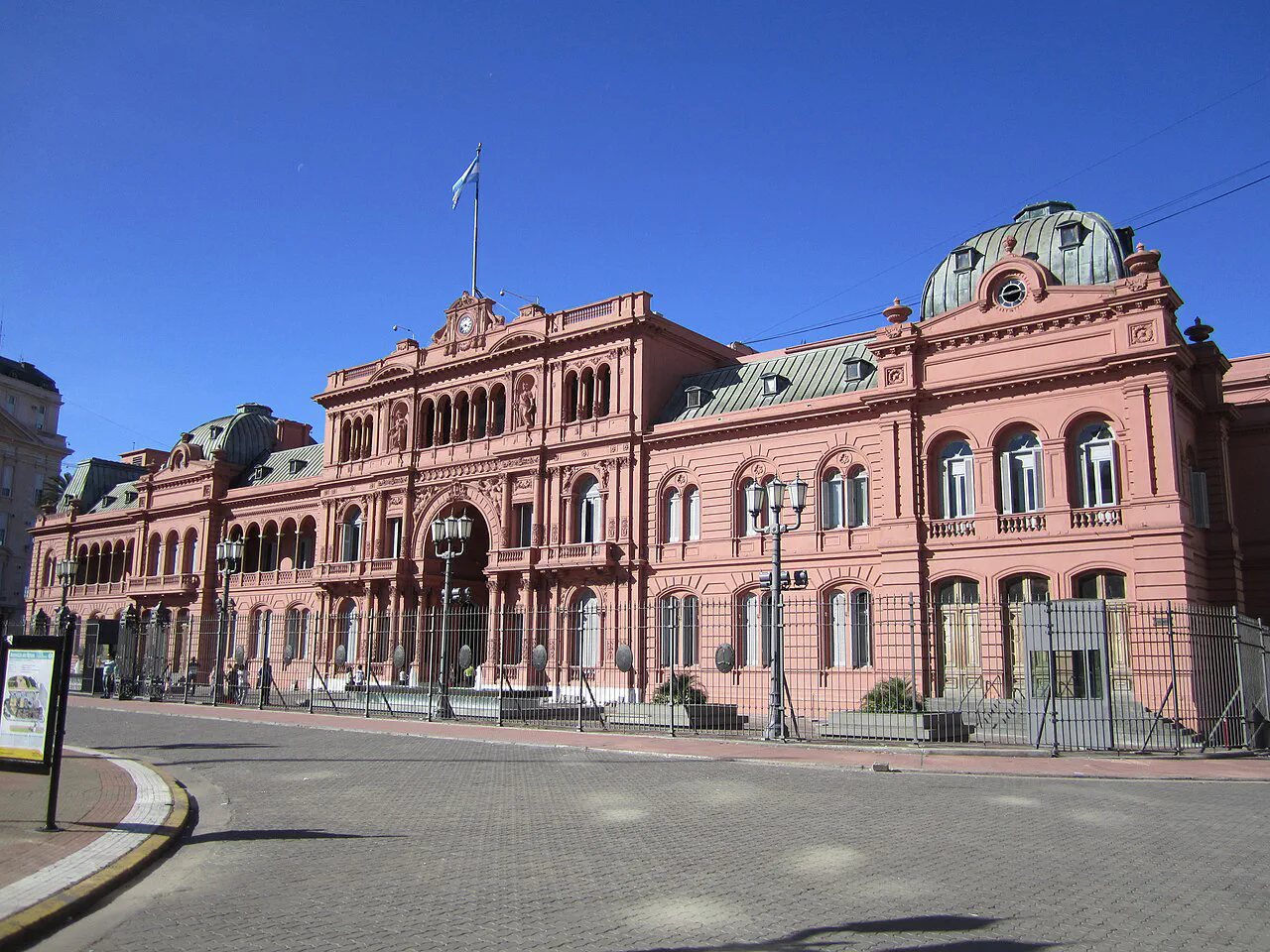
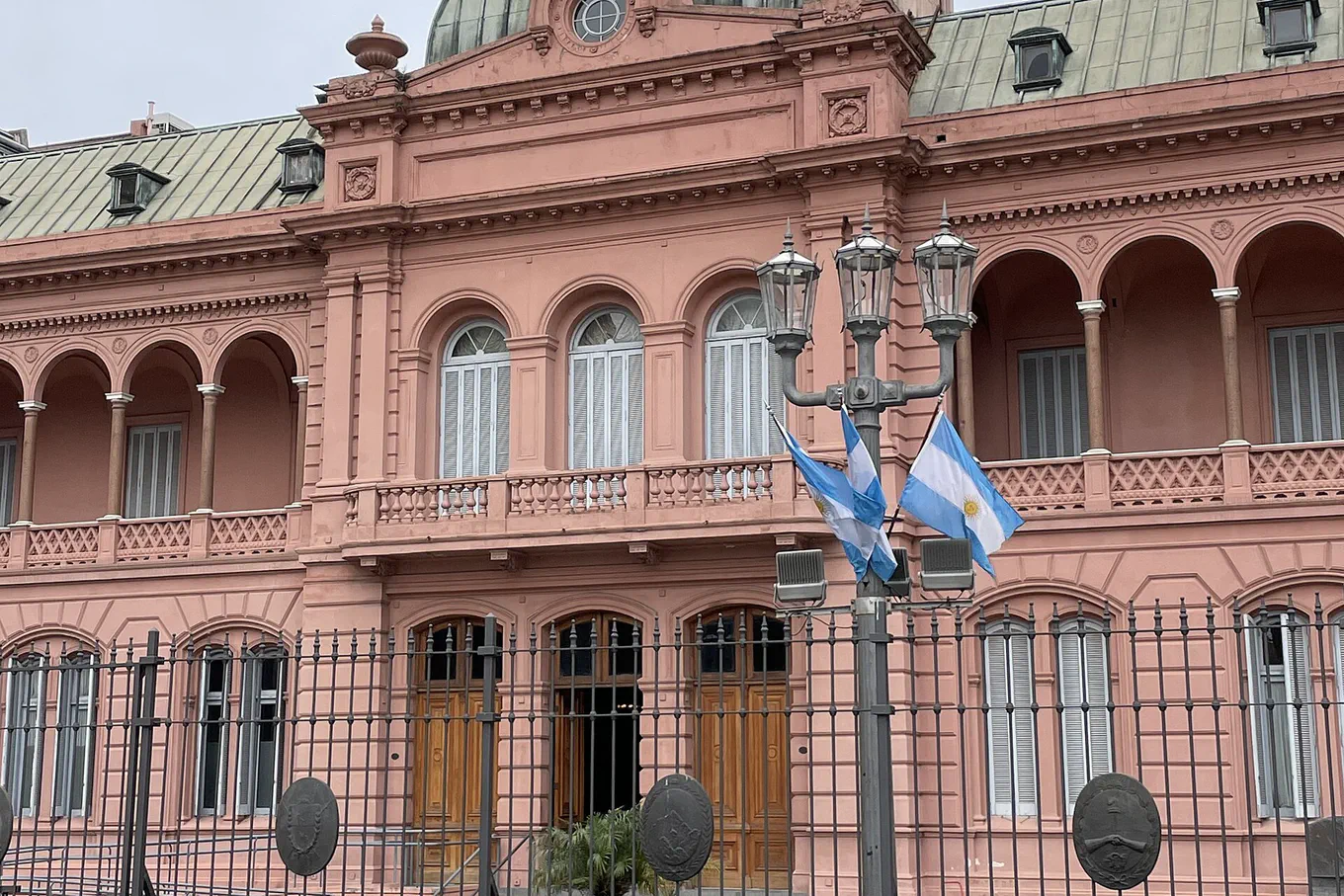
When Alan Parker filmed Evita, with Madonna as Eva Perón, he wanted to shoot at the real Casa Rosada. President Carlos Menem told him he could shoot in Argentina, but not there. So Parker had the building photographed and a replica built at Shepperton Studios in England. Then, shortly before the crew was due to leave Buenos Aires, Menem gave way. Over two days from 9 March 1996, with 4,000 extras, Madonna filmed “Don’t Cry for Me Argentina” on the balcony itself.
2 Eva Perón’s missing body and her tomb in Recoleta
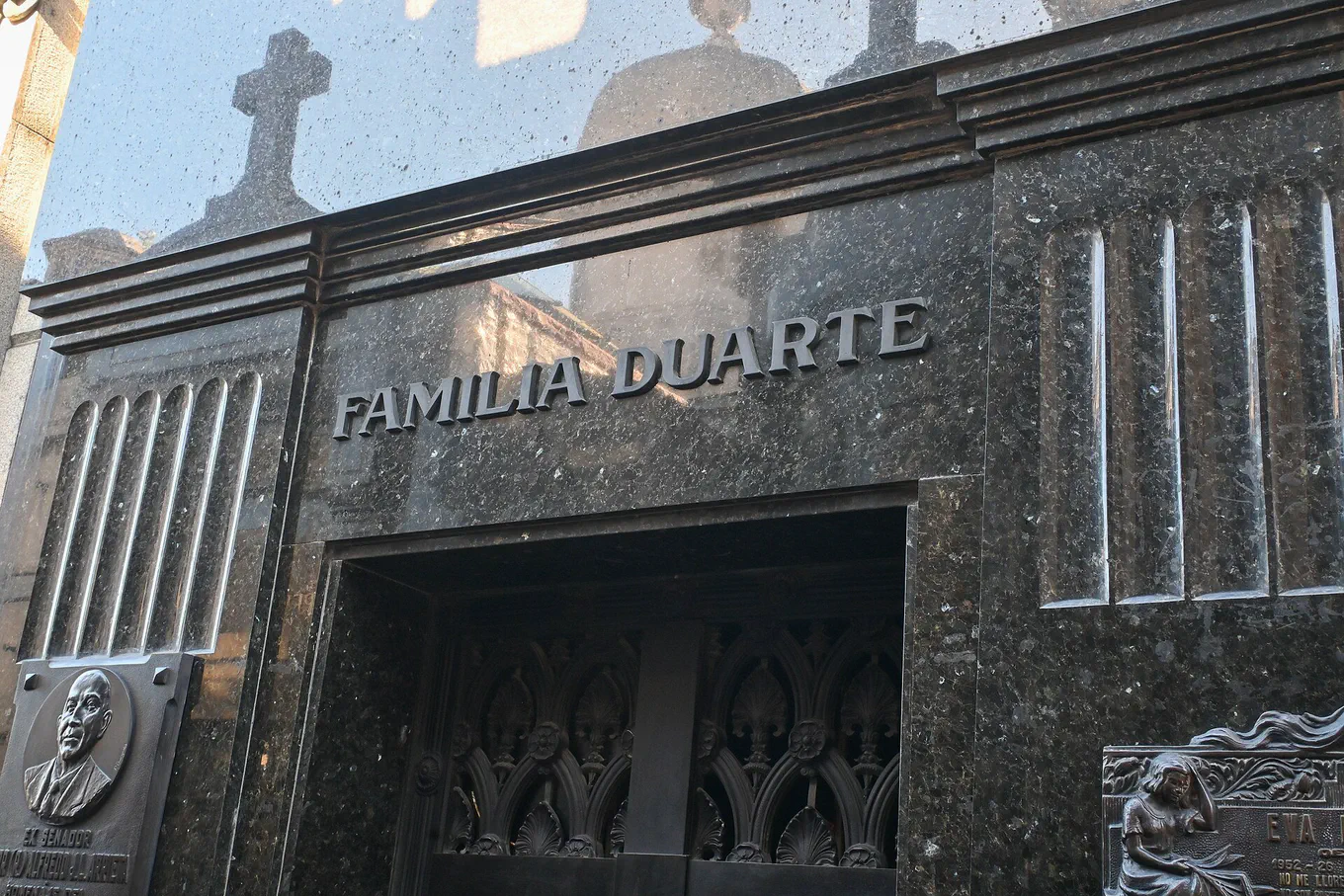
Stand here. The Duarte family tomb in La Recoleta Cemetery, Junín 1760, where her coffin lies beneath two trap doors in the floor.
Eva Perón, whom Madonna played in Evita, died in 1952. Her embalmed body was to go on show in a monument larger than the Statue of Liberty. Before it was finished, a coup overthrew her husband, President Juan Perón, and the military took her. For 16 years she was missing. She turned up in Milan, under a false name, and was flown to Perón in Spain, where he kept her in his dining room. Only after he died was she brought home. Now she lies beneath two trap doors.
3 Borges, the blind director of the National Library
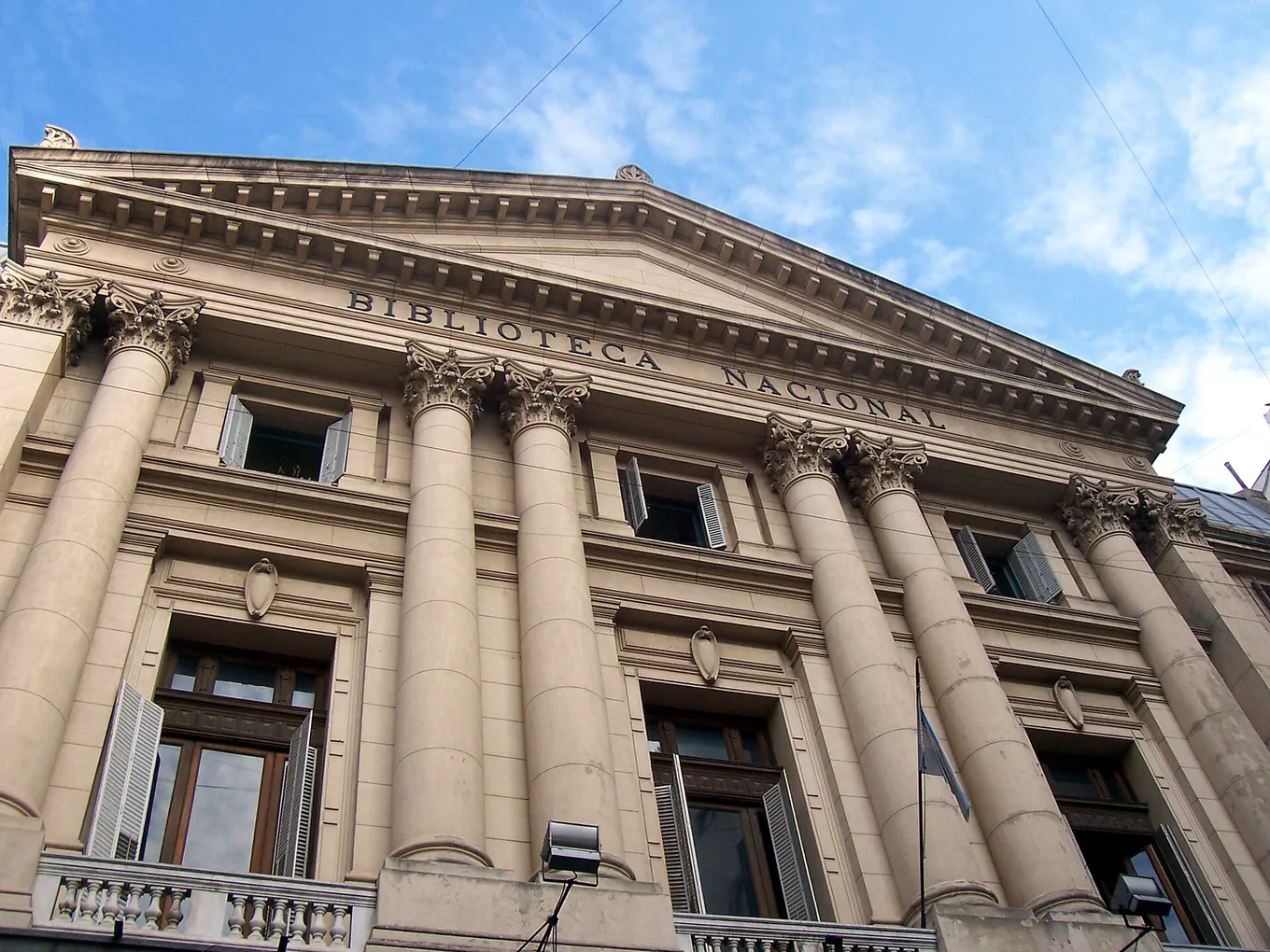
Stand here. The old National Library at Calle México 564, in Monserrat. The building now houses the Centro Nacional de la Música.
Under Perón, Jorge Luis Borges, the writer of Ficciones and The Aleph, was “promoted” from a library job to inspector of poultry and rabbits. He resigned the next day. After the coup of 1955 drove Perón into exile, Borges was made director of the National Library. But he was going blind, and soon after he started he was told to give up reading and writing. In verse, he wrote of God, “who with such splendid irony, / At one touch granted me books and night.”
4 Carlos Gardel’s house in the Abasto, and the crash
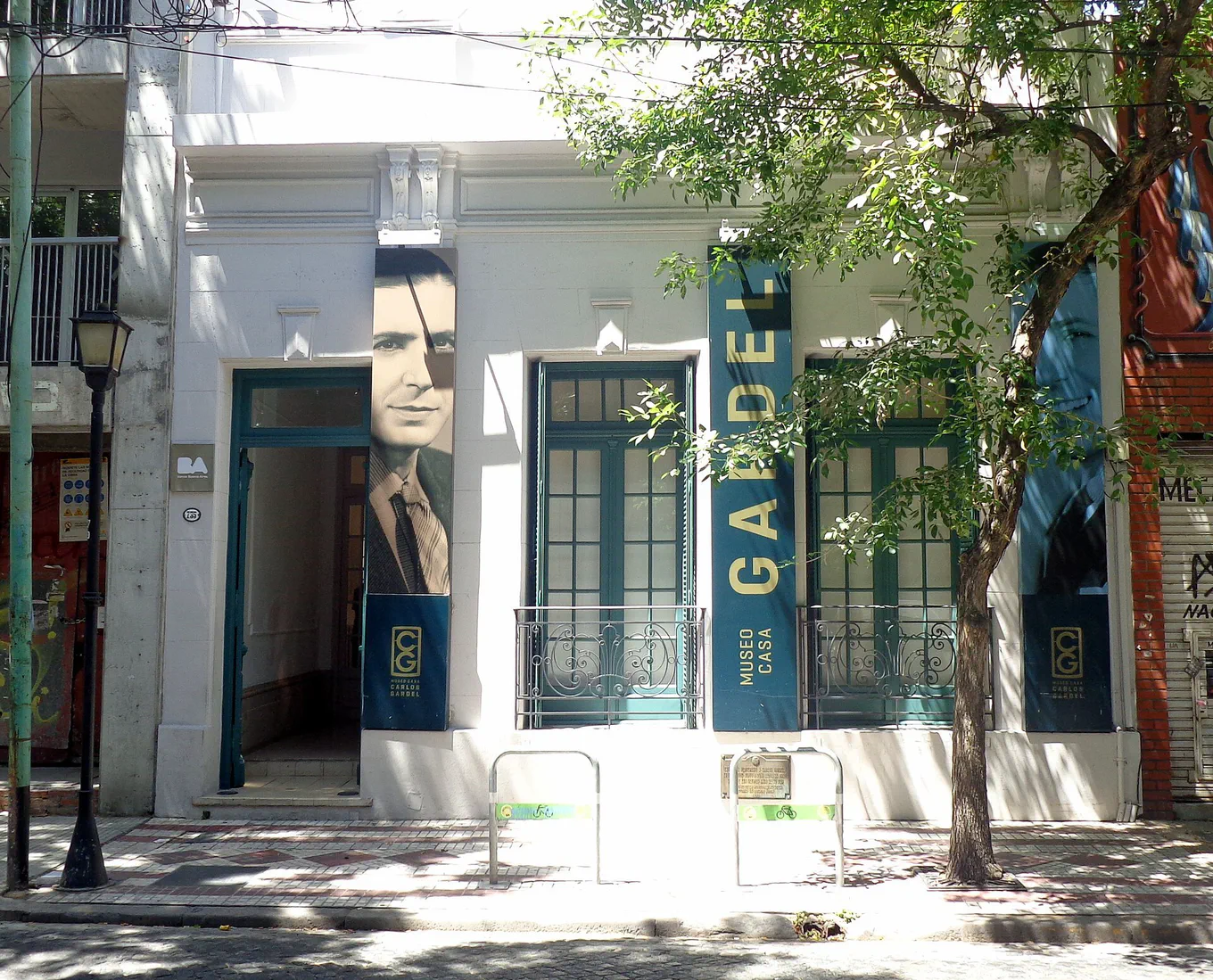
Stand here. Jean Jaurés 735, in the Abasto. The house Gardel bought for his mother is now a museum, closed on Tuesdays.
“Por una cabeza”, the tango in Scent of a Woman, was composed by Carlos Gardel, the most prominent figure in tango’s history. Born in France, he came to Buenos Aires with his mother as a small boy, and grew up to create the sung tango. In 1927, he bought this house for her, and lived in it for six years. In 1935, the year he composed “Por una cabeza” for a film, two planes collided at an airfield in Medellín, in Colombia. Gardel was killed at the height of his career.
5 Palacio Barolo, the Dante skyscraper on Avenida de Mayo
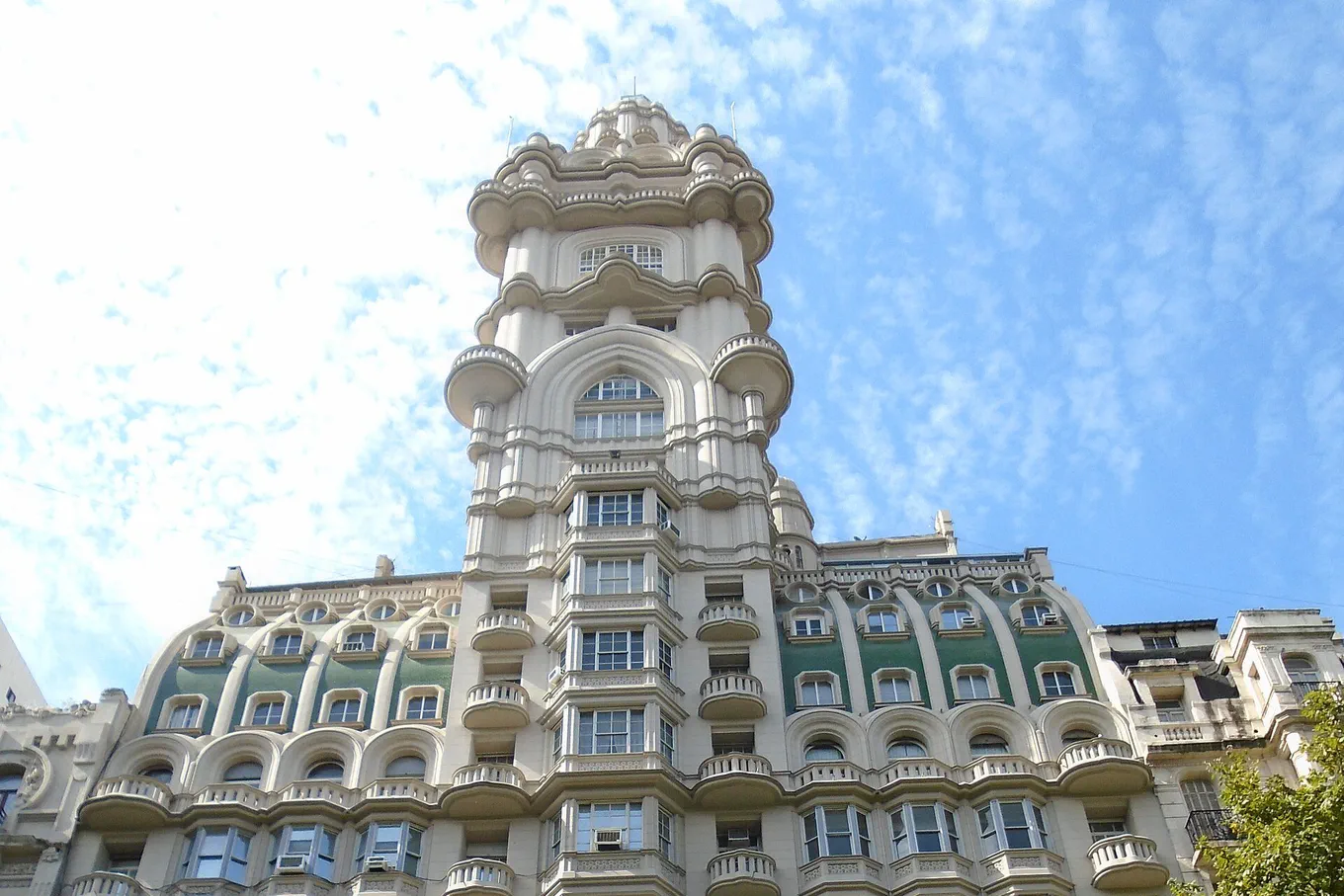
Stand here. Avenida de Mayo 1370, in Monserrat. Palacio Barolo is an office building now, with lawyers, a Spanish school, and a tango clothing shop.
The story goes that Luis Barolo, an Italian immigrant, wanted a building to keep Dante’s ashes safe from a Europe he believed was drifting towards collapse. So its floors follow the Divine Comedy, from hell in the basement to heaven at the top, and it stands 100 metres tall, a metre for each canto. It opened in 1923 as South America’s tallest building. Barolo had died before the opening. And a 2025 study could find no document from him or his architect showing that Dante was the plan.
Pack nothing. Leave Friday.
Every Friday, I write a free letter, Journey, that takes us on a trip through places, stories, and ideas.
Santa Evita(Tomás Eloy Martínez, 1995). A novel, blending fact and fiction, that tracks Eva Perón’s embalmed corpse, including how the military seized it in 1955.
On Heroes and Tombs(Ernesto Sabato, 1961). A novel. Its story begins on a bench beside the statue of Ceres in Parque Lezama, in the south of the city.
Mafalda(Quino, 1964). A comic strip. A life-size statue of Mafalda was unveiled in 2009 at the corner of Chile and Defensa, in San Telmo, with Quino there.
Films to watch before you visit Buenos Aires
Evita(Alan Parker, 1996). A film. Madonna plays Eva Perón and films “Don’t Cry for Me Argentina” on the presidential balcony of the Casa Rosada.
Nine Queens(Fabián Bielinsky, 2000). A film, partly shot at the Hilton in Puerto Madero, which happened to be under construction at the time.
The Secret in Their Eyes(Juan José Campanella, 2009). A film. Its football sequence was filmed in the stadium of the club Huracán, after three months of pre-production.
Tetro(Francis Ford Coppola, 2009). A film, shot in La Boca and other parts of the city.
Argentina, 1985(Santiago Mitre, 2022). A film, shot where its events took place, including the original courtroom at Tribunales.
Questions
Where is Eva Perón buried?
In the Duarte family tomb in La Recoleta Cemetery, at Junín 1760 in the Recoleta neighbourhood. The tomb’s marble floor has a trap door leading to a compartment with two coffins. Beneath that is a second trap door and a second compartment, where her coffin rests.
Can you visit Carlos Gardel’s house?
Yes. The Museo Casa Carlos Gardel, at Jean Jaurés 735 in the Abasto, is the house he bought for his mother in 1927 and lived in until 1933. It opened as a museum in 2003.
Where was tango born?
Along the Río de la Plata in the 1880s, in the working-class districts of Buenos Aires and Montevideo. In 2009, UNESCO approved a joint proposal by Argentina and Uruguay to add tango to its Intangible Cultural Heritage lists.