Busan sits on the south-eastern tip of the Korean Peninsula, about 314 km from Seoul. It became Korea’s first international port in 1876, and during the Korean War it served for a time as South Korea’s de facto capital. Its stories are a zombie train racing for the city, a magistrate who wouldn’t step aside, a bridge where refugees waited, a veteran’s minute of silence, and a superhero film whose Busan shoot began in a fish market.
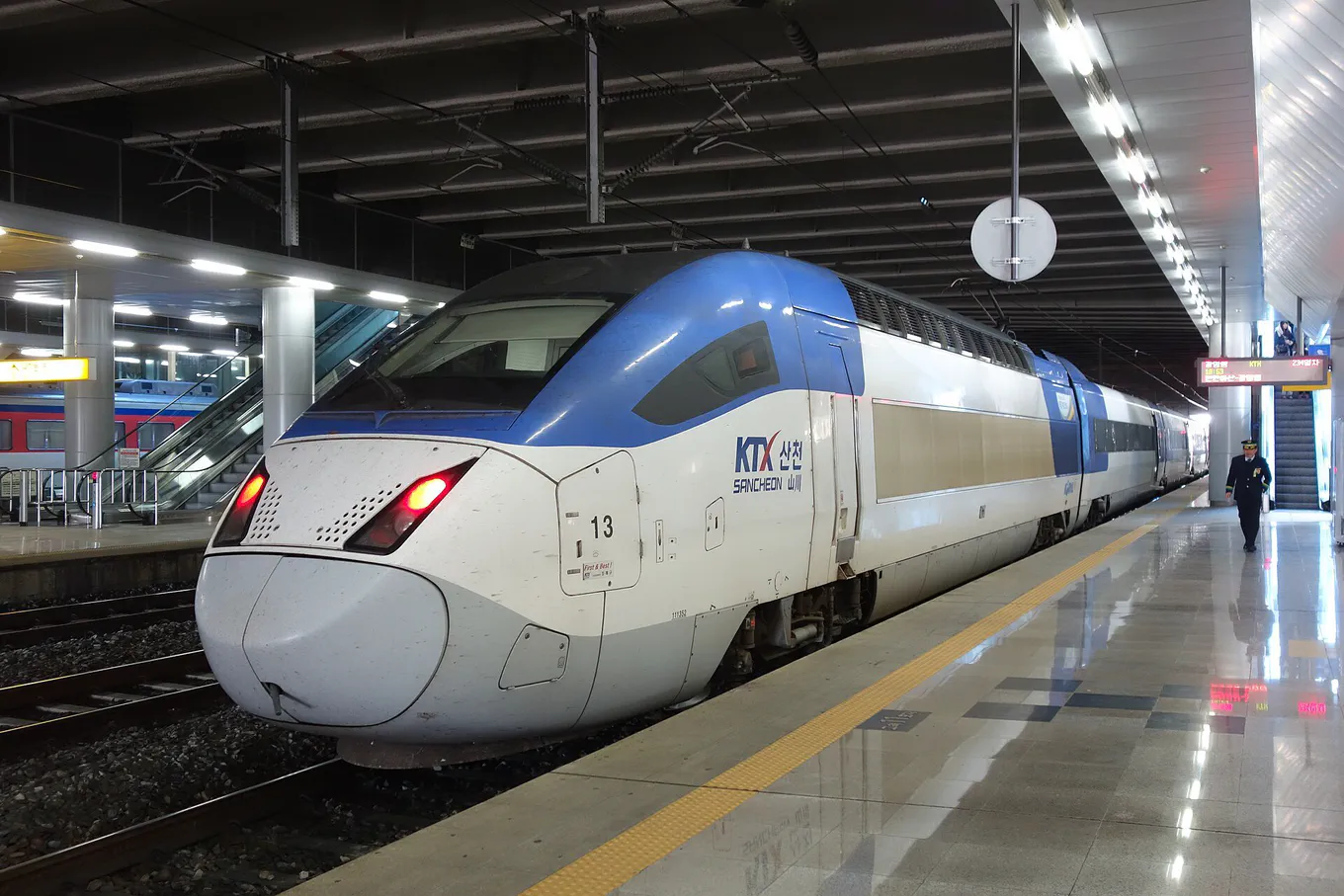
Stand here. Busan Station, in Choryang-dong, opened in 1908 and is the end of the high-speed line from Seoul. The film’s station scenes were shot elsewhere.
Train to Busan, the 2016 zombie film, follows Seok-woo, a divorced workaholic in Seoul, as he takes his daughter Su-an to see her mother in Busan. A zombie outbreak sweeps their train, and the conductor cancels every stop except Busan, where the army has set up a quarantine. Seok-woo gets Su-an and a pregnant passenger into the engine room, then throws himself off the train just before he turns. At a tunnel near Busan, soldiers take the two survivors for zombies. They’re about to shoot when Su-an sings.
2 Song Sang-hyeon’s reply at the walls of Dongnae
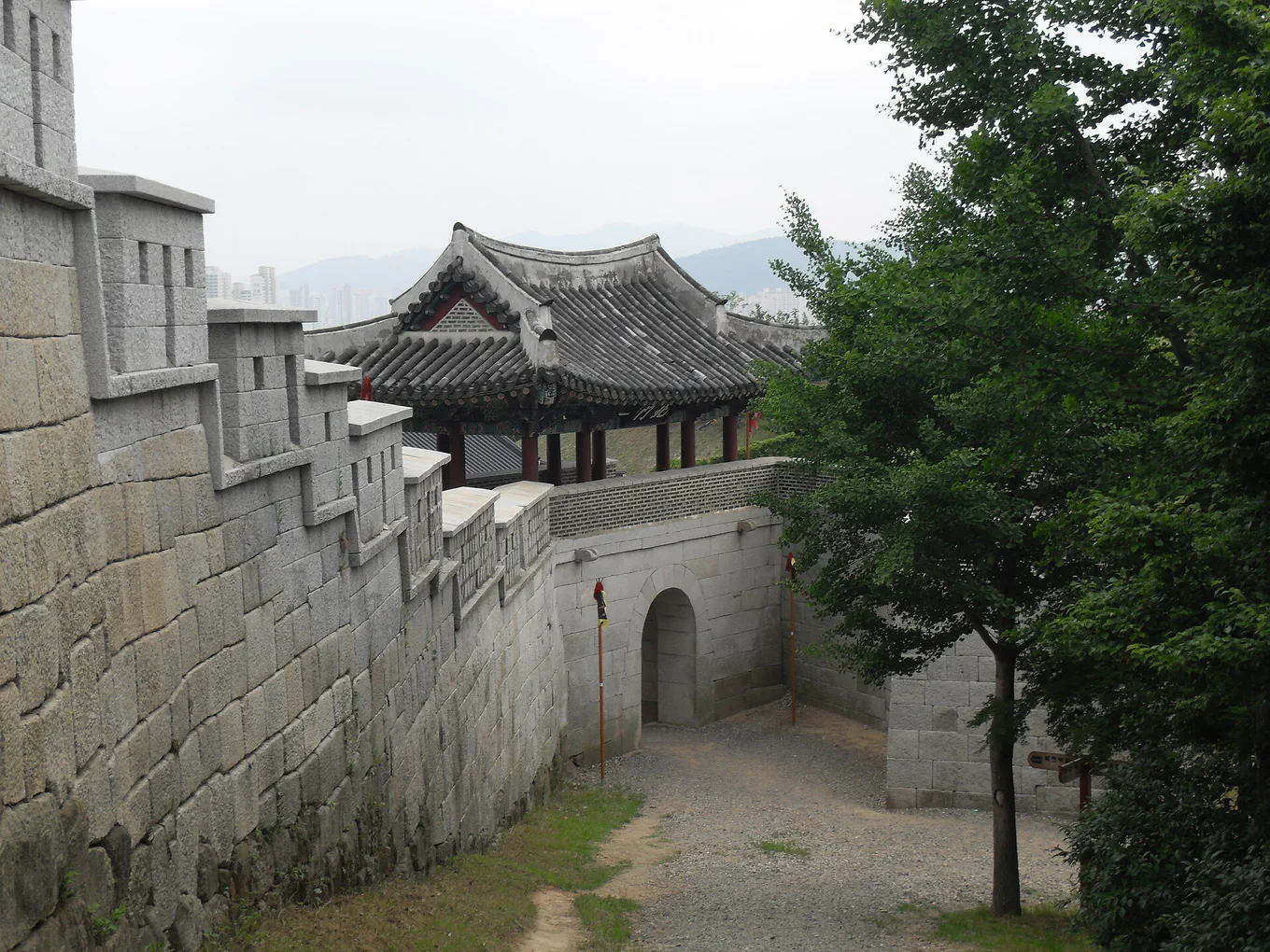
Stand here. Dongnaeeupseong, the hilltop fortress of Dongnae, now a district of Busan, restored from 1979. Song is honoured at Chungnyeolsa shrine below.
In 1592, a Japanese army landed at Busan and reached Dongnae, a walled town held by its magistrate, Song Sang-hyeon. The Japanese commander put up a board: “Fight if you want to, or let us pass.” Song threw his reply over the wall: “It is easy for me to die, but difficult to let you pass.” When Dongnae fell, he put on his court robes, sat on a folding stool, and refused an offer of escape. Before he was killed, he wrote his father a farewell poem on a fan.
3 The refugees who waited at Yeongdo Bridge
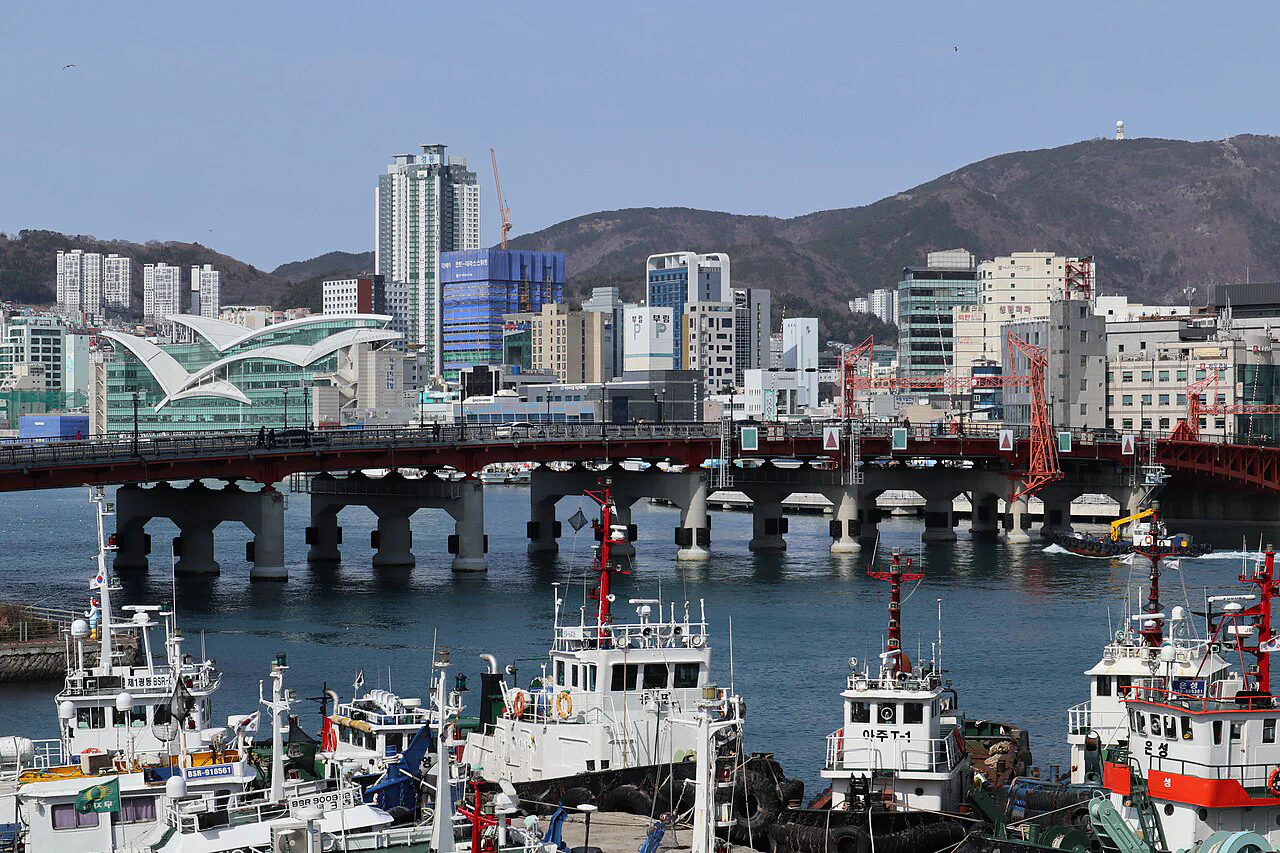
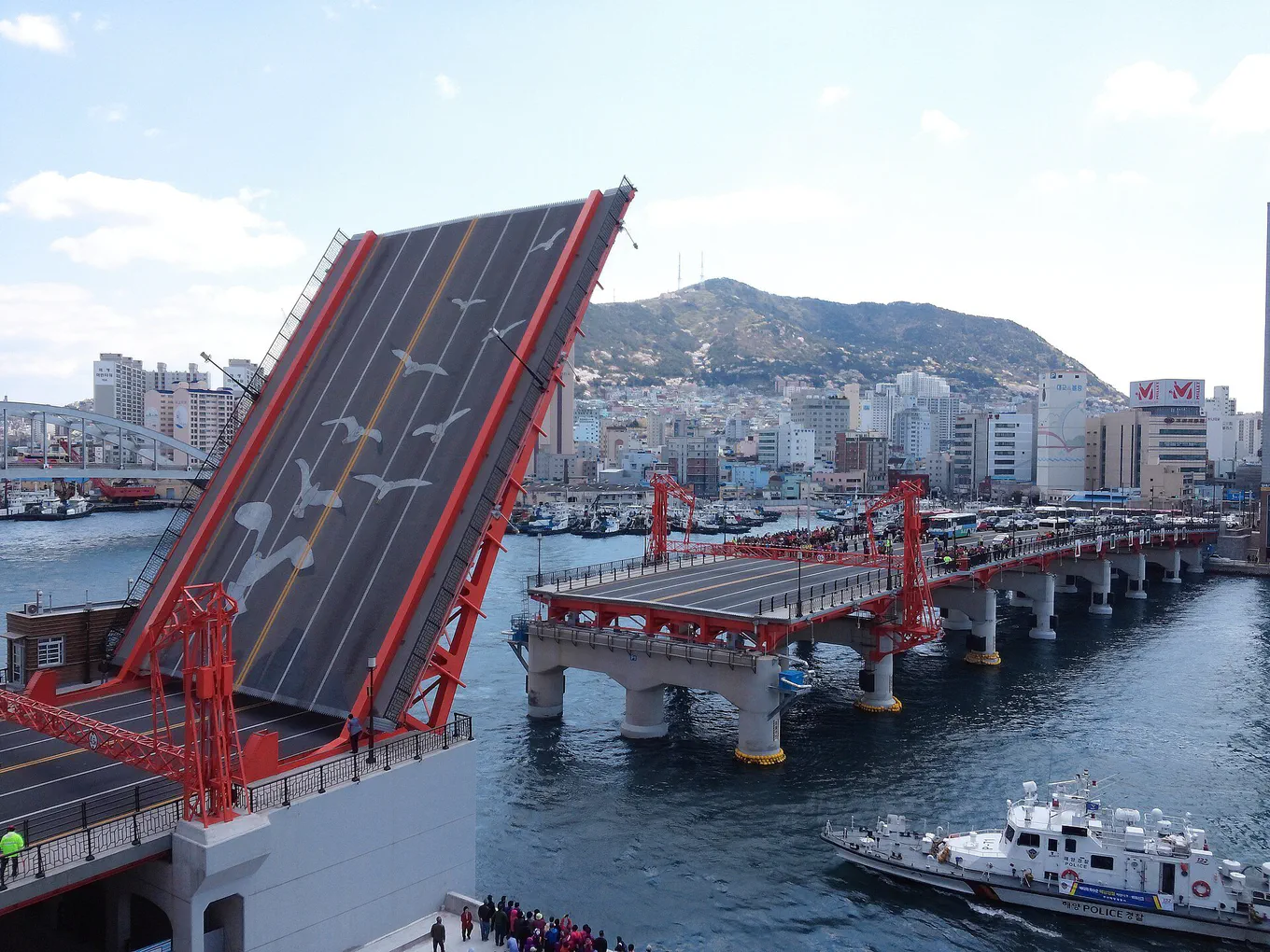
Stand here. Yeongdo Bridge, from Jung District to Yeongdo Island. Statues of refugees stand in Yurari Square beneath it, and a song monument nearby.
Yeongdo, the island where Min Jin Lee’s novel Pachinko begins, is linked to the mainland by this drawbridge, completed in 1934. In the Korean War, refugees parted from their families packed the area around it in the vague hope of finding them, and fortune-tellers who heard their stories did a thriving trade. “Cheer Up, Geum-sun”, sung by Hyun In, names the bridge. In it, a refugee peddler in Busan sends word to Geum-sun, parted from him at Hungnam pier, hoping she’ll stay strong until they meet again.
4 Vincent Courtenay and the world’s only UN cemetery
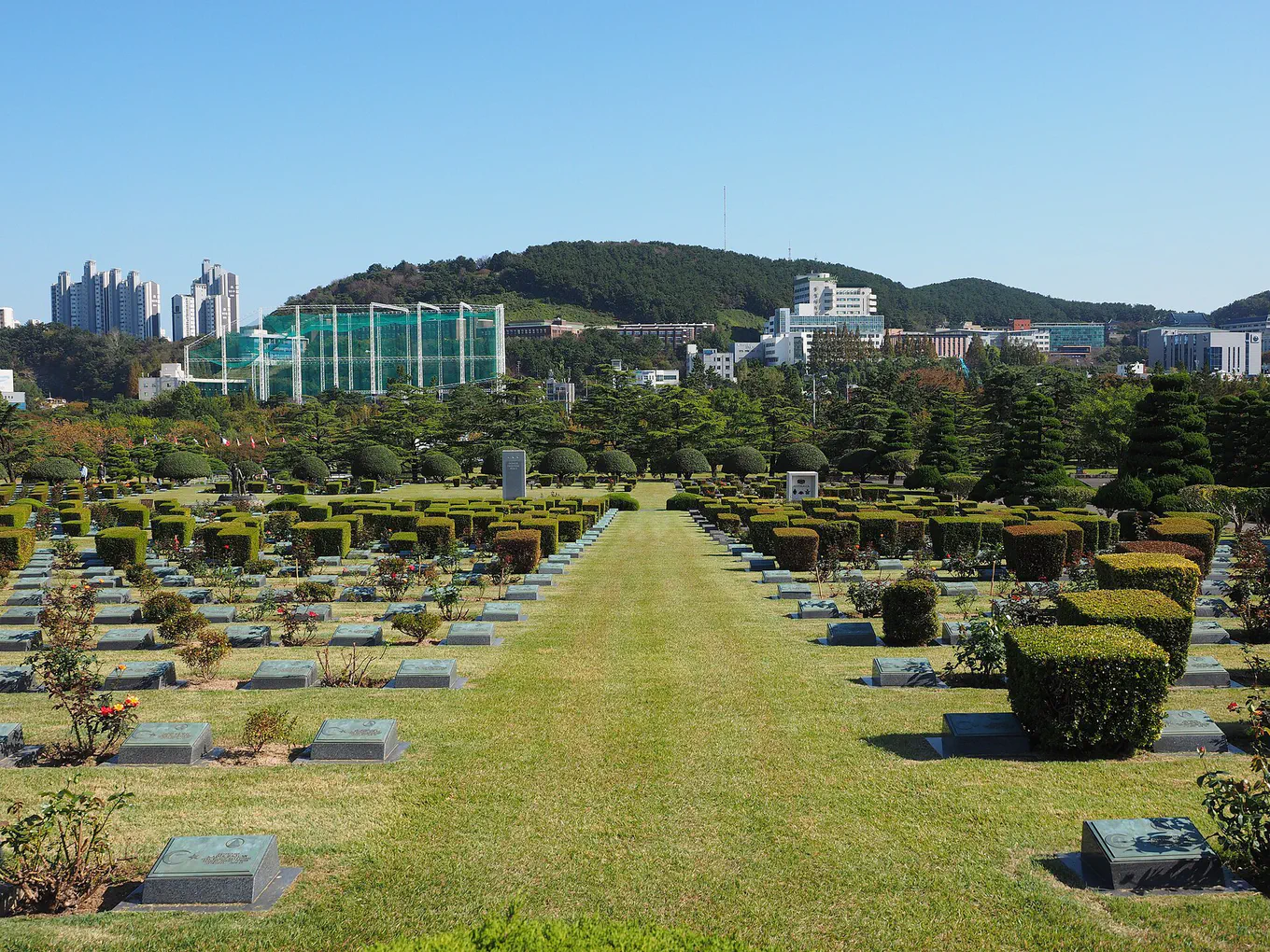
Stand here. The UN Memorial Cemetery in Korea, at Tanggok in Nam District. Its Wall of Remembrance, completed in 2006, names 40,896 UN killed and missing.
Vincent Courtenay, a Canadian veteran of the Korean War, designed his country’s monument at the only United Nations cemetery in the world. Between 1951 and 1954, about 11,000 UN troops from 21 countries were buried here, Canadians among them. Courtenay wanted a way for people everywhere to honour them. In 2007, he proposed that every 11 November, at 11 a.m. Korean time, the world turn toward Busan for a minute’s silence. At exactly that minute, sirens sounded across the city, and Courtenay laid flowers.
5 Black Panther’s Busan filming at Jagalchi Fish Market
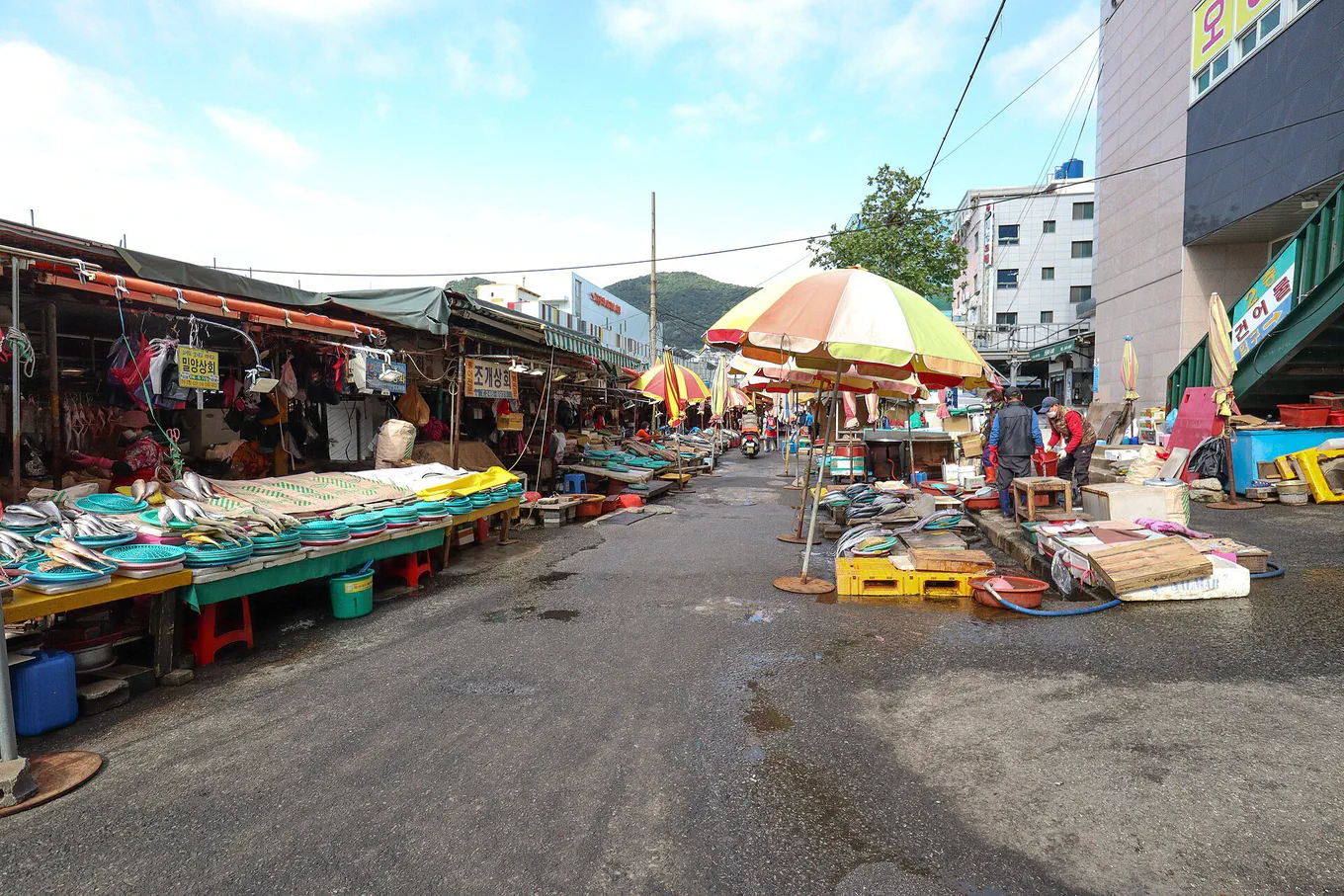
Stand here. Jagalchi Fish Market, on the edge of Nampo Port, considered the largest fish market in South Korea.
Filming of Marvel’s Black Panther in Busan began here, on 17 March 2017, and the city’s scenes include a car chase with 150 cars and over 700 people. In the film, T’Challa, the Black Panther, comes to Busan to catch Klaue, the arms dealer who stole vibranium from Wakanda. After a firefight, T’Challa catches him and reluctantly hands him to a CIA agent, Ross. T’Challa’s cousin Killmonger attacks to free Klaue, and Ross is gravely injured. Rather than chase Klaue, T’Challa takes Ross to Wakanda to save his life.
Pachinko(Min Jin Lee, 2017). A novel. A Korean family’s story begins in 1883 in Yeongdo, a fishing village a ferry ride from Busan, and moves to Japan.
If You Leave Me(Crystal Hana Kim, 2018). A novel. During the Korean War, the refugee Haemi Lee is forced to move to Busan with her mother and younger brother Hyunki, who suffers from a severe illness.
Hot Blood(Kim Un-su, 2016). A novel by a writer born and raised in Busan. It follows thugs, loan sharks, prostitutes, and other shady characters who live by the Busan seaside.
Films to watch before you visit Busan
Ode to My Father(Yoon Je-kyoon, 2014). A film. A family and their shop, Kkotbunine, in Gukje Market, from the Korean War onward.
Haeundae(Yoon Je-kyoon, 2009). A disaster film, also called Tidal Wave. The wave reaches Haeundae and sweeps people on the Gwangan Bridge into the sea.
Friend(Kwak Kyung-taek, 2001). A neo-noir film. The director’s semi-autobiography, set in his hometown of Busan, with the Gukje Hotel and Hobak Night Club as a location.
Black Panther(Ryan Coogler, 2018). A superhero film. Its Busan filming began at Jagalchi Fish Market and also used Marine City and the Gwangan Bridge.
Questions
Was Train to Busan filmed at Busan Station?
No. The film’s station scenes were shot in Daejeon, Cheonan, and East Daegu, and its ending is at a tunnel near Busan rather than the station. The real Busan Station, opened in 1908 in Choryang-dong, is the southern end of the high-speed line from Seoul.
Was Yeongdo Bridge nearly demolished?
Yes. Its lifting span stopped moving in September 1966, because of heavy traffic and water pipes laid beneath it. In 2003, the bridge was deemed dangerous and almost torn down, but it was designated a historical monument instead and restored as a drawbridge. It reopened on 27 November 2013, and some 70,000 people came to watch it lift.
Was Busan ever South Korea’s capital?
For a time, yes. Busan was one of the few areas that stayed under South Korean control throughout the Korean War, so it served for some time as the country’s de facto capital. UN troops held a defensive line around it, the Pusan Perimeter, in the summer and autumn of 1950.