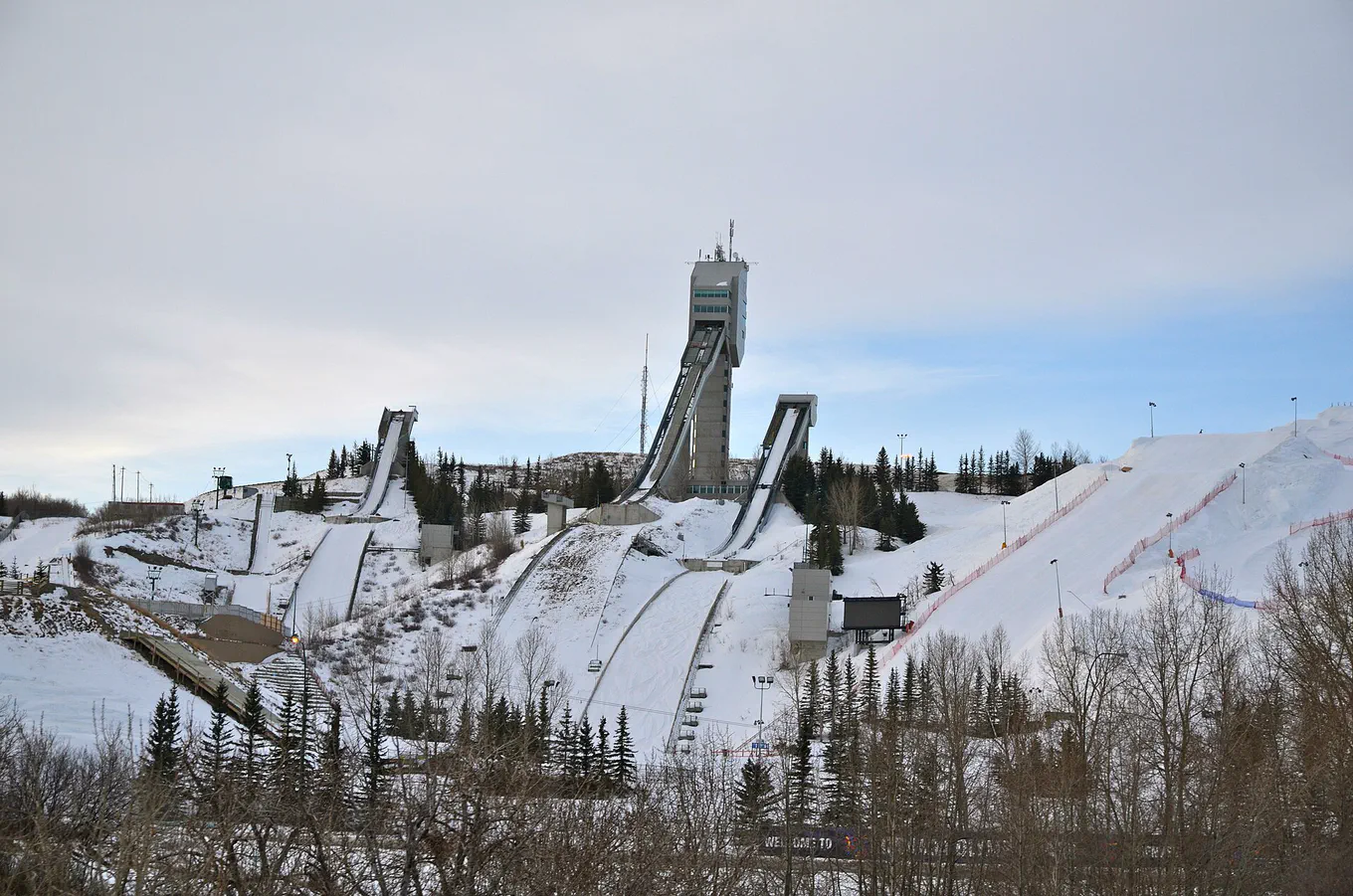
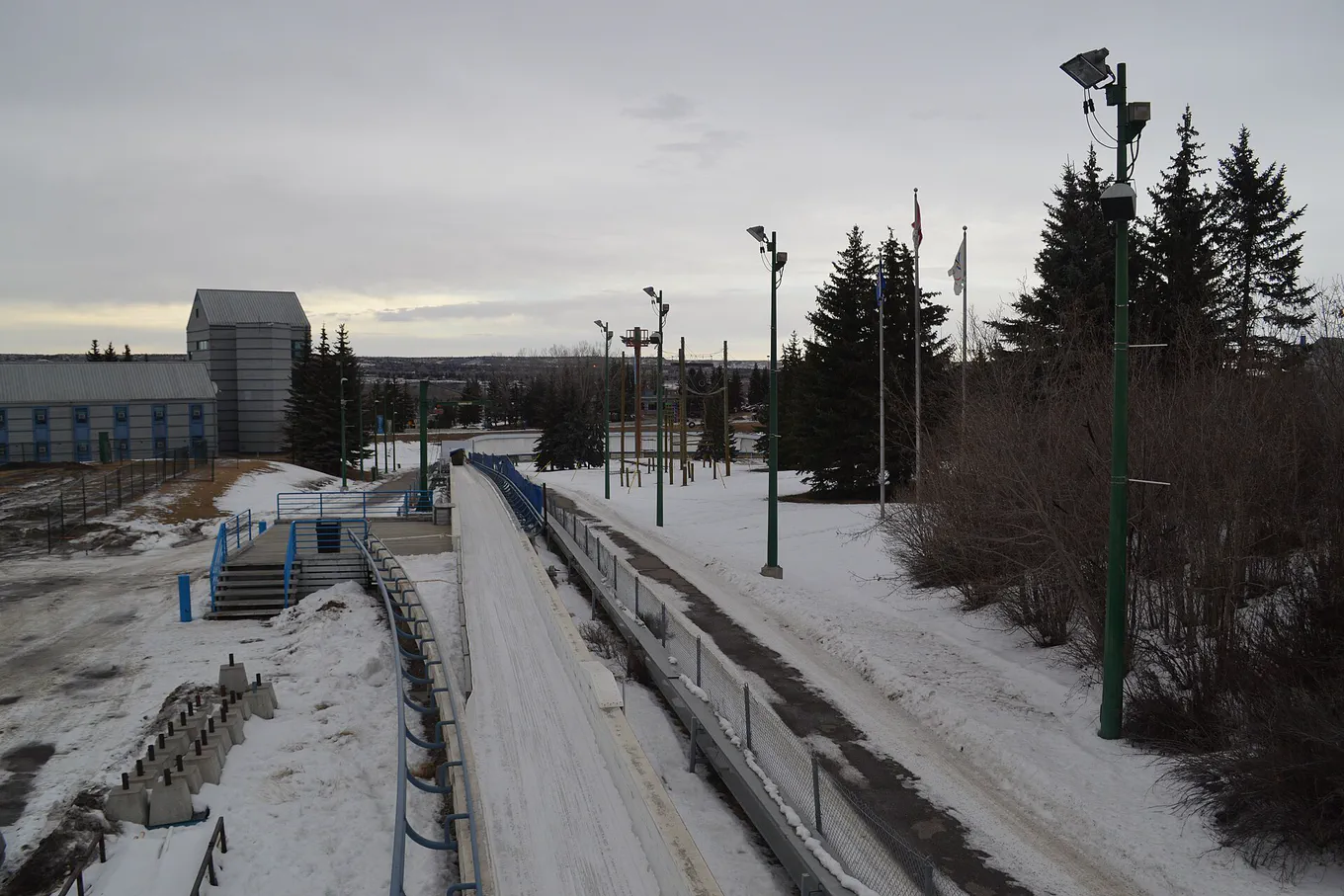
I mean, this is where Eddie “The Eagle” Edwards did his thing in 1988. Classic British underdog story… in which the underdog lost and also won.
— Nick
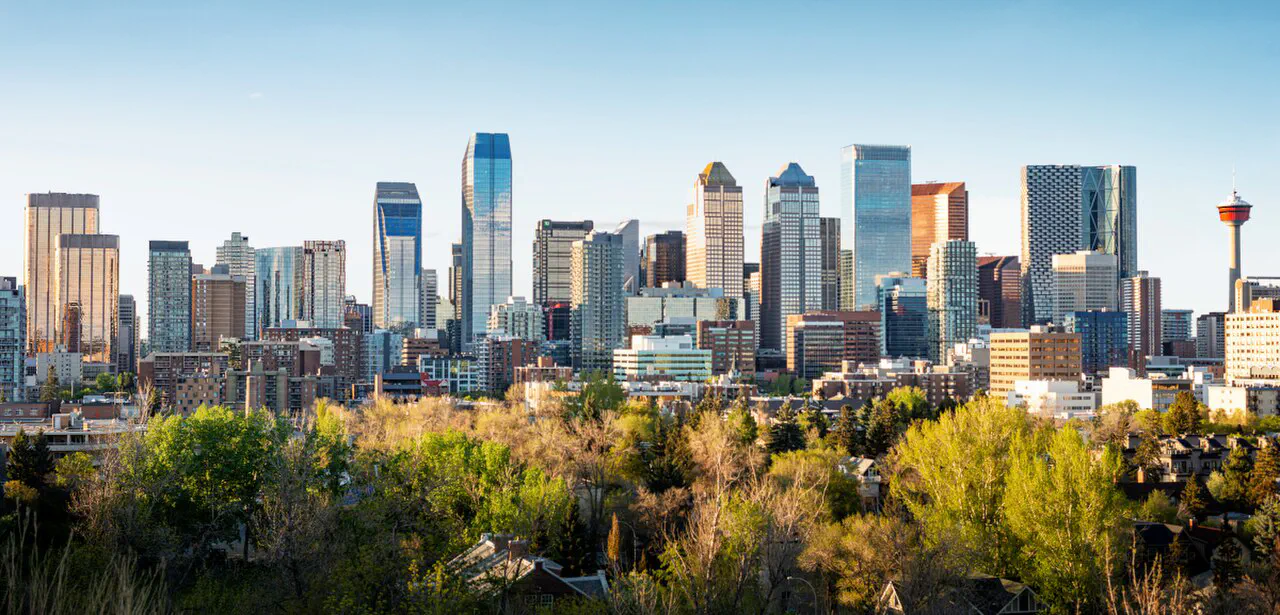
Where the Bow and Elbow rivers meet, between the Rocky Mountain foothills and the prairies, sits Calgary, the largest city in Alberta, Canada. It began as a police fort in 1875 and hosted the 1988 Winter Olympics. A ski jumper who came last precedes a cowboy show its backers wouldn’t repeat, a fort that lost its commander’s name, a bobsleigh crash, and a wrestling school in a basement.
Michael Edwards, the hero of the film Eddie the Eagle, was a plasterer from Cheltenham who in 1988 became the first to ski-jump for Great Britain at the Olympics since 1928. He paid his own way, his thick glasses misted under his goggles, and he wore six pairs of socks to make borrowed boots fit. In Calgary, he came last in both events, and the world loved him for it. Afterwards, Olympic hopefuls had to finish in the top 30 per cent, or the top 50, at international events. It became known as the Eddie the Eagle Rule.
2 Guy Weadick and the first Calgary Stampede
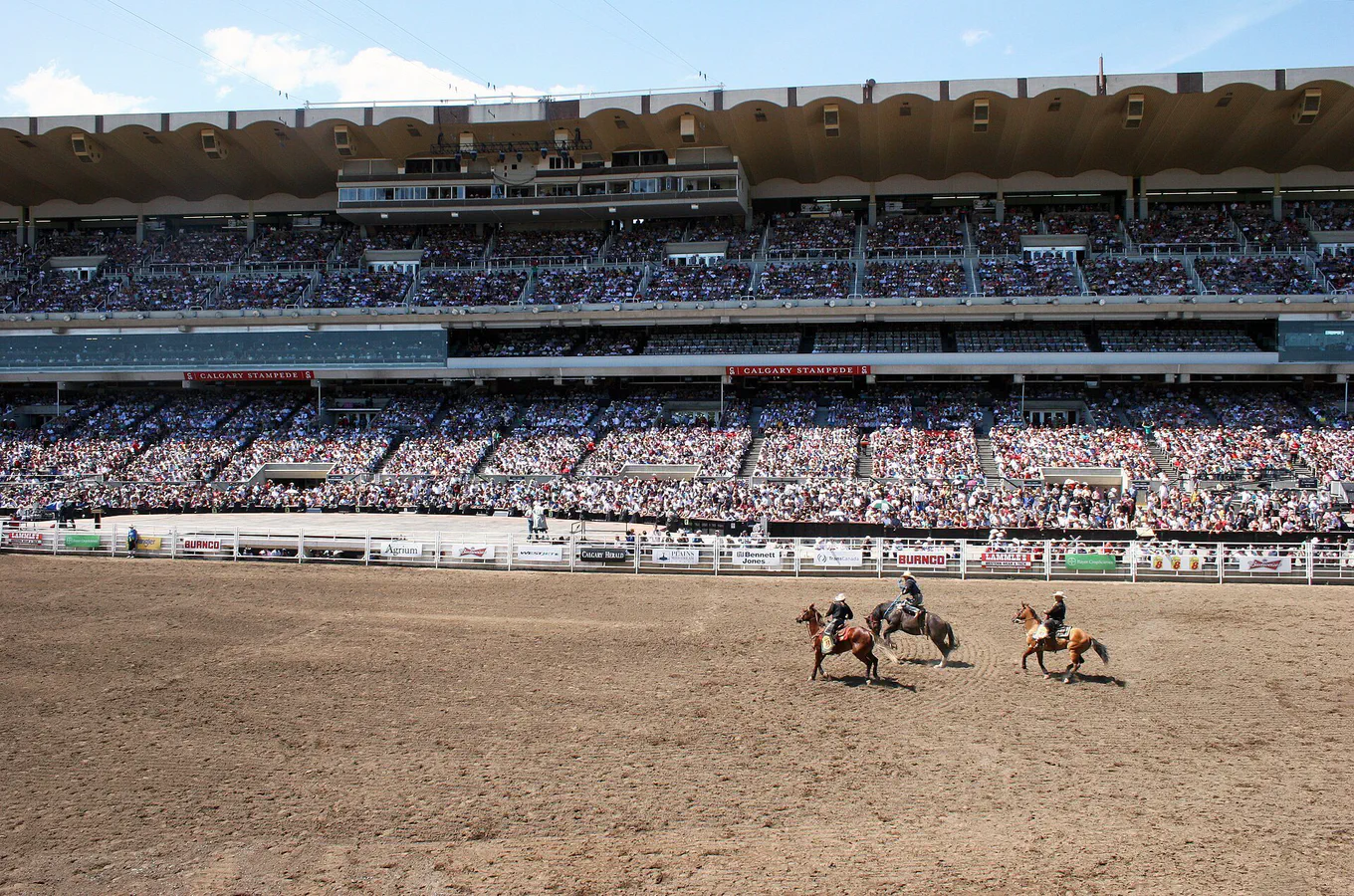
Stand here. Stampede Park, in the Beltline southeast of downtown, where the first show was held. The Stampede still runs here for ten days every July.
The Calgary Stampede, billed as “The Greatest Outdoor Show on Earth”, began with an American trick roper, Guy Weadick. In 1912, he came back to Calgary wanting to stage a truer wild west, but the city’s leaders turned him down. So he went to four rich cattlemen, who put up $100,000 as a last celebration of their way of life. Over 100,000 people came that September. The cattlemen had no wish to do it again. It was eleven years before Weadick’s show came back to stay.
3 Brisebois and the fort that became Fort Calgary
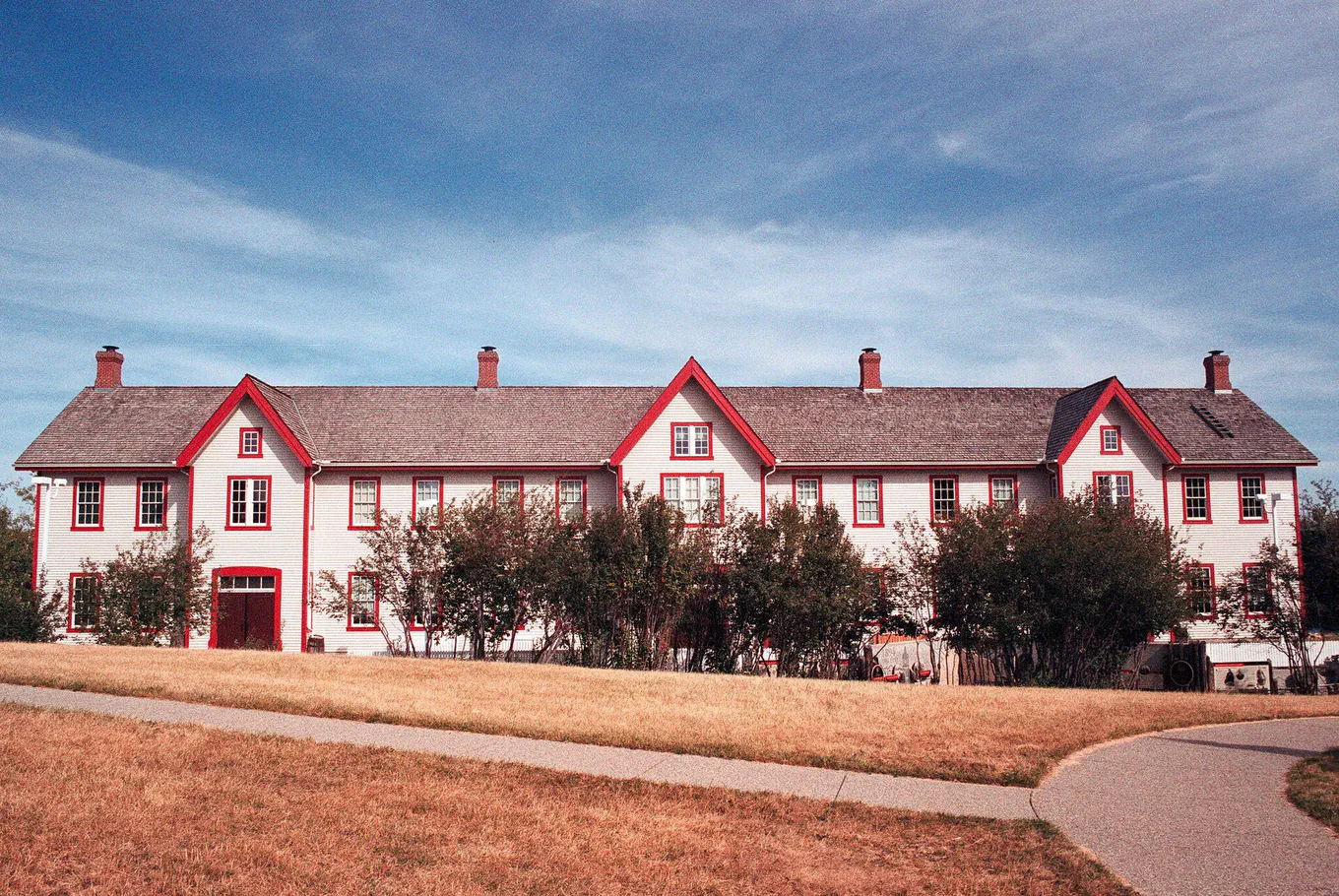
Stand here. The Confluence Historic Site and Parkland, where the Bow meets the Elbow. The police buildings were demolished, and a replica barracks stands there now.
Calgary takes its name from a spot on the Scottish Isle of Mull, and it nearly didn’t. In 1875, Éphrem-A. Brisebois led a troop of Mounted Police here to build a fort, and that December he named it Fort Brisebois. But the fort was badly heated, and when he took its only cook-stove for his draughty room, his men came close to mutiny. His superiors felt he had misused his authority in naming it. The next summer it became Fort Calgary, and Brisebois resigned and rode alone to Winnipeg.
4 The real Cool Runnings crash at Canada Olympic Park
Stand here. Canada Olympic Park, in western Calgary, where the 1988 bobsleigh races ran.
In the 1993 film Cool Runnings, Jamaica’s bobsleigh team carry their sled to the finish to a standing ovation. The real crew raced in Calgary in February 1988 with little experience, asking other teams for basic kit, and one of them, a sprinter, had never been in a bobsleigh before. On their third run, they reached 130 km/h, lost control, and crashed, their helmets scraping the wall for 600 metres. They walked beside the sled to the finish. The applause was scattered. The ovation came five years later, on film.
5 Stu Hart’s Dungeon in the basement of the Hart House
Stand here. The Hart House, on its hill in Patterson Heights. It’s now a protected municipal heritage site, renovated in 2013 and offered for rent.
WWF star Bret Hart learned to wrestle in his father’s basement. Stu Hart bought this hilltop mansion in 1951, and in the low-ceilinged room downstairs, the Dungeon, he held trainees in painful holds for a long time. Bret has described walls and ceiling holed by bodies. But after Stu died, the family put the house up for sale, and in 2006 a city council vote to protect it tied seven to seven and failed. Six years later, the city made it a heritage site.
Pack nothing. Leave Friday.
Every Friday, I write a free letter, Journey, that takes us on a trip through places, stories, and ideas.
419(Will Ferguson, 2012). A novel, set in motion when Henry Curtis, a retired schoolteacher in Calgary, dies in a car accident.
Ladybug, Ladybug(W. O. Mitchell, 1988). A novel set in Roxboro, the Calgary neighbourhood where W. O. Mitchell lived from 1968 until his death in 1998, though the novel doesn’t name it.
Restlessness(Aritha van Herk, 1998). A novel. Its narrator books a room at Calgary’s Palliser Hotel as the venue for her “planned and chosen oblivion”, where its Chicago-style wings let her observe a fellow guest.
Films to watch before you visit Calgary
Eddie the Eagle(Dexter Fletcher, 2016). A film. Taron Egerton plays Michael Edwards at the 1988 Calgary Olympics. Hugh Jackman’s coach is a fictional character.
Cool Runnings(Jon Turteltaub, 1993). A film with John Candy, loosely based on Jamaica’s bobsleigh debut at Canada Olympic Park, and shot partly in Calgary.
Superman III(1983). A film. Most of its exteriors were shot in Calgary, including Superman’s drinking scene at the St. Louis Hotel in the East Village.
The Last of Us(HBO, 2023). A TV series. Season one built its Boston quarantine zone near Stampede Park, and Calgary stood in for Kansas City.
Questions
When is the Calgary Stampede?
Every July. It runs for ten days from the first Friday of the month at Stampede Park, in the Beltline district southeast of downtown. It draws more than a million visitors a year.
Can you still see the 1988 Olympic ski jumps in Calgary?
Partly. Canada Olympic Park, in western Calgary, was the main venue for ski jumping, bobsleigh, and luge in 1988. Its jumps closed in 2018 and were decommissioned in 2024, but the 90-metre tower was kept for ziplining and other uses.
Why is Calgary called Calgary?
The fort the city grew from was named Fort Brisebois in 1875, after its commander. His superiors felt he had misused his authority in naming it, and in June 1876 it became Fort Calgary, on the suggestion of James Macleod, soon to be the Mounted Police commissioner, who had been a summer guest at Calgary on the Isle of Mull.