Douglas Adams was born in Cambridge and told us that the answer to life, the universe, and everything was 42. Francis Crick walked into the Eagle at lunchtime and actually (kinda) announced the secret of life. (Sidenote: Douglas Adams is buried in Highgate Cemetery in London, which has a great tour if you are in the area.)
— Nick
Cambridge is the county town of Cambridgeshire, on the River Cam 55 miles north of London. Its university was founded in 1209, after scholars left Oxford following a dispute with the townspeople. The stories here are a pub that was told the secret of life, the real runner behind Chariots of Fire, a poet’s bear, a philosopher’s poker, and a clock that eats time.
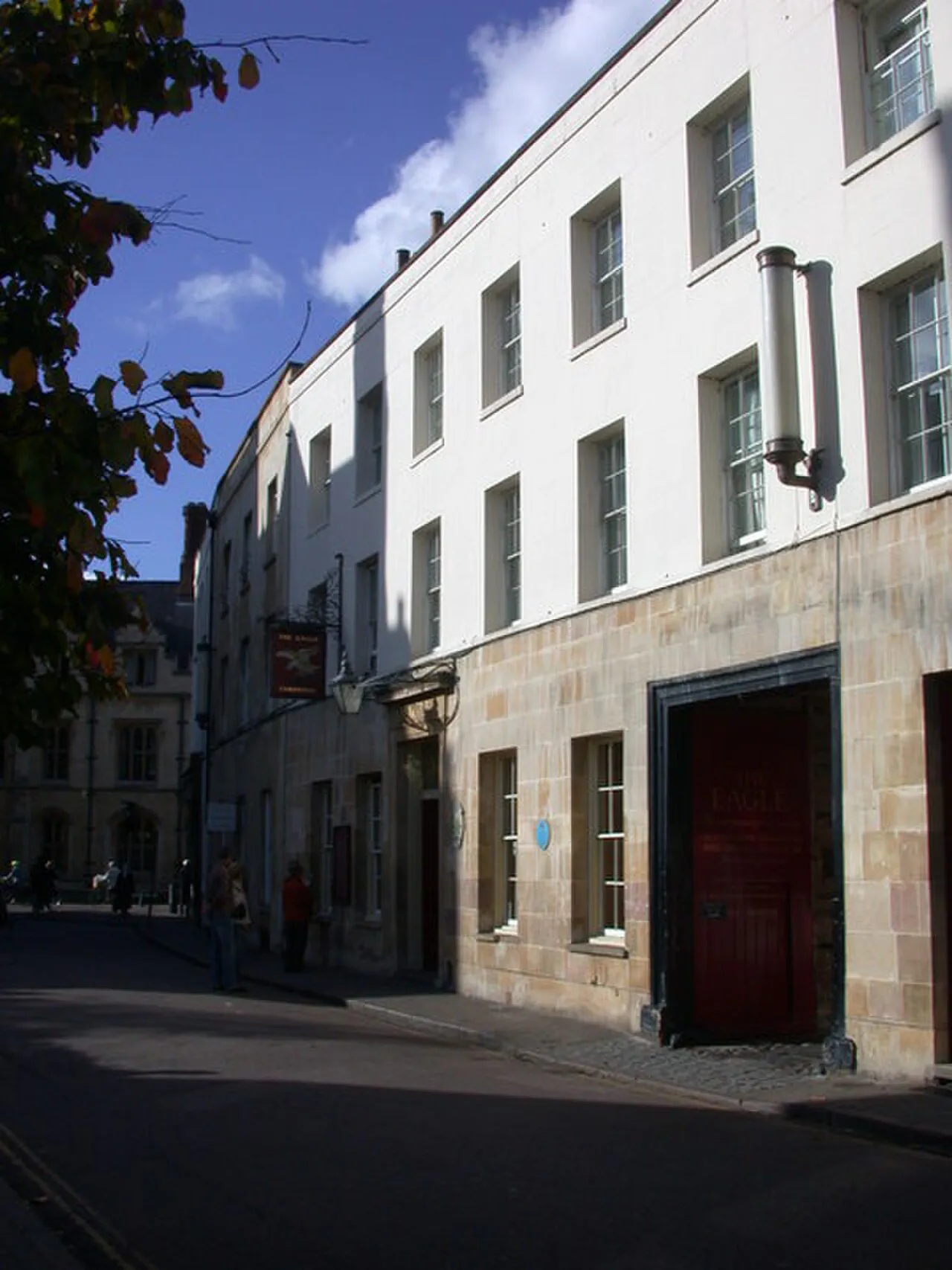
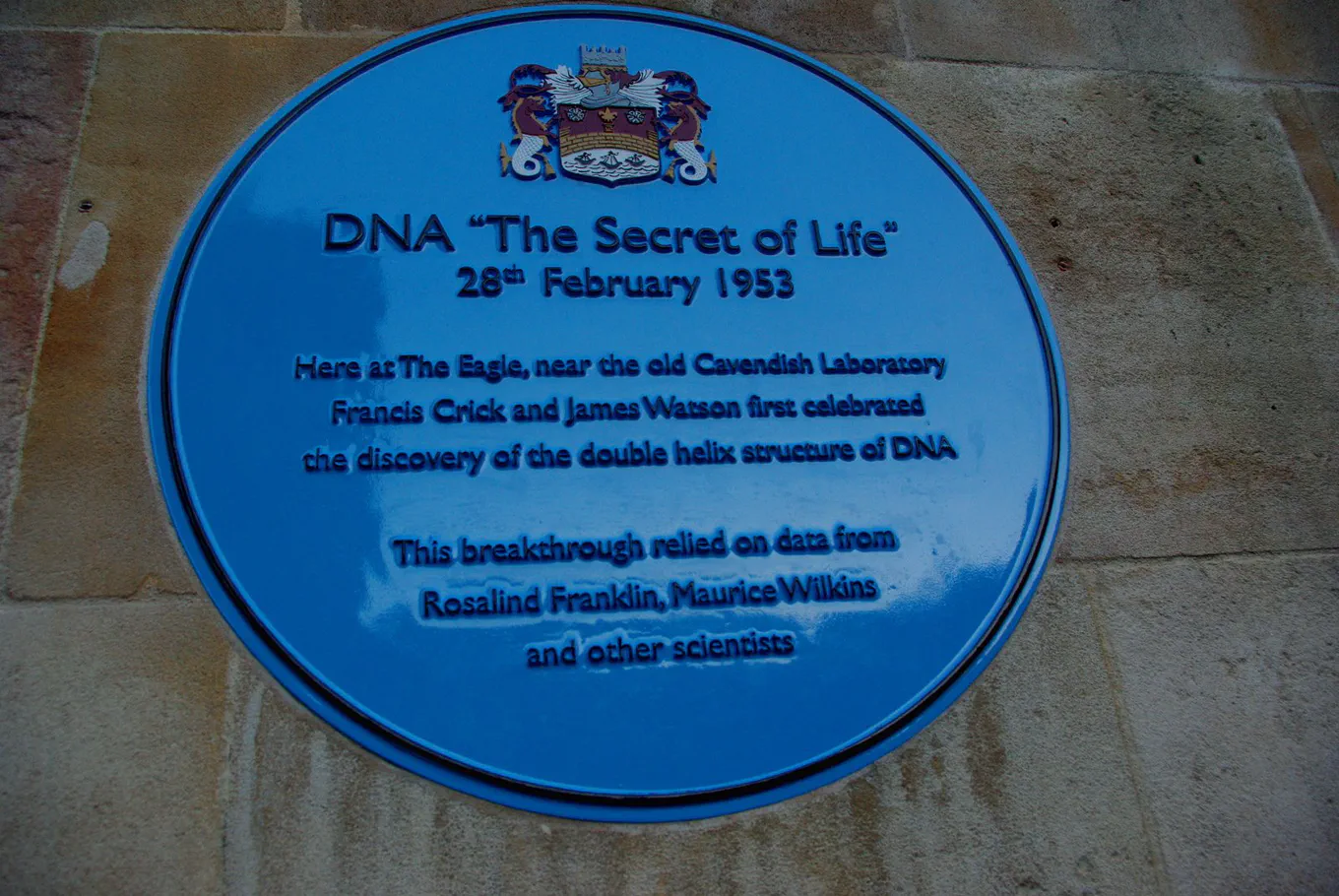
James Watson’s bestseller The Double Helix tells how, on 28 February 1953, Francis Crick interrupted lunchtime at the Eagle to announce that he and Watson had “discovered the secret of life”, the structure of DNA. But Watson had seen Photo 51, a picture taken by Rosalind Franklin and Raymond Gosling, which Maurice Wilkins showed him without her permission. The Nobel Prize went to Watson, Crick, and Wilkins, four years after Franklin died. Only in 2023 did the plaque outside add her name.
2 Lord Burghley’s real Great Court Run at Trinity
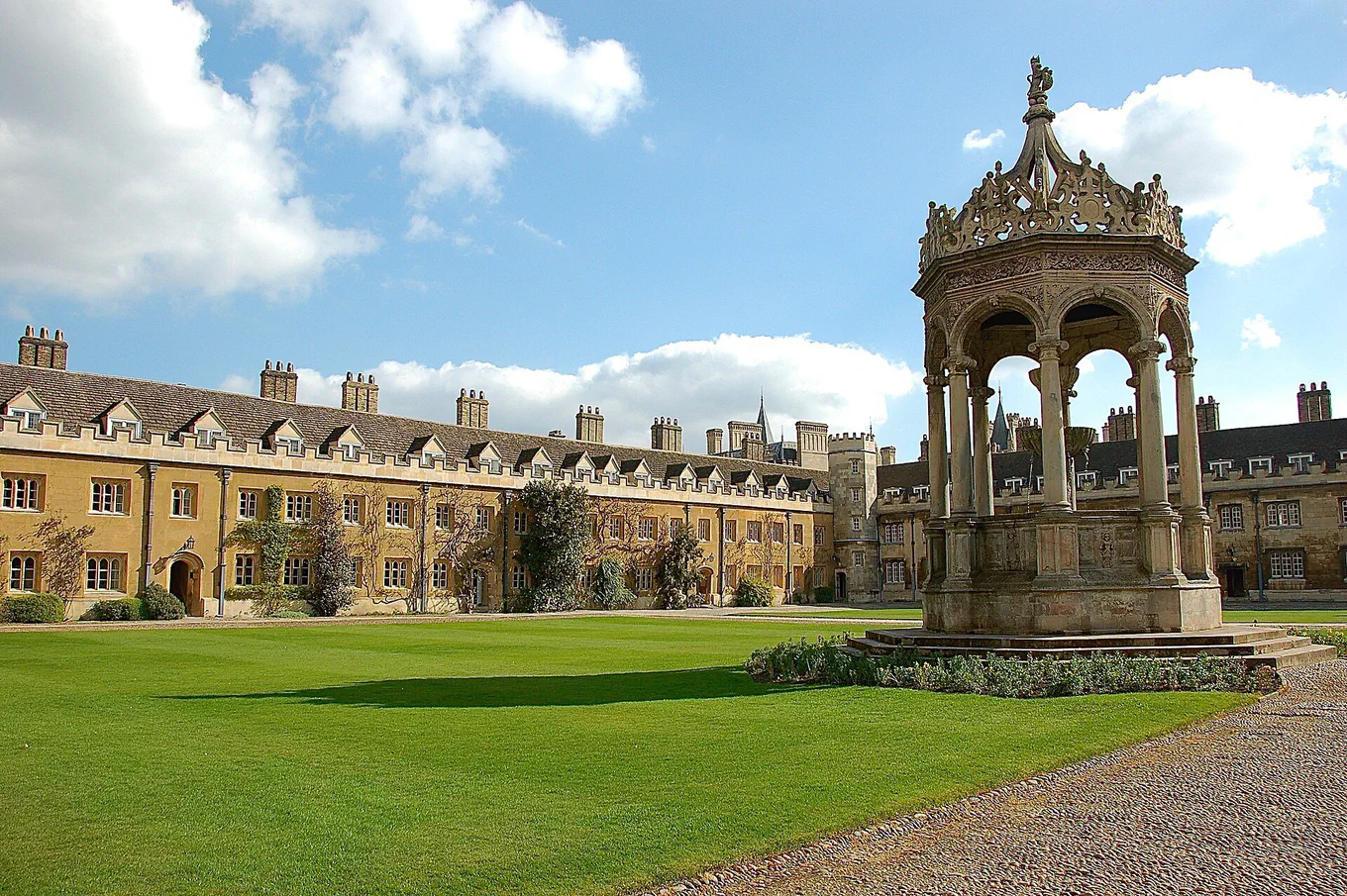
Stand here. Great Court, Trinity College, said to be Europe’s largest enclosed courtyard. Students still race its clock on the day of the Matriculation Dinner.
Chariots of Fire shows Harold Abrahams racing round this court while the clock strikes twelve, but Abrahams never tried. The first to do it was Lord Burghley, a future Olympic hurdles champion, at midnight in June 1927, beating what is, by an old tradition, twenty-four chimes. The film based a character on him, but Burghley refused it his name for getting the history wrong. Cambridge had turned the film away too, so the scene was shot at Eton, with the wrong man running.
3 Lord Byron’s bear at Trinity College
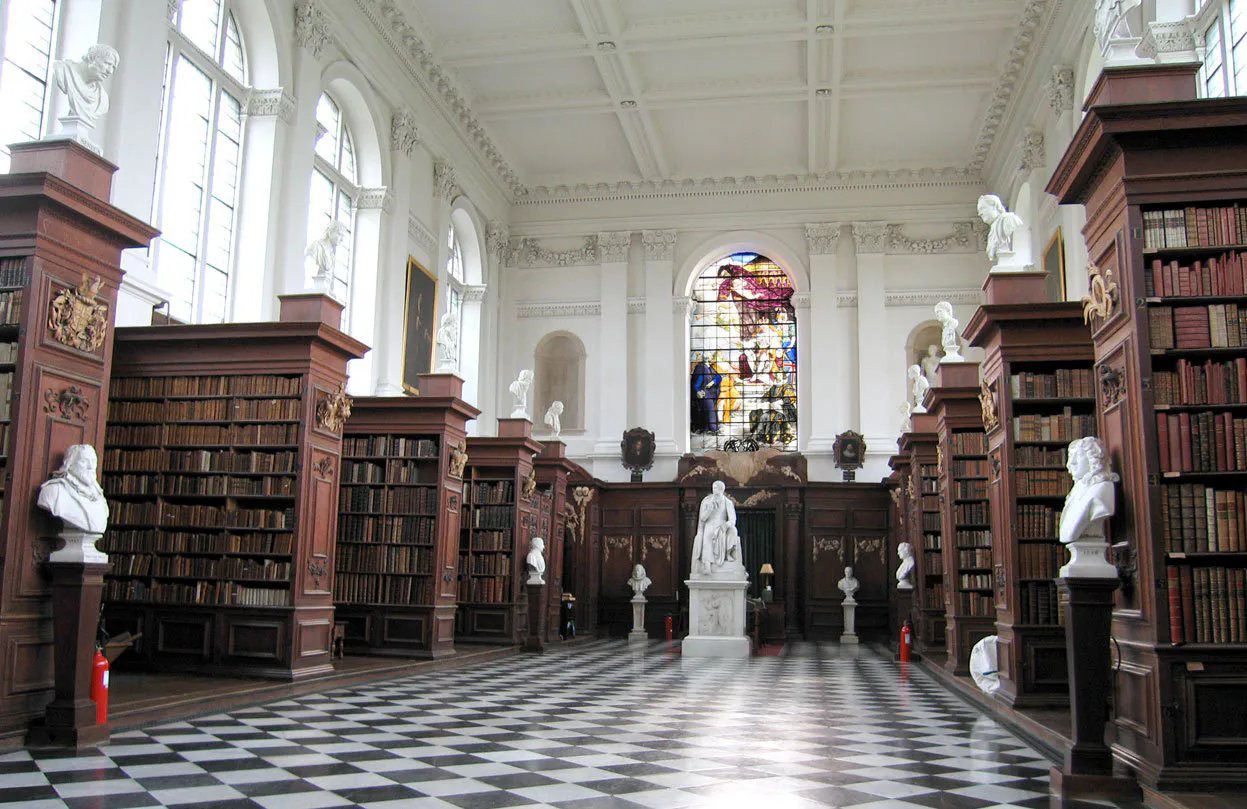
Stand here. The Wren Library at Trinity College. Byron’s full-size statue stands inside.
In October 1805, the poet Lord Byron entered Trinity College. He loved animals, above all his Newfoundland dog, Boatswain, but the college rules forbade pet dogs. Its statutes said nothing about bears, though, so Byron kept a tame one. He even suggested the bear apply for a fellowship. Later, a statue of Byron was offered to Westminster Abbey and refused because of his reputation for immorality. St Paul’s, the British Museum, and the National Gallery said no as well. Trinity put him in its library.
4 Wittgenstein’s poker in a King’s College room
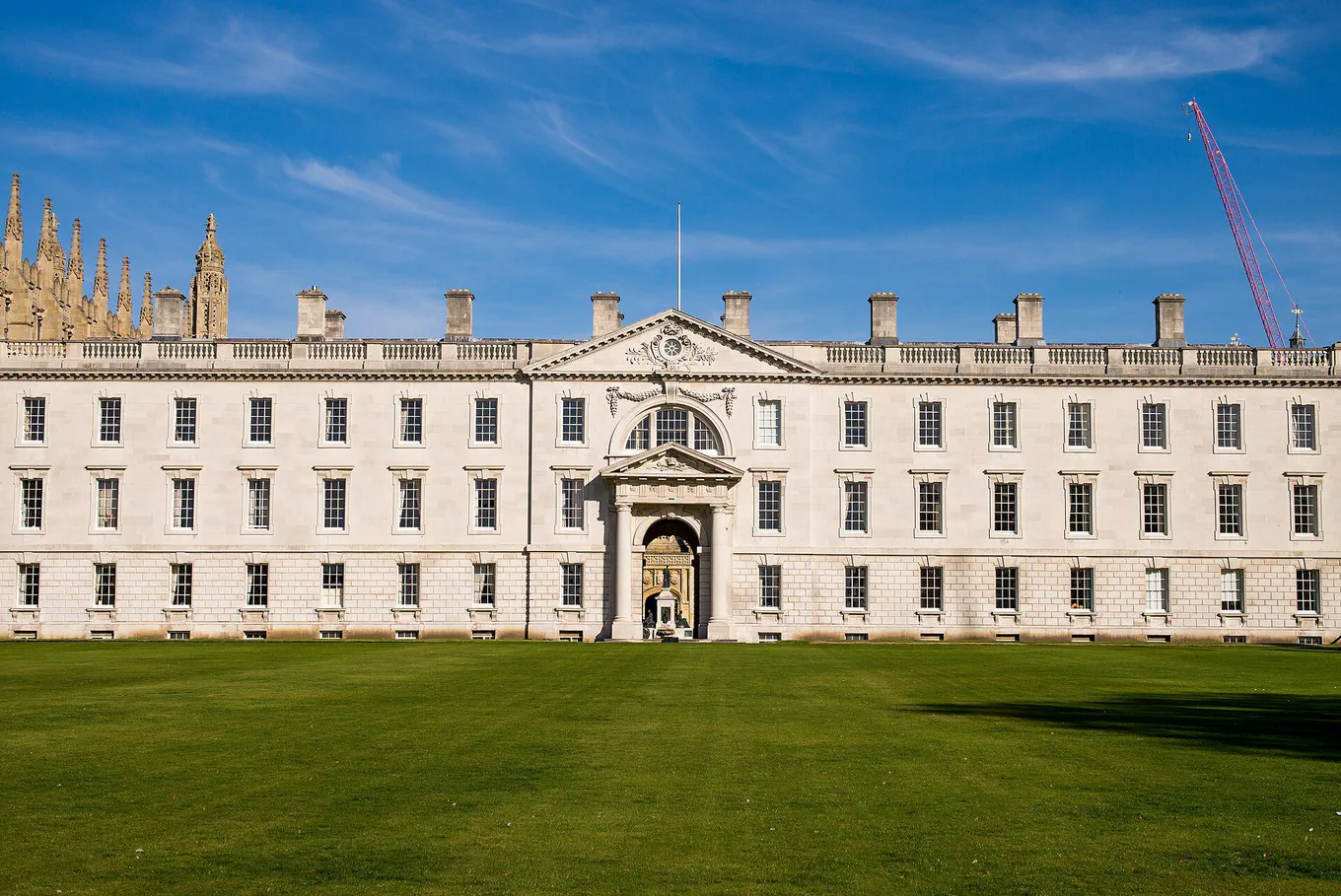
Stand here. The meeting was in the Gibbs Building at King’s College, in room three on the first floor of staircase H.
The meeting at the heart of Wittgenstein’s Poker took place here in October 1946. Karl Popper had come from London to read a paper to a club chaired by Ludwig Wittgenstein. By Popper’s own account, Wittgenstein brandished a poker and demanded an example of a moral rule. Popper replied, “Not to threaten visiting speakers with pokers.” Wittgenstein threw it down and stormed out. Other accounts give the joke to someone else, or have Wittgenstein leaving early, as he often did. The club’s minutes don’t mention a poker at all.
5 John Taylor’s time-eating Corpus Clock
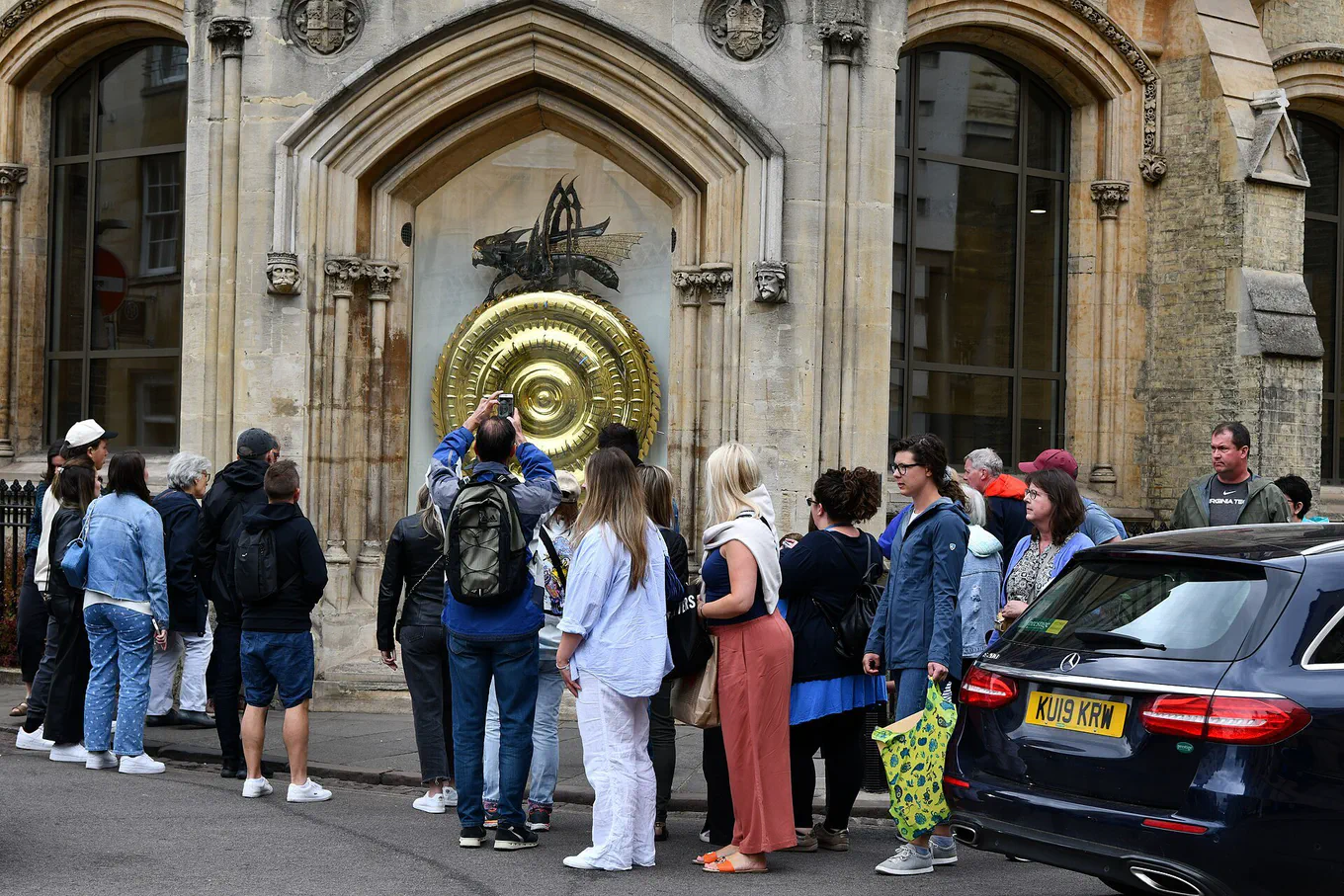
Stand here. The corner of Bene’t Street and Trumpington Street. The clock sits at street level on Corpus Christi’s Taylor Library, facing King’s Parade.
Stephen Hawking unveiled this clock in 2008, and the creature on top has been eating the seconds ever since. John Taylor, an inventor whose company sold over 200 million kettle controls, spent five years and £1 million on it. But by design it is exactly right only once every five minutes, which Taylor says reflects life’s “irregularity”. “I view time as not on your side,” he says. “He’ll eat up every minute of your life.” On the hour, a chain clanks into a wooden coffin hidden in the back.
Pack nothing. Leave Friday.
Every Friday, I write a free letter, Journey, that takes us on a trip through places, stories, and ideas.
The Double Helix(James D. Watson, 1968). A memoir, and the source of the story of Crick’s lunchtime announcement at the Eagle on Bene’t Street.
Wittgenstein’s Poker(David Edmonds and John Eidinow, 2001). A history, by two BBC journalists, of the meeting in the Gibbs Building at King’s.
A Room of One’s Own(Virginia Woolf, 1929). An essay, based on two lectures Woolf gave in October 1928 at Newnham College and Girton College.
The Night Climbers of Cambridge(Whipplesnaith, 1937). A memoir of climbing by night, whose famous climbs include King’s College Chapel and St John’s College Chapel.
Films to watch before you visit Cambridge
Chariots of Fire(Hugh Hudson, 1981). A film. Its race round Trinity’s Great Court was recreated at Eton College rather than filmed in Cambridge.
Maurice(James Ivory, 1987). A film, shot largely in the halls and quadrangles of King’s College, with interiors in the college chapel.
The Theory of Everything(James Marsh, 2014). A film, with scenes shot at St John’s College, on its New Court lawn and Kitchen Bridge, and on the Backs.
Questions
Can you visit the Eagle pub where Crick announced the discovery of DNA?
Yes. The Eagle on Bene’t Street is still a pub, owned by Corpus Christi College and run by Greene King. A blue plaque on the outside wall, replaced in 2023 to name Rosalind Franklin and Maurice Wilkins, marks the discovery, and the pub serves an ale called Eagle’s DNA.
Did Isaac Newton build the Mathematical Bridge without nuts or bolts?
No. The bridge, which crosses the Cam to join two parts of Queens’ College, was designed by William Etheridge and built by James Essex in 1749, twenty-two years after Newton died. Bolts, or their equivalent, are part of the design, and it has been rebuilt twice to the same plan.
How old is the University of Cambridge?
It was founded in 1209, after scholars left Oxford following a dispute with the townspeople there, and it is the second-oldest university in the English-speaking world. Cambridge was not given modern city status until 1951.