The closest I’ve been to Cancún is the Turks and Caicos Islands, roughly 1,500 kilometres east, where my 1993 sailing trip ended in a shipwreck.
— Nick
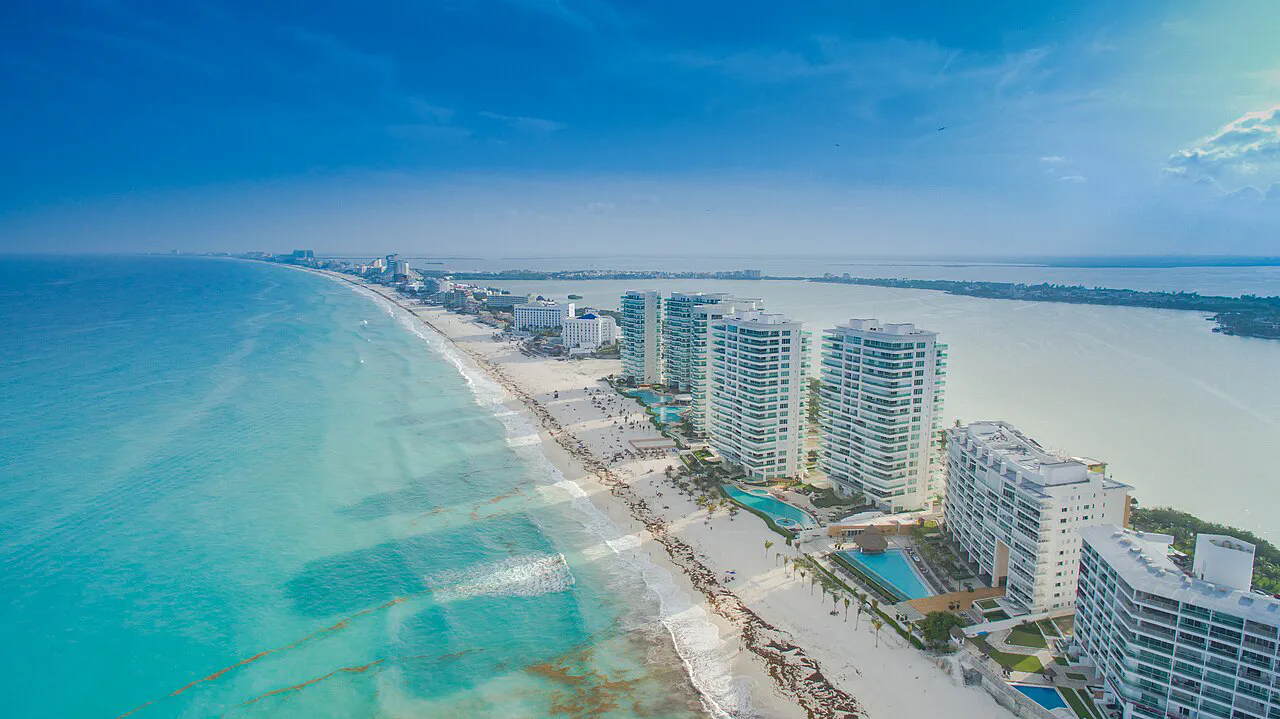
Cancún is the most populous city in Quintana Roo, on the north-east coast of Mexico’s Yucatán Peninsula, facing the Caribbean. The government planned it for tourists, and work began on 23 January 1970. Its stories here are a resort built on a sandbar, a summit of twenty-two nations, a museum on the seabed, and a climate deal gavelled through in the small hours.
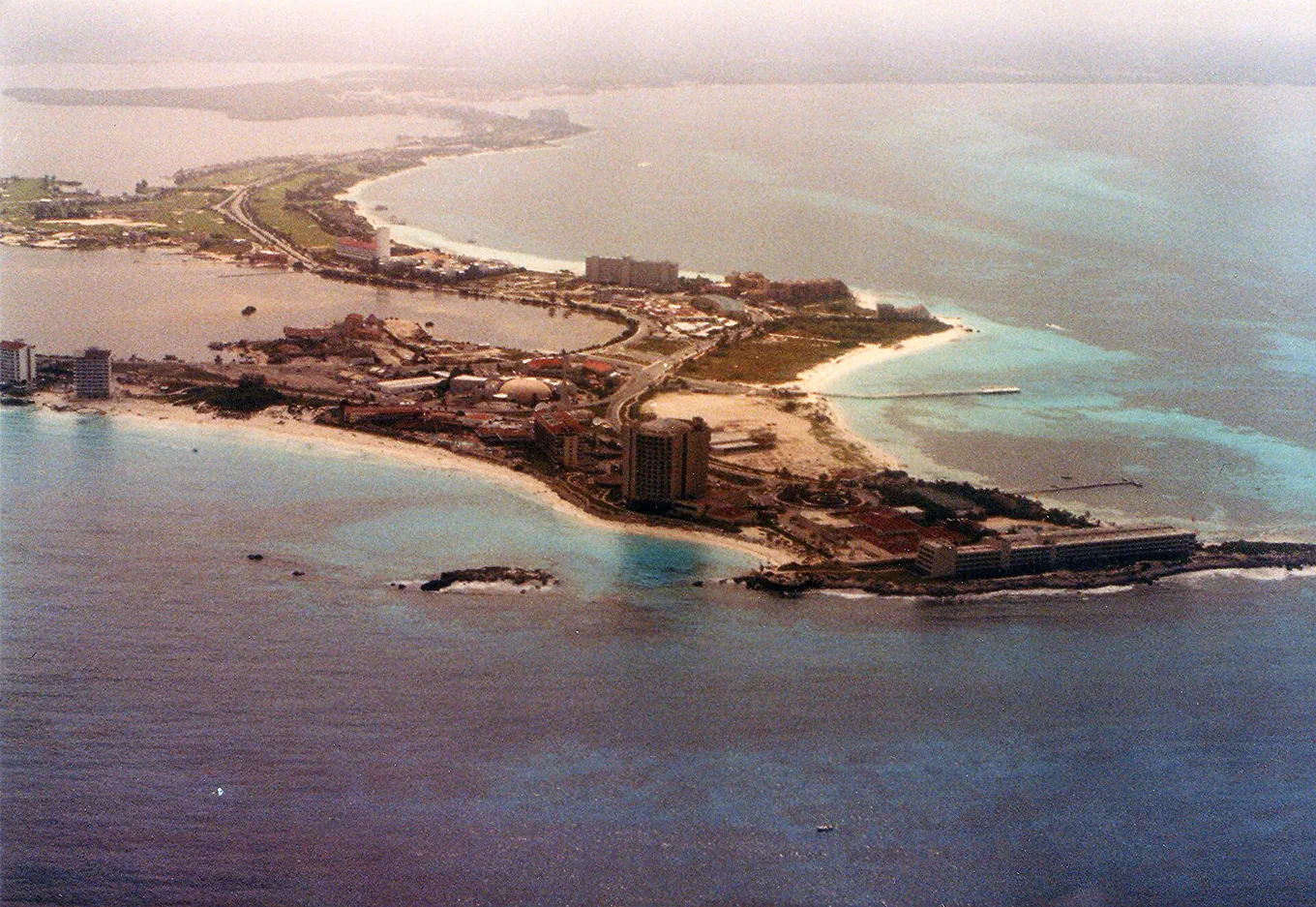
A young Bank of Mexico economist, Antonio Enríquez Savignac, was put in charge of INFRATUR, the bank’s new tourism agency, to win Mexico a share of Caribbean tourism. The bank sent him round the world’s resorts, from Monaco and Naples to Brighton. The site was a sandbar reached only by boat. When work began in January 1970, three people lived on it, caretakers of a coconut plantation. But investors wouldn’t risk an unknown place, so the government paid for the first nine hotels. In 2023, 21 million tourists came.
2 José López Portillo and the North–South Summit at the Cancún Sheraton
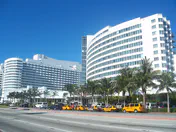
Stand here. The Cancún Sheraton, in the Hotel Zone, where the summit met. The hotel is now defunct.
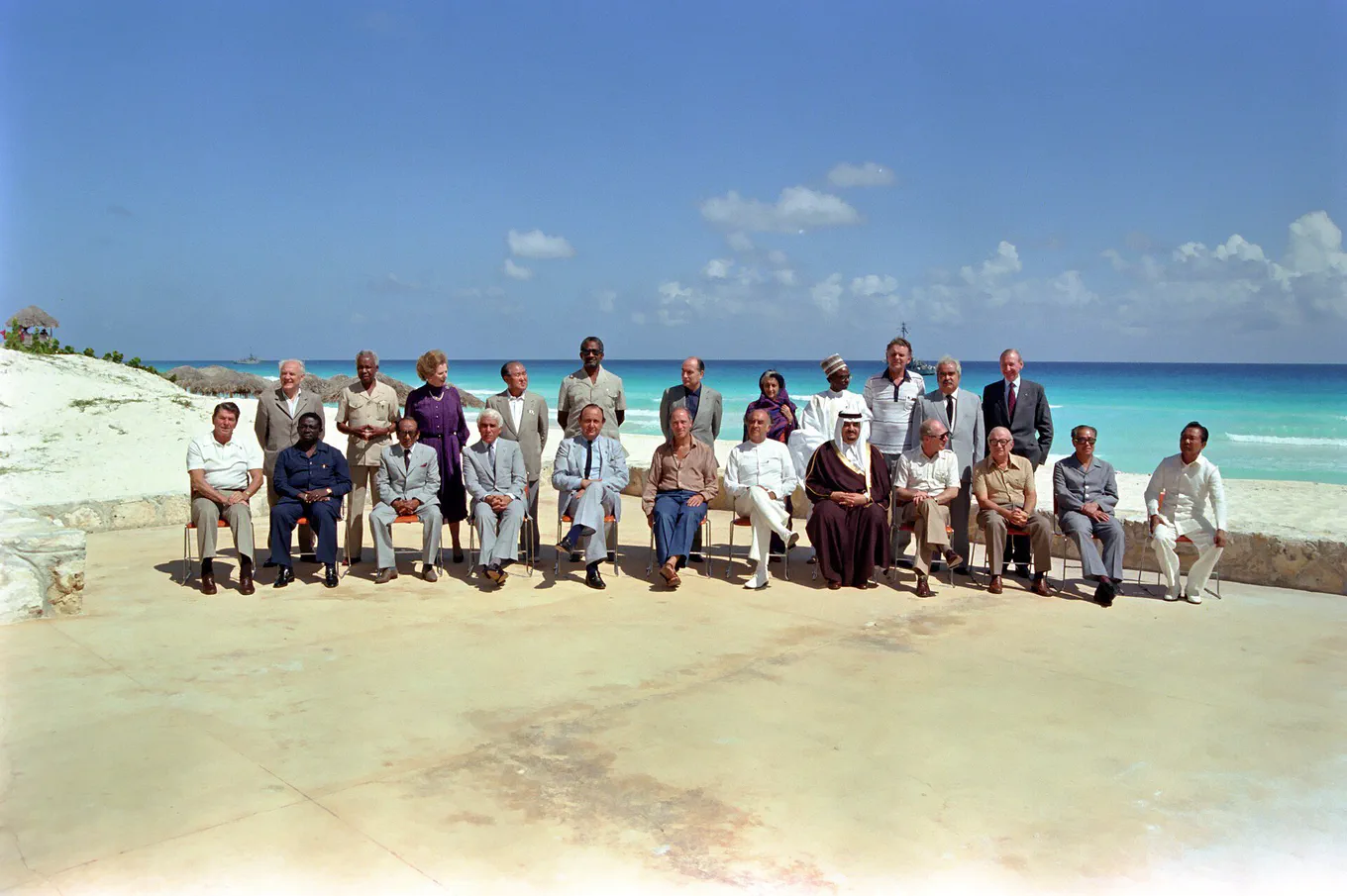
In October 1981, twenty-two nations met in Cancún for the North–South Summit. Mexico wanted the meeting at its new resort for the publicity, and President José López Portillo invited Ronald Reagan personally to make sure the United States came. The goal was development for the poorer South. But the richer North refused to entertain the South’s plan for a new economic order. Nothing substantial was agreed. Cancún, though, had hosted the only North–South summit ever held outside the United Nations.
3 Jaime González Cano and Cancún’s underwater museum
Stand here. The Manchones gallery of MUSA, the underwater museum off Cancún. Replicas and one original stand at Plaza Kukulcán, in the Hotel Zone.
Jaime González Cano ran the marine park off Cancún, where tourists, anchors, and divers were damaging the reefs, above all Manchones, the largest. So he set out to give the visitors somewhere else to go. He found a British sculptor, Jason deCaires Taylor, and from 2009 figures went down onto the seabed by the hundred, one work cast from about 90 people of the fishing village of Puerto Morelos. Visitors now split their time between the statues and the natural reef. And the statues themselves are turning into reef.
4 Patricia Espinosa’s gavel and the Cancún climate deal
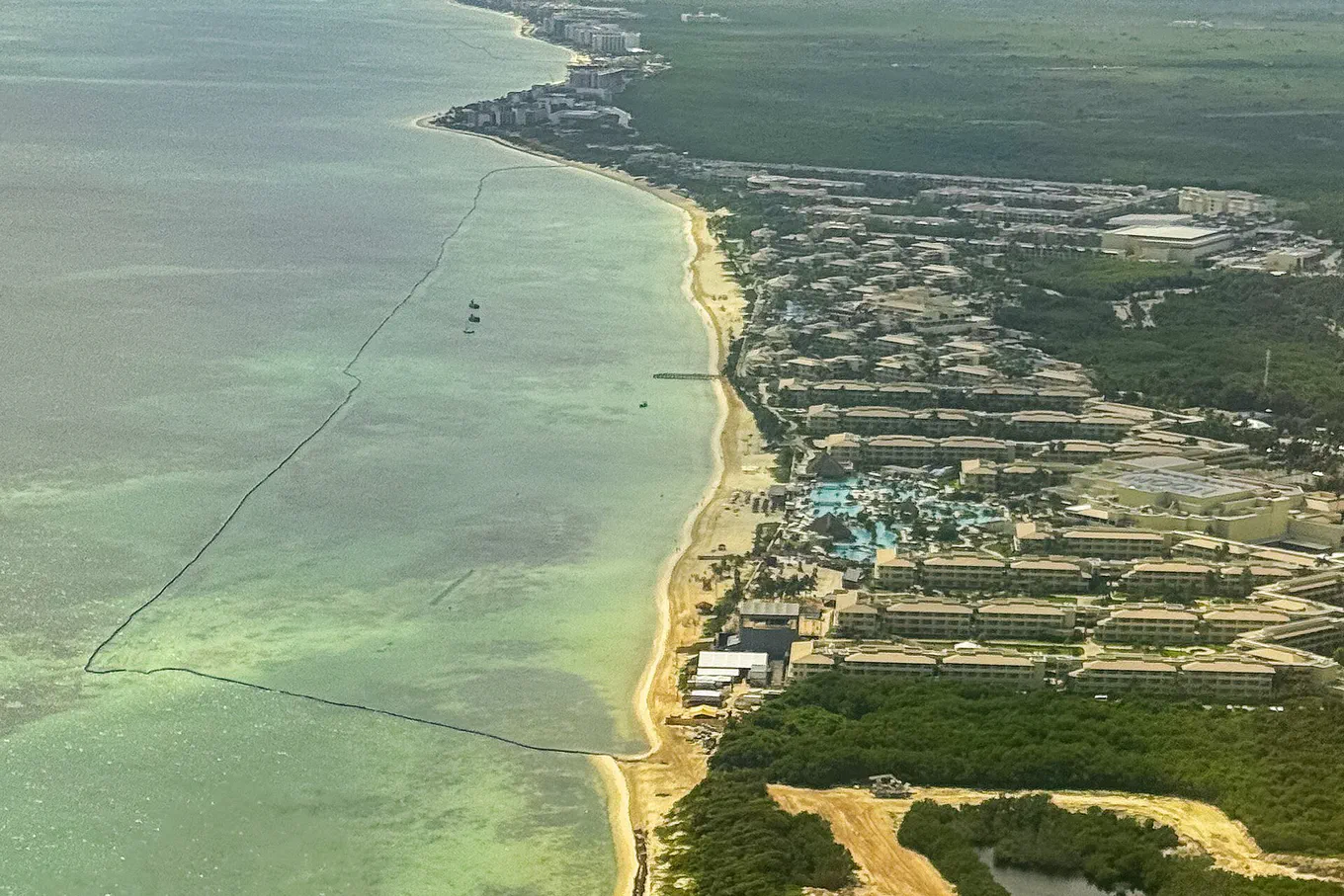
Stand here. The Moon Palace Hotel, on the Cancún–Chetumal road. It shared the 2010 climate talks with the Cancunmesse conference centre, about 7 km away.
After the non-binding Copenhagen Accord, hopes were low when the UN climate talks came to Cancún in 2010. Mexico’s foreign minister, Patricia Espinosa, chaired them. The final session ran ten hours over, and 193 of 194 parties backed a deal with a fund for poorer countries and a 2°C limit on warming. But Bolivia’s envoy, amid boos, called it a step backwards. Espinosa said consensus did not mean unanimity, and in the small hours of the Saturday morning she banged down the gavel. She would not let one country veto 193.
Pack nothing. Leave Friday.
Every Friday, I write a free letter, Journey, that takes us on a trip through places, stories, and ideas.
The Reef(Juan Villoro, 2012). A novel set at The Pyramid, an exclusive resort in a fictionalised Cancún. Villoro calls the city Kukulcan, not wanting to be forced to depict a real Mexico.
After the Sun(Jonas Eika, 2021). A collection of fiction. Under Cancún’s hard blue sky, a beach boy provides a canvas for tourists’ desires, seeing deep into the world’s underbelly.
Blood Sacrifice(Gary Alexander, 1993). A mystery. Ex-cop Luis Balam, a full-blooded Mayan, investigates the case of Proctor Smith, linked to “Gilbert”, a serial killer of prostitutes in Cancún’s Hotel Zone.
Films to watch before you visit Cancún
The Christmas Chronicles 2(Chris Columbus, 2020). A Christmas comedy film. Kate Pierce, a cynical teen, is unhappy about spending Christmas in Cancún with her mother, her brother, her mother’s new boyfriend, and his son.
The Real Cancun(Rick de Oliveira, 2003). A reality film. It follows sixteen Americans celebrating spring break in Cancún’s Hotel Zone from 13 to 23 March 2003.
The Real World: Cancun(Jonathan Murray, 2009). A reality TV series, the twenty-second season of The Real World. The cast stayed at the ME Cancun resort on Boulevard Kukulkan, in the Hotel Zone.
Questions
Can you see Cancún’s underwater museum without diving?
Yes. Snorkellers, scuba divers, and glass-bottom boats all visit MUSA. The Nizuc gallery is about four metres deep and open only to snorkellers, while Manchones, about eight metres deep, suits both divers and snorkellers. Replicas and one original stand at a visitor centre in Plaza Kukulcán, a mall in the Hotel Zone.
Are there Maya ruins in Cancún?
Yes. El Rey, in the Hotel Zone, was a port in the trade network along the Caribbean coast, and what you see of its 47 structures dates from about 1300 to 1500. Its name, “the king”, comes from a sculpture that resembles a monarch. San Miguelito stands beside the Maya Museum of Cancún, which opened in 2012 at km 16.5 of Kukulcán Boulevard.
When is hurricane season in Cancún?
June to November. Cancún lies in one of the Caribbean’s main hurricane zones. Hurricane Gilbert hit it directly in September 1988, and the hotels had to be rebuilt. Hurricane Wilma later destroyed or badly damaged 110 hotels in Cancún alone and washed about 700,000 cubic metres of sand off its beaches.