Can’t help it. This place will always remind me of The Canterbury Tales, Chaucer’s epic anthology of tales told on the road to Thomas Becket’s tomb at Canterbury Cathedral. Sadly for the city, I studied The Pardoner’s Tale, which is a devilishly brilliant sermon against greed told by the greediest pilgrim of them all… so as a group they didn’t leave a great impression.
Also, this is 200 years before Shakespeare… so it doesn’t make for easy reading.
— Nick
Canterbury is a city on the River Stour in Kent, England, not far from the Strait of Dover, and Augustine founded its cathedral, the seat of the Archbishop of Canterbury, in 597. Its stories here are a queen’s chapel that was there first, an archbishop killed by his old friend’s knights, pilgrims who never arrive, a shoemaker’s son who wrote Doctor Faustus, and a film shot among the bomb sites.
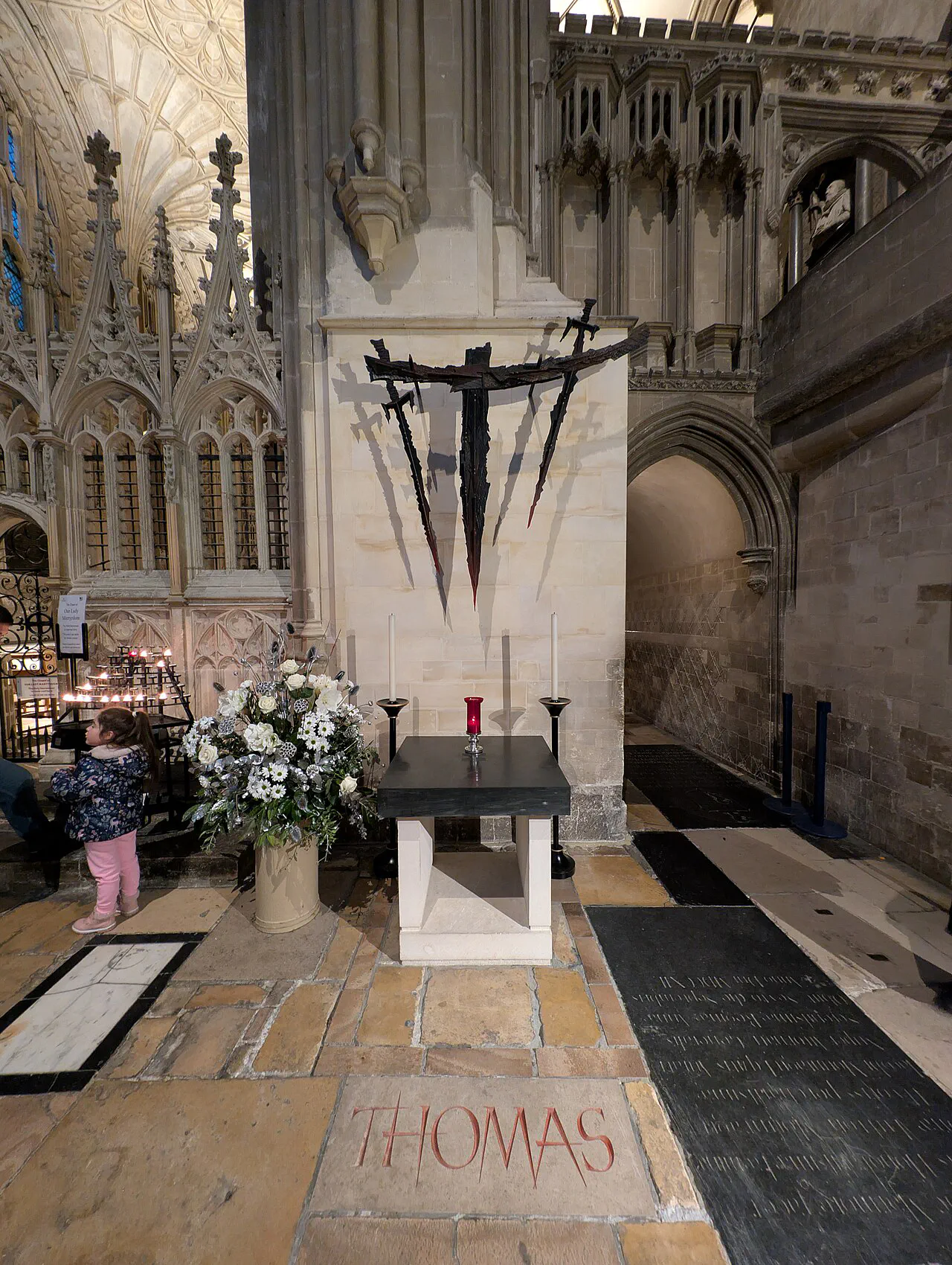
The Martyrdom in Canterbury Cathedral, where the Altar of the Sword’s Point marks the place Becket was murdered.Andy Li, CC0, via Wikimedia Commons.
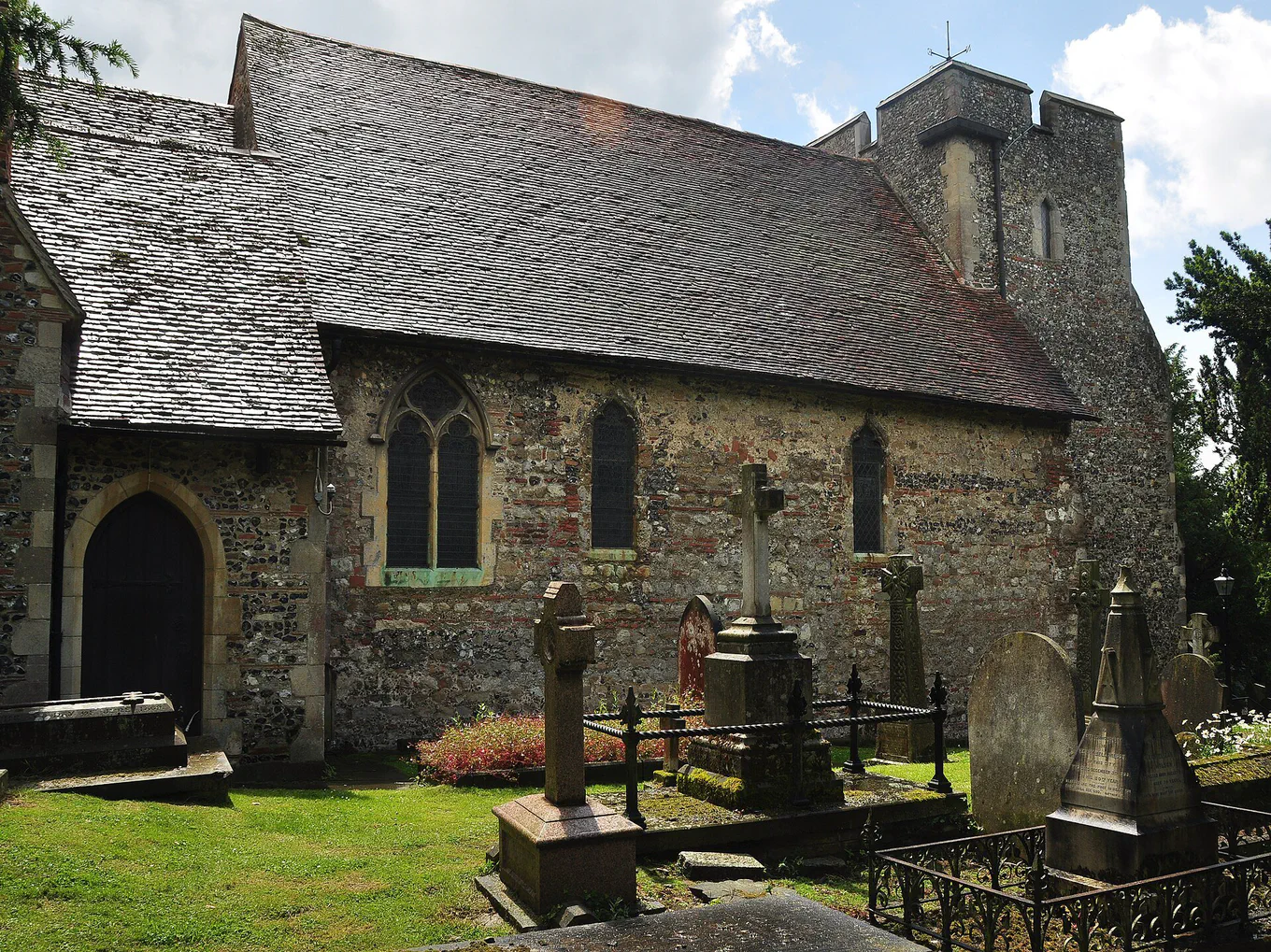
Pope Gregory the Great sent Augustine, prior of St Andrew’s Abbey in Rome, to convert King Æthelberht of Kent. Partway there, his missionaries lost heart and sent him back to Rome to ask leave to go home. Gregory refused. When Augustine landed in 597, Canterbury already had a Christian queen. Bertha, a Frankish princess, had brought her own chaplain, and her pagan husband had let her keep her faith. Augustine made her private chapel his headquarters. The men who had wanted to turn back found a church already standing.
2 Thomas Becket, the king’s friend killed in Canterbury Cathedral
Stand here. The Martyrdom, the cathedral’s north-west transept, or cross-arm, where the Altar of the Sword’s Point marks the place Becket was killed.
Thomas Becket had been King Henry II’s Chancellor and great friend, so Henry persuaded him to become Archbishop of Canterbury, hoping for an ally. Instead, Becket argued with him over the division of power between king and Church. On 29 December 1170, four of Henry’s knights confronted him in the cathedral, and one sliced off the top of his head with a sword. Within four years, Henry walked barefoot through Canterbury in sackcloth, lay before Becket’s tomb, and was whipped by the monks. He spent the night on the cathedral floor, with no food or blanket.
Geoffrey Chaucer’s The Canterbury Tales follows about thirty pilgrims from the Tabard inn in Southwark, in London, to Becket’s shrine, telling stories on the road in a contest. Chaucer meant each pilgrim to tell four, about 120 in all. Between 1387 and 1400, he wrote 24, and he never finished. In the poem as it survives, the pilgrims get only as far as the outskirts of Canterbury. Pier Paolo Pasolini’s 1972 film lets them reach the cathedral. Chaucer’s own are still on the road.
4 Christopher Marlowe, the Canterbury shoemaker’s son
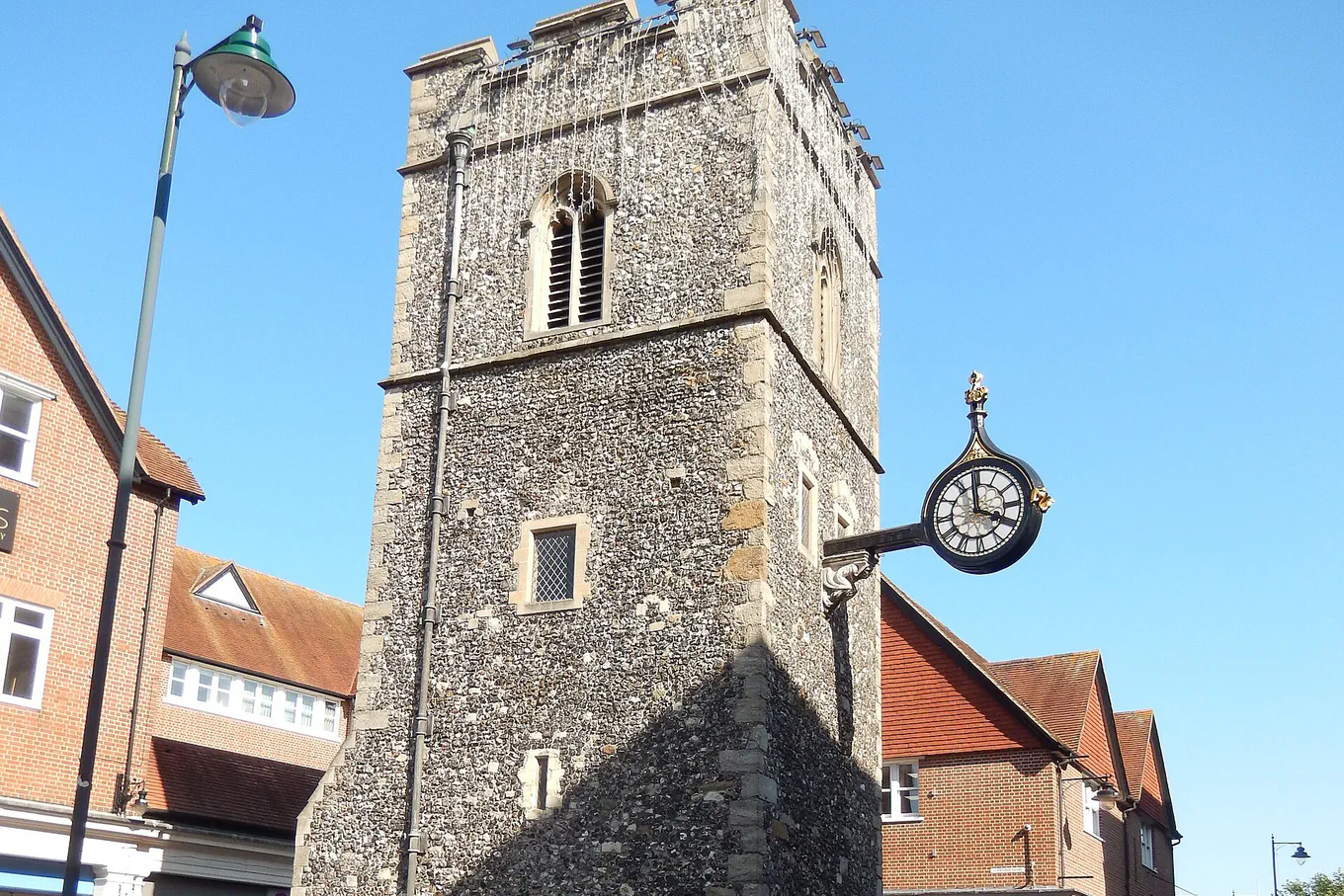
Stand here. St George’s Tower, on St George’s Street at the eastern end of the Parade, all that remains of the church where Marlowe was baptised.
Doctor Faustus, the first play made from the Faust legend of a scholar’s dealings with the devil, was written by a Canterbury shoemaker’s son. Christopher Marlowe was baptised at St George’s Church in 1564, in the parish where his father kept his shop. A scholarship took him to the King’s School by the age of 14. At 29, he was stabbed above the right eye and killed instantly. On 1 June 1942, German bombs badly damaged the church of his baptism. Only its clock tower survived.
5 Powell and Pressburger’s A Canterbury Tale among the bomb sites
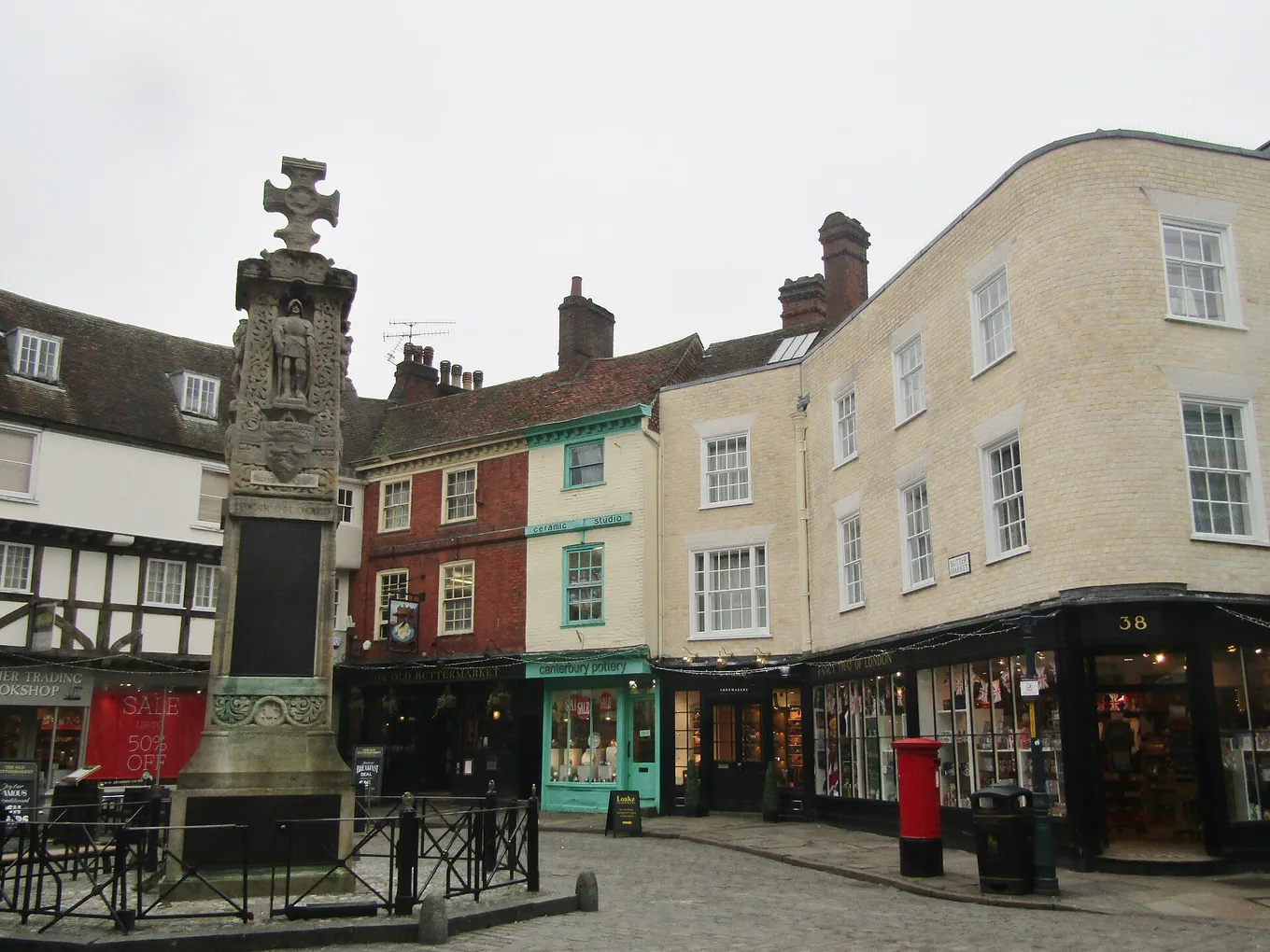
Stand here. The Buttermarket, the High Street, and Rose Lane, where Powell and Pressburger filmed among the city’s wartime bomb sites.
In 1944, Michael Powell and Emeric Pressburger released A Canterbury Tale, shot across Kent. Its three young people, hunting a mystery attacker called the “glue man”, arrive in a Canterbury devastated by wartime bombing. Those bomb sites were real. Much of the cathedral wasn’t. With its stained glass taken down, it couldn’t be used for filming, so parts were rebuilt in a studio. British critics panned the film, and few saw it. The British Film Institute restored it in the late 1970s, and it was hailed as a masterwork.
Pack nothing. Leave Friday.
Every Friday, I write a free letter, Journey, that takes us on a trip through places, stories, and ideas.
The Canterbury Tales(Geoffrey Chaucer, 1387–1400). A poem, left unfinished. About thirty pilgrims tell stories on the road from Southwark to Becket’s shrine in Canterbury Cathedral.
Murder in the Cathedral(T. S. Eliot, 1935). A play about Becket’s death, first performed in the cathedral’s Chapter House. The knights justify the murder in strikingly contemporary prose.
David Copperfield(Charles Dickens, 1850). A novel. The House of Agnes is said to be the house where the Wickfields live.
Of Human Bondage(W. Somerset Maugham, 1915). A novel that describes Maugham’s unhappy time as a boarder at the King’s School, in a Canterbury renamed Tercanbury.
Films to watch before you visit Canterbury
The Canterbury Tales(Pier Paolo Pasolini, 1972). A film of Chaucer’s stories. Unlike the poem, it ends with the pilgrims arriving at Canterbury Cathedral.
A Canterbury Tale(Michael Powell and Emeric Pressburger, 1944). A film, shot around the cathedral and among the bomb sites of the High Street, Rose Lane, and the Buttermarket.
Becket(Peter Glenville, 1964). A film. A historical drama about Henry II and his friend-turned-bishop Thomas Becket, adapted from Jean Anouilh’s play. Henry’s barons go to Canterbury and put Thomas to the sword.
Questions
Is Becket’s shrine still in Canterbury Cathedral?
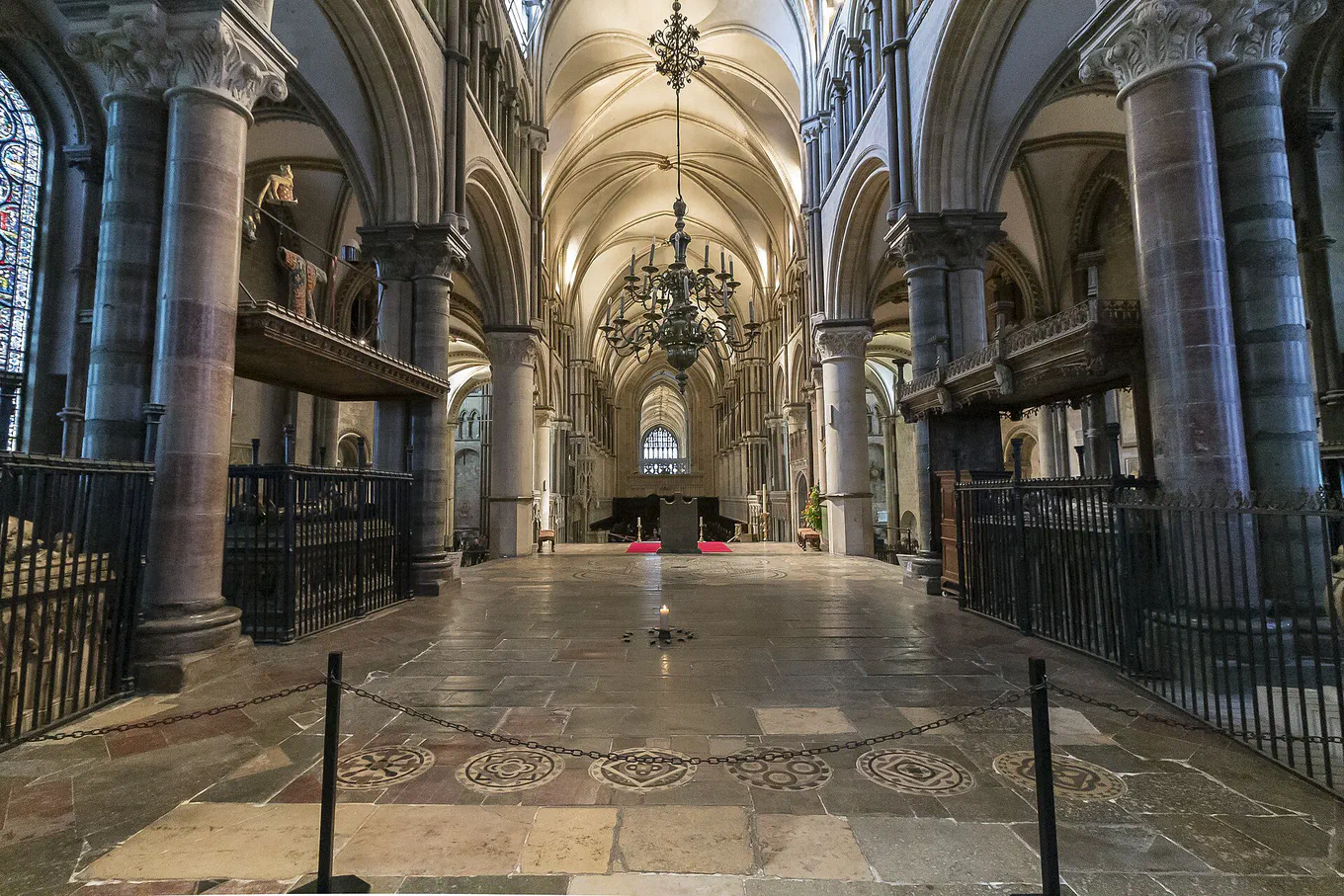
No. The shrine built for Becket in the Trinity Chapel was completed in 1220, and Chaucer’s fictional pilgrims were heading for it. Henry VIII destroyed it in 1538, as part of his reforms of the Church in England. The Trinity Chapel, where the shrine stood, is still part of the cathedral.
Did Henry II really say “Will no one rid me of this turbulent priest?”
Probably not in those words. The exact wording is in doubt, and several versions were reported, but the famous line was invented in 1740. What isn’t in doubt is what followed. On 29 December 1170, four of Henry’s knights killed Becket in Canterbury Cathedral.
Is Canterbury Cathedral a World Heritage Site?
Yes. Canterbury Cathedral, St Augustine’s Abbey, and St Martin’s Church are together part of a World Heritage Site. St Martin’s was Queen Bertha’s chapel and Augustine’s first headquarters, he founded the cathedral in 597, and the monastery he founded became St Augustine’s Abbey, where he was first buried.