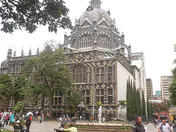
Caracas, Venezuela, Capital District, South America
Pixar’s Up gets me every time, and its Paradise Falls was inspired by Angel Falls in Venezuela. So, in my head, Venezuela is somewhere you get to by tying balloons to your house. To be clear, Caracas has more to it than that.
— Nick
Caracas is the capital and largest city of Venezuela, set in a valley and cut off from the Caribbean by the mountains of El Ávila. Diego de Losada founded it on 25 July 1567. Its stories here are Bolívar defying an earthquake, a revolutionary handed to Spain by his own officers, Calder’s sculptures tuning a concert hall, an orchestra born in a garage, and a skyscraper where thousands lived without lifts.
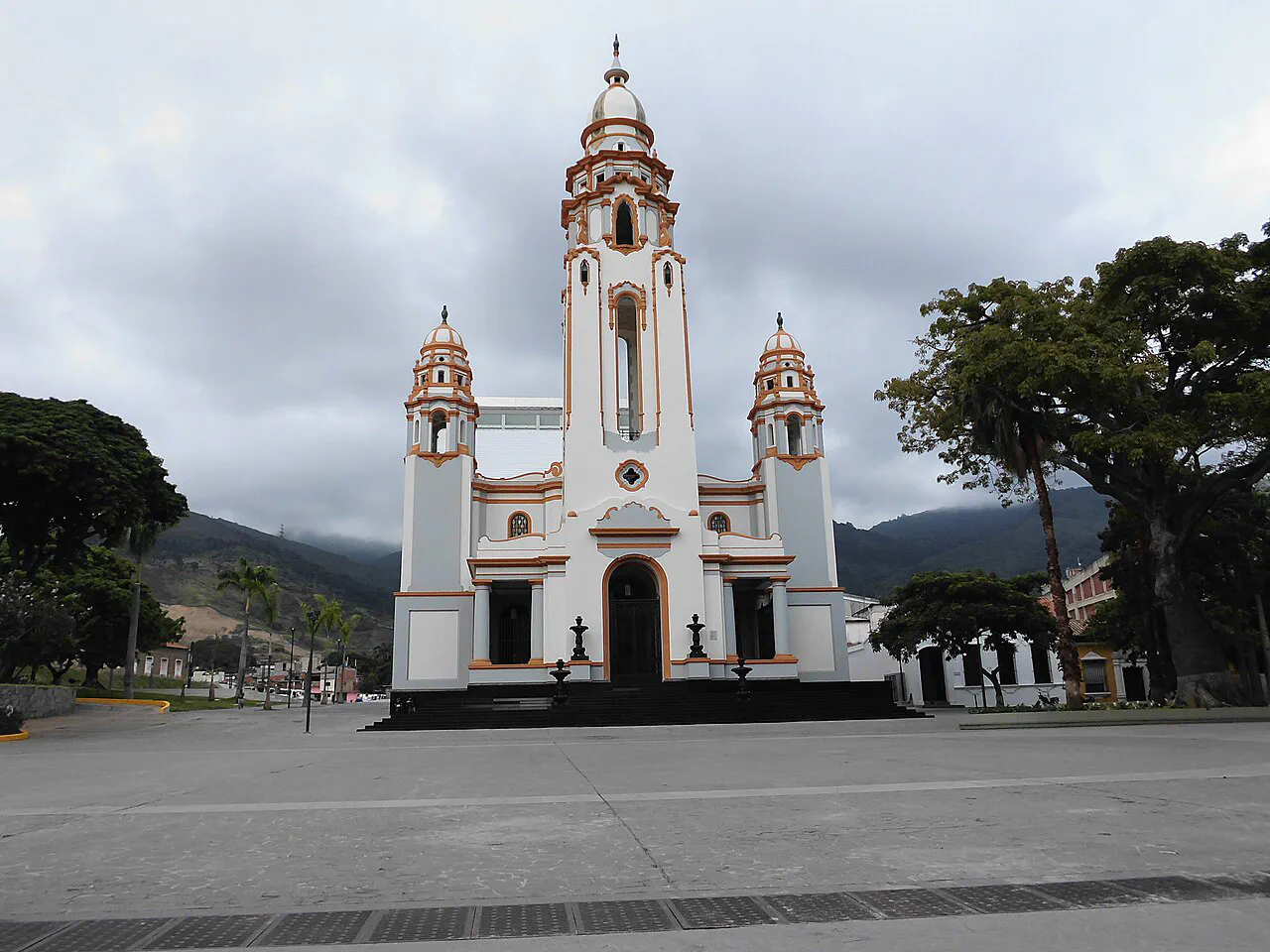
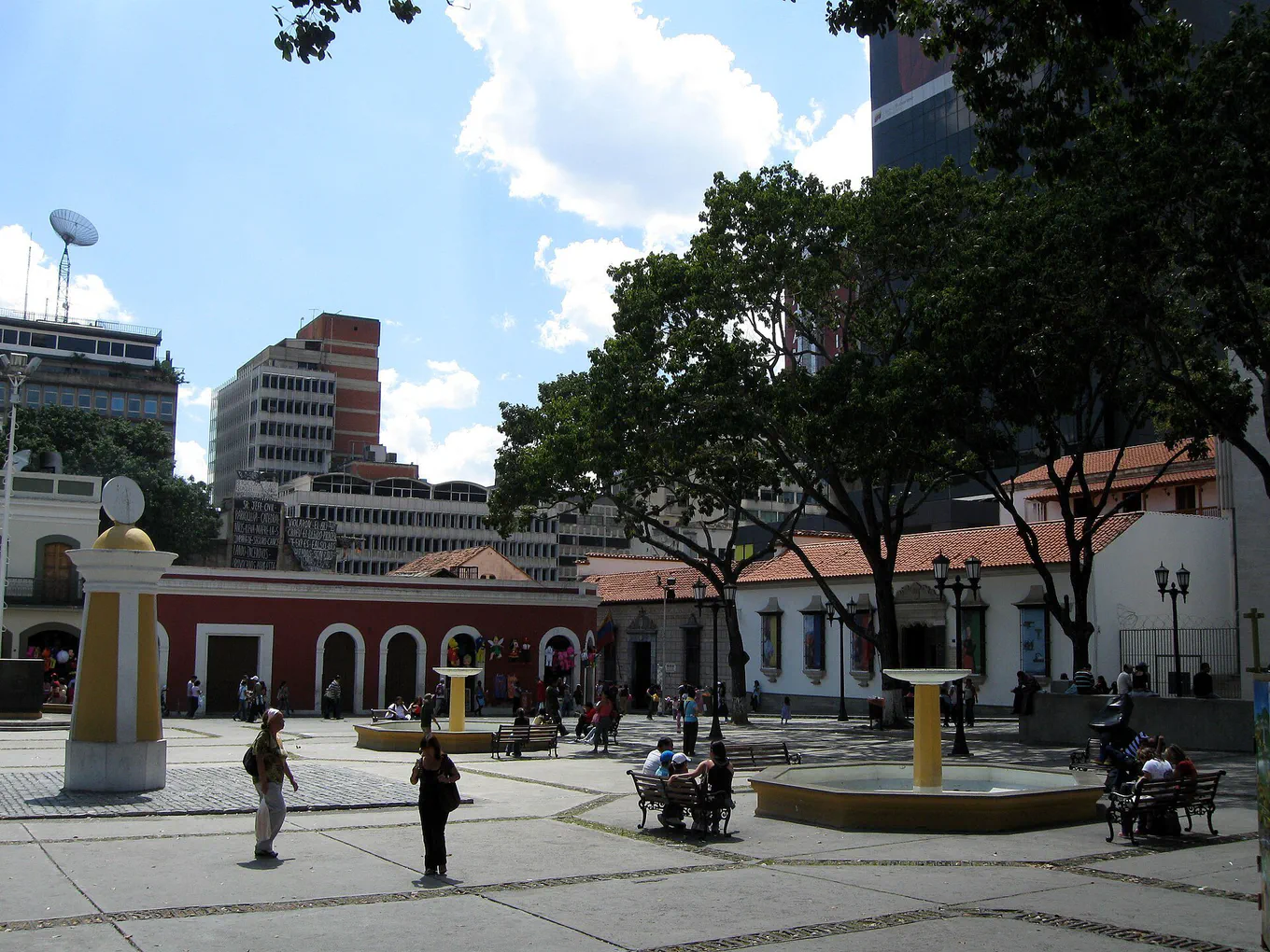
The Liberator, Simón Bolívar, was born just off this square. On Maundy Thursday, 26 March 1812, an earthquake almost totally destroyed Caracas, and royalists called it God’s punishment for breaking with Spain. A royalist witness saw the church of San Jacinto collapse, climbed over the ruins, and found Bolívar on top of them. By that witness’s account, Bolívar told him, “We will fight nature itself if it opposes us, and force it to obey.” But people believed the royalists, and within four months the young republic had fallen.
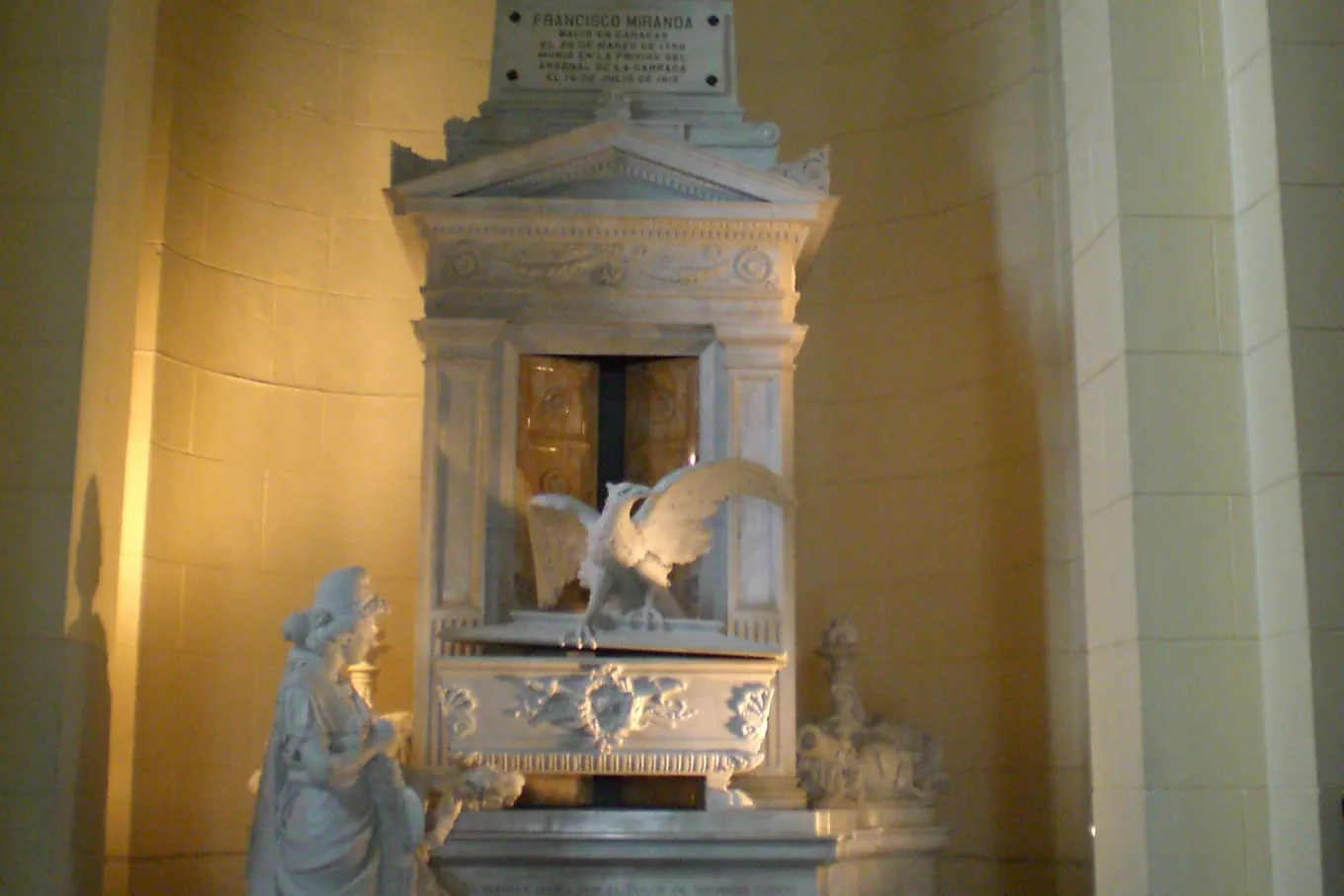
2 Francisco de Miranda’s empty tomb in the National Pantheon
Stand here. The National Pantheon, on the northern edge of the old town. Bolívar’s sarcophagus stands where the altar would be, and Miranda’s tomb is empty.
On the Arc de Triomphe in Paris, the carved names include Francisco de Miranda, who fought in the American and French Revolutions. In Venezuela, he was given dictatorial powers in the new republic, and when it collapsed in July 1812, he signed an armistice with Spain. His own officers, Bolívar among them, called it treason and handed him to the Spanish, who gave Bolívar a passport for it. Miranda died in a prison outside Cádiz and was buried in a mass grave. His tomb here is empty.
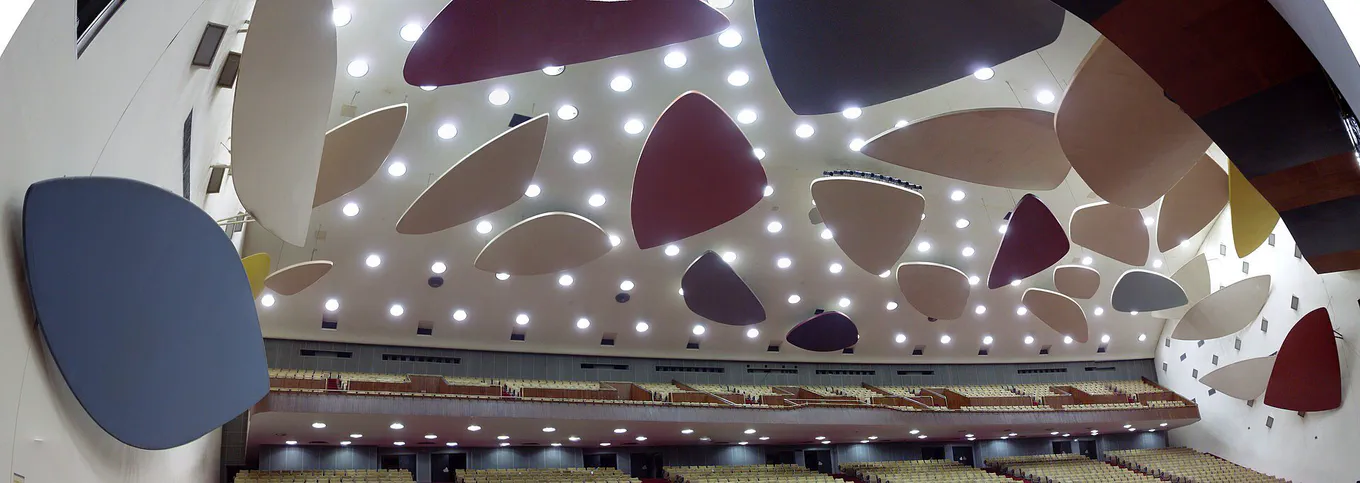
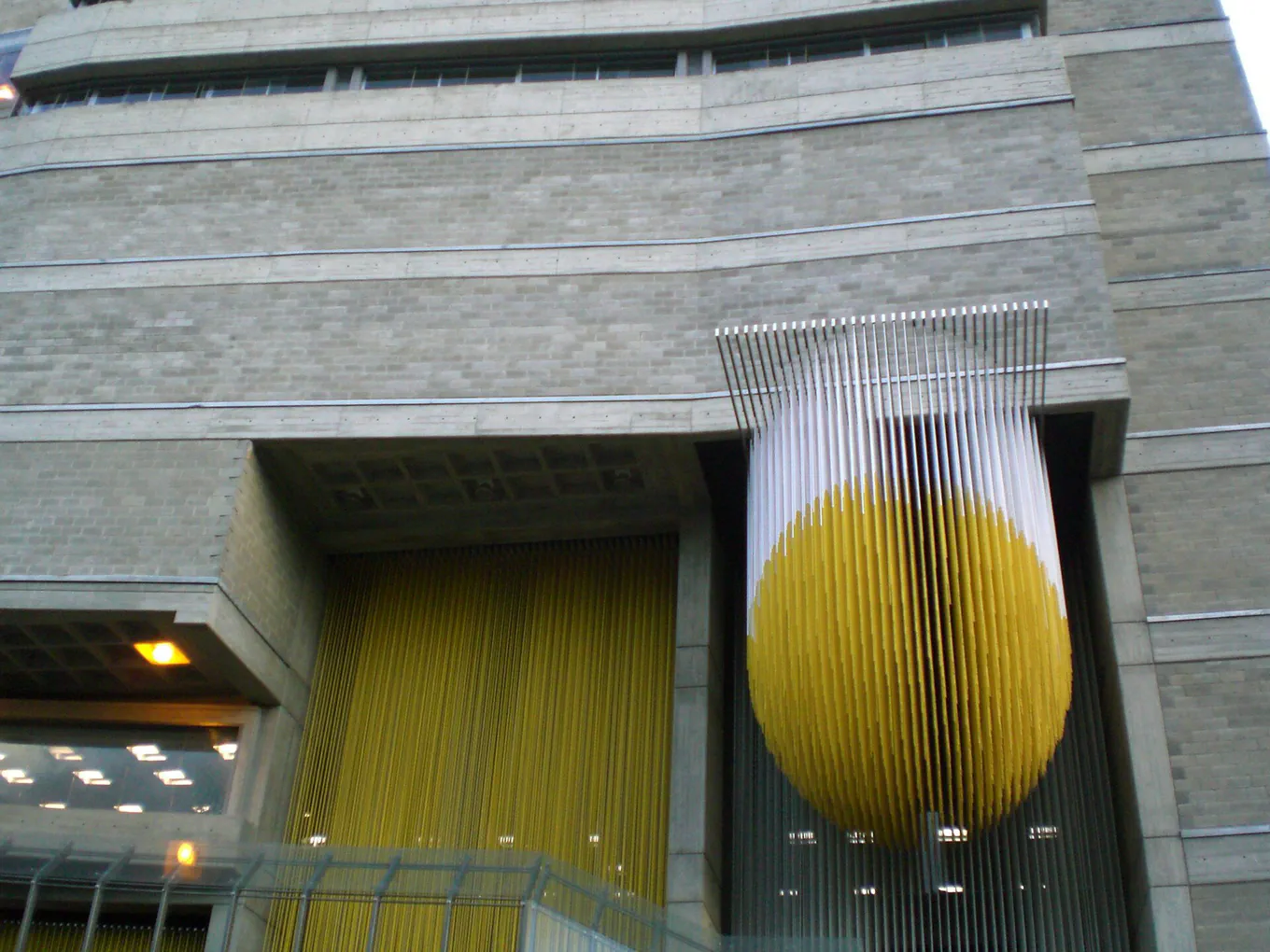
3 Alexander Calder’s Floating Clouds in the Aula Magna
Stand here. The Aula Magna, the great hall of the Central University of Venezuela, where the 31 clouds still hang from ceiling and walls.
Alexander Calder’s clouds were never meant to hang in here. He was designing a large mobile for the covered plaza outside. But acoustic engineers warned that the hall, shaped like a conch shell, would sound poor without extensive panelling. So in 1953, Calder’s shapes came inside as 31 acoustic clouds. In the 1980s, the acoustics engineer Leo Beranek, who contributed to the project, ranked the hall among the world’s five best concert halls. Calder saw his clouds only once, yet he is said to have named them his favourite of all his works.
4 José Antonio Abreu and eleven teenagers in a Caracas garage
Stand here. The garage isn’t identified. Since 2011, El Sistema has been based at the National Center for Social Action for Music, by Los Caobos Park.
Gustavo Dudamel, now music and artistic director of the New York Philharmonic, began the violin in El Sistema, which started in an underground garage in Caracas. There, on 12 February 1975, the musician José Antonio Abreu held a rehearsal for an all-Venezuelan orchestra, in a culture where orchestral players were almost always foreign. Eleven teenagers came. Reportedly, 25 came to the next, 46 to the one after, and 75 within a month. By 2015, official figures counted 700,000 young musicians. Dudamel has said music saved his life.
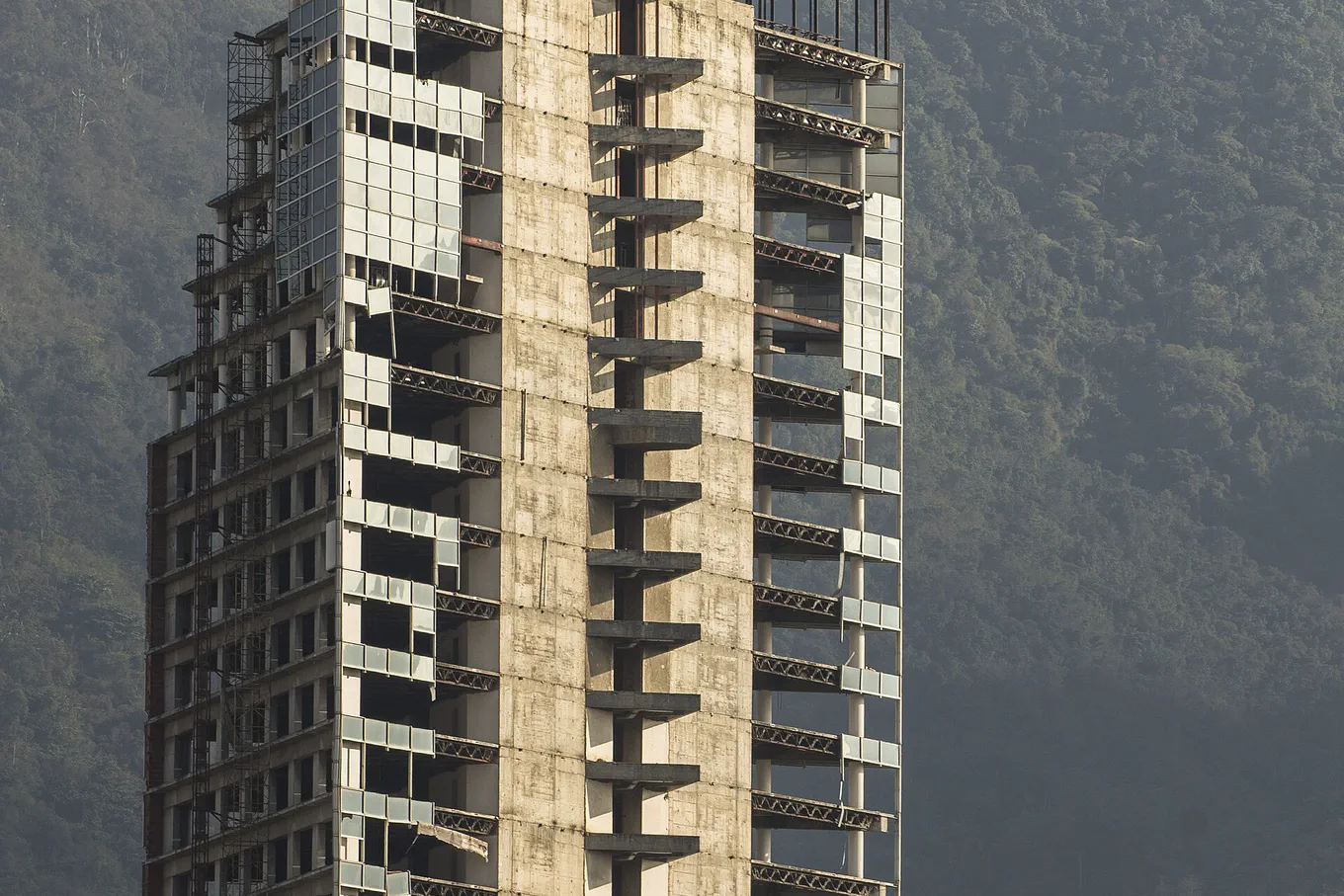
5 The Tower of David, the unfinished skyscraper of Caracas
Stand here. Downtown Caracas, where the Centro Financiero Confinanzas still stands unfinished. Its top five floors partly collapsed in 2018.
Homeland set its episode “Tower of David” in this building. The tower was meant to be a 45-storey financial centre, nicknamed after its main investor, David Brillembourg. He died, and in 1994 a banking crisis stopped the work. Thirteen years later, squatters moved in. At the peak, 5,000 people lived there, with barbers, beauty salons, and an unlicensed dentist. There were no lifts, so motorcycles ran up the first ten floors and the stairs did the rest. The government moved everyone to new homes, and the tower was abandoned again.
Pack nothing. Leave Friday.
Every Friday, I write a free letter, Journey, that takes us on a trip through places, stories, and ideas.
Torre David: Informal Vertical Communities(Alfredo Brillembourg and Hubert Klumpner, eds., 2012). An architectural study, with photographs by Iwan Baan, of a year spent studying life inside the Tower of David.
La hija de la española(Karina Sainz Borgo, 2019). A novel. Sainz Borgo’s first, it is set in a Caracas sunk in political violence, after Adelaida Falcón’s mother dies following a long illness.
Ídolos rotos(Manuel Díaz Rodríguez, 1901). A novel. On first meeting Caracas, its protagonist dislikes the dirty streets and the city’s poor architectural taste, then mounts an unsuccessful exhibition in a café near Plaza Bolívar.
Films to watch before you visit Caracas
The Revolution Will Not Be Televised(Kim Bartley and Donnacha Ó Briain, 2003). A documentary, filmed on the streets of Caracas as the coup of 11 April unfolded, and later inside Miraflores, the presidential palace.
Homeland, “Tower of David” (Showtime, 2013). A television episode, set in the Tower of David in downtown Caracas, though filmed in Puerto Rico.
Pelo malo(Bad Hair) (Mariana Rondón, 2013). A film. A young boy, Junior, growing up in the overcrowded housing projects of Caracas.
Questions
Where is Simón Bolívar buried?
In the National Pantheon in Caracas, where his bronze sarcophagus takes the place of the altar. Bolívar died near Santa Marta on 17 December 1830, and his remains were moved to the Pantheon in October 1876. His heart stayed in Santa Marta.
Where can you see Calder’s clouds in Caracas?
In the Aula Magna, the great hall of the Central University of Venezuela, on its Ciudad Universitaria campus. The 31 panels Calder designed in 1953 hang from the ceiling and walls and shape the sound. The campus, designed by Carlos Raúl Villanueva, has been a UNESCO World Heritage Site since 2000.
What is the mountain above Caracas?
El Ávila, officially Waraira Repano National Park, after its indigenous name. It rises to 2,740 metres north of the city and separates Caracas from the Caribbean Sea. It was declared a national park in 1958, and a cable car climbs from the city to about 2,135 metres.