I love that the British, in 1741, were already striking medals showing Cartagena’s defender defeated BEFORE it happened. Very British for the time, but it turned out that the ladders we’d bought for storming the fortress were ten feet too short. Very British for now. Maybe we should have seen it as a sign.
— Nick
Cartagena is a port on Colombia’s Caribbean coast, founded by the Spanish in 1533 and now the capital of Bolívar Department. Eleven kilometres of walls, built between 1614 and 1796 against pirates, ring its old centre. Its stories here are Francis Drake’s ransom, a one-eyed admiral, a priest who met the slave ships, a girl’s hair in a convent crypt, and a fictional lover’s wait of fifty-one years.
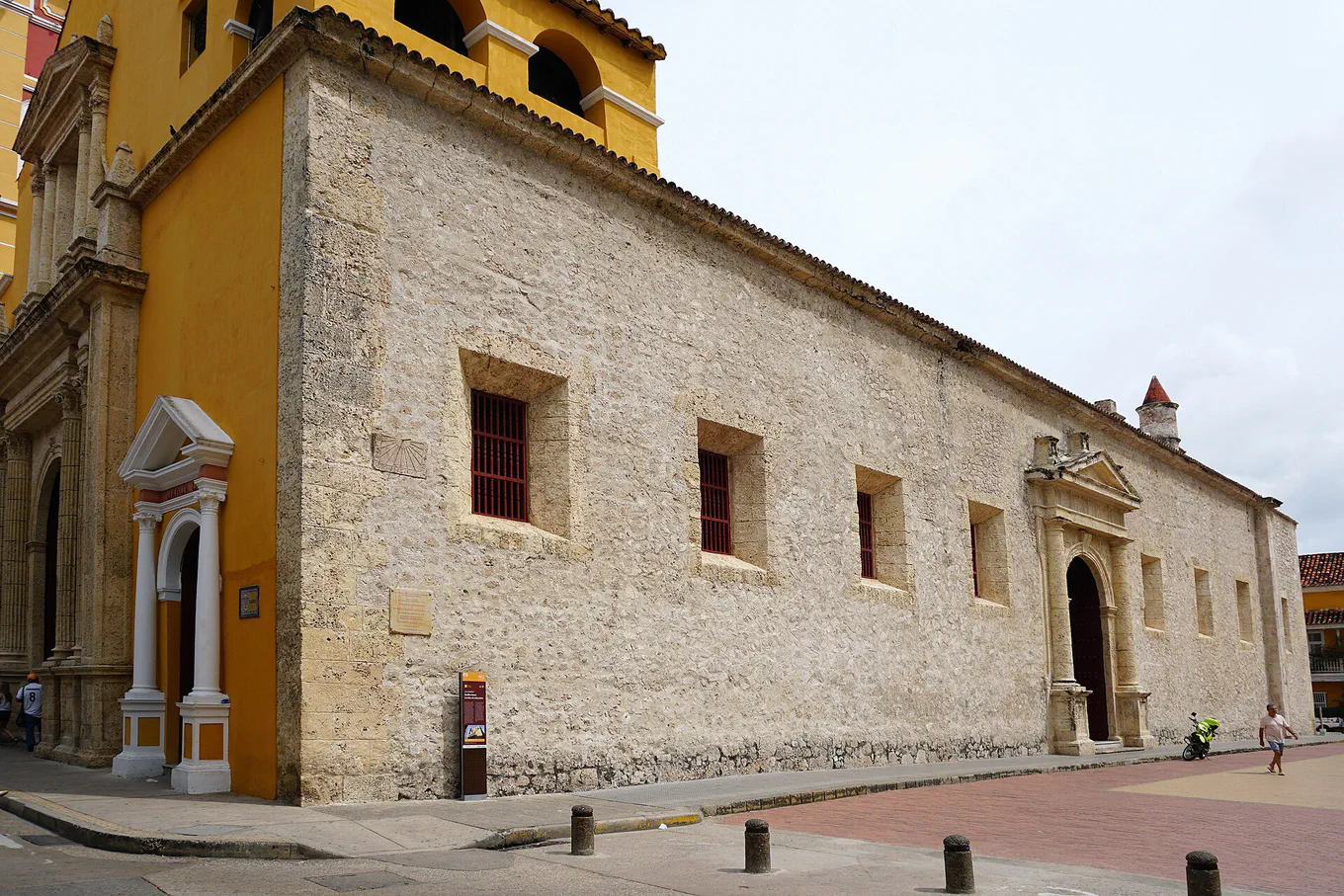
Stand here. Cartagena Cathedral, beside Parque de Bolívar in the historic centre. Its original structure survives almost unchanged, with the tower and dome refurbished in 1908.
In February 1586, Sir Francis Drake, the privateer who sailed round the world, took Cartagena and demanded 400,000 pesos to spare it. The Spanish offered 25,000. So Drake began burning the city, 250 houses and public buildings in all, and threatened the unfinished cathedral with cannon. His first warning shot knocked down a column, which took two more with it. He settled for 107,000 pesos and, with fever spreading, sailed. That same year, Spain commissioned its most famous military engineer to fortify the city.
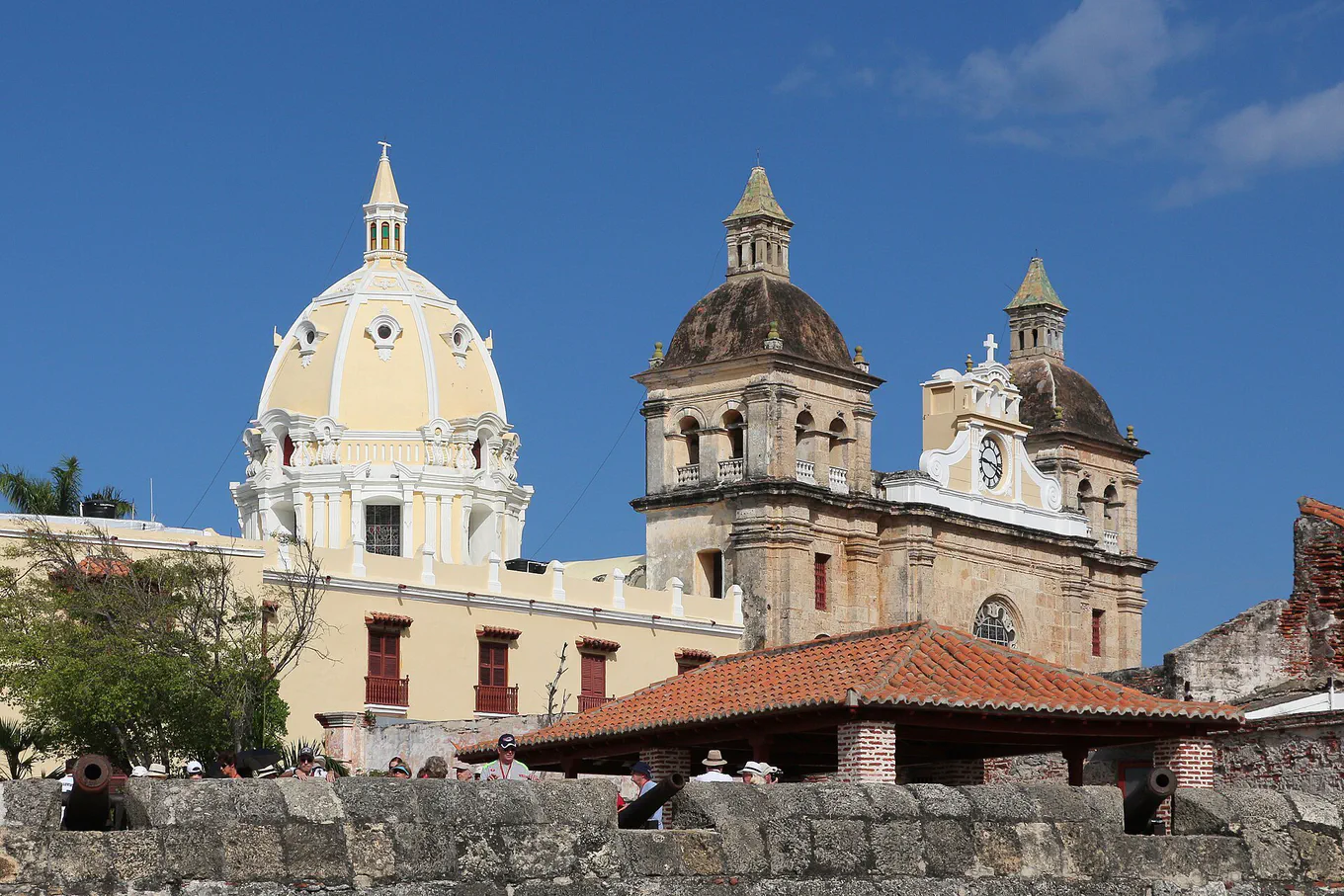
Saint Peter Claver is the patron saint of slaves and Colombia. A Spanish Jesuit, he came to Cartagena in 1615, when 10,000 enslaved Africans arrived each year. He met them aboard the ships, often among the first people they saw, and signed his final vows “servant of the Africans forever”. But for his last four years, too ill to leave his room, he was largely forgotten, and starved and abused by the ex-slave hired to care for him. He never complained. When he died, pilgrims stripped his room bare for relics.
3 Blas de Lezo and the medals Britain made too soon
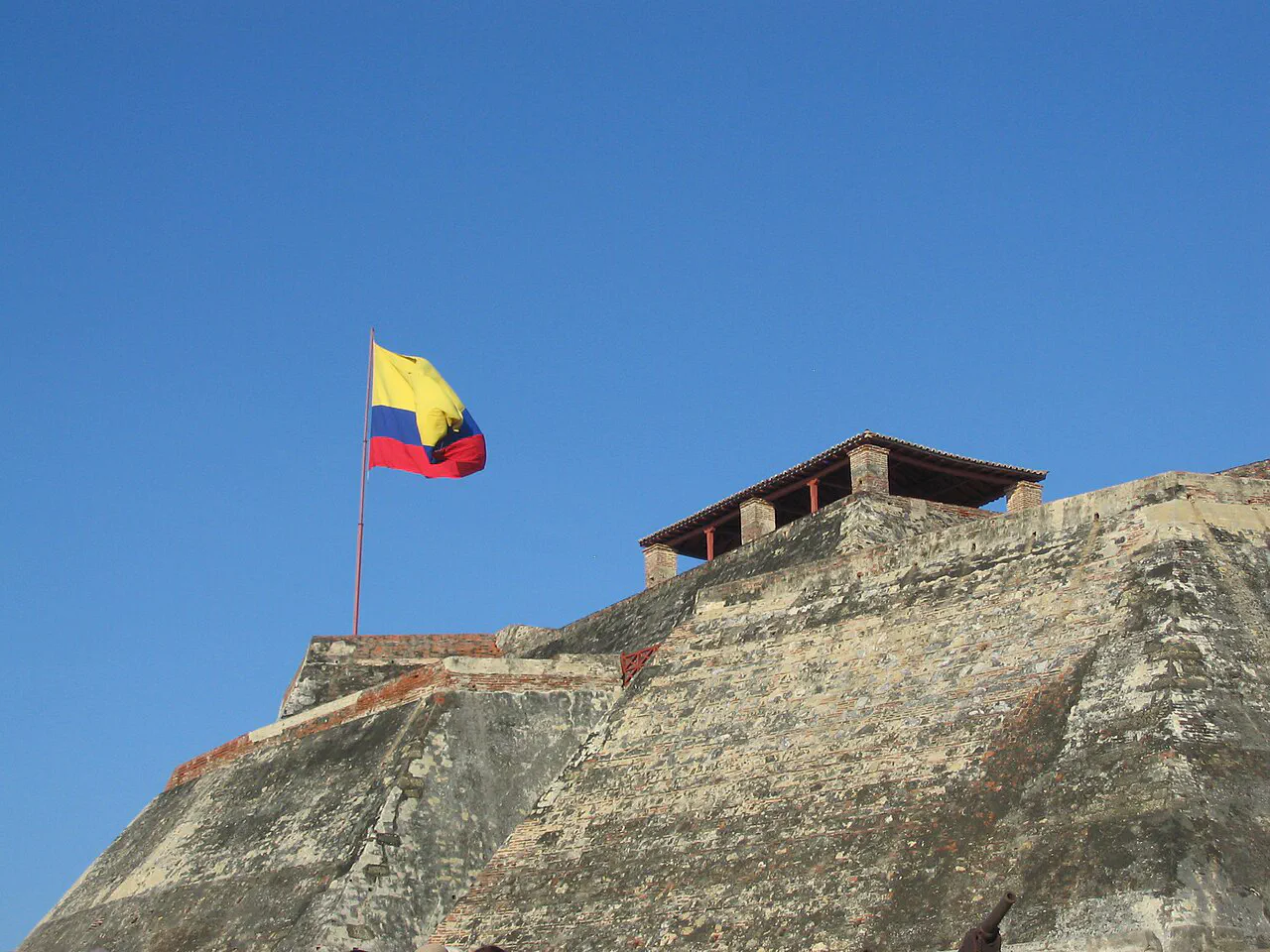
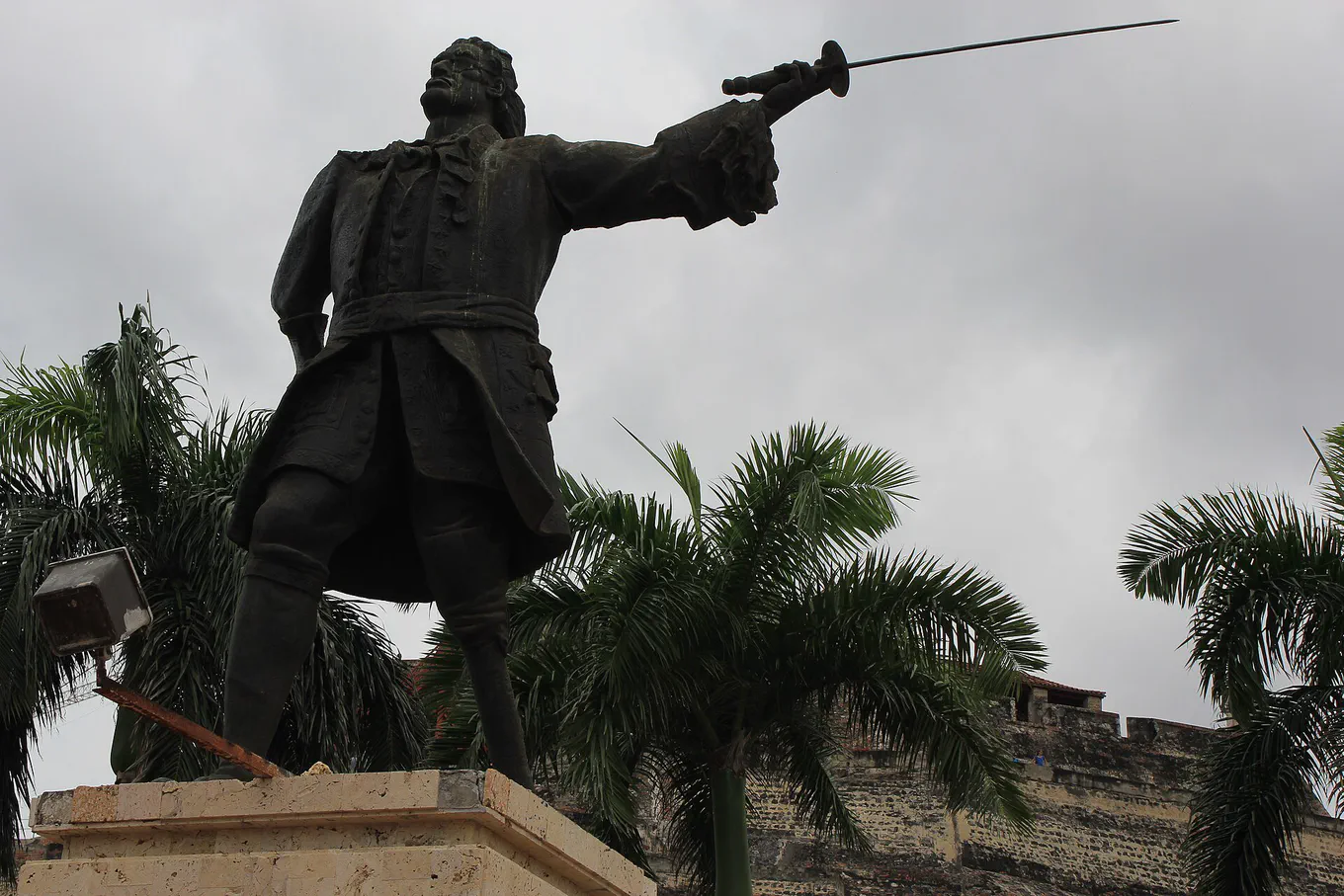
Stand here. Castillo San Felipe de Barajas, the fortress on Cerro San Lázaro, built by enslaved Africans from 1639. A modern statue of Lezo stands in front.
When 124 British ships came for Cartagena in 1741, its defender, Admiral Blas de Lezo, had lost an eye, his left leg below the knee, and, at the siege of Barcelona, the use of his right arm. The British sent word home that they were inside the inner bay, and button-makers there were already making victory medals, one showing Lezo “defeated”. But the ladders for storming San Felipe were ten feet too short, and disease drove the British away. Lezo died that year, and his grave has never been found.
4 García Márquez and the girl in the Santa Clara crypt
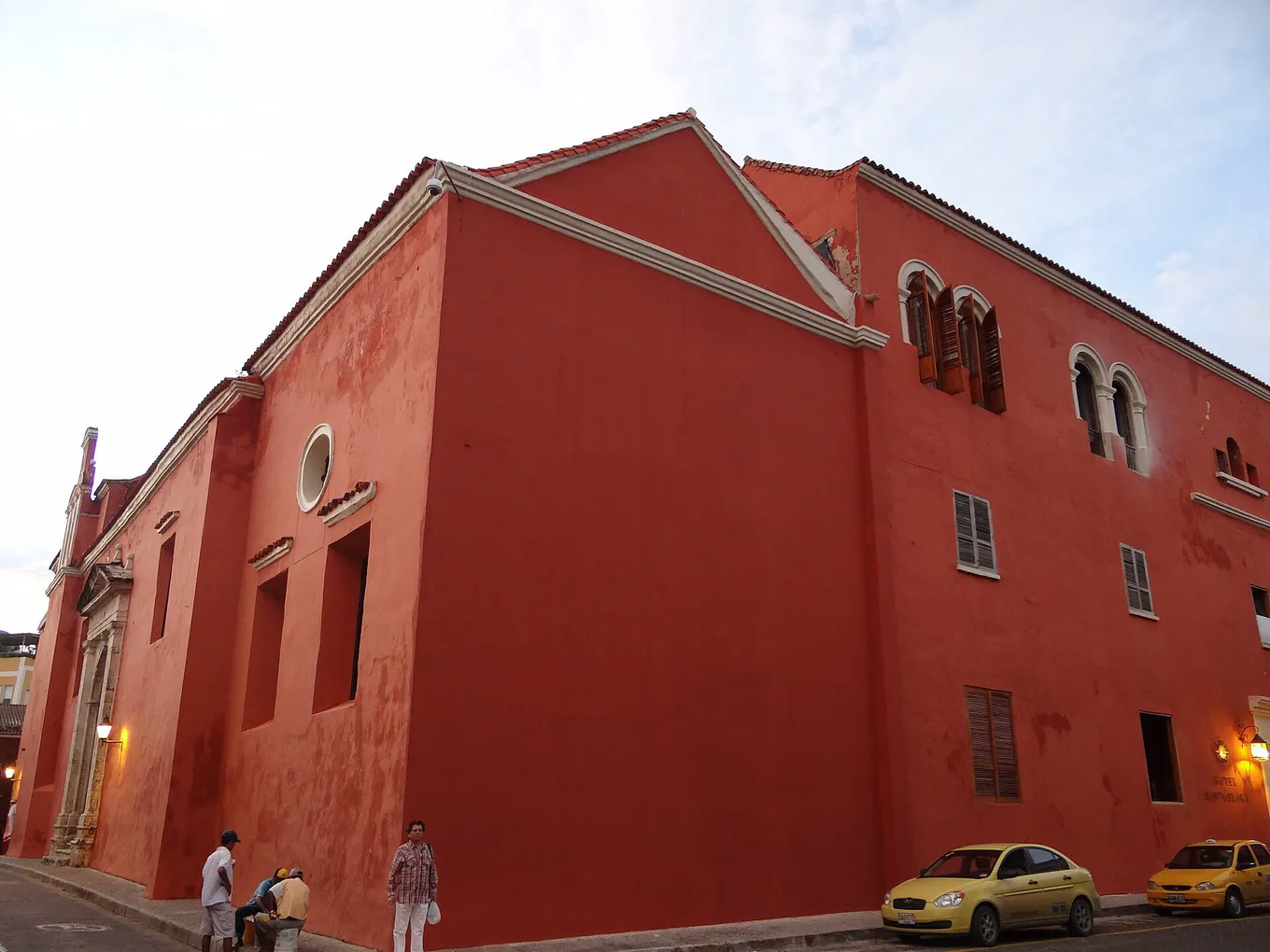
Stand here. The old convent of Santa Clara, on Calle del Torno, now a hotel. García Márquez had a house built across the road.
Gabriel García Márquez, the author of One Hundred Years of Solitude, began as a reporter in Cartagena. On 26 October 1949, his editor sent him to watch the crypts of Santa Clara being emptied. By his own account, one tomb spilled out a girl’s copper-coloured hair, twenty-two metres long. The stone gave only a name, Sierva María de Todos los Ángeles. He remembered his grandmother’s legend of a twelve-year-old marquise who died of rabies. Forty-five years later, she became the heroine of his novel Of Love and Other Demons.
5 Love in the Time of Cholera’s Arcade of the Scribes
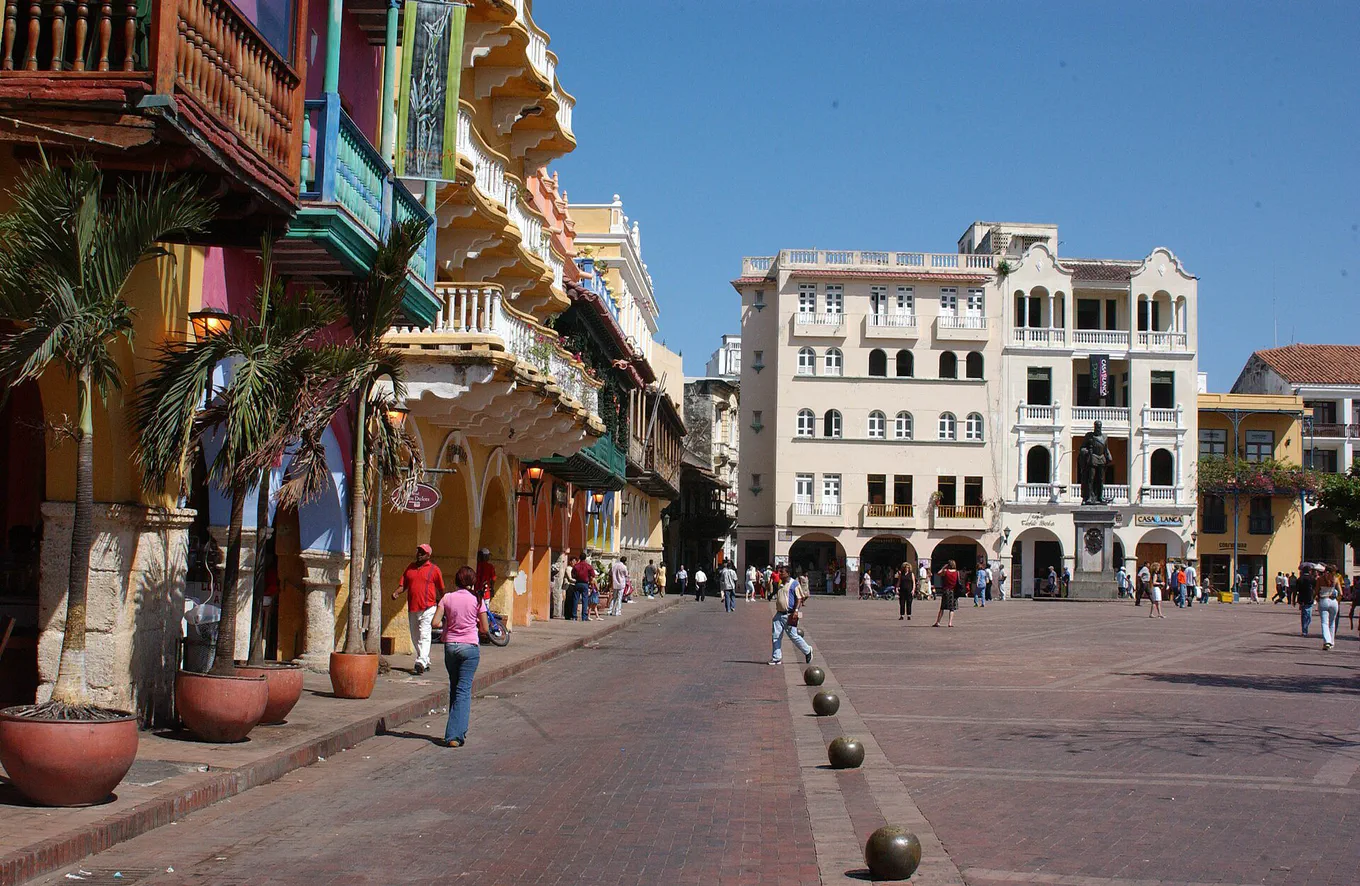
Stand here. The Portal de los Dulces, the arcade across the Plaza de los Coches from the Clock Tower gate in the city wall.
The port city of Love in the Time of Cholera is never named, and García Márquez’s 1985 novel draws on Cartagena and Barranquilla. But its Arcade of the Scribes is identified with the Portal de los Dulces, and there Florentino Ariza writes hundreds of letters to Fermina Daza. Their young love was drawn from the author’s own parents. In the novel, though, Fermina turns Florentino down and marries another man. He swears to stay faithful and wait for her. The wait lasts fifty-one years, nine months, and four days.
Pack nothing. Leave Friday.
Every Friday, I write a free letter, Journey, that takes us on a trip through places, stories, and ideas.
Love in the Time of Cholera(Gabriel García Márquez, 1985). A novel. Its Arcade of the Scribes, where Florentino writes to Fermina, is the Portal de los Dulces.
Of Love and Other Demons(Gabriel García Márquez, 1994). A novel. In 18th-century Cartagena, a marquis’s daughter bitten by a rabid dog is sent to the Santa Clara convent.
The General in His Labyrinth(Gabriel García Márquez, 1989). A novel. The General prepares for his journey towards the port of Cartagena, meaning to leave Colombia for Europe.
Films to watch before you visit Cartagena
Love in the Time of Cholera(Mike Newell, 2007). A film of the novel. Much of it takes place in Cartagena’s historic walled city.
Always a Witch(Ana María Parra, 2019). A Colombian TV series. Its plot follows Carmen Eguiluz, a witch and slave from 1646, and is set in both 17th-century and present-day Cartagena.
Romancing the Stone(Robert Zemeckis, 1984). A romantic comedy-adventure film in which Joan must bring a map to the Colombian coastal city of Cartagena as a ransom, and hands it over there.
Questions
Where are Saint Peter Claver’s remains?
In the Church of San Pedro Claver in Cartagena, the church of the Jesuit house where he lived, renamed in his honour. His bones lie under an altar. In May 2022, the church dedicated a new two-storey mausoleum in the space behind his resting place.
Where is Gabriel García Márquez buried?
Part of his ashes rest in Cartagena, the city where he began his writing career. In May 2016, a bronze bust of him by the British artist Katie Murray was dedicated in the colonial-era Cloister of La Merced, on a stone that holds them. The rest stayed in Mexico, where he lived for decades and died in 2014.
Was Romancing the Stone filmed in Cartagena?
No. In Robert Zemeckis’s 1984 film, starring Kathleen Turner, Joan is told to bring a map to Cartagena as a ransom. But it was shot in the United States and Mexico, at places including Veracruz and Xalapa, with interiors filmed in Mexico City.