So much of what we all do today is performative… including me writing these words. What blows my mind is that Nek Chand inspected roads by day and spent eighteen years secretly building a garden out of broken sinks and bangles. Are real achievements in life the ones we don’t need to tell anyone else about?
— Nick
Chandigarh, in north-western India, near the foothills of the Himalayas, is the shared capital of Punjab and Haryana. It was built after Partition gave Lahore, the old capital, to Pakistan, and inaugurated in 1953. Its stories are an architect lost in a plane crash, a roads inspector’s secret garden, a giant hand built to turn in the wind, a sprinter who looked round, and a chair the government threw out.
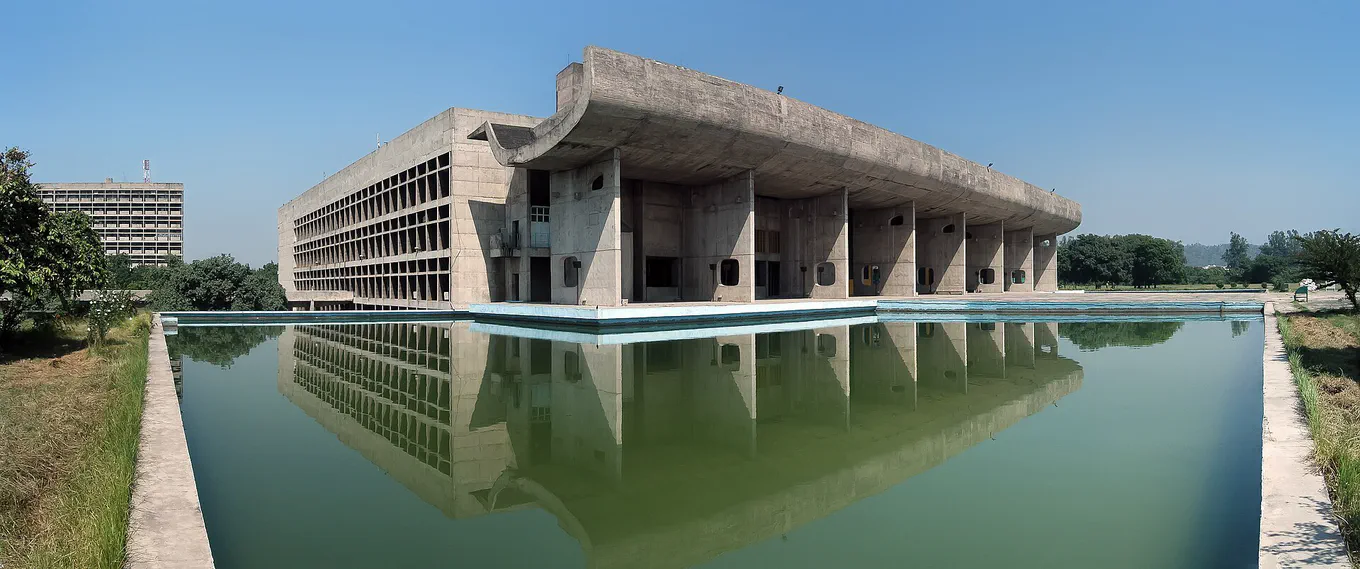
Le Corbusier built Chandigarh’s Capitol Complex, but the city’s first chief architect was Matthew Nowicki. Nehru wanted a new town “unfettered by the traditions of the past”, and Nowicki, a Polish architect working in the United States, drew a first design for the Capitol Complex. Then, returning from India in 1950, he was killed when his plane crashed in the Egyptian desert. Two officials went to Europe for replacements and found Le Corbusier. The buildings in Sector 1 are his, not Nowicki’s.
2 Nek Chand’s secret Rock Garden in Chandigarh
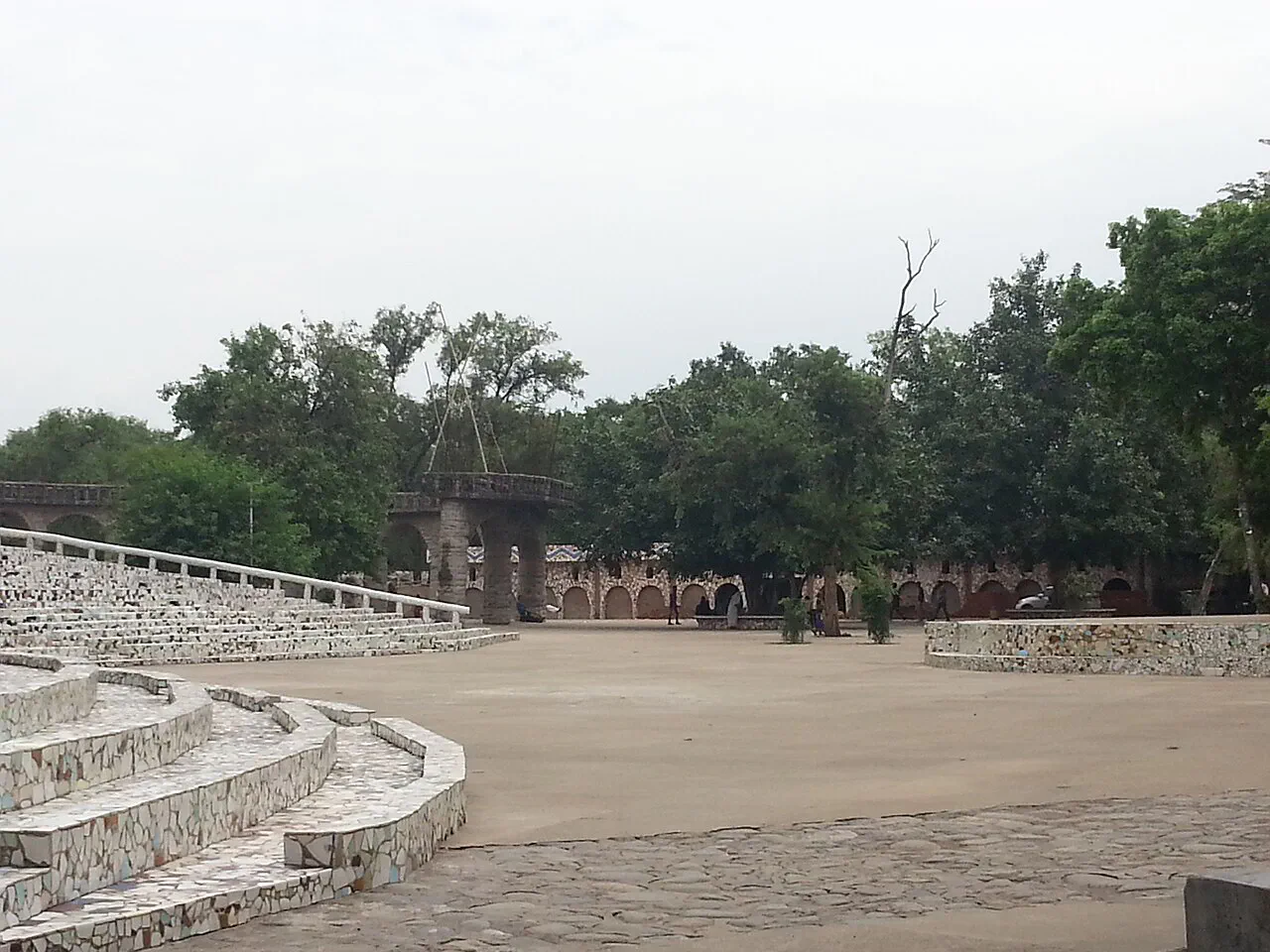
Stand here. The Rock Garden, near Sukhna Lake. It draws 3,000 to 4,000 visitors a day.
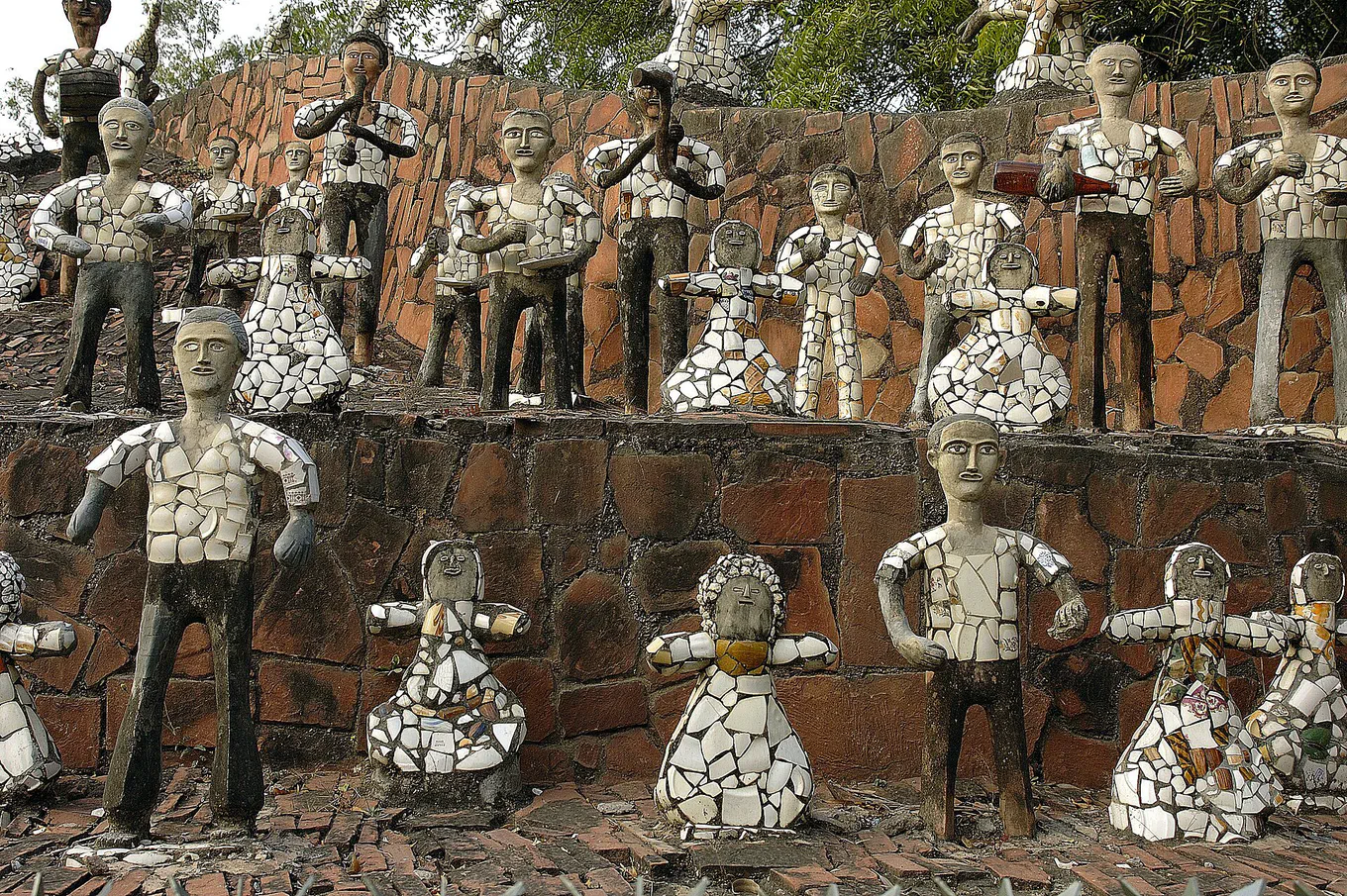
Nek Chand inspected roads for the Public Works Department, and from 1957, in his spare time, he made a garden in a gorge where nothing could be built. He filled it with bottles, bangles, tiles, sinks, and broken pipes from demolition sites. The work was illegal, so he hid it. When the authorities found it in 1975, eighteen years later, it covered twelve acres and faced demolition. But the public took his side. The city paid him a salary, gave him fifty labourers, and made him “Sub-Divisional Engineer, Rock Garden”.
3 Le Corbusier’s Open Hand, built twenty years too late
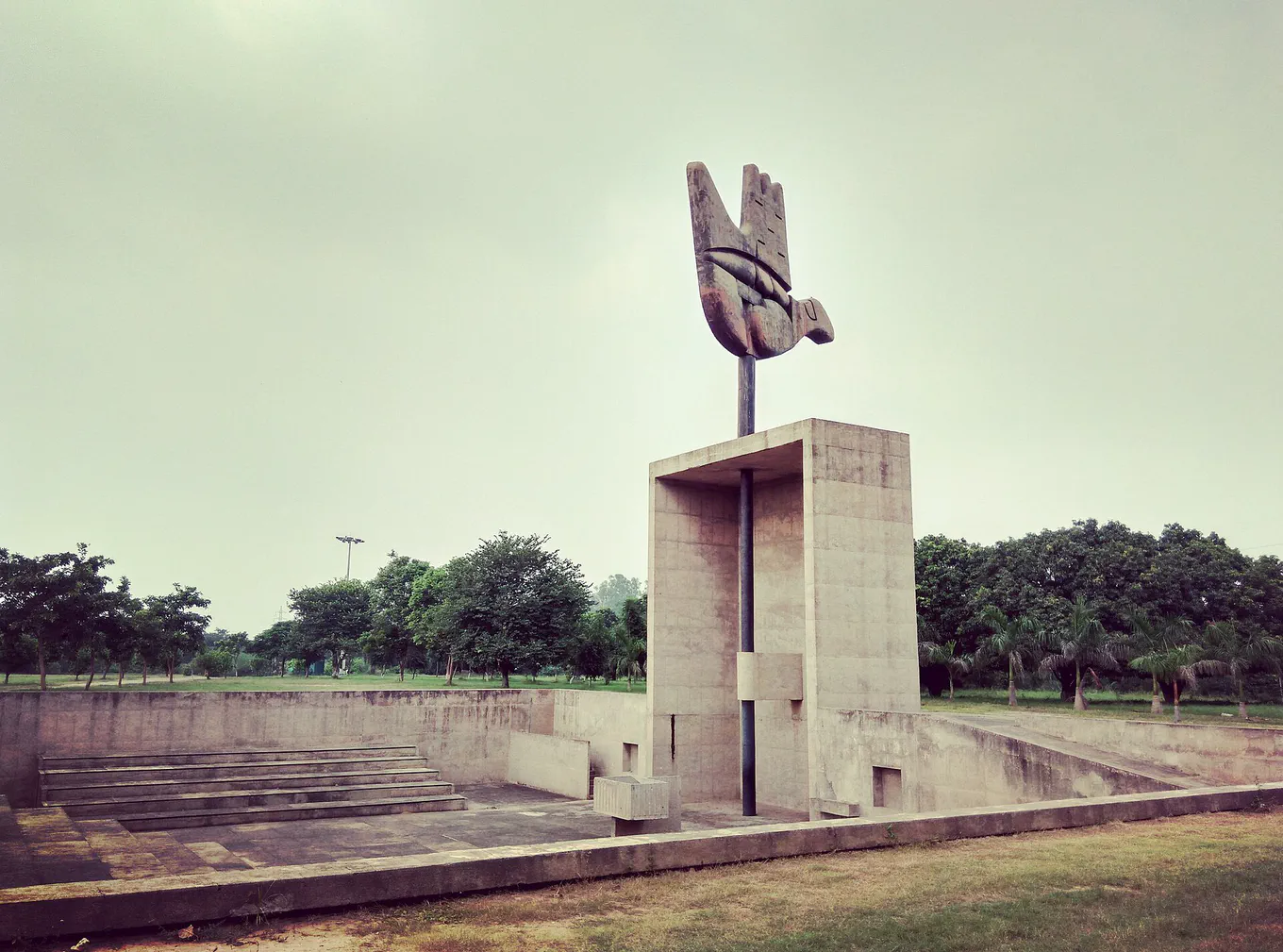
Stand here. The Open Hand Monument, in the Capitol Complex, Sector 1. It stands 26 metres high and is the emblem of Chandigarh’s government.
For Le Corbusier, an open hand meant “peace and reconciliation”. It was, he said, “open to give and open to receive”. He wanted a giant metal one at the Capitol Complex, built to turn in the wind. Nehru liked the idea, and Le Corbusier asked André Malraux to have it made as a gift from France. But the hand wasn’t built in his lifetime. A workshop in Nangal cast it by hand in sheet metal, and in 1985, twenty years after his death, his dream project went up.
To play Milkha Singh in Bhaag Milkha Bhaag (2013), Farhan Akhtar came to Chandigarh several times and talked with him for hours. Singh, orphaned in Partition, went into the 400 metres final at the 1960 Olympics in Rome as one of the favourites. But he slowed down, sure he couldn’t hold the pace, and looked round at the others. He finished fourth. Those mistakes, he believed, cost him a medal. He called that race his worst memory.
5 Pierre Jeanneret and the Chandigarh chair
Stand here. Pierre Jeanneret’s house, House No. 57 in Sector 5, restored and opened as a museum in 2017.
The V&A calls the Chandigarh chair “a 20th-century design classic”, but the government once threw its chairs out and sold them “for peanuts”. Pierre Jeanneret, Le Corbusier’s cousin and Chandigarh’s chief architect, had made the chair with Eulie Chowdhury for the new public buildings. Dealers bought the cast-offs in bulk, restored them, and sold them at auction for large sums. In 2011, India banned their further sale and export. Jeanneret had stayed on in the city he helped build. His ashes went into Sukhna Lake.
Pack nothing. Leave Friday.
Every Friday, I write a free letter, Journey, that takes us on a trip through places, stories, and ideas.
Chandigarh’s Le Corbusier(Vikramaditya Prakash, 2002). A history of Le Corbusier’s Chandigarh and its Capitol Complex, by an associate dean of architecture who grew up in the city.
Storm in Chandigarh(Nayantara Sahgal, 1969). A novel by Nehru’s niece. A Delhi civil servant is offered the job of overseeing Haryana’s split from Punjab.
The Secret Kingdom(Barb Rosenstock and Claire A. Nivola, 2018). A biography. The story of the world’s largest visionary environment, the Rock Garden of Chandigarh, kept secret by outsider artist Nek Chand for fifteen years.
Films to watch before you visit Chandigarh
Chandigarh Kare Aashiqui(Abhishek Kapoor, 2021). A romantic comedy film, shot in Chandigarh, about a bodybuilder and gym owner preparing for a competition.
Dev.D(Anurag Kashyap, 2009). A romantic drama film. Dev returns to Chandigarh after his studies and rekindles an old romance.
Mere Dad Ki Maruti(Ashima Chibber, 2013). A comedy film set in the Chandigarh Tricity, where a wedding is about to take place at the Khullar house.
Jersey(2022). A film about Arjun, a gifted cricketer from Chandigarh, living in a run-down house in the city in 1996.
Questions
Why was Chandigarh built?
At Partition in 1947, Lahore, the capital of undivided Punjab, went to Pakistan, leaving the Indian state of East Punjab without a capital. Chandigarh was planned as its new one, and President Rajendra Prasad inaugurated it on 7 October 1953. Nehru backed it as a new town “unfettered by the traditions of the past”.
Is Chandigarh a UNESCO World Heritage Site?
Its Capitol Complex is. UNESCO inscribed it in 2016 as part of “The Architectural Work of Le Corbusier”, a group of his buildings around the world. The complex holds the Palace of Assembly, the Secretariat, and the High Court, with monuments including the Open Hand.
Can you visit Pierre Jeanneret’s house in Chandigarh?
Yes. The Chandigarh Administration restored his home, House No. 57 in Sector 5, and opened it as a museum on 22 March 2017, his 121st birth anniversary. Jeanneret, Le Corbusier’s cousin, was the city’s chief architect and lived in Chandigarh until 1965.