In around AD 1,000, Chengdu gave the world the jiaozi, which numismatists regard as the first paper money. If you think about it, money is an extraordinary cultural idea. Because we all agree on a shared story about value, the value becomes real. That idea lasted for another thousand years before it became even more abstracted. That said, on our 2026 trip to Salzburg, a lot of the locals only accepted cash.
— Nick
Sichuan province, in China, has its capital at Chengdu, which the Kingdom of Shu founded in the 4th century BC. The city has kept the same name for more than two thousand years. The woman behind mapo tofu rounds off the stories, after a governor splitting a river, a dying emperor’s last order, a poet losing his roof, and a donkey thief’s tomb mistaken for a lovers’ terrace.
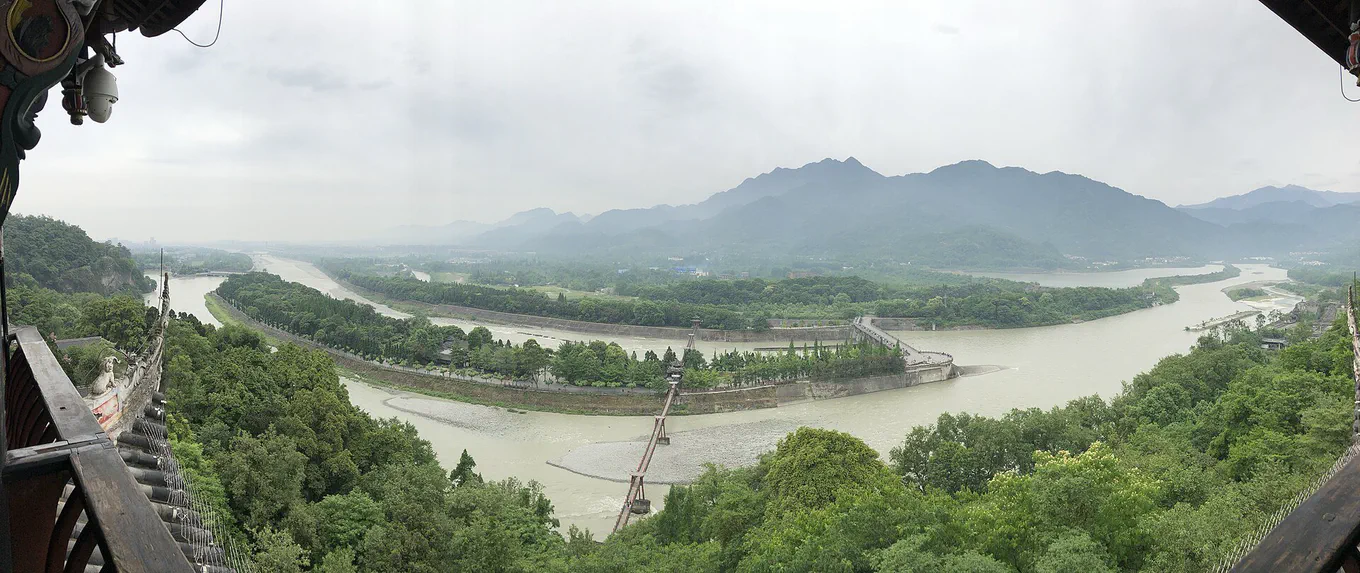
Stand here. The Dujiangyan Irrigation System, on the Min River. It still waters the Chengdu Plain, and has been a UNESCO World Heritage Site since 2000.
The king of Qin sent Li Bing to govern Shu, where the Min River flooded every year. A dam would have tamed the river, but the Qin wanted it open for their military boats. Around 256 BC, Li Bing built a levee shaped like a fish’s mouth to split the flow, and cut a channel through Mount Yulei onto the dry Chengdu Plain, heating the rock with fire and cooling it with water for eight years. The floods stopped, and more than two thousand years on, the system still works.
2 Liu Bei’s last order to Zhuge Liang, at Wuhou Temple
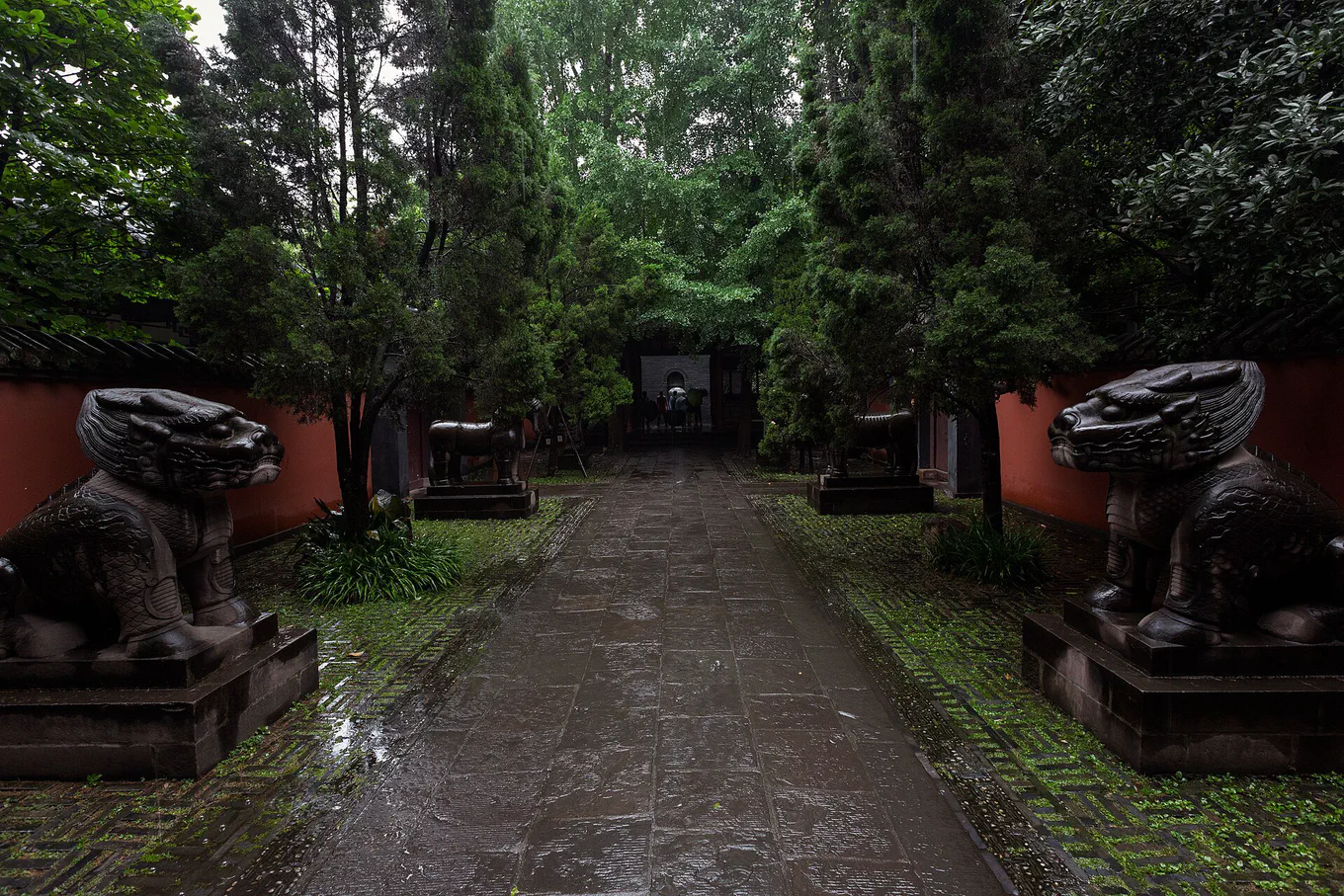
Stand here. Wuhou Temple, in the southwest of downtown Chengdu. Liu Bei’s tomb, Huiling, lies on its west side, inside a round brick wall.
Romance of the Three Kingdoms made Liu Bei the model of a kind ruler. As emperor of Shu Han, he went to war to avenge Guan Yu, refused an offer of peace, and lost forty camps to fire. Dying at Baidicheng in 223, he told Zhuge Liang, whom he had left in charge in Chengdu, to help his heir, but “if he turns out to be incompetent, then you may make your own decision”. The words are ambiguous. Zhuge Liang swore loyalty until death, and died on campaign eleven years later.
3 Du Fu’s roof and the autumn gale in Chengdu
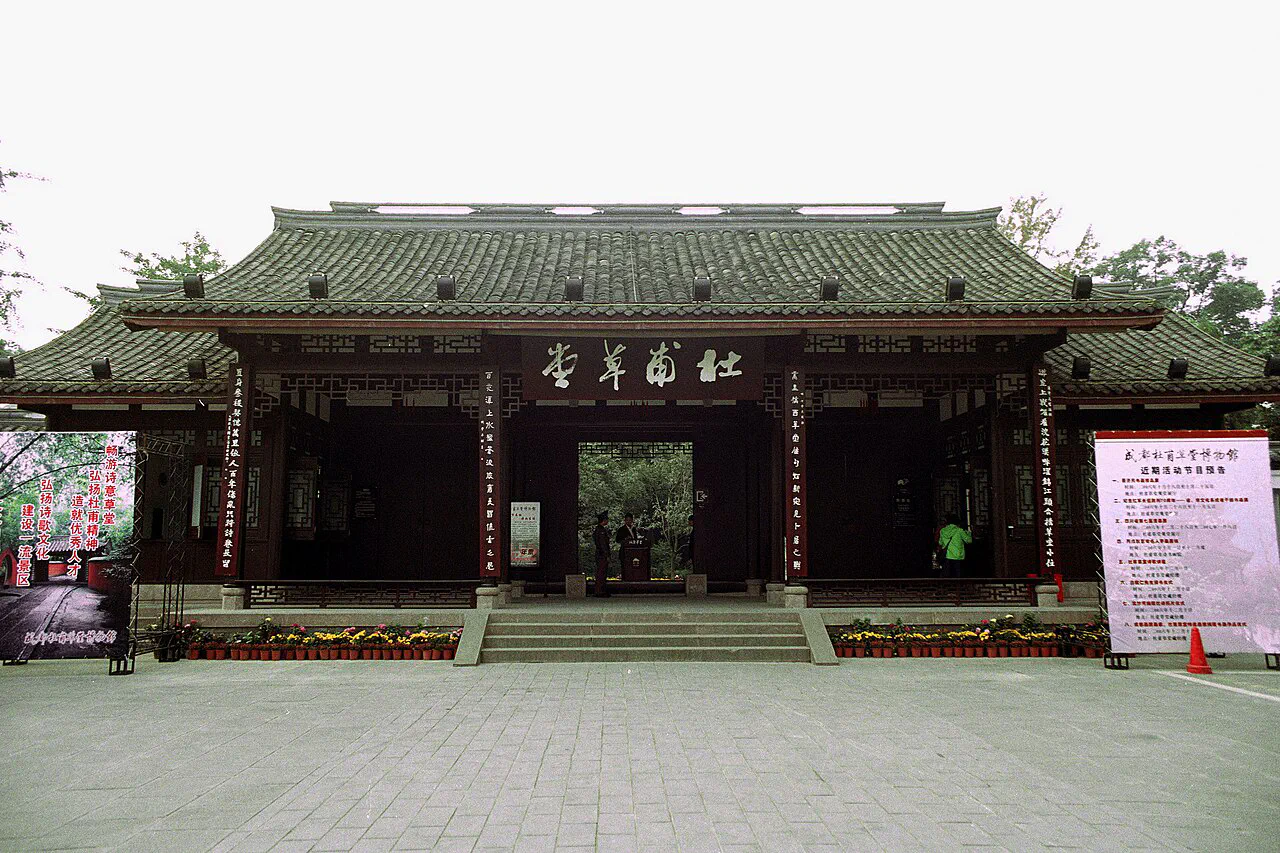
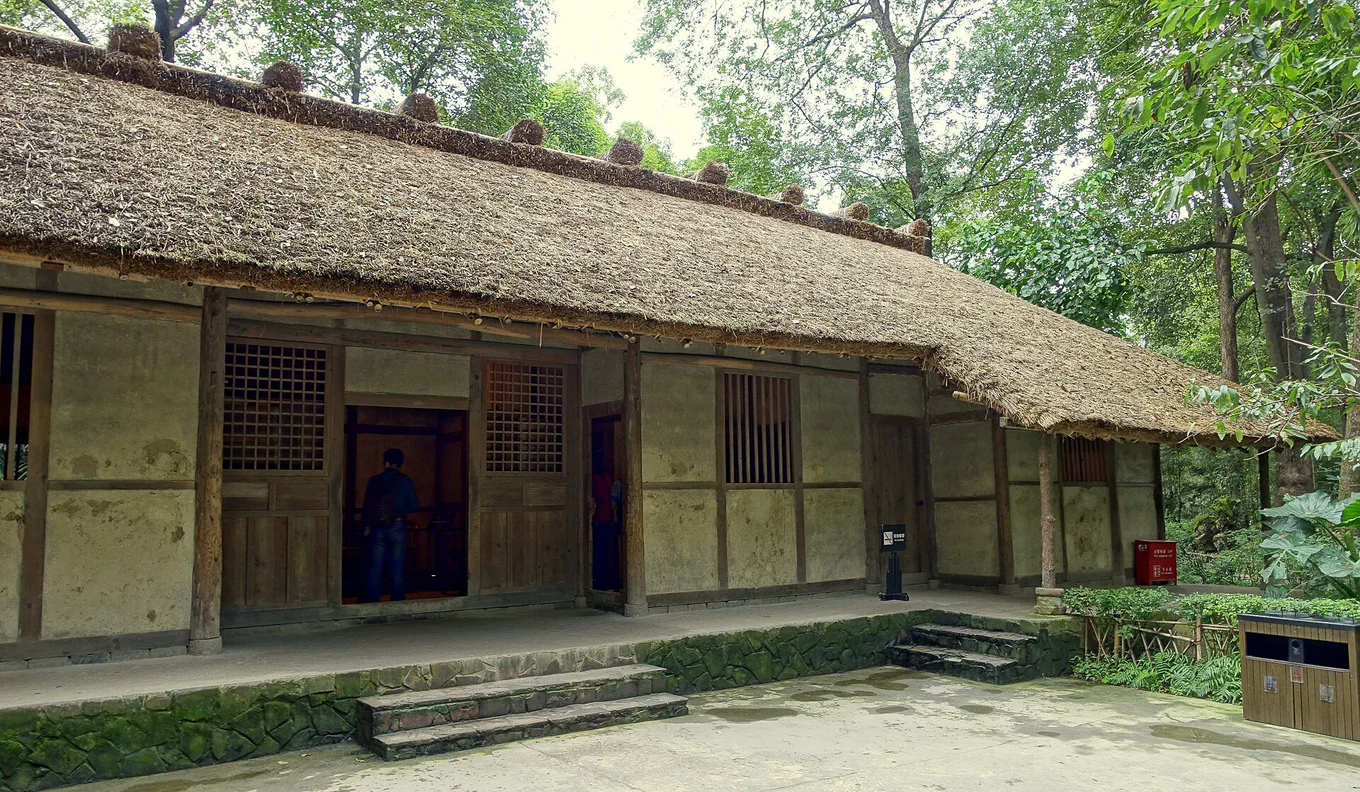
Stand here. Du Fu Thatched Cottage, in western Chengdu. The original hut is gone, and a rebuilt one stands in a park and museum.
The rebuilt thatched hut at the Du Fu Thatched Cottage, in western Chengdu.Daderot / CC0.
Du Fu, often called China’s greatest poet, came to Chengdu in 759, driven from home by the An Lushan rebellion. He built a thatched hut by the Flower Rinsing Creek. As his poem tells it, an autumn gale tore three layers of thatch off the roof, village boys carried it into the bamboo, and rain soaked every bed. He went on to wish for a palace of ten thousand rooms to shelter all the poor scholars. If he could see it, he would gladly freeze to death in his broken home.
4 Wang Jian’s tomb at Yongling, mistaken for a zither terrace
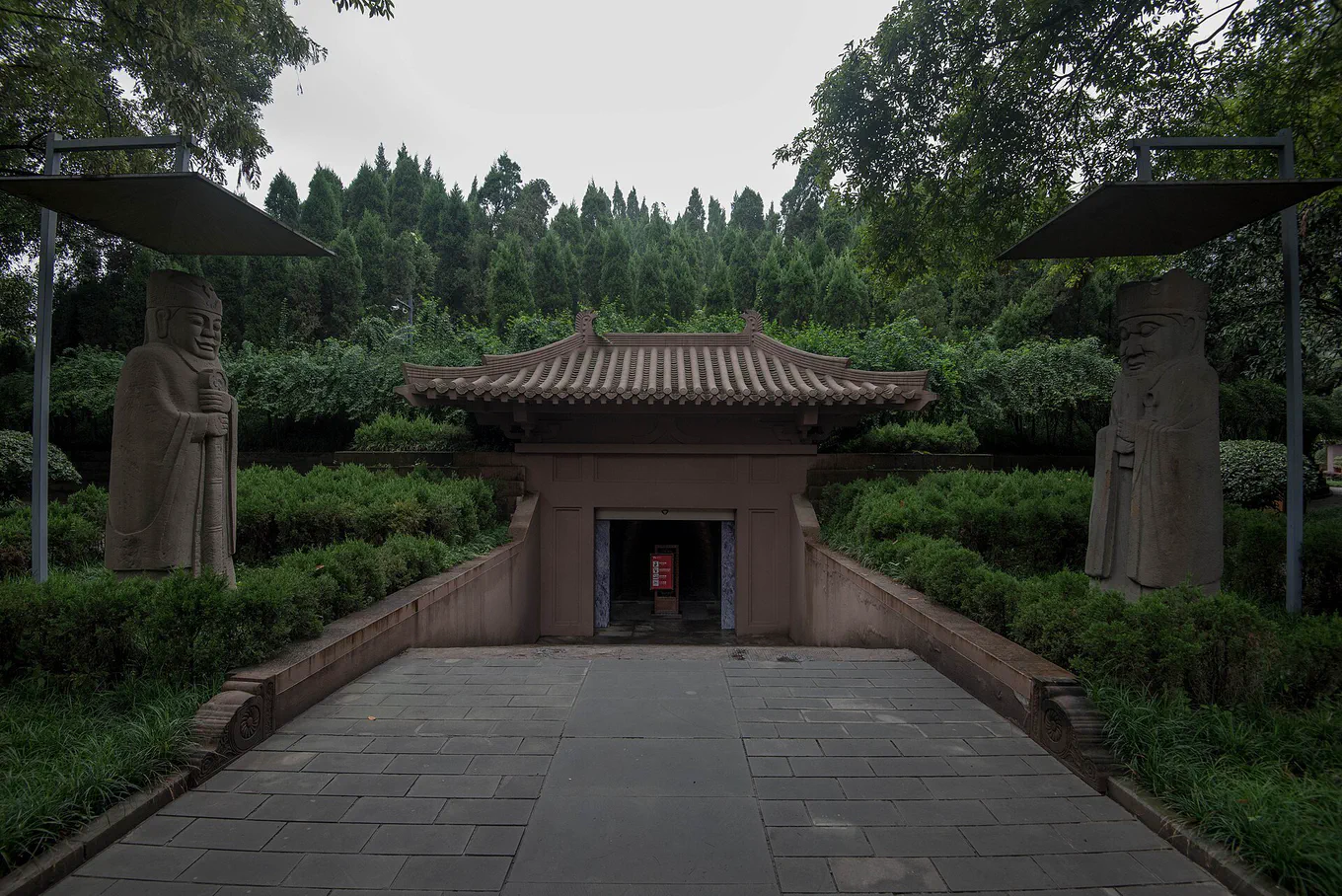
Stand here. Yongling Museum, at 10 Yongling Road in Jinniu District. The mound, 15 metres high, still stands in Yongling Park.
Wang Jian gave up the family trade of baking to butcher cattle, steal donkeys, and smuggle salt, and died the emperor of Former Shu, buried in Chengdu. His mound was long mistaken for the Zither Playing Terrace, where a Han scholar played to his lover. In 1940, a railway bureau digging a shelter from Japanese bombs beside the mound hit brick walls. Inside lay his coffin, his seated statue, and reliefs of twenty-two musicians and two dancers. The donkey thief had gone to his grave with his own band.
5 Pockmarked Mrs Chen’s tofu at Wanfu Bridge
Stand here. Near Wanfu Bridge, in Chengdu, where the Chens ran their small restaurant.
Mapo tofu is named after a woman’s face. In 1862, a couple named Chen opened a small restaurant near Wanfu Bridge in Chengdu, though some sources say 1874. As the story is told, oil porters crossing the bridge brought their own oil and asked the Chens to cook them something nice. Mrs Chen made a simple dish of chilli, pork, tofu, and Sichuan pepper. Chengdu called her Chen Mapo. Ma means pockmarked, and po an old woman. Her face is still in the name.
Pack nothing. Leave Friday.
Every Friday, I write a free letter, Journey, that takes us on a trip through places, stories, and ideas.
Song of My Cottage Unroofed by Autumn Gales(Du Fu, 761). A poem from his thatched-hut years in Chengdu, the peak of his creativity, when he wrote 240 poems.
Shark’s Fin and Sichuan Pepper(Fuchsia Dunlop, 2008). A memoir. In Chengdu, Dunlop enrolled at the Institute of Higher Cuisine, a professional chef’s programme.
Family(Ba Jin, 1933). A novel about an upper-class family in Chengdu in the early 1920s.
Leave Me Alone: A Novel of Chengdu(Murong Xuecun, 2002). A novel, first distributed online, about young men in dead-end jobs, with gambling, drugs, and prostitution.
Films to watch before you visit Chengdu
24 City(Jia Zhangke, 2008). A film, shot at the real 24 City apartment complex, built on the site of a fighter-jet engine factory where some of its interviewees once worked.
Chengdu, I Love You(Fruit Chan and Cui Jian, 2009). A film. In its 2029 segment, young rock musicians meet in a Chengdu bar.
Questions
Can you visit Du Fu’s thatched cottage in Chengdu?
Yes, though not the original hut, which was destroyed. The Du Fu Thatched Cottage is a 24-acre park and museum on the western edge of Chengdu, beside the Flower Rinsing Creek. Its rebuilt hut is divided into a study, a bedroom, and a kitchen. The cottage has been a National Heritage site since 1961.
Was paper money invented in Chengdu?
Chengdu is where the jiaozi appeared, around the 11th century. It was a promissory note, and numismatists regard it as the first paper money. Merchants issued it first, to replace heavy coins. In 1023, after several merchant houses went bankrupt, the Song government took over its production.
Why is Chengdu called the Land of Abundance?
The Chengdu Plain around the city is known as the Land of Abundance, and Chengdu itself has been called the Abundant Land since ancient times, for its fertile soil and good climate. The Dujiangyan irrigation system, built around 256 BC and still in use, made Sichuan for a time the most productive farming region in China.