Chiang Mai, the largest city in northern Thailand, was begun by King Mangrai in 1296, and its name means ‘New City’. Its stories here are a king driven out by floods, a sacred statue that never came back, the son of Anna from The King and I, a princess who gathered her family’s ashes, and a monk who built a road up a mountain.
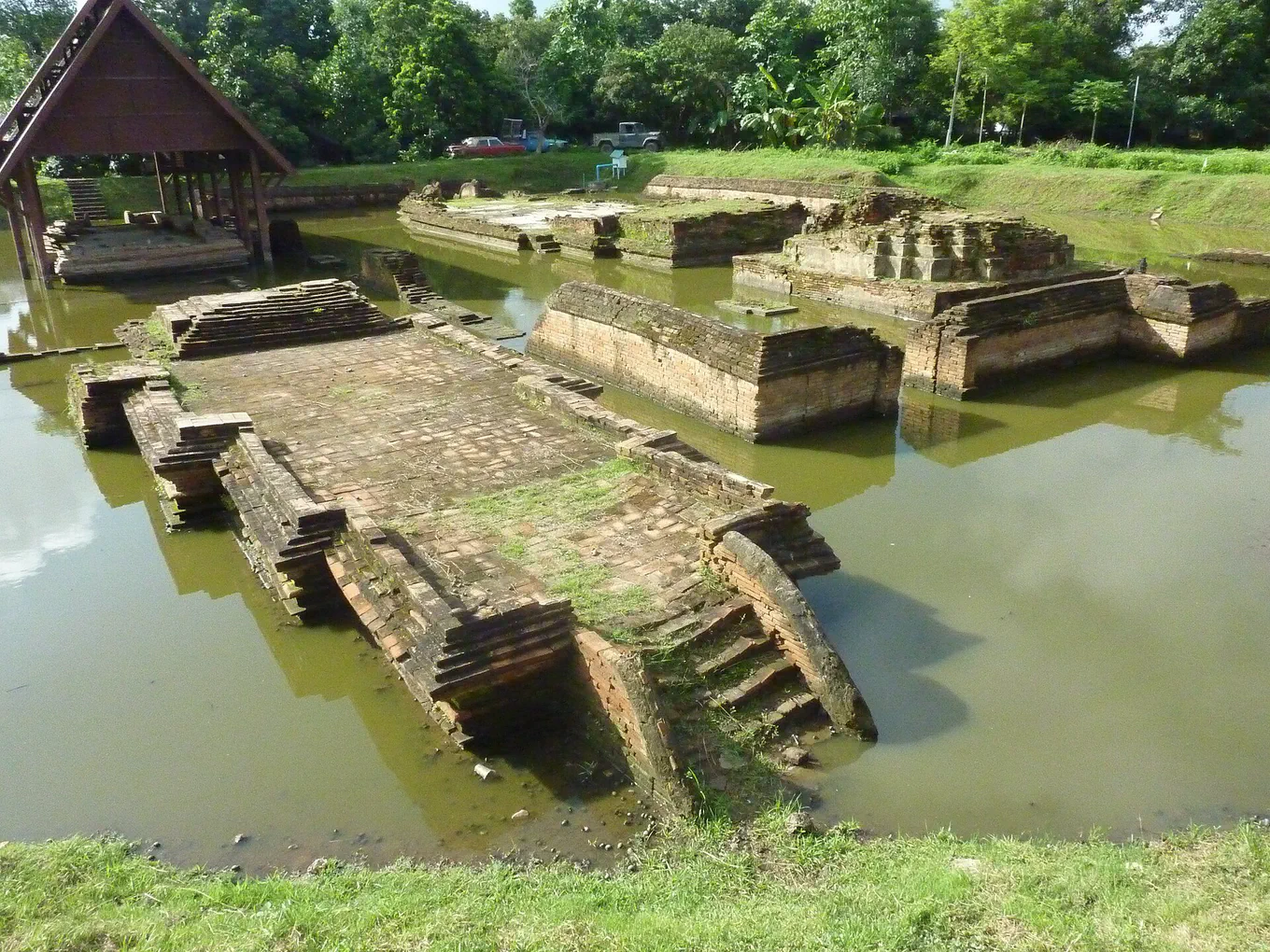
King Mangrai built a city, Wiang Kum Kam, on the eastern bank of the Ping River, but the site was plagued with floods. So he chose new ground several kilometres north-west, at the foot of the mountain Doi Suthep, and in 1296 he began again. This was Chiang Mai, the New City, and tradition says he died there, struck by lightning in its market. Wiang Kum Kam is thought to have flooded again and been abandoned, and one of its temples was buried under about 1.8 metres of sediment.
2 How the Emerald Buddha left Wat Chedi Luang
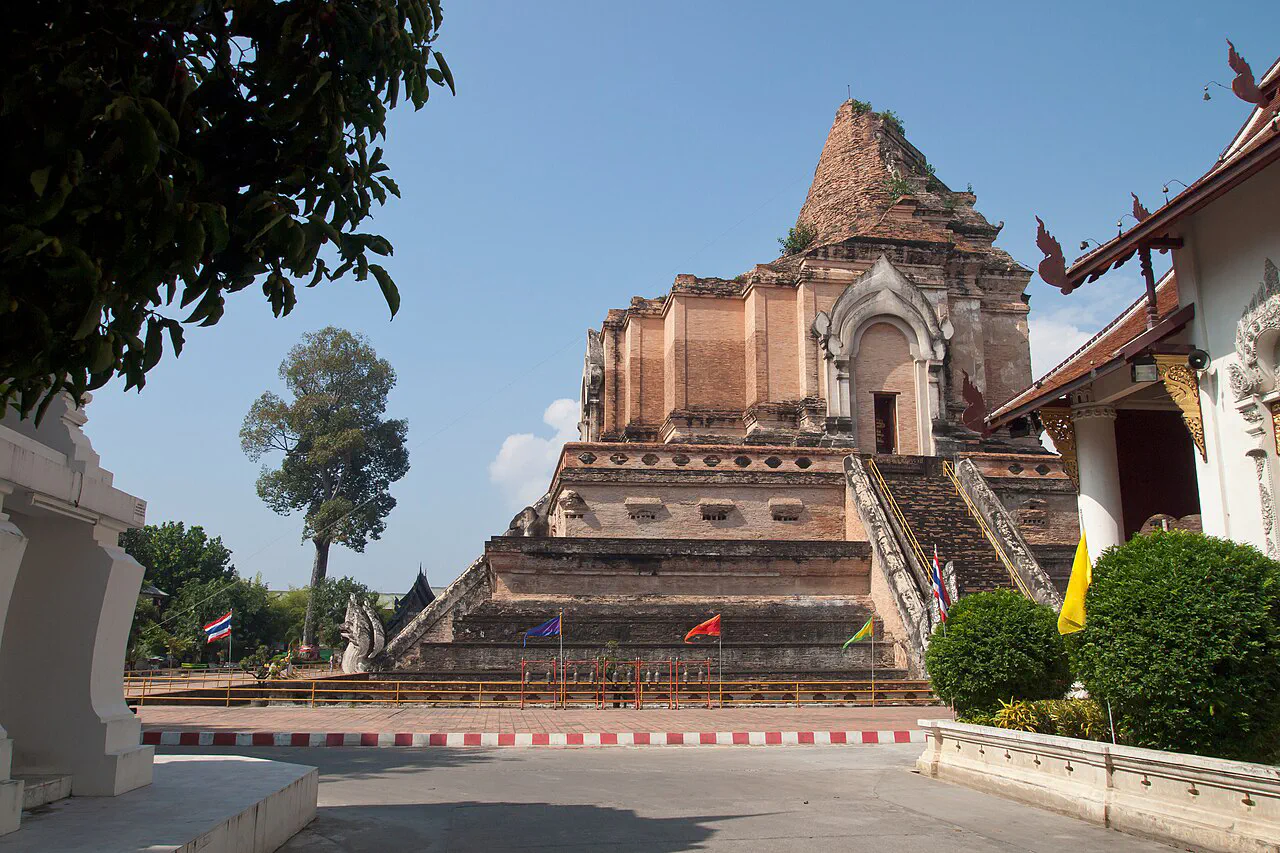
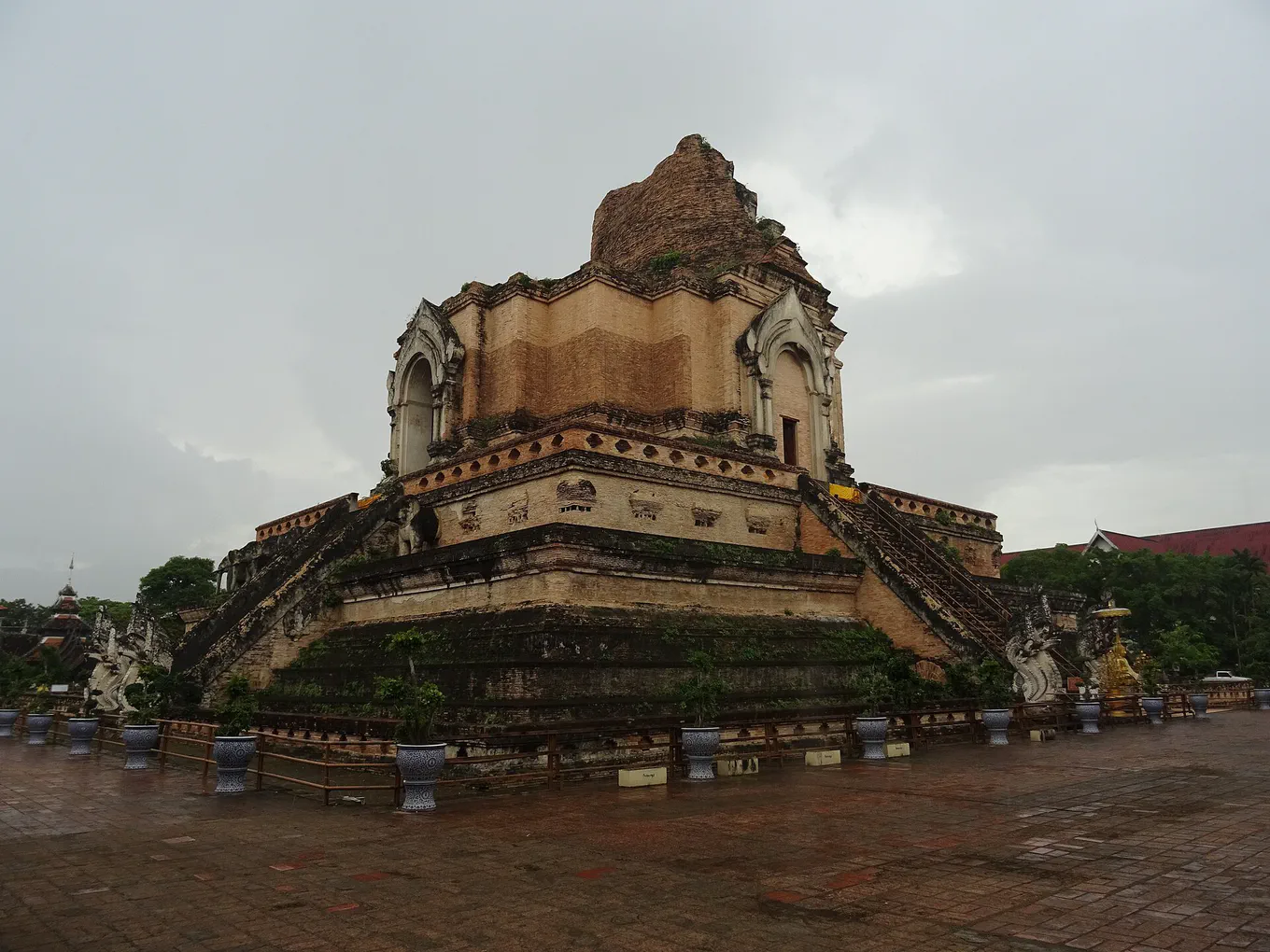
Stand here. Wat Chedi Luang. A black jade copy of the Emerald Buddha fills the eastern niche of its chedi.
The Emerald Buddha once sat in the eastern niche of this chedi, a Buddhist pagoda. In 1546, the officials and monks of Lanna, the kingdom ruled from Chiang Mai, gave their throne to Setthathirath, a prince of Laos whose mother came from Lanna. He took the statue as his palladium, his guardian image. When his father died, he hurried home to Laos with it. But Lanna’s nobles decided he had stayed away too long and crowned someone else. The statue never came back.
3 Louis Leonowens, the King and I boy, in Chiang Mai
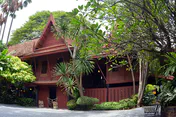
Stand here. The Borneo Company’s teak house, finished in the late 1880s and raised on 137 pillars, is now part of the 137 Pillars House hotel.
Louis Leonowens was the son of Anna Leonowens, of The King and I fame. From the age of seven, he lived in Bangkok’s Grand Palace, where he became friends with the heir, Prince Chulalongkorn. As a man, he came to Chiang Mai for the Borneo Company, which cut teak in northern Thailand for England, and replaced its agent, whose spending had raised concerns. In 1895, Louis resigned, but the teak forests were not the company’s to keep. They had been leased to him personally.
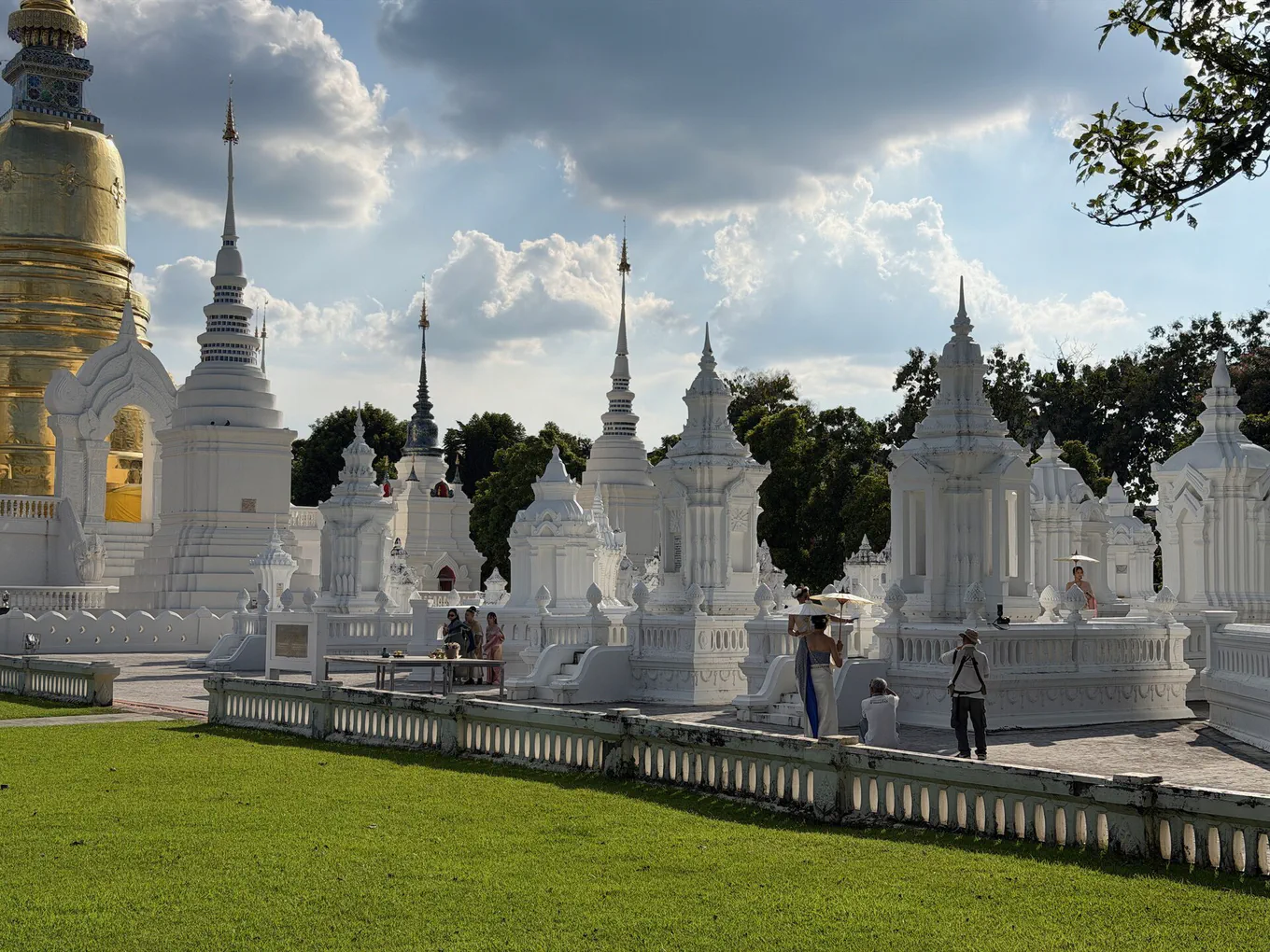
Dara Rasmi, daughter of Chiang Mai’s king, became a consort of King Chulalongkorn of Siam, Louis Leonowens’ boyhood friend. At his Grand Palace, she and her ladies were teased as ‘Lao ladies’ who ‘smelled of fermented fish’, and in 1892 her daughter died, aged two. Yet early in the 20th century, Dara Rasmi had the ashes of Chiang Mai’s royal family gathered from around the city and laid here. Part of her daughter’s ashes lie among them.
5 Kruba Srivichai, the monk who built the Doi Suthep road
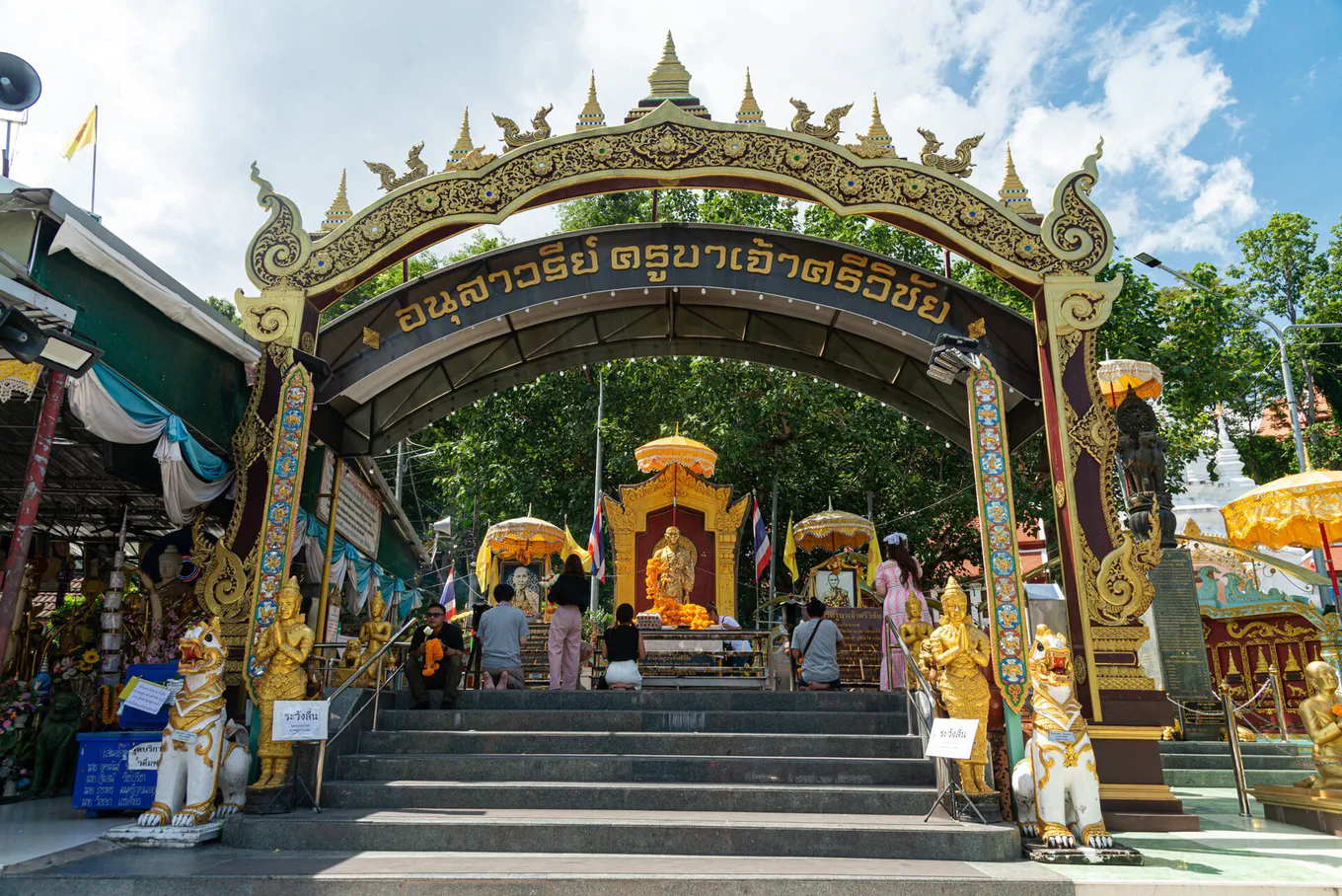
Stand here. Kruba Srivichai’s shrine, at the foot of Doi Suthep.
In 1934, Kruba Srivichai, a monk known as the Engineer Monk, struck the first hoe for a road up Doi Suthep to its mountain temple. He had spent years in conflict with the national order of monks and Siamese officials, and had been imprisoned more than once. But it was ordinary people who answered him. Thousands came, from hill tribes, distant villages, and nearby towns, and he gave them food and water as they dug. On 30 April 1935, before the rains, the road opened.
Pack nothing. Leave Friday.
Every Friday, I write a free letter, Journey, that takes us on a trip through places, stories, and ideas.
Behind the Night Bazaar(Angela Savage, 2006). A crime novel. Bangkok private detective Jayne Keeney, after a violent turn of events on a job, seeks solace with her dearest friend Didier de Montpasse in Chiang Mai.
Ghosts of the New City: Spirits, Urbanity, and the Ruins of Progress in Chiang Mai(Andrew Alan Johnson, 2014). An ethnography of how the trauma of the 1997 crash haunts efforts to remake Chiang Mai. For many residents, new developments harbour the seeds of the crash.
Fieldwork(Mischa Berlinski, 2007). A debut work of fiction. A journalist investigates the suicide of an American anthropologist serving a murder sentence in Chiang Mai’s women’s prison.
Films to watch before you visit Chiang Mai
Lost in Thailand(Xu Zheng, 2012). A film. A Chinese comedy shot mainly in and around Chiang Mai, with its market chase filmed in Talat Warorot and many nature scenes at Chiang Mai University.
Grean Fictions(Chookiat Sakveerakul, 2013). A film. A Thai coming-of-age comedy-drama about Tee, an upper-secondary-school boy from Chiang Mai, and his friends Oat, Mon, and Mone at school there.
Home(Chookiat Sakveerakul, 2012). A film. A Thai drama set in Chiang Mai, told in three continuous segments, the last centred on the wedding of Chiang Mai native Preeya and Leng.
Questions
Is the Emerald Buddha still at Wat Chedi Luang?
No. It sat in the eastern niche of the great chedi from 1468 until it was taken to Laos in the 1550s. When the chedi was rebuilt in the early 1990s, a black jade copy was placed in the niche.
What is the oldest temple in Chiang Mai?
Wat Chiang Man is counted as Chiang Mai’s first temple. King Mangrai camped on the site while building his city, and an inscribed stone records the city’s founding at 4 am on 12 April 1296. Its oldest structure is the Chedi Chang Lom, whose upper levels seem to ride on the backs of elephants.
What does Chiang Mai mean?
It means ‘New City’. King Mangrai began building it in 1296, after floods drove him from Wiang Kum Kam, his earlier city several kilometres to the south-east. Its heart is the old city, a square about a mile on each side.