One of my favourite thrillers (Die Trying) starts here when Jack Reacher is snatched off the street. It’s a strong contender for biggest hook, but then again… you can’t beat the parade in Ferris Bueller’s Day Off.
— Nick
Burned in 1871 and rebuilt in steel and stone, Chicago sits on the southwestern shore of Lake Michigan, in northeastern Illinois, and is the third most populous city in the United States. Mrs O’Leary’s cow and John Dillinger’s last night at the cinema open a set closing with a nuclear reactor in a rackets court, the Rolling Stones at their heroes’ studio, and Ferris Bueller at the Art Institute.
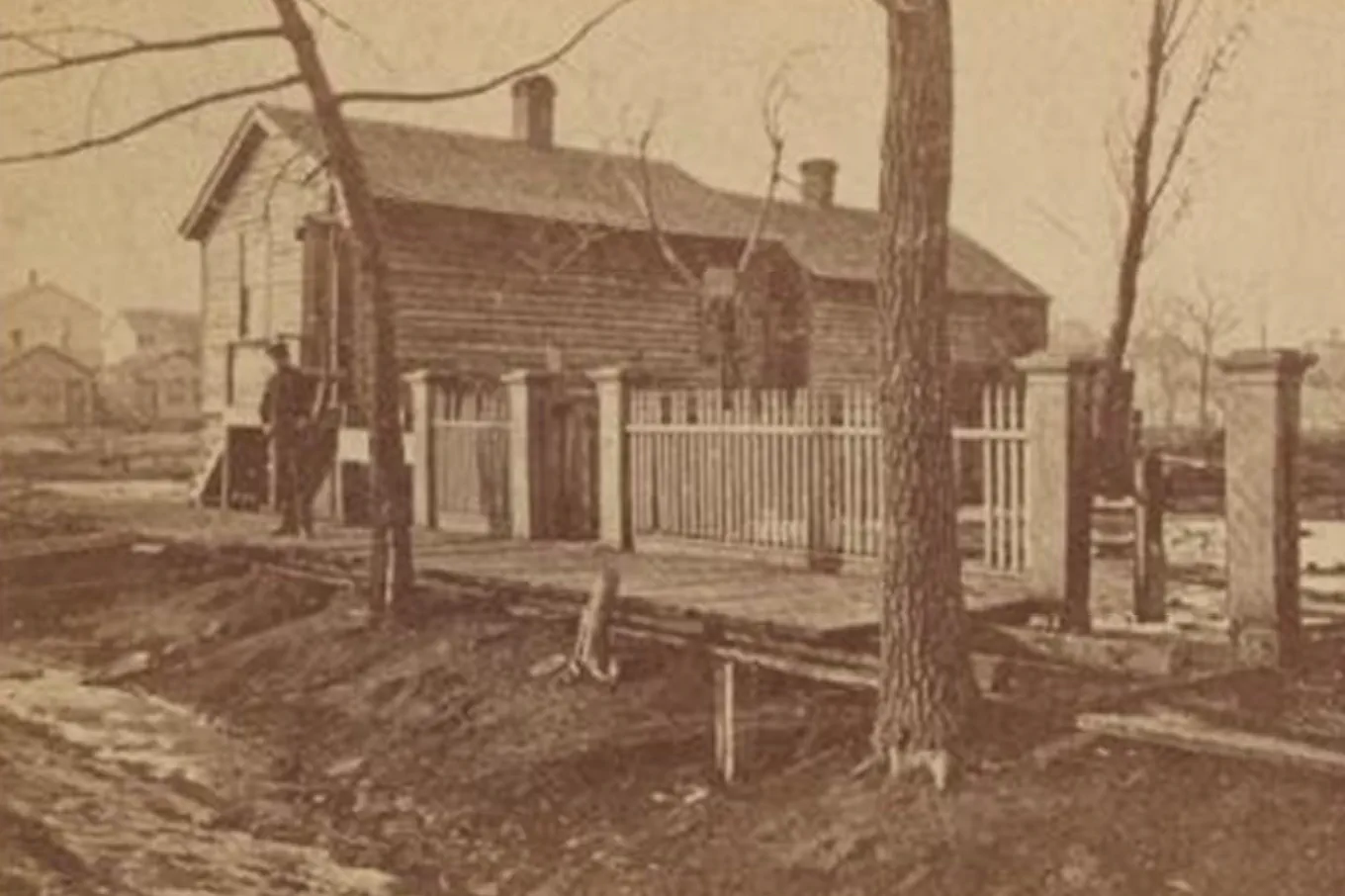
Stand here. 558 West DeKoven Street, now the Chicago Fire Academy, where firefighters train. A bronze Pillar of Fire marks where the blaze began.
Catherine O’Leary’s cottage on DeKoven Street, which survived the Great Chicago Fire that began in the family’s barn.A.H. Abbott / Public domain.
Mrs O’Leary’s cow, the legend says, kicked over a lantern and started the Great Chicago Fire. On 8 October 1871, a fire is said to have begun in or around the O’Leary barn, killing about 300 people. The O’Leary family said they had been in bed. But Catherine O’Leary was a poor Irish Catholic immigrant, the perfect scapegoat. Twenty-two years later, the reporter behind the story admitted he had made it up, but the legend held. The city council cleared her, and the cow, in 1997, 102 years after her death.
2 John Dillinger and the Woman in Red at the Biograph
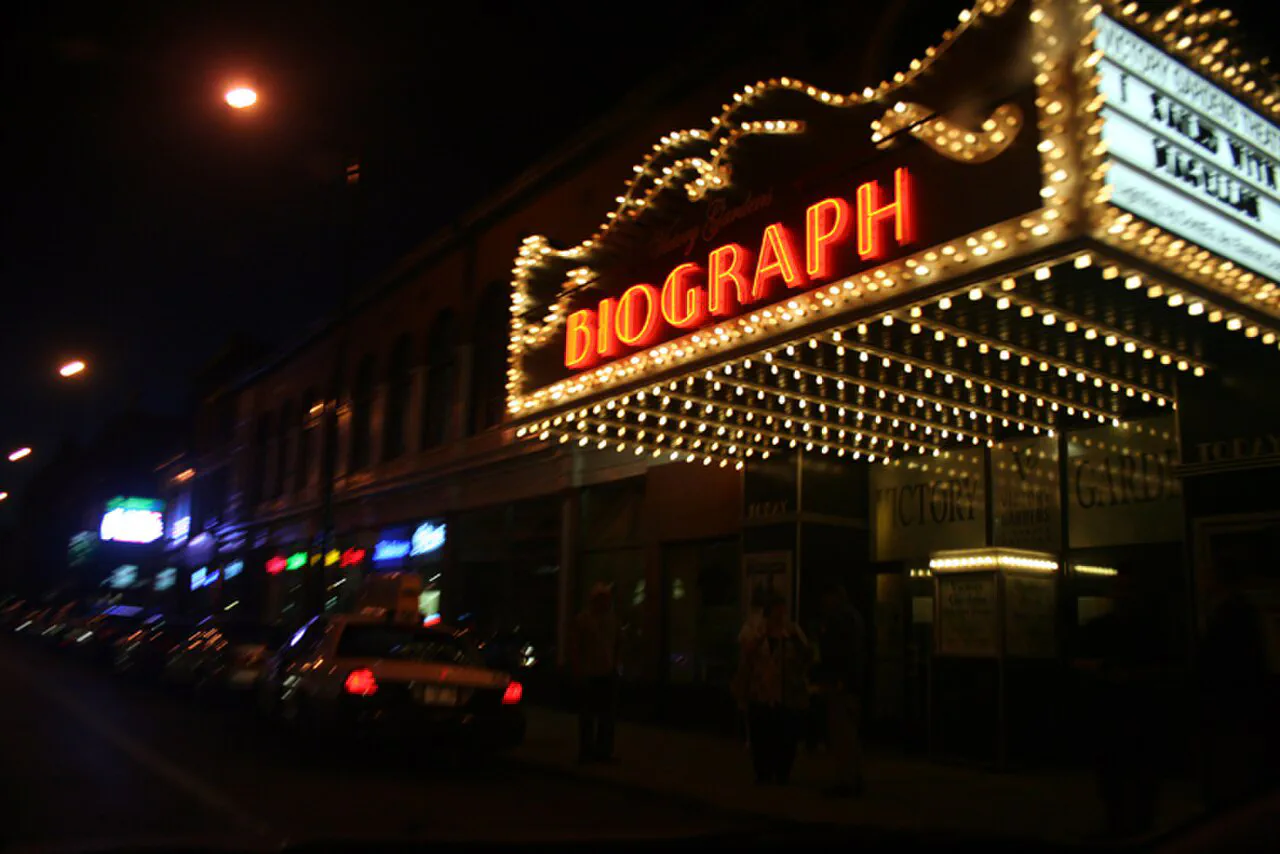
Stand here. The Biograph Theater, 2433 North Lincoln Avenue, in Lincoln Park. The cinema still stands, a Chicago Landmark, converted for live theatre in 2006.
Ana Cumpănaș is remembered as the Woman in Red who betrayed the gangster John Dillinger, though she is said to have worn orange. A Romanian madam facing deportation in 1934, she offered the FBI information on Dillinger in return for help to stay. On 22 July, Dillinger went to see Manhattan Melodrama at the Biograph. As it ended, an agent at the door lit a cigar, the signal, and agents shot Dillinger dead. Cumpănaș got half the reward she said she was promised. Then she was deported anyway.
3 Enrico Fermi’s reactor under the Stagg Field stands
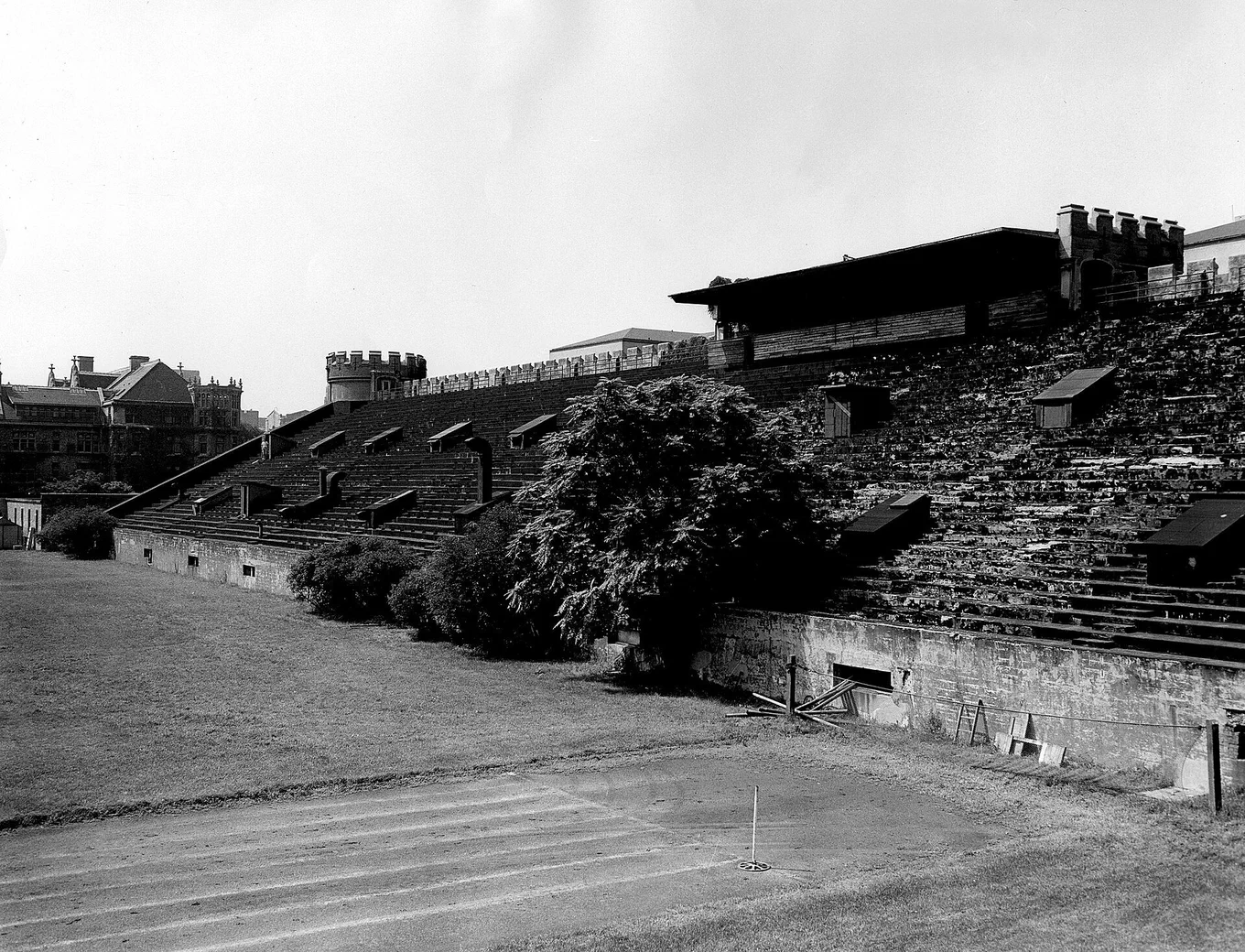
Stand here. Ellis Avenue, at the University of Chicago. The stands were demolished in 1957, and Henry Moore’s bronze Nuclear Energy marks the spot.
The West Stands of the old Stagg Field at the University of Chicago, where Chicago Pile-1 was built beneath the seats.ENERGY.GOV / Public domain.
Enrico Fermi’s reactor was meant to go up at a remote site at Argonne. But labour disputes held up the building, so Fermi proposed a rackets court under the stands of Stagg Field, with Chicago all around it. Arthur Compton, a Nobel-winning physicist at the university, agreed without asking its president, because, he said, the answer could only have been no. On 2 December 1942, the reactor achieved the first human-made self-sustaining nuclear chain reaction. Compton phoned a colleague in code: “The Italian navigator has landed in the New World.”
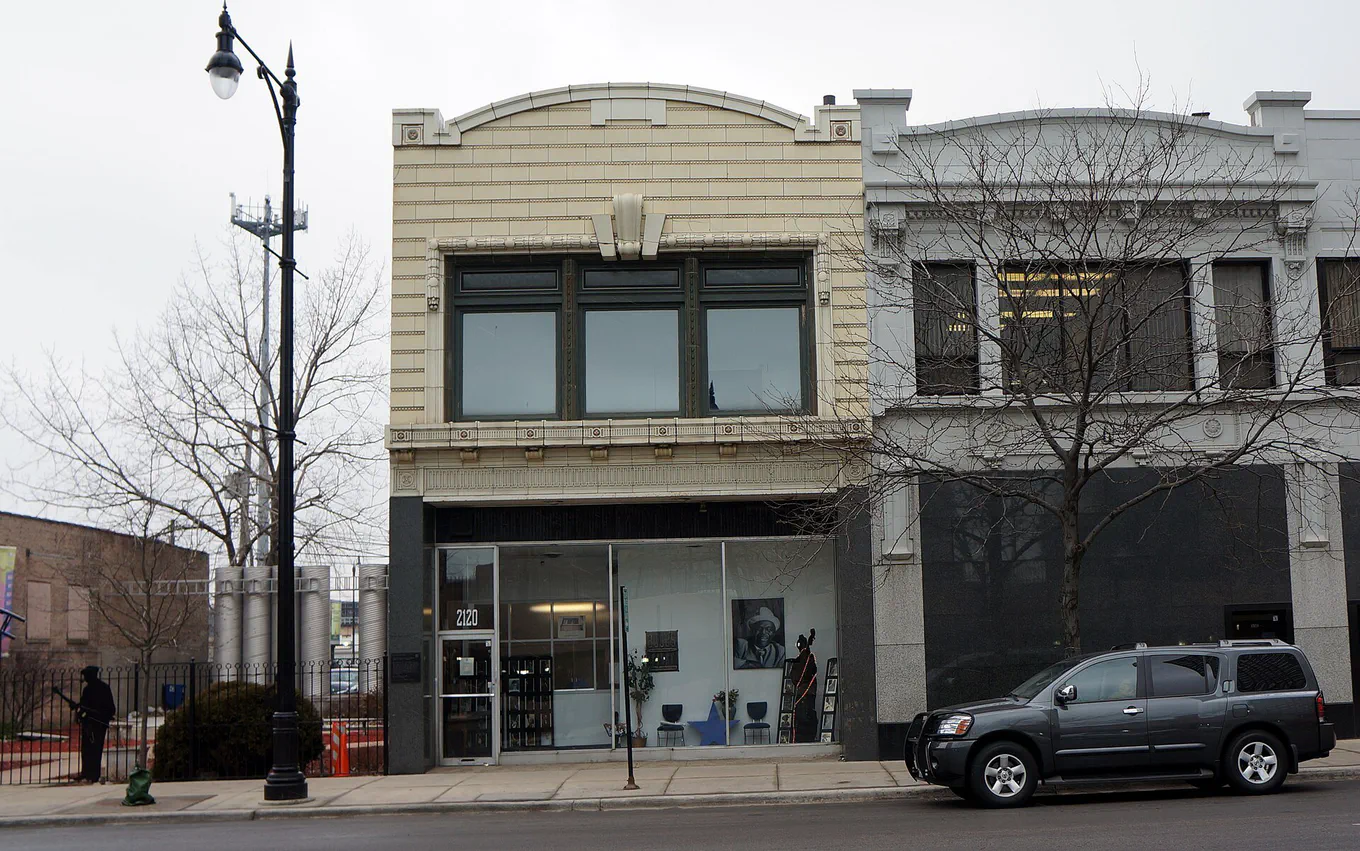
4 The Rolling Stones at Chess Records, 2120 South Michigan Avenue
Stand here. 2120 South Michigan Avenue. The old Chess studio is now a museum, home to Willie Dixon’s Blues Heaven Foundation.
The Rolling Stones named themselves after a Muddy Waters song, and in June 1964, on their first visit to America, they came to record at his Chicago label, Chess. They cut five tracks here and named an instrumental after the address. Keith Richards still says they found Muddy up a stepladder, painting the ceiling. Marshall Chess, the founder’s son, says there’s no truth in it, and Muddy denied it too. People want to believe it, Marshall thinks, because it says something about how unfashionable the blues had become.
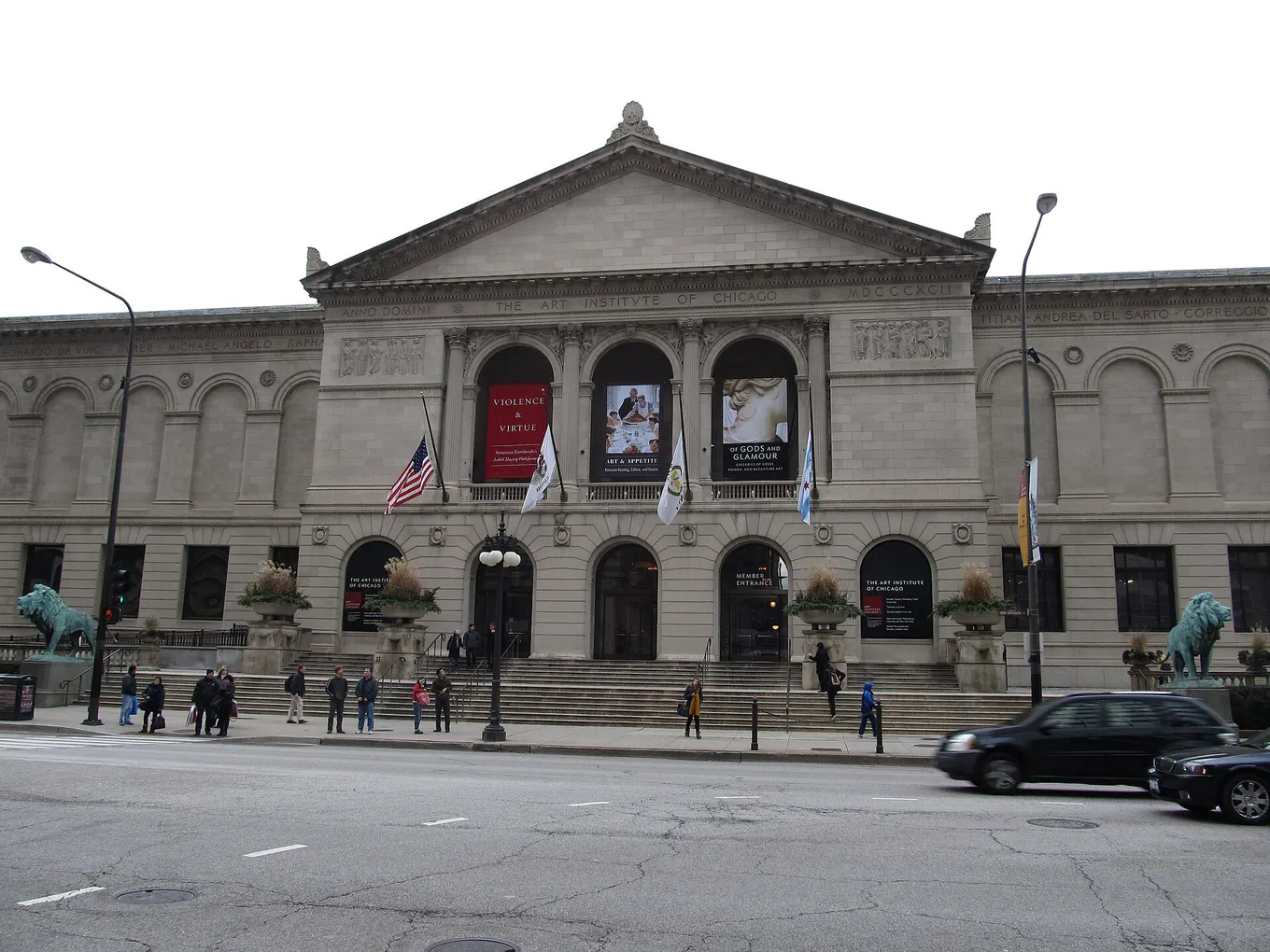
5 John Hughes, Ferris Bueller, and the Seurat at the Art Institute
Stand here. The Art Institute of Chicago, 111 South Michigan Avenue, between its two bronze lions. Seurat’s painting is still in its collection.
John Hughes called much of Ferris Bueller’s Day Off, his 1986 comedy, “sort of my love letter to the city”. The Art Institute had been his refuge, and he wanted to go back and show his favourite paintings. Nobody had filmed inside the museum before, but it let him in. So Hughes gave himself what he called a self-indulgent scene. His character Cameron stands transfixed by Seurat’s A Sunday Afternoon on the Island of La Grande Jatte, searching for himself in the face of one of its children.
Pack nothing. Leave Friday.
Every Friday, I write a free letter, Journey, that takes us on a trip through places, stories, and ideas.
The Jungle(Upton Sinclair, 1906). A novel of the meatpacking district at the Union Stock Yards, where Sinclair spent seven weeks gathering material in 1904.
Native Son(Richard Wright, 1940). A novel. Bigger Thomas, twenty and living in utter poverty on the South Side in the 1930s, drives through Washington Park.
The Devil in the White City(Erik Larson, 2003). A history of the 1893 World’s Fair, told through its architect, Daniel Burnham, and H. H. Holmes.
Films to watch before you visit Chicago
The Blues Brothers(John Landis, 1980). A film. Its chases run along Lower Wacker Drive, and the Bluesmobile drives through the lobby of the Richard J. Daley Center.
Ferris Bueller’s Day Off(John Hughes, 1986). A film. Hughes’s love letter to the city, with scenes at the Art Institute, the Sears Tower, and Wrigley Field.
High Fidelity(Stephen Frears, 2000). A film, adapted with its setting moved from London to Chicago, where Rob runs Championship Vinyl, a record shop in Wicker Park.
Questions
Can you see where the first nuclear reactor was built?
Yes. The west stands of the old Stagg Field, where the reactor was built, were demolished in 1957. Henry Moore’s bronze Nuclear Energy now stands on the spot, on Ellis Avenue at the University of Chicago, with four plaques on a nearby granite wall. The site is a National Historic Landmark.
Why is Chicago called the Windy City?
The popular story, that a New York editor coined it during the race for the 1893 World’s Fair, is a myth. Its first known use dates from 1876, and Chicago didn’t win the fair until 1890. Nineteenth-century journalists used it to mock the city’s politicians as full of hot air. Chicago isn’t the windiest city in the United States.
What survived the Great Chicago Fire?
The Chicago Water Tower was the only public building in the burned zone to survive the fire of 1871. It stands on the Magnificent Mile, the shopping district on the Near North Side, and now holds a small art gallery, the City Gallery in the Historic Water Tower.