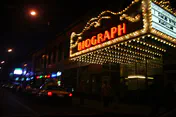
Hamilton County, Ohio, holds Cincinnati, on the Ohio River facing Kentucky. Founded in 1788, it grew up on the border between a free state and a slave state. A novel born of that border opens the stories; after it come a bridge the war brought back to life, a fountain from Munich, a chili served beside a burlesque theatre, and a film that turned the city into 1950s New York.
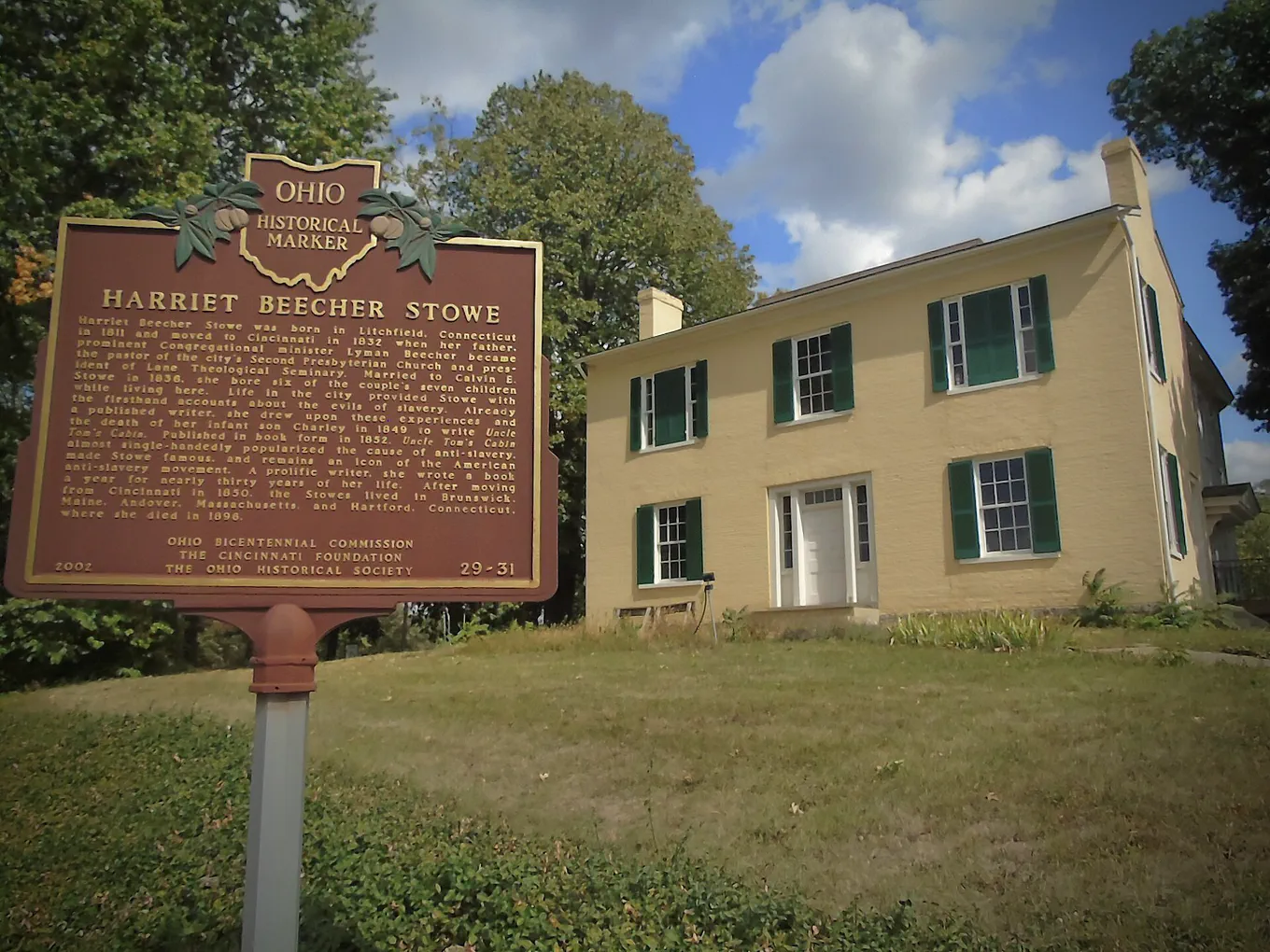
Harriet Beecher Stowe wrote Uncle Tom’s Cabin, the best-selling book of its time, soon after she left Cincinnati. She came in 1832 to join her father, president of Lane Seminary, and married a professor there. In Kentucky, she watched a slave auction. Back in the city, runaways told her the stories behind her characters, she always said. Then, in 1849, cholera killed her son Samuel Charles.
2 John Roebling’s Ohio River bridge, before Brooklyn
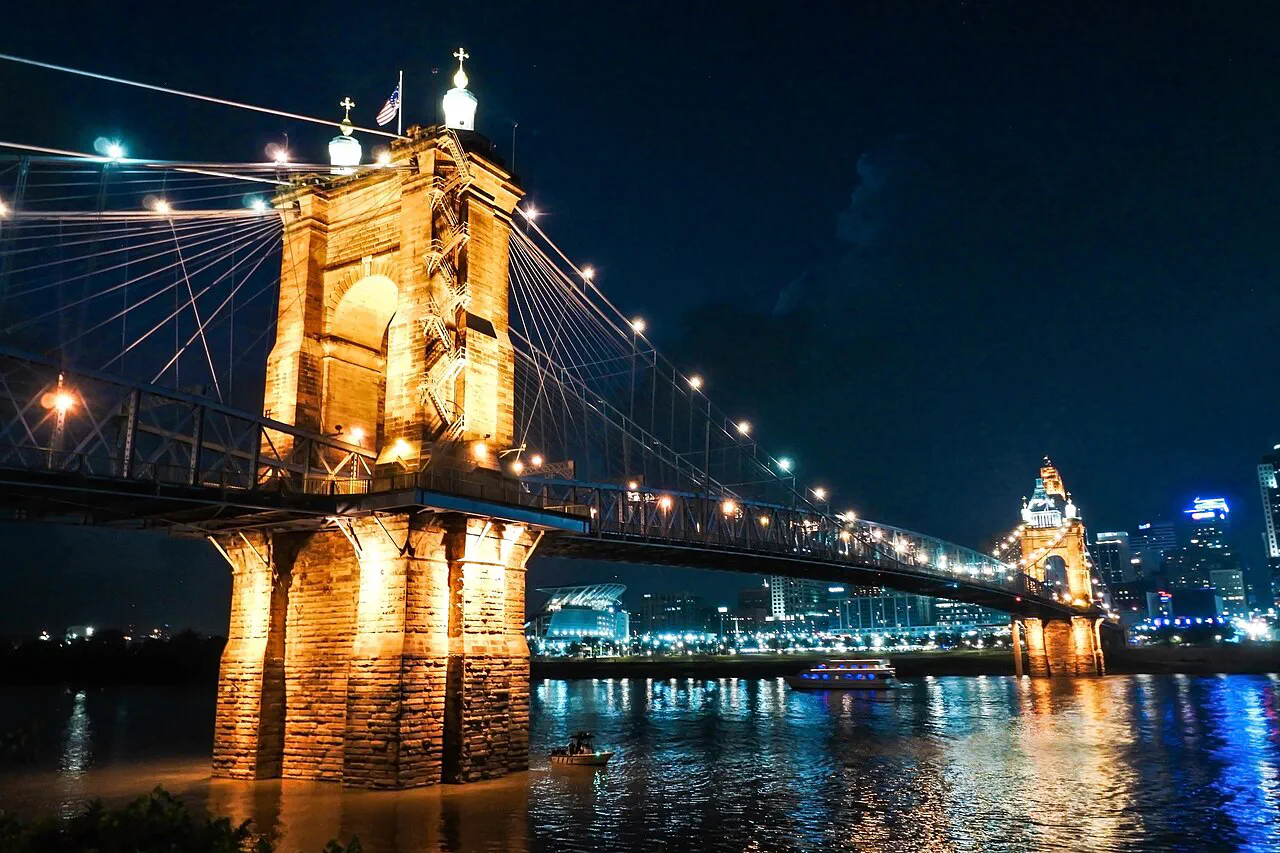
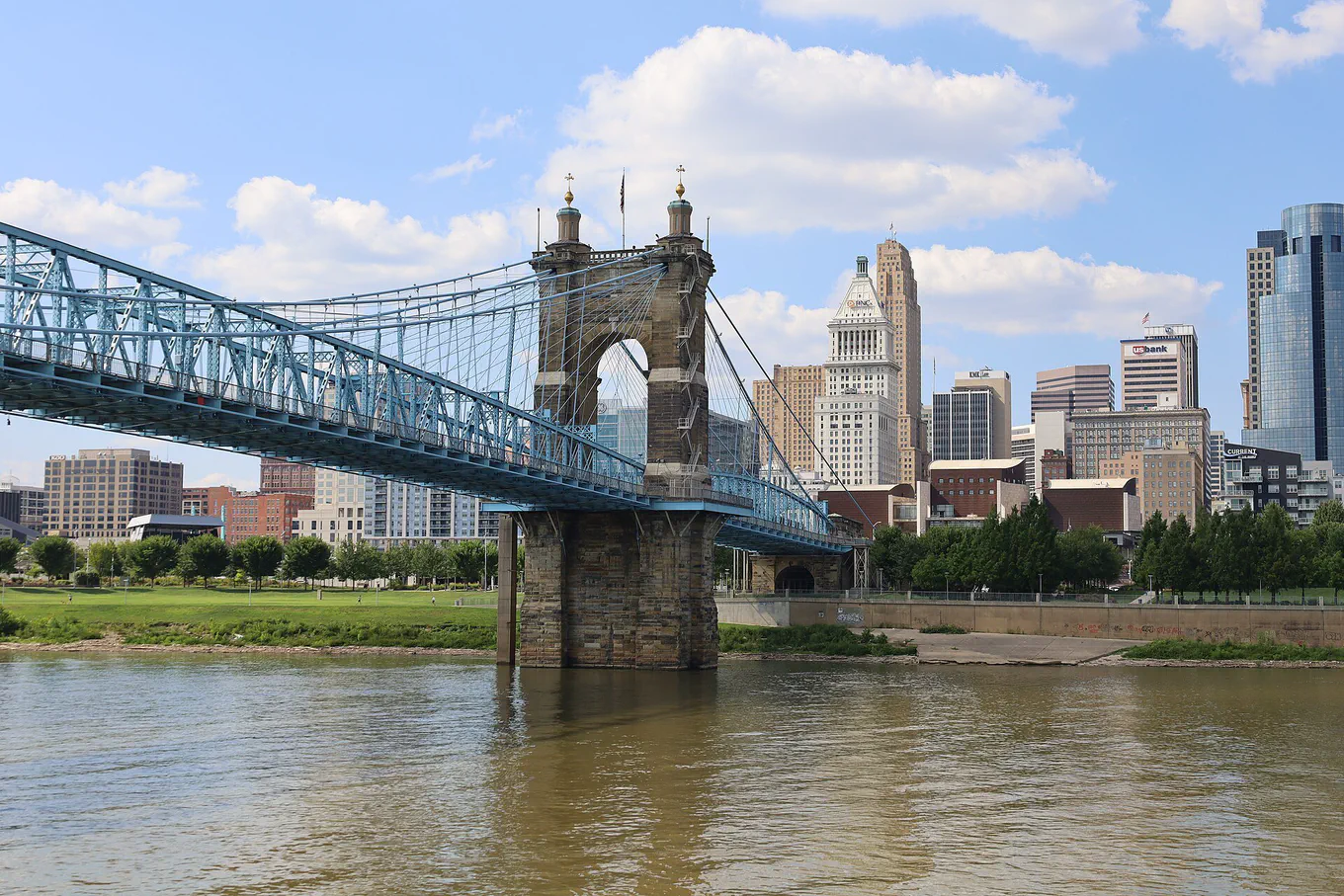
Stand here. The John A. Roebling Suspension Bridge, between Cincinnati and Covington, Kentucky. Once the world’s longest suspension bridge, it still carries cars and people on foot.
The Brooklyn Bridge is John Roebling’s most famous design. This one came first. The German-born maker of wire rope began it, but the money soon ran out, and the work sat idle as the country moved towards civil war. The war revived it. When Confederate forces threatened Cincinnati in 1862, troops and supplies crossed the Ohio on a pontoon bridge of coal barges, and the city wanted its real bridge again. In December 1866, people walked on it for the first time, and over 166,000 crossed in two days.
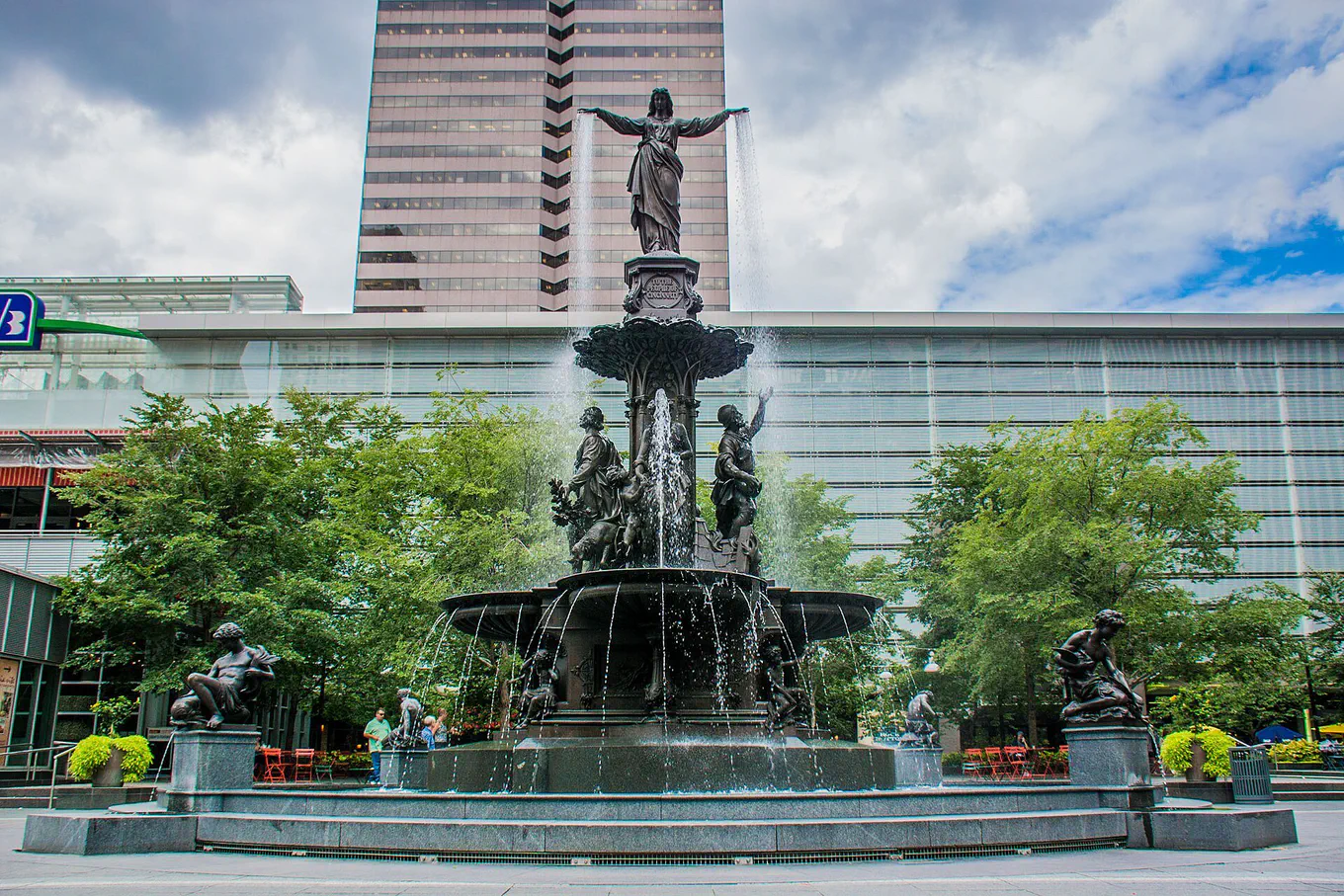
Anyone who has watched the opening credits of WKRP in Cincinnati has seen this fountain, though the show was taped in Hollywood. It started with a death. When the hardware magnate Henry Probasco lost his brother-in-law and partner, Tyler Davidson, he went to Munich. At the Royal Bronze Foundry, a fountain design had languished for years for want of a patron. Probasco became one. Cast in sections and shipped over, the fountain was dedicated in 1871. At its centre, a nine-foot woman, the Genius of Water, still pours down longed-for rain.
4 The Kiradjieff brothers and the birth of Cincinnati chili
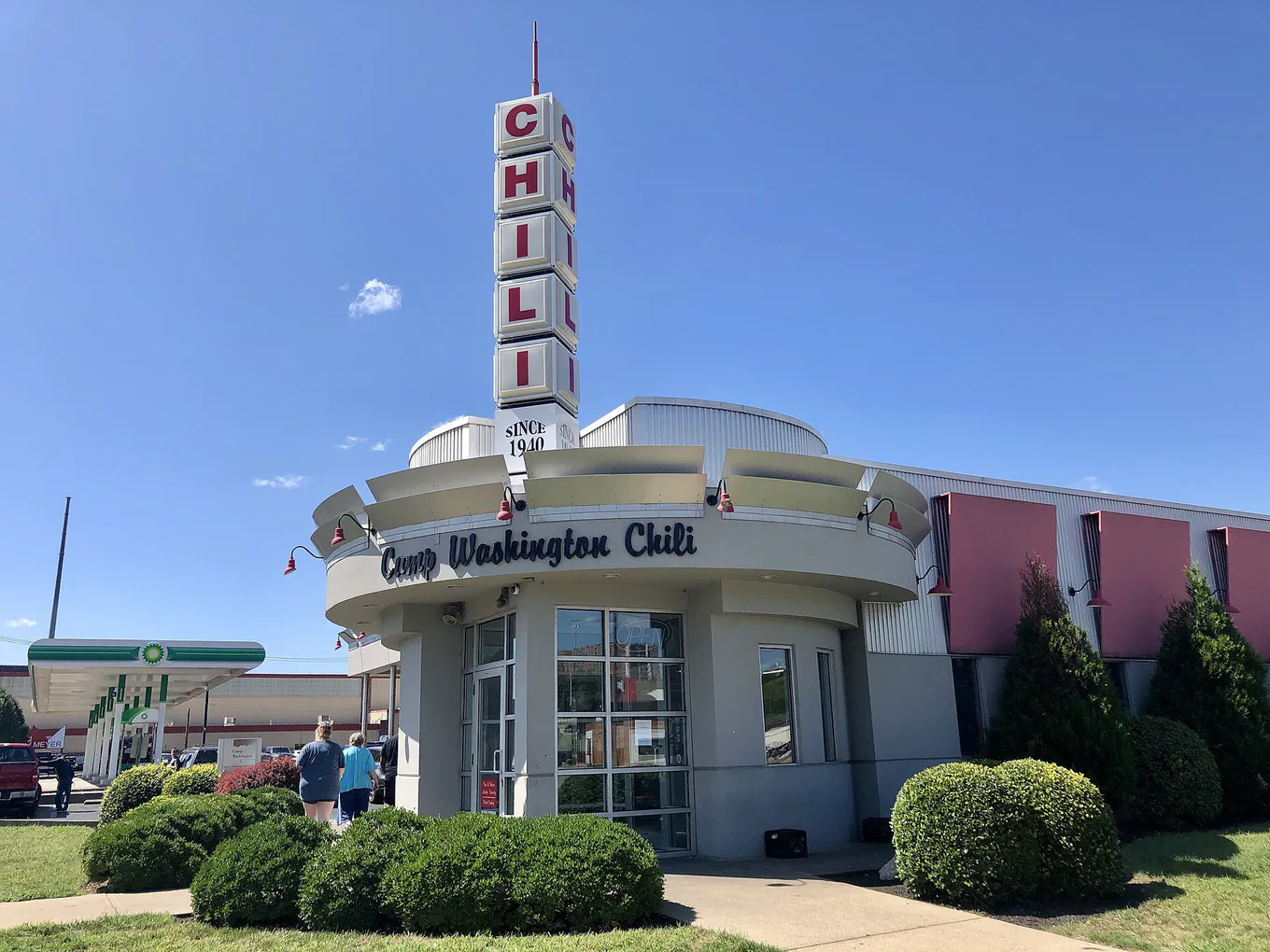
Stand here. Camp Washington Chili, a parlour founded in 1940, still serves the dish. The brothers’ own 1922 stand stood beside the Empress, a burlesque theatre.
Camp Washington Chili, the Cincinnati chili parlour at Colerain Avenue and Hopple Street, with its tall “Chili” sign.Warren LeMay / CC0.
Order a three-way in Cincinnati and you get spaghetti, chili, and shredded cheese. It began with Tom and John Kiradjieff, Macedonian immigrants who opened a hot-dog stand in 1922 beside a burlesque theatre, the Empress, and named their business after it. Hoping to sell beyond ethnic food, they served a stew with Mediterranean spices on hot dogs. Tom reworked a traditional dish into “chili spaghetti”, but it took customers’ requests to turn the sauce into a topping. To keep orders moving, the brothers invented the ways. There is no one-way.
5 How Cincinnati played 1950s New York in Carol
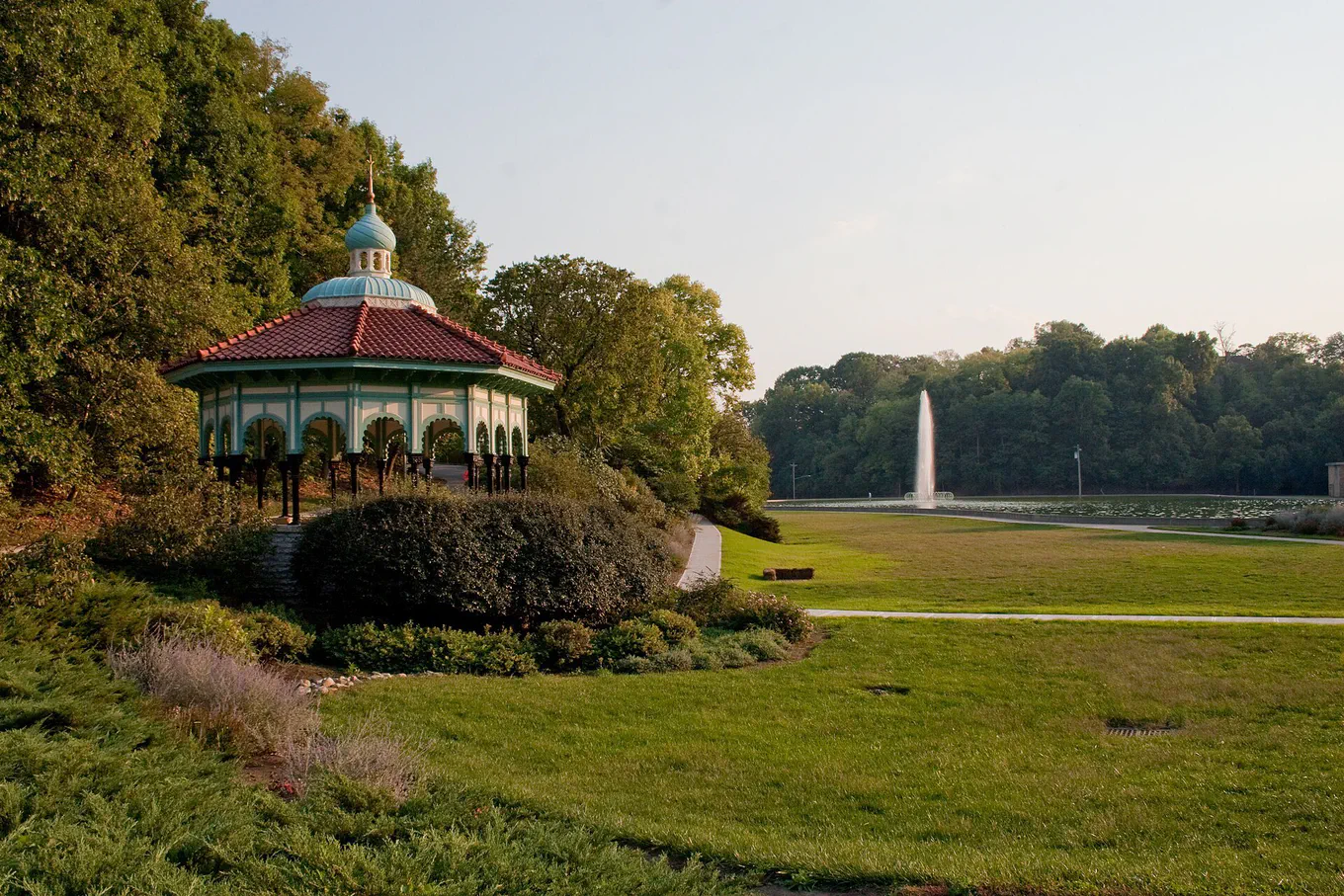
Stand here. Eden Park, a public park, where filming began in March 2014. Downtown Cincinnati, Hyde Park, and Over-the-Rhine were also used.
Carol, with Cate Blanchett and Rooney Mara, is set in 1950s New York but was shot here. New York was too expensive, and too changed to pass for the early 1950s. One producer remembered a film set in 1950s New York that she had made in Cincinnati 27 years earlier. She found the city barely changed. Patricia Highsmith’s novel began when a woman in a mink coat ordered a doll from her at Bloomingdale’s. The film found its toy department on the second floor of a defunct Cincinnati department store.
Pack nothing. Leave Friday.
Every Friday, I write a free letter, Journey, that takes us on a trip through places, stories, and ideas.
Uncle Tom’s Cabin(Harriet Beecher Stowe, 1852). A novel. Eliza’s escape over the ice of the Ohio River grew from an account given at Lane Seminary in Cincinnati.
Beloved(Toni Morrison, 1987). A novel, and winner of the 1988 Pulitzer Prize for Fiction. It opens in 1873 at 124 Bluestone Road, a fictional house in Cincinnati.
Films to watch before you visit Cincinnati
Carol(Todd Haynes, 2015). A film. Cincinnati, from Eden Park to Over-the-Rhine, plays 1950s New York in a romance from Patricia Highsmith’s novel.
Rain Man(Barry Levinson, 1988). A film. Charlie Babbitt comes to Cincinnati to settle his father’s estate.
Little Man Tate(Jodie Foster, 1991). A film, shot mostly in Over-the-Rhine and downtown Cincinnati, with scenes at the University of Cincinnati’s McMicken Hall in Clifton.
Dark Waters(Todd Haynes, 2019). A film. Mark Ruffalo plays Rob Bilott, a partner at Taft, a Cincinnati corporate law firm, and filming began in the city.
Questions
Can you visit the Harriet Beecher Stowe House?
Yes. The house at 2950 Gilbert Avenue was built in 1833 for the president of Lane Seminary, and Harriet lived there, on and off, until she married in 1836. It is owned by the Ohio History Connection and open to the public, with a small park and garden beside it.
What is a three-way in Cincinnati chili?
Chili on spaghetti is a two-way. A three-way adds shredded cheese, a four-way adds onions or beans before the cheese, and a five-way has both. There is no one-way. The Kiradjieff brothers devised the system to speed up ordering, and the chili itself is always seasoned with cinnamon, allspice, cloves, cumin, nutmeg, and chili powder.
Why is Cincinnati called the Queen City?
The nickname comes from an 1819 newspaper article, and an 1854 poem, “Catawba Wine”, made it last with the line “To the Queen of the West”. Residents took it up during the city’s years of rapid growth. For many years the city was also known as Porkopolis, for its pork industry.