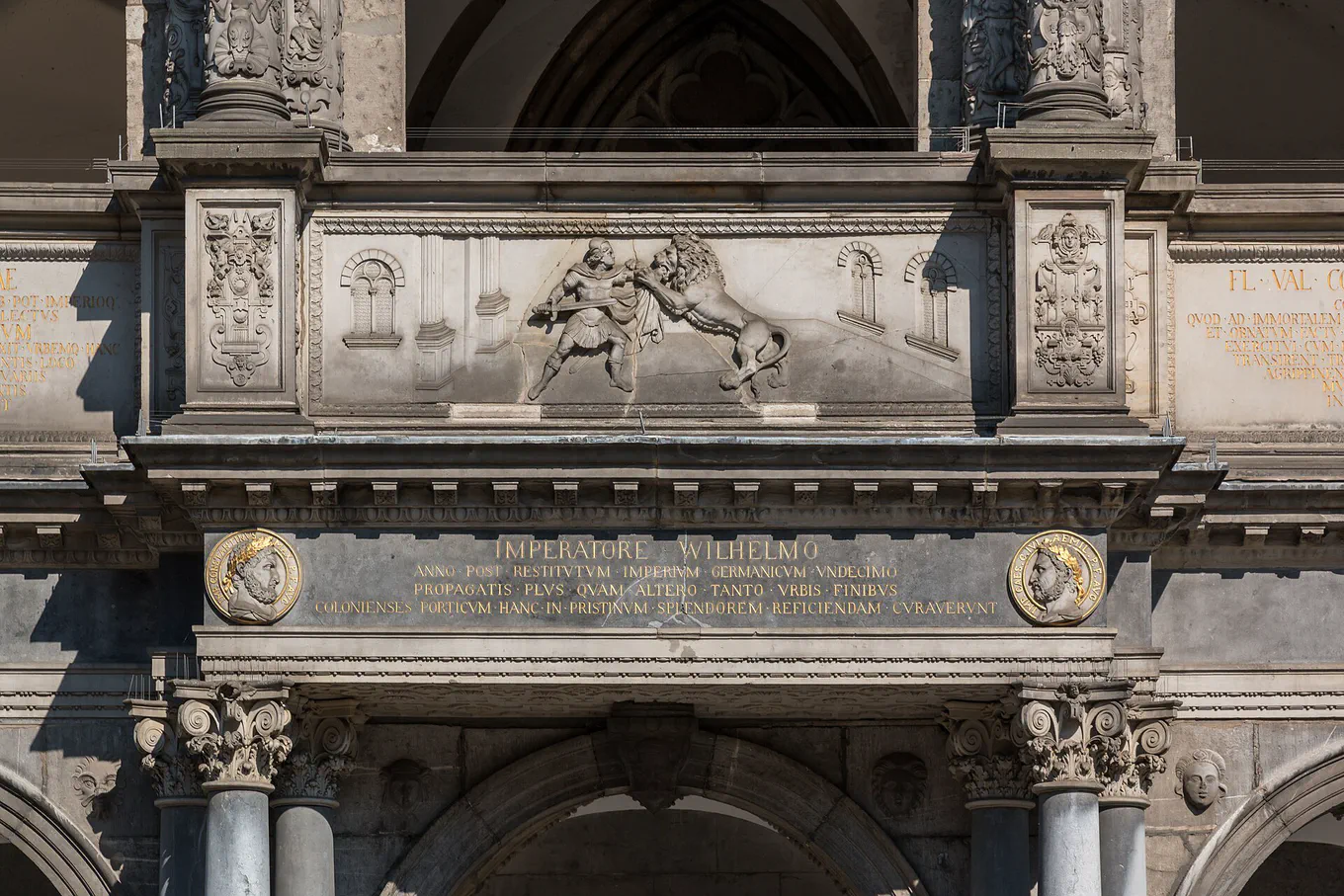
The longest project I’ve worked on was probably the first full novel that I wrote. I probably wrote 500,000 words to get to the 130,000 that were actually published. And to be honest, I was pretty impressed with myself. Then I saw that Cologne Cathedral took 632 years to finish. (So I’m less impressed now.)
— Nick
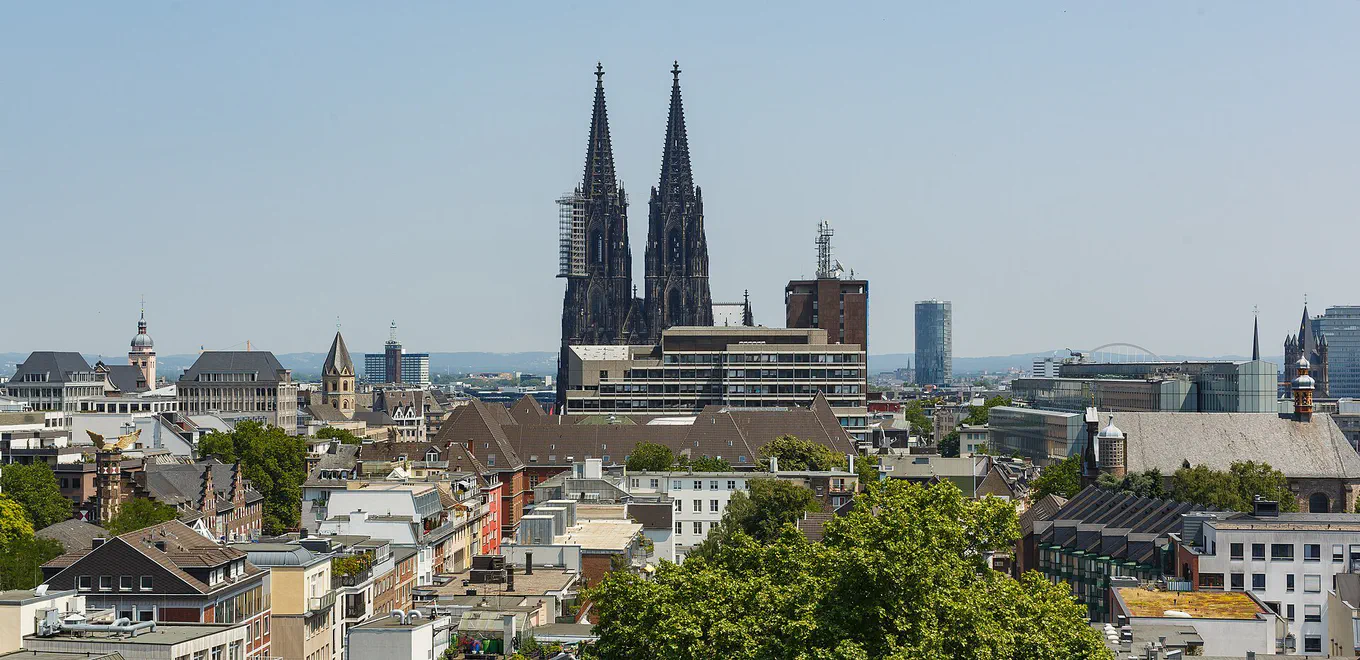
Cologne stands on the Rhine in western Germany and is the largest city in North Rhine-Westphalia. The Romans founded it in AD 50 as Colonia, a Roman colony, which gave the city its name. Its stories are an archbishop with the Three Kings’ bones, a perfumer whose name was borrowed, a lost plan found in two halves, a mayor sacked twice, and a pianist given the wrong piano.
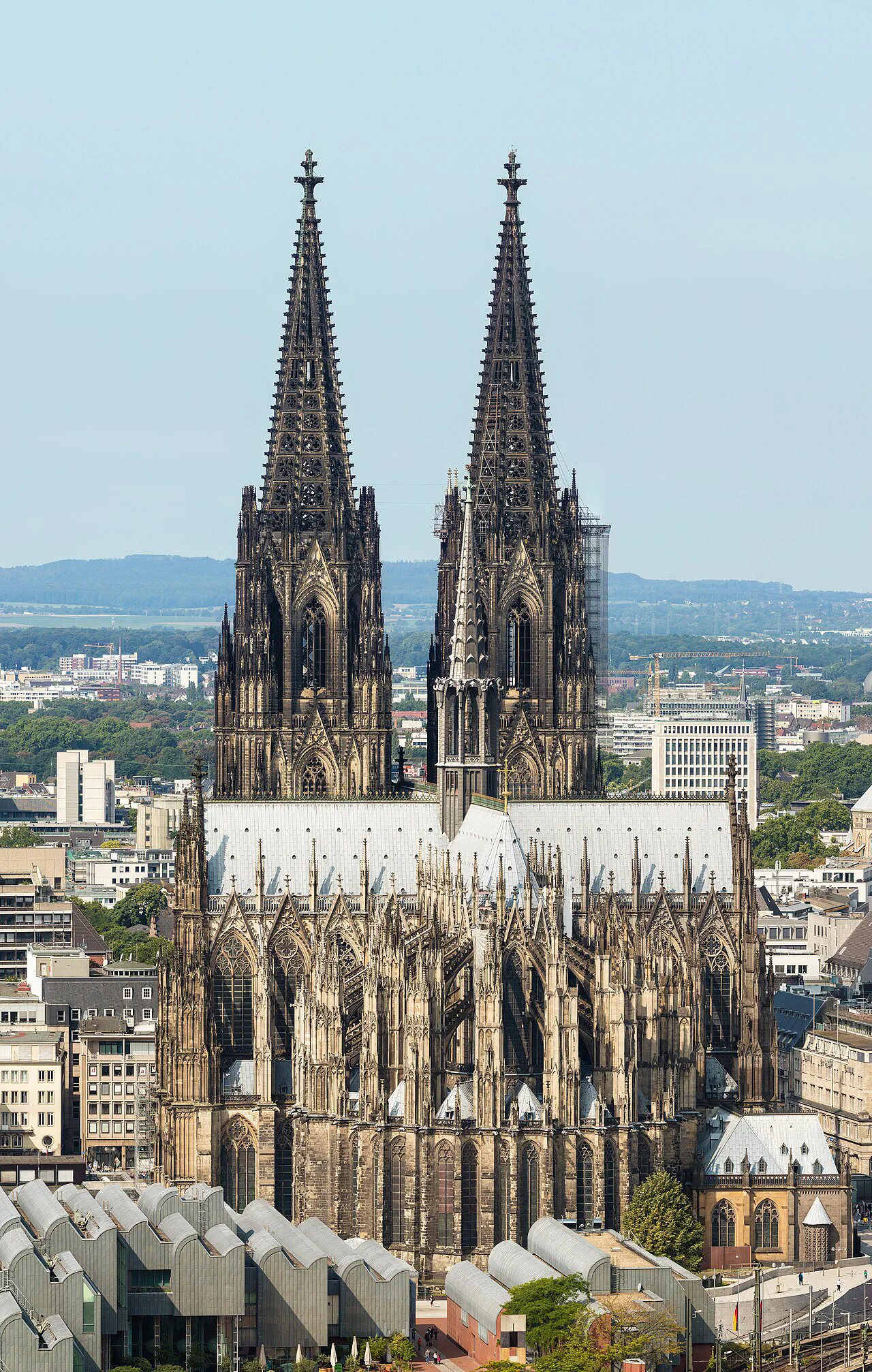
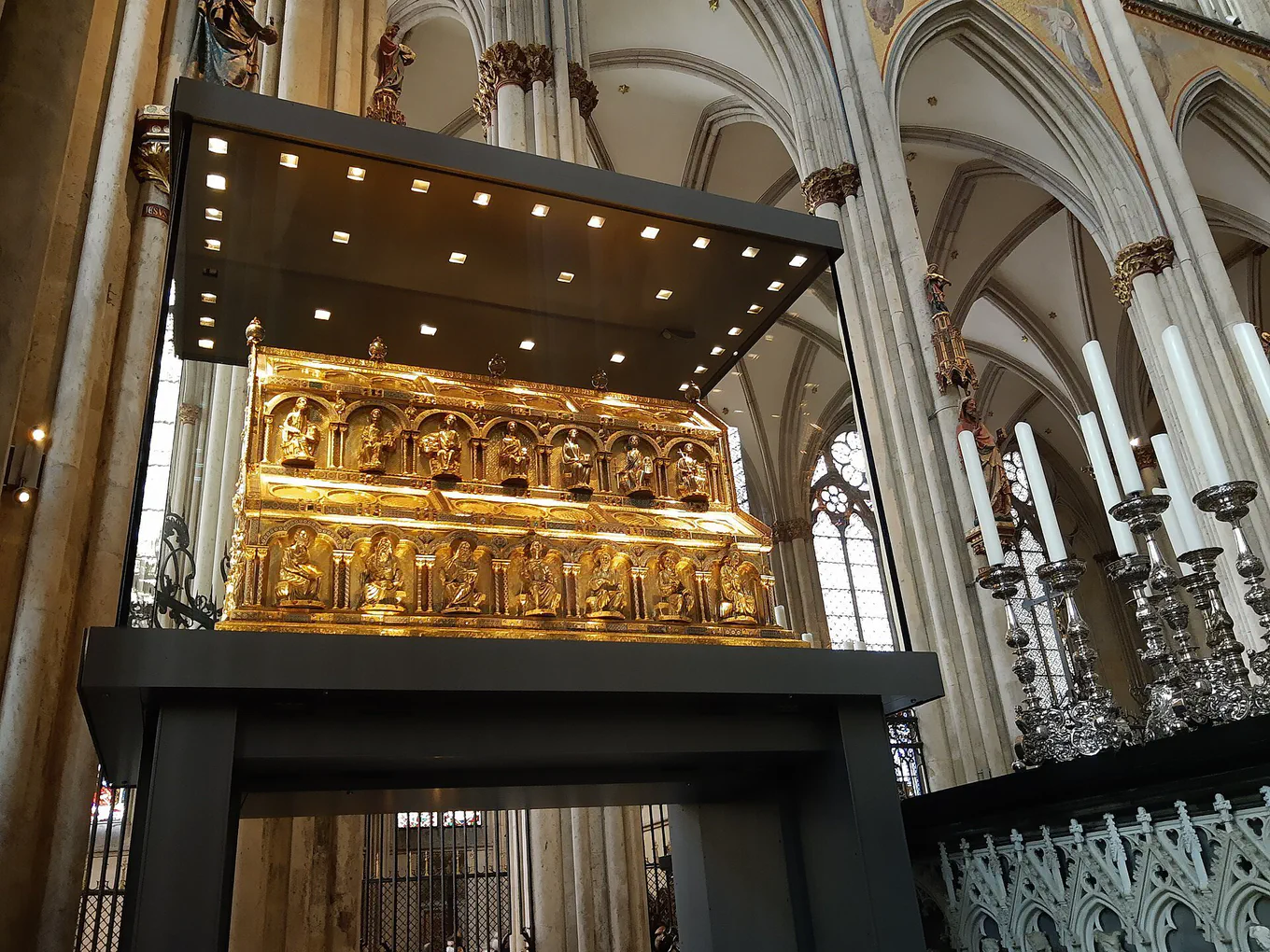
Cologne Cathedral is said to hold the bones of the Three Wise Men of the Nativity, and Rainald of Dassel is why. He was the city’s archbishop and chancellor to Emperor Frederick Barbarossa, who took rebellious Milan and seized the bones. In 1164, Rainald carried them to Cologne as the emperor’s gift. In Milan they had been almost unknown. Rainald made them famous across much of Christendom, until the old cathedral’s one narrow side door couldn’t cope with the pilgrims. So in 1248, Cologne began a new one. It took 632 years.
2 Johann Maria Farina and the first Eau de Cologne
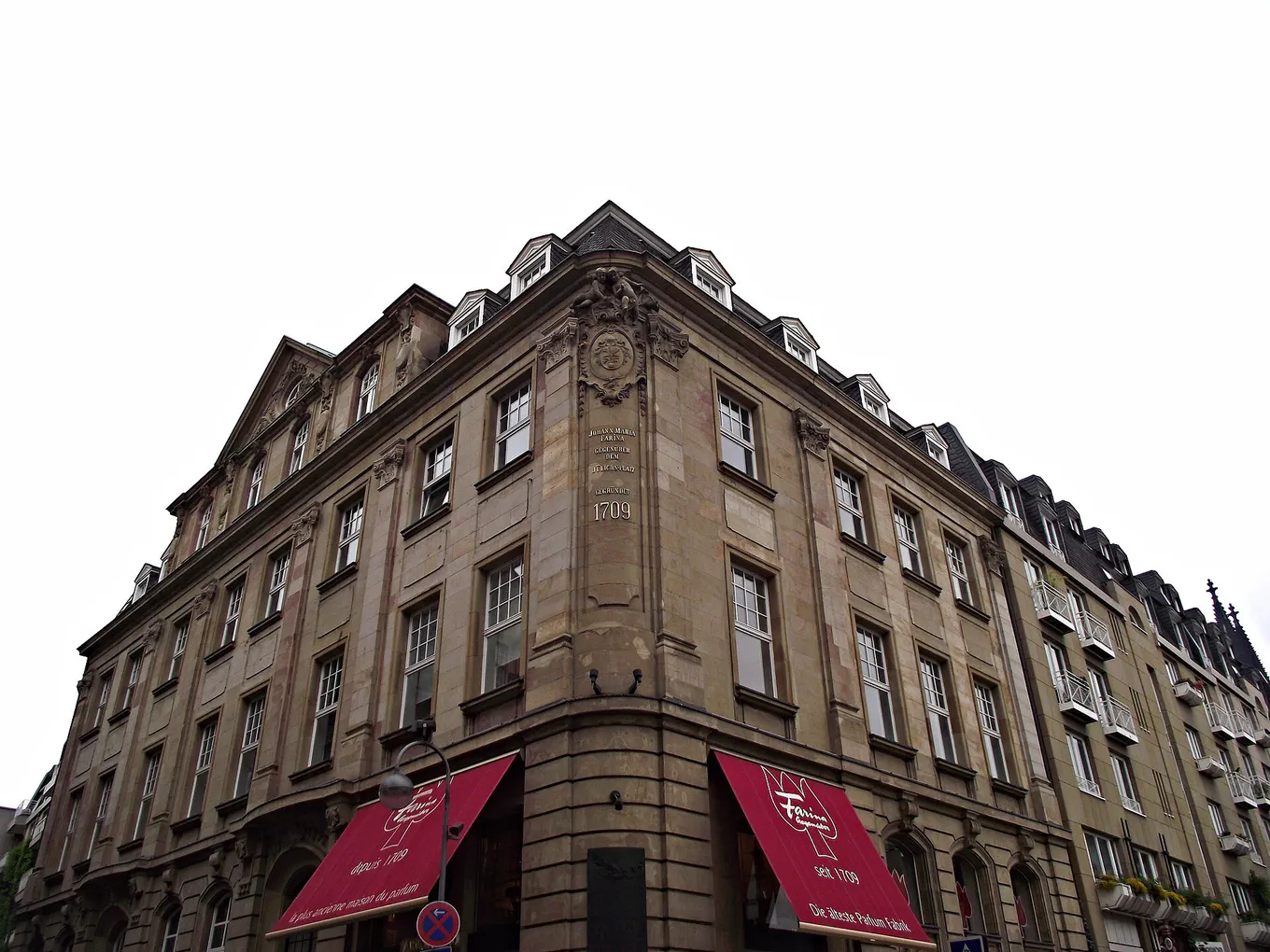
Stand here. Farina House, Obenmarspforten 21, in the old town. The family firm, now in its eighth generation, shows its Fragrance Museum by guided tour only.
Eau de Cologne began here in 1709. Its maker, Johann Maria Farina, wrote to his brother that he had found a scent that reminded him of an Italian spring morning, and named it after his new home town. A vial cost half a civil servant’s yearly pay, and every royal court had to have it. But once the French brought free trade, rivals sold their own Eau de Cologne. The Mülhens family, of 4711, used the Farina name. When they lost a dispute over it, they hired another Mr Farina.
3 Sulpiz Boisserée and the lost plan of Cologne Cathedral
Stand here. In front of the cathedral’s west front, facing its twin spires, built to the medieval drawing and finished in 1880.
For four hundred years, a huge crane stood on the unfinished south tower of Cologne Cathedral, where work had stopped. Sulpiz Boisserée, a Cologne art collector, wanted the cathedral finished, and even asked Napoleon for help, in vain. Then the medieval drawing of the west front turned up, in two halves, near Darmstadt and in Paris, and Boisserée got both. He won over Prussia’s crown prince, who as king restarted the work in 1842. Finished to that drawing, the cathedral was briefly the tallest building in the world.
4 Konrad Adenauer, sacked twice as mayor of Cologne
Stand here. Cologne City Hall, on Rathausplatz. It still houses the mayor’s offices, under a restored Gothic tower 61 metres high.
Konrad Adenauer, West Germany’s first chancellor, had run his home city for sixteen years when the Nazis threw him out in 1933 and froze his bank accounts. In May 1945, the Americans put him back as mayor. Within months, the British sacked him for “incompetence” and banned him from politics and from Cologne itself. He turned instead to building a new party. Four years later, aged 73, he was elected chancellor, and it was said he won by “a majority of one vote – his own”.
5 Keith Jarrett’s Köln Concert and the wrong piano
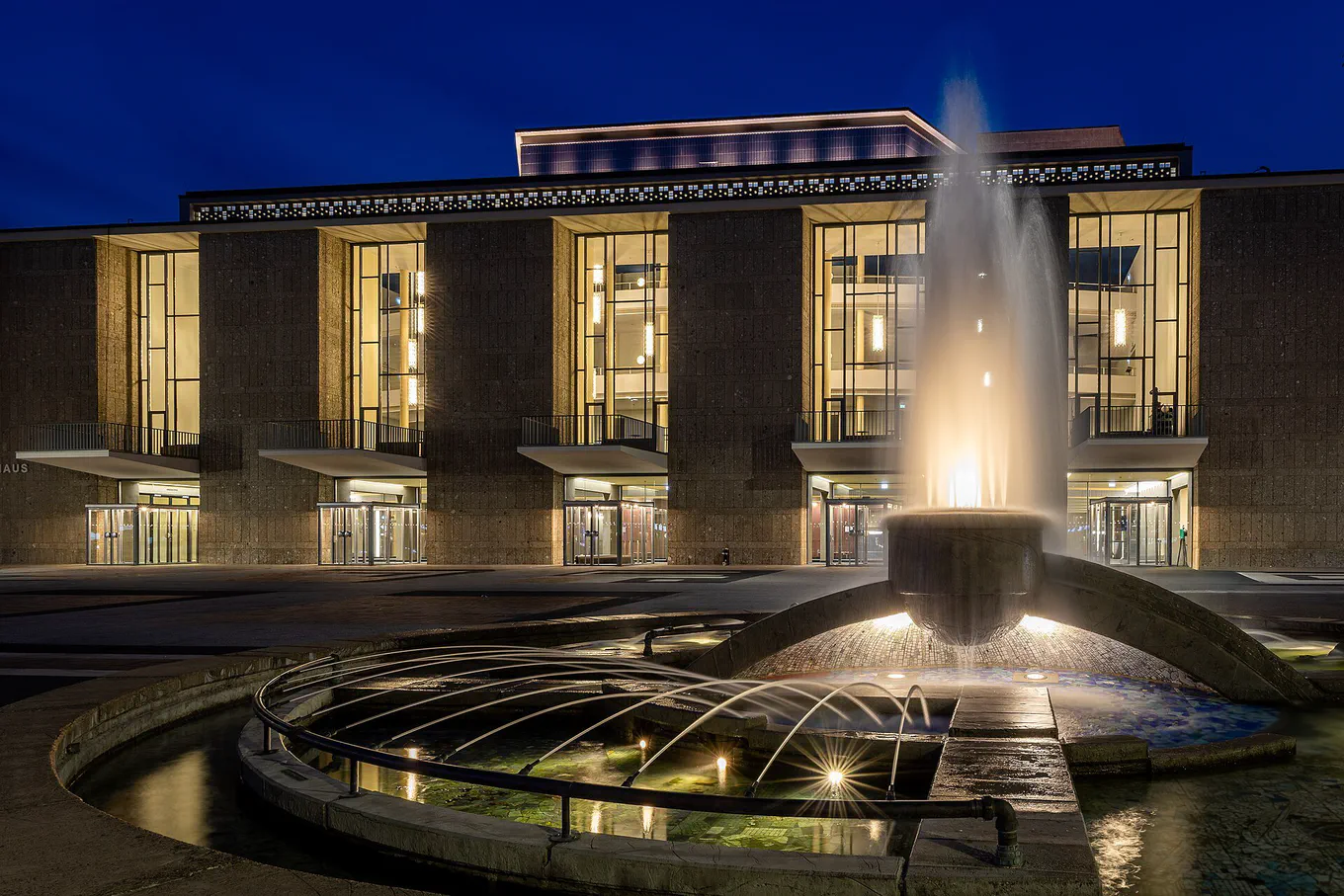
Stand here. Offenbachplatz, outside the Cologne Opera. The 1957 opera house reopened in September 2026 after fourteen years of renovation.
The Köln Concert, the best-selling solo jazz album ever, was recorded here on 24 January 1975. Its promoter, Vera Brandes, was eighteen. Keith Jarrett had asked for a Bösendorfer concert grand, but the only piano was a small rehearsal model, tinny at the top, weak in the bass, its pedals faulty. Jarrett, short of sleep and in a back brace, nearly walked out. Brandes talked him into playing. His producer said he probably played the way he did because it was not a good piano.
Pack nothing. Leave Friday.
Every Friday, I write a free letter, Journey, that takes us on a trip through places, stories, and ideas.
Billiards at Half-Past Nine(Heinrich Böll, 1959). A novel. Most of it takes place in Cologne, much of it at the fictional Prince Heinrich Hotel, where Robert plays billiards every weekday.
Group Portrait with Lady(Heinrich Böll, 1971). A novel. A woman faces eviction from her apartment building in Cologne, in a portrait of the city’s life from the 1910s to 1971.
The Silent Angel(Heinrich Böll, 1992). A novel, written in 1950 and published decades later. A German soldier goes to Cologne at the end of the Second World War.
Films to watch before you visit Cologne
Köln 75(Ido Fluk, 2025). A film. The teenage Vera Brandes puts on Keith Jarrett’s 1975 concert at the Cologne Opera House.
Tatort(WDR, 1997). A TV crime series. Its Cologne episodes follow two chief inspectors, and almost every one ends at a snack stand in Deutz, looking across the Rhine to the cathedral.
Edelweiss Pirates(Niko von Glasow, 2004). A film loosely based on actual events in Cologne’s Ehrenfeld district in autumn 1944, as young Edelweiss Pirates refuse to submit to the pressure of the Nazi regime.
Questions
Are the Three Kings really buried in Cologne Cathedral?
The gilded Shrine of the Three Kings stands above and behind the cathedral’s high altar. When it was opened in 1864, it held the bones of three people, one young, one in early manhood, and one old. No secular historian has verified that they are the Magi, and many scholars think the Magi were legendary.
Did Cologne Cathedral survive the Second World War?
Yes, though it was badly damaged. It took about 70 bomb hits, 14 of them from heavy aerial bombs, yet it stayed standing in an otherwise flattened city. Repairs were far enough along for it to reopen in 1956.
Why is the Cologne scent 4711 called 4711?
In 1794, with French troops just outside the city, Cologne’s council numbered every house. One house, Glockengasse 12, got number 4711, and later a Mülhens founded a small Eau de Cologne factory on the Glockengasse. The well-known picture of a French officer on horseback painting the number is a product of advertising.