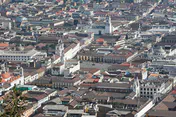
Two days before we were leaving Peru, my wife broke her arm in the shadow of Machu Picchu. It was one of those random could-happen-to-anyone kind of accidents, and we were quickly “evacuated” back to a hospital in Cusco. They did a great patch job, and we spent our final day exploring the city.
(My wife chose to fly home with her arm splinted but not mended, which gives you some measure of the woman.)
— Nick
Cusco sits at around 3,400 metres in the Andes of southeastern Peru, near the Sacred Valley. It was the capital of the Inca Empire until 1532, and Francisco Pizarro arrived on 15 November 1533. Its stories here are a conquistador who lost the sun at cards, an Inca siege, a rebel’s last day on the main square, Machu Picchu’s finds coming home, and a festival rebuilt from a book.
Mancio Serra de Leguízamo was a captain who came with Francisco Pizarro to conquer the Incas. Coricancha’s walls were sheeted in gold. When the spoils were shared out, the story goes, his share was a gold disc carved with the sun. He lost it at cards that night. The Spanish saying “to gamble the sun before dawn” is said to come from his loss. In 1589, bedridden, he made a statement, he said, to unburden his conscience.
Francisco Pizarro made Manco Inca, son of the emperor Huayna Capac, a puppet ruler, and the Spaniards humiliated him. On 6 May 1536, Manco laid siege to Cusco, held by Hernando Pizarro. Burning arrows set the thatch alight, and a stone killed Juan Pizarro. Cornered in the Suntur Wasi, an Inca ceremonial building, the Spanish drove the Incas back, and Manco withdrew to Vilcabamba. The Spanish credited St James, said to have come down from heaven. The church they built on the spot is called the Triumph.
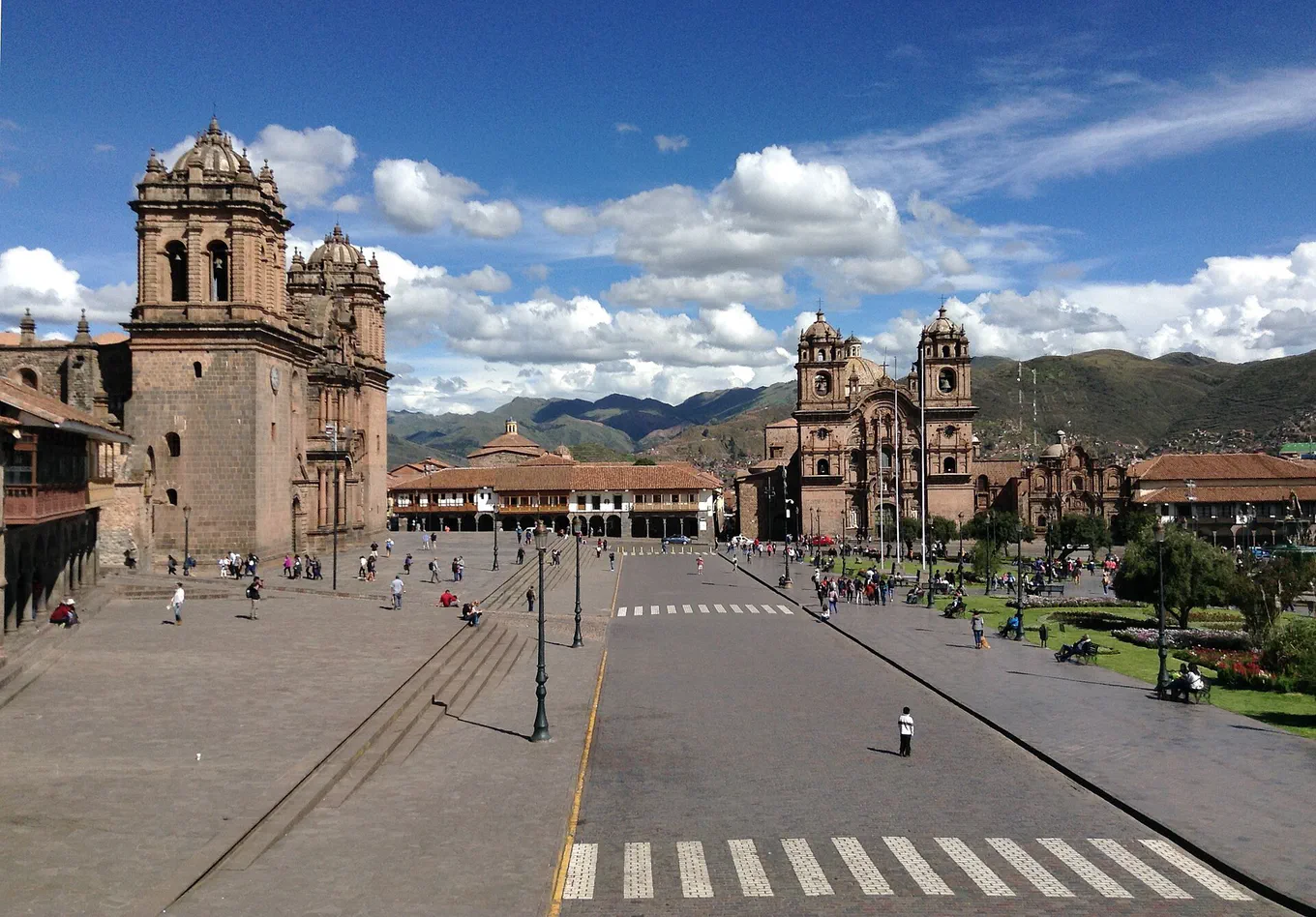
In 1780, José Gabriel Condorcanqui, an Indigenous chief descended from Túpac Amaru, the last Inca of Vilcabamba, rose in rebellion as Túpac Amaru II. He wanted to end the mita, forced labour in the mines, and began by executing a Spanish official. But two of his officers betrayed him. On 18 May 1781, he was brought to the Plaza de Armas and made to watch his wife and son die. Four horses were meant to pull him apart. They failed, and he was beheaded in the same square.
4 Hiram Bingham’s Machu Picchu finds come home to Casa Concha
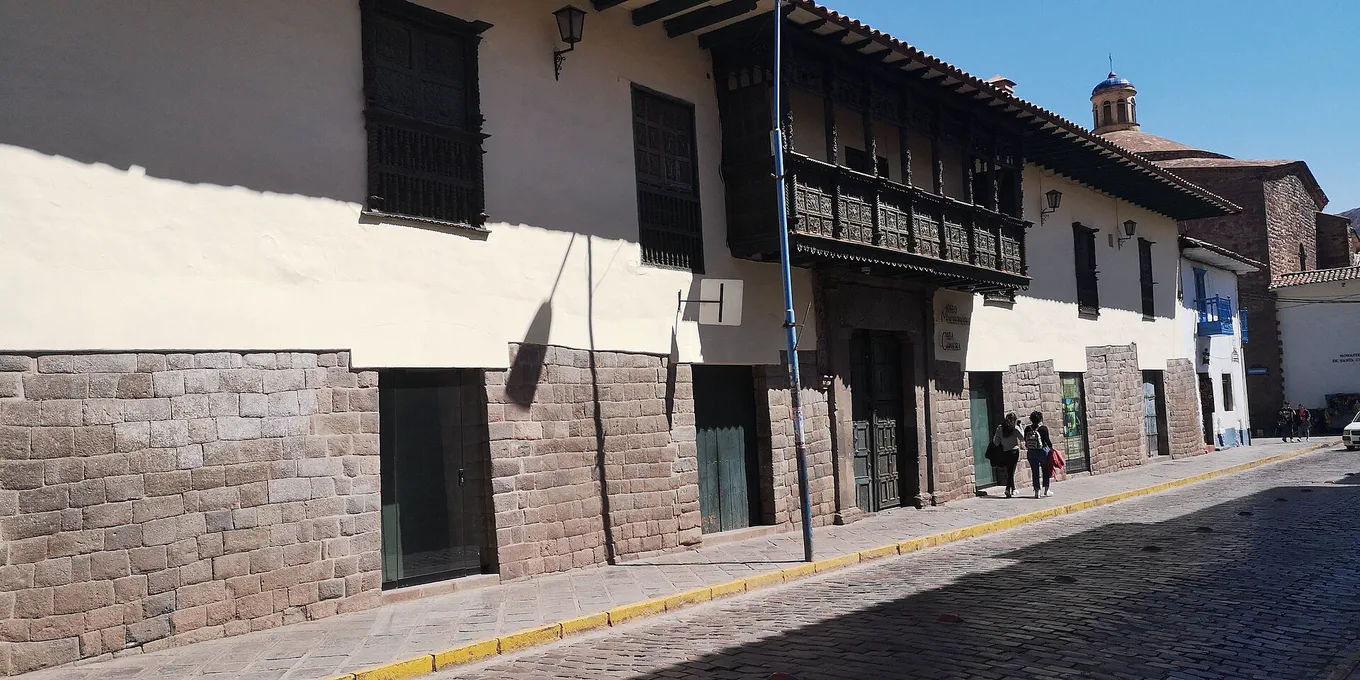
Stand here. Casa Concha, at Calle Santa Catalina Ancha 320, home of the Museo Machu Picchu since 2011.
Hiram Bingham, an American explorer, was led to Machu Picchu on 24 July 1911, and he took its finds to Yale. Peru reserved the right to ask for them back, and Bingham himself later wrote that they belonged to Peru. But when Peru asked, Yale wanted more time, and the deadline passed with nothing returned. In 2009, Peru sued, and protesters later chanted “Give us back our heritage!” In 2011, the finds came home, to a house built on Inca walls.
5 Faustino Espinoza Navarro brings Inti Raymi back to Sacsayhuamán
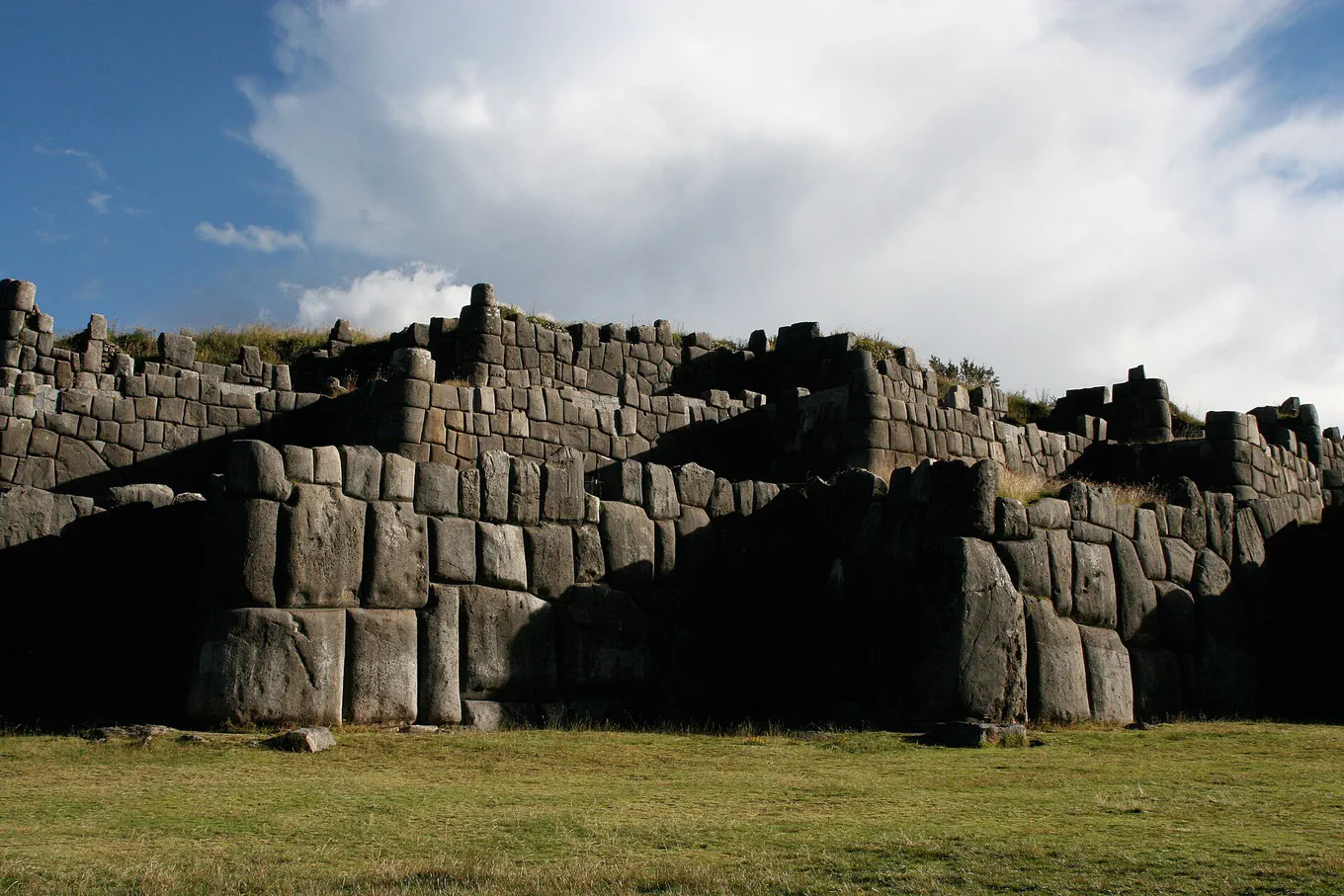
Stand here. Sacsayhuamán, the Inca citadel of huge stones laid without mortar on Cusco’s northern edge, where the revived festival has been staged since 1944.
The massive mortarless stone walls of Sacsayhuamán, the Inca citadel on the northern edge of Cusco.Esoltas / Public domain.
The Spanish banned Inti Raymi, the Inca festival of the sun, after 1535. In 1944, a Peruvian writer and actor, Faustino Espinoza Navarro, brought it back with Humberto Vidal Unda. He wrote every part in Quechua and played the Inca himself for the first 14 years. They worked largely from the chronicles of Inca Garcilaso de la Vega, the Cusco-born son of a conquistador and an Inca noblewoman. Garcilaso wrote them far from Cusco. He had left for Spain at 21 and never came home.
Pack nothing. Leave Friday.
Every Friday, I write a free letter, Journey, that takes us on a trip through places, stories, and ideas.
Royal Commentaries of the Incas(Inca Garcilaso de la Vega, 1609). A history. The 1944 revival of Inti Raymi was based largely on Garcilaso’s chronicles. Garcilaso’s former house in Cusco is now the Regional Historical Museum.
Deep Rivers(José María Arguedas, 1958). A novel. It opens as the boy Ernesto arrives in Cusco with his father and is dazzled by the Inca palace walls, whose fitted stones seem to move and speak.
The Motorcycle Diaries(Ernesto “Che” Guevara, 1993). A memoir. In its Cusco chapter, “The navel”, he finds the Inca capital visible only in “violated ruins”.
Films to watch before you visit Cusco
The Motorcycle Diaries(Walter Salles, 2004). A film. Most of its “Cuzco” scene was actually shot in the village of Ollantaytambo, in the Sacred Valley.
Secret of the Incas(Jerry Hopper, 1954). A film, often credited as the inspiration for Raiders of the Lost Ark, shot in Cusco and at Machu Picchu with Charlton Heston as the adventurer Harry Steele.
Motherland (Kinra)(Marco Panatonic, 2023). A Peruvian drama film. Atoqcha travels between his home in the mountains, where his mother lives, and the city of Cusco, seeking a future as a civil engineering student.
Questions
Can you still see the Inca walls of Coricancha?
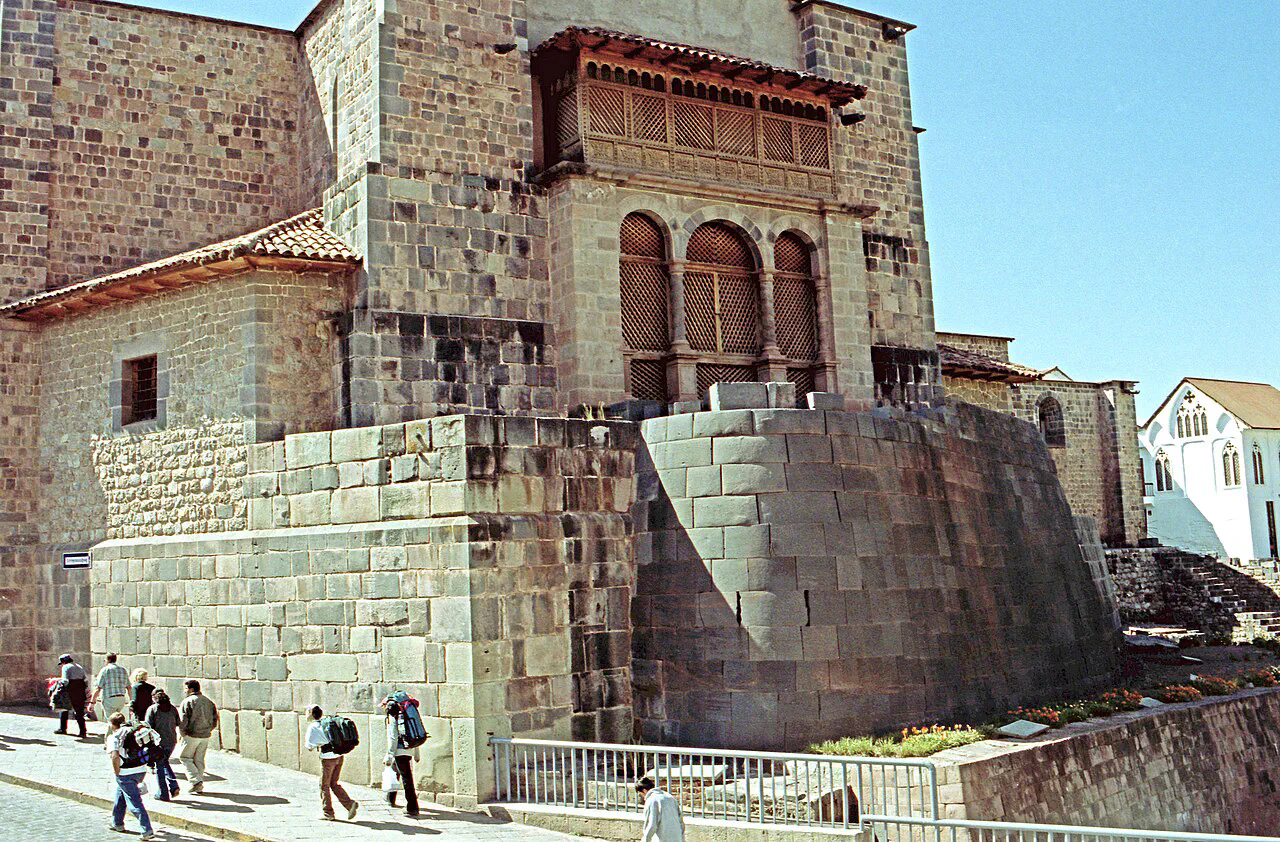
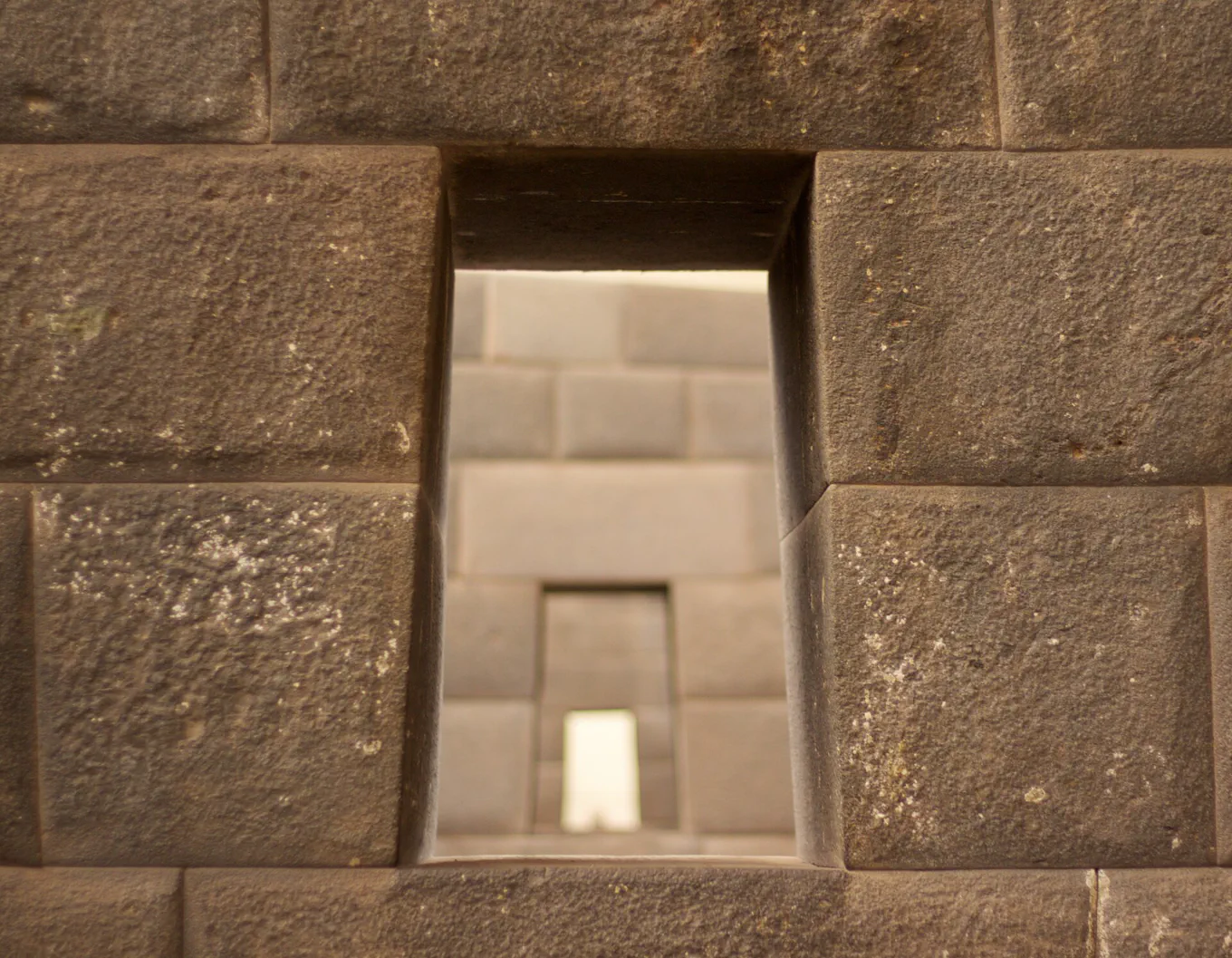
Yes. The Spanish built the Church and Convent of Santo Domingo on Coricancha, the Inca Temple of the Sun, and earthquakes later damaged the church badly. But the Inca walls, of huge, tightly interlocking stone blocks, still stand. An earthquake exposed Coricancha’s old retaining walls, and they were rediscovered. The convent houses a museum of Inca artefacts.
Where is the twelve-angled stone in Cusco?
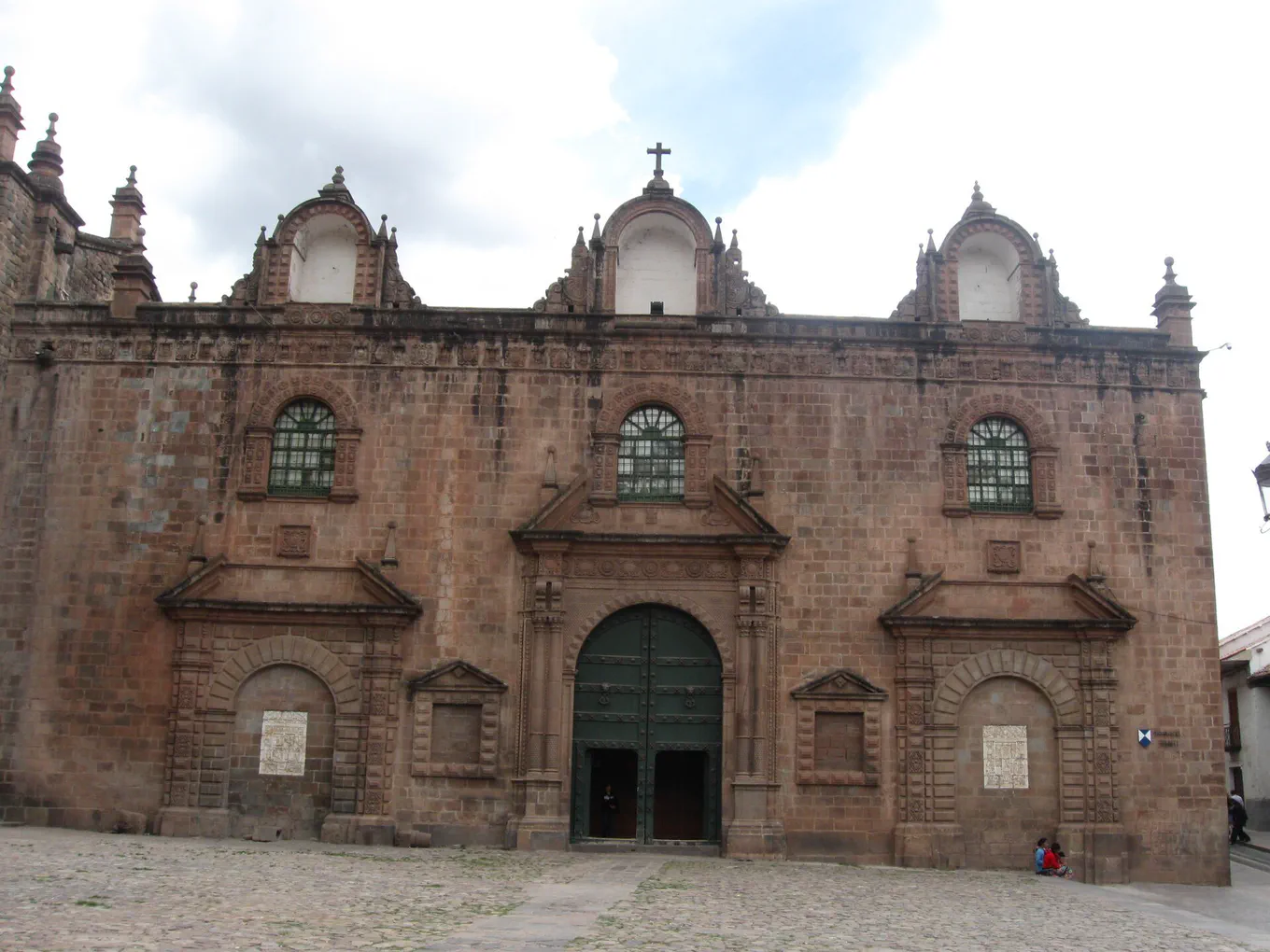
It sits in the Hatun Rumiyoc, a wall that makes up the outside of the Archbishop’s palace in Cusco. The stone is diorite, recognised by its fine finishing and its twelve-angled border, and it is considered a national heritage object of Peru.
How high is Cusco?
Cusco sits at around 3,400 metres (11,200 feet), in southeastern Peru near the Sacred Valley of the Andes. Sacsayhuamán, the Inca citadel on the city’s northern outskirts, is higher still, at 3,701 metres (12,142 feet).