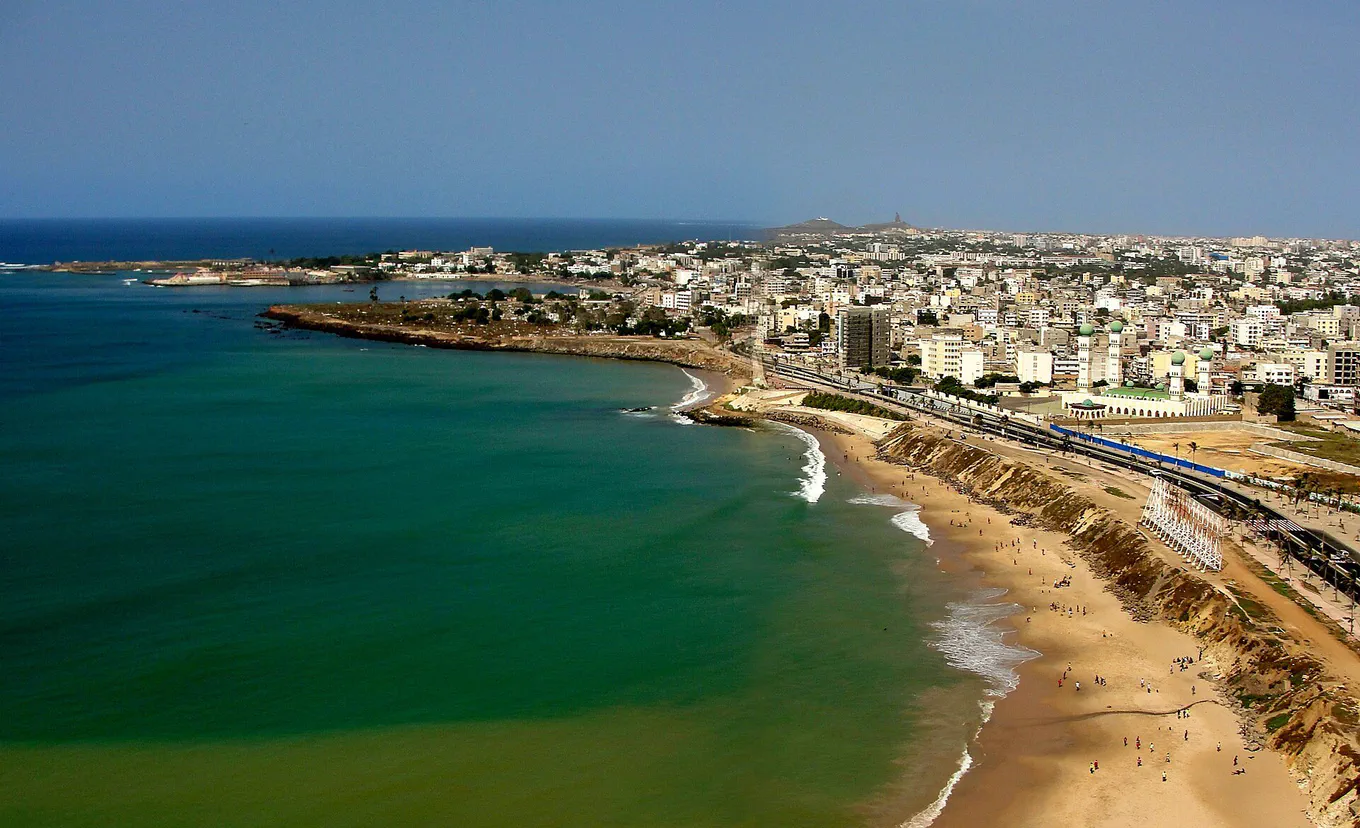
Dakar, on the Cap-Vert peninsula, is Senegal’s capital and the westernmost city on the African mainland. The French set up a military post in 1857, and from 1902 it was the capital of French West Africa. Its stories are a rally born of getting lost, a battle de Gaulle called off, a singer from the Medina, a runaway in a film, and a bronze giant on a hill.
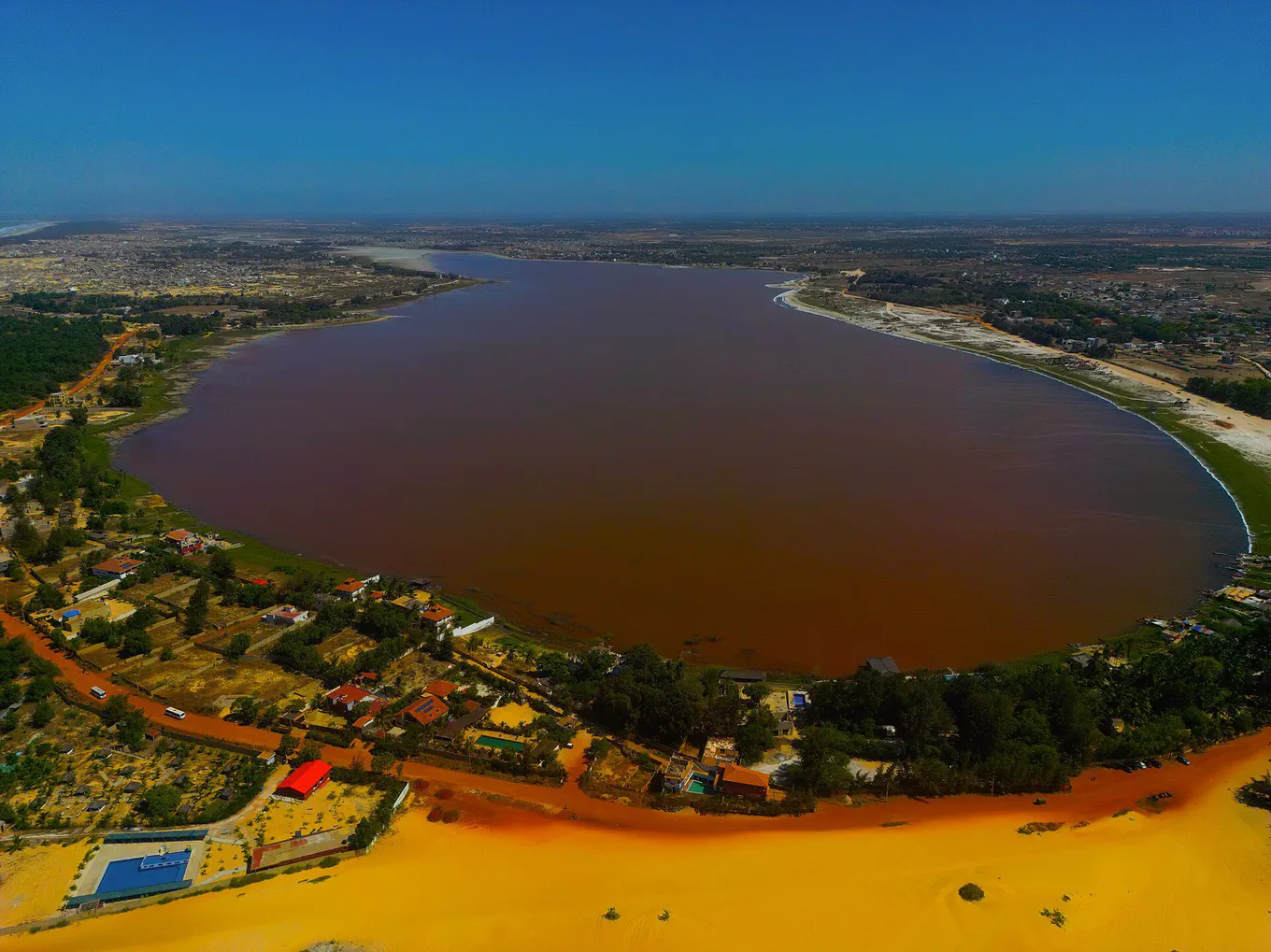
The Dakar Rally began after Thierry Sabine, a French motorcyclist, got lost in the desert during a race. He decided the desert would suit a regular rally, set one up from Paris to Dakar, and gave it the rest of his life. In 1986, his helicopter crashed into a dune in Mali during a sudden sandstorm. His slogan for the race was “A challenge for those who go. A dream for those who stay behind.”
2 De Gaulle’s failed bid to take Dakar in 1940
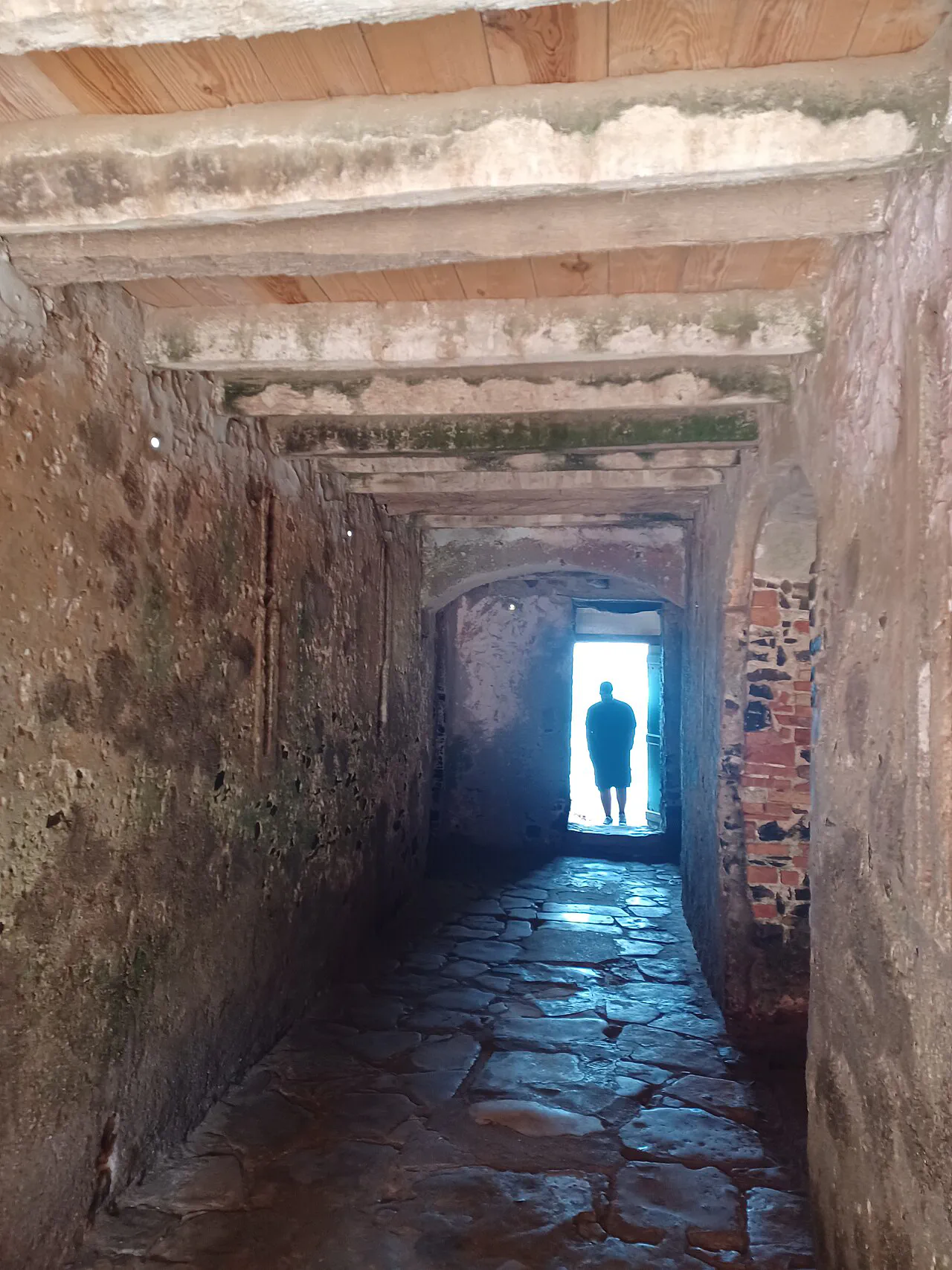
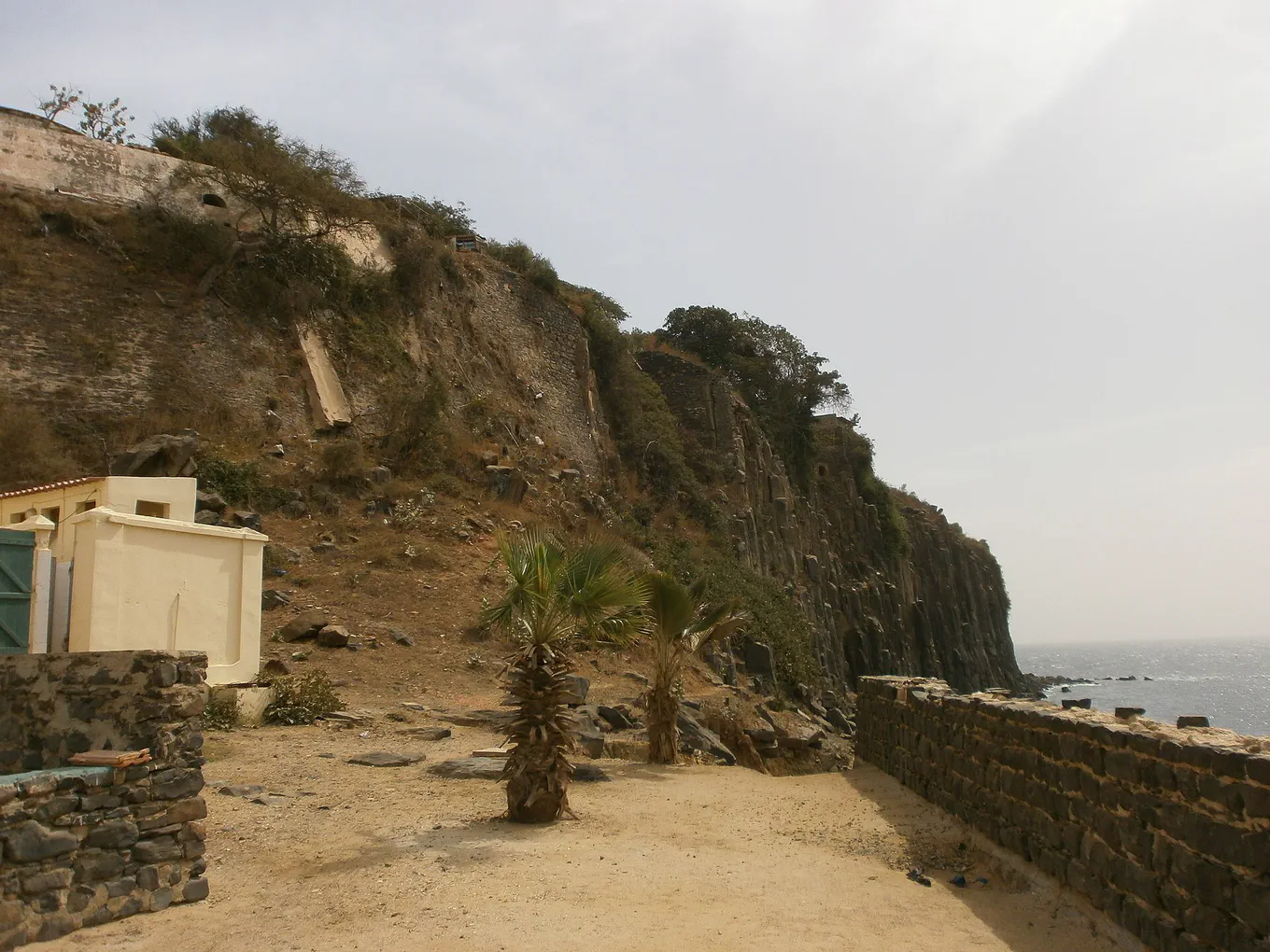
Stand here. The Castel battery on Gorée Island. It preserves a twin turret of 240mm guns, a model that served in the Battle of Dakar.
In September 1940, Charles de Gaulle believed he could talk the Vichy French forces in Dakar into joining the Allies. The prize was the port and the gold reserves stored there. But the boat carrying his representatives into the harbour was fired upon, and the Vichy battleship Richelieu, though torpedoed, kept firing. De Gaulle called off the assault, saying he did not want to “shed the blood of Frenchmen for Frenchmen”. The Allies withdrew, and Dakar stayed in Vichy hands.
Long before “7 Seconds”, his duet with Neneh Cherry, Youssou N’Dour was a boy in Dakar’s Medina. His father, a mechanic, discouraged him from music. His mother was a griot, one of the community’s historians and storytellers, and with her encouragement he sang at kassak, parties to celebrate a circumcision. In 1976, he signed to sing with the Star Band, then the best-known pop band in Senegal. By 20, he had left to form his own, and called it Étoile de Dakar, the Star of Dakar.
4 Touki Bouki and the runaway at the Port of Dakar
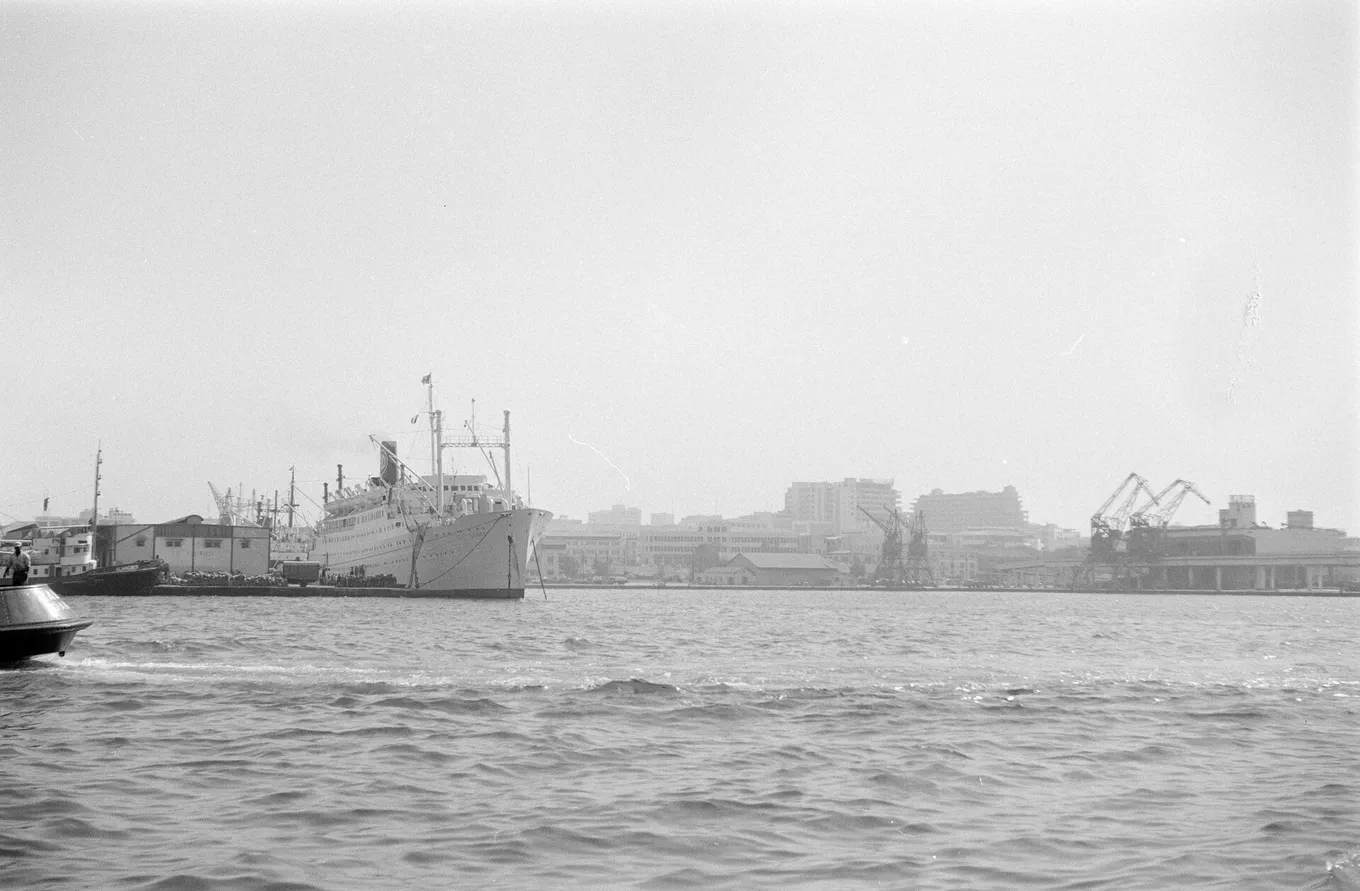
Stand here. The Port of Dakar, where the film’s two runaways come to board their ship.
Beyoncé and Jay-Z’s tour poster referenced a motorbike from a 1973 Senegalese film, one adorned with a bull-horned skull. In Djibril Diop Mambéty’s Touki Bouki, the bike is ridden by Mory, a cowherd, who meets Anta, a student, in Dakar. The two dream of escaping to Paris, and they get as far as the Port of Dakar. As they board the ship, Mory panics and flees. The ship sails with Anta, and leaves Mory behind.
Stand here. The top of one of the twin Collines des Mamelles hills, in the Dakar suburb of Ouakam, where the statue stands.
A North Korean company built the African Renaissance Monument, a 50-metre bronze, for Abdoulaye Wade, who patented some simple sketches of it. It cost US$27 million, paid in land, 30 to 40 hectares of it. Wade reportedly insisted he was entitled to 35 per cent of the profits. Local imams called the statue idolatrous and objected to its semi-nude figures, and an opposition politician called it an “economic monster and a financial scandal”. It was unveiled on 3 April 2010, before 19 African heads of state.
Pack nothing. Leave Friday.
Every Friday, I write a free letter, Journey, that takes us on a trip through places, stories, and ideas.
So Long a Letter(Mariama Bâ, 1979). A novel. Mariama Bâ’s first novel, set in Dakar, Senegal’s capital, the city where she was born in 1929.
God’s Bits of Wood(Ousmane Sembène, 1960). A novel based on a historic railway strike in colonial Senegal in the 1940s, in which women eventually march on foot for over four days from Thiès to Dakar.
The Beggars’ Strike(Aminata Sow Fall, 1979). A novel in which beggars expelled from the city strike and refuse alms, while Dakar’s sanitation director is ordered by a marabout to give the poor portions of sheep.
Films to watch before you visit Dakar
Touki Bouki(Djibril Diop Mambéty, 1973). A film. A cowherd and a student dream of Paris, and their escape comes apart at the Port of Dakar.
Xala(Ousmane Sembène, 1975). A film. The new African elite take over the Chamber of Commerce, and a Dakar beggar’s curse falls on the man who took his land.
Black Girl(La Noire de…, Ousmane Sembène, 1966). A film. Diouana roams Dakar looking for a job.
Atlantics(Mati Diop, 2019). A film. A “mysterious fable of class, migration and heartbreak” (Sight and Sound), it opens on a Dakar construction site.
Questions
Where is the African Renaissance Monument, and how tall is it?
It is a 50-metre bronze statue on top of one of the twin Collines des Mamelles hills, in the Dakar suburb of Ouakam. A North Korean company, Mansudae Overseas Projects, built it with 150 North Korean and 50 Senegalese workers, and it was unveiled in 2010.
Why did the Dakar Rally leave Africa?
The 2008 rally was cancelled on 4 January, amid fears of attacks in Mauritania, and from 2009 to 2019 the race was held in South America. Before the move, it often finished at Lac Rose, the pink lake about 35 km north-east of Dakar.
Is Dakar the capital of Senegal?
Yes. Dakar is Senegal’s capital and largest city, and it has been the capital of the independent republic since 1960. Before that, from 1902, it was the capital of French West Africa, taking over from Saint-Louis.