After washing up in Miami in January 1993, I took a Greyhound to Dallas in time to see the Cowboys parade their Super Bowl trophy. A good day.
— Nick
Dallas’s founder, John Neely Bryan, settled on the Trinity River in 1841, and the railroads made the city an industrial and financial centre. It lies in northern Texas and is the ninth-most populous city in the United States. A home movie on Dealey Plaza comes first, then an outlaw’s grave, a television cliffhanger, a store said to have refused Coca-Cola, and a summer that made the microchip.
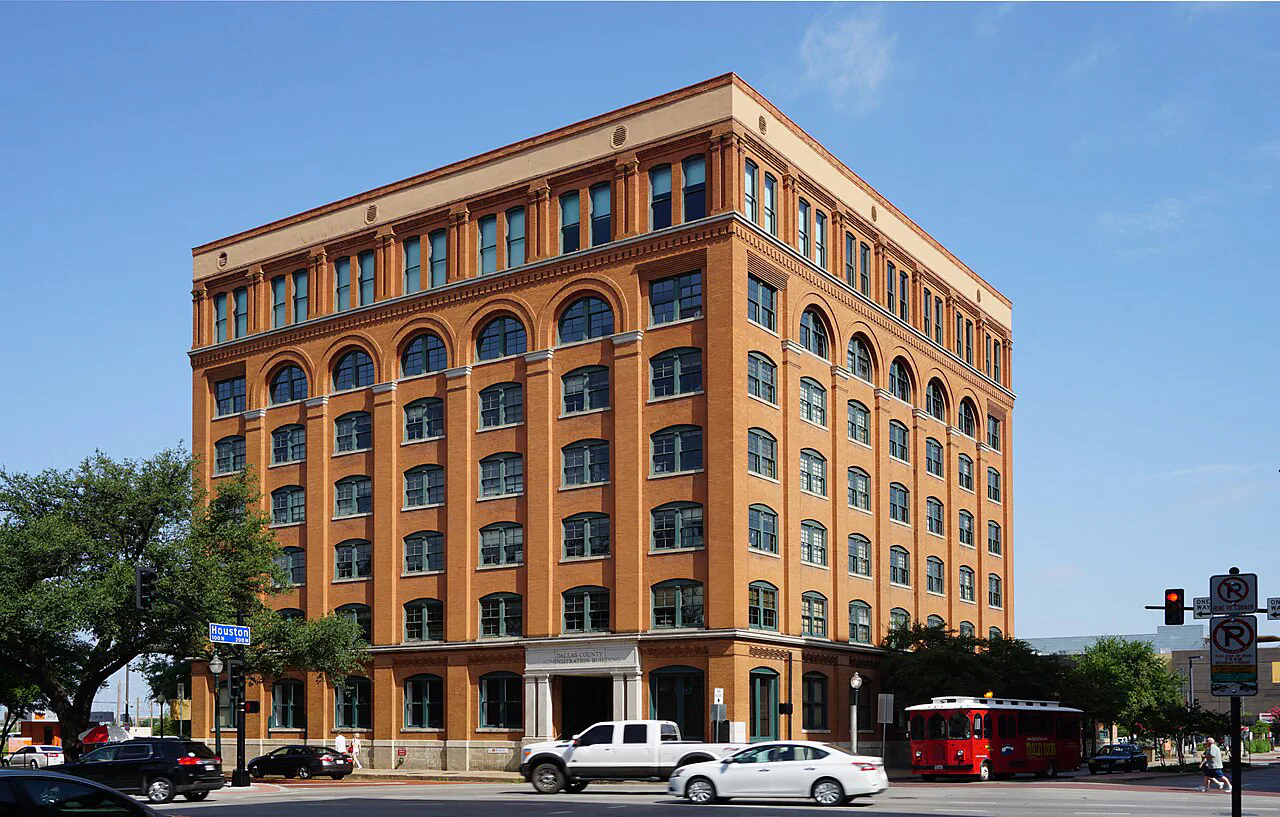
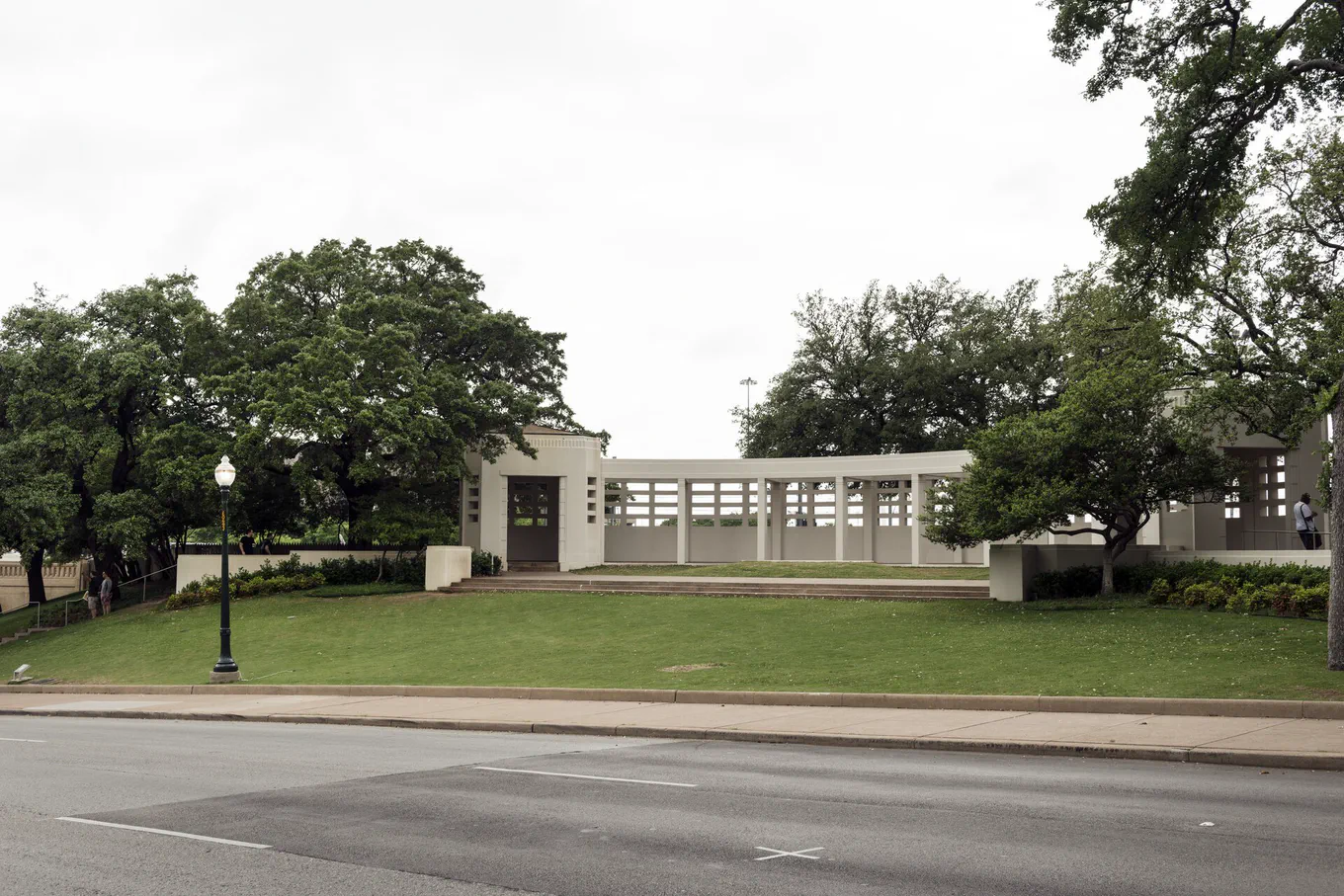
On 22 November 1963, President Kennedy’s motorcade was coming through Dealey Plaza, and Abraham Zapruder, a clothing manufacturer, had left his camera at home. The weather had cleared, so his assistant sent him back for it. He had vertigo, and his secretary held his coat to steady him on a concrete ledge here. His 26.6 seconds of film caught the president’s killing. After a nightmare about a booth in Times Square, he made Life withhold the frame of the fatal shot. He never filmed with a camera again.
2 Bonnie Parker’s Dallas grave, apart from Clyde Barrow
Stand here. Bonnie Parker’s grave in Crown Hill Cemetery, Dallas. Clyde Barrow lies in another Dallas cemetery, Western Heights.
Before Warren Beatty and Faye Dunaway played them in the 1967 film Bonnie and Clyde, Bonnie Parker worked in a Dallas café. She met Clyde Barrow and smuggled a gun into a Waco jail so he could escape. In 1934, the pair were ambushed in Louisiana and killed in a barrage of 167 bullets. They had wished to be buried side by side, but her family would not allow it. Her stone here says that “this old world is made brighter by the lives of folks like you.”
3 Larry Hagman, Southfork Ranch, and “Who shot J.R.?”
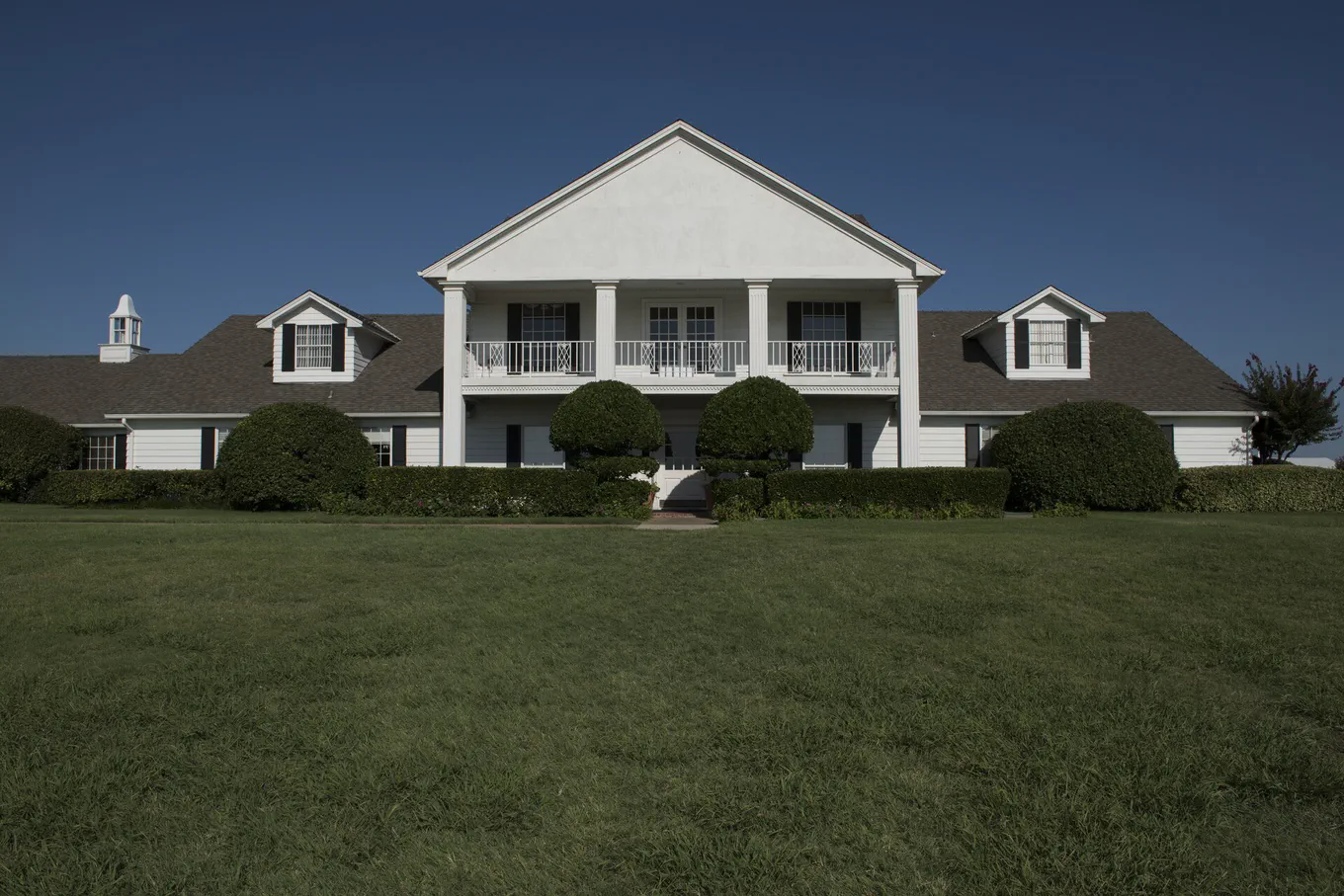
Stand here. Southfork Ranch, in Parker, 25 miles north of Dallas, where the TV series Dallas filmed its exteriors. It’s now an event centre with tours.
The main house at Southfork Ranch in Parker, north of Dallas, the Ewing family home in the TV series Dallas.Carol M. Highsmith / Public domain.
“Who shot J.R.?” began in March 1980, when the TV series Dallas ended its season with its oil baron, J.R. Ewing, shot twice by an unseen attacker. Advised that the shooting had made him very valuable, Larry Hagman, who played J.R., demanded a raise. CBS prepared to replace him by giving J.R. facial reconstructive surgery, though the bullet had hit his stomach. Hagman returned on $100,000 an episode. To keep the shooter secret, every actor and crew member was filmed pulling the trigger. Even Hagman shot J.R.
4 Neiman Marcus, the Dallas store said to have refused Coca-Cola
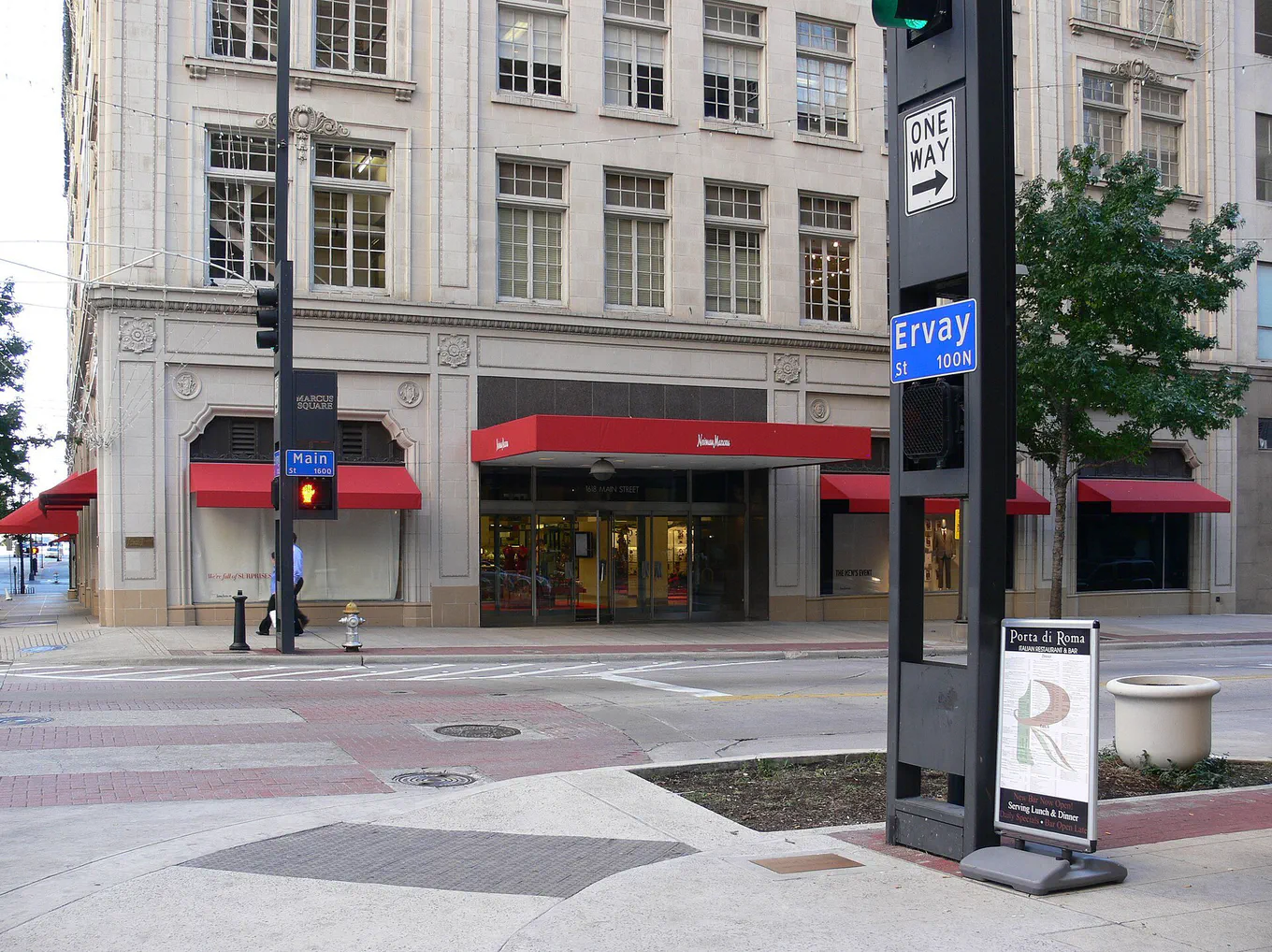
Stand here. The Neiman Marcus Building, at Main and Ervay, downtown. The 1914 red brick and white stone building stands, but the store closed in 2026.
Herbert Marcus, his sister Carrie, and her husband Al Neiman, who founded Neiman Marcus, turned down the young Coca-Cola company, the story goes, rather than gamble on a sugary soda-pop business. They took the $25,000 they had made in Atlanta home to Dallas instead, and in 1907, in the middle of a recession, opened a lavishly furnished store. The first store burned down, and its replacement went up on this corner. In time, its Christmas catalogue offered His-and-Hers gifts, among them a pair of aeroplanes.
5 Jack Kilby’s microchip, made in a Dallas summer
Stand here. The statue of Jack Kilby in Texas Instruments Plaza, on the University of Texas at Dallas campus.
The microchip began with a holiday Jack Kilby wasn’t allowed to take. He joined Texas Instruments in Dallas in 1958, and as a new engineer he had no right to a summer off. So he spent the summer on a circuit-design problem called the tyranny of numbers. On 12 September, he showed his managers a piece of germanium with an oscilloscope attached, and it showed a continuous sine wave. His chip worked. Forty-two years later, it won him a share of the Nobel Prize in Physics.
Pack nothing. Leave Friday.
Every Friday, I write a free letter, Journey, that takes us on a trip through places, stories, and ideas.
Libra(Don DeLillo, 1988). A novel in which Lee Harvey Oswald shoots as Kennedy’s motorcade passes through Dealey Plaza, in downtown Dallas.
11/22/63(Stephen King, 2011). A novel whose hero, Jake, rushes to the Texas School Book Depository and interrupts Oswald.
Films to watch before you visit Dallas
JFK(Oliver Stone, 1991). A film about the assassination of President Kennedy in Dealey Plaza on 22 November 1963.
Dallas(David Jacobs, 1978–1991). A primetime soap opera, with Larry Hagman as the oil baron J.R. Ewing, its exteriors filmed at Southfork Ranch, in Parker, from 1978 to 1989.
Bottle Rocket(Wes Anderson, 1996). A film whose final heist was shot at the Texas Ice House in Dallas.
Questions
Can you visit the sixth floor of the Texas School Book Depository?
Yes. The Sixth Floor Museum fills the top two floors of the former Depository, at 411 Elm Street. Official investigations concluded that Lee Harvey Oswald fired from a sixth-floor window on its south-east corner, and the museum’s main exhibit, John F. Kennedy and the Memory of a Nation, is on that floor.
Where are Bonnie and Clyde buried?
Apart, in two Dallas cemeteries. They wished to be buried side by side, but the Parker family would not allow it. Bonnie Parker lies in Crown Hill Cemetery, where her body was moved in 1945, and Clyde Barrow in Western Heights Cemetery, next to his brother Marvin.
How tall is Reunion Tower, and what is at the top?
Reunion Tower is a 561-foot (171-metre) observation tower that opened to the public on 15 April 1978. Its observation level is called the GeO-Deck, and its current restaurant, Crown Block, serves steaks and seafood and does not rotate.