Che Guevara’s Congo diary, written up in hiding here, begins ‘This is the story of a failure.’ I’ve read a lot of opening lines, and I can’t think of a braver one.
Most of us spend our lives trying not to write that sentence.
— Nick
Dar es Salaam, on the Swahili coast of East Africa, is Tanzania’s largest city and financial hub. Sultan Majid of Zanzibar began building it in 1865 or 1866, and it was the capital until the move to Dodoma was completed in 1996. Its stories here are a revolutionary in hiding, a painter who used bicycle paint, a sultan’s unfinished town, and a parcel bomb.
1 Che Guevara hides above the Cuban embassy in Upanga
Stand here. Upanga, a suburb of Dar es Salaam, where the Cuban embassy had a two-bedroom flat on top.
Che Guevara went to the Congo to export revolution, training rebel fighters. The campaign failed, and he was reluctant to go home, because Castro had made public the farewell letter Guevara meant to stay secret until his death. At the end of November 1965, he was back in Dar es Salaam, and later moved into a two-bedroom flat above the Cuban embassy. For four months he never went outside. He read, played chess, and wrote up his Congo diary. Its preface begins, “This is the story of a failure.”
2 Edward Saidi Tingatinga’s bicycle-paint pictures in Oyster Bay
Stand here. Oyster Bay, where his paintings were sold at the Morogoro Stores shopping centre. He is buried at Msasani Cemetery.
A gardener called Edward Saidi Tingatinga began to paint in 1968, using cheap materials such as masonite squares and bicycle paint. His wife, Agatha, and his nephew took the pictures to a shopping centre in Oyster Bay and sold them to expatriates. In time, his paintings became very popular with European residents and tourists. Then, four years after he began, police shot him dead by mistake. His school of painting survived him, and grew. A whole genre of painting carries his name.
3 Sultan Majid’s unfinished town and the Old Boma
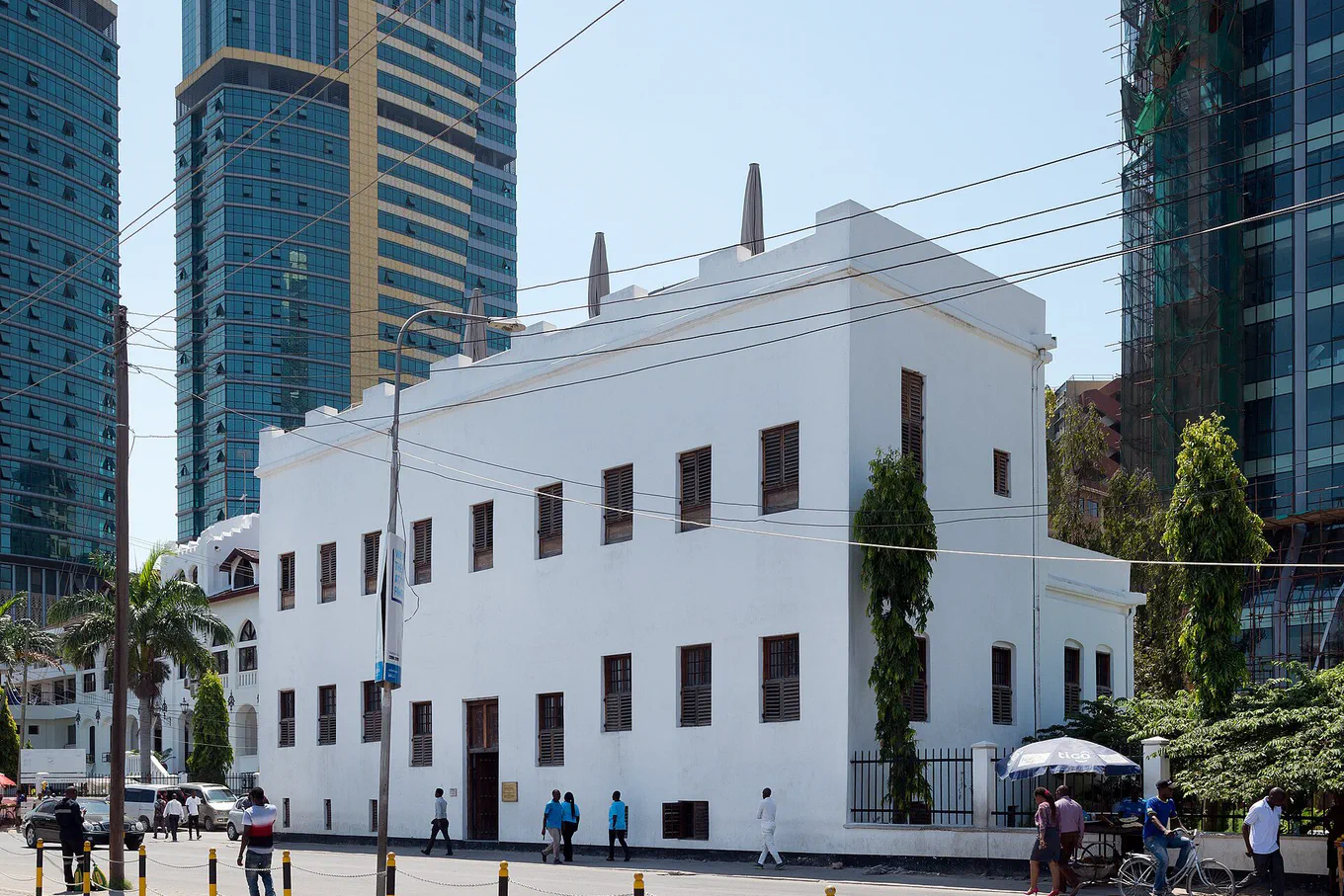
Stand here. The Old Boma, at the crossing of Morogoro Road and Sokoine Drive. It now houses the Dar es Salaam Centre for Architectural Heritage.
Dar es Salaam was begun in the mid-1860s by Sultan Majid bin Said of Zanzibar, on a natural harbour beside Mzizima, a fishing village. The town was meant to grow on coconut plantations and caravans. Near his palace, he put up the building now called the Old Boma. But labour was short, and when Majid died in 1870, the town was still unfinished. It fell into decline until the German East Africa Company set up a station seventeen years later. Majid’s palace is gone. The Old Boma still stands.
4 Eduardo Mondlane and the Moscow-stamped parcel collected on Nkrumah Street
Stand here. 201 Nkrumah Street, in central Dar es Salaam, where FRELIMO, the Mozambique Liberation Front, had its offices in 1969.
On 3 February 1969, Eduardo Mondlane, who led Mozambique’s liberation front from exile, collected his mail from its offices. He drove to an American friend’s beach villa in Oyster Bay, where he liked to work away from the noise and heat. One parcel bore Moscow stamps and held a book by a Russian Marxist. He went to flip through the pages. The parcel was a bomb, and it killed him. Who sent it has never been settled. Six years later, Mozambique became independent, without him.
Pack nothing. Leave Friday.
Every Friday, I write a free letter, Journey, that takes us on a trip through places, stories, and ideas.
Uhuru Street(M. G. Vassanji, 1991). Short stories. Loosely linked tales of Dar es Salaam’s Indian community over about forty years, on Uhuru Street, once called Kichwele Street.
The African Dream(Ernesto Che Guevara, Harvill Press, 2001). A memoir. Guevara’s diary of the failed Congo campaign, written up in the flat above the Cuban embassy in Upanga.
Revolutionary State-Making in Dar es Salaam(George Roberts, 2021). A history. The city as a mecca for liberation movements, with a chapter on the killing of Eduardo Mondlane.
Films to watch before you visit Dar es Salaam
T-Junction(Amil Shivji, 2017). A film. It opens in a queue that won’t move at a hospital in Dar es Salaam.
Binti(Seko Shamte, 2021). A film. A drama about four contemporary women in Dar es Salaam, told in four chapters, and shot in and around the city. It is Tanzania’s first Netflix film.
Dar Noir(Hamadi Mwapachu, 2016). A film. Hamadi Mwapachu’s debut feature, set in Dar es Salaam, follows a conflicted detective with a heroin problem who decides to start acting right.
Questions
Where did Che Guevara hide in Dar es Salaam?
In a two-bedroom flat on top of the Cuban embassy in Upanga, a suburb of the city. Guevara was back in Dar es Salaam at the end of November 1965, after his Congo campaign failed, and spent four months without going outside. His six months in hiding were split between the embassy and a Cuban safehouse near Prague.
Where is the Askari Monument in Dar es Salaam?
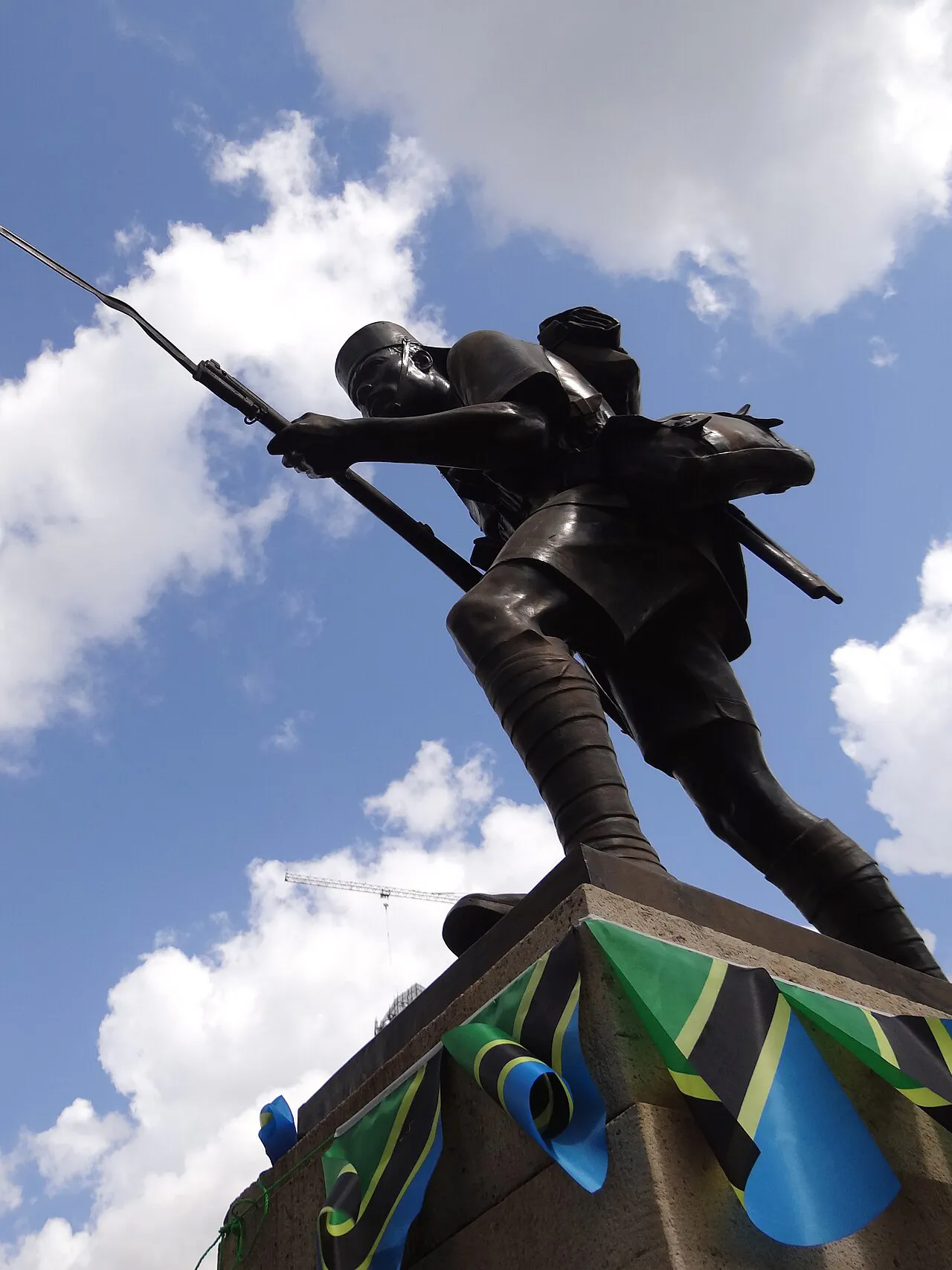
At the centre of a roundabout on Samora Avenue, a spot said to mark the exact centre of the city. The askari, or African soldier, was unveiled in 1927 where a statue of the German governor Hermann Wissmann had stood until the British removed it in 1916. A line of its English inscription is attributed to Rudyard Kipling.
What does the name Dar es Salaam mean?
The name comes from Arabic and is commonly translated as “abode of peace”, or “home of peace”. The town was built very close to Mzizima, a coastal fishing village on the edge of the Indian Ocean trade routes.