My one brief stint in corporate life was with IBM, 1996–1997. Great people, but not for me. Its founder, Thomas Watson, learned to sell in Dayton with the National Cash Register Company. He was entrepreneurial enough to start his own business, and I followed his lead. I’ve been building businesses for 30 years now. Thanks, Thomas. IBM showed me the other path very clearly.
— Nick
Dayton is a city on the Great Miami River in Ohio, founded in 1796 by twelve settlers, and the county seat of Montgomery County. Powered aviation began here, and one of its nicknames is the Birthplace of Aviation. Its stories are a saloon keeper’s invention, a poet in a lift, a factory that built boats, Orville Wright’s rebuilt Flyer, and a war ended on an air base.
A Dayton saloon keeper invented the cash register because he believed his staff were pocketing the money. On a sea voyage, James Ritty noticed a mechanism counting the turns of the ship’s propeller. With his brother John, a mechanic, he patented a register in 1879. But running two businesses overwhelmed him, and he sold out. He opened a new saloon, the Pony House, with a bar carved from 5,400 pounds of mahogany. His register business became the National Cash Register Company, and Ritty wasn’t resentful that he gained little.
2 Paul Laurence Dunbar, the poet who ran a Dayton lift
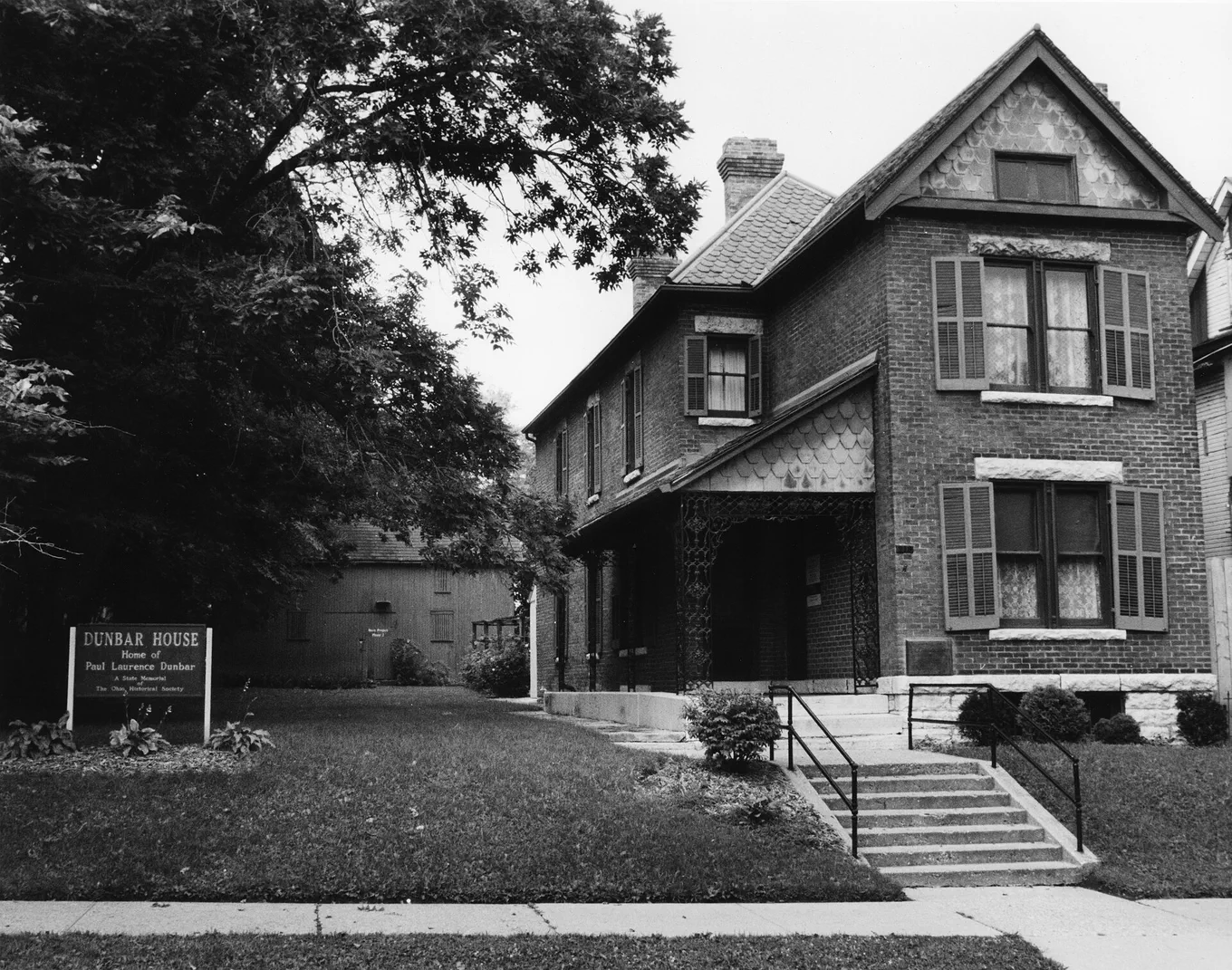
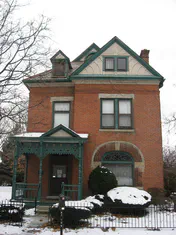
Stand here. The Paul Laurence Dunbar House, 219 Paul Laurence Dunbar Street, a house museum, dedicated in 1936 as the first state memorial to an African American.
The Paul Laurence Dunbar House in Dayton, the poet’s home and the first state memorial to an African American.NPS Photo / Public domain.
Orville Wright’s classmate at Central High School was Paul Laurence Dunbar, the son of parents enslaved in Kentucky and the school’s only African-American student. Dunbar edited the school paper. But jobs for an African-American man were few, so he ran a lift for four dollars a week. In 1893, he paid to print his first poems, selling copies himself, often to his passengers. A review in Harper’s Weekly brought him national fame. He bought this house for his mother and lived there with her until he died, aged 33.
3 John H. Patterson’s NCR boats in the 1913 Dayton flood
Stand here. Dayton History’s Great 1913 Flood exhibit, at 1000 Carillon Boulevard.
When the flood struck Dayton in March 1913, killing more than 360 people, the head of the National Cash Register Company was a convicted man. John H. Patterson had been sentenced to a year in prison for breaking antitrust law. Now he had his carpentry department build more than 200 flat-bottomed boats, and turned his factory into a relief station, where thousands found shelter, food, and clothing. Patterson’s rescue work made his conviction unpopular, and in 1915 it was overturned on appeal.
4 Orville Wright and the 1905 Flyer at Carillon Park
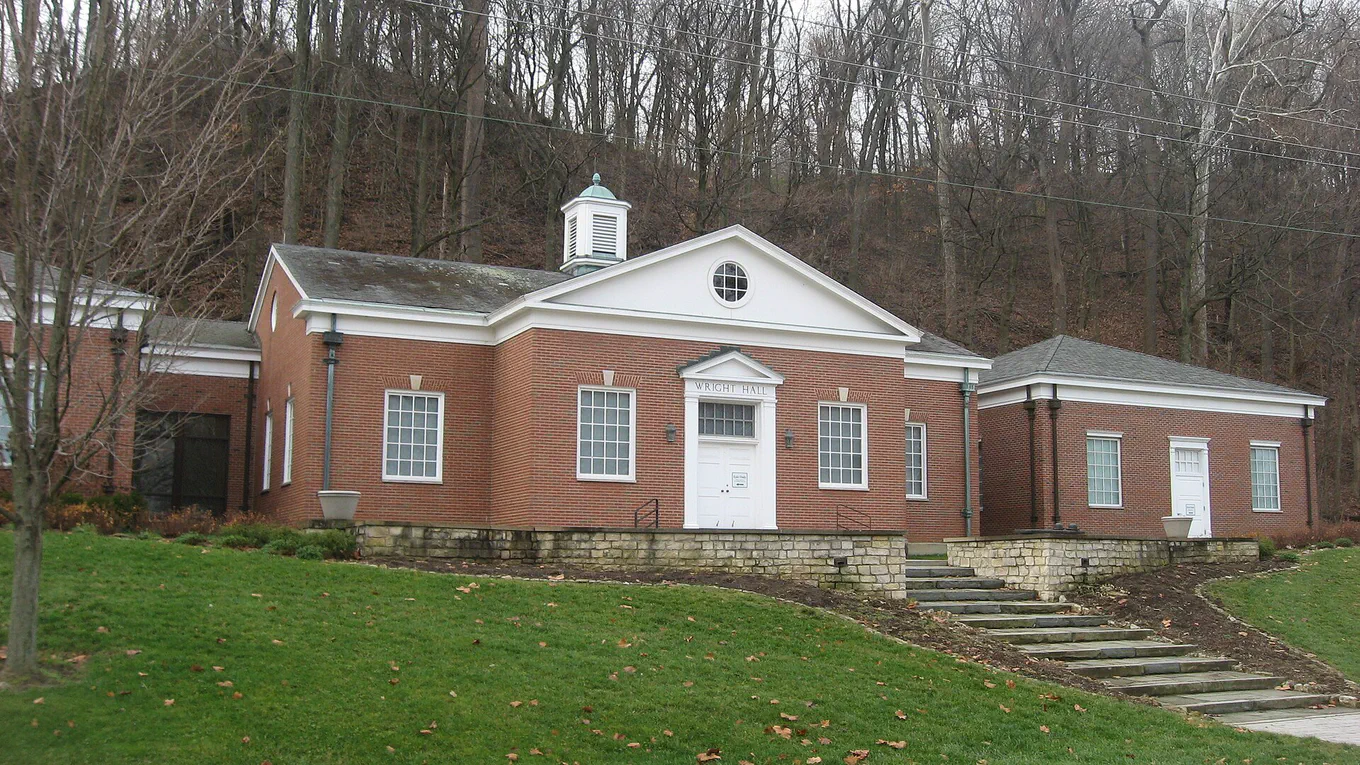
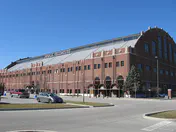
Stand here. Wright Hall, in the Wright Brothers Aviation Center at Carillon Historical Park, home of the original 1905 Flyer III.
Wright Hall at Carillon Historical Park in Dayton, the building Orville Wright designed to house the 1905 Wright Flyer III.Nyttend / Public domain.
In 1905, the Wright brothers’ Flyer III became the world’s first aeroplane capable of sustained, manoeuvrable flight, and Wilbur once circled in it for 39 minutes. Decades later, asked to help choose a machine for display at Carillon Historical Park, Orville recommended rebuilding the Flyer III and oversaw every detail himself. He designed the hall to hold it, too. But on 30 January 1948, before the hall was finished, Orville died. The Flyer went on show in his hall without him.
5 Richard Holbrooke and the Dayton Accords at the Hope Hotel
Stand here. The Hope Hotel, on Area A of Wright-Patterson Air Force Base, where the peace talks were held.
The Dayton Accords, which ended the Bosnian War, were signed ceremonially in Paris, but made on an Ohio air base, because the US negotiator Richard Holbrooke wanted somewhere he could seal off from the press. For three weeks in November 1995, the region’s leaders talked there. On 20 November, by the account of Kati Marton, who was there, the talks broke down over the city of Brčko, and Holbrooke was preparing his closing statement. One of the leaders sighed deeply. “It’s an unjust peace,” he said, “but my people need peace.”
Pack nothing. Leave Friday.
Every Friday, I write a free letter, Journey, that takes us on a trip through places, stories, and ideas.
The Wright Brothers(David McCullough, 2015). A history. Wilbur and Orville’s mechanical genius shows first in their Dayton print shop, then in their bicycle shop.
To End a War(Richard Holbrooke, 1998). A memoir. Holbrooke’s first-hand account of the negotiations at Wright-Patterson Air Force Base that led to the peace settlement.
Sharp and Dangerous Virtues(Martha Moody, 2012). A novel. In 2047, after food and water shortages across the United States, a “heartland grid” has been created near Dayton.
Films to watch before you visit Dayton
American Factory(Steven Bognar and Julia Reichert, 2019). A documentary. The Chinese company Fuyao opens a factory in an abandoned General Motors plant in Moraine, a city near Dayton.
The Old Man & the Gun(David Lowery, 2018). A film. Liberty Tower, the Art Deco office building in downtown Dayton, stands out in scenes revolving around a major heist at the old Liberty Savings Bank.
Blue Car(Karen Moncrieff, 2002). A drama film set in the Dayton area, about Meg, a high school senior who wins a local poetry competition. It was filmed primarily in Dayton.
Questions
Where is the original 1905 Wright Flyer III?
In Wright Hall, at Carillon Historical Park in Dayton, a building Orville Wright designed to house it. The Flyer is the original 1905 machine, the first practical aeroplane, and the only aeroplane designated a National Historic Landmark.
Why is Dayton called the Birthplace of Aviation?
Because powered aviation began there. Wilbur and Orville Wright ran a bicycle business in Dayton, and on the second floor of their shop they built a six-foot wind tunnel and tested more than 200 shapes of model wing. In 1905, at Huffman Prairie, they learned to manoeuvre an aeroplane safely. Ohio as a whole uses the same nickname.
Is the Wright brothers’ bicycle shop still in Dayton?
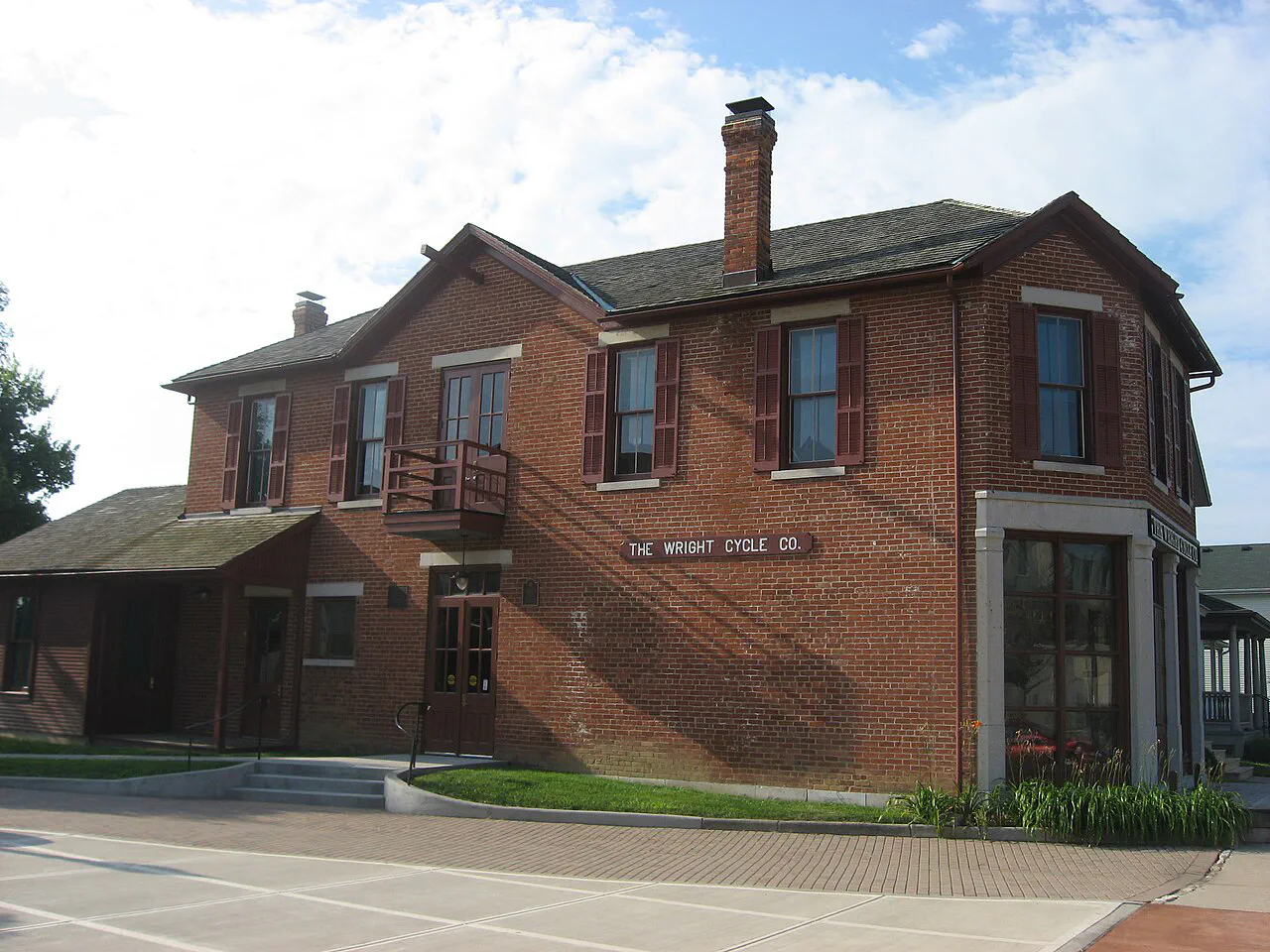
One of them is. The Wright Cycle Company building at 22 South Williams Street, home to the brothers’ bicycle business from 1895 to 1897, stands on its original site in Dayton Aviation Heritage National Historical Park. Their later shop on West Third Street, where they built the wind tunnel, was moved by Henry Ford to Greenfield Village in Dearborn, Michigan.