Humayun’s Tomb was built for an emperor who died after a fall on his library stairs, arms full of books. I switched to a Kindle in 2010 for a different reason. See Rome for why.
— Nick
Straddling the Yamuna river, Delhi is a megacity that holds New Delhi, India’s capital. From the early 13th century to the mid-19th, it was the capital of the Delhi Sultanate and then the Mughal Empire. Gandhi’s last walk heads the list, with a stolen throne, a fall on a library stair, a poet’s city turned to desert, and a palace hidden by its own slope.
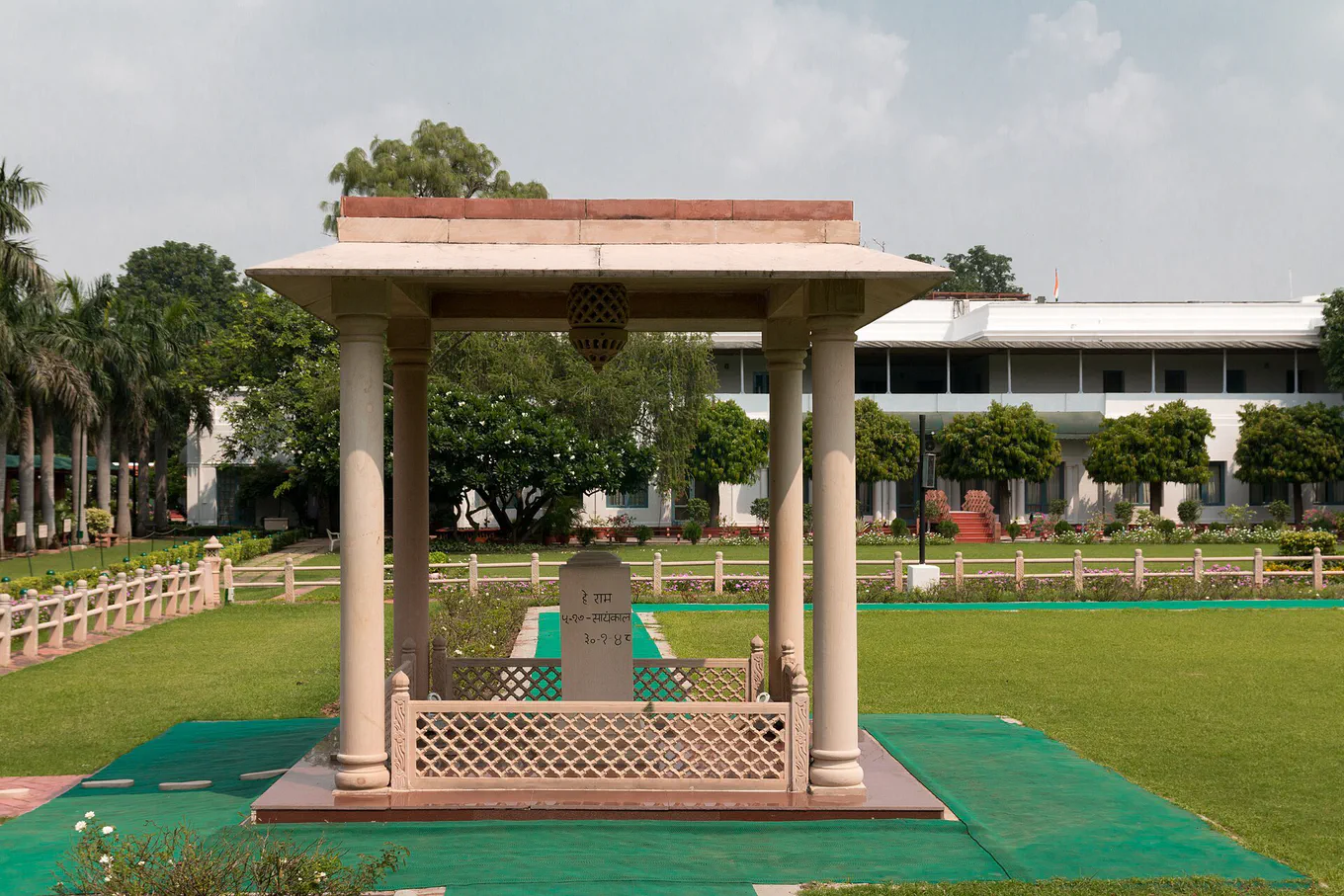
Stand here. Gandhi Smriti, once Birla House, at 5 Tees January Marg in New Delhi. His room is preserved, and the Martyr’s Column marks where he was shot.
Richard Attenborough’s Gandhi opens with the walk that ended here. Mahatma Gandhi lived in two plain rooms of the Birla family’s mansion, and every evening he held a multi-faith prayer meeting in its grounds. On 30 January 1948, he was about ten minutes late, leaning on the shoulders of two grand-nieces. A man pushed through the crowd, bent over with his hands folded, and fired three bullets into him at point-blank range. Gandhi died half an hour later. The assassin, Nathuram Godse, said he had bowed to him first.
The Koh-i-Noor diamond, now in the Tower of London, was taken from the Mughals in 1739 by Nader Shah of Iran, along with the Peacock Throne. The Mughal emperor Shah Jahan had the throne made of gold, precious stones, and pearls, at twice the cost of the Taj Mahal. Nader beat the Mughals at Karnal, and his troops left Delhi with the throne. Eight years later, his own officers killed him, and the throne vanished, probably broken up for its valuables. No part of it is proven to survive.
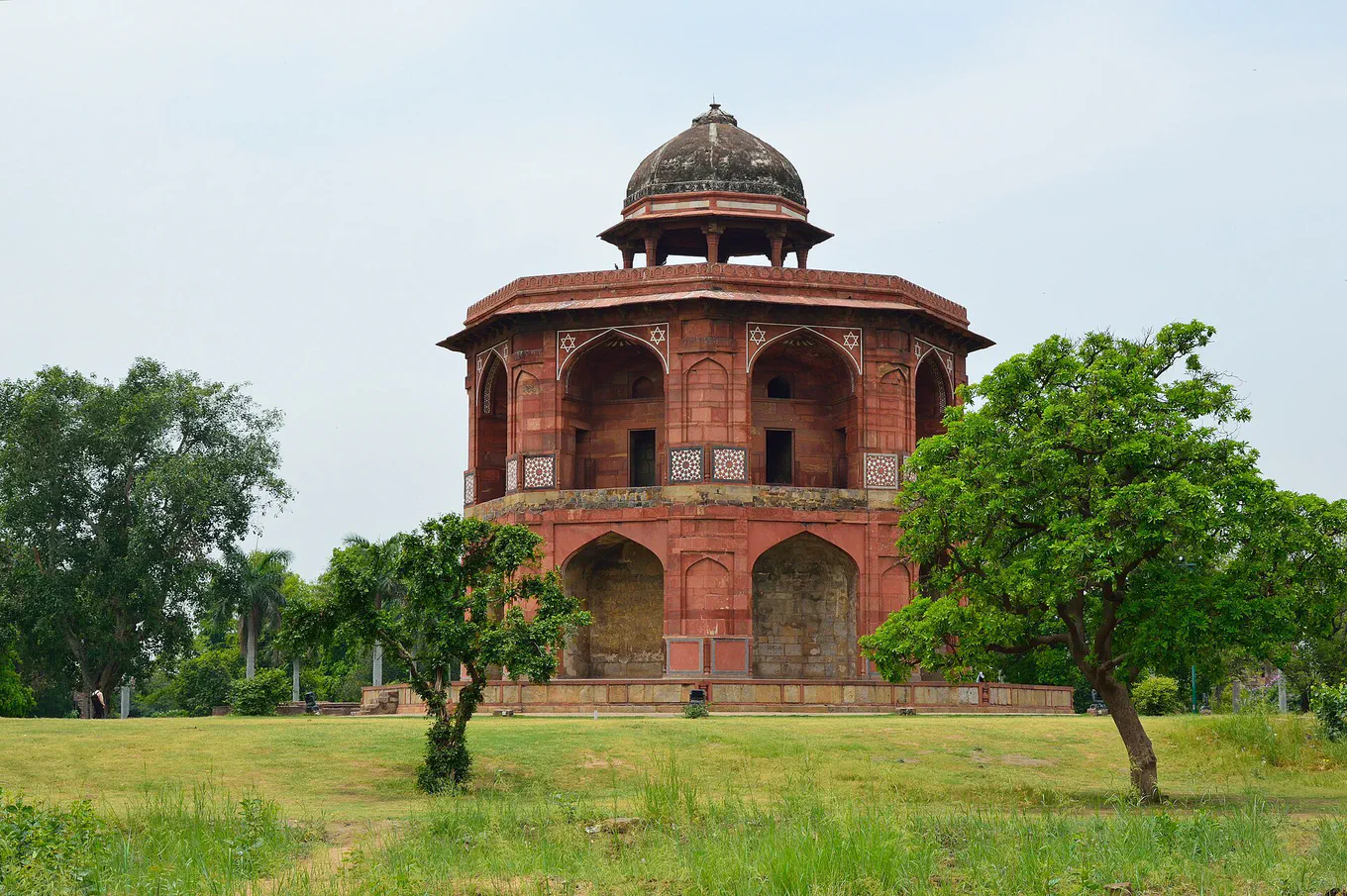
Humayun’s Tomb was built for an emperor killed by a fall. Humayun had lost his empire to Sher Shah Suri and taken fifteen years to win it back. In January 1556, coming down from his library with his arms full of books, he heard the call to prayer. He went to kneel, as he always did, caught his foot in his robe, and fell, hitting his temple on a stone edge. He died three days later, six months after taking back his father’s throne.
4 Mirza Ghalib’s haveli and the fall of Mughal Delhi
Stand here. Ghalib ki Haveli, in Gali Qasim Jan, Ballimaran, Old Delhi, the house where he died. It’s now a free museum holding his handwritten poems.
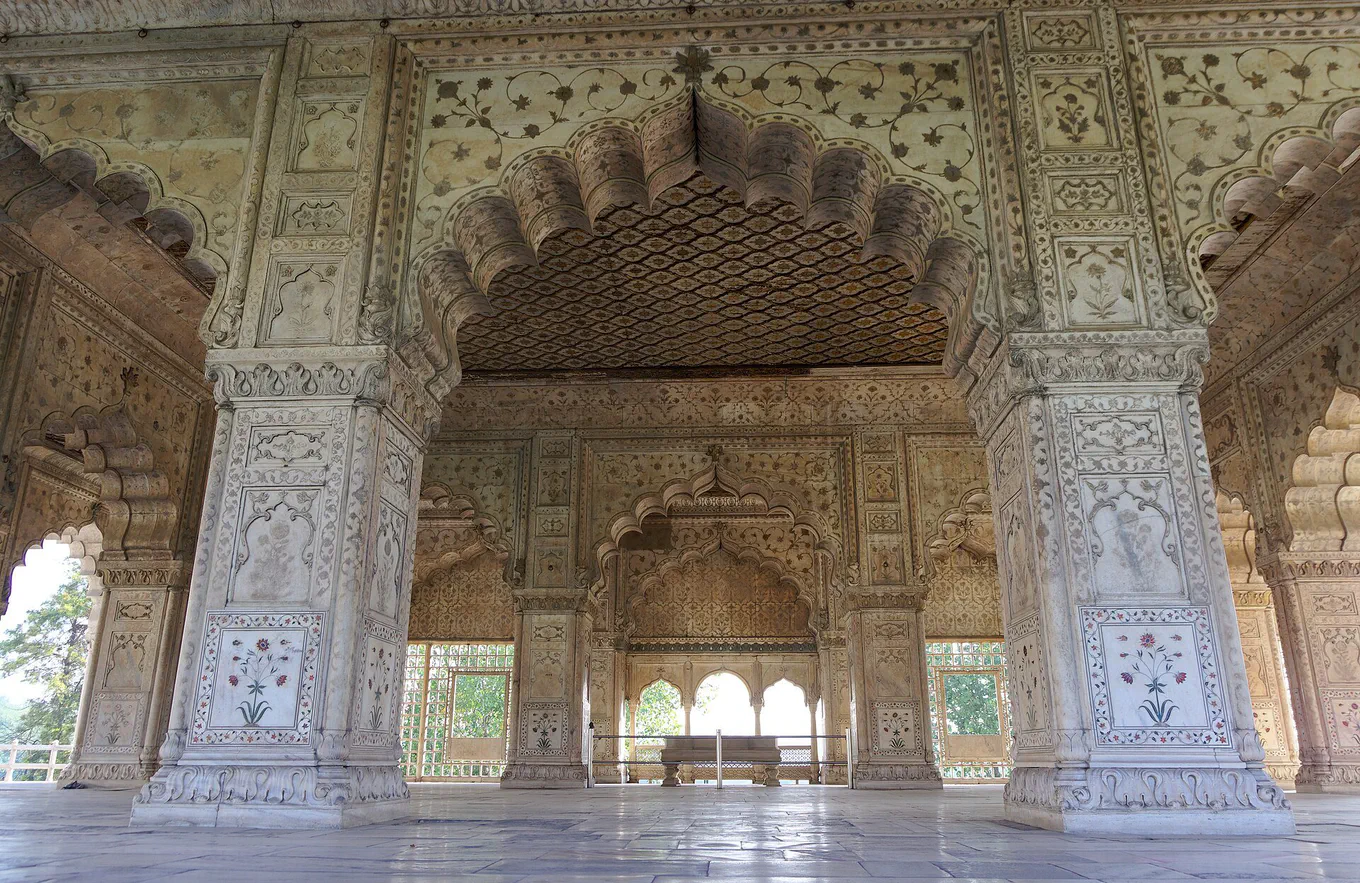
The last Mughal emperor, Bahadur Shah Zafar, was a poet himself, and Mirza Ghalib, who wrote in Urdu and Persian, was among the poets at his court. Ghalib lived on royal patronage, credit, and the generosity of friends, and in 1854 the emperor made him his poetry tutor. Then the rebellion of 1857 was defeated. Zafar was captured and exiled to Rangoon, and the havelis, or mansions, of Ghalib’s friends were razed to the ground. Ghalib wrote that Delhi had become a desert.
5 Lutyens, Baker, and the slope that hid a palace
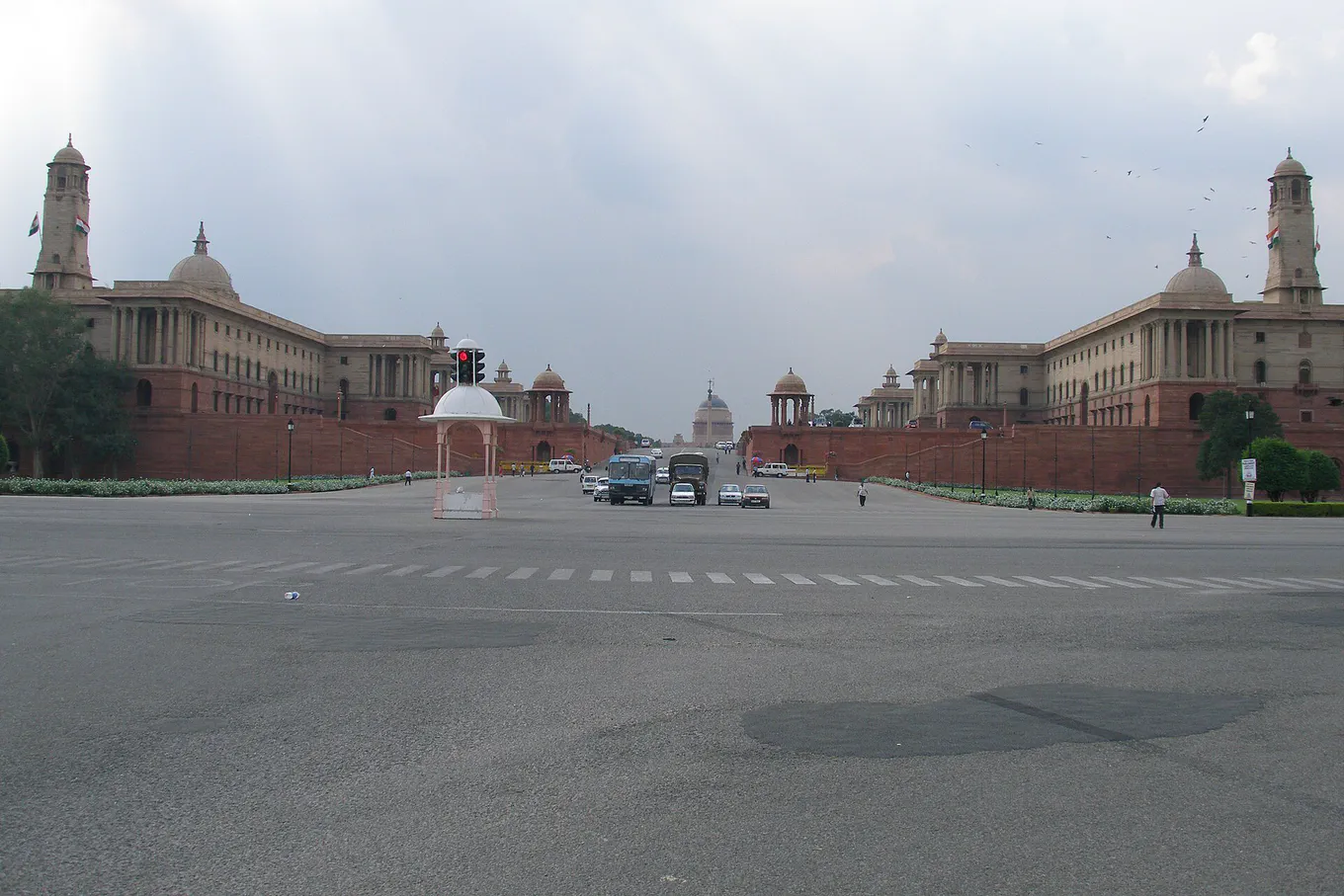
Stand here. Vijay Chowk, looking up Raisina Hill between the two Secretariat buildings. Of Rashtrapati Bhavan beyond them, only the dome shows.
Rashtrapati Bhavan, the President of India’s house, has more floor space than any other head of state’s home. Edwin Lutyens designed it as the Viceroy’s House, wanting a long approach up Raisina Hill to show it from far back. His old friend Herbert Baker designed the Secretariat buildings in front. But the slope ended up steeper, and Lutyens hadn’t grasped how little of his house would show. In 1916, the Imperial Delhi committee refused to change it. Lutyens accused Baker of spoiling his greatest work, and their friendship never recovered.
Pack nothing. Leave Friday.
Every Friday, I write a free letter, Journey, that takes us on a trip through places, stories, and ideas.
Twilight in Delhi(Ahmed Ali, 1940). A novel of Old Delhi and its Muslim inhabitants, set between about 1911 and 1919.
The Last Mughal(William Dalrymple, 2006). A history of Delhi in 1857, and of the last emperor, Bahadur Shah Zafar, in his palace, the Red Fort.
Clear Light of Day(Anita Desai, 1980). A novel. Tensions in a family after Partition, set mostly in Old Delhi and in the family’s home there.
Films to watch before you visit Delhi
Delhi-6(Rakeysh Omprakash Mehra, 2009). A film. Its title is the postcode of Chandni Chowk, in Old Delhi, shortened from 110006.
Chandni Chowk to China(Nikkhil Advani, 2009). A film. Its hero cuts vegetables at a roadside food stall in Chandni Chowk, and parts were shot in Paranthe Wali Gali.
Rang De Basanti(Rakeysh Omprakash Mehra, 2006). A film. In it, a group organises a huge, peaceful candlelight vigil at India Gate.
Monsoon Wedding(Mira Nair, 2001). A film set entirely in New Delhi, and winner of the Golden Lion at the Venice film festival.
Questions
Can you visit the place where Gandhi was shot?
Yes. Birla House, at 5 Tees January Marg in New Delhi, opened to the public as the Gandhi Smriti museum on 15 August 1973. You can see the room where Gandhi lived, and the Martyr’s Column stands on the spot in the grounds where he was shot.
What is the difference between Delhi and New Delhi?
Delhi, officially the National Capital Territory of Delhi, is a megacity and a union territory. New Delhi is India’s capital and a relatively small part of it, inaugurated as the new capital on 13 February 1931. People often use the two names interchangeably, but they are distinct.
Why does India’s prime minister speak from the Red Fort on Independence Day?
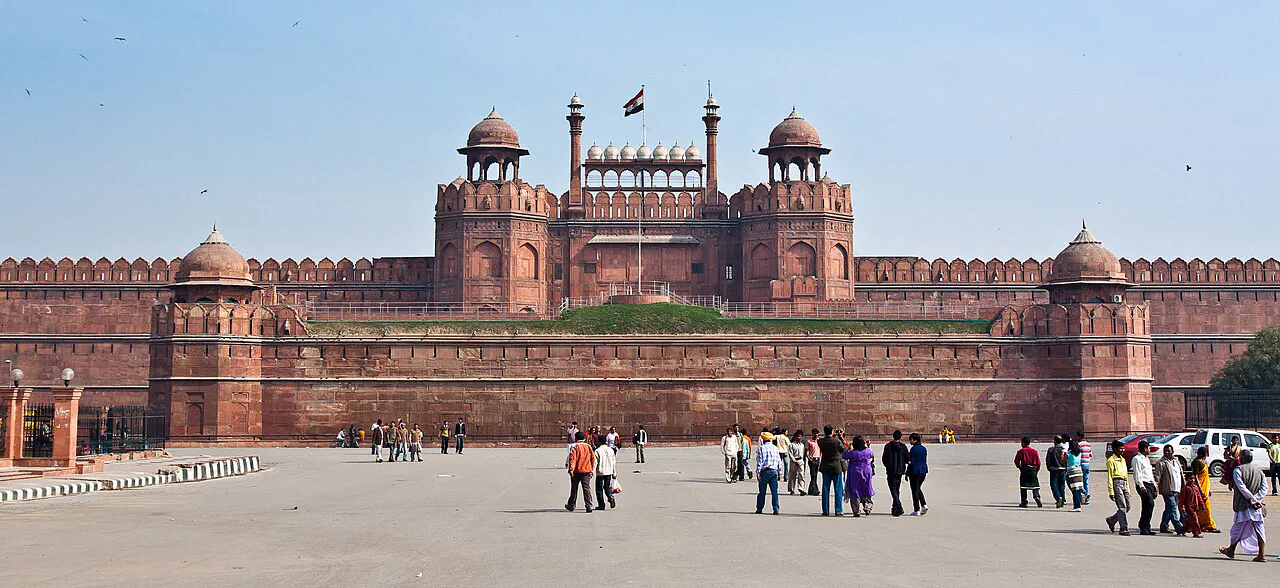
On 15 August 1947, Jawaharlal Nehru, India’s first prime minister, raised the Indian flag above the Lahori Gate, the fort’s main entrance. Every prime minister since has raised the flag at the main gate on Independence Day and given a nationally broadcast address from the ramparts.