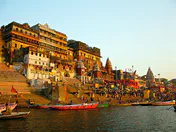
Dhaka stands on the Buriganga River in the Ganges Delta. The Mughals made it the capital of Bengal in 1610, and in 1971 it became the capital of independent Bangladesh. Its stories here are a governor’s daughter buried in an unfinished fort, a palace wrecked by a tornado, a monument built overnight, a speech to a million people, and an architect whose body lay unclaimed in New York.
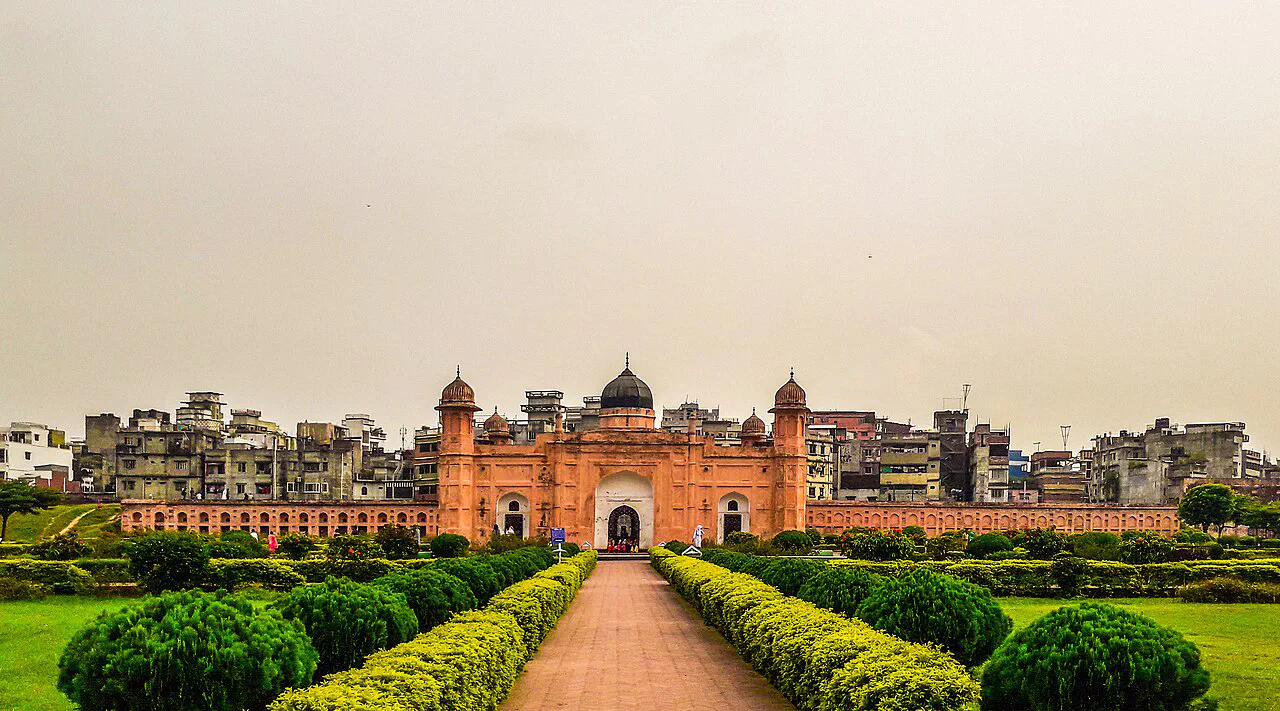
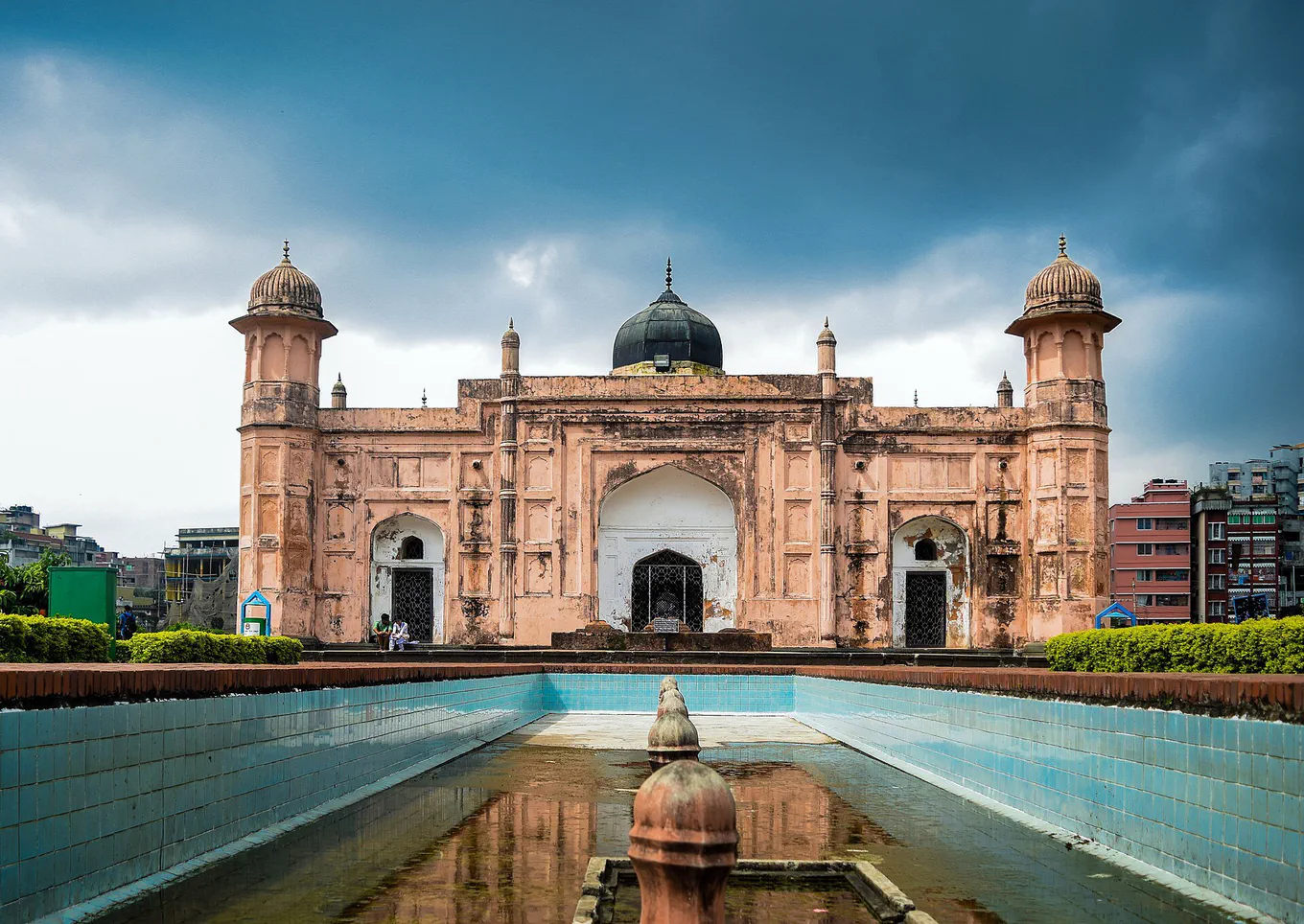
A son of the Mughal emperor Aurangzeb began this fort, but his father called him away to fight the Marathas before it was finished. Bengal’s governor, Shaista Khan, was Aurangzeb’s uncle, and in 1684 his daughter, Iran Dukht, known as Pari Bibi, died at the fort. Her death was such a shock that Shaista Khan decided the place was unlucky, and he abandoned it. Over her grave he raised a tomb lined with white marble. The fort was never finished. The tomb was.
2 Ahsan Manzil, the Dhaka palace wrecked by a tornado
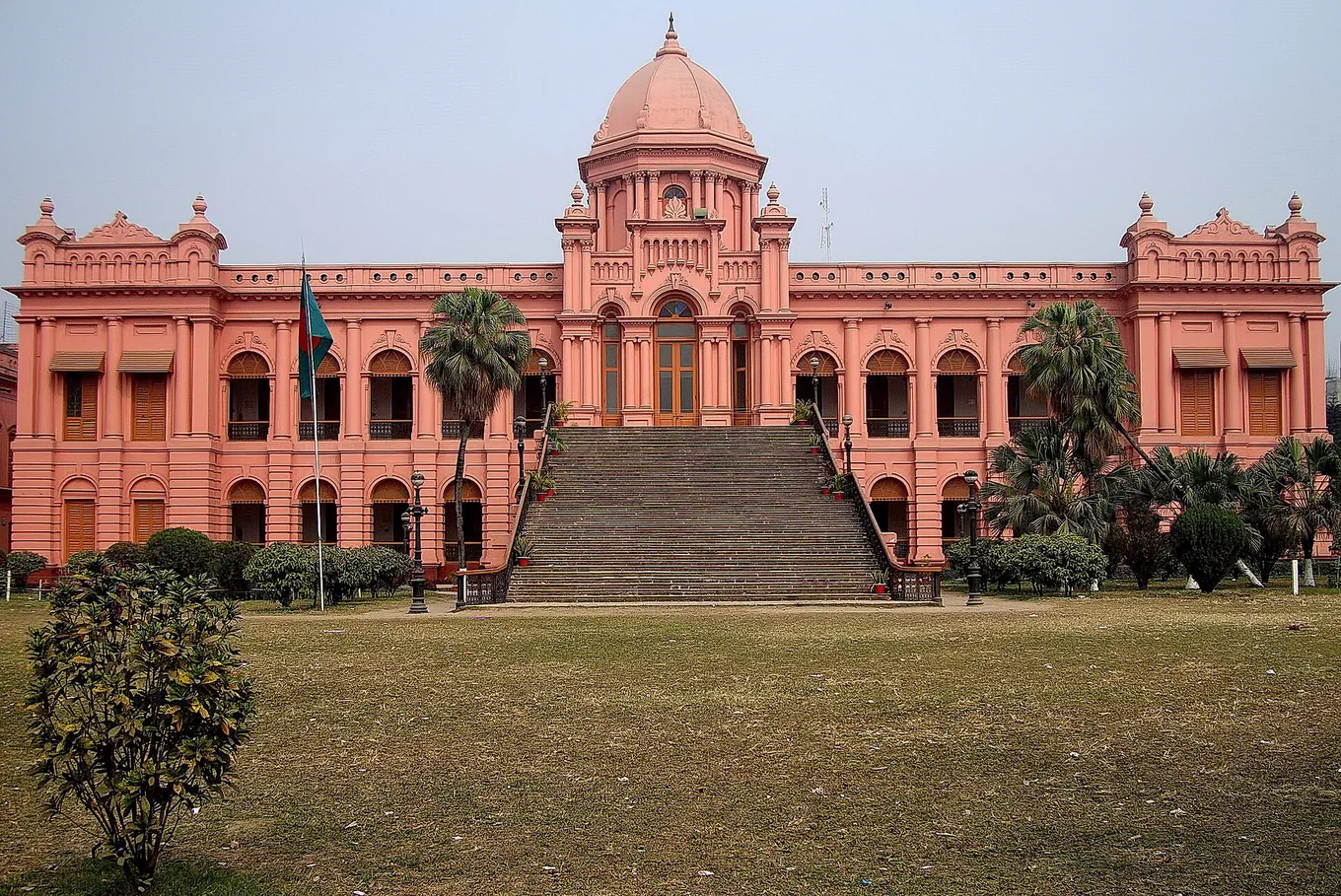
Stand here. Ahsan Manzil, on the Buriganga riverfront at Kumartoli, Old Dhaka. The Nawabs’ former palace has been a museum since 1992.
Ahsan Manzil is where the All India Muslim League was founded, and by then it was lucky to be standing. Nawab Abdul Ghani named the palace after his son, Ahsanullah. On 7 April 1888, a tornado wrecked it, and every building but one had to be rebuilt. Ahsanullah took that on, adding the dome you see today. Nine years later, an earthquake badly damaged it again, and again he had it repaired. It carried his name, and twice he brought it back.
3 The Dhaka students who built a monument overnight
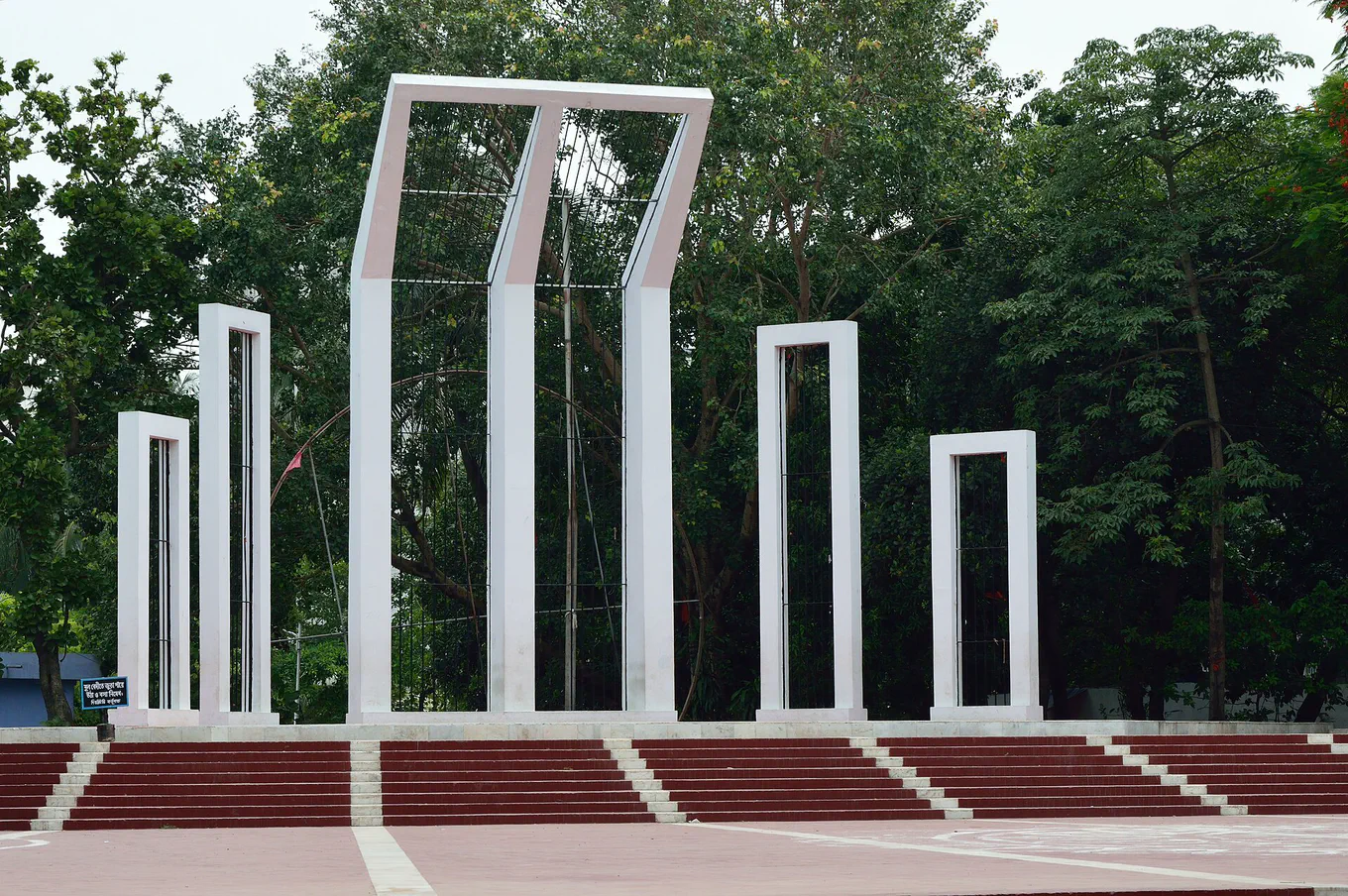
Stand here. The Central Shaheed Minar, near Dhaka Medical College Hospital. Each 21 February, the nation’s mourning and cultural events centre on it.
Every 21 February is International Mother Language Day, UNESCO’s tribute to the Bengali language movement. Pakistan had made Urdu its only state language. On 21 February 1952, students at the University of Dhaka defied a ban on gatherings, and police opened fire, killing several, Abul Barkat among them. Two days later, students built a monument overnight. Police tore it down within three days. The Shaheed Minar, or martyrs’ monument, that replaced it was opened on the anniversary in 1963 by Hasina Begum, Barkat’s mother.
4 Sheikh Mujib’s 7 March speech at the Ramna Race Course
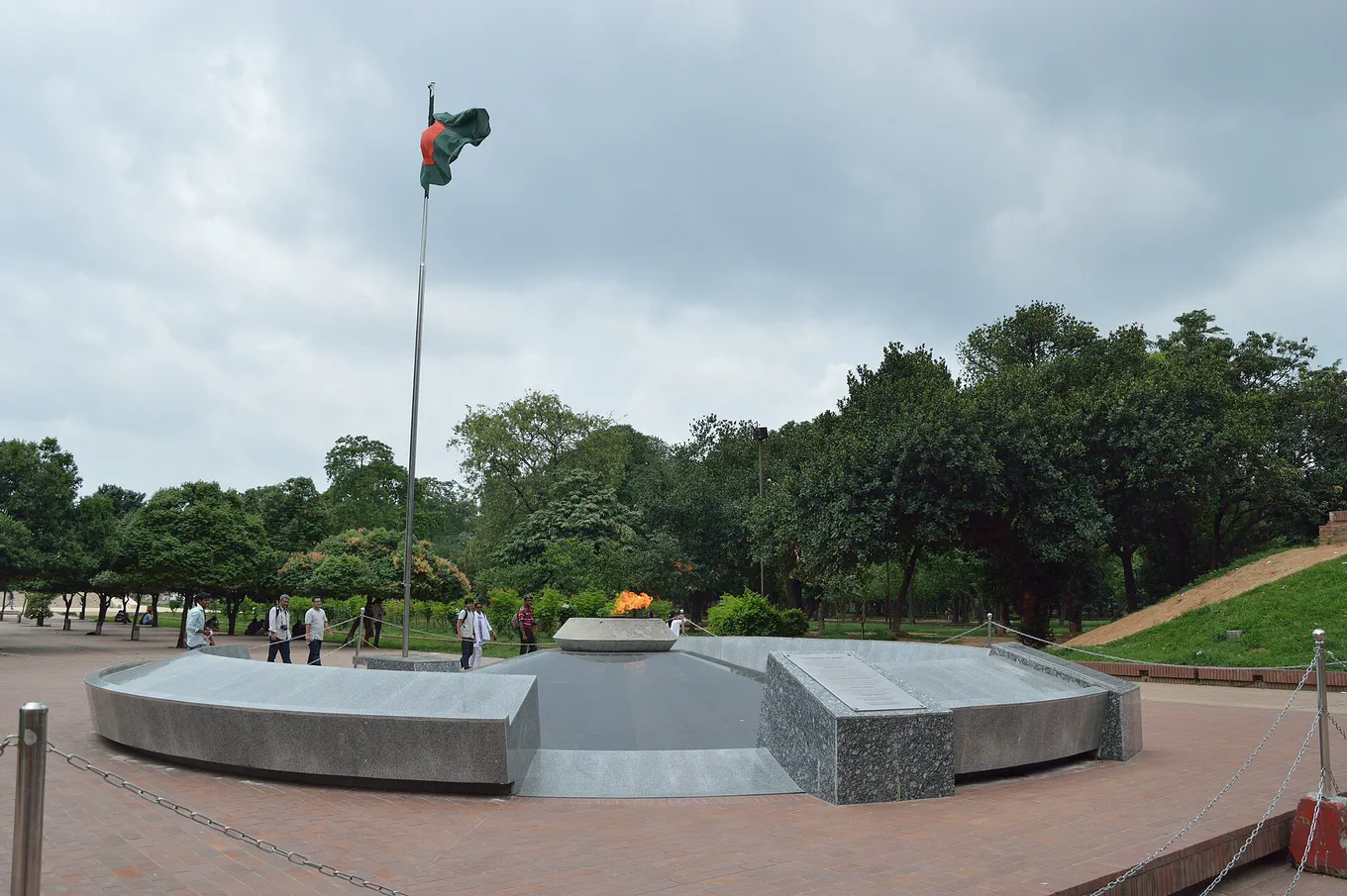
Stand here. Suhrawardy Udyan, the park that was once the Ramna Race Course. An eternal flame, the Shikha Chirantan, marks where Mujib spoke.
Sheikh Mujibur Rahman, later Bangladesh’s founding president, gave a speech here that UNESCO has added to its Memory of the World Register. His Awami League had won 167 of East Pakistan’s 169 seats, but President Yahya Khan put off the assembly. On 7 March 1971, Mujib told more than a million people at the Race Course, “The struggle this time is a struggle for our independence.” Eighteen days later, the Pakistan Army launched Operation Searchlight, and the Liberation War began. On 16 December, on this same ground, Pakistan’s forces surrendered.
5 Louis Kahn and the Dhaka parliament he never saw finished
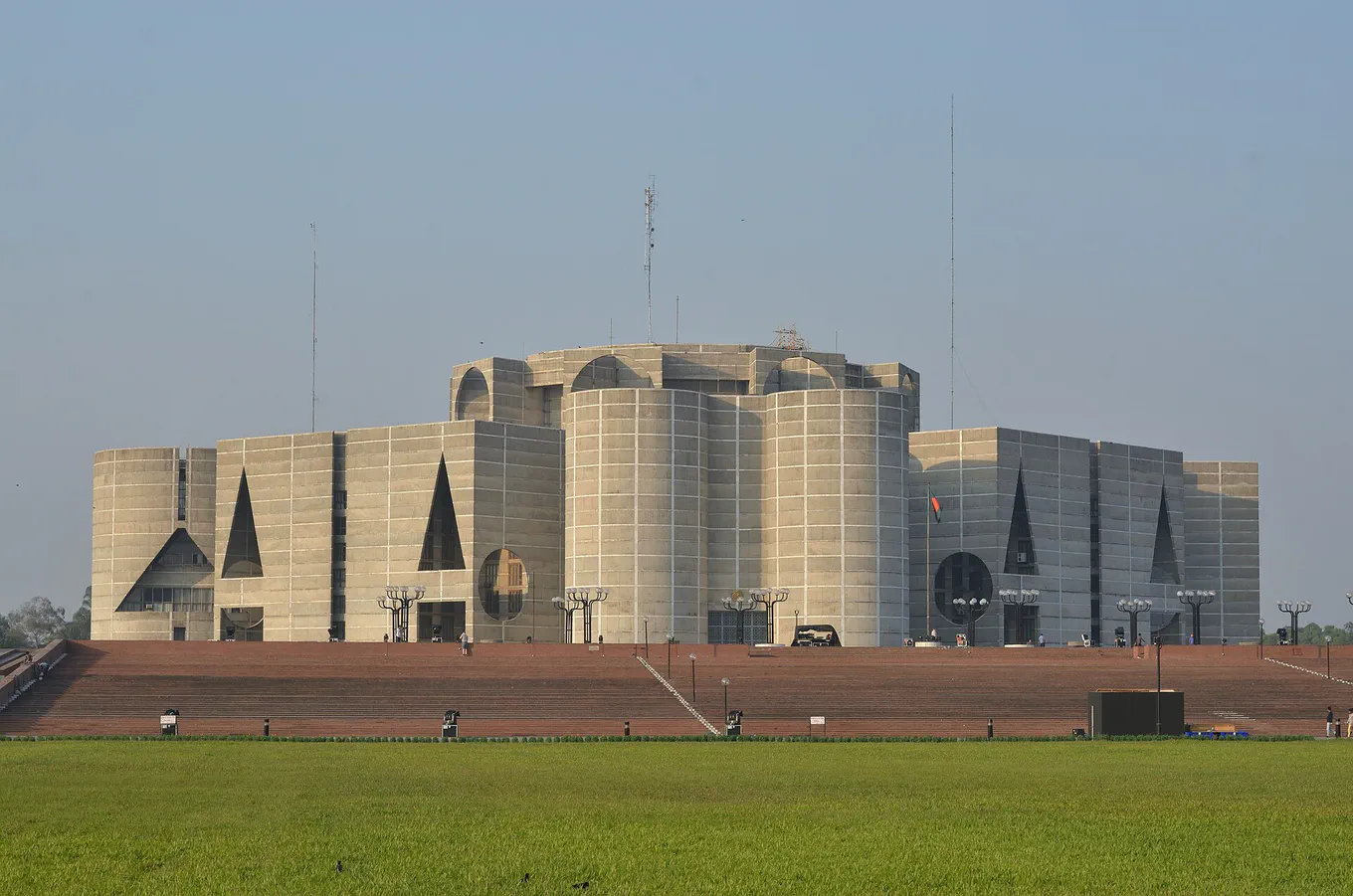
Stand here. Jatiya Sangsad Bhaban, Bangladesh’s parliament, at Sher-e-Bangla Nagar, ringed on three sides by an artificial lake.
If you’ve seen My Architect, Nathaniel Kahn’s Oscar-nominated film about his father, Louis, you’ve seen this building. Kahn took it on as a parliament for Pakistan, which had made Dhaka its second capital. The 1971 war stopped work. Back from India in 1974, Kahn died of a heart attack in a lavatory at New York’s Penn Station. He was bankrupt, his passport’s address had been scratched out, and his body lay unclaimed for three days. The building was finished in 1982, for a country that hadn’t existed when he began.
Pack nothing. Leave Friday.
Every Friday, I write a free letter, Journey, that takes us on a trip through places, stories, and ideas.
A Golden Age(Tahmima Anam, 2007). A novel. Set in 1971, during Operation Searchlight, it features the attacks on Dhaka. An engagement party keeps Rehana’s children away from the attacks on Dhaka University.
Chilekothar Sepai(The Sepai in the Rooftop Room) (Akhtaruzzaman Elias). A novel. It moves largely around Laxmibazar, with a trip or two to Islampur and Shakhari Bazar.
I See the Face(Shahidul Zahir, translated by V Ramaswamy). A novel. It weaves together the lives of two boys from Dhaka’s Ghost Lane, against the Liberation War of 1971.
Bengal Hound(Rahad Abir, 2023). A novel. Shelley, a student of English at Dhaka University in the 1960s, moves between its corridors, Madhur Canteen, and Fuller Road.
Films to watch before you visit Dhaka
My Architect: A Son’s Journey(Nathaniel Kahn, 2003). A documentary. Louis Kahn’s son visits his father’s buildings, and the parliament at Sher-e-Bangla Nagar features prominently.
Aynabaji(Amitabh Reza Chowdhury, 2016). A Bangladeshi crime thriller film. Ayna, a professional imposter hired to impersonate different individuals, runs a children’s drama school in Old Dhaka. The entire film was shot in Dhaka.
Live from Dhaka(Abdullah Mohammad Saad, 2016). A Bangladeshi film set in Dhaka. Hounded by loan sharks, the physically handicapped Sazzad grows desperate to escape from the city and his troubles.
Questions
Can you go inside Bangladesh’s parliament building?
Yes. The Jatiya Sangsad Bhaban complex at Sher-e-Bangla Nagar in Dhaka is open to visitors. Louis Kahn designed it, and it was completed in 1982, years after his death.
Why is 21 February International Mother Language Day?
On 21 February 1952, police in Dhaka opened fire on protesting students, and several were killed. On 17 November 1999, UNESCO declared the date International Mother Language Day, in tribute to the Bengali language movement.
What was Dhaka called in the past?
It was formerly spelled Dacca. In 1610, when it became the capital of the Mughal province of Bengal, it was named Jahangirnagar, the City of Jahangir, in honour of the emperor then ruling. Today it is the capital and largest city of Bangladesh.