If you search for Kurt Vonnegut lectures, you’ll get some of the best storytelling insight I’ve seen. Vonnegut survived the bombing of Dresden in a meat locker three storeys beneath a slaughterhouse. ‘When we came up, the city was gone.’
— Nick
Dresden is the capital of Saxony, in Germany, on both banks of the River Elbe. First recorded in 1206, it was the seat of the Electors and Kings of Saxony, and it has been called Florence on the Elbe. Its stories are Vonnegut’s slaughterhouse, an alchemist who never made gold, Wagner on a church tower, Kästner watching his books burn, and the cross made by a bomber’s son.
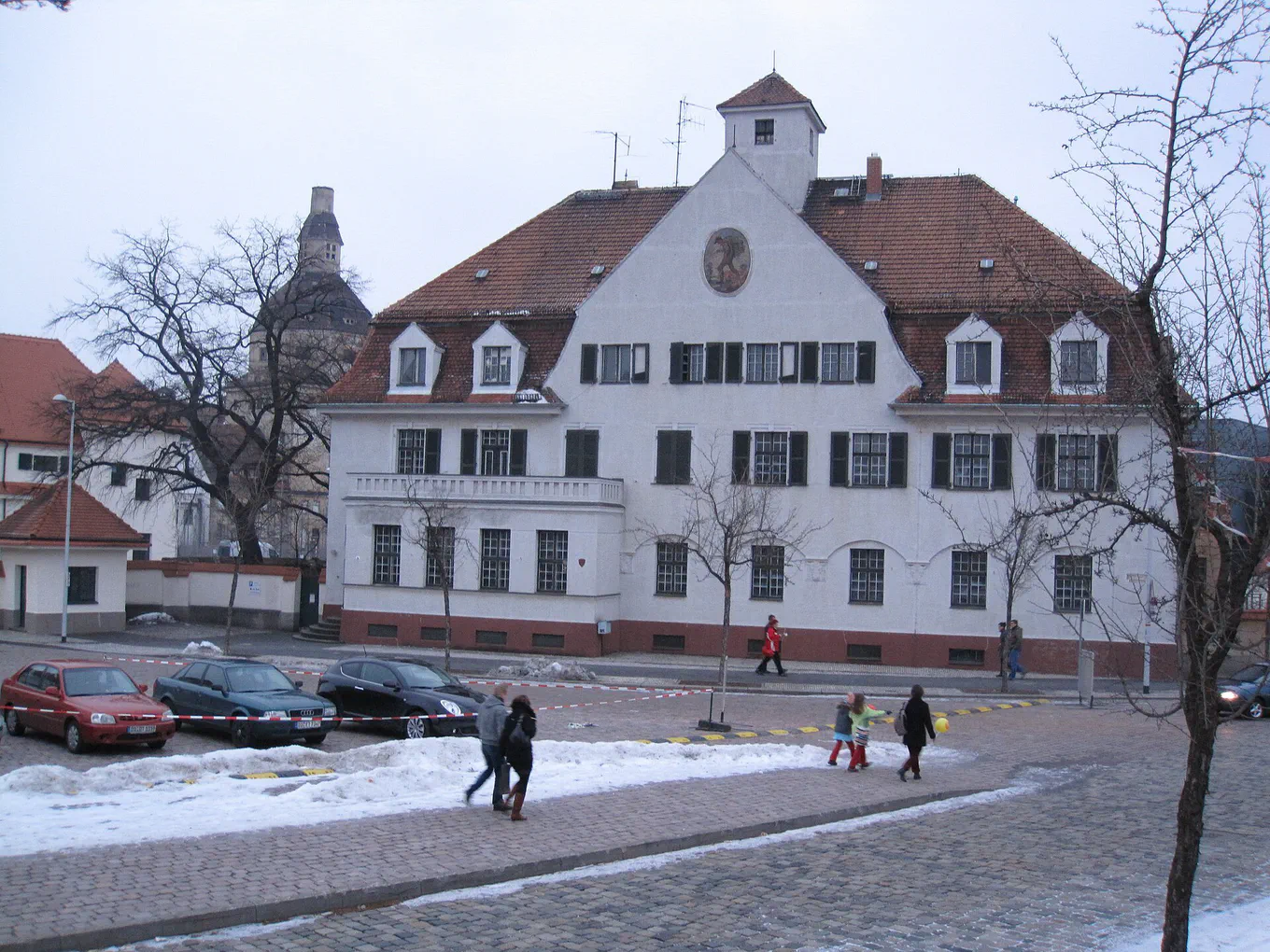
In Slaughterhouse-Five, Billy Pilgrim is held prisoner in a Dresden slaughterhouse, and so was Kurt Vonnegut. Taken prisoner at the Battle of the Bulge, the 22-year-old American soldier was held here, and he thought Dresden “the first fancy city” he had ever seen. On 13 February 1945, British and American bombers attacked. The slaughterhouse saved him. Vonnegut sat out the raid in a meat locker three storeys underground, among hanging cadavers. “When we came up,” he said, “the city was gone.”
2 Böttger, the gold-maker who found porcelain in Dresden
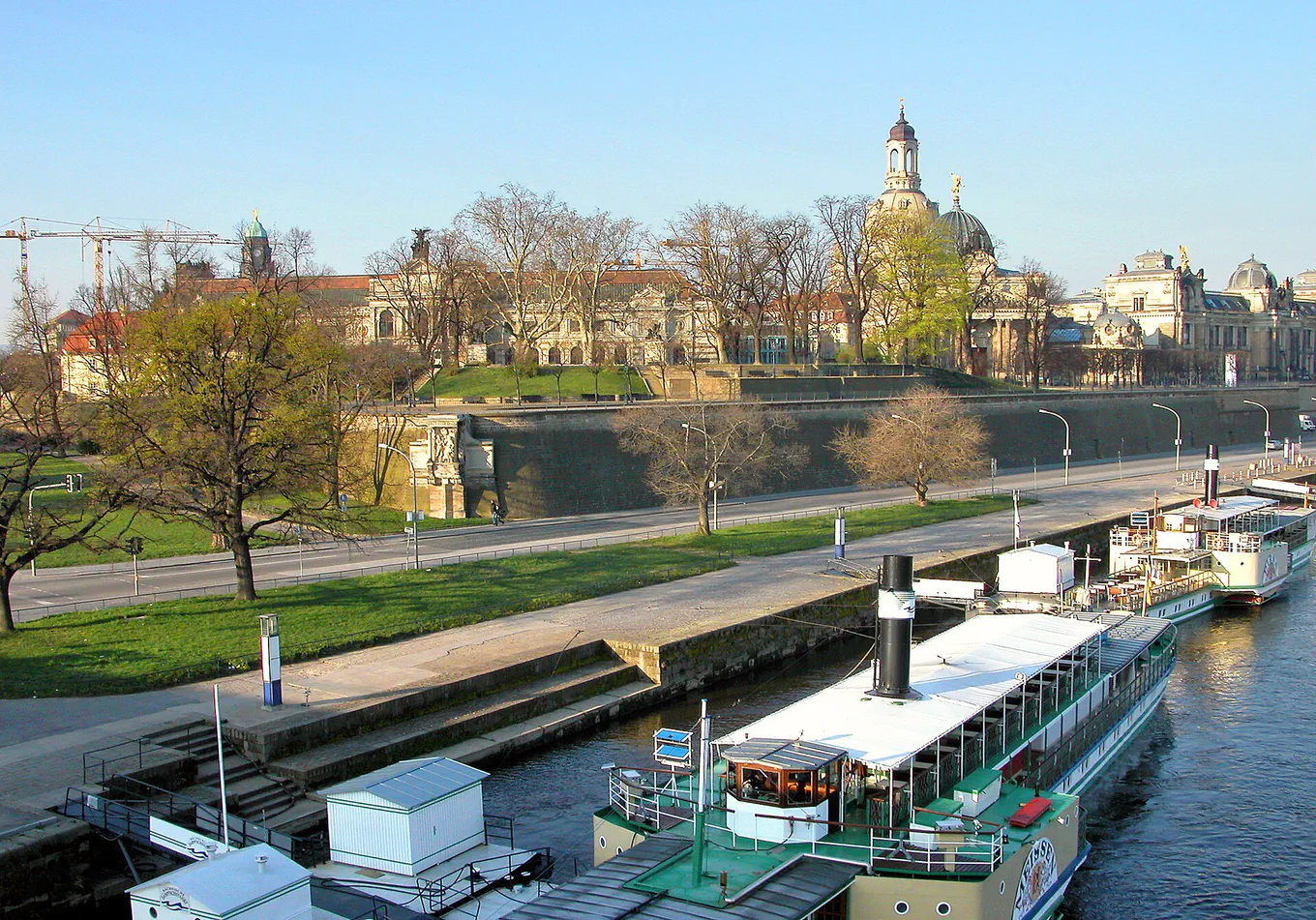
Stand here. The Jungfernbastei, part of what is now Brühl’s Terrace, high above the Elbe. Its vaults hold the Museum Festung Dresden.
Meissen porcelain began with a promise of gold. Johann Friedrich Böttger, an alchemist, let it be believed he could turn base metals into gold, and he ended up held in Dresden by Augustus the Strong, Elector of Saxony, a ruler always short of money. In 1704, the impatient Augustus set the scientist Tschirnhaus over him. They worked in a laboratory in these vaults. No gold came. But around 1708 the two men made the key advances towards Europe’s first hard-paste porcelain. Augustus had wanted gold. He got white gold.
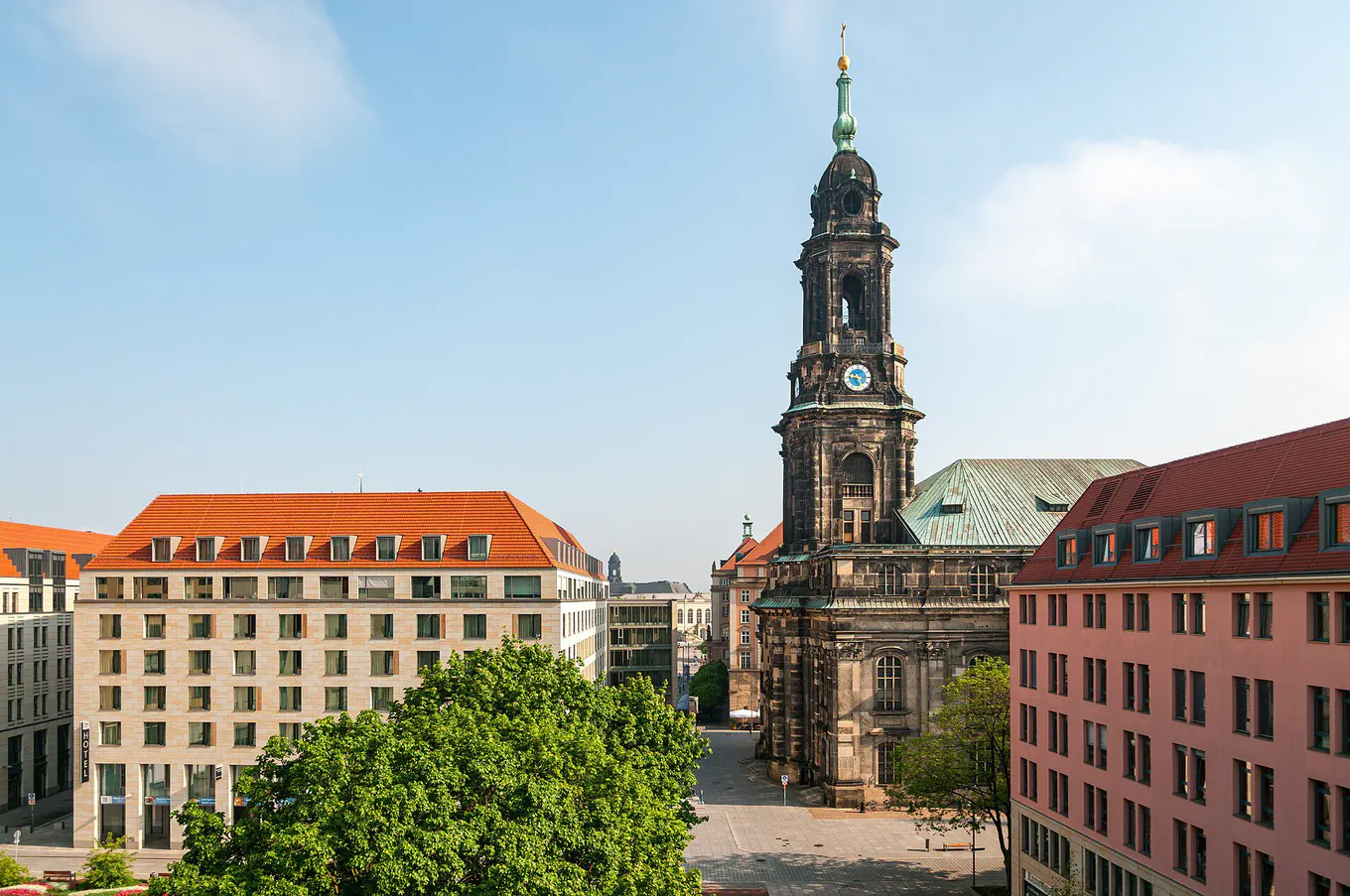
3 Richard Wagner on the Kreuzkirche tower in 1849
Stand here. The Kreuzkirche, at the south-east corner of the market square. Burned in 1945 and reopened in 1955, it is home to the Kreuzchor boys’ choir.
Richard Wagner was Royal Saxon Court Conductor, and Dresden had staged his Rienzi, The Flying Dutchman, and Tannhäuser. But he mixed with radicals, and when the May Uprising broke out in 1849, he joined it, making hand grenades and keeping lookout from the top of the Kreuzkirche. Another account makes his part a minor one. Prussian troops crushed the rising, and a warrant went out for his arrest. Wagner fled to Paris, then Zürich. The king’s own conductor spent twelve years in exile.
4 Erich Kästner and his uncle’s villa in Dresden
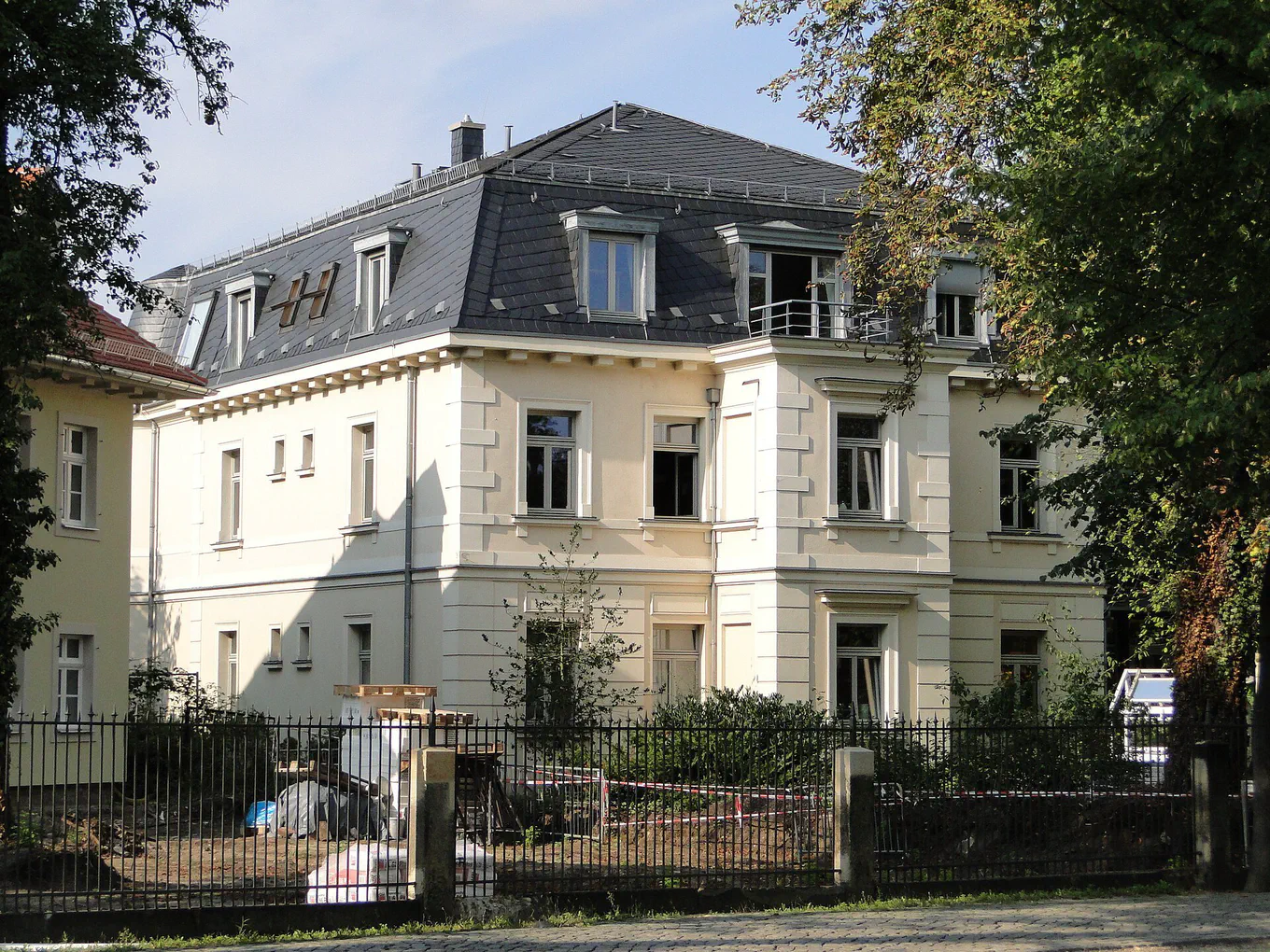
Stand here. Villa Augustin, Antonstraße 1 on Albertplatz, in the Innere Neustadt. The villa has been the Erich Kästner Museum since 2000.
Long before Disney turned his novel Lisa and Lottie into The Parent Trap, and before Emil and the Detectives, Erich Kästner was a Dresden teenager who often visited this villa, the home of his uncle Franz Augustin, a rich horse dealer. Unlike many writers who opposed the Nazis, Kästner did not go into exile, arguing that he could better chronicle events if he stayed. But on 10 May 1933, the Nazis burned his books as “contrary to the German spirit”. Kästner watched them burn.
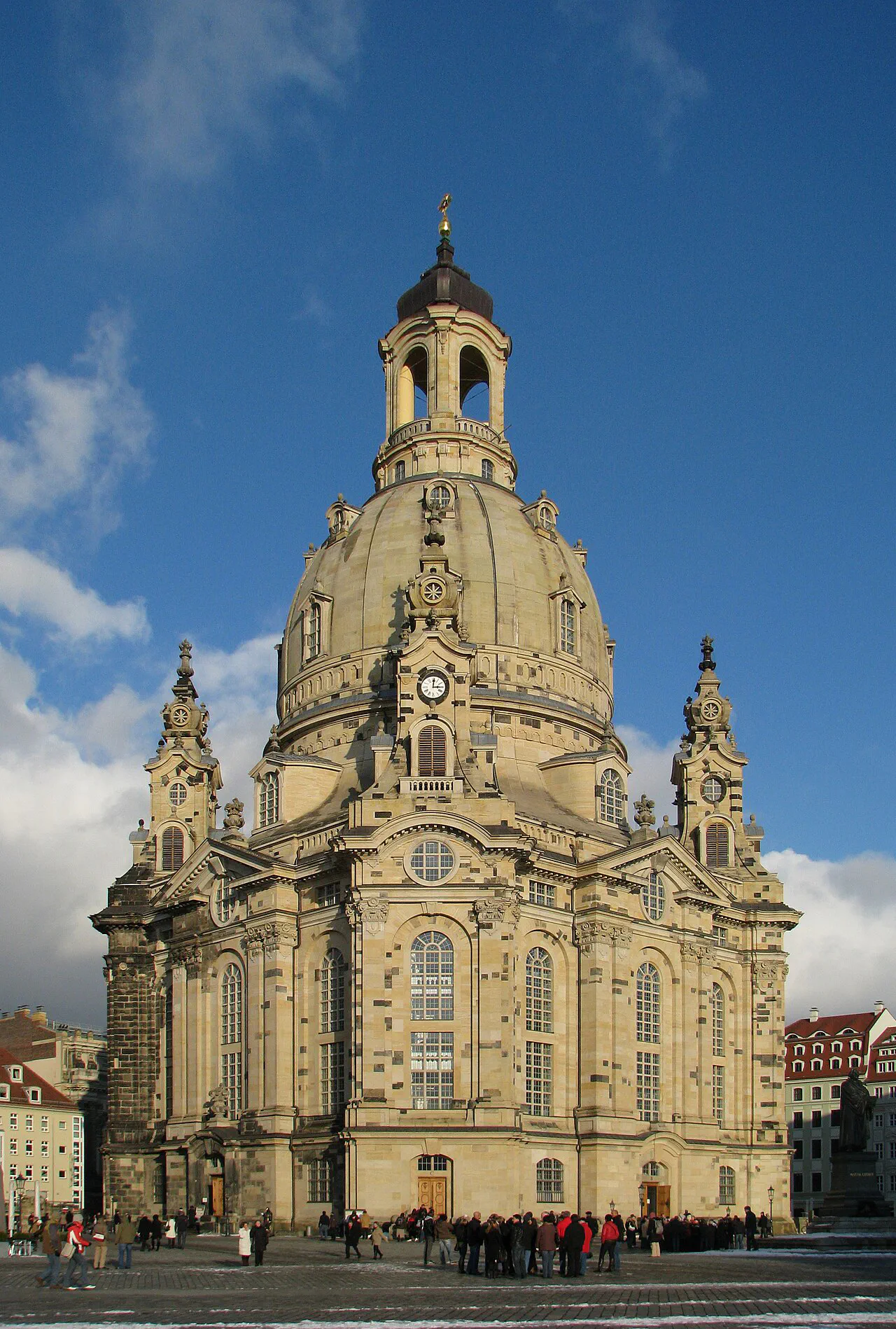
5 The bomber’s son who made the Frauenkirche cross
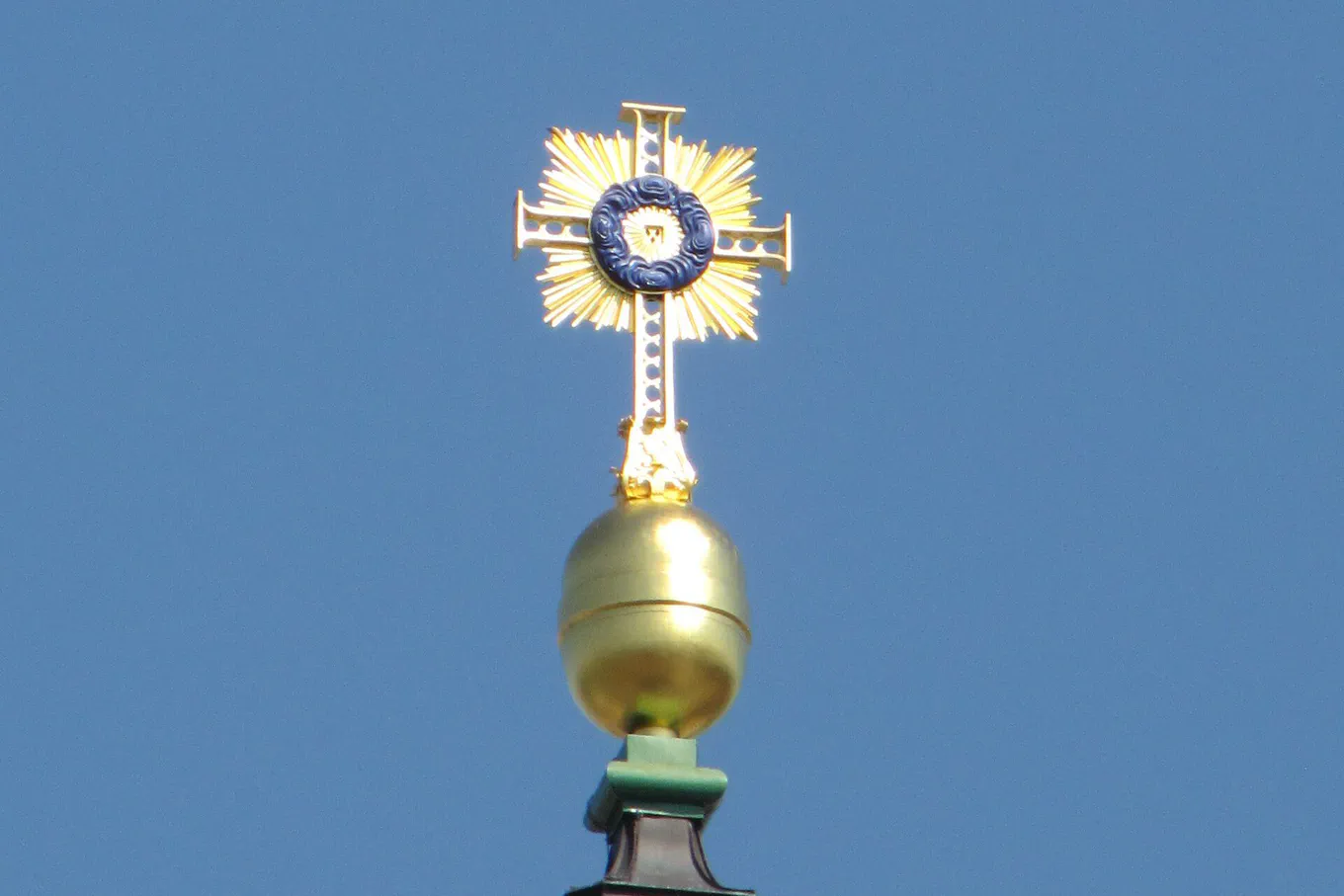
Stand here. The Frauenkirche, on the Neumarkt. The old cross, twisted and charred, stands to the right of the altar.
The Frauenkirche’s dome collapsed after the 1945 bombing, and its blackened stones lay in a heap for 45 years. Frank Smith had been in one of the aircrews on that raid, and he would tell his son Alan of the war’s suffering. As the church was rebuilt, Alan, a London silversmith moved by his father’s remorse, spent eight months making its new orb and cross. In June 2004, with Alan and his mother there, a crane lifted the orb and cross onto the dome. Old Dresdeners wept and cheered.
Pack nothing. Leave Friday.
Every Friday, I write a free letter, Journey, that takes us on a trip through places, stories, and ideas.
Slaughterhouse-Five(Kurt Vonnegut, 1969). A semi-autobiographical novel. Billy Pilgrim and his fellow prisoners are held in an empty Dresden slaughterhouse, Schlachthof-fünf, now the exhibition centre Messe Dresden.
When I Was a Little Boy(Erich Kästner, 1957). A memoir. Kästner’s own childhood in Dresden, where he grew up on Königsbrücker Straße in the Äußere Neustadt.
I Shall Bear Witness(Victor Klemperer). Diaries, 1933 to 1941. Klemperer taught Romance languages at Dresden’s Technical University until 1935, and in 1940 he and his wife were moved into a “Jews’ House”.
Films to watch before you visit Dresden
Never Look Away(Florian Henckel von Donnersmarck, 2018). A film. A painter inspired by Gerhard Richter sees a Nazi show of “degenerate art” in Dresden as a child, then studies at the Dresden Academy of Fine Arts.
The Grand Budapest Hotel(Wes Anderson, 2014). A comedy-drama film. Scenes were filmed in Dresden at the Zwinger and the Pfunds Molkerei creamery.
The Tower(Christian Schwochow, 2012). A German TV drama film set in Dresden between 1982 and 1989, in the GDR’s last years, based on Uwe Tellkamp’s 2008 novel.
Questions
Can you visit Slaughterhouse Five in Dresden?
Only on a guided tour. The cellar where Vonnegut survived the bombing is now part of Hall 1 of Messe Dresden, the exhibition centre in the old slaughterhouse. A memorial wall stands in the foyer, but because the halls are in use, it isn’t open to the public. Messe Dresden’s own page points visitors to a guided tour, “Auf den Spuren von Kurt Vonnegut”.
Is the Frauenkirche in Dresden original?
Partly. The church built between 1726 and 1743 collapsed two days after the February 1945 bombing and lay in ruins for nearly half a century. It was rebuilt from 1994 and reconsecrated in 2005. About 3,800 of the original stones were reused, and they are the darker ones among the new.
Why is Dresden called Florence on the Elbe?
For centuries the Electors and Kings of Saxony filled their capital with cultural and artistic splendour. Dresden has been called Elbflorenz, Florence on the Elbe, and, for its Baroque and Rococo centre, the Jewel Box.