In 841, the Vikings set up a fortified base on Dublin Bay, at the mouth of the River Liffey, on Ireland’s east coast. Dublin is now the capital and largest city of Ireland. Between a walk that gave Ulysses its day and a dean who wanted England and got Dublin sit the first performance of Handel’s Messiah, a brewer’s 9,000-year lease, and a rebellion declared outside the Post Office.
1 James Joyce, Nora Barnacle, and the day Ulysses happens
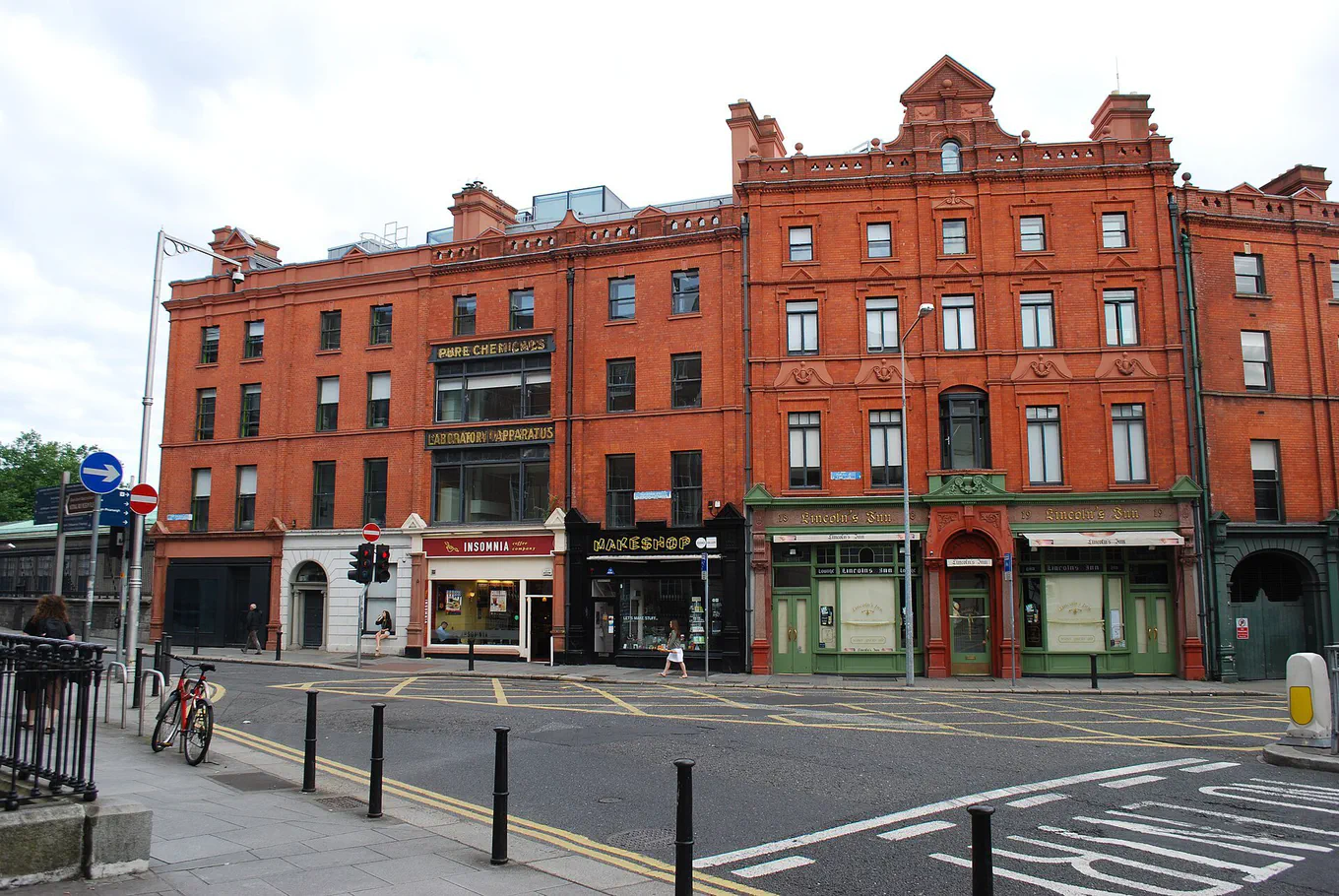
Stand here. Leinster Street, at the east end of Nassau Street, by the Trinity College railings. Look up, and the lettering “Finn’s Hotel” is still there.
Every 16 June, Dublin celebrates Bloomsday, the day in 1904 on which James Joyce set Ulysses. He chose it for Nora Barnacle. Joyce first saw her stepping out of Finn’s Hotel, where she worked as a chambermaid. They arranged to meet, but Nora didn’t come. Two days later, on 16 June, they met at the corner of Merrion Square and walked out together for the first time, down to Ringsend. In October, they left Ireland together. Joyce came back briefly in 1912, and never again. His books never left.
2 Handel’s Messiah, first heard on Fishamble Street
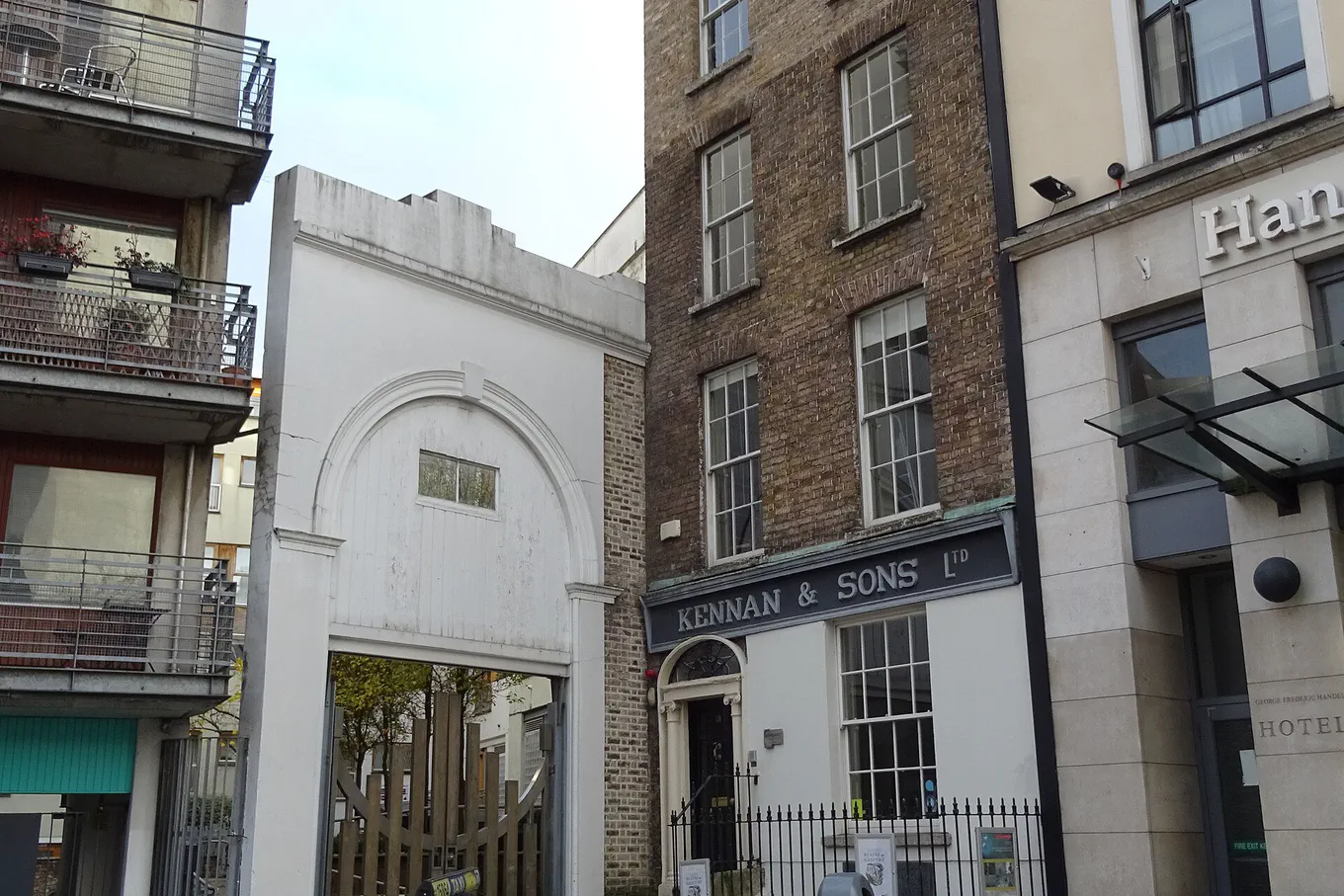
Stand here. Fishamble Street, inside the old city walls. The music hall is gone. Only its entrance arch survives, now the gateway to an apartment forecourt.
Handel’s Messiah was first heard here, not in London, on 13 April 1742. London’s taste for Italian opera was fading. In 1741, Handel gave it up and, invited by the Lord Lieutenant, came to Dublin. To fit in the biggest crowd, men were asked to come without swords, and women without hooped dresses. Seven hundred came, and the takings freed 142 prisoners held for debt. A year later, London gave Messiah a cool reception. Every 13 April, choirs still sing in the open air outside the site of the hall.
3 Arthur Guinness and his 9,000-year lease at St James’s Gate
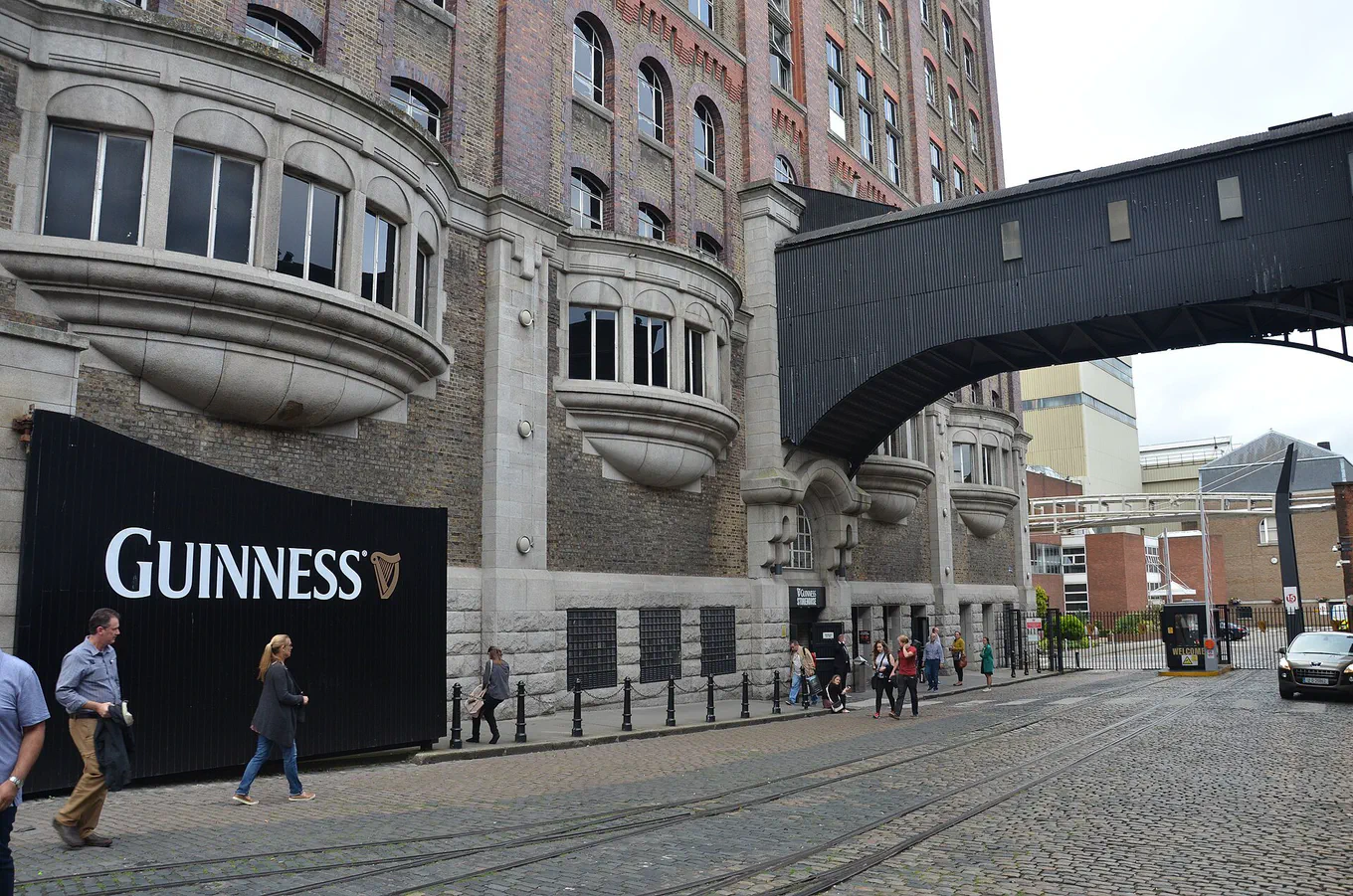
Stand here. The Guinness Storehouse at St James’s Gate, a 1902 fermentation plant. A copy of the lease lies at the foot of its pint-glass atrium.
The Guinness brewery at St James’s Gate began with a lease, signed on 31 December 1759. Arthur Guinness took on four acres at St James’s Gate and a brewery that had stood empty for nine years. He paid £100 down and agreed to £45 a year, for 9,000 years. By the 1880s, his brewery was the largest in the world, and as it spread past its four acres, the company bought the land outright. The lease that was meant to run until the year 10759 is no longer in force.
4 Patrick Pearse and the Proclamation at the General Post Office
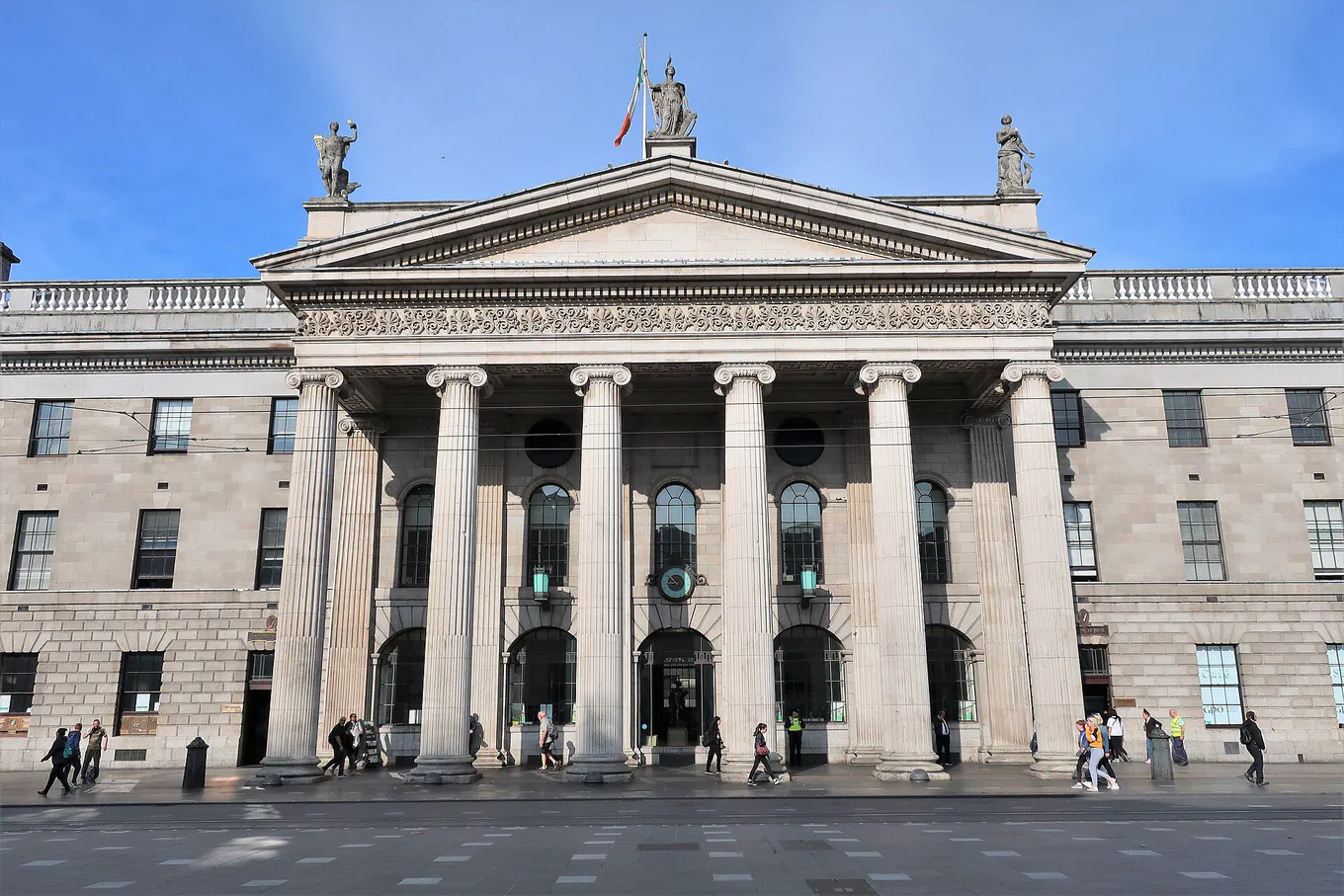
Stand here. The General Post Office, O’Connell Street. Rebuilt behind its original granite front, it is still Dublin’s main post office, with the GPO Museum inside.
On Easter Monday, 24 April 1916, Patrick Pearse read the Proclamation of the Irish Republic outside the Post Office, and the Easter Rising began. The rebels made the building their headquarters, but many Dubliners were bewildered, some hostile. After days of shelling, the Post Office caught fire and the garrison had to leave. On the Saturday, Pearse surrendered. Fourteen rebels faced firing squads at Kilmainham Gaol, and all seven who had signed the Proclamation were executed. It was the executions, and the way the prisoners were treated, that turned Irish opinion towards the rebels.
5 Jonathan Swift and the Dublin cathedral he settled for
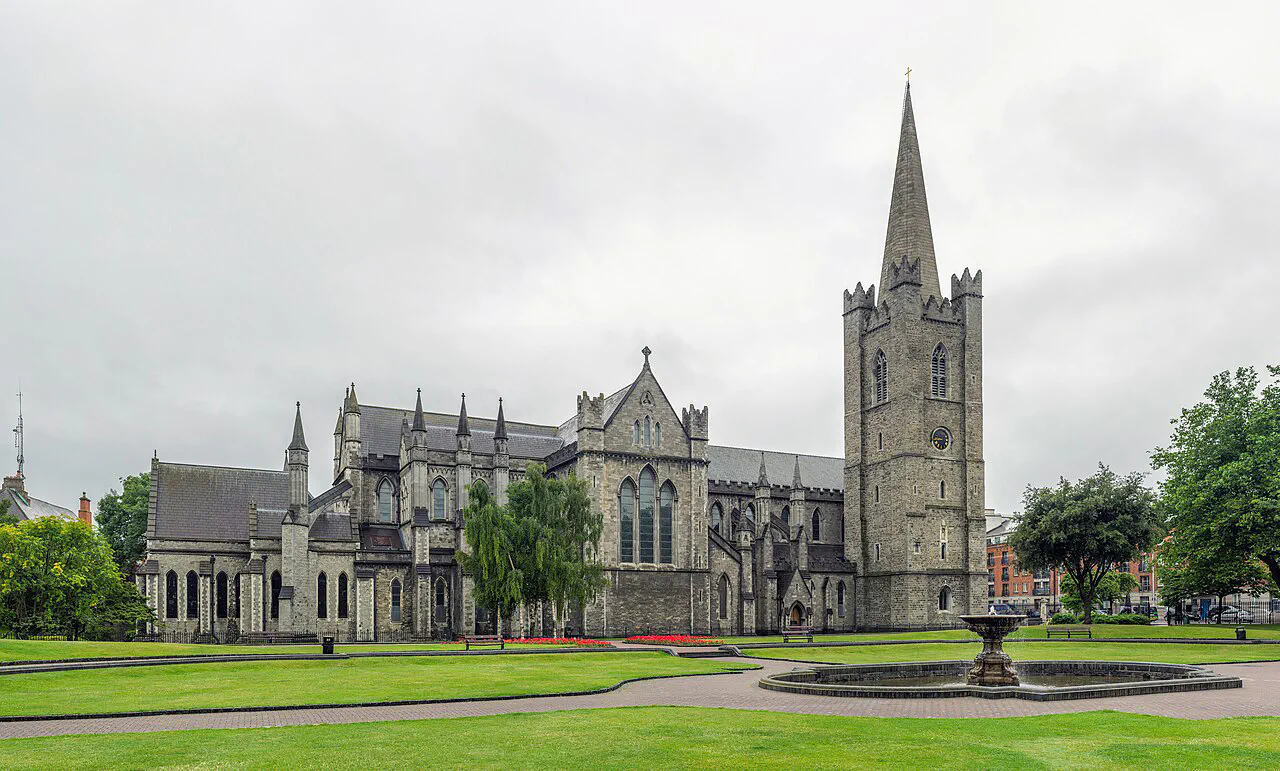
Stand here. St Patrick’s Cathedral, the largest church in Ireland. Swift’s grave and epitaph are inside, alongside those of his friend Stella.
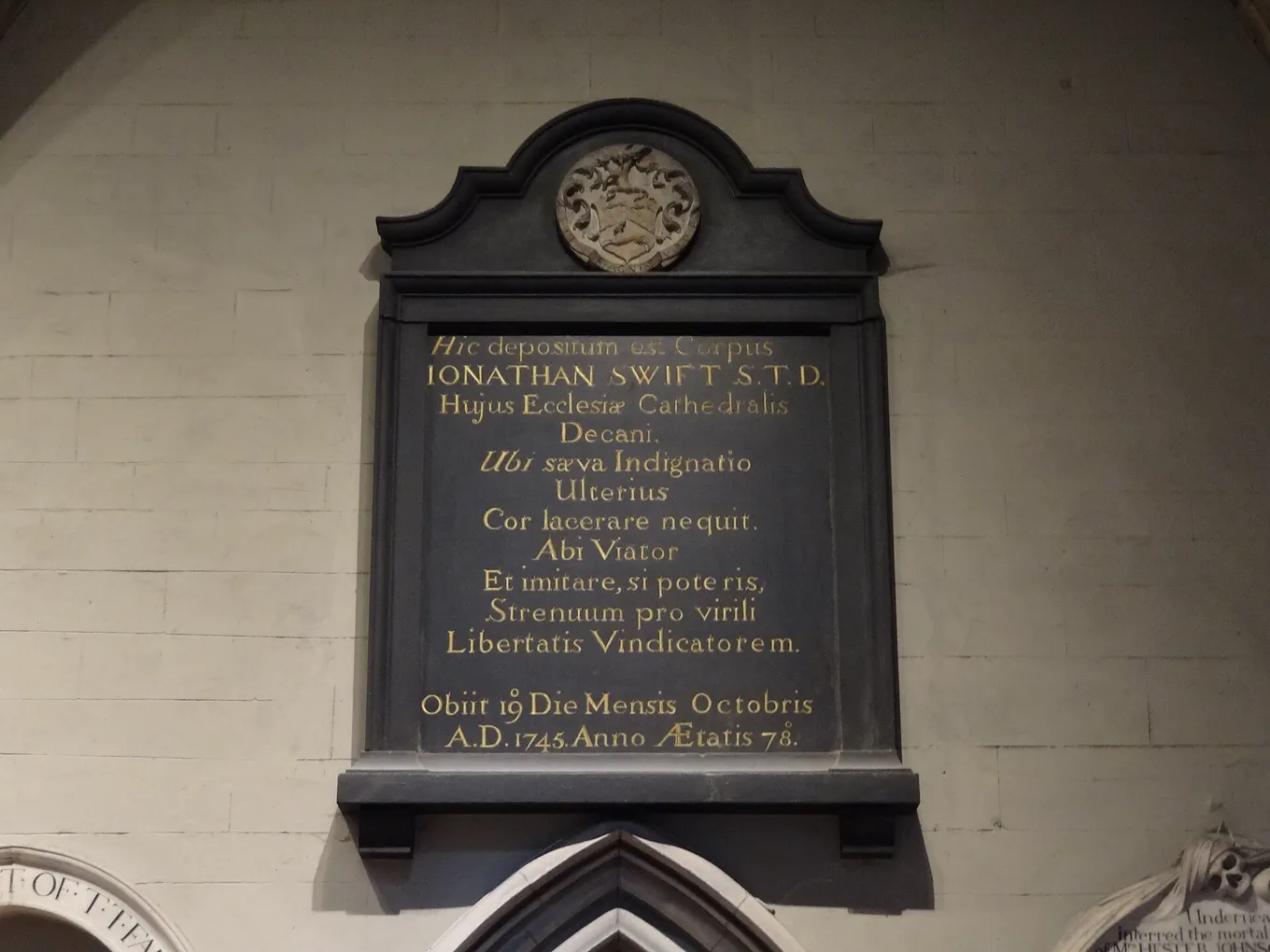
Jonathan Swift’s epitaph on the wall of the south aisle in St Patrick’s Cathedral, Dublin.Antoine Rex / CC0.
Jonathan Swift, the Dublin-born clergyman who would write Gulliver’s Travels, hoped to be rewarded with a church post in England. Queen Anne blocked him, reportedly thinking his book A Tale of a Tub blasphemous. In 1713, the best his friends could get him was the deanery of St Patrick’s, and he held it for the rest of his life. He was buried in his own cathedral, beside his friend Esther Johnson, his “Stella”. The epitaph he wrote for himself places him “where fierce indignation can no longer injure the heart”.
Pack nothing. Leave Friday.
Every Friday, I write a free letter, Journey, that takes us on a trip through places, stories, and ideas.
Ulysses(James Joyce, 1922). A novel. Leopold Bloom’s home, 7 Eccles Street, was demolished in 1967. Its door is now at the James Joyce Centre.
“Araby”, in Dubliners(James Joyce, 1914). A short story that opens on the drab life people live on North Richmond Street.
My Left Foot(Christy Brown, 1954). An autobiography. In 1924, Brown’s family moved to 54 Stannaway Road, in Kimmage, his childhood home.
The Ginger Man(J. P. Donleavy, 1955). A novel. A young American, Sebastian Dangerfield, arrives in Ireland after the Second World War and enrols at Trinity College Dublin.
Films to watch before you visit Dublin
The Commitments(Alan Parker, 1991). A film. Scenes were shot on Sheriff Street, in front of St Laurence O’Toole Church.
Sing Street(John Carney, 2016). A film, named after Synge Street CBS, the school that was one of its locations.
Questions
Why is Bloomsday on 16 June?
James Joyce set Ulysses on 16 June 1904, the day of his first outing with Nora Barnacle, who became his wife. Dublin marks Bloomsday every year, and Davy Byrne’s pub at 21 Duke Street, where Leopold Bloom stops for a gorgonzola sandwich and a glass of burgundy, is particularly popular on the day.
Can you see the Guinness 9,000-year lease?
You can see a copy. It lies at the base of the glass atrium, shaped like a pint of Guinness, in the Guinness Storehouse at St James’s Gate. The lease itself is no longer in effect, because the company bought the land as the brewery grew beyond its first four acres.
Was Molly Malone a real person?
There is no evidence that she was. The song tells the made-up tale of a fishwife selling on the streets of Dublin, who died young, of a fever. The legend of a real 17th-century Molly only grew up in the late 20th century. Her statue has stood on Suffolk Street, in front of the Tourist Information Office, since July 2014.