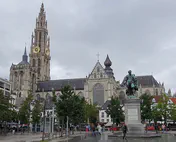
Düsseldorf, Germany, North Rhine-Westphalia, Europe
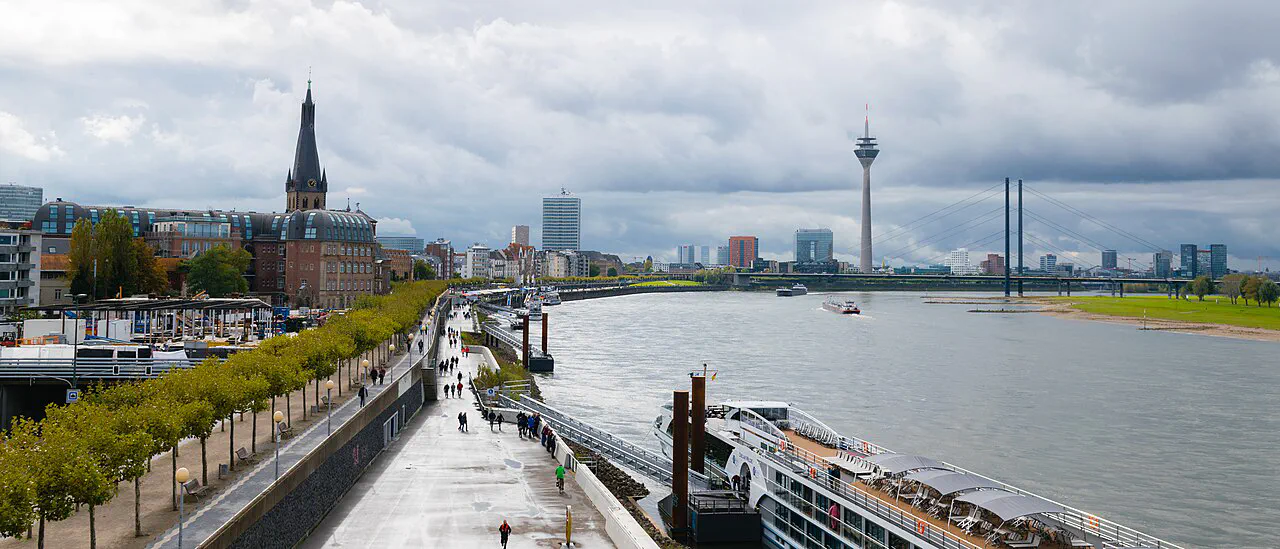
Düsseldorf is the capital of North Rhine-Westphalia, Germany’s most populous state, and it takes its name from the Düssel, a small river that joins the Rhine here. It gained city rights in 1288. Its stories are a poet’s fountain that went to New York, a composer’s last family home, a band in a backyard room, a professor who took in the rejected, and a statue with a legend of silver cutlery.
Heinrich Heine’s “Die Lorelei” is a poem about a water spirit much like a mermaid, and Heine was born here, into a Jewish family. In 1887, a Düsseldorf committee planned him a memorial, and his admirer Empress Elisabeth of Austria sent 50,000 marks. The empress pulled out. Then antisemitic and nationalist opposition sank the plan, and the city withdrew its permit. The memorial, a marble fountain, was finished but had nowhere to go. In 1899, German Americans unveiled it in the Bronx, where it still stands, near Yankee Stadium.
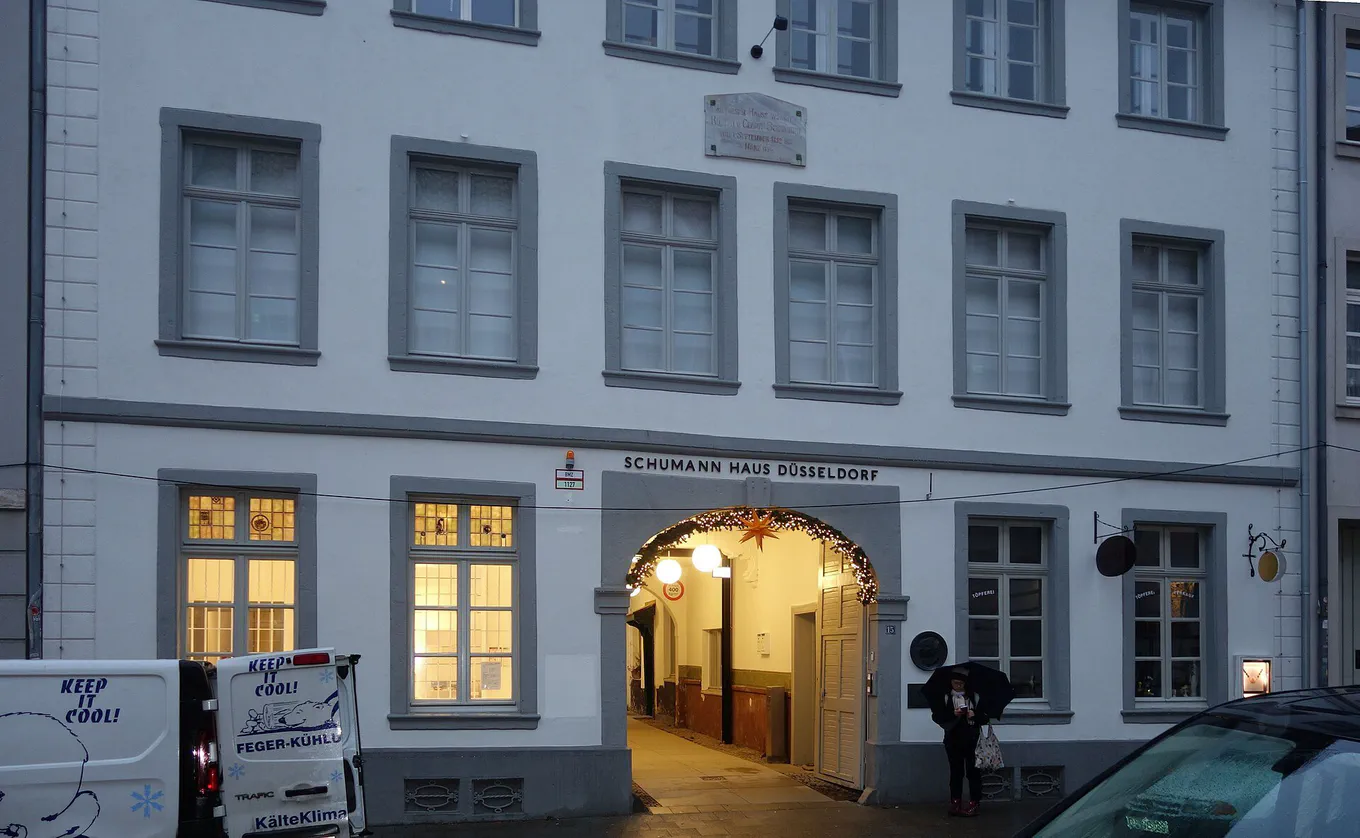
2 Robert and Clara Schumann’s last home, on Bilker Straße
Stand here. Bilker Straße 15. Their last home together, and the only one still in its historic fabric, it has been restored as a museum.
The Schumann-Haus at Bilker Straße 15 in Düsseldorf’s Carlstadt, the last home Robert and Clara Schumann shared.Kürschner / CC0.
Robert Schumann came to Düsseldorf as the city’s music director, with his wife, the celebrated pianist Clara. But his shyness and mental instability made it hard to work with the orchestra. In 1853, the twenty-year-old Johannes Brahms called on them, and Schumann hailed him in print, in what was his last article. That winter, Schumann threw himself into the Rhine. Fishermen pulled him out, and at his own request he went to a sanatorium near Bonn. Clara was not allowed to visit him until two days before he died.
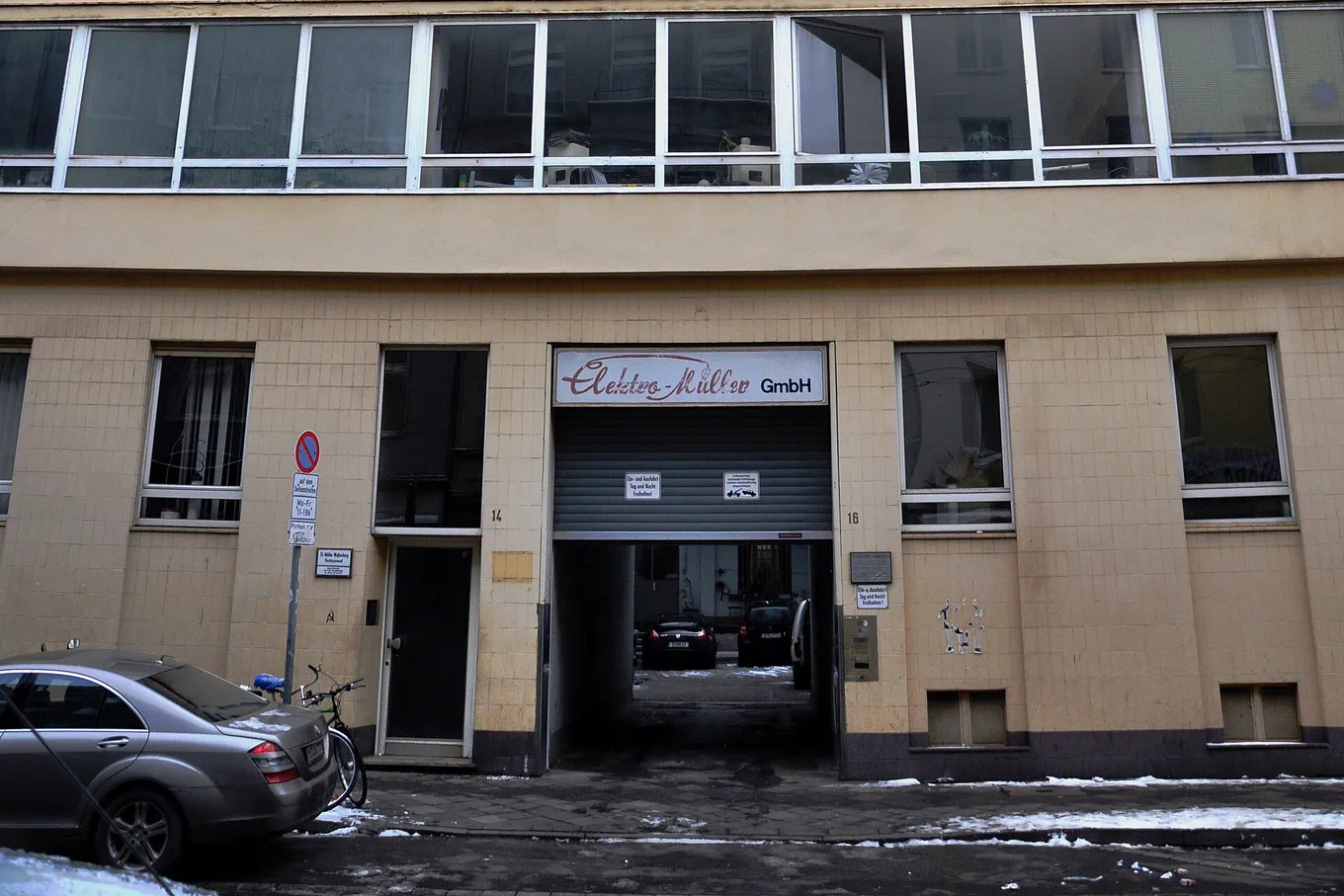
3 Kraftwerk’s Kling Klang studio, in a backyard near the station
Stand here. Mintropstraße 16, a backyard building with glass-block windows, in the station district near the Hauptbahnhof. Kraftwerk moved the studio to Meerbusch in 2009.
Kraftwerk began, by the band’s own reckoning, in 1970, when Florian Schneider rented a small, empty room in a workshop here. He and Ralf Hütter had met as students at the Robert Schumann Hochschule, and the room became their studio, Kling Klang. Then came “Autobahn”. The first station to play the single wasn’t in Germany but in Chicago, from an import copy, and in 1975 it became an international hit. Its refrain, “Fahren fahren fahren”, was often heard as “Fun fun fun”.
4 Joseph Beuys and the students the Kunstakademie turned away
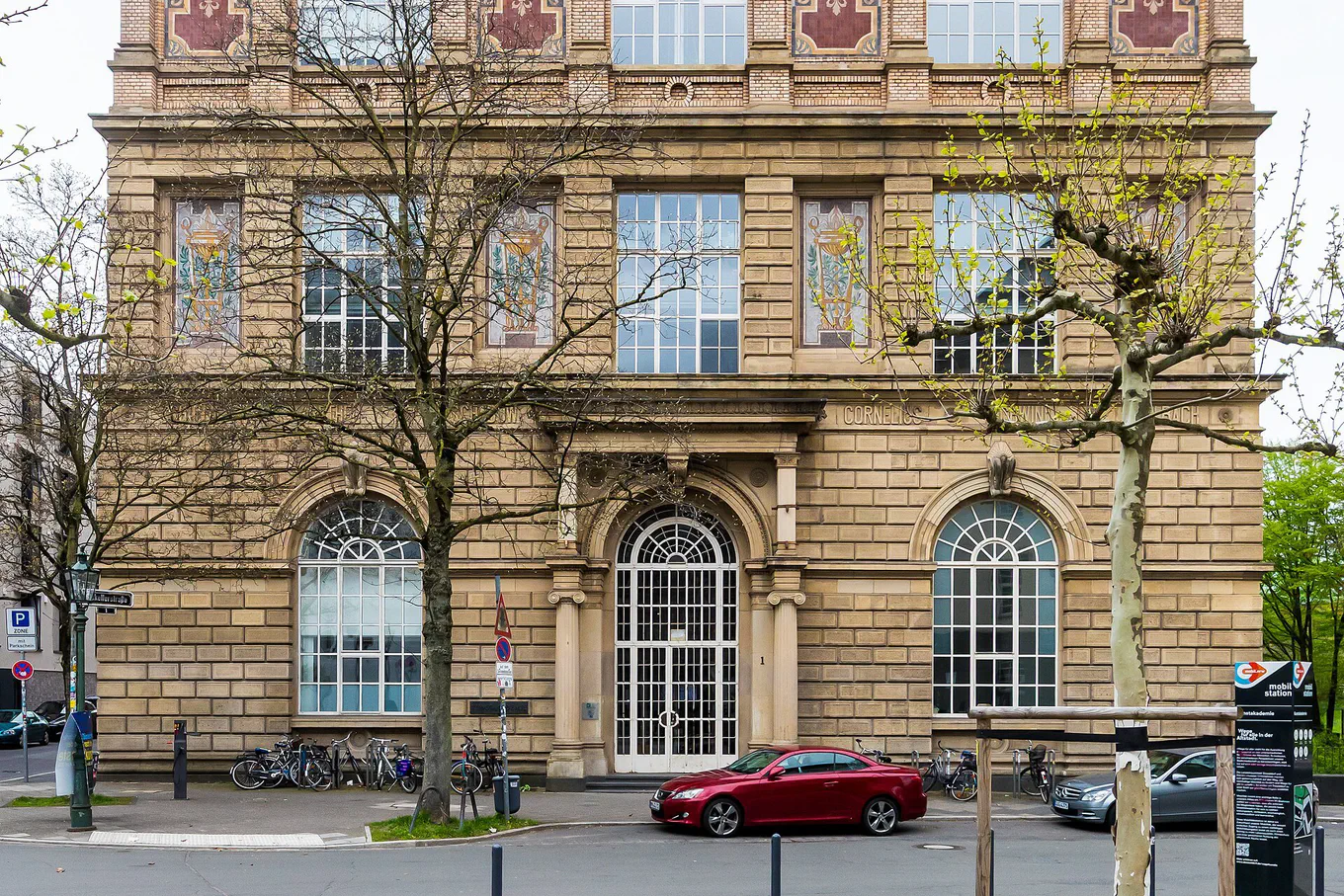
Stand here. The Kunstakademie, the city’s art academy, at Eiskellerstraße 1. Beuys was its professor of monumental sculpture from 1961.
Joseph Beuys, the artist in the felt hat, is famous for saying “Everyone is an artist”. He told colleagues he would take into his class every applicant they turned away. He took in all 142 rejected applicants, and his class swelled to about 400. In 1972, when he occupied the academy’s office with rejected students, his employer, the science ministry, sacked him without notice, and police saw them out. Beuys refused to accept it. Eight years later, a settlement let him keep his studio, Room 3, but not his job.
5 Jan Wellem’s statue and the town’s silver cutlery
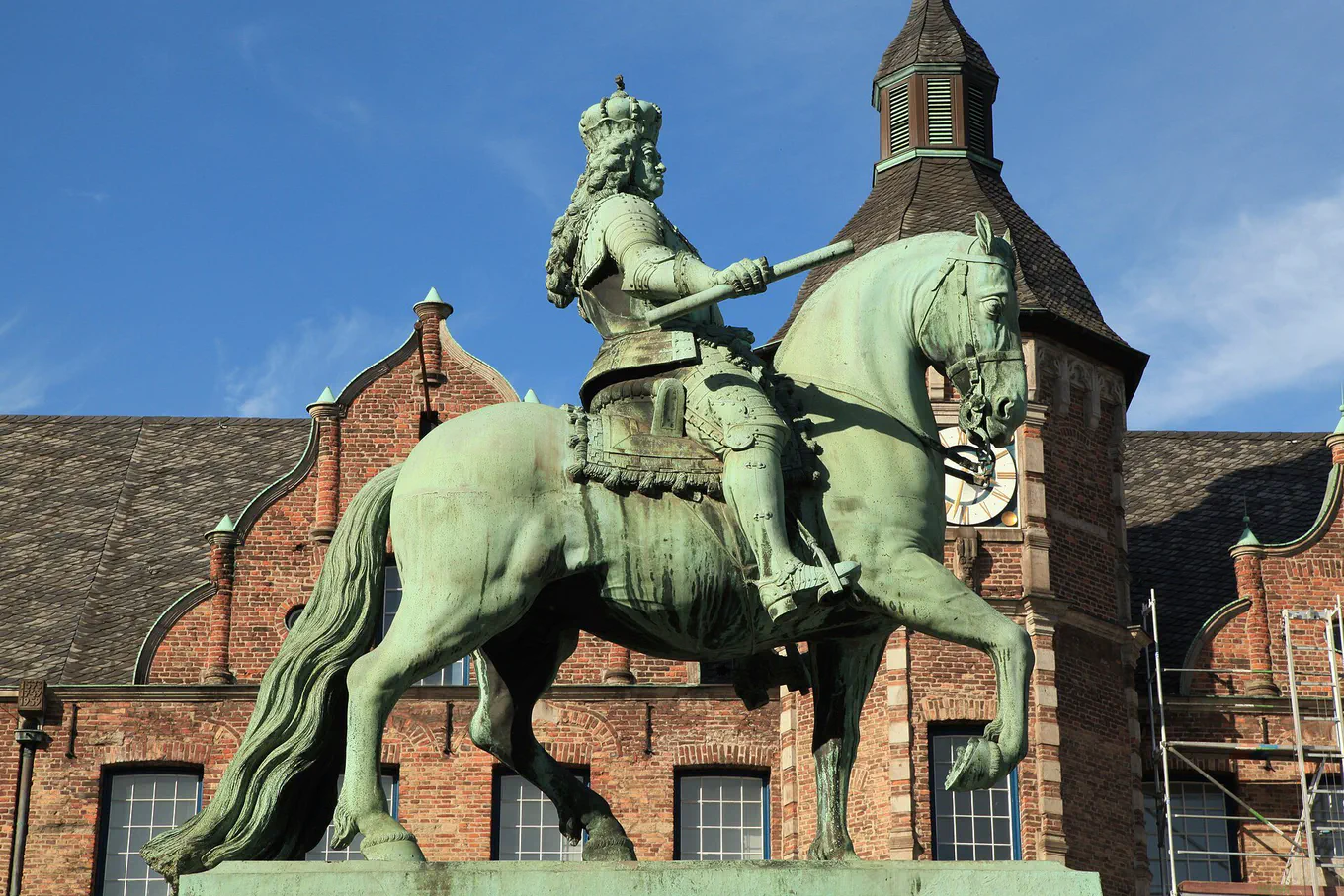
Stand here. The Marktplatz, in the Altstadt. Jan Wellem rides here in bronze, a few steps from his former palace on Burgplatz.
Born in Düsseldorf, the Elector Palatine Johann Wilhelm, Jan Wellem in Low German, kept his lavish court here. His court sculptor, Gabriel Grupello, began a bronze of him on horseback. A local legend says Grupello ran out of silver and sent a young helper knocking on doors, and the people of Düsseldorf gave their silver cutlery to finish it. It went up in 1711, and its plaque says it was set up “by the grateful citizens”.
Pack nothing. Leave Friday.
Every Friday, I write a free letter, Journey, that takes us on a trip through places, stories, and ideas.
Ideen. Das Buch Le Grand(Heinrich Heine, 1827). A memoir in prose, in which Heine remembers watching the Emperor ride down the avenue of Düsseldorf’s Hofgarten.
Königsallee(Hans Pleschinski, 2013). A novel imagining a reunion between Thomas Mann, 79, and his former love Klaus Heuser in Düsseldorf in 1954, with the Hotel Breidenbacher Hof preparing to receive him.
Melancholy(Jon Fosse, 1995). A novel. The Norwegian painter Lars Hertervig, a young student at the Düsseldorf Academy, is driven towards a mental breakdown by unrequited love and doubt in his art.
Films to watch before you visit Düsseldorf
Never Look Away(Florian Henckel von Donnersmarck, 2018). A film. Its hero lies about his age to get into Düsseldorf’s art academy; his professor is based on Joseph Beuys.
Geliebte Clara(Helma Sanders-Brahms, 2008). A film. Robert and Clara Schumann settle in Düsseldorf with their five children in 1850, and get to know the young Johannes Brahms.
Beuys(Andres Veiel, 2017). A documentary film about Joseph Beuys, who taught at the Kunstakademie until his dismissal in 1972.
Questions
Where was Heinrich Heine born?
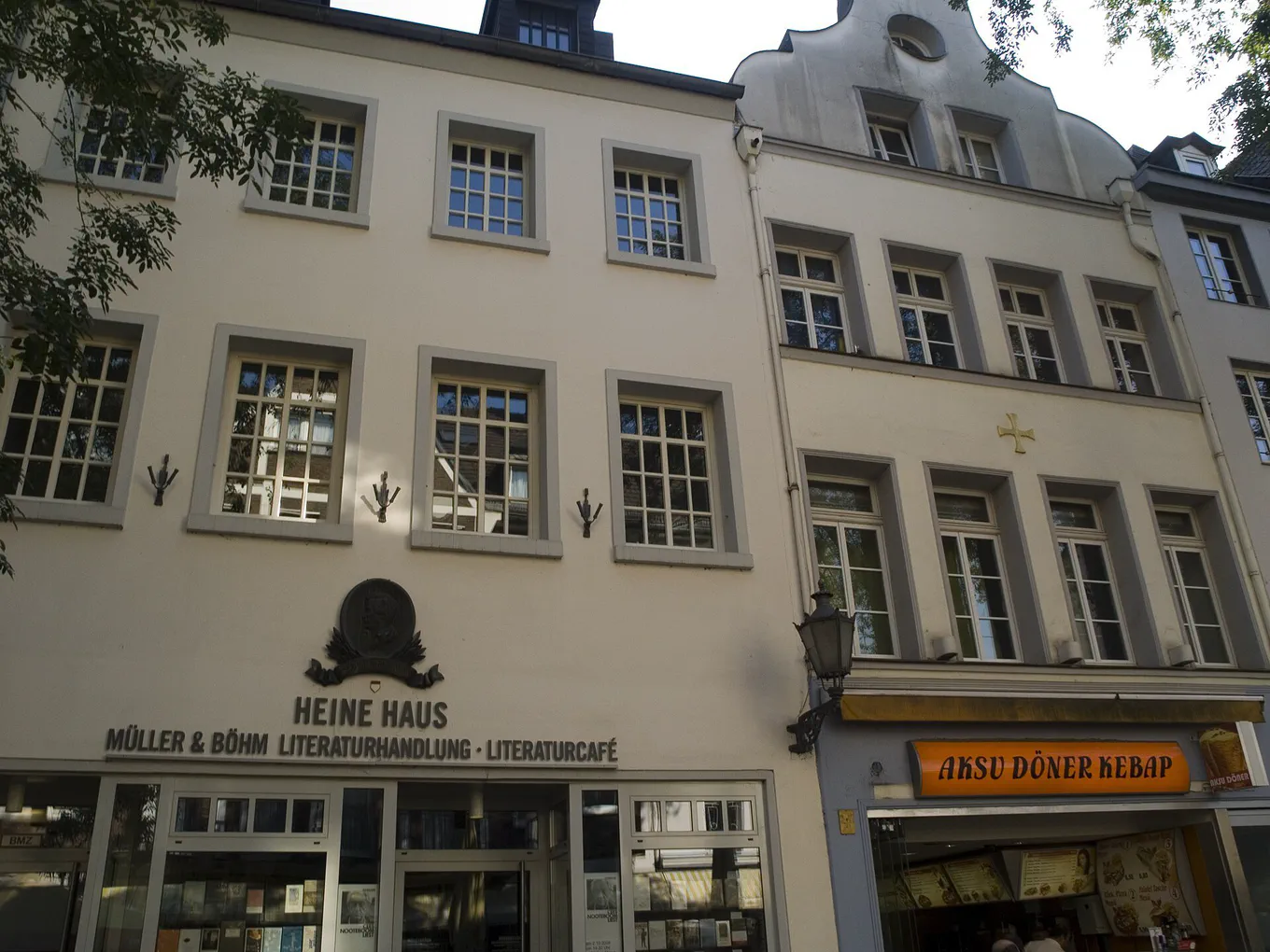
In the rear house of Bolkerstraße 53, in the Altstadt, probably on 13 December 1797. The front house was pulled down around 1821, and the building was destroyed in 1943, all but its facade. Since 1947, a bronze relief of Heine has marked the spot, saying he was born there.
Where was Kraftwerk’s Kling Klang studio?
At Mintropstraße 16, hidden in a backyard in the station district near Düsseldorf Hauptbahnhof. Florian Schneider rented a small room there in 1970, which the band counts as its real beginning, and it was christened Kling Klang in 1973. In 2009, the studio moved to Meerbusch, about 10 kilometres west of the city.
What is Altbier, and how do you stop the waiter bringing more?
Altbier is a copper-coloured, top-fermented beer, often served in Düsseldorf’s Old Town in 0.25-litre glasses. In the brewpubs, the waiter is a Köbes, traditionally in a blue linen apron. When a glass is empty, the Köbes brings a fresh one without being asked, unless you lay a beer mat on top.