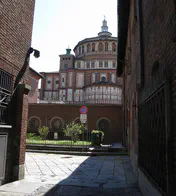
I visited Florence with my fiancée in 1999, and loved it. Not just the architecture (which is great) or the food (which is great), but the storytelling. Machiavelli. Michelangelo. Boccaccio. The Medici. It’s a hugely rich tapestry… in a place that has a lot of hugely rich tapestries.
— Nick
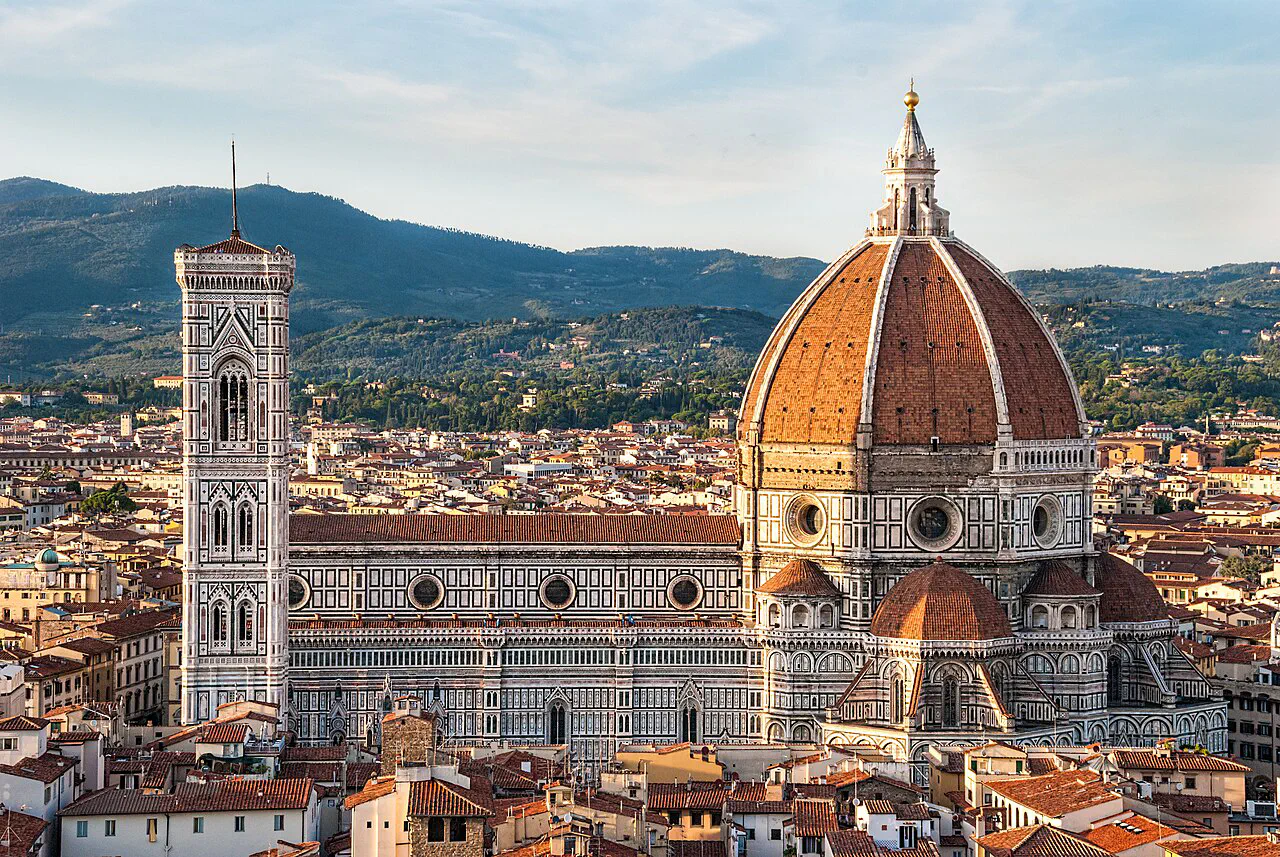
The River Arno cuts through the old city of Florence, capital of Tuscany, in Italy. Many academics consider it the birthplace of the Renaissance, and UNESCO made its historic centre a World Heritage Site in 1982. Crime bookends the list, a murder at High Mass first and a stolen painting in a hotel room last, with a neglected marble block, a scientist’s finger and a novel’s fainting heroine between.
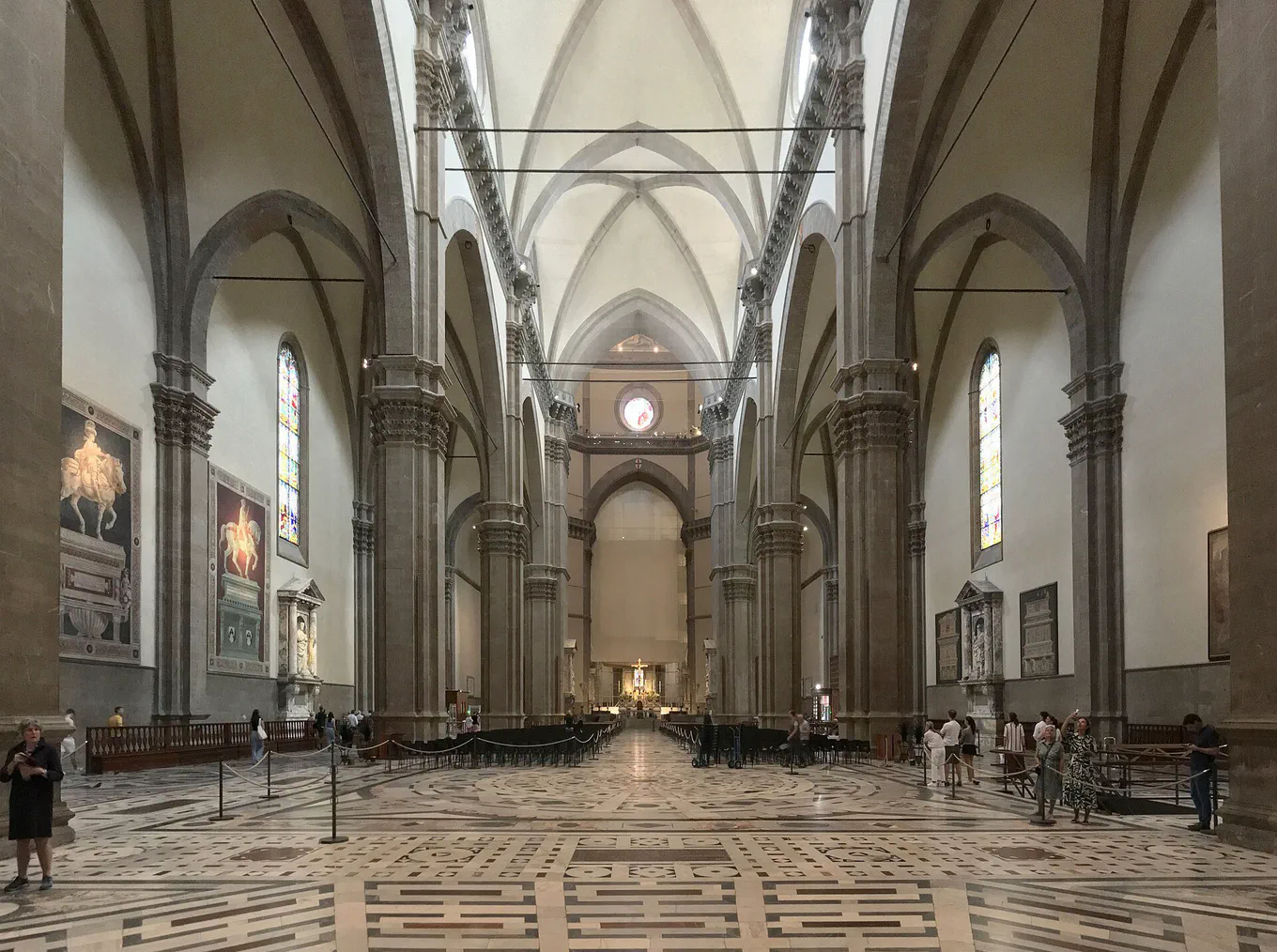
Lorenzo the Magnificent, the Medici patron of Botticelli and Michelangelo, ruled Florence with his brother Giuliano. The Pazzi family and their allies wanted the Medici gone, and on 26 April 1478 they struck during High Mass in the cathedral. Giuliano was stabbed nineteen times and died on the floor. Lorenzo escaped with a wound to the neck, into the sacristy and then home, and for several hours he didn’t know his brother was dead. Over eighty people were executed for the plot, some hanged from windows of the Palazzo Vecchio.
2 Michelangelo’s David and the neglected marble giant
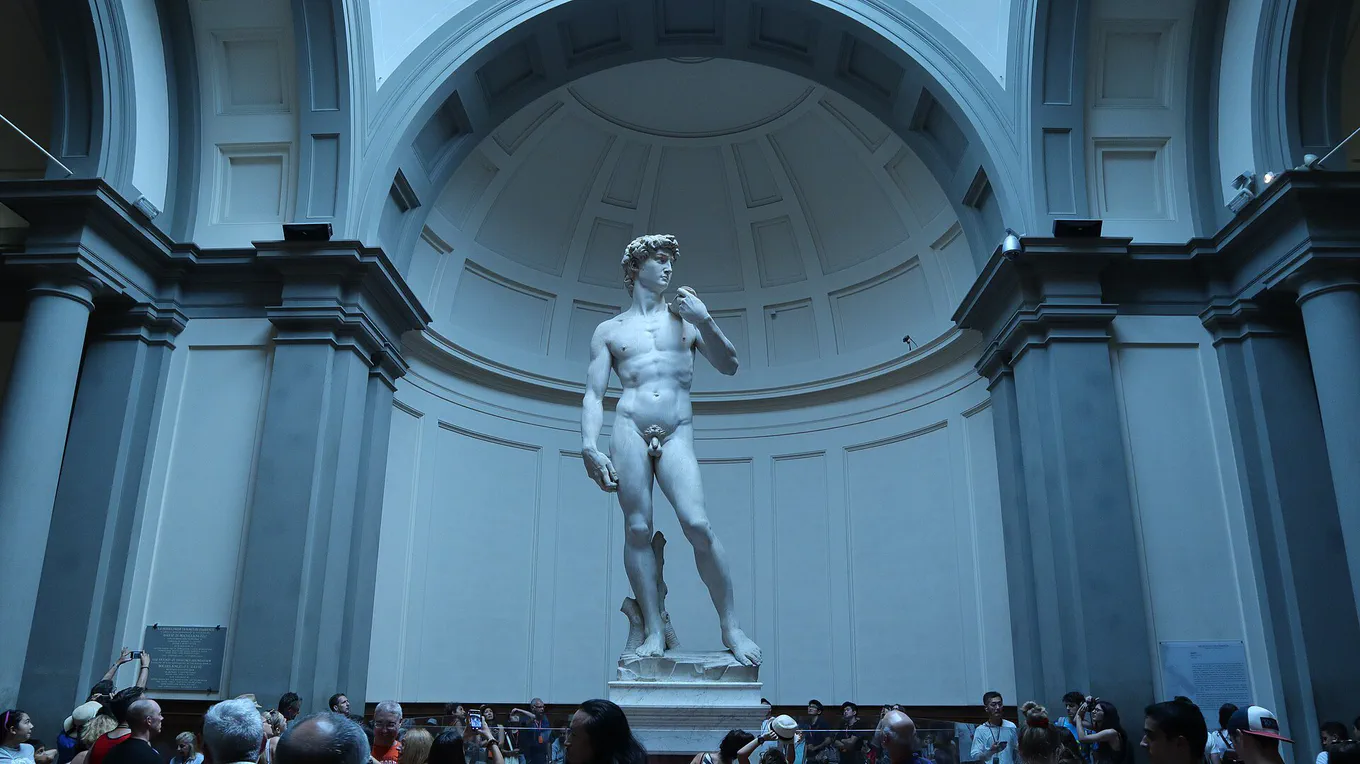
Stand here. The Galleria dell’Accademia, where the original has stood since 1873. A replica stands on its first spot, by the Palazzo Vecchio’s entrance.
Michelangelo’s David is carved from a block two sculptors left unfinished. The first stopped after roughing out the torso, legs, and feet, and the second’s contract was apparently cancelled. For twenty-five years the block lay in the cathedral’s workshop yard, open to the weather, listed in an inventory as “badly blocked out and supine”, lying on its back. The cathedral’s overseers called it the giant. Michelangelo, at 26, convinced them it should be his. In 1504, more than forty men rolled the giant half a mile to Piazza della Signoria.
3 Galileo’s finger, from Santa Croce to the Museo Galileo
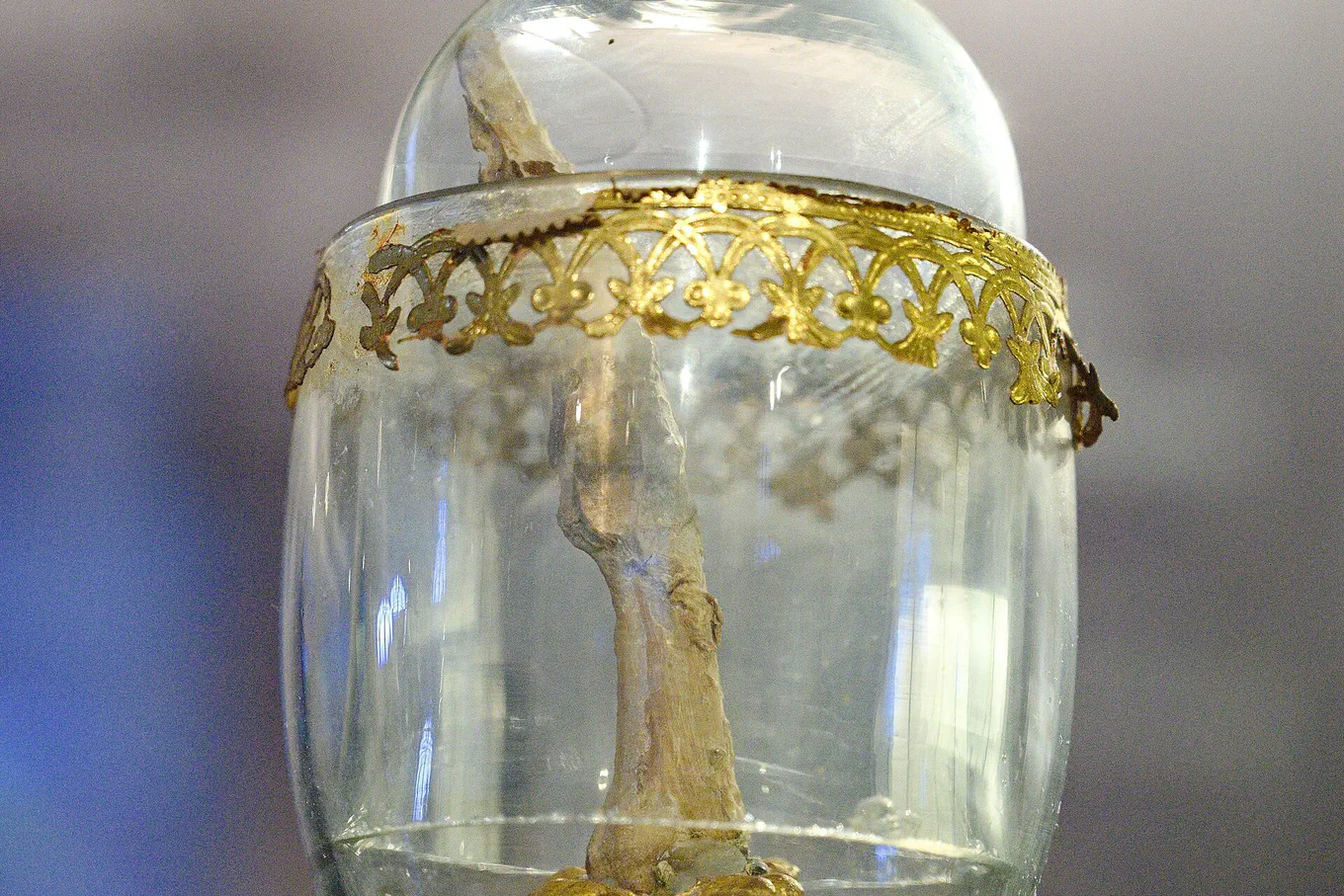
Stand here. Room VII of the Museo Galileo, in Piazza dei Giudici beside the Arno, near the Uffizi. His tomb is in Santa Croce.
When Galileo died under house arrest in 1642, the Grand Duke of Tuscany wanted him buried in Santa Croce, beside his father. The Pope objected, because the Church had condemned him for suspected heresy, so Galileo was buried in a small side room. In 1737, he was finally moved to a monument in the church, and during the move three fingers and a tooth were taken. Today his middle finger sits on a marble base in the Museo Galileo, the relic of “a hero and martyr of science”.
4 A Room with a View: Lucy faints in Piazza della Signoria
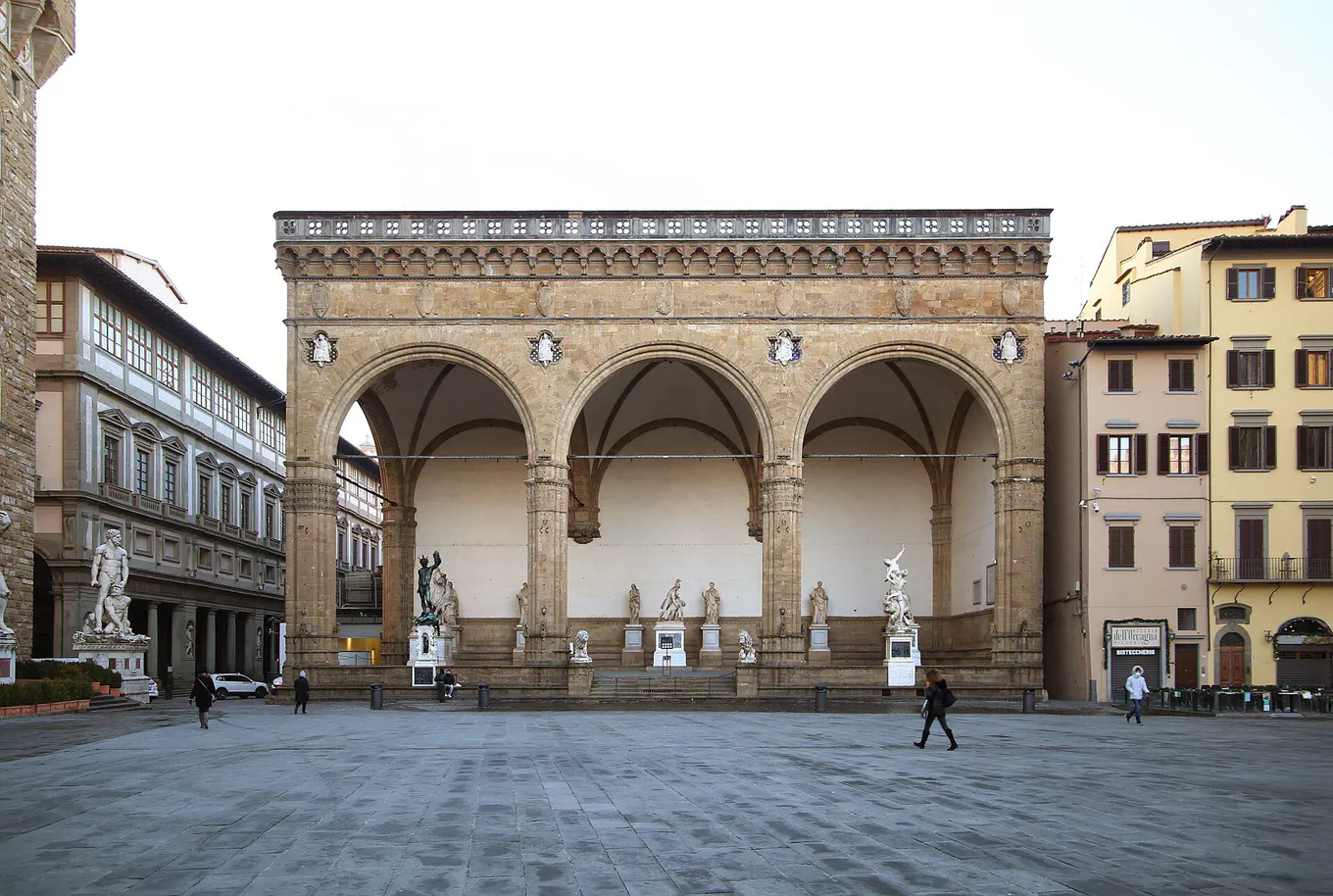
Stand here. Piazza della Signoria, by the Loggia. Merchant Ivory had the square cleared to film here.
In E. M. Forster’s 1908 novel A Room with a View, Lucy Honeychurch is touring Italy. In Piazza della Signoria, she sees two Italians quarrel over a debt. One bends towards her as if he has a message, opens his lips, and a stream of red comes out. Lucy faints, and wakes on some steps in the Uffizi arcade in the arms of George Emerson, a fellow guest. “She had complained of dullness,” Forster writes, “and lo! one man was stabbed, and another held her in his arms.”
5 The stolen Mona Lisa turns up in a Florence hotel
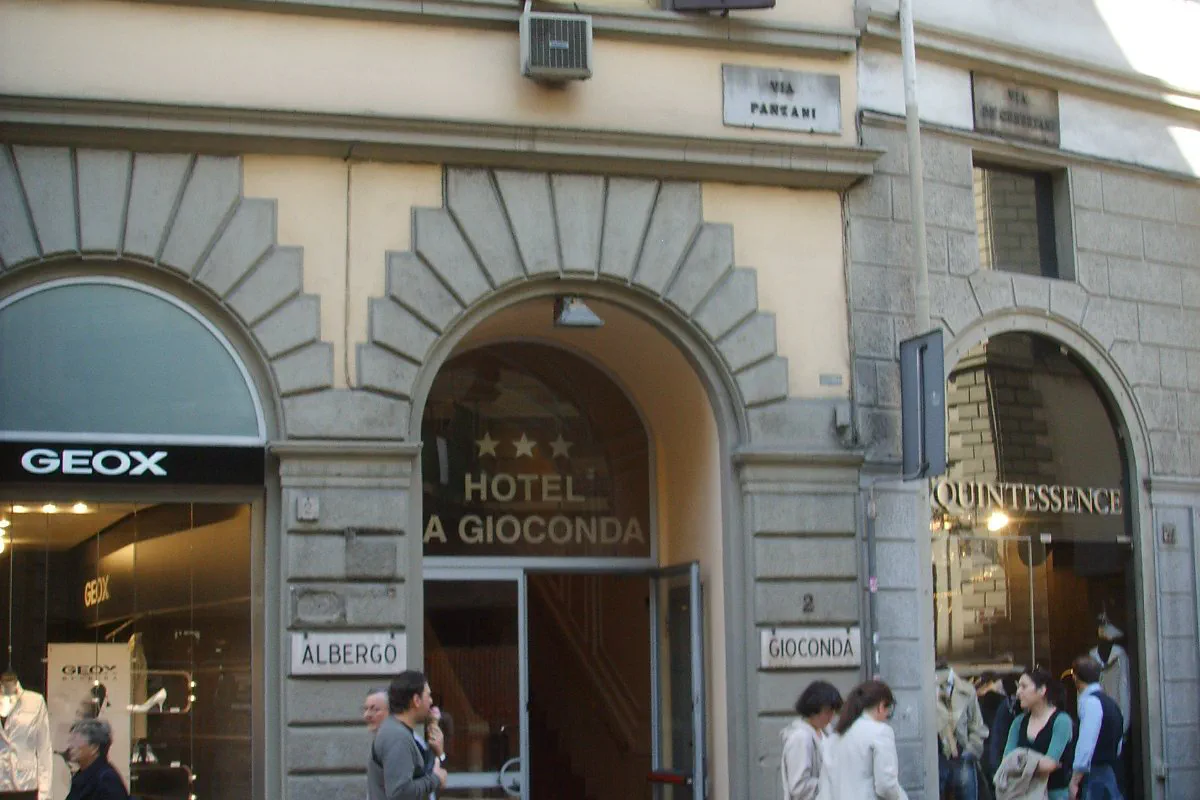
Stand here. Hotel La Gioconda, Via Panzani 2. In 1913 it was the Tripoli e Italia, and it is still a hotel.
The Mona Lisa wasn’t yet popular with the public when Vincenzo Peruggia, a former Louvre glazier, stole it in 1911, wearing the white smock of the museum’s workers. For two years he hid it in a trunk in Paris. Then he took it to Italy and contacted a Florence dealer as “Leonardo V.” The dealer called in the Uffizi’s director, who confirmed it was genuine, and police found the painting in a room at his hotel and arrested him. He never profited. The headlines around the world gave the painting a fame it had never had.
Romola(George Eliot, 1863). A novel. Baldassarre escapes into the Duomo and there swears revenge on his ungrateful adoptive son.
A Room with a View(E. M. Forster, 1908). A novel. Lucy and George witness a murder in Piazza della Signoria, and it ends with them eloped in Florence.
Hannibal(Thomas Harris, 1999). A novel. Hannibal Lecter hangs a disgraced Italian detective, Rinaldo Pazzi, from a window of the Palazzo Vecchio.
The Agony and the Ecstasy(Irving Stone, 1961). A novel about Michelangelo. He studies in Lorenzo de’ Medici’s sculpture garden and dissects bodies at Santo Spirito.
Casa Guidi Windows(Elizabeth Barrett Browning, 1851). A long poem. Casa Guidi is the house in Florence she and her husband rented from 1847 until her death in 1861.
Inferno(Dan Brown, 2013). A novel. Its heroes slip into the Palazzo Vecchio and find a phrase in a Vasari painting in the Hall of the Five Hundred.
Films to watch before you visit Florence
A Room with a View(James Ivory, 1985). A film, with Helena Bonham Carter as Lucy. Merchant Ivory had Piazza della Signoria cleared for filming.
Paisan(Roberto Rossellini, 1946). A film. Every bridge but the Ponte Vecchio has been blown up, and the way into the embattled city is the Vasari Corridor.
Questions
Where is the real David in Florence?
Michelangelo’s original David is in the Galleria dell’Accademia, where it was moved in 1873 to protect it from damage. The statue by the entrance to the Palazzo Vecchio, in Piazza della Signoria, is a replica, put up at its original site in 1910.
Can you climb Brunelleschi’s dome?
Yes. There are 463 stairs to the top, with platforms about every hundred steps, and a 360-degree view over the city at the end. A narrow stairway runs up between the dome’s two shells to the lantern. Brunelleschi built the dome between 1420 and 1436, and it is still the largest masonry dome in the world.
Why is Florence called the cradle of the Renaissance?
Many academics consider Florence the birthplace of the Renaissance, and it is known as la culla del Rinascimento, the cradle of the Renaissance. The Medici, its most powerful family from the 15th to the 18th centuries, ruled it for long periods, and Lorenzo de’ Medici, the most powerful patron of Renaissance culture, sponsored Botticelli and Michelangelo.