Goethe was born here, and two of his lines live in my commonplace book. ‘A man can stand anything except a succession of ordinary days.’ And from Faust, ‘All theory is grey, my friend, but forever green is the tree of life.’ I’ve never actually read the original Faust, which is grey of me.
— Nick
Frankfurt am Main is Germany’s fifth-largest city, on both banks of the river Main in Hesse, and the home of the European Central Bank. It was first mentioned in 794, when Charlemagne held an assembly there. Its stories here are a poet’s hopeless love, a banker born behind locked gates, a philosopher and his poodles, a doctor’s Christmas present, and a parliament that offered a king a crown.
1 Goethe writes Werther in his Frankfurt family home
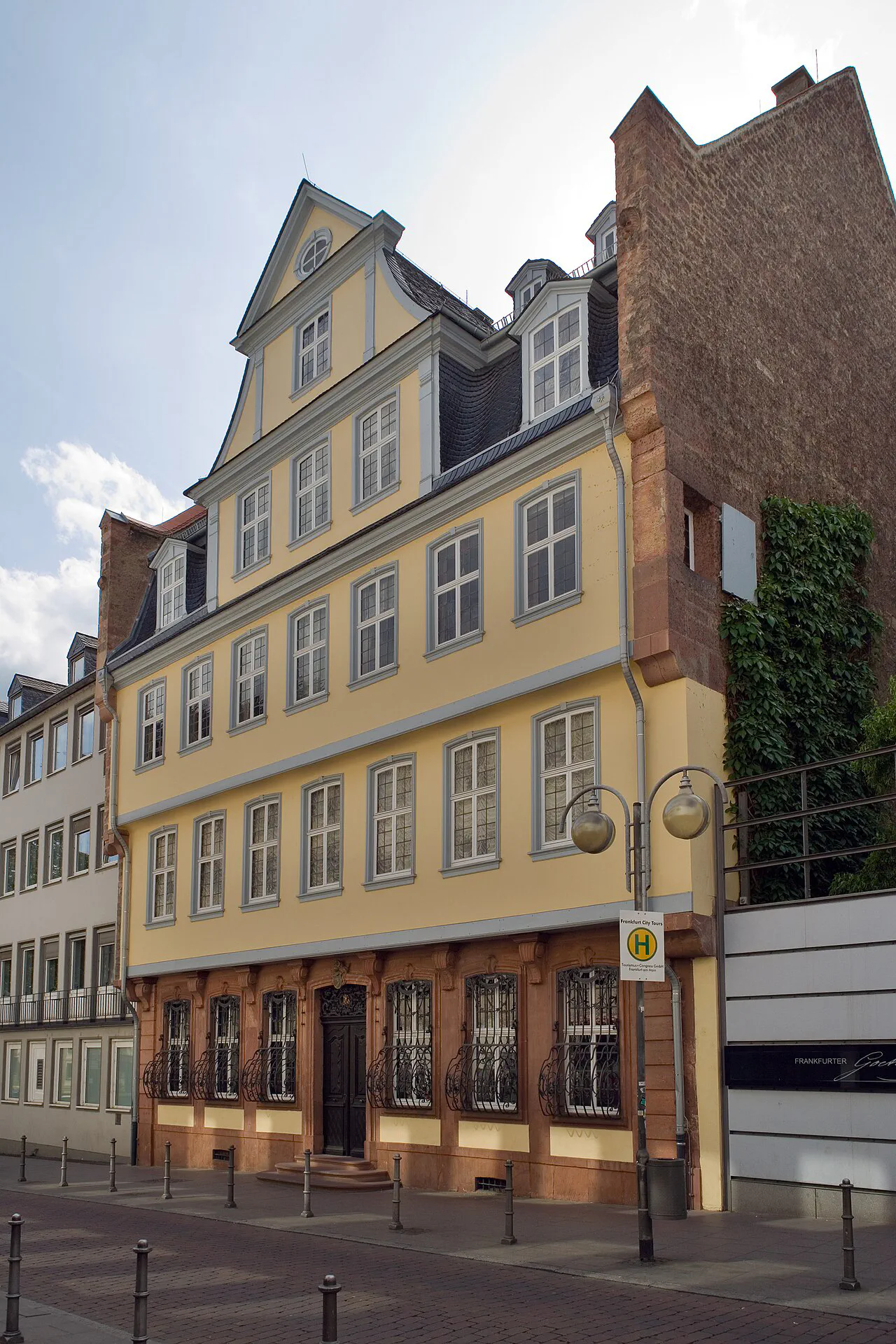
Stand here. The Goethe House, Goethe’s birthplace, at Großer Hirschgraben 23. Rebuilt after the bombing of 1944, it is now a writer’s house museum.
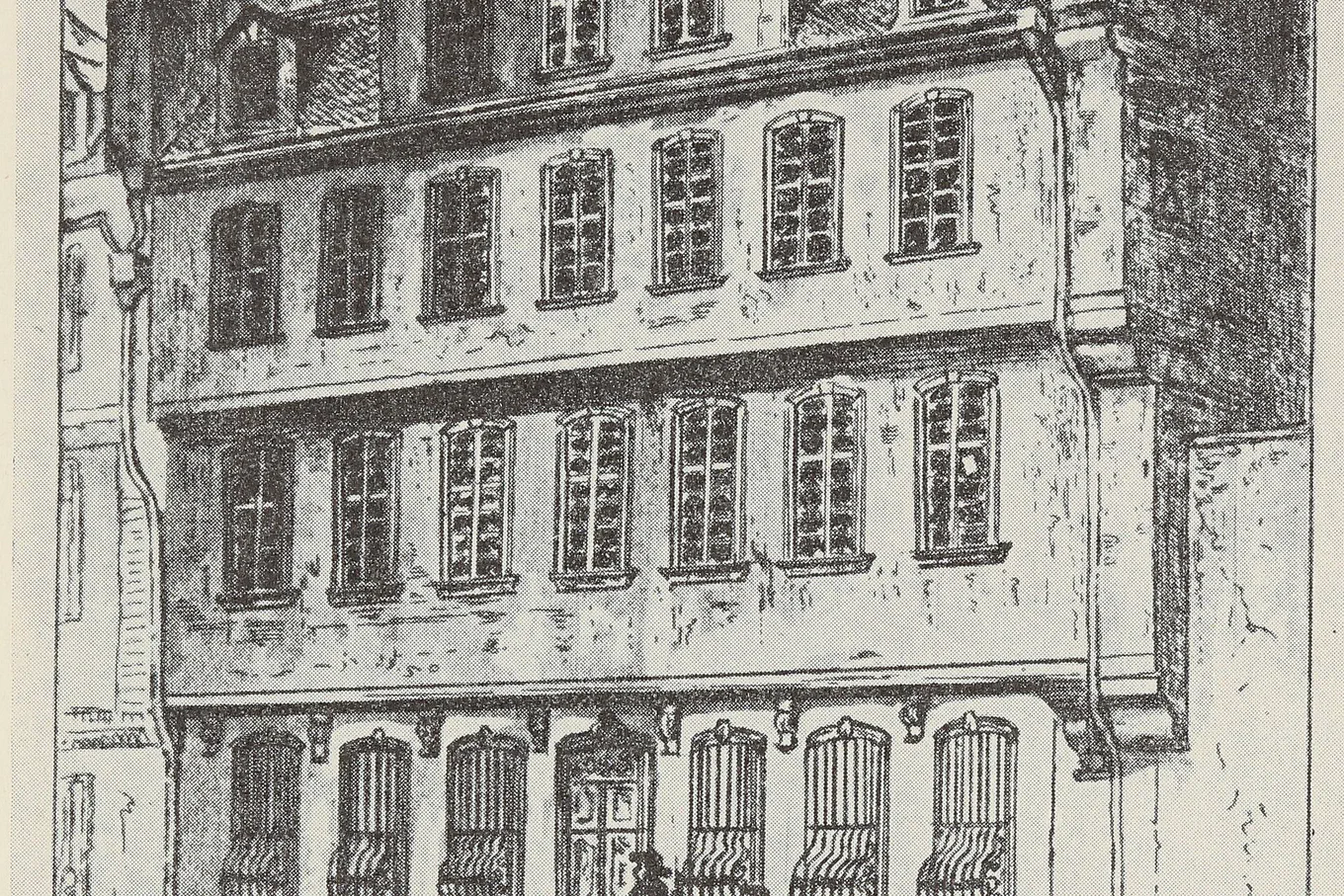
A 19th-century print of Goethe’s birthplace on the Großer Hirschgraben, the original house before the bombing of 1944.Unknown / Public domain.
Goethe wrote The Sorrows of Young Werther, the novel that made him famous, in the house where he was born. One summer in Wetzlar, he had fallen in love with Charlotte Buff, but she was already engaged to another man. Back in Frankfurt, Goethe, aged 24, turned the love he couldn’t have into a book in five and a half weeks of writing, early in 1774. It became an international bestseller, perhaps the first in history, and young men across Europe began to dress like Werther.
2 Mayer Amschel Rothschild and the locked lane of the Judengasse
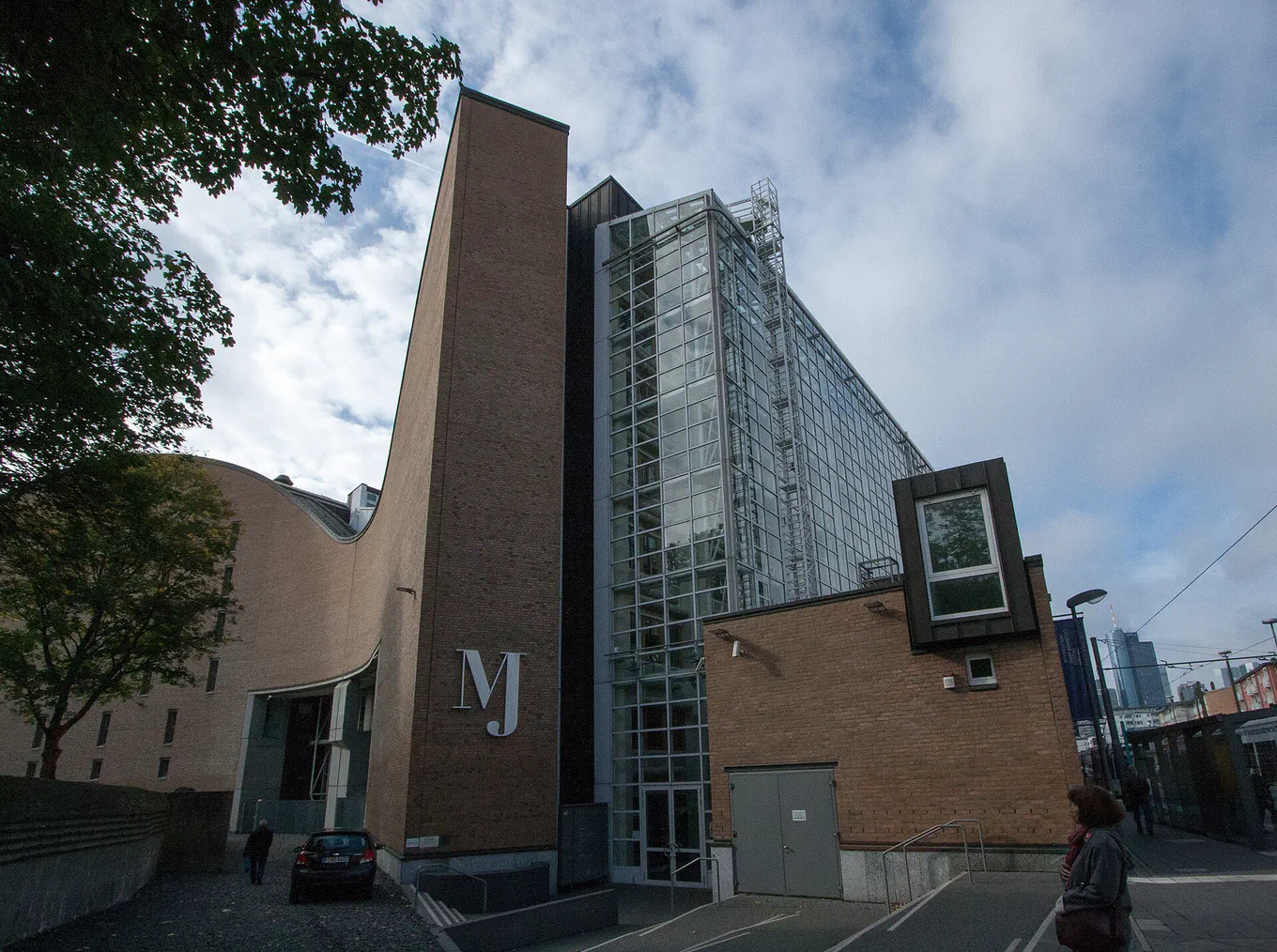
Stand here. The Museum Judengasse, Battonnstraße 47, built around the archaeological remains of five houses from the lane. The lane itself was demolished in 1874 and 1884.
The Museum Judengasse on Battonnstraße, built around the excavated foundations of houses from Frankfurt’s Jewish lane.Szilas / Public domain.
The Rothschild banking dynasty began behind locked gates. Mayer Amschel Rothschild was born in 1744 in Frankfurt’s Judengasse, the Jewish ghetto, a lane three or four metres wide whose gates were locked at night, on Sundays, and on Christian holidays. He dealt in rare coins, won the patronage of Crown Prince Wilhelm of Hesse, and became his principal banker. His eldest son kept the Frankfurt bank. The other four took the family name from that locked lane to Vienna, London, Naples, and Paris.
3 Arthur Schopenhauer, his poodles, and the fame that came late
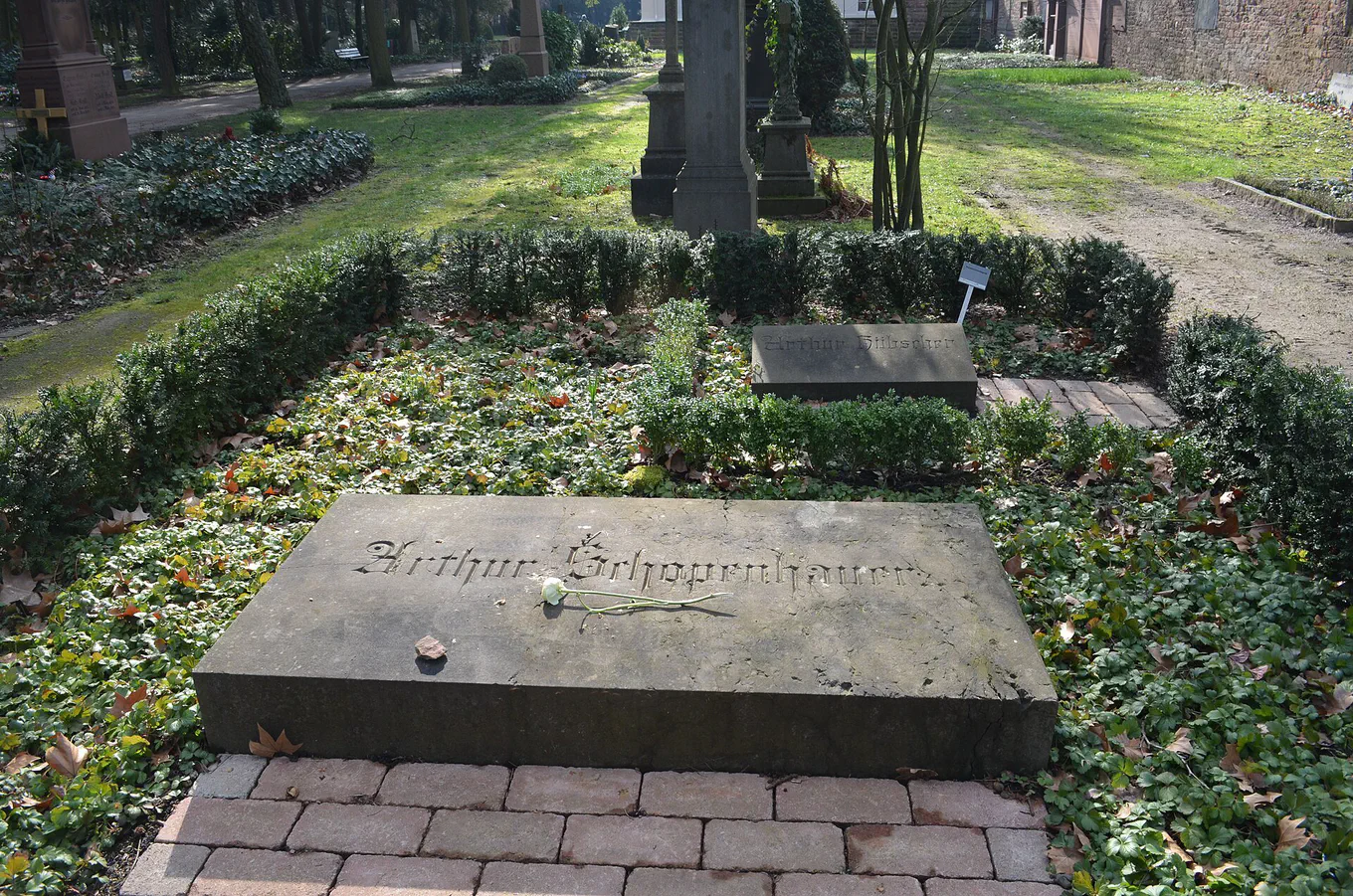
Stand here. Schopenhauer’s grave in the Hauptfriedhof, Frankfurt’s main cemetery. He stayed in the city until his death in 1860.
Arthur Schopenhauer’s grave in Frankfurt’s Hauptfriedhof, a plain slab bearing only his name.Karsten Ratzke / CC0.
When cholera broke out in Berlin, the German philosopher Arthur Schopenhauer fled, and in 1833 he settled in Frankfurt for good. He listed the city’s advantages, among them a healthy climate, better theatre, more Englishmen, better coffee houses, and a skilful dentist. He lived alone with a succession of poodles, named Atman and Butz, and his books were mostly ignored. Then, in 1851, Parerga and Paralipomena became his first widely read book.
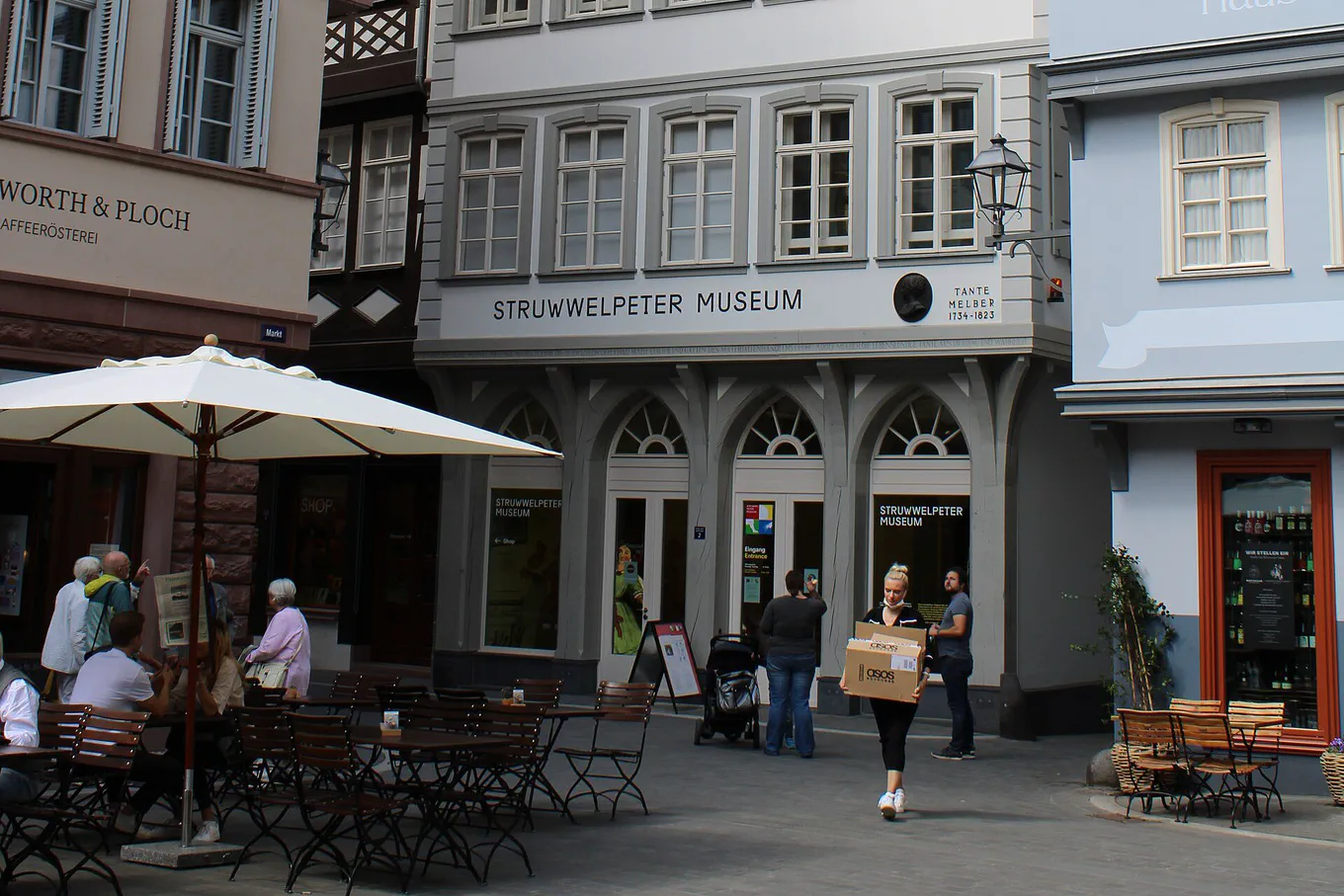
Struwwelpeter, the picture book Mark Twain translated, began as a Christmas present. In 1844, a Frankfurt doctor, Heinrich Hoffmann, looked for a book for his three-year-old son and was disappointed by everything he found. So he made his own, with no plan to publish it, and by Christmas Eve it lay under the tree. A publisher wanted it, and Hoffmann agreed “on a bright, wine-influenced whim”. That night, he recalled, he had become an author of children’s books almost without knowing what he had done.
5 The Paulskirche parliament and the crown a king refused
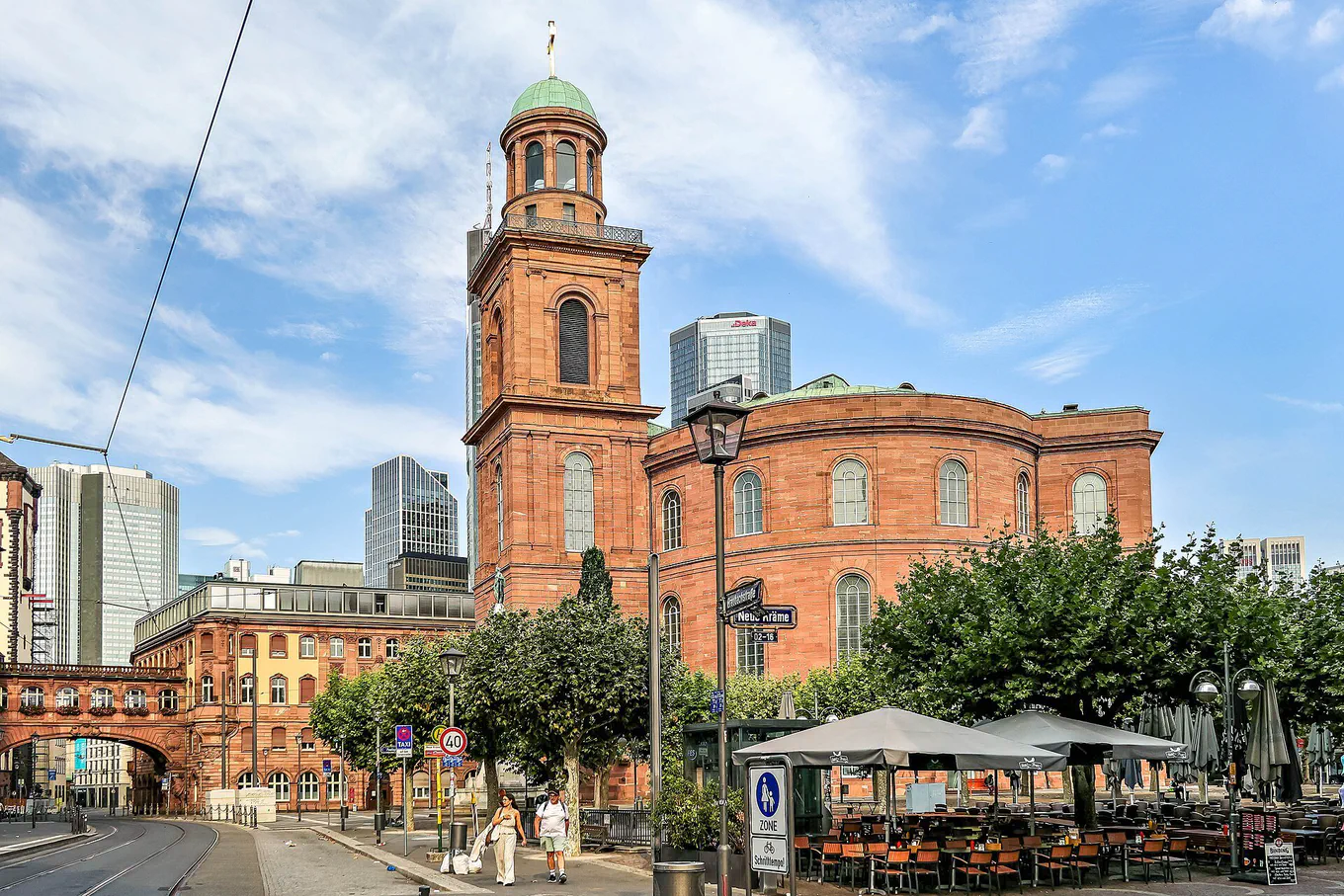
Stand here. The Paulskirche, St Paul’s Church, the first building Frankfurt rebuilt after the war. No longer a church, it is a venue for exhibitions and events.
On 18 May 1848, the first freely elected parliament for all the German states met in this oval church. It took until the next spring to pass a constitution, by 267 votes to 263, and to elect the King of Prussia hereditary emperor. But the king, Frederick William IV, believed in the divine right of kings. He refused the constitution and its crown. He wanted no crown touched by “the hussy smell of revolution”. The remaining deputies fled to Stuttgart, where soldiers occupied their chamber before the session began.
Pack nothing. Leave Friday.
Every Friday, I write a free letter, Journey, that takes us on a trip through places, stories, and ideas.
From My Life: Poetry and Truth(Johann Wolfgang von Goethe, 1811–1833). An autobiography. Goethe looks back on his happy childhood in Frankfurt, in the house on the Großer Hirschgraben.
Westend(Martin Mosebach, 2019 edition). A novel. Frankfurt society changes in West Germany’s founding years, in the 19th-century boom-time borough between the Palmengarten and the Alte Oper.
Kaiserhofstraße 12(Valentin Senger, 1978). A memoir of the author’s childhood at Kaiserhofstraße in central Frankfurt, where his Jewish family survived the entire Nazi era undetected. Published in English as The Invisible Jew.
Films to watch before you visit Frankfurt am Main
Rosemary(Rolf Thiele, 1958). A film, shot partly in Frankfurt, about the scandal of Rosemarie Nitribitt, a call girl found dead in her Stiftstraße flat in 1957.
A Girl Called Rosemary(Bernd Eichinger, 1996). A film, Eichinger’s remake of Rosemary, with Nina Hoss as Nitribitt, the Stiftstraße call girl whose killer the police never found.
Labyrinth of Lies(Giulio Ricciarelli, 2014). A film. A Frankfurt prosecutor under Fritz Bauer investigates former Auschwitz camp workers, towards the trial that opened in the Bürgerhaus Gallus.
Questions
Is the Goethe House in Frankfurt the original building?
No. The house where Goethe was born in 1749 was destroyed in the Allied bombing of Frankfurt on 22 March 1944. Rebuilding began in 1947, and Theodor Heuss, then President of Germany, reopened it in 1951. It is now a writer’s house museum on the Großer Hirschgraben.
Can you still see Frankfurt’s Judengasse?
Only its remains. The houses of the old Jewish lane were demolished in 1874 and 1884, but the Museum Judengasse, at Battonnstraße 47, is built around the archaeological remains of five of them. The museum is a branch of the Jewish Museum Frankfurt.
Why is it called Frankfurt am Main?
The name means “the ford of the Franks on the Main”, a place where the river was shallow enough to cross on foot. A legend says a doe crossed there and showed Charlemagne and his army the way. The city was first mentioned in a document in 794.